Hip Replacement Recovery for Seniors: A Family Guide to the Weeks at Home
What hip replacement recovery looks like at 70-80 — week by week, what helps, what goes wrong, and how to set up the home to make the months ahead easier.
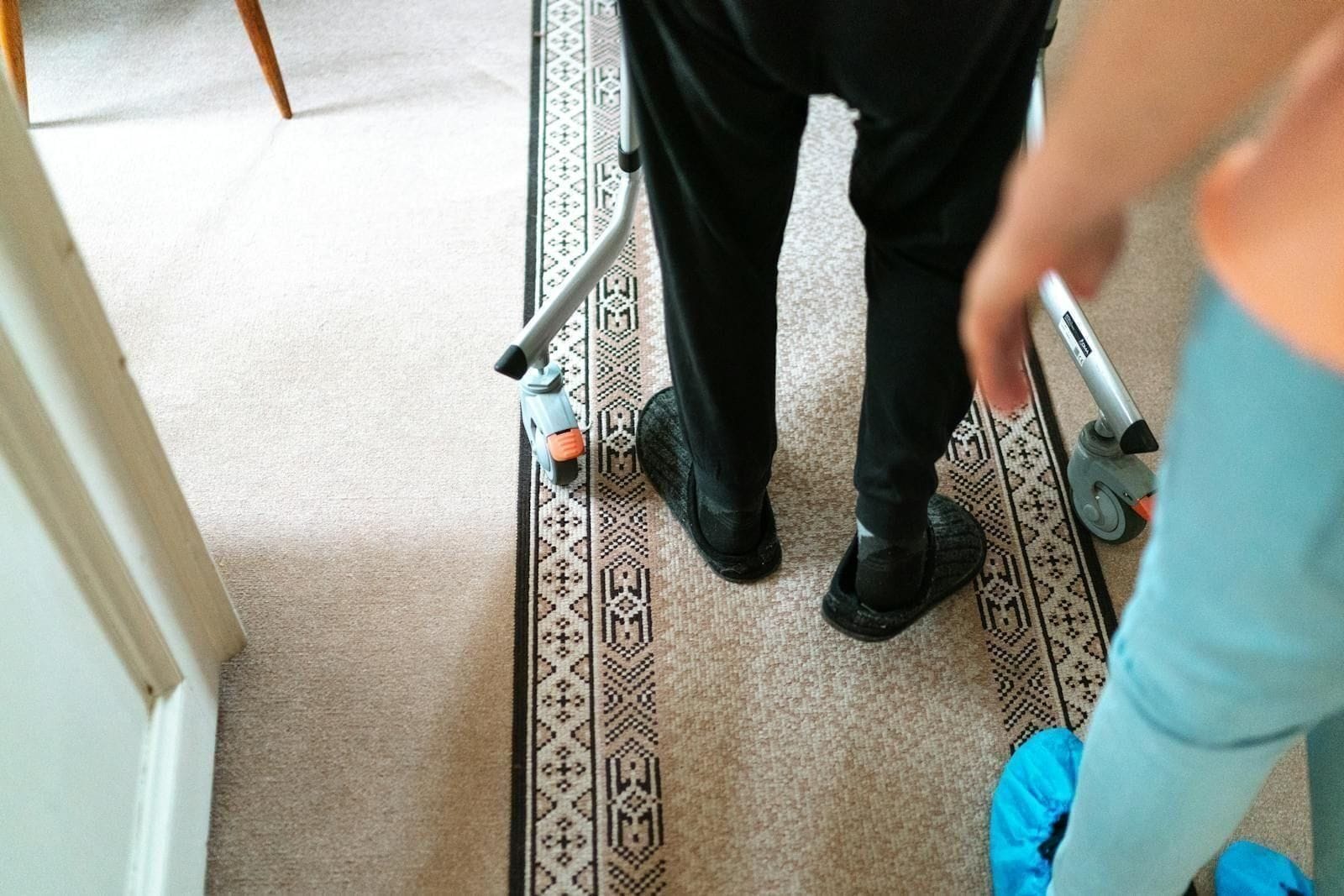
The phone call usually comes in the afternoon. Mom is doing great. The surgery went beautifully. She is sitting up, sipping water, asking about the dog. They want to discharge her tomorrow. Could someone be at the house by ten?
That is the moment most families realize they have been preparing for the wrong thing. They prepared for the surgery — the hospital bag, the parking deck, the long sit in the waiting room with bad coffee. They did not prepare for the months on the other side. Hip replacement recovery is rarely talked about with the same urgency as the operation itself, which is strange, because the operation is over in two hours and the recovery defines the next half-year of a person's life.
This guide is the conversation we wish more families had a week before the surgery instead of a week after. It walks through what recovery actually looks like for an older adult, week by week, with attention to the parts that are different at seventy and seventy-five and eighty. It is honest about what tends to go wrong. And it is specific about how to set up a home, and a few weeks of help, so that the recovery your mother or father comes home to is one their body can actually finish.
Why So Many Older Adults Are Having This Surgery Now
Hip replacement — total hip arthroplasty in the medical chart, total hip replacement in conversation — has become one of the most common elective surgeries in the United States. Researchers tracking national trends project that primary hip replacements will rise sharply over the next decade , driven almost entirely by the aging of the baby-boom generation and the parallel rise in hip osteoarthritis. By 2030, hundreds of thousands of these procedures will be performed annually in the U.S., and the fastest-growing patient group is the one over seventy-five.
For most of the twentieth century, surgeons hesitated to operate on patients in their eighties. That hesitation has softened. A recent ten-year analysis of more than ten thousand hip replacements at one major center compared octogenarians to patients under eighty and found that the older group did remarkably well: complication rates were similar, and patient-reported outcomes were comparable. The surgery has, in effect, caught up to the demographic. An eighty-year-old in 2026 is not the eighty-year-old of 1986. Many are still working, traveling, gardening, lifting grandchildren. They walk into the operating room expecting to walk out of the recovery, and most of them do.
What has not changed is that recovery is harder at seventy-five than at fifty-five. The surgery is the same; the body around it is not. A longitudinal qualitative study described the year after hip replacement for older adults as “a bumpy road” — a recovery shaped not only by the hip but by fatigue, fear, the temporary loss of independence, the slow return of confidence, and the small daily decisions that either build momentum or quietly undo it. Families who understand the shape of that road before they are on it travel it better.
The First Week: The Hardest, Quietest Stretch
Most hospitals now discharge hip replacement patients on the first or second day after surgery. A growing number do it the same day. For older adults, the discharge tends to land at day one or two, depending on pain control, blood pressure, and whether the patient can climb three stairs with a walker before the physical therapist signs off. This is faster than families expect, and it is one of the reasons the first week at home feels so dense.
In that first week, the body is doing everything at once. The incision is healing. The deep tissues around the new joint are inflamed. The leg is swelling in a way that can stretch the skin shiny. Pain control is shifting from a hospital IV to oral medications that wear off and have to be re-taken on a clock. The patient is moving with a walker for the first time in their life, on a leg that does not yet feel like theirs, while remembering — every single time they shift in a chair — to keep the operated hip from bending past ninety degrees or rotating inward, depending on the surgical approach.
Sleep is rarely good in this first week. Many patients sleep in a recliner instead of a bed for the first several nights because lying flat is uncomfortable and rolling onto the operative side is not yet allowed. The American Academy of Orthopaedic Surgeons reminds families that moderate to severe swelling is expected for the first few weeks , that ice and elevation are part of the daily routine, and that a sudden, asymmetric, painful new swelling is a different animal altogether — a signal to call the surgeon's office and ask about a blood clot.
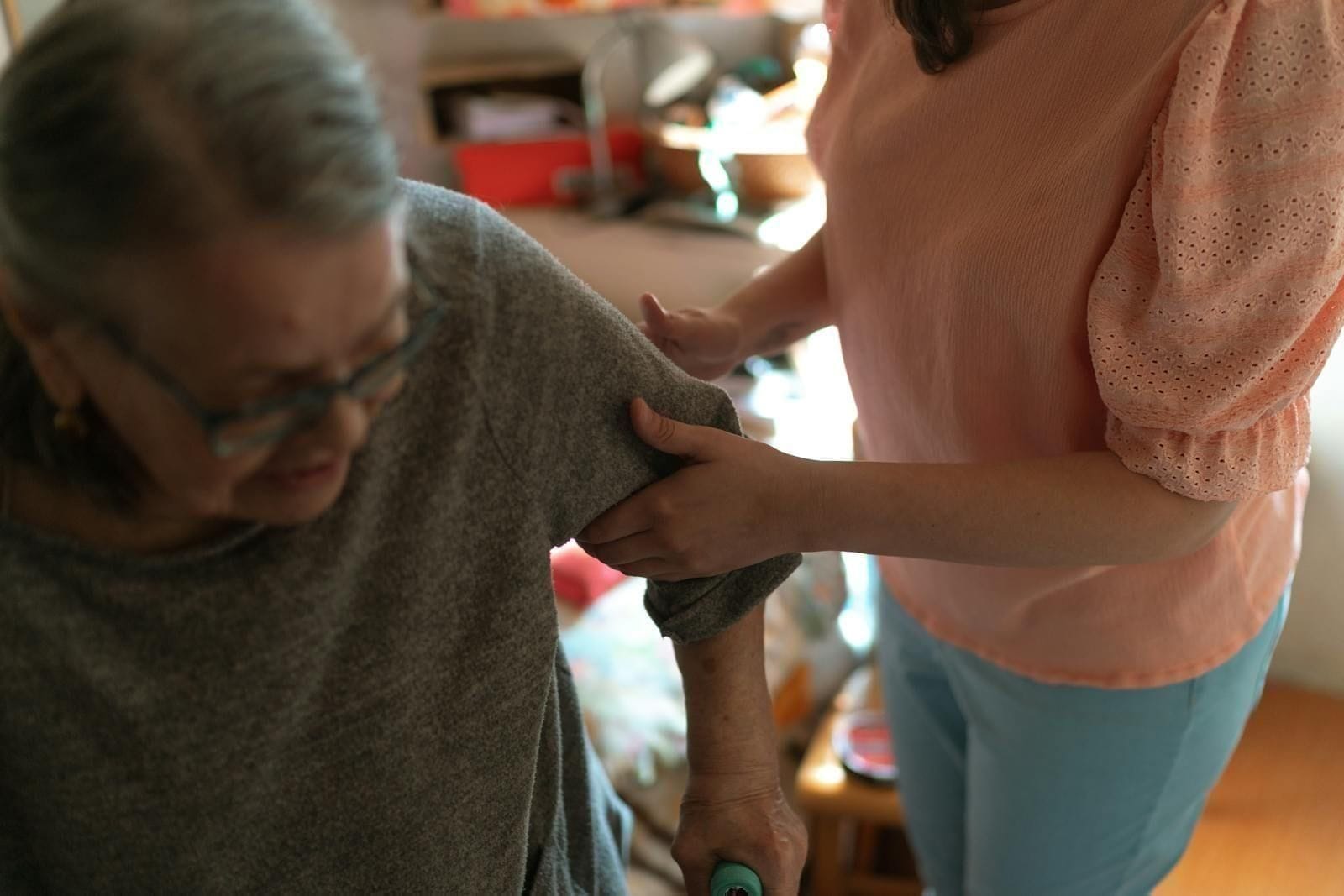
What families notice in this first week, more than anything, is how many small tasks have suddenly become two-person jobs. Getting from the bed to the bathroom at three in the morning. Putting on socks. Reaching the lower shelf of the refrigerator. Stepping into the shower. The patient is not unable; the patient is forbidden, by hip precautions, from certain shapes of movement that healthy bodies do without noticing. Without help in the room, those small forbidden movements happen anyway — and that is how dislocations and re-injuries occur.
Weeks Two and Three: The Quiet Middle
By the second week, the worst of the swelling has usually begun to recede. Pain levels drop. Many patients begin to wean off opioid medication and rely on acetaminophen plus an anti-inflammatory if their surgeon permits one. Stitches or staples come out, or the dissolvable ones soften and slough. The home health physical therapist who has been visiting two or three times a week begins to push harder — a little more distance with the walker, a little more time on the stationary bike, the first attempt at a real stair.
The Hospital for Special Surgery in New York, whose surgeons publish some of the most widely-followed hip replacement guidance in the country, describes the typical pattern as roughly two weeks of recovery at home followed by two to four weeks of outpatient physical therapy, with walking — yes, ordinary walking — emerging as the single most important therapeutic activity. The hip wants to move. The muscles around it have been shortened by years of arthritis and then shocked by surgery; they have to be coaxed back to length. Sitting too long in the same chair is, in this stretch, almost as risky as walking too much.
For older adults, weeks two and three are also when the early energy of being home wears off and the work becomes psychologically heavy. The initial relief of leaving the hospital fades into a recognition that the recovery is going to take time, that fatigue is not going away next Tuesday, and that the leg does not yet feel reliable. Many patients describe a small wave of low mood in this stretch. It is not a complication; it is part of the recovery. Acknowledging it — out loud, to a family member or a friend — usually helps it pass faster than pretending it isn't there.
Weeks Four Through Six: The Real Turn
Somewhere between the fourth and sixth week, most older adults reach what the AAOS calls a return to “most normal light activities of daily living.” The walker is often traded for a cane. Driving may resume, depending on the surgeon, the side operated on, and how well the patient can react in an emergency. Stairs get easier. Showers no longer require a stool in some cases, though many patients keep the shower seat for months because it is simply more comfortable.
This is also the window when patients tend to push too hard. They feel better, decide they are done, and skip the home exercises. The hip rewards the skipping with stiffness that takes another two weeks to undo. Recovery is, frustratingly, less of a steady upward line and more of a wide staircase: a small plateau, then a step, then another plateau, then another step. Families who track the trend over a month rather than the day-to-day variation tend to feel more settled about the progress than families who keep score every morning.
Specific hip precautions — the rules about not bending more than ninety degrees, not crossing the legs, not turning the foot inward — usually remain in force for the first six to twelve weeks, depending on the surgical approach. The anterior approach tends to require fewer or shorter precautions because of the way the muscles are spared, while the posterior approach requires stricter precautions for longer. Whatever the surgeon prescribed, those precautions are not optional. The surgery's success is partly an engineering question and partly a behavior question. The behavior part is what families help enforce.
Months Two Through Six: The Long Tail
The official medical answer to “how long is recovery” is usually six to twelve weeks. The honest answer, especially for an older adult, is closer to six to twelve months. Surgeons measure recovery in terms of safe weight-bearing, restored range of motion, and the closing of the incision. Patients measure it in terms of when they stopped thinking about the hip every time they stood up.
In months two and three, the leg gets stronger and the gait begins to even out. Most patients are walking unaided indoors and using a cane outdoors, though many seventy- and eighty-year-olds keep the cane longer than younger patients do. This is not a sign of poor recovery. It is a sensible response to the very real consequence of a fall on a recently-operated joint.
In months four through six, the surrounding muscles finish their slow rebuild. Patients who were active before surgery often return to walking miles, swimming, biking, golfing, dancing in the kitchen at Christmas. The replaced joint, properly cared for, generally lasts twenty years or more, and many patients describe the surgery in hindsight as the most decisive quality-of-life decision they ever made.
For an older adult who was less active before surgery — who had been avoiding the stairs for two years and skipping outings because the hip hurt — the recovery curve is shallower. The hip can be replaced; the muscles that atrophied during the years of avoidance still have to be rebuilt. This is one reason orthopedic surgeons increasingly encourage older patients not to wait so long. The longer the pre-surgery period of inactivity, the longer the post-surgery rebuild.
What Is Different About Recovering at 70, 75, or 80
Older adults recover from major surgery on a different timeline than younger ones. Several specific patterns show up across the research.
Fatigue lasts longer. A fifty-year-old often feels meaningfully better by week three. A seventy-five-year-old may not feel like themselves again until month four. Multiple studies note that post-operative fatigue in older adults can persist for months and is one of the most under-discussed parts of recovery. It is not a sign of complication. It is the body, with fewer reserves, doing extraordinary work in the background.
Confusion sometimes appears in the first days at home, particularly in patients over eighty. A review of post-operative complications in octogenarian hip replacement patients found that delirium, urinary tract infection, mild pneumonia, and transient confusion were the most common inpatient complications , each occurring in roughly four percent of patients. Many of these resolve within days. Some are pre-existing dementia that surgery has temporarily worsened. Some are signs of an infection or a medication issue that needs investigation. The key for families is to know that any new confusion in the days after surgery deserves a phone call to the surgeon's office. It is rarely nothing.
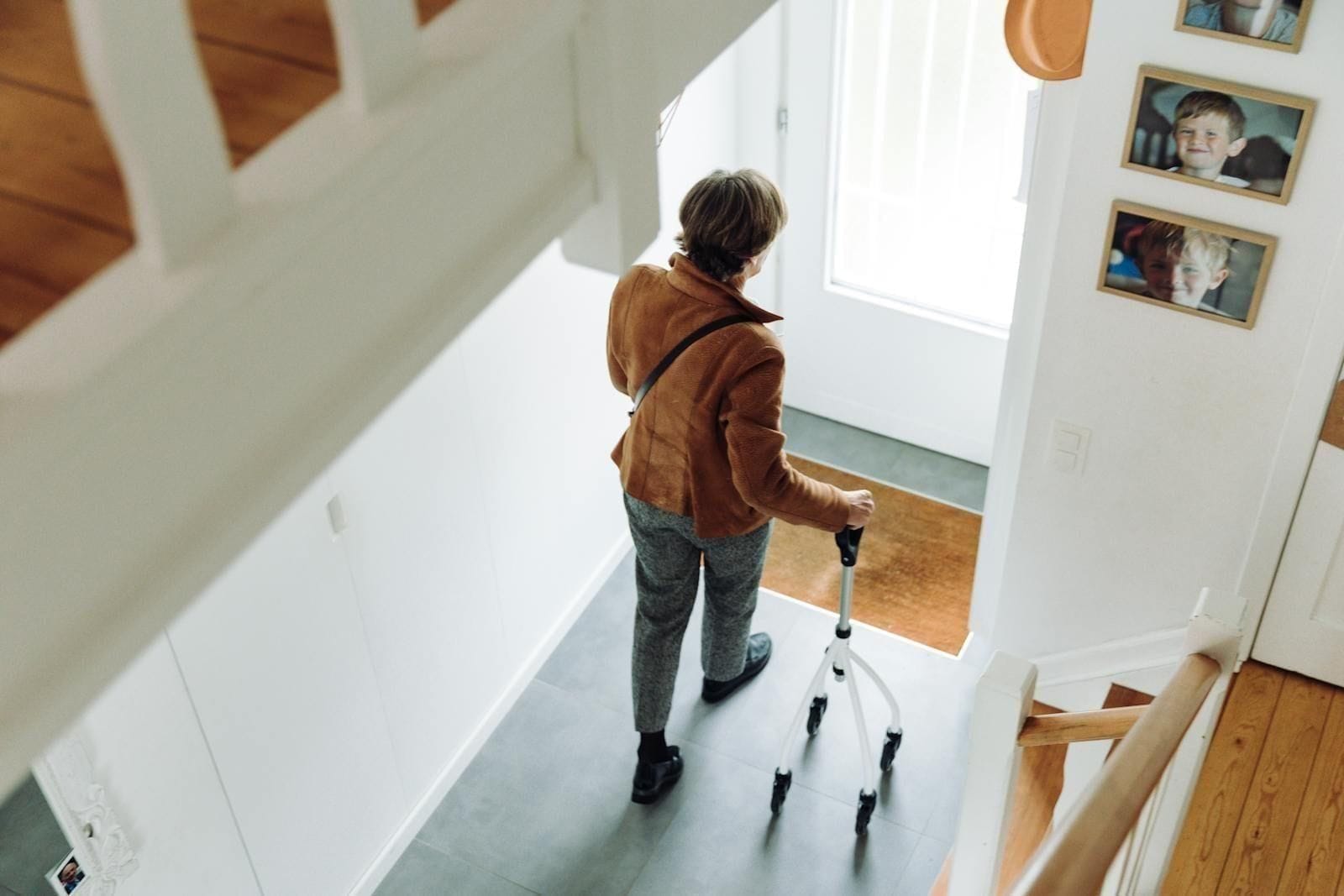
Falls become the single biggest secondary risk. The newly-replaced hip is, paradoxically, one of the most vulnerable joints in the body for the first three months. A fall onto it can fracture the bone around the implant in a way that is much harder to fix than the original surgery. The AAOS publishes a thorough fall prevention guide that families should treat as required reading before discharge: remove every throw rug, secure every electrical cord, add a non-slip bath mat, install temporary grab bars if the bathroom doesn't have them, and keep the path from the bed to the bathroom obstacle-free and well-lit at night.
Constipation is nearly universal. The combination of opioid pain medication, reduced movement, and dehydration can stop the bowels for days. Most surgeons send patients home with a stool softener and a laxative; using them on a schedule, not waiting until something feels wrong, prevents the much more uncomfortable problem that develops if you don't.
Appetite often drops. A balanced diet with adequate protein, plenty of fluids, and an iron supplement (if the surgeon recommends one) is important for healing — but many older patients simply do not feel like eating in the first weeks. Small, frequent meals tend to work better than three big ones. A nutrition shake at mid-morning often goes down when toast does not.
Setting Up the Home Before Discharge
The single best thing families can do for a recovering parent is to prepare the house before the surgery, not after. A few hours of work in advance saves entire weeks of trouble.
Move the bedroom downstairs if it is upstairs, even temporarily. Stairs are the most-cited single barrier to a smooth first month. Many families rent or borrow a hospital bed for the living room. Others move a comfortable recliner into the bedroom and let the patient sleep there for the first several weeks.
Make the bathroom a fortress. A raised toilet seat with grab arms, a shower bench, grab bars in the tub or shower, a handheld shower head, and a non-slip mat — every one of these is worth more than its price. The AAOS and Cochrane reviewers consistently identify environmental modifications as one of the most effective ways to prevent post-operative complications and dislocations . They cost less than a single ambulance ride.
Clear the pathways. Remove every throw rug. Tape down extension cords. Get the cat's food bowl out of the hallway. Move the side table six inches farther from the chair. Walkers do not pivot well around obstacles, and the surgically-operated leg cannot be quickly pulled back if a foot catches.
Prepare food in advance. Many families cook and freeze two weeks of meals before the surgery. Recovering patients are unsteady at the stove, and the kitchen is the room where falls happen most.
Arrange the help in advance. The AARP's reporting on joint replacement recovery at home notes that surgeons increasingly favor home recovery over skilled nursing facility stays for elective hip replacement — provided that family and professional help are actually in place when the patient walks in the door. The patients who do best at home are the ones whose help arrived an hour before they did.
What Goes Wrong, and How to Spot It
Most hip replacements heal beautifully. A small but real percentage develop complications, and almost all of them are easier to fix if caught in the first day or two of trouble. Families who know what to watch for catch them.
Infection shows up as a persistent fever above one hundred degrees, shaking chills, increasing redness or warmth around the incision, new or unusual drainage from the wound, and pain that is getting worse instead of better. Wound infection is the single most feared complication of joint replacement because it can travel to the implant itself. Any of these signs is a same-day call to the surgeon's office.
Blood clots are the second thing to watch for. A deep-vein thrombosis usually appears as new pain, tenderness, or asymmetric swelling in the calf of the operated leg. A pulmonary embolism — a clot that has traveled to the lungs — feels like sudden shortness of breath, chest pain that hurts more with a deep breath, or a fast heart rate that came out of nowhere. This is an emergency-room visit, not a phone call.
Dislocation is rare with modern surgical technique but more common in the first three months and more common with the posterior approach. It usually feels like a sudden, sharp pain in the hip during a specific motion, sometimes with a popping sensation, and the leg may look or feel different — shorter, rotated outward, unable to bear weight. This too is an emergency-room visit.
Confusion or behavioral change in older patients is the subtle one. New disorientation, sleeping all day, unusual agitation, sudden incontinence, or any acute personality shift in the weeks after surgery should be evaluated. The most common causes are a urinary tract infection, dehydration, or a medication interaction, any of which is fixable once identified. Confusion in older adults rarely fixes itself; it almost always points at something.
Where Home Care Fits
Hip replacement recovery is the textbook reason private home care exists. Most of what an older adult needs in the first four to six weeks at home is not medical. It is physical presence: someone to be in the room when they get out of the recliner, someone to manage the bathroom transitions, someone to prepare meals, someone to make sure the icing schedule and the medication schedule actually happen on time, someone to drive to the outpatient physical therapy appointments, and — perhaps most importantly — someone who is not the spouse or the adult child, so that the family relationships do not warp under the weight of six weeks of intense personal care. For a sense of what those first six weeks actually cost — and where the line falls between non-medical caregiver hours and a true private duty nurse for skilled tasks — our 2026 price guide breaks down hourly, live-in, and 24/7 rates in plain language.
Our hospital-to-home care program was built specifically for this transition. The first visit usually happens within twenty-four hours of discharge, often the same afternoon. The caregiver reviews the discharge instructions with the family, walks through the home with an eye for fall risks, sets up the bedroom and bathroom for the patient's mobility level, and begins a routine that mirrors what the hospital was already doing — ice on a schedule, medications on a schedule, walks on a schedule, rest on a schedule. That last word does most of the work. Recovery is a calendar problem disguised as a medical one.
As the weeks progress, the care plan changes. The first ten days often need a caregiver in the home for most of the day. Weeks two and three may shift to partial days. By week four, many families taper to a few mornings a week — enough to keep the exercise routine on track, to handle bathing safely, and to make sure the patient has not quietly decided the cane is optional. Our mobility-focused care is paired with hands-on personal care — bathing, dressing, transfers, toileting — because the most dangerous moments in the day are the small choreographed ones, and those are the moments a caregiver who has done this hundreds of times handles without thinking.
Every plan is overseen by a registered nurse, because the difference between “Mom is just having a tired week” and “Mom has a urinary tract infection that is showing up as confusion” is sometimes a clinical judgment, and we want a clinician making it. Families in Bergen County , Monmouth County , and our other New Jersey service areas typically come to us a week or two before the surgery, when they have started doing the math on what the first month is going to look like and realized the math does not work without help.
One Last Thing About the Long View
Hip replacement is one of the most consistently successful operations in modern medicine. The literature, repeated study after repeated study, finds that even patients in their late eighties experience meaningful pain relief and functional improvement after the procedure. The barrier to that outcome is rarely the surgery itself. It is what happens in the weeks and months afterward — whether the home was prepared, whether the precautions were respected, whether the exercises were done, whether the falls were prevented, and whether someone was paying attention to the small signs of the things that go wrong.
Families who plan that part with the same seriousness they brought to choosing the surgeon almost always get the outcome they hoped for: a parent who walks better at the end of the year than they have in a decade, who is no longer afraid of stairs, who can pick up a grandchild again without thinking about how the next morning will feel.
If you would like to talk through what the first weeks at home could look like for your family, our care team is here . We will listen first.
Photographs by Jsme MILA and wheeleo, licensed under the Pexels free-use license.