Knee Replacement Recovery After 65: A Realistic Timeline
Knee replacement recovery after 65 — the real timeline, why week eight is the hard part, and the questions families ask but rarely see answered.
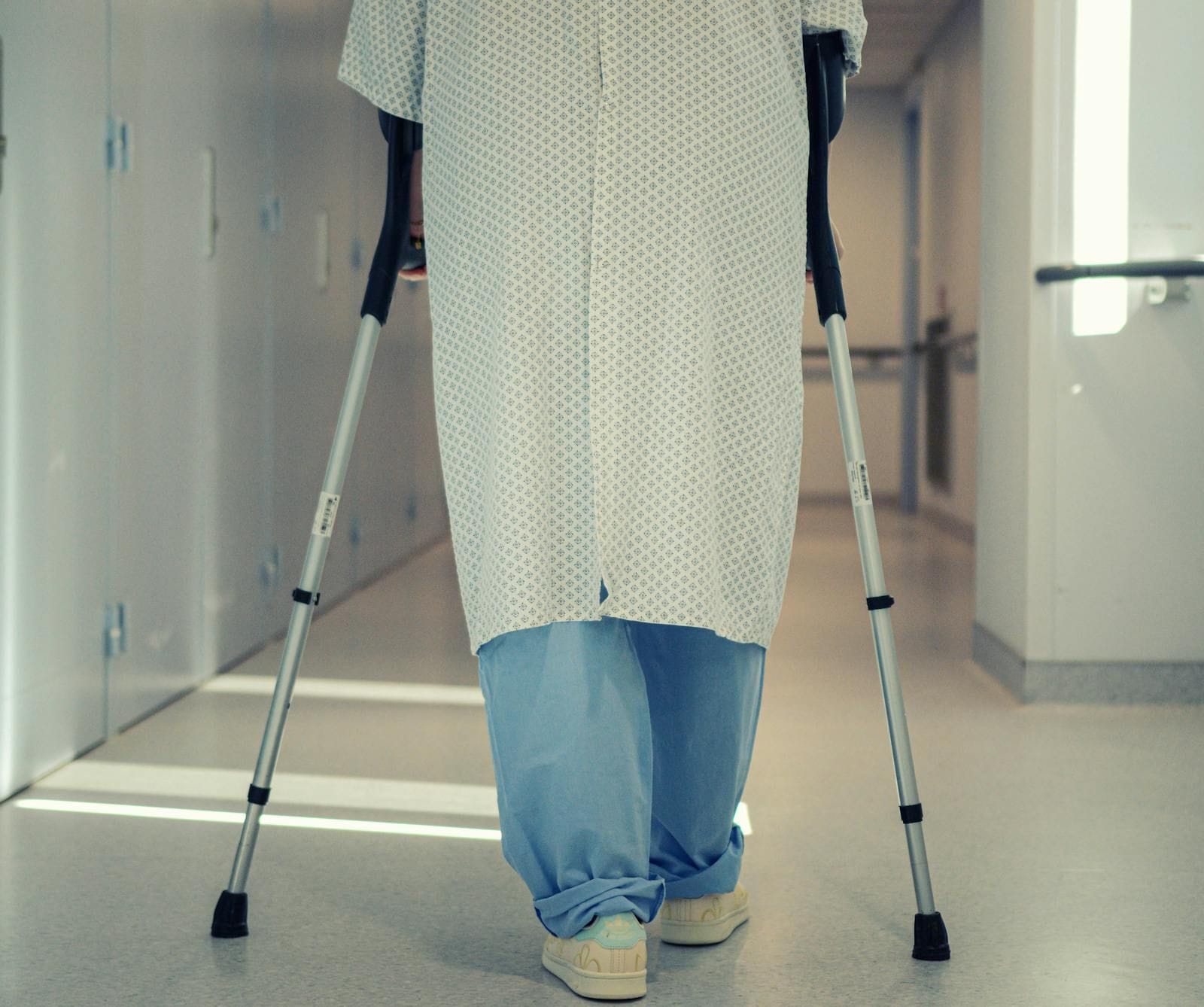
About 700,000 total knee replacements are performed in the United States every year, according to the American Academy of Orthopaedic Surgeons. The procedure is one of the most reliably successful operations in modern medicine — better than 90 percent of replaced knees are still functioning fifteen years out, and roughly 82 percent are still in place at twenty-five. None of that is what families want answered. What they want answered is more practical: how long will the new knee hurt, when does the walker come off, why does it still ache at week eight, and when does life — driving, climbing stairs, sleeping through the night — go back to something like normal.
This is a guide to the recovery itself, written for adults sixty-five and older and the people helping them through it. The published timelines are tidy: day one walking, week two stitches out, week six driving, three months back to function. The actual experience is messier in ways the brochures do not say. What follows is organized around the questions people actually ask once recovery is under way — not in the order surgeons go through them at the pre-op visit, but in the order they come up at home.
Is the Surgery Actually Worth It at 70, 75, or 80?
Yes — and the evidence on this is more decisive than for most elective surgical decisions late in life. Roughly nine in ten patients experience substantial improvement in pain, function, and quality of life. The American Joint Replacement Registry's most recent annual report, drawn from data through early 2025, shows that adults in their seventies and eighties undergoing primary total knee replacement do as well on patient-reported outcomes as patients twenty years younger. Age is not, by itself, a reason to wait. What changes with age is not whether the operation works — it works — but who it works best for, and what recovery looks like along the way.
What matters more than the number on the birthday card is functional reserve. A seventy-eight-year-old who walks the dog twice a day, climbs the stairs to bed, and can stand from a chair without using the armrests has more reserve than a sixty-four-year-old with diabetes, COPD, and a year of sedentary recovery from a different surgery behind them. The surgeon's calculus increasingly runs along those lines: cardiac function, kidney function, nutritional status (the serum albumin a family will see on a pre-op blood draw is a strong predictor of complication risk), the ability to participate in physical therapy, and the support available at home. None of these are settled by a birthday.
The harder version of this question is when. Waiting until it gets worse has costs the surgical conversation often understates. Severe knee pain limits walking, walking is the dominant fall-prevention exercise in older adults, fewer steps per day accelerates deconditioning, and the cycle reinforces itself. Surgeons increasingly suggest that the right window for the operation is the year the knee starts meaningfully restricting daily life — not the year a patient finally cannot take the pain. The recovery is reliably better the better the patient walks going in.
Total, Partial, or Revision — Which One Am I Getting?
Three categories of knee replacement exist, and patients often arrive at surgery without a clear sense of which one is being scheduled.
A total knee replacement — also called total knee arthroplasty or TKA — resurfaces all three compartments of the joint: the inside (medial), outside (lateral), and the kneecap (patellofemoral). It accounts for the great majority of the 700,000 annual surgeries and is what most people picture when they hear knee replacement.
A partial knee replacement — unicompartmental knee arthroplasty, or UKA — resurfaces only one compartment, typically the medial side, leaving the rest of the joint native. It is a less invasive operation, with a smaller incision, less blood loss, and a noticeably faster recovery. Walking with little or no support often resumes within two to three weeks rather than four to six. The trade-off is candidacy: the disease must be confined to one compartment, the ligaments must be intact, and the surgeon must do enough of these procedures annually to do them well. Cleveland Clinic has estimated that as many as half of patients with knee osteoarthritis are anatomical candidates for partial replacement, but high-volume orthopedic centers report performing partial procedures at rates closer to forty percent and most community hospitals at five percent or less. Whether a patient is offered the partial option depends as much on the surgeon's training and operative volume as on the patient's anatomy.
A revision knee replacement is a redo — replacing a previously implanted joint, usually because of loosening, wear, or infection. It is a longer operation, recovery is slower, and outcomes are less predictable. If a patient is being told they need a revision, the question to ask is not whether the operation makes sense but which surgeon does the highest volume of revisions within driving distance. Volume matters more here than for any other variant.
A small fraction of patients will be offered a bicompartmental or patellofemoral replacement that resurfaces only two compartments or only the kneecap. These are uncommon, a specialist conversation, and do not need to drive the decision for most patients.
Will I Stay Overnight in the Hospital — or Go Home the Same Day?
This has changed within the last five years. Outpatient knee replacement — the patient walking out the same day, often within a few hours of leaving the recovery room — was rare in older adults a decade ago. The 2025 American Joint Replacement Registry data shows it is now offered to a growing share of patients who clear specific health criteria, including selected adults over sixty-five in good baseline health.
The published evidence on safety within the right cohort is reassuring. A 2026 cohort study from the Orlando College of Osteopathic Medicine found outpatient TKA was not independently associated with higher complication or infection rates than hospital-based surgery in a carefully selected population — and patient satisfaction in adults over fifty-six was higher with the outpatient pathway (91 percent versus 75 percent). A separate Medicare analysis suggested that a short stay of around twenty-three hours appears to be the lowest-complication path for older adults — better than either pure outpatient discharge or a multi-night admission. The point is not that outpatient is always right, but that overnight is not automatically required by age alone.
What rules a patient out of the outpatient pathway: diabetes that is not well controlled, BMI over 35, significant heart or lung disease, kidney disease, an ASA risk score of 4, anemia, a history of opioid tolerance, or simply living alone without someone able to be present for the first twenty-four to forty-eight hours. Anyone for whom one of those factors is a question should expect an overnight or twenty-three-hour stay, and that is not a worse outcome. It is matched to the risk.
What Do the First Two Weeks at Home Actually Feel Like?
The first three days are dominated by pain that arrives in waves, swelling that peaks at the end of day two or day three, and the bewildering experience of the leg being heavier and clumsier than it has ever been. Pain medication is on a schedule rather than as-needed: patients who try to tough it out early reliably end up in worse pain on day three because the swelling outruns the medication's ability to catch up. A reasonable home setup includes ice — a continuous-flow cold therapy device is worth the rental fee for the first ten days — elevation on a stack of pillows that lifts the calf above the heart, and a path to the bathroom that does not require a single turn while holding the walker.
Sleep is the universal complaint. The standard regimen of blood thinners, oral pain medication, and a leg that aches when bent and aches when straight produces a first week of fractured, three-hour sleep blocks. This is normal. It does not mean anything is wrong with the knee. By the end of the second week, with stitches or staples out and swelling visibly receding, sleep usually consolidates back into longer stretches. Bringing the bed downstairs for the first ten days, if the home has stairs, is the single most useful piece of pre-discharge planning most families do not think to do.
The visiting physical therapist comes two or three times a week starting in the first few days. The exercises are not punishing — ankle pumps, quad sets, straight-leg raises, gentle knee bends — but they require the patient to participate when participating feels impossible. Households where someone is present to remind, encourage, and physically be in the room for the first ten days have measurably better outcomes than households where the patient is alone. This is one of the moments where a few hours a day of hospital-to-home support from a non-medical caregiver is more useful than another medical specialist — the work is helping the patient get to the bathroom, prepping a meal, sitting with them during the ice cycle, and getting them up to do the PT exercises on the schedule the visiting therapist set. The families who work with Always Responsive Home Care in Union County, NJ often describe the first ten days as the stretch they could not have managed cleanly without a third person in the house.
When Can I Get Off the Walker?
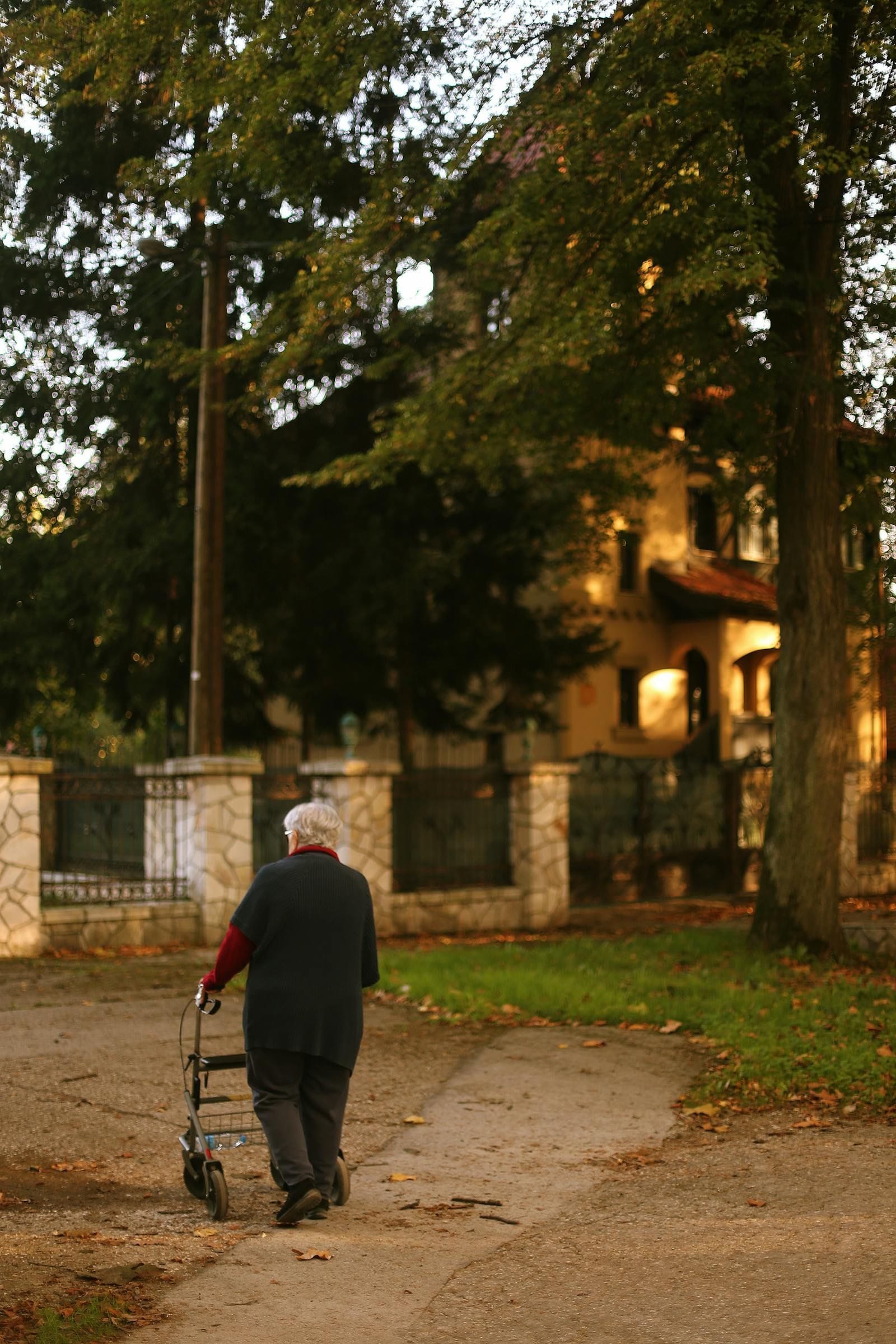
The standard answer is four to six weeks. The honest answer is that the walker is a confidence and balance tool more than a weight-bearing one — most patients are cleared for full weight bearing on the operated leg within the first week — and the timing of off the walker comes down to balance, not strength. Patients usually transition from a four-wheeled walker to a cane around weeks four to six, and from the cane to no support around weeks eight to twelve. A few older adults, particularly those over eighty or with prior balance issues, continue using a cane for outdoor walking permanently, and that is a sensible accommodation rather than a failure of recovery.
The transition follows a recognizable sequence. The walker comes out for everything in the first ten days. By the end of week three, most patients are doing short distances inside the house without it — bathroom, kitchen — but still reaching for it on stairs, outdoors, and on uneven floors. By week four to six, the cane replaces the walker outside. By week six to eight, the cane stays propped in the corner most of the day but comes out for distances and unfamiliar terrain. By week twelve, in the typical recovery, neither is needed for normal life.
The danger window is actually weeks six to eight, when patients feel well enough to stop using a support but balance has not fully caught up to confidence. Most preventable falls during knee recovery happen here. The rule physical therapists give: keep the cane in the hand for outdoor walks even after it feels unnecessary, for two weeks past the point you think you do not need it. The fall that happens in week eight, in a parking lot, with a freshly implanted joint, is a worse setback than the inconvenience of carrying a cane for fourteen extra days.
When Can I Drive Again?
For most patients, four to six weeks. The published median sits closer to six. Three things have to be true before the surgeon will clear the patient to drive: the patient is off prescription narcotic pain medication, the operated leg can move from gas to brake quickly enough to make an emergency stop, and the patient has the strength and range of motion to control the pedals comfortably. Brake-reaction-time studies show that most patients meet the threshold by week four, but only for left-knee replacements with an automatic transmission. Right-knee replacements take a week or two longer because the operated leg is the one working the pedals. Manual transmissions take longer still.
The surgeon's clearance is not a formality. A 2025 review of return-to-driving evidence after knee replacement found that one in five patients who self-cleared, without a surgeon sign-off, scored below the safe threshold on instrumented brake-reaction tests at the moment they resumed driving. The cost of an accident in the early recovery window is not just a fender-bender — it is a re-injury to the new joint at the moment it is most vulnerable. A short ride with a family member, on quiet streets, ahead of the first solo trip, is the test most patients should run themselves.
Transportation in the meantime matters more than families anticipate. Most older adults under-budget the number of rides they will need in the first six weeks — to physical therapy two or three times a week, to surgical follow-ups, to the grocery store, to the family events they want to keep attending. A short-term arrangement that bundles a few hours of in-home mobility support with transportation is often a more sustainable answer than asking an adult child to take time off work for every appointment.
Why Am I Worse at Week Eight Than I Was at Week Four?
This is the most-asked question, and the one recovery articles often skip. The week-eight plateau is real, well-documented, and tells you nothing is wrong.
A predictable pattern shows up around weeks six to ten. Pain that had been steadily improving stops improving. Swelling that had been receding comes back. The knee that felt looser at week five feels stiffer at week eight. Sleep gets worse again. Patients describe it as a backslide and conclude something is going wrong.
It is not going wrong. The post-surgical inflammatory response — the body's healing chemistry — peaks at about three weeks, declines through six, and then enters a slower, longer phase that runs through about week twelve. Physical therapy in this window simultaneously gets more demanding: the exercises that were manageable in week four become harder in week eight as the therapist pushes for the last twenty degrees of flexion. The combination of a still-active healing response and a more demanding rehab produces a recognizable plateau — pain, swelling, and stiffness that genuinely worsen for a stretch in the middle of recovery.
What helps: continuing PT through the plateau (the temptation to skip is high; the consequence is months of regret), aggressive use of ice for the first hour after every session, a frank conversation with the surgical team about pain management that does not require returning to narcotics, and the awareness that this stretch is the rule and not the exception. A 2023 systematic review of home-based prehabilitation found that patients who built strength before surgery had less pronounced plateau symptoms after it — another reason the year before the surgery matters as much as the year after.
How Do I Know If Something Is Going Wrong?
Most knee replacement recoveries proceed without serious complication. The two complications that genuinely matter — infection and blood clots — are uncommon but worth knowing the signal for, because both are treatable when caught early and dangerous when missed.
Periprosthetic joint infection occurs in roughly one percent of knee replacements, according to the AAOS guidance on joint replacement infection. The highest-risk window is the first six weeks, but late infections years out are possible. The signal is fever above 101 degrees, a wound that becomes red, warm, swollen, or starts to drain, new pain in a joint that had been getting better, or any unexpected worsening that does not match the normal arc of recovery. A 2025 Cleveland Clinic analysis found that periprosthetic infection carries a five-year mortality rate higher than several common cancers — not because the infection itself is uniformly fatal but because the population that develops it is medically vulnerable. The corollary is that catching the infection at the first sign of fever or wound change matters enormously. Calling the surgical office about a fever on day eight is not an overreaction; it is the response the surgeon would prefer.
Deep vein thrombosis — a blood clot in the leg veins — occurs in roughly one to three percent of joint-replacement patients. Patients are typically on a blood thinner for the first four to six weeks specifically to lower this risk. The signal is calf pain that is disproportionate to anything that should be hurting, calf swelling that is asymmetric (one calf visibly larger than the other), or shortness of breath that comes on suddenly. The last is the medical emergency: a pulmonary embolism. Calf changes warrant a same-day call to the surgical office; sudden shortness of breath warrants 911.
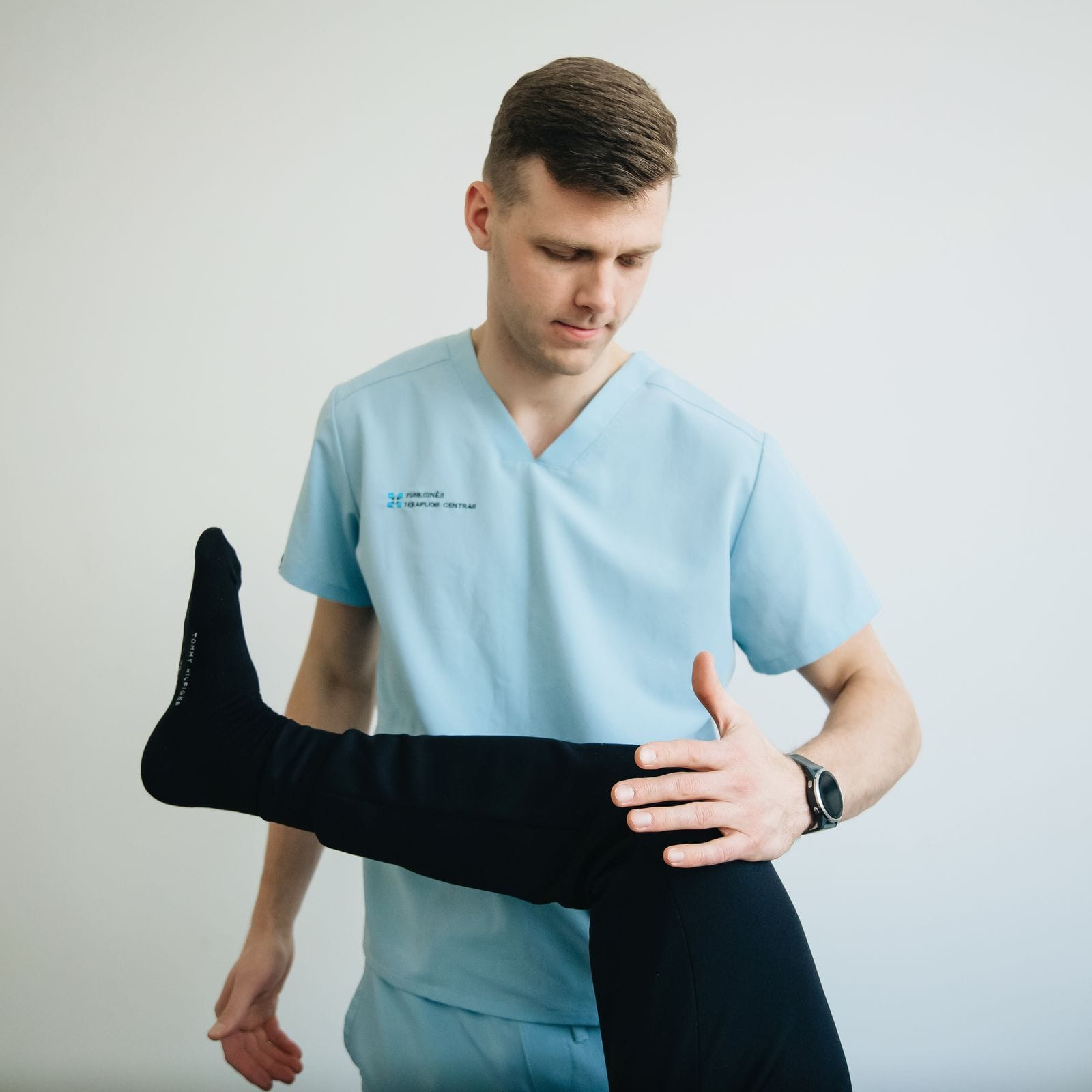
The third category of complication, less catastrophic but more common, is stiffness — the operated knee fails to bend past about ninety degrees by the end of recovery. This is largely preventable through honest participation in physical therapy in the first eight weeks. Patients who skip PT or pull back at the first plateau are the ones whose knees stiffen, and the procedure to fix a stiff knee (a manipulation under anesthesia, performed in the operating room) is much less pleasant than the PT they avoided.
How Much Does It Matter Who I Pick to Do the Surgery?
A great deal — and more than most patients realize when they choose a surgeon based on geographic convenience or insurance network alone.
Surgeon and hospital volume are among the strongest predictors of outcomes in joint replacement. A long line of registry studies has shown that high-volume surgeons (typically defined as fifty or more knee replacements per year) have lower complication rates, lower revision rates, and faster recovery times than low-volume surgeons performing the same procedure. The effect is most pronounced for partial knee replacement and revision surgery, where the volume gap between specialist centers and community hospitals is widest. For partial knee replacement specifically, surgeons whose practice is less than five percent UKA have substantially higher revision rates than surgeons running forty to sixty percent UKA. The latter exists almost exclusively in academic medical centers and large orthopedic specialty practices.
A practical sequence: ask the surgeon how many total knee replacements they performed in the previous year, ask how many partial knee replacements they performed if the patient is a candidate, ask the hospital's surgical site infection rate (the better hospitals publish it openly), and ask which physical therapy practice they refer to most often. The answer to the PT question is more diagnostic than it sounds — a surgeon who refers consistently to one or two practices and follows up on PT progress is engaged with the recovery side of the procedure, not just the operative side. A surgeon who hands the patient a generic referral list is not.
Traveling for the surgery is a real option for patients living within a few hours of a high-volume orthopedic center. The arithmetic is straightforward: the operation takes an hour and a half, the hospital stay takes a day or two, and the recovery happens at home regardless of where the surgery occurred. Trading two hours of car time on the day of surgery for a measurably better surgical outcome is a defensible trade for most patients who can manage it.
When Will I Walk Without Thinking About My Knee?
For most patients, somewhere between three and six months — and the threshold sneaks up rather than arriving. The patient who, in week seven, was counting every step around the kitchen, finds themselves in month four walking from the parking lot to the doctor's office and only realizing on the way back that they have not thought about the knee in twenty minutes. That is the moment the recovery has, functionally, ended.
Full strength keeps improving for another six to twelve months past that point. The new knee continues to integrate, ligaments tighten, the surrounding muscles rebuild after the immobility of the first eight weeks. Patients often report that the recovered knee feels different — slightly stiffer first thing in the morning, slightly clunky on stairs descending — without being painful. That residual difference is permanent and does not preclude returning to walking, swimming, cycling, golf, doubles tennis, low-impact hiking, or the kind of life most patients had the surgery to get back to. High-impact activities — singles tennis, running, basketball — are generally not recommended at any point. Pickleball is a more interesting case: low enough impact that most surgeons clear patients to play recreationally at four to six months, with the caveat about avoiding lunging-and-twisting motions that some prosthesis designs do not tolerate.
The implant itself, in modern designs, is built to last beyond the patient's lifetime. The AAOS registry's longitudinal data shows that 82 percent of replacement knees are still functioning at twenty-five years, and the recent generations of implants are tracking better than the cohort that data was drawn from. The number worth holding onto, in the middle of a hard recovery, is not the percentage of failures but the median experience: roughly nine in ten patients describe the procedure, a year later, as something they would do again — and most wish they had not waited as long as they did.
The Quiet Tuesday Afternoon
Patients ask about week one, week two, week eight, week twelve. They rarely ask about month six. By month six, for most older adults who have done the work, the operated knee has stopped being the question. It is, again, just a knee — the one that gets the patient down the porch step in the morning, across the parking lot at the grocery store, up the stairs without holding the rail. The story of a successful knee replacement is not that the joint was repaired. It is that the patient stopped noticing the joint at all, and that the moment of stopping happened without fanfare, somewhere in the middle of a Tuesday afternoon. The number worth holding onto is not the recovery time. It is what comes after.
Frequently Asked Questions
How long does knee replacement recovery take for older adults? Most adults over 65 are walking around the house without a walker by weeks 3 to 4, transition off the walker to a cane around weeks 4 to 6, and reach functional independence between 6 and 12 weeks. Full strength continues to return for 6 to 12 months. Older adults heal more slowly than younger patients on average, but American Joint Replacement Registry data shows that final functional outcomes for patients in their 70s and 80s are comparable to those of younger patients.
When can I walk normally after a knee replacement? Walking with assistance starts within hours of surgery. Walking around the house without a walker typically resumes at 3 to 4 weeks, with a cane outdoors at 4 to 6 weeks, and unassisted walking by 8 to 12 weeks. The threshold most patients describe as walking without thinking about the knee comes between months 3 and 6, and it tends to arrive without fanfare rather than as a clear milestone.
How long until I can drive after knee replacement? Most patients can resume driving 4 to 6 weeks after surgery, with three conditions: off prescription narcotic pain medication, sufficient strength and range of motion to control the pedals, and clearance from the surgeon. Left-knee patients with an automatic transmission typically resume sooner; right-knee patients and anyone driving a manual transmission take 6 to 8 weeks. Brake-reaction-time studies show that self-clearing without a surgeon sign-off carries real risk.
What is the hardest week of knee replacement recovery? The first three days are the most painful. The most-misunderstood part of recovery is weeks 6 to 10, often called the plateau. Pain, swelling, and stiffness that had been improving temporarily worsen because the body's inflammatory response is still active while physical therapy demands have increased. This stretch is normal and not a sign that something is going wrong. Continuing PT through the plateau is what separates patients who recover full range of motion from those who develop stiffness.
What is the difference between total and partial knee replacement? A total knee replacement resurfaces all three compartments of the joint and is the most common procedure performed. A partial, or unicompartmental, knee replacement resurfaces only one compartment — usually the medial side — when the disease is confined there and the ligaments are intact. Partial recovery is faster: full weight bearing in 2 to 3 weeks rather than 4 to 6, less blood loss, smaller incision. The patient must be an anatomical candidate, and the rate at which surgeons offer the partial option varies enormously by surgeon training and operative volume.
Is outpatient knee replacement safe for someone over 70? Yes, for carefully selected patients. Outpatient TKA — going home the same day as surgery — has shown comparable safety and higher satisfaction scores in adults over 56 with good baseline health, well-controlled diabetes, BMI under 35, no significant heart or lung disease, and someone able to be present for the first 24 to 48 hours at home. Patients who do not meet those criteria are better served by a 23-hour or overnight stay, which a 2018 Medicare analysis suggested may be the lowest-complication path for older adults.
What are the most common knee replacement complications in seniors? Periprosthetic joint infection occurs in roughly 1 percent of cases; the signals are a fever above 101 degrees, wound redness or drainage, or new pain in a joint that had been improving. Deep vein thrombosis occurs in 1 to 3 percent; the signals are asymmetric calf pain or swelling, with sudden shortness of breath as the emergency sign of a possible pulmonary embolism. The third common issue is post-surgical stiffness from inadequate physical therapy, which is largely preventable.
How long does a knee replacement last? According to the American Academy of Orthopaedic Surgeons, more than 90 percent of knee replacements are still functioning at 15 years and approximately 82 percent at 25 years. Modern implant designs and surgical techniques are tracking better than these historical numbers. For most patients undergoing primary knee replacement after 65, the implant is built to last beyond their lifetime, and revision surgery — a redo of an existing replacement — is uncommon in this age cohort.
Frequently Asked Questions
How long does knee replacement recovery take for older adults?
Most adults over 65 are walking around the house without a walker by weeks 3 to 4, transition off the walker to a cane around weeks 4 to 6, and reach functional independence between 6 and 12 weeks. Full strength continues to return for 6 to 12 months. Older adults heal more slowly than younger patients on average, but American Joint Replacement Registry data shows that final functional outcomes for patients in their 70s and 80s are comparable to those of younger patients.
When can I walk normally after a knee replacement?
Walking with assistance starts within hours of surgery. Walking around the house without a walker typically resumes at 3 to 4 weeks, with a cane outdoors at 4 to 6 weeks, and unassisted walking by 8 to 12 weeks. The threshold most patients describe as walking without thinking about the knee comes between months 3 and 6, and it tends to arrive without fanfare rather than as a clear milestone.
How long until I can drive after knee replacement?
Most patients can resume driving 4 to 6 weeks after surgery, with three conditions: off prescription narcotic pain medication, sufficient strength and range of motion to control the pedals, and clearance from the surgeon. Left-knee patients with an automatic transmission typically resume sooner; right-knee patients and anyone driving a manual transmission take 6 to 8 weeks. Brake-reaction-time studies show that self-clearing without a surgeon sign-off carries real risk.
What is the hardest week of knee replacement recovery?
The first three days are the most painful. The most-misunderstood part of recovery is weeks 6 to 10, often called the plateau. Pain, swelling, and stiffness that had been improving temporarily worsen because the body's inflammatory response is still active while physical therapy demands have increased. This stretch is normal and not a sign that something is going wrong. Continuing PT through the plateau is what separates patients who recover full range of motion from those who develop stiffness.
What is the difference between total and partial knee replacement?
A total knee replacement resurfaces all three compartments of the joint and is the most common procedure performed. A partial, or unicompartmental, knee replacement resurfaces only one compartment — usually the medial side — when the disease is confined there and the ligaments are intact. Partial recovery is faster: full weight bearing in 2 to 3 weeks rather than 4 to 6, less blood loss, smaller incision. The patient must be an anatomical candidate, and the rate at which surgeons offer the partial option varies enormously by surgeon training and operative volume.
Is outpatient knee replacement safe for someone over 70?
Yes, for carefully selected patients. Outpatient TKA — going home the same day as surgery — has shown comparable safety and higher satisfaction scores in adults over 56 with good baseline health, well-controlled diabetes, BMI under 35, no significant heart or lung disease, and someone able to be present for the first 24 to 48 hours at home. Patients who do not meet those criteria are better served by a 23-hour or overnight stay, which a 2018 Medicare analysis suggested may be the lowest-complication path for older adults.
What are the most common knee replacement complications in seniors?
Periprosthetic joint infection occurs in roughly 1 percent of cases; the signals are a fever above 101 degrees, wound redness or drainage, or new pain in a joint that had been improving. Deep vein thrombosis occurs in 1 to 3 percent; the signals are asymmetric calf pain or swelling, with sudden shortness of breath as the emergency sign of a possible pulmonary embolism. The third common issue is post-surgical stiffness from inadequate physical therapy, which is largely preventable.
How long does a knee replacement last?
According to the American Academy of Orthopaedic Surgeons, more than 90 percent of knee replacements are still functioning at 15 years and approximately 82 percent at 25 years. Modern implant designs and surgical techniques are tracking better than these historical numbers. For most patients undergoing primary knee replacement after 65, the implant is built to last beyond their lifetime, and revision surgery — a redo of an existing replacement — is uncommon in this age cohort.