Vascular Dementia Stages: A Family Guide to Symptoms, Progression, and Care
Vascular dementia stages explained — early warning signs, the stepwise progression that distinguishes it from Alzheimer's, life expectancy, and home care.
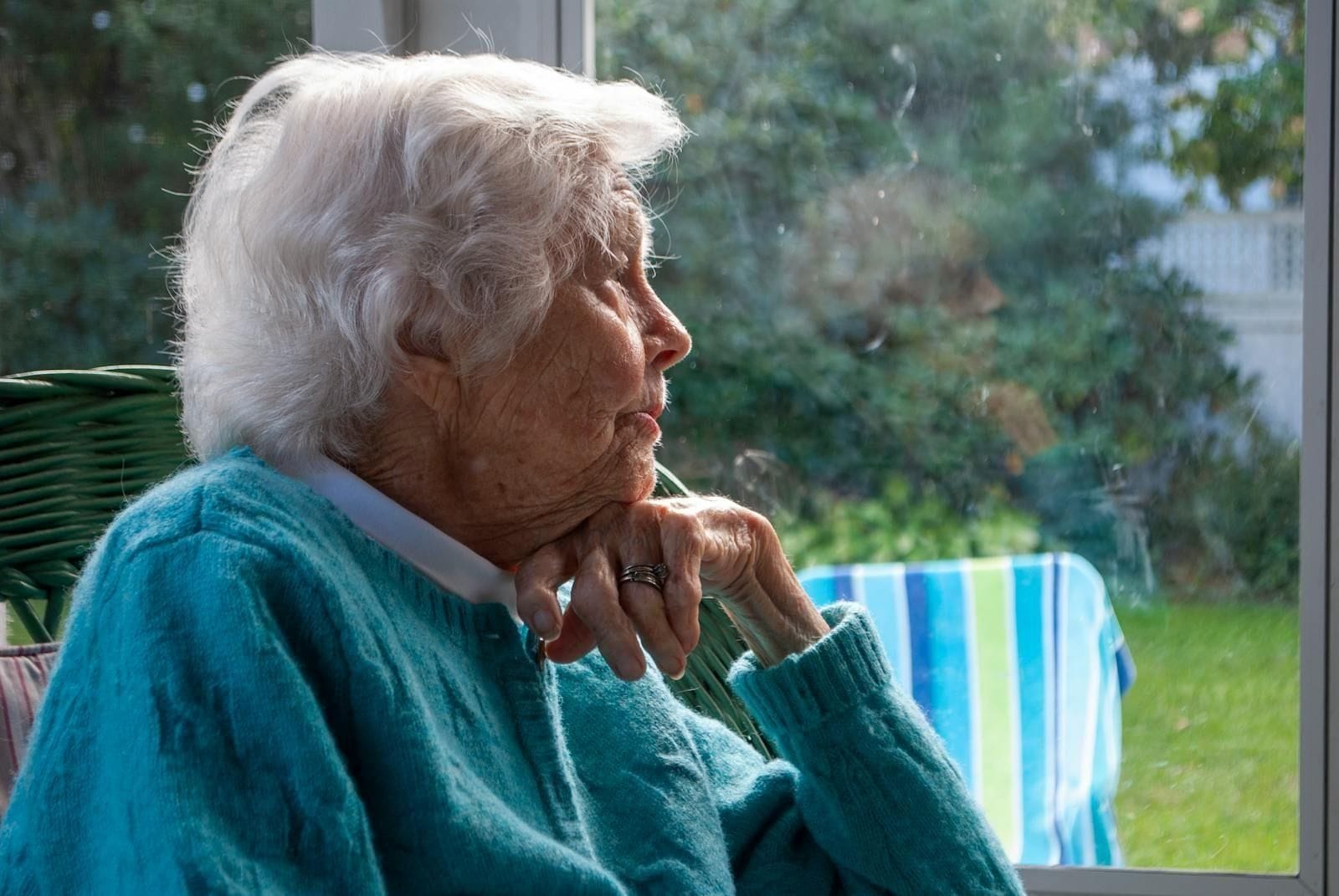
The hospital said it was a small stroke. A TIA, technically — a transient ischemic attack. The MRI showed a couple of tiny dots in the white matter, the kind of thing the radiologist explained, a little too cheerfully, was “not uncommon at your mother's age.” She walked out under her own power, slightly slower than she went in, with new prescriptions for blood pressure and cholesterol and instructions to follow up with her primary care doctor in two weeks. The discharge paperwork said nothing about her mind.
Six weeks later her daughter found her standing in the kitchen at three in the afternoon, holding a tea kettle, unsure whether she had been about to fill it or empty it. She did not look frightened. She looked patient, the way someone looks when they are waiting to see what their body will tell them next. Three months after that, she could no longer reliably manage her own checkbook. The slope was not steep — she was not gone — but the stairs had started.
This is what vascular dementia very often looks like in the months after the event that nobody quite called a turning point. It is the second most common form of dementia in older adults, behind only Alzheimer's, and according to the National Institute on Aging , its symptoms can begin gradually or suddenly, and then progress over time with possible short stretches of improvement. It is named for what causes it — damaged blood vessels — and it has a personality all its own: a stepwise descent, not the smooth slide of Alzheimer's. This guide is for the families who have started noticing those stairs.
What Vascular Dementia Actually Is
In a healthy brain, hundreds of miles of blood vessels feed every cell, every minute of every day. In vascular dementia, something has gone wrong with that delivery. Sometimes it is a large stroke that takes out a recognizable chunk of tissue all at once. Sometimes it is a cluster of smaller strokes, each so quiet that nobody noticed it happen, slowly knocking out little patches of brain. Sometimes it is the slow narrowing and stiffening of the deep, small vessels that feed the white matter — a condition called small vessel disease that starves brain regions of oxygen for years before any one symptom rises high enough to be noticed.
Researchers describe all of this under the umbrella term “vascular contributions to cognitive impairment and dementia,” or VCID. The federal alzheimers.gov resource describes a typical brain on imaging as showing evidence of prior strokes, thickened vessel walls, and thinning white matter — the connective wiring that lets one part of the brain talk to another. Cognition is not destroyed all at once. It is unplugged in pieces.
Clinicians sort vascular dementia into four broad subtypes. The first is post-stroke dementia, which is diagnosed when significant cognitive changes appear within six months of an obvious stroke. The second is subcortical ischemic vascular dementia, the slow grinding form caused by small vessel disease deep in the brain. The third is multi-infarct dementia, the older name for the staircase pattern caused by a sequence of small strokes adding up over years. The fourth, and arguably the most common, is mixed dementia, in which vascular damage runs alongside Alzheimer's pathology. Each of these has a slightly different shape, but the underlying truth is the same: blood is no longer reaching parts of the brain reliably, and the affected regions cannot do what they used to do.
Why It Doesn't Look Like Alzheimer's
The single most important thing a family can understand early is that vascular dementia does not unfold the way Alzheimer's does. Alzheimer's is a gradual erosion — a steady, slowly sloping downhill, in which a person tends to look almost the same from one month to the next and recognizably different from one year to the next. Vascular dementia, by contrast, tends to move in steps. Long plateaus, during which the person seems stable. Sudden drops, often tied to a new stroke or a fresh wave of small vessel damage. Then another plateau, possibly at the new lower level for months, until the next step down. The Alzheimer's Association notes that this stepwise pattern is one of the classic fingerprints of vascular dementia, although a more gradual, smaller- scale progression caused by chronic small vessel disease is also common and is sometimes harder to distinguish from Alzheimer's without imaging.
Memory loss is also not always the headline. In Alzheimer's, the earliest and most prominent symptom is usually the forgetting of recent events — what someone had for lunch, the name of the visitor who just left. In vascular dementia, the first thing to fall apart is often executive function: planning, organizing, sequencing, working out the right order of steps in a task. The first warning signs may be the bills that get paid twice or not at all, the meal that gets partly made and abandoned, the inability to follow a recipe that has been in the family for fifty years. Speed is the other early casualty. Things take much longer than they used to. Conversations lag. Decisions stall.
Mood comes into the picture earlier and more reliably than in Alzheimer's as well. Depression is unusually common, partly because the person is aware of what is changing and partly because the brain regions that regulate mood are themselves vulnerable to vascular injury. Apathy — a flatness that can look like depression but is not the same — is often the first symptom that family members notice without quite being able to name it. Alzheimer's Society in the UK describes a particular phenomenon called emotional incontinence — sudden episodes of laughing or crying out of proportion to the situation — as another tell of vascular damage to the parts of the brain that govern feeling.
The Early Signs Worth Watching
In the years before diagnosis, many vascular dementia stories have a similar texture. The driving gets a little worse. Familiar routes are approached with new hesitation. Names of acquaintances start slipping. A new clumsiness shows up in the kitchen, or with the grandchildren's names, or with keeping track of the day of the week. Gait can change before cognition does: a shortening of the stride, a hint of unsteadiness, more falls. Bladder control may waver earlier than the family would expect.
One of the most reliable early markers is what happens after a small vascular event. A loved one goes into the hospital for a UTI, a hernia repair, a mild stroke, and comes home looking visibly older, more confused, slower to bounce back than makes sense for the severity of the problem. Sometimes the new baseline is permanent. Sometimes the person partially recovers over weeks and stabilizes at a level a notch lower than where they began. Each event is its own small step down the staircase.
The other warning sign is the steady rumble of vascular risk in the background: long-standing high blood pressure, untreated high cholesterol, diabetes, atrial fibrillation, a history of smoking, prior heart attacks or strokes. These are the conditions that damage blood vessels everywhere, and the brain's vessels are among the most demanding customers of all. The earlier the family notices the pattern and gets the underlying conditions treated, the more likely the staircase has fewer steps in it.
The Seven Stages, Used as a Map
Unlike Alzheimer's, vascular dementia does not have a single, universally agreed-upon staging system. The medical literature acknowledges this openly — the disease is too heterogeneous, the trajectories too variable, the subtypes too distinct from each other to fit one tidy ladder. What families and clinicians often borrow instead is the seven-stage Global Deterioration Scale developed for Alzheimer's, applied loosely as a way to describe where someone is on the road. Use it the same way you would use a map of a mountain: it tells you which features lie ahead, not the exact weather you will hit when you get there.
Stage 1: No noticeable impairment. The vascular damage is present, perhaps for years, but no cognitive symptoms have yet surfaced. Brain imaging may show silent infarcts or white matter changes long before anyone notices anything is wrong. This is the stage at which controlling vascular risk factors does the most good, and the stage at which almost no one acts, because there is nothing yet to react to.
Stage 2: Very mild cognitive decline. Subtle changes show up. Words come a little more slowly. Names go missing. Concentration drifts in the middle of long tasks. Most families attribute this to ordinary aging or to stress. They may be right. They may not. This is also the stage during which the first small, silent strokes often happen — strokes the person never knew they had, visible only on imaging done later for another reason.
Stage 3: Mild cognitive decline. Difficulties with complex thinking begin to show. Multi-step tasks falter. Finances get confusing. Co-workers notice slower performance at work. New routes feel disorienting. In this stage, many people receive an initial diagnosis of mild cognitive impairment, sometimes labeled vascular cognitive impairment in the literature — a sort of vestibule to dementia in which not all activities of daily life have yet been affected, but the cognitive change is real enough to be measured on testing.
Stage 4: Mild dementia. The changes are no longer easy to wave off. The person needs help with bills, scheduling, driving in unfamiliar places, and following the threads of long conversations. Mood symptoms often deepen — depression, irritability, a flatness of affect. A fresh stroke at this point can collapse weeks of stability into a sudden, dramatic step down. Many people are formally diagnosed in this stage. This is also when families begin the conversations they would have rather had years earlier: power of attorney, healthcare proxy, what kind of care the person wants if they can no longer make decisions themselves.

Stage 5: Moderate dementia. The person can no longer safely live alone. They forget recent events reliably, lose track of the day or the season, sometimes forget the names of grandchildren or close friends, and need help with at least some activities of daily living. Bathing, dressing, and meal preparation become difficult or unsafe without supervision. The risk of falls climbs, especially if small vessel disease is affecting gait and balance. This is the stage at which most families either bring in regular home care or start thinking seriously about it. The UCSF Health caregiver guidance emphasizes the value, at this stage, of environmental consistency, posted cues, removed clutter, and the kind of patient, flexible support that responds to today rather than to yesterday.
Stage 6: Severe cognitive decline. Activities of daily living require full assistance. Continence is often lost. Speech may narrow to short phrases. The person may not recognize a spouse of fifty years some hours and recognize them perfectly the next afternoon. Sleep grows fragmented; daytime drowsiness deepens. The motor symptoms that small vessel disease creates — shuffling gait, slow movement, unsteadiness — often progress to the point that walking requires support and falls become a constant worry. Behavioral symptoms, including agitation and resistance to care, show up more often, especially during transitions and at the end of the day.
Stage 7: Late-stage vascular dementia. The person is largely bed-bound. Communication may be reduced to single words, facial expressions, or only the squeeze of a hand. Swallowing becomes impaired, raising the risk of aspiration pneumonia. Pneumonia and cardiovascular events — not the dementia itself — are the most common causes of death in vascular dementia. This is the stage at which hospice care often becomes the right answer, and the families who arranged for it earlier tend to describe the final weeks as quieter and less frantic than they expected.
The Mixed Dementia Reality
One of the harder things to absorb about vascular dementia is that it very rarely shows up alone. Autopsy studies repeatedly show that the brains of older adults with dementia almost always contain a mix of pathologies: Alzheimer's plaques and tangles, vascular injury, sometimes Lewy bodies as well. The pure-form vascular dementia case — clean staircase, no other disease in the brain — is the exception, not the rule. In most cases the underlying picture is mixed dementia, in which vascular and Alzheimer's damage have been compounding each other for years.
For families, this matters in a practical way. It explains why the staircase does not always stay clean: the steady erosion of Alzheimer's smoothes the steps of the vascular descent, until the trajectory looks like a gentle, continuous slope with the occasional sharper drop. It also explains why doctors sometimes prescribe the standard Alzheimer's medications — donepezil, rivastigmine, memantine — to people with vascular or mixed dementia. The evidence base is more modest than in pure Alzheimer's, but many patients with mixed disease appear to benefit, at least for a time. None of these medications stop the underlying process. They may smooth a little of the slide.
Life Expectancy, Honestly
The number families ask about, and the one they often dread, is how much time. The honest answer is that the range is wide and depends heavily on what the person's overall cardiovascular health looks like and how aggressively the underlying risk factors are treated. A frequently cited NIH-supported study found average survival after diagnosis of about four and a half years for women and just under four years for men, compared with roughly five and four years respectively for all dementias combined. Cleveland Clinic clinicians point out that the lower life expectancy is in part because people with vascular dementia are more likely to die of the cardiovascular disease that caused the dementia in the first place — a stroke or a heart attack — than of the dementia itself.
Two practical implications follow. First, controlling vascular risk factors does not just protect the brain; it can extend life. Tight blood pressure control, treatment of diabetes and high cholesterol, smoking cessation, anticoagulation for atrial fibrillation, and a Mediterranean-style diet are the levers that have the most evidence. Second, advance care planning matters more for vascular dementia than for almost any other dementia, because the next stroke could come tomorrow. Families who have settled questions of healthcare proxy, code status, and care preferences while the person can still participate in those decisions are not just easing their own future burden. They are honoring the person who is still in the room with them.
What Actually Slows It Down
There is no medication that reverses vascular dementia, and there is no drug on the market that meaningfully slows its underlying progression once it has begun. But there are several things that meaningfully reduce the chance of the next step down on the staircase, and they are mostly the same boring things a cardiologist would have advised twenty years earlier.
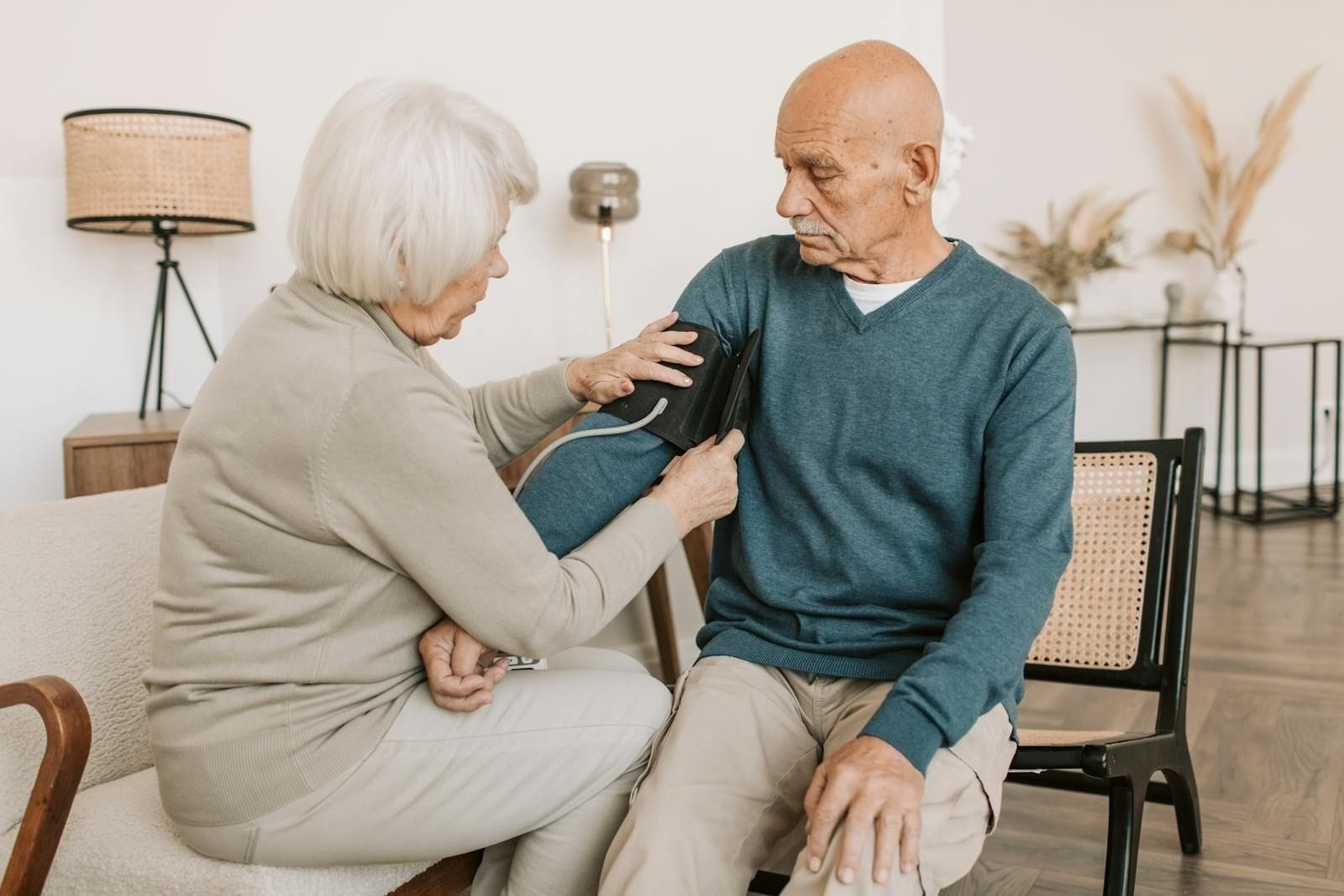
Blood pressure control, especially long-term, is the single most powerful protective lever. So is treating untreated high cholesterol. So is keeping diabetes blood sugars in a sensible range. For people with atrial fibrillation, the appropriate anticoagulant — under careful medical supervision — substantially reduces the risk of embolic strokes that drive further vascular damage. Smoking cessation, even late in life, lowers the rate of new vascular events. Regular cardiovascular exercise, even very modest amounts, is associated with slower progression in observational studies.
Beyond medication and lifestyle, social and cognitive engagement matter. The brain that is being used builds redundancy. Reading, conversation, puzzles, hobbies, music, and time with grandchildren do not undo the existing damage, but they create what researchers call cognitive reserve — additional networks of brain function that can take over when other networks fail. A person with strong cognitive reserve and identical brain imaging often does noticeably better than a person with weak reserve. This is one of the most genuinely hopeful findings in the entire field, and it is also one of the most actionable: family members, neighbors, day programs, and home caregivers who keep the person engaged are doing something measurable for the brain.
Where Home Care Fits
Most vascular dementia journeys eventually outrun what one family member can do alone. Two practical realities push families toward outside help. The first is that the stepwise descent often creates sudden, sharp increases in care need — a fresh stroke means that the person who was managing well yesterday now needs help bathing, transferring, taking medications, and walking safely to the bathroom. The second is that the long, plateau-heavy nature of vascular dementia means that primary caregivers can be on duty for many years. Burnout in this population is well documented and very real.
Home care can take many shapes. In the early and middle stages, many families benefit from a few hours a day of personal care — bathing, dressing, light meal prep, gentle redirection when things get confusing — built around the structures the person already has. This is also when the person can still actively participate in the rhythm of the day, and a caregiver who learns the person's routines and stories tends to become part of the family's extended ecosystem. For families coping with a sudden decline after a hospitalization, our hospital-to-home transition care exists specifically for the dangerous first weeks back at home — the period in which a new fall, a missed medication, or an unrecognized worsening can rapidly become a second hospitalization.
In the later stages of vascular dementia, when supervision needs to be constant and the risk of falls or wandering is high, families often turn to overnight care or live-in support, and to the specialized memory care our caregivers are trained for. Many of the techniques that work for Alzheimer's — predictable routines, gentle redirection, simplified environments, calm voices during behavioral spikes — work equally well for vascular dementia, with extra attention to fall prevention and gait support. Our families across our Monmouth County, New Jersey team and our other regions tell us repeatedly that the goal is not to do everything for the person but to do exactly what they can no longer do, so that the person retains everything they still can.
The Conversations Worth Having Early
Of all the dementias, vascular dementia is the one that most rewards early conversations and the one that most punishes putting them off. Because the next stroke could come at any time, the window for a person to participate meaningfully in their own care planning is always shorter than it looks. The right time to have the difficult conversations is in the early or mild stages, while the person can still answer questions in their own voice.
The conversations are familiar to anyone who has walked any of the other dementia roads. Who do you want making medical decisions for you if you can no longer make them yourself? How do you feel about feeding tubes, hospitalizations in the late stages, antibiotics for pneumonia, hospice care when the time comes? Where do you want to live if home becomes impossible? What music, what books, what people do you want around you? Vascular dementia adds a few of its own to this list. What level of risk are you willing to take with daily blood pressure medications, knowing that lower numbers may protect the brain but may also leave you lightheaded? How do you want us to respond if you have another stroke?
Families who have these conversations in writing, with the help of a good clinician and an elder-law attorney, almost always describe the later stages of the disease as easier to navigate. Families who put them off often describe sitting in emergency rooms making decisions they were never prepared for, on behalf of a parent who can no longer help.
One Last Thing
Vascular dementia is, in some ways, the most preventable of the major dementias. Every choice that protects the heart and blood vessels — controlling blood pressure, treating diabetes, quitting smoking, eating well, moving — also protects the brain. The medical community has been saying this for thirty years, and the message has finally begun to land: large epidemiologic studies show falling rates of dementia in populations that have improved cardiovascular health, even as Alzheimer's rates have held more or less steady. That is a real reason for hope.
Once the disease has begun, it is also more responsive to consistent care than families often expect. The brain that has lost some of its connections benefits from environments that compensate. The person who can no longer plan their own day can still flourish inside a well-planned one. The grandmother who can no longer remember what year it is can still recognize her favorite hymn and the smell of her own kitchen. The husband who can no longer manage the checkbook can still tell you, on a good afternoon, the story of the night he met your mother. The person is not erased by vascular dementia. The person is filtered through a brain whose wiring is unraveling in pieces, and on most days, the most important parts of the person are still in there, still themselves, still hoping to be treated like a whole human being.
If your family is somewhere in this story — if a stroke just turned the family upside down, if the small declines have been adding up for years, if the diagnosis has just been given and the next step on the staircase feels too unknown — our care team is here . We will listen first. The right plan for the first year of vascular dementia is almost never the plan a family pictures at the start, because the disease has more stairs in it than most families know to expect. We can walk those stairs with you.
Photographs by Matt Barnard, cottonbro studio, and Vlada Karpovich, licensed under the Pexels free-use license.