Gifts for Seniors That Don't Gather Dust
Gifts for seniors they will actually use, chosen around the real challenges of aging: stiff hands, isolation, unsteady balance, and fading memory.

Everyone who has shopped for an aging parent knows the drawer. It is where the scented candles, the third bathrobe, and the novelty mug go to sit, unopened, next to the reading glasses in the wrong strength. The gift was kind. It just did not fit the life it was given to. And with each passing year the guessing gets harder, because the person seems to need less, want less, and mention nothing at all when you ask.
There is a single test that rescues most of these decisions, and it is not about spending more. A gift for an older adult lands when it fits into the actual shape of their day and quietly makes one part of it easier, warmer, or less lonely. Shop for the day, not the drawer. What follows is a run through the gifts that pass that test, grouped by the everyday challenges of getting older, so you can start from the person in front of you and work toward the present.
How to Pick a Gift That Gets Used
Before any list, one habit is worth more than the whole thing: spend a few minutes noticing where their day snags. The jar that sits unopened on the counter. The squint at a medicine label. The hallway they cross in the dark because the switch is at the far end. The long, quiet stretch between lunch and a phone call. Each snag is a gift idea in disguise, and a present aimed at a real friction almost never ends up in the drawer.
Keep three filters in mind as you choose. Does it fit their vision, grip, and mobility as those are now, not as they were a decade ago? Is it genuinely easy to use, with large buttons, simple setup, and no fussy app to configure? And does it add to their independence rather than underline what they have lost? A gift that passes those three tends to get used until it wears out.
1-4. For Hands That Have Gotten Less Sure
Grip strength and fine dexterity fade quietly, and the tasks that suffer first are the small, daily ones: opening a jar, buttoning a shirt, tying a shoe, reading the back of a package. Gifts that give those tasks back are among the most appreciated you can buy, precisely because they restore a bit of self-reliance.
- 1. Easy-grip kitchen tools and a jar opener. Fat-handled, non-slip utensils and a mounted or lever-style jar opener turn a frustrating fight into a two-second task. Look for the ones designed for arthritic hands.
- 2. Elastic no-tie laces and a long-handled shoehorn. Two small items that end the daily struggle of bending down to tie shoes, and that reduce the risky forward lean that comes with it.
- 3. A lighted magnifier or large-button essentials. A handheld magnifier with its own LED light makes pill bottles, mail, and crossword clues legible again. Large-button phones and remotes belong in the same category.
- 4. A grabber-reacher tool. Cheap, unglamorous, and used every single day for the dropped remote, the high shelf, and the sock on the floor, without the bending that invites a fall.
These are the kinds of small adaptations a caregiver reaches for constantly. Helping with dressing, grooming, and the fiddly parts of the morning is a core piece of personal care, and the right tool often bridges the gap between needing help and staying independent a while longer.
5-7. For Staying Steady on Their Feet
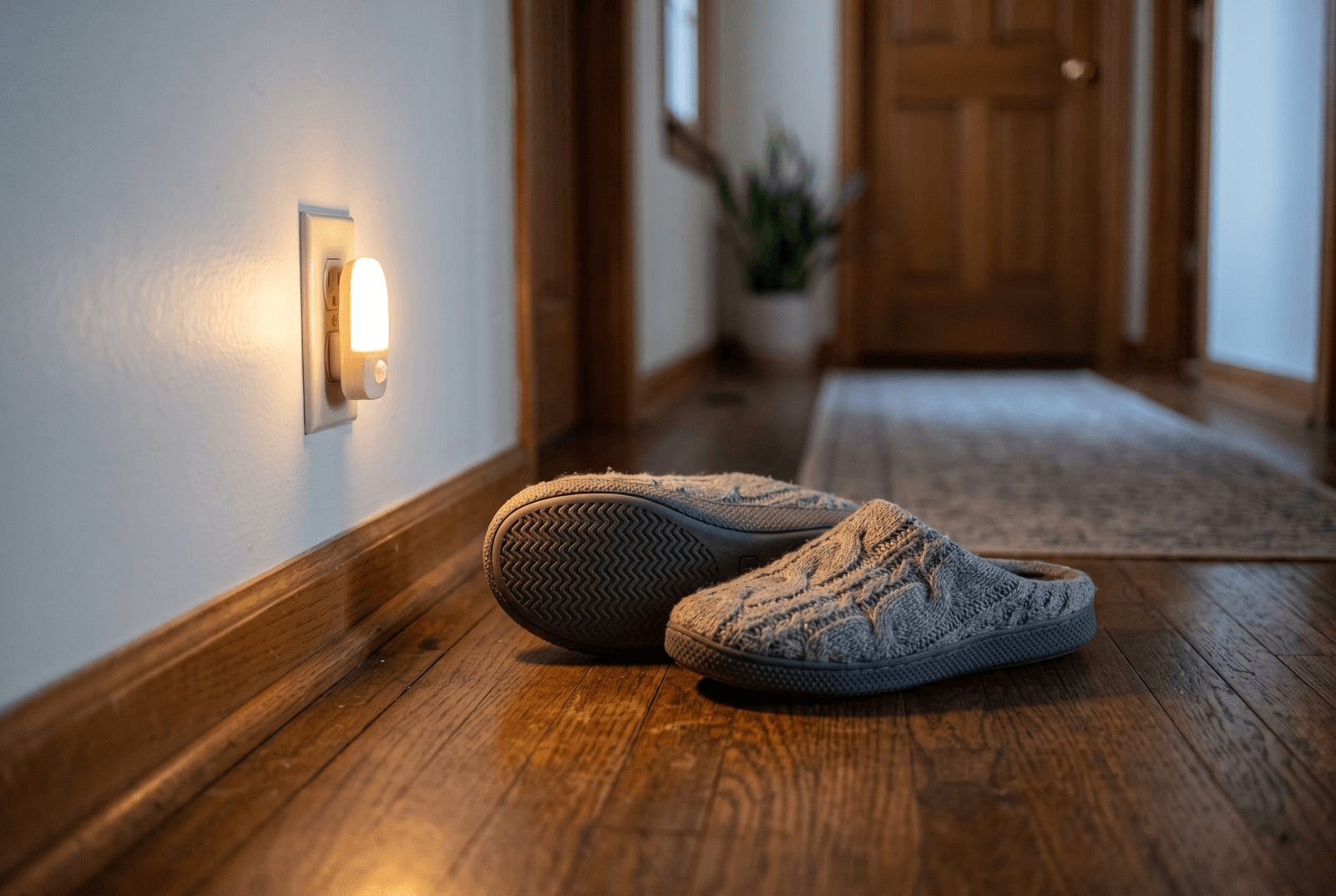
Falls are the safety story that sits under everything else in later life; they are the leading cause of injury among older adults, and many of them happen on the ordinary trip to the bathroom at night. Several of the most useful gifts you can give are quietly aimed at preventing exactly that, without ever announcing themselves as medical.
- 5. Non-slip slippers or house shoes. Sturdy, grippy soles and a back that stays on the heel, not the loose scuffs that slide on a kitchen floor. A small gift that removes a daily hazard.
- 6. Motion-sensor nightlights. A set that switches on the moment feet hit the floor lights the path to the bathroom without hunting for a switch. One of the highest-value few-dollar gifts on this list.
- 7. A medical alert device. A pendant or wristband that calls for help at the press of a button, some with automatic fall detection, buys real peace of mind for a parent who lives alone, and for everyone who worries about them.
Gifts help at the margins, but the surest protection is a home set up to be walked through safely and a steady hand for the moments that have grown risky. Support with walking, transfers, and moving safely around the house is the heart of mobility care, and it is what turns a safer home into a safer daily life.
8-11. For the Quiet of a House Alone
For an older adult who lives on their own, the hardest part of the day is often not a task at all. It is the silence. Isolation is common in later life and weighs on both mood and health, which is why gifts that carry connection into the house tend to be treasured far beyond their price. The gift ideas here are worth pairing with the one thing that makes them work, which is a family that keeps using them.
- 8. A digital photo frame the family can send to. Choose one that relatives can email or text new photos to from anywhere. It turns a shelf into a living window on the grandkids, refreshed without the parent touching a thing.
- 9. A simple video-call device. A tablet or dedicated caller built for older users, with a big screen and one-tap answering, so a Sunday call becomes a face instead of a voice. Set it up fully before you wrap it.
- 10. A lifelike companion pet. The robotic cats and dogs made for older adults purr, respond to touch, and offer real comfort, especially for someone who can no longer care for a live animal.
- 11. A subscription that arrives each month. Flowers, a book club, a snack box, a magazine in large print, anything that brings a small, recurring delight and a reason to look forward to the mail.
If loneliness is the real problem behind the gift, it is worth reading up on what actually helps; our guide to why seniors feel lonely and what genuinely eases it goes deeper than any single present can.
12-14. For a Mind That Wants Occupation
Staying mentally engaged is one of the quiet pleasures of a good later life, and the right gift can hand someone hours of it. The trick is to meet the eyesight and dexterity they have now, so the gift invites them in rather than reminding them of a limit.
- 12. Large-print books or an e-reader with adjustable text. A device that shrinks a heavy hardcover to a light tablet and lets the reader dial the font up to comfort reopens a lifelong pleasure for tired eyes.
- 13. Puzzles and games sized for older eyes and hands. Jigsaw puzzles with larger pieces, big-print playing cards, and classic games in easy-grip versions make an afternoon pass and, better still, invite company to the table.
- 14. A kit to restart an old hobby. Watercolor supplies, a beginner's knitting set, birdwatching binoculars and a field guide, a harmonica. Aim at something they used to love and quietly stopped doing.
15. For Memory That Needs a Gentler Hold
When memory has begun to slip, the best gifts lean on the senses and on things that are deeply familiar, because those often stay reachable long after recent memory has frayed. A weighted blanket can be calming for someone who gets restless or anxious. A "twiddle" muff or a fidget item gives busy hands something soothing to do. And the standout in this category earns its own number.
- 15. A reminiscence photo book or memory box. Large, clearly-labeled photographs of people, places, and the years that mattered most give a person with dementia a way back into their own story, and give visitors an easy, warm way to connect. Keep the labels simple and the images from long ago, which tend to be the most vivid.
Gifts like these are also everyday tools in dementia and Alzheimer's care, where a familiar photo or a calming object can steady a hard moment better than words. If you are choosing for someone in the middle stages, simpler and more familiar almost always beats new and clever.
The Gift You Can't Wrap

Ask older adults what they most want, and the answer, over and over, is not on any shelf. It is time, and the company of the people they love. That is the one gift no store stocks, and the one that matters most. It can be a standing weekly visit that both of you can count on, an outing to a place they used to go, an afternoon spent working through the errands and paperwork that have quietly piled up, or simply sitting together with the television off.
For a lot of families, the honest problem is that they cannot be there as often as they would like, whether they live a plane ride away or are stretched thin by their own days. That gap is exactly what companion care is built to fill: a familiar person who comes by to share a meal, play a game of cards, run to the store, and keep the house from feeling empty. Across our Monmouth County, New Jersey service area and beyond, some of the most valued gifts we see given are not objects at all; they are hours of steady, friendly company arranged for a parent who was spending too many of them alone.
Still Stuck? Ask Three Questions
When the list has not settled it, narrow the whole thing down to three quick questions and let the answers point you at the gift.
- Where does their day snag? Name one task that has gotten harder, and buy the tool that eases it. That single observation solves most gift problems on its own.
- What do they have too little of, stuff or company? If the house is already full, skip the object and give an experience, a consumable, or your time.
- Can you just ask? A warm, direct question, framed as wanting to give something they will truly enjoy, beats guessing nearly every time, and the asking is a small gift in itself.
Whatever you land on, the through-line is the same. The gifts that get used, and the ones that are remembered, are the ones that fit the life and say, in whatever small way, that you were paying attention. That is a present worth giving at any age.
This article is for general education and is not medical advice. For questions about a specific health condition, mobility limitation, or safety concern, talk with a doctor or a qualified care professional who knows the person's situation.
Sources: National Council on Aging - Best Gifts for Seniors; National Institute on Aging - Loneliness and Social Isolation; CDC - Older Adult Falls Data.
Frequently Asked Questions
What do seniors want the most as a gift?
Ask older adults directly and the answer is remarkably consistent: they want time and connection more than any object. In practice that means a visit they can count on, a phone or video call that actually happens on a schedule, a shared meal, or help with a task that has quietly become a struggle. This is not a poetic dodge around buying a real present. Loneliness and social isolation are common in later life and carry genuine health consequences, so a gift that brings company or reconnects a person to family is doing more good than its price suggests. If you do want something to hand over, pair it with presence: a digital photo frame is a lovely object, but it means far more when the family keeps sending photos to it every week.
What are good gifts for seniors who have everything?
When someone already owns everything they need, stop shopping for things and start shopping for ease, experiences, and connection. Consumable and experiential gifts sidestep the clutter problem entirely: a favorite bakery subscription, tickets to a concert or a ballgame you attend together, a prepaid ride service so getting out is no longer a barrier, or a session with a photographer to capture the family. Practical upgrades to items they already use also land well, because they replace something worn with something better without adding to the pile: a nicer reading lamp, a more comfortable chair cushion, warmer non-slip slippers. And the gift of your labor is always welcome, whether that is a standing afternoon of help with errands, the yard, or the paperwork that has piled up.
What is a good gift for an elderly person with limited mobility?
Aim for gifts that make the world come to them or make movement safer and easier. Things that reduce reaching and bending help every day: a grabber-reacher tool, a long-handled shoehorn, elastic no-tie shoelaces, and easy-grip jar openers and utensils. Comfort where they spend the most time matters too, such as a supportive seat cushion, a warm lap blanket, or a bed rail that makes getting up safer. For the world coming to them, consider a large-print book subscription, a streaming service with an easy remote, or a digital photo frame. If mobility is declining, the most useful gift can be arranging a professional assessment of the home for trip hazards and a plan for safe transfers, which prevents the falls that so often follow reduced strength and balance.
Are gift cards or cash a good gift for older adults?
They can be, as long as they are chosen with the person in mind rather than as a default. A gift card to a specific store or restaurant they love, or to a grocery or pharmacy they use, is practical and lets them pick exactly what they want, which matters more when getting out to shop is harder. General-purpose cash or a prepaid card offers the most flexibility but can feel impersonal, so it lands better paired with a note or an experience. Two cautions worth keeping in mind: gift cards are a common vehicle for scams that target older adults, so it is worth a gentle reminder that no legitimate business or agency ever asks to be paid in gift cards, and cards that expire or charge inactivity fees are best avoided in favor of ones that hold their value.
What do you get an elderly person who is hard to buy for?
Start from their day rather than a store catalog. Watch for the small friction points, the jar they cannot open, the fine print they squint at, the shoes they struggle to tie, the evenings that feel long and quiet, and let the friction point you to the gift. Sentimental and personalized gifts also work when a person seems to need nothing, because they cannot be bought generically: a printed photo book of the family, a recorded interview of their life story, a recipe collection in your handwriting. And when you are truly stuck, ask. A direct, warm question, framed as wanting to give something they will actually enjoy, almost always beats guessing, and it turns the gift into a small conversation of its own.