How to Spot — and Recover From — Caregiver Burnout: A Family Guide
What caregiver burnout actually looks like in a family, the signs that creep up slowly, and the small, practical things that help more than willpower does.

The first sign is usually not a sign. It is a Tuesday afternoon when you realize you have not laughed at anything in three weeks. It is the moment you snap at the pharmacist for something that is not her fault. It is finding your own toothbrush in the medicine cabinet two days after you thought you had used it that morning. None of these things look like a diagnosis. They look like the texture of an ordinary, slightly worn-out life. Which is exactly why caregiver burnout is so good at hiding.
Most families do not arrive at burnout through a single dramatic event. They arrive at it the way a person arrives at the bottom of a long staircase, one step at a time, without ever consciously deciding to walk down. The mother who fell in March needed a little extra help. The hip healed wrong and the help got bigger. The dementia diagnosis came on a Thursday and the help started bleeding into evenings. The husband's COPD flared and the doctor said somebody needed to be home to listen for the wheezing. Each step felt obvious. None of the steps, on their own, felt like a decision. Yet here you are at the bottom of the stairs, and the woman at the top — the one you were before all this — is far enough away that you can barely see her.
The American statistic that ought to make every family pause is this: according to the Cleveland Clinic's overview of the condition, more than sixty percent of family caregivers experience symptoms of burnout . Not stress, not fatigue, not a bad week — burnout, the clinical state of physical, emotional, and mental exhaustion that develops when a person gives more than they can sustainably give for longer than they can sustainably give it. And those caregivers, across the country, are not rare specialists. The most recent AARP Valuing the Invaluable report estimates that fifty-nine million Americans are caring for an adult family member, neighbor, or friend, providing 49.5 billion hours of work per year — labor that would be worth more than a trillion dollars annually if anyone were paying for it. They are the largest unpaid workforce in the country. And the majority of them are burned out, or on their way to it, and most of them do not know there is a name for what they are feeling.
What Burnout Actually Is — and What It Is Not
Caregiver burnout is not the normal tiredness of a hard week. It is a particular kind of exhaustion that develops when caregiving demands — emotional, physical, financial, logistical — outrun the caregiver's capacity to replenish themselves. The condition has been studied for decades. The National Institutes of Health describes it as a state in which the cumulative stress of caring for someone else begins to produce measurable changes in the caregiver — in the immune system, in the cardiovascular system, in sleep architecture, in mood. Research summarized by NIH found that caregivers spend more days sick with infectious diseases, mount a weaker response to flu vaccines, and heal more slowly from wounds than non-caregivers of the same age. They are also more likely to develop heart disease, diabetes, hypertension, depression, and anxiety. The body keeps a ledger, and the body is paying interest.
Two distinctions help families recognize the condition for what it is. First, burnout is different from stress. A stressed person is still engaged, still pursuing solutions, still feeling things. A burned-out person has often gone numb. They describe themselves as flat, detached, going through the motions. The emotional spark that made the caregiving feel meaningful in the first place — the love, the connection, the sense of doing something important — starts to fade, and what is left is the logistics. They are still showing up. They are not feeling much when they do.
Second, burnout is different from caregiver depression, though the two overlap heavily and one can become the other. Burnout is more situational — it is what the role is doing to you. Depression is what the role plus your own biology and history are doing to you together. The Alzheimer's Association notes that caregivers of people with dementia are particularly vulnerable to depression, and that the depression can appear at any point along the disease — at diagnosis, mid-progression, or in the long silent stretch when cognitive abilities have already faded. The practical implication is that a caregiver who has crossed from burnout into depression needs more than a weekend off. They need a doctor.
The Quiet Signs That Show Up First
When families finally come to us, they almost never describe themselves as burned out. They describe the symptoms one at a time, as though each is a separate problem that happens to be unfortunate. The Mayo Clinic's list of caregiver stress signs reads like a transcript of these conversations: feeling burdened, feeling tired often, sleeping too much or too little, gaining or losing weight, becoming easily irked or angry, losing interest in activities you used to enjoy, having frequent headaches or other physical complaints, leaning on alcohol or sedatives more than you used to, missing your own medical appointments. None of these by themselves are emergencies. All of them together, sustained for months, are a diagnosis with a name.
The earliest signs are often the ones the caregiver dismisses fastest. Sleep is usually first. A caregiver who used to sleep through the night starts waking up at two in the morning to check on a parent and then cannot fall back asleep. They begin reading the body's small alarms — a stomach that does not settle, a heart rate that runs higher than it should at rest, a faint headache that never quite goes away — as background noise rather than as data. Their appetite changes, often toward eating in a hurry on the kitchen counter rather than sitting down to a meal. They stop calling friends back, not because they do not want to talk, but because returning a phone call requires fifteen minutes of psychic preparation and they do not have it.
Then the mood pieces start to drift in. The irritation gets a little faster on the trigger. They snap at the person they are caring for over something small and feel terrible about it for the rest of the day — and then snap again the next morning. Tasks that used to feel like care start to feel like obligations. The spouse or adult child who once arrived at the bedside with patience now arrives with a clipboard and a list. They describe the role to themselves in different words than they did at the beginning. I'm taking care of my mother becomes I'm managing my mother. That language shift is rarely conscious. It is almost always meaningful.
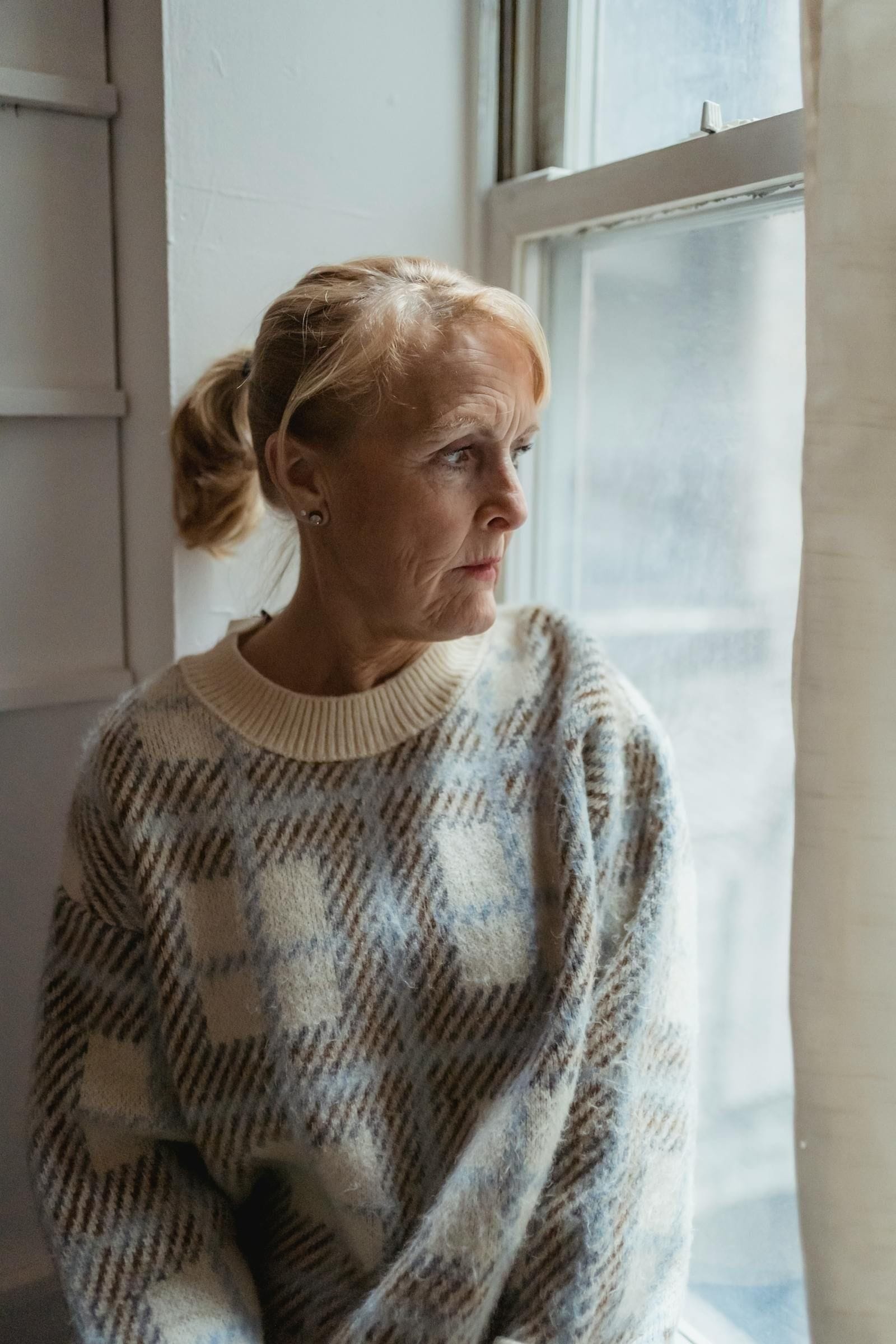
Eventually the caregiver starts to lose interest in the things that used to keep them grounded outside the role. Hobbies that survived raising children, marriage, the working years, and grief now fall away. They stop going to the book club. They stop walking the dog the long way. They stop watching the show. The world shrinks down to the house, the medications, the chart, the next appointment. By the time someone notices, the caregiver themselves is the one who needs care.
Why It Hits Family Caregivers Harder
Professional caregivers — the nurses, aides, and home-care staff who do this work for a living — also experience burnout, and the research on their exhaustion fills its own bookshelf. But family caregivers face a particular set of pressures that compound the ordinary stress of the work, and those pressures are worth naming because they explain why burnout in this population is so unusually common.
The first pressure is that the role is unchosen. A professional caregiver applied for the job, was trained for the job, can call out sick, can change agencies, can leave the field. A family caregiver walked into the job because someone they love got sick. They cannot call out. They cannot transfer. They cannot, in their own minds, ethically resign. The role arrived, and it arrived for keeps. The Alzheimer's Association's most recent Facts and Figures report notes that the majority of dementia caregivers live with the person they care for, which means there is no commute, no clock-out, no return to a separate house at the end of a shift. The job is the living room.
The second pressure is that the role is emotionally entangled. A nurse caring for a patient with advancing dementia can be tender, attentive, and grieved by the trajectory of the disease, but she did not raise that patient. She did not, twenty years ago, sit in his kitchen while he taught her to drive. The family caregiver carries every interaction on top of an entire history. Every refusal of food is the woman who fed her. Every angry outburst is the man who patiently taught her long division. Every blank stare is the parent who used to know her better than anyone else on earth. The grief is not a future grief; it is happening right now, in real time, while she is also handing over the medications and changing the sheets.
The third pressure is the practical one, and it is heavier than people outside the role realize. The AARP report puts the average family caregiver at twenty-seven hours of caregiving per week, with fifty-seven percent now described as “high-intensity” caregivers — people performing complex medical tasks once handled by professionals. They are managing medication schedules that would make a hospital pharmacist nervous. They are interpreting symptoms, coordinating specialists, navigating insurance, calling pharmacies, fighting denials, scheduling MRIs, transcribing what the cardiologist said for the neurologist, and explaining to the orthopedist that the hip is now connected to a dementia diagnosis that affects how the recovery is going to look. They are doing all of this in the cracks of their own working lives, often while also raising children. About a quarter of dementia caregivers, the Alzheimer's Association notes, are sandwich-generation caregivers caring for an aging parent and a child at the same time.
The fourth pressure is invisibility. The work of family caregiving rarely makes it onto a resume, a paycheck, or a Sunday-dinner conversation with people outside the immediate orbit. Friends ask how Mom is. They very rarely ask how the daughter is. The caregiver feels — accurately — that the labor of the role is happening behind a curtain that nobody is opening, and that if they themselves do not open the curtain, the work will continue to be unseen until something breaks. Sometimes the thing that breaks is the parent. More often, the thing that breaks is the caregiver.
The Slow Slide: How Burnout Builds in Stages
Caregiver burnout does not arrive as a single moment. It builds in rough phases, and recognizing the phase you are in is often the difference between a hard month and an entire year you do not get back.
In the early stage, the caregiver is still energized. The role is new and the love is fresh and the adrenaline is doing real work. They are reading articles. They are taking notes at appointments. They are proud of how well they are managing. Outside friends comment on how capable they look. The caregiver themselves believes — and believes for good reason — that they are handling it.
In the middle stage, the energy starts to thin. Sleep becomes irregular. The caregiver begins skipping their own medical appointments because they cannot find a sitter for a parent who cannot be left alone. They start drinking the second cup of coffee in the afternoon because the first one no longer carries them. They stop being able to remember the last time they did something for themselves. Friends notice they look tired. The caregiver notices, too, but tells themselves it is temporary. When the next appointment is over. When the new medication kicks in. When she finally sleeps through the night. Then I'll rest.
In the later stage, the body starts to talk in louder ways. The caregiver gets sick more often and stays sick longer. They develop a headache that does not respond to anything. Their blood pressure creeps. They eat strangely. They cry at small things and feel nothing at large things. They begin to fantasize about getting hit by a reasonably soft car. The fantasy is not about wanting to die; it is about wanting an excuse to lie down for a week with permission. It is the form a depleted brain finds for the request please someone make me stop.
In the final stage, the caregiver becomes a patient. They are hospitalized for something stress-driven — an arrhythmia, a panic episode, a fall of their own, a hypertensive crisis. The family meeting that should have happened a year ago happens now, in a hospital corridor, with everyone agreeing it is time to bring in help. The help, brought in at this point, works. It would have worked better six months earlier. It would have worked best a year ago. The lesson is not that the help is wrong. The lesson is that the help came in at the wrong end of the staircase.
What Actually Helps
The advice given to burned-out caregivers tends to fall into two buckets, and only one of them is useful. The unhelpful bucket contains all the small-self-care prescriptions — take a bath, light a candle, journal your feelings, try yoga. None of these are wrong. None of them touch the actual problem. The actual problem is that the caregiver is doing the work of three people, and no candle can carry that load.
The useful bucket starts with one principle: the only sustainable way out of burnout is fewer hours. Not better hours. Not more-mindful hours. Fewer. Every other intervention is downstream of that. A caregiver who finds a way to subtract eight hours a week from their direct caregiving load and replace them with rest, sleep, exercise, social contact, or simply silence is a caregiver who can recover. A caregiver who keeps the same hours and tries to push better self-care into the cracks is, by definition, taking on more work — and more work is the disease, not the cure.
The National Institute on Aging's guidance for caregivers hammers this point in plainer language. The agency's top recommendation is not to journal. It is to identify your warning signs early, ask for help, and accept that you cannot do this alone. Asking for help is, in the NIA's framing, not a luxury but a clinical intervention. Caregivers who ask early have measurably better health outcomes. Caregivers who do not ask until they are in crisis have measurably worse ones.
Asking is the hardest part. Family caregivers are often the type of person who is structurally bad at asking. They are usually the eldest daughter, the only spouse, the one who has always been the dependable one in the room. Asking feels, to them, like admitting they cannot do something they should be able to do. The reframing that helps most is the one the home-care world has been quietly using for thirty years: you are not asking for yourself. You are asking on behalf of the person you are caring for. A burned-out caregiver cannot deliver the same quality of care that a rested one can. Bringing in help is not a personal indulgence; it is a clinical improvement to the patient's situation.
The second principle is regular, scheduled relief — what the caregiving world calls respite. Professional in-home respite care is built for exactly this kind of recurring, dependable relief. A caregiver who takes a weekend off twice a year is a caregiver who has been told to take vacations. A caregiver who has eight hours of relief on a recurring weekly schedule is a caregiver who has been given a sustainable system. Research summarized by the Alzheimer's Association's caregiver-health resources, and by hospice-program studies, shows that consistent respite use lowers stress hormones, reduces symptoms of depression and anxiety, and protects long-term physical health . The dose matters. Occasional respite is better than none. Scheduled, recurring respite is meaningfully better than occasional. Respite that arrives only at the point of caregiver collapse is the least effective version of the medicine, because the caregiver no longer has anything left to recover into.
The third principle is medical. A caregiver who has been in the middle or later stages of burnout for more than a few months should see their own doctor. Not the parent's doctor — their own. The visit should include a frank conversation about caregiver stress, sleep, mood, and any new physical symptoms. Depression in caregivers is highly treatable and often goes treated only after the precipitating crisis has already happened. Getting ahead of it is one of the kinder things a caregiver can do for themselves and for the person depending on them.
Dementia Caregiving: A Sharper Version of the Problem
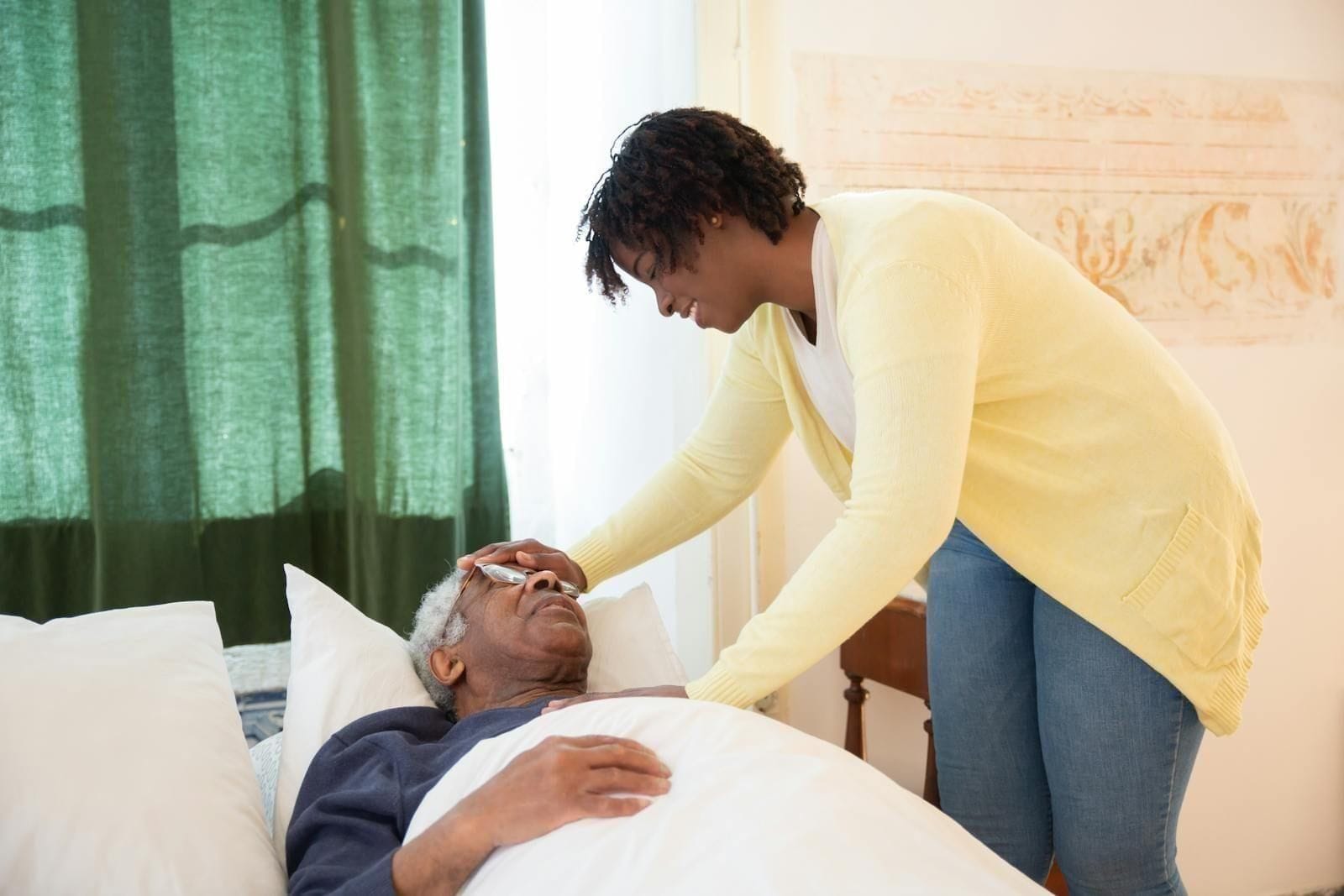
Families caring for a loved one with Alzheimer's or another dementia experience all of the above more intensely. The research is consistent and stark. The Alzheimer's Association's 2024 Facts and Figures report found that fifty-nine percent of dementia caregivers report high to very high emotional stress and thirty-eight percent report high to very high physical stress. Seventy-four percent of dementia caregivers say they are somewhat to very concerned about maintaining their own health. NIH research has found that caregivers for people with dementia carry particularly elevated levels of stress hormones — a biological footprint that does not lie about what the work is doing to the body.
The reasons are not mysterious. Dementia caregivers are managing not just a body but a mind that is changing in directions that nobody, the caregiver included, can predict. They are absorbing agitation, sundowning, wandering, repetitive questions, paranoid moments, and the slow erasure of recognition. Many of them are also grieving the living. The wife sitting across from her husband at breakfast is, in some real sense, attending the funeral of the man she married while also cooking him eggs. That is not a metaphor for stress. That is the daily emotional weather of the role.
A 2025 analysis by the Alzheimer's Association found that dementia caregivers themselves are now significantly more likely than the general population to have modifiable risk factors for dementia — smoking, hypertension, poor sleep, diabetes, obesity. Caregivers, in other words, are quietly inheriting the disease they are managing. That finding alone should be enough to retire any lingering idea that pushing through burnout is a noble strategy. The cost is real, and the cost lands on the next generation if nothing changes.
For dementia families specifically, the protective factor that shows up most consistently in the research is steady, structured support built around the disease — both for the patient and for the caregiver. That means understanding the trajectory, anticipating the hard transitions before they arrive, and accepting outside help earlier rather than later. Our Alzheimer's and dementia care at Always Responsive Home Care is built around exactly this principle: caregivers trained in the specific behaviors of the disease, scheduled consistency so the patient sees the same faces, and a structure that gives the spouse or adult child the recurring breaks research says they need.
Where Professional Home Care Fits
Home care is one of the most direct answers to burnout that exists, and most families try every other approach first. They try splitting the work among siblings, which works for a while and fails the moment one sibling lives farther away or has a child in crisis. They try hiring a part-time helper through a friend of a friend, which works for a while and fails the first time the helper does not show up. They try asking the church or the synagogue for volunteer rotations, which works for a while and fails when the volunteers, who also have lives, drift away. By the time professional home care comes into the picture, the family has usually been improvising for so long that professional help feels exotic, expensive, or like an admission of defeat.
It is none of those things. Professional, private-pay, non-medical home care is, in most cases, the simplest and most reliable way to pull the eight to twenty hours a week out of the caregiver's load that the research says they need. It works because it is predictable — the same caregiver, on the same schedule, doing the same work — and because predictability is what allows the family caregiver to actually rest during the relief hours. A respite hour spent worrying whether the helper will show up is barely a respite hour. A respite hour with someone the family has come to trust is a real one.
What this looks like in practice depends on the family and the patient. For some, it is a few hours a day of companion care — meals together, conversation, an extra set of eyes during the hours when the family caregiver needs to be elsewhere or simply asleep. For others, it is hands-on personal care for bathing, toileting, dressing, and mobility — the daily physical work that wears spouses out faster than anything else and that asks more of the caregiver's body than most spouses can afford to give long-term. For families dealing with overnight wandering or the broken sleep of dementia, overnight care can return whole nights of sleep to a caregiver who has not slept through one in a year. For households where the role has simply outgrown what one person can do, live-in care brings in a caregiver who is present around the clock so the family can step into a sustainable, oversight-and-presence role instead of a hands-on, twenty-four-seven one. When continuous coverage is needed but a single live-in caregiver is not the right fit, that same around-the-clock support can be staffed as 24-hour home care in rotating shifts.
The most common pattern we see is the smallest one: a family that starts with eight to sixteen hours a week of help and reports back, a few weeks in, that they cannot believe how much that small subtraction has changed the household. That is not a marketing line. It is a predictable downstream effect of the research. The dose-response curve on respite is steep at the beginning. A little, consistently, does a lot.

Talking to the Person You Are Caring For
One of the quietest reasons family caregivers do not bring in help is the assumption that the person being cared for will not allow it. Sometimes that assumption is correct. More often, it is an old idea the family is treating as a current one. The mother who said, twenty years ago, that she would never have a stranger in her house was a different woman with a different brain in a different decade. The husband who insists he is fine on his own is sometimes correctly assessing his abilities and sometimes preserving a self-image that the dementia or the heart failure has long since outrun. The conversation, in either case, deserves to be opened again with the person who is in the chair today, not the one who was in it years ago.
The conversation that works best in our experience is the one that is not framed as you need help. It is framed as I need help. A daughter saying I cannot keep doing what I'm doing without burning out, and I need to bring in some hours of support so that I can keep showing up for you the way I want to is a different conversation than a daughter saying Mom, you need a caregiver. The first frame is honest, vulnerable, and almost impossible to argue with. The second invites resistance almost by default. Most older parents, when the request comes from the place of the daughter's real need, accept it with far less resistance than the family expected.
The other piece of language that helps is the introduction of the caregiver as someone for both of them, not as a replacement for the family. This is the person who's going to give us both more time, framed truthfully and over a cup of tea, lands differently than This is the person who's going to take over while I'm not here. Most patients, especially in the early phases of needing help, respond to caregivers who arrive as additions to the family rather than substitutions for one.
The Recovery Curve
Caregivers who get help in time recover. That is the most important sentence in this article. Burnout is not a permanent state. The body responds to rest. The mood responds to social contact and exercise and sleep. The mind responds to having a few hours a week where the only person it has to track is itself. Caregivers who have been at this for a year describe, three months after bringing in steady help, a different version of themselves — laughing again, sleeping again, beginning to notice the rest of their own life again. It is not a transformation. It is a return.
The recovery is not instant. The first week with new help is often harder, not easier, because the caregiver has to learn to be somewhere else without monitoring. The first month is the hard month. Most caregivers spend it second-guessing the decision, calling too often, returning home too soon from errands, hovering on Sunday afternoons. By the second month, the pattern settles. By the third, the caregiver has usually rediscovered something — a friend, an errand done at a normal pace, a walk that has nothing to do with the parent, an evening on the couch that does not end in tears.
The caregivers who do best in the long run are the ones who learn to treat their own restoration as part of the patient's care plan, not as a luxury that runs parallel to it. A daughter who takes the dog for a long walk on Tuesday morning is not stealing time from her father. She is investing in the only resource that is keeping him at home. The math of caregiving, sustained over years, only works if that piece of the math is honored.
If You Recognize Yourself in This
If you have read this far and quietly recognized your own week in several of these paragraphs, the most useful thing you can do is the smallest thing you have not yet allowed yourself to do.
Tell one person, in plain language, what your week actually looks like. Not the summary you give at family dinners. The real version — the sleep, the meals you have skipped, the medications you have argued about, the moment last Thursday when you sat in the car in the pharmacy parking lot and cried for ten minutes before going in. The person you tell can be a friend, a sibling, a clergyperson, a therapist, your own physician, or the intake person at a home-care agency. The point is not who hears it. The point is that hearing it said out loud is often the moment the staircase becomes visible again, and you realize you have agency over the next step.
If the next step you can imagine is a few hours of professional help a week, that is a real and meaningful next step, and it does not need to be the final answer. Families we serve across Bergen County , Monmouth County , and beyond often begin with the smallest possible amount of help they can imagine accepting — eight or twelve hours a week — and discover within a month that the relief is large enough that they wish they had started a year earlier. Our founder, Teresa Sajkowski, RN, came to this work after more than a decade of geriatric and hospice nursing, and the company she built is designed specifically around the long arc of the family caregiver, not around any single crisis moment.
When you are ready to talk it through — our care team is here . There is no version of caregiver burnout that has to be carried alone, and the families who recover from it almost always describe the same turning point: the moment they stopped trying to do it all and let one other steady person into the house. That is the part we know how to do.
Photographs by cottonbro studio, Teona Swift, and Kampus Production, licensed under the Pexels free-use license.