Strength Training for Seniors, No Matter Where You Start
Strength training for seniors, from chair exercises to light weights: beginner moves by ability, a simple two-day plan, and how to start safely.
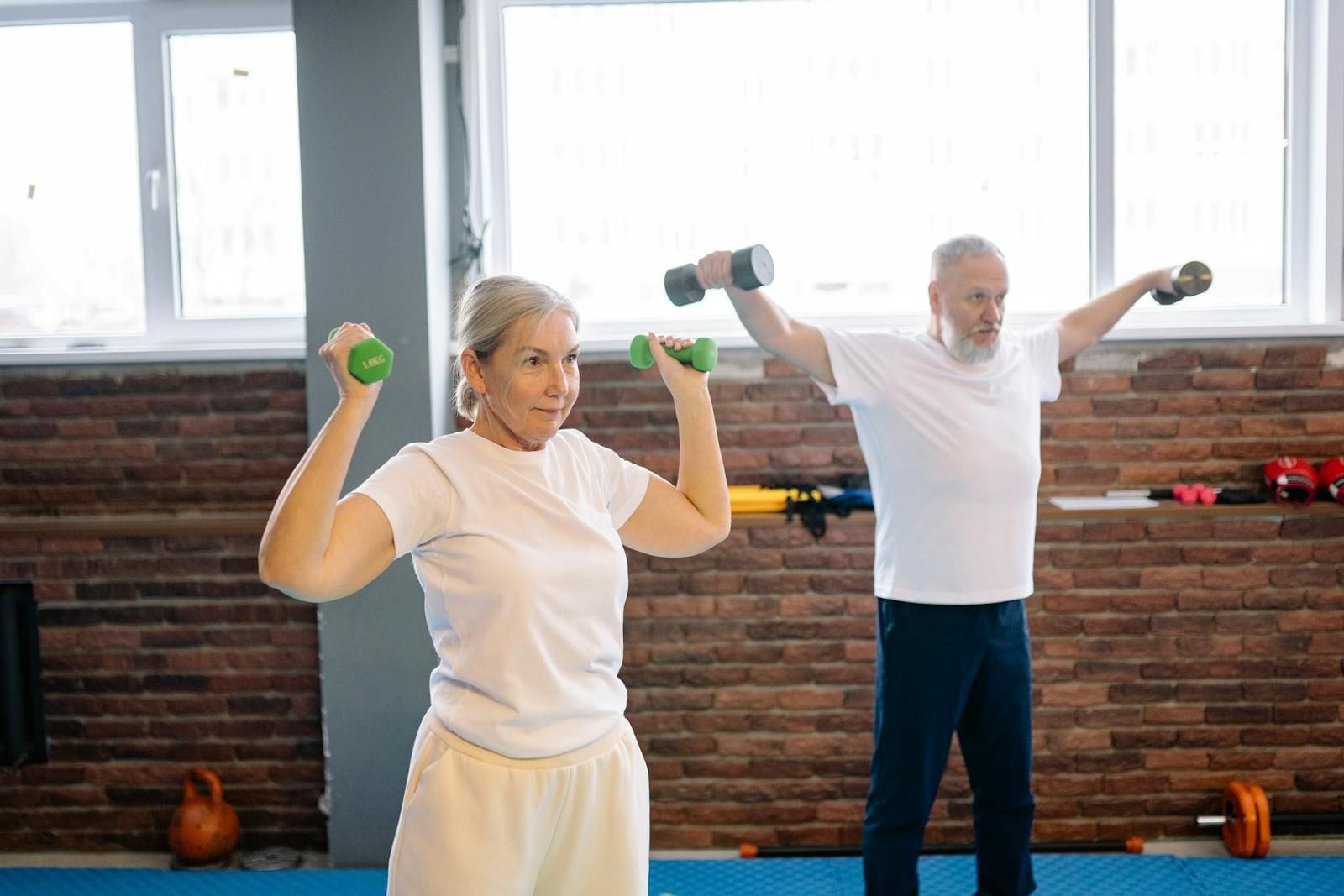
Of all the things that decide whether an older adult keeps living in their own home, one of the quietest is also one of the most fixable: muscle. The strength to rise from a chair without using your hands, to climb the stairs to your own bedroom, to carry a laundry basket or get up off the floor after a stumble, is not fixed by age. It is built, kept, and rebuilt by use. And strength training for seniors, far from being the risky, gym-bro activity it sometimes sounds like, is the single most studied way to do it.
This is a practical guide to starting, written for older adults and the family members cheering them on, whether you are a vigorous seventy-year-old looking to do more or someone who has not exercised in years and feels a little nervous about it. It covers the moves, how often, how to get harder over time, how to stay safe, and how to begin from wherever you genuinely are today. None of it replaces advice from your own doctor or a physical therapist who knows your body. What follows is the shape of a sensible beginning.
You Are Not Too Old to Build Muscle
Start here, because it is the belief that stops most people before they begin. The idea that muscle is for the young is simply wrong. In a now-famous study published in the Journal of the American Medical Association, researchers led by Maria Fiatarone put a group of frail nursing-home residents, average age ninety and some as old as ninety-six, through eight weeks of resistance training. Their muscle strength increased by an average of 174 percent, the muscle in their thighs grew, and their walking speed improved by nearly half. People who had needed help standing were moving more freely. If ninety-year-olds in a care home can do that, the question is not whether you are too old. You are not.
The science behind it is encouraging and unfussy. As Harvard Health puts it, progressive resistance training is the best way to rebuild the muscle that age takes, and the body keeps that ability for life. Gains may arrive more slowly at seventy-five than at thirty-five, and that is fine. Slower is not the same as impossible, and the first improvements, getting out of a chair more easily, feeling steadier on your feet, often show up within a few weeks, well before any muscle is visible in a mirror.
The Muscle You Lose Without Noticing
There is a reason this matters more with each passing decade. Starting around age thirty, adults lose roughly three to five percent of their muscle mass every ten years, a gradual wasting called sarcopenia. According to the Cleveland Clinic, the loss speeds up between about sixty-five and eighty, when someone can shed as much as eight percent per decade. It happens so slowly that no one notices a single day of it. What people notice instead is the result, years later: jars that will not open, a chair that takes two tries, a curb that feels higher than it used to.
The stakes are not vanity. As muscle fades, the risk of falls and fractures climbs, and the everyday tasks that let a person stay home, getting off the toilet, stepping into the tub, reaching a high shelf, getting up off the floor, become harder one by one. The National Institute on Aging notes that strength work protects against this muscle and bone loss, and that better physical function lowers both the chance of a fall and the odds of a serious injury if one happens. Strength, in other words, is not about looking athletic. It is about staying out of a hospital and in your own kitchen.
Pick Your Starting Level
The most common mistake is starting where a video tells you to instead of where your body actually is. Honest self-assessment is what keeps the first week from being the last. Most older beginners fit one of three levels, and the same movement can be done at any of them, so there is always a next step rather than a wall.
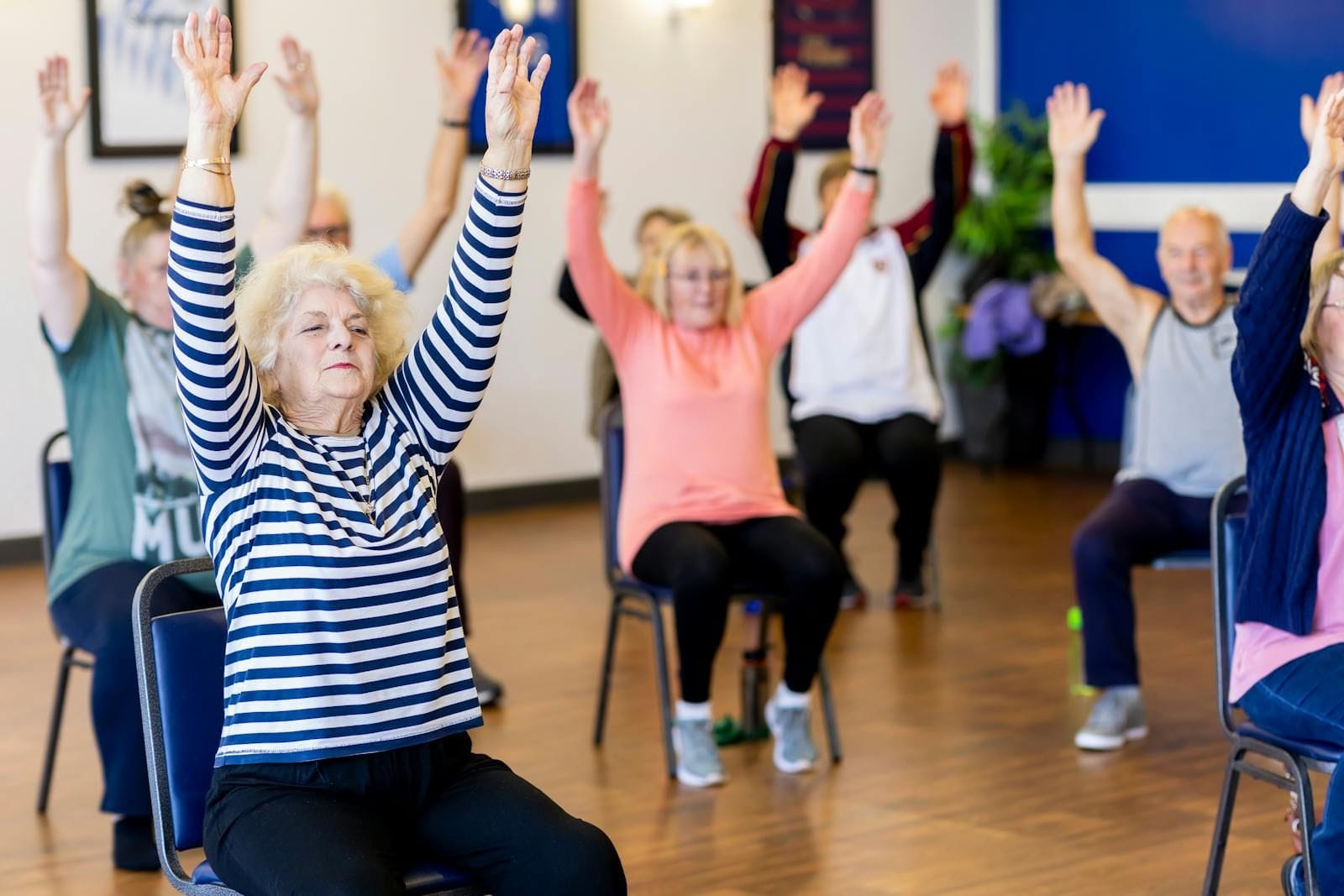
Level one, seated and supported. If you tire easily, feel unsteady, or are just out of the hospital, begin in a chair. Seated leg lifts, seated marches, and rising part-way out of the chair build the foundation without any risk of a fall. Level two, standing with support. When seated work feels easy, move to standing exercises while holding a sturdy counter or the back of a heavy chair for balance. Level three, added resistance. Once a movement is smooth and your balance is reliable, you make it harder, with a resistance band, light dumbbells, or even full water bottles and soup cans. Take the humble sit-to-stand: pushing up off the armrests is level one, standing hands-free is level two, and standing slowly while holding a light weight to your chest is level three. Picking the right rung is not a limitation. It is the thing that lets you keep climbing.
The Lower-Body Moves That Keep You Standing
If you only had time for one half of the body, this would be it. The legs and hips are what get you out of chairs, up stairs, and back to your feet, which is why leg strengthening exercises for seniors do the most to protect independence. Four moves cover the essentials, and all can be done holding a counter or sturdy chair for balance.
The sit-to-stand is the king of them: sit toward the front of a firm chair, lean slightly forward, push up through your heels to stand tall, then lower yourself back down slowly and with control. The standing calf raise, rising up onto the balls of your feet and lowering slowly, strengthens the lower legs that steady you and power each step. The back leg raise, lifting one straight leg behind you without leaning forward, builds the glutes that hold you upright. And the side leg raise, lifting a leg out to the side with the toes pointing forward, strengthens the outer hips that keep you stable when you turn or shift your weight. Do all the repetitions on one leg, then switch, and keep every motion slow enough that you could stop it at any point.
The Upper-Body Moves for Everyday Lifting
Upper-body strength is the difference between managing a bag of groceries, a gallon of milk, or a grandchild and asking someone else to. Four moves, done seated or standing, cover the pushing, pulling, and lifting of ordinary days.
The wall push-up builds the chest, shoulders, and arms with none of the danger of the floor version: stand a little past arm's length from a wall, place your palms on it at shoulder height, bend your elbows to bring your chest toward the wall, then push back out. The seated or standing row, done with a resistance band anchored in front of you, pulls your elbows back and squeezes the shoulder blades together, strengthening the upper back that fights a forward hunch. The biceps curl, curling a light weight from your side toward your shoulder, is the muscle for lifting and carrying. And the overhead raise, pressing light weights from shoulder height up over your head, makes reaching a high cupboard easy again. Resistance band exercises for seniors are an ideal starting point here, because a band is cheap, kind to the joints, easy to store in a drawer, and simple to make harder by stepping farther from the anchor.

A Strong Middle, Safely
The core, the muscles around your trunk and hips, is what holds you upright and catches you when balance wobbles, so core strengthening exercises for seniors are worth a few minutes even though they are less glamorous than arms and legs. You do not need sit-ups, which strain the neck and back. Simply standing tall and bracing your stomach during the other exercises trains the core. If getting down to and up from the floor is safe for you, the glute bridge, lying on your back with knees bent and lifting your hips into a straight line, strengthens the buttocks, lower back, and core together. If the floor is not safe, skip it without guilt and let the standing work do the job. Strength training should never start with a move that puts you on the ground when you are not sure you can get back up.
Two Days a Week Is Enough
The schedule is more forgiving than people expect. The CDC's Growing Stronger guide and the federal Physical Activity Guidelines for Americans both recommend muscle-strengthening on at least two non-consecutive days a week, hitting all the major muscle groups. That is the whole requirement. Two sessions, Monday and Thursday or Tuesday and Friday, with at least a day of rest between them so the muscles can rebuild.
A session is short. Warm up for five to ten minutes with easy marching and arm circles and a run-through of the moves with no weight. Then do one set of eight to twelve repetitions of each exercise to start, resting about a minute between them, and build toward two or three sets over the following weeks as it gets comfortable. Finish with a little gentle stretching. The whole thing takes twenty to thirty minutes. On the days in between, add some easy walking and a minute of balance practice, such as standing on one foot near the counter, which the guidelines specifically encourage for older adults. If a structured plan helps you stick with it, our guide to building a safe exercise program for seniors walks through how to put the week together, and our at-home exercises for seniors fill in the walking-and-balance days.
How to Know It's Time for More Weight
Muscle grows only when you gradually ask a little more of it, a principle with the intimidating name of progressive overload and a very simple meaning: make it slightly harder over time, one small step at a time. The cue to follow is honest effort. The right level is when the last one or two repetitions of a set feel genuinely hard but you can still finish them with good form. If you could rattle off five more, it is too easy. If your form falls apart before you reach eight, it is too hard, and you should go lighter.
When you can comfortably complete twelve repetitions of all your sets, it is time to nudge the challenge up. Add repetitions first, then a set, then a small amount of resistance, a slightly heavier weight, a thicker band, or light ankle weights for the leg moves. The jumps should be small, and there is no prize for rushing. This is exactly how building muscle after 60 works: in patient increments, measured in weeks rather than days, which is also why people who keep a simple log of what they did last time tend to stick with it and keep climbing.
Lifting Without Hurting Yourself
A few rules keep strength training squarely in the safe column. Talk with your doctor before you begin if you have heart disease, high blood pressure, diabetes, arthritis, a recent surgery, or balance problems, and ask whether any moves should be modified for you. Always warm up first. Breathe out during the effort and in as you relax, and never hold your breath and strain, which spikes blood pressure; counting your repetitions out loud guarantees you keep breathing. Move slowly, keep your form clean, and never snap a joint into a locked position.
Learn the difference between soreness and pain. Mild muscle soreness a day or two after a workout is normal and even a good sign. Sharp pain, joint pain, or a swollen joint is not; stop that exercise, rest, and try again later with less weight or check with your doctor. Stop right away and seek help for chest pain or pressure, shortness of breath, dizziness, or a racing or irregular heartbeat. Set up for safety, too: drink water, wear supportive shoes rather than socks or loose slippers, keep a sturdy non-rolling chair or counter within reach, and have a phone or another person nearby. People with osteoporosis can usually lift, and often should, but it is the clearest case for starting under the eye of a physical therapist who can steer you away from the forward-bending and twisting loads that strain fragile bones.
Feeding the Muscle You're Building
Strength is built by two things working together, the training and what you eat, and the second half is easy to neglect. Older adults generally need more protein per pound of body weight than younger people to build and hold muscle, and the body uses it best when it is spread across the day rather than piled into dinner. A protein source at every meal, eggs or yogurt at breakfast, beans or fish or poultry later, is a more useful target than any supplement. Enough total calories and enough fluids round it out. None of this is exotic, and none of it requires a special diet. It is the same plate that supports the rest of healthy aging, with a little more attention to protein and a reason to care about it.
The Quiet Difference a Second Person Makes
Here is the part the workout videos leave out: the hardest thing about strength training is not the exercises, it is doing them again next week, and the week after. This is where another person changes everything. A spouse, an adult child, or an in-home caregiver who steadies the chair, counts the repetitions out loud, notices that you stood hands-free for the first time, and simply shows up on the scheduled day turns a good intention into a standing habit. Safety improves too, because someone is there to spot a wobble during standing work and to be present if balance fails.
For families who live far away or are stretched thin, this is one of the most valuable and least dramatic things a companion caregiver can do: keep the twice-weekly session on the calendar, provide the encouragement, and quietly track the small wins that prove it is working. When mobility is the larger concern, our in-home mobility support pairs that consistency with hands-on help moving safely. It is the reason families near our Monmouth County, New Jersey office often build a short strength routine into a parent's week of care, because the caregiver who is already there to help with the day is also the person who makes the exercise actually happen.
Starting Again After an Illness or a Fall
Muscle is lost fastest exactly when a person can least afford it, during the bed rest of a hospital stay, an illness, or recovery from a fall. A week flat in bed can cost an older adult a startling amount of strength, and that deconditioning, more than the original event, is often what turns a temporary setback into a permanent loss of independence. The path back is the same as the path in, only gentler: start at level one, in the chair, with no weight, and rebuild from there. Coordinate with a physical therapist or your doctor, who can tell you which moves are cleared and which to wait on, and watch for the same red flags as anyone else. This is where a few weeks of in-home personal care earns its place, handling the bending and lifting while the body relearns its own, so that the temporary help becomes the bridge back to managing alone rather than a new normal.
What Strength Really Buys You
It is worth being clear about the reward, because it is bigger than the moves suggest. Every repetition is a deposit against a specific future. The sit-to-stand is the toilet you can use without help and the low couch you can leave on your own. The leg raises are the curb you do not trip on. The calf raises and the steady core are the stairs to your bedroom and the bath you can step into. The biceps curls are the groceries you carry in from the car. None of it is about looking strong. It is about the morning, years from now, when getting up and moving through your own home is still something you simply do, without a second thought and without a second set of hands. Two short sessions a week, started wherever you are today, is a remarkably small price for that. The best time to begin was decades ago. The next best time is this week.
Photo credits: Yan Krukau (Pexels 6815693), Centre for Ageing Better (Pexels 11674389), and SHVETS production (Pexels 8899509), via Pexels.
Frequently Asked Questions
Should a 70-year-old do strength training?
Yes. National health guidelines recommend that adults of every age, including those in their 70s, 80s, and beyond, do muscle-strengthening activities at least two days a week. Strength training is one of the most effective things an older adult can do to stay mobile, steady, and independent. The main caution is to start light, build gradually, and check with your doctor first if you have heart disease, uncontrolled blood pressure, recent surgery, or another chronic condition.
How many days a week should a senior do strength training?
At least two non-consecutive days a week, working all the major muscle groups, is the standard recommendation from the CDC and the Physical Activity Guidelines for Americans. Leaving about 48 hours between sessions lets the muscles recover and rebuild. Two short 20-to-30-minute sessions a week are enough to make a real difference, with easy walking and a little balance practice on the days in between.
Is it ever too late to build muscle?
No. Muscle responds to training at any age. In a landmark study, frail nursing-home residents with an average age of 90 increased their muscle strength by an average of 174 percent after just eight weeks of resistance exercise. Progress may come more slowly than it did at 40, but the body keeps its ability to grow stronger for life.
Can you lift weights with osteoporosis?
Usually yes, and strength training is often encouraged because it helps maintain bone density. The key is technique: avoid heavy loads, fast jerking movements, and exercises that round or twist the spine forcefully. Many people with osteoporosis do best starting with a physical therapist or a knowledgeable trainer who can tailor the moves. Always confirm your specific plan with your doctor.
What should I eat to gain muscle after 60?
Protein matters most. Older adults generally need more protein per pound than younger people to build and keep muscle, so most experts suggest spreading good protein sources, such as eggs, fish, poultry, dairy, beans, and lentils, across all three meals rather than loading it into one. Pair that with enough total calories, plenty of fluids, and the strength training itself, since muscle is built by the combination of eating well and using the muscle.
What strength exercises should seniors avoid?
Most seniors should avoid very heavy lifting, exercises that require holding your breath and straining, fast ballistic movements, and anything that causes sharp joint pain. Deep squats, heavy overhead pressing, and loaded spinal twists are best skipped or modified, especially with osteoporosis or joint problems. The safer path is lighter resistance with more repetitions, slow controlled movement, and seated or supported versions when balance is a concern.
Do resistance bands build real strength for older adults?
Yes. Resistance bands provide genuine, adjustable resistance and are one of the best tools for older beginners because they are inexpensive, gentle on the joints, easy to store, and simple to make harder or easier. They work well for rows, presses, and leg exercises, and many people use them as a bridge before, or instead of, dumbbells.