UTI in the Elderly: Why Confusion Is Often the First Sign
Why a urinary tract infection in an older adult often shows up as confusion or agitation instead of urinary symptoms — and how families can spot it earlier.

It is almost always a Tuesday afternoon when the call comes. Mom didn't recognize the kitchen this morning. Dad got combative with his shoe. Your wife wandered to the living room at three in the morning insisting it was time to leave for work, and now she will not stop asking where her mother is.
The family does the only thing the family knows how to do: they brace for worse. Whatever this is, it is dementia accelerating. The disease has taken another step. There will be a new normal by the end of the week.
Sometimes that is true. Often it is not. There is a different, much more treatable possibility that emergency-room geriatricians see all day long, and most families have never heard of it. In an older adult, a urinary tract infection — a UTI — frequently shows up not as burning or urgency, but as a sudden change in thinking and behavior. No fever. No complaints about going to the bathroom. Just confusion that arrived overnight.
Knowing that pattern exists is one of the most useful things a family member caring for an aging parent can carry around. It is not a diagnosis you make yourself; it is a question you know to raise with the doctor. And raising it early can be the difference between a five-day course of antibiotics and a hospital stay.
What a UTI Actually Is, and Why It Looks So Different in Older Adults
A urinary tract infection is exactly what it sounds like: bacteria, almost always E. coli, get into the urinary tract — bladder, urethra, sometimes the kidneys — and start to multiply. In a younger adult, the body announces this loudly. There is burning when you urinate. There is urgency. There is a fever if the infection is climbing. The symptoms are unmistakable enough that a drugstore aisle has its own dedicated section for them.
In someone over seventy-five, that announcement often does not come. A cross-sectional study cited in a recent systematic review at the National Library of Medicine found that only eleven percent of hospitalized older adults with a UTI ran a fever. Almost thirty percent presented with delirium. Others arrived with falls, sudden incontinence, drowsiness, or simply “not herself today.” The classic textbook symptoms — the burning, the urgency, the fever — were missing in the majority of cases.
There are several reasons for this. The aging bladder is less sensitive, so the early discomfort that drives a younger person to the doctor barely registers. The aging immune system mounts a quieter inflammatory response, so the fever often does not rise. And the aging brain is, simply, more fragile. An infection anywhere in the body — pneumonia, the flu, a UTI — can tip an older adult into delirium long before the local symptoms become loud. The brain shows up first.
The clinical literature has a careful name for this pattern: atypical presentation. In practice, it means the things you would expect to be the first signs of an infection arrive last, if at all, and the things you would not expect — agitation, paranoia, sudden trouble walking, a flat refusal to eat — arrive first.
The Numbers Behind the Pattern
UTIs are quietly one of the most common infections in older adults, and the most common reason an aging parent ends up in the emergency department for something that started as “she just seemed a little off.”
A review of UTI epidemiology in older adults found that more than ten percent of women over sixty-five report a UTI in any given year, climbing to nearly thirty percent in women over eighty-five. Roughly one in four hospital admissions in geriatric care involves a UTI somewhere in the picture. The infection accounts for an estimated fifteen percent of hospitalizations and six percent of infectious-disease deaths in older adults.
For people living with dementia, the numbers are even more striking. A Medicare claims study published in 2020 looked at older adults arriving in the emergency department and found that those with a dementia diagnosis were diagnosed with a UTI in thirty-four percent of visits, compared with thirteen percent of visits in patients without dementia. That is more than twice the rate. And those patients were less likely to report any urinary symptoms at all — the diagnosis was almost always made because someone in the family said, “She has gotten so much worse this week. I don't know what is happening.”
What to Watch For
The Alzheimer's Association keeps a 24/7 helpline staffed by care consultants who, between them, have answered thousands of calls about exactly this pattern. Their public-facing guide on UTI behavior changes is one of the clearer summaries of what families notice in the days before a diagnosis.
The symptoms tend to fall in two columns. There are the urinary signs — which may or may not be present — and then there are the behavioral and cognitive signs, which often arrive first.
On the urinary side, you may notice darker, cloudier, or stronger-smelling urine. Increased trips to the bathroom, or the opposite — sudden incontinence in someone who was previously continent. Visible discomfort during urination, though older adults often will not name it.
On the behavioral side, the changes are more numerous and easier to misattribute. Confusion that came on over hours rather than weeks. Agitation, paranoia, or a sharper temper than usual. New hallucinations or delusions. Sudden lethargy or sleeping all day. A loss of appetite that arrived overnight. Falls or unsteadiness in someone who was walking fine last week. And the one most caregivers describe almost identically: she just is not herself.
The key word in all of these is sudden. Dementia worsens slowly, over months and years. An infection-driven change in mental status arrives in a day or two. If the difference between Mom on Monday and Mom on Thursday is dramatic, infection deserves a place near the top of the list of possibilities.

The Other Side of the Coin: Why Not Every Confused Senior Has a UTI
There is an important counterweight to all of this, and it deserves its own paragraph. Geriatricians spend a great deal of time worrying about the opposite problem — older adults whose confusion is reflexively blamed on a UTI when something else is going on.
Cleveland Clinic geriatrician Amanda Lathia has written carefully on this . Her point is straightforward and important: confusion alone does not prove a UTI. Older adults have many reasons to become acutely confused — dehydration is the most common, followed by medication side effects, a silent stroke, low blood sugar, pneumonia, an electrolyte imbalance, or a poor night's sleep on top of cognitive impairment. If a clinician sees confusion and immediately runs a urine sample, they may find bacteria — because somewhere between fifteen and fifty percent of older adults, depending on the setting, have bacteria in their urine without an active infection. The medical term is asymptomatic bacteriuria, and treating it does not help and can actively cause harm by exposing a frail person to unnecessary antibiotics.
This is why the conversation a family has with the doctor matters so much. “I think Mom might have a UTI” is useful information. So is “She has been drinking less water this week,” and “Her blood pressure was 88/50 yesterday,” and “She started a new medication ten days ago.” A good geriatric workup looks at all of it before settling on a single answer.
The right framing for caregivers is not I should figure out whether this is a UTI. It is I should make sure the doctor considers it.
When to Go to the Emergency Room
Most UTIs are treated by a primary care doctor with a five- to seven-day course of antibiotics, and the patient is meaningfully better within two or three days. But UTIs in older adults occasionally escalate, and a few signs mean the call is to 911 rather than to the family physician on Monday.
A fever above 101 in an older adult is more serious than the same fever would be in someone younger, especially if it is paired with shaking chills. Severe back or flank pain — the area below the ribs and above the hip — suggests the infection has reached the kidneys. New extreme drowsiness or difficulty waking the person, very low blood pressure, a rapid heart rate, a blue-ish tinge to the lips or fingernails, or rapid breathing can all be early signs of urosepsis, which is what happens when a UTI spills into the bloodstream. Sepsis is a medical emergency at any age and is more dangerous in older adults than it is in younger people.
When in doubt, call. Both the primary care office and the emergency department would rather see a worried family with a relatively well patient than a too-late family with a critical one.
Prevention: The Boring, Effective Things
No single change prevents UTIs entirely, but a small handful of habits move the odds significantly, and the most important is the simplest. Older adults who stay reasonably well-hydrated get fewer UTIs. A British care-home study documented in BMJ Open Quality introduced something called “structured drink rounds” — staff offered residents seven glasses of fluid a day instead of relying on residents to ask. UTIs requiring antibiotics dropped by fifty-eight percent. Hospital admissions for UTIs dropped by thirty-six percent. The intervention was, essentially, water.
Hydration is harder than it sounds for an older adult. The thirst signal weakens with age, so the cue most younger people rely on simply doesn't arrive. Many seniors restrict fluids deliberately to avoid bathroom trips they find difficult or embarrassing. Some are on medications — diuretics for blood pressure, for instance — that pull fluid out faster than they realize. The practical answer is to make water visible and easy: a full glass on the side table, a refilled bottle in the recliner cup-holder, a routine of tea with breakfast and a glass of water with each medication. The Mayo Clinic guideline of about fifty ounces of fluid a day is a reasonable target for most older adults whose doctors have not specifically restricted fluids.
The other prevention measures are quieter. Regular trips to the bathroom, not waiting until the last possible minute. Wiping front to back. Cotton underwear instead of synthetic fabric that traps moisture. Prompt changes of incontinence briefs, with a focus on keeping the skin dry — bacterial growth in damp incontinence products is a leading cause of recurrent UTIs in older women. Good hygiene during bathing, particularly for someone who can no longer do it independently. Treating constipation, which is more linked to UTI risk than most families realize because a full rectum presses on the bladder and prevents complete emptying.
For postmenopausal women with recurring UTIs, vaginal estrogen cream prescribed by a gynecologist has solid evidence behind it. Cranberry products have a more modest, mixed track record but are generally harmless. None of these is a substitute for hydration; all of them are cheap, sustainable, and worth combining.
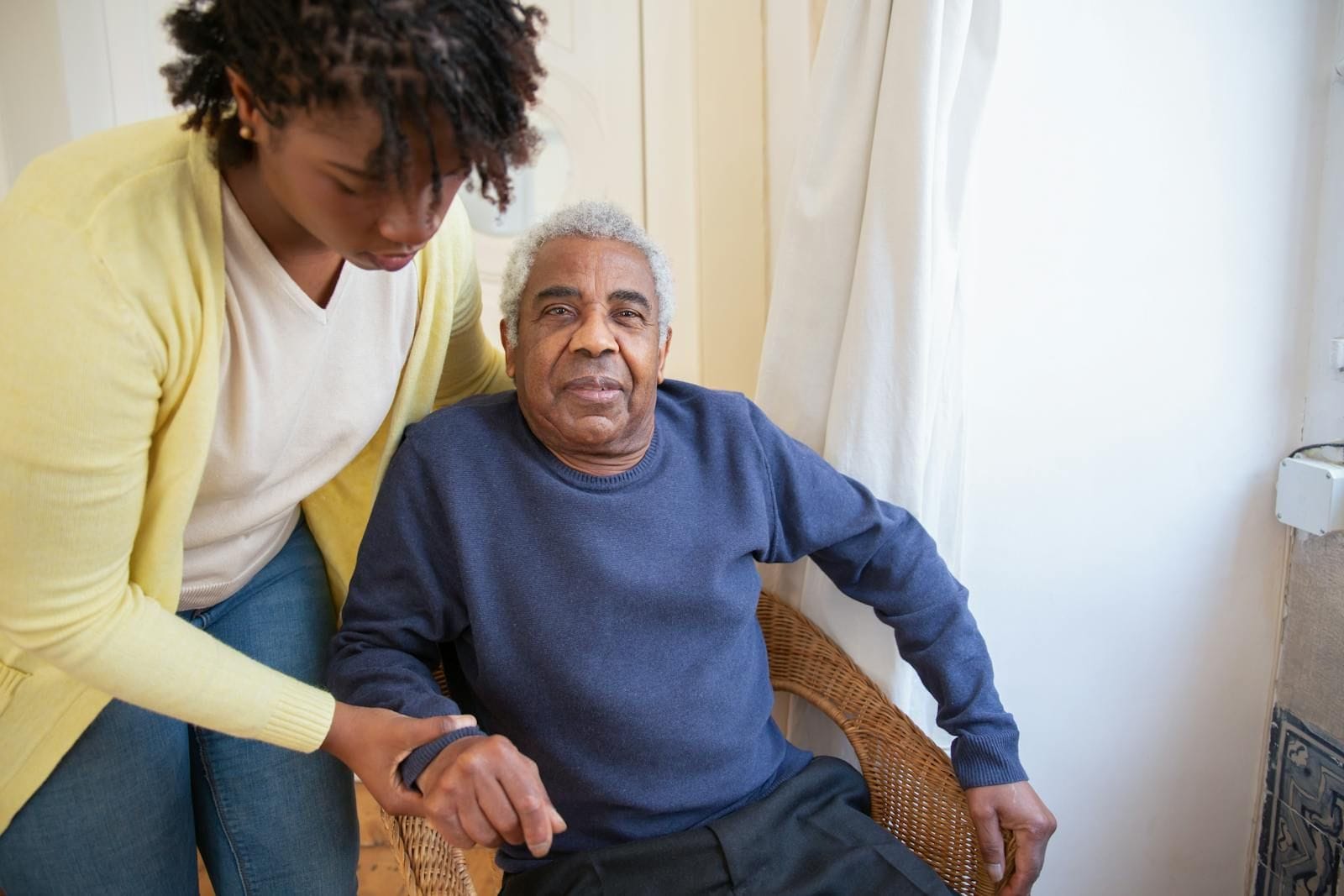
Where Consistent Caregivers Make the Difference
This is the part of the conversation we know best. Most of what makes a UTI catastrophic in an older adult — the late presentation, the cascade into delirium, the avoidable hospital admission — is downstream of one thing: nobody noticed early enough.
The single highest-leverage prevention strategy for an at-risk senior is someone in the house who knows them, sees them often, and pays attention to the small things. Not a clinician on a once-a-month visit, who has nothing to compare against. Someone who can say, “She drank less than half her morning coffee. She has not asked for the crossword. Her urine yesterday was darker than it should have been.”
Our caregivers do this work without thinking of it as detection. They notice because they have been there for a hundred Tuesdays and they know what Tuesday usually looks like. They flag concerns to our nurses, who decide whether the family needs to call the doctor today, this week, or not at all. More than once, we have helped a family identify a UTI in its first twenty-four hours — when treatment is still a phone call and a prescription rather than a hospital admission.
The people we serve across Monmouth County and Middlesex County often come to us through this door — a daughter who has been worrying alone, a husband who has stopped trusting his own observations, a son who flies in once a month and does not feel he can be the early-warning system from three states away. Hourly support a few days a week, or overnight coverage for someone whose nights have become unpredictable, is sometimes enough. For families managing dementia at home, where UTIs hit harder and hide more thoroughly, our dementia-trained caregivers are particularly attentive to the subtle behavioral shifts that can signal infection.
Our personal-care service covers the prevention side of the equation as well — the bathing, the toileting, the encouragement to drink water through the afternoon. None of it is dramatic. All of it adds up.
The Question Worth Carrying
If there is one sentence to take away from all of this, it is the one most geriatricians wish more families knew to say.
When the call comes — when Mom is suddenly different, when Dad is suddenly agitated, when your wife has gotten worse over a weekend in a way the disease has never before behaved — call the doctor and say, Could this be an infection?
Most of the time, the answer will be one of several things, and the doctor will work through them carefully. But often enough — far more often than most families realize — the answer is yes, and the treatment is a course of antibiotics, and a week from now you have your parent back. That is a conversation worth knowing how to start.
And if you would like to talk about what consistent in-home support could look like for someone you love — the kind that catches things early instead of late — our care team is here . We will listen first.
Photographs by cottonbro studio, Mikhail Nilov, and Kampus Production, licensed under the Pexels free-use license.