How to Plan Tours for Seniors with Limited Mobility: A Practical Guide
Learn how to plan safe and enjoyable travel for seniors with limited mobility by assessing needs, setting goals, and preparing for accessibility.
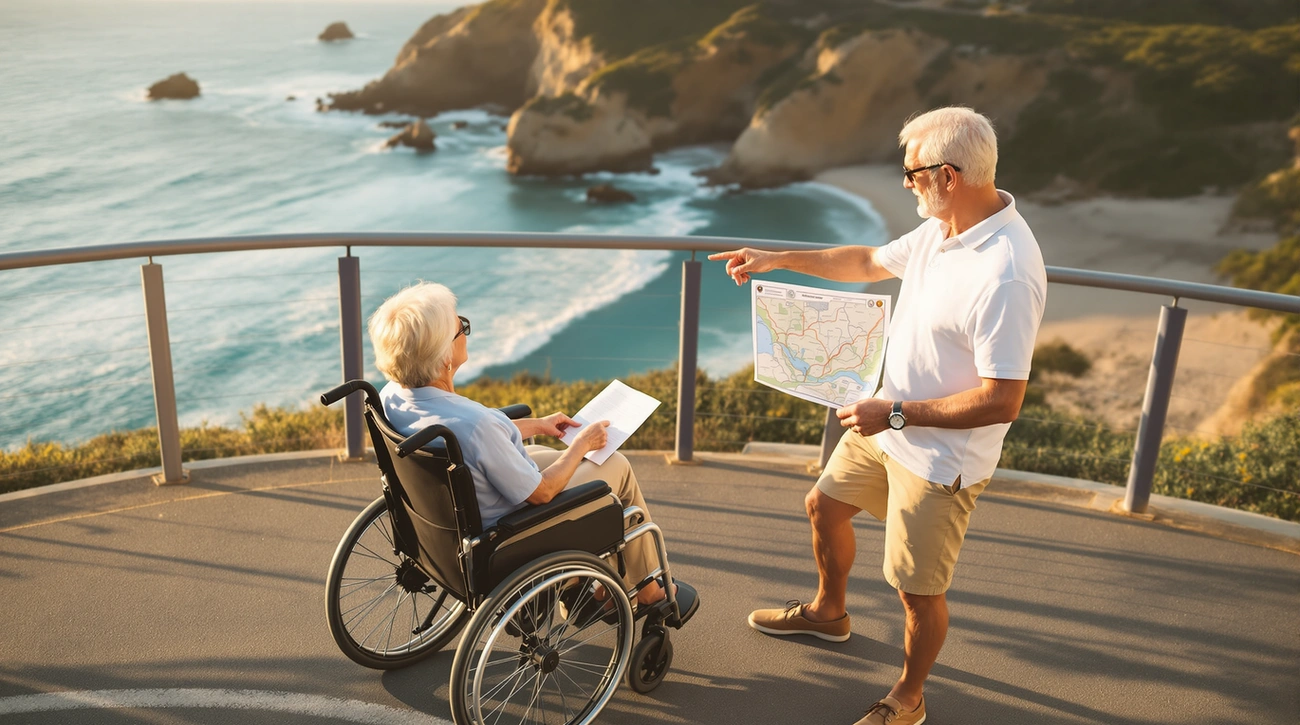
Step 1: Assess Needs and Set Travel Goals
Planning a successful tour for seniors with limited mobility needs a full picture of needs and clear goals. This critical first step builds the foundation for an enjoyable travel experience. You need to address all essential requirements before departure.
Understand mobility limitations
You should review physical abilities and limitations honestly before booking any trip. Nearly nine in ten older adults take at least one medication [1] . This requires careful planning during travel. Daily routines and specific needs while at home and during outings can help you prepare better for the trip [1] .
The Life-Space Assessment tool is a great way to learn about mobility patterns. It documents where and how often people travel and any assistance needed during movement [2] . This knowledge helps you prepare better. Mobility typically declines with age. One-third of 70-year-olds and most 80-year-olds report restrictions in movement around their immediate surroundings [3] .
Healthcare providers should review your travel plans if you have chronic conditions or physical limitations. They can guide you on managing conditions away from home. You might need their documentation for traveling with certain medications or medical equipment [4] .
Decide on travel pace and comfort level
After this, you need to determine a comfortable travel pace to prevent exhaustion and improve the experience. Research shows older adults prefer traveling in mornings and early afternoons ( between 8:00-15:59 ) rather than evenings [5] . This should shape your itinerary planning.
Daily activity levels should match your usual routine to avoid fatigue. Travel experts suggest focusing on accessibility features like ground-floor rooms, roll-in showers, and wheelchair-friendly transportation [1] . Afternoon rest periods help seniors who usually take naps at home [1] .
Your comfort matters more than the number of experiences. Many seniors find more satisfaction in "slow travel" - taking time to appreciate destinations instead of rushing through multiple sites [6] .
Set realistic expectations for the trip
Clear expectations prevent disappointment. You should discuss what makes a realistic itinerary before finalizing bookings [1] . Centrally located accommodations reduce travel time and save energy [6] .
You can handle possible challenges by arranging help in advance. Airlines offer accessibility services that you can request during booking [7] . Holland America cruise lines feature accessible rooms and special lifts for wheelchair-bound guests [6] .
Even with careful planning, unexpected situations may arise. Travel insurance that covers medical emergencies makes sense for seniors [8] . This preparation and some schedule flexibility create a balanced approach. You can work around limitations while maximizing enjoyment.
Step 2: Plan the Itinerary with Accessibility in Mind
Planning an available itinerary becomes a vital part of organizing tours for seniors with limited mobility. A well-thought-out plan will give a smooth experience where everyone can enjoy themselves without strain or stress.
Choose the best vacations for seniors with limited mobility
Your destination choice should prioritize accessibility. National parks make excellent choices since many have wheelchair-accessible boardwalks and scenic drives with panoramic views [9] . Cities like San Diego with wide walkways, Savannah's flat historic district, and Scottsdale's accessible resorts rank highly for travelers who face mobility challenges [10] .
Beach destinations remain popular among seniors. Amelia Island, Florida offers ADA-accessible boardwalks and wheelchairs [11] . Those who love cultural experiences will find Barcelona appealing with its accessible transportation and beautiful parks [12] .
These travel styles naturally work well with mobility limitations:
-
Ocean cruises with accessible cabins and elevators [13]
-
Train excursions through scenic areas [14]
-
Small group tours (13-24 participants) designed specifically for seniors [15]
-
Guided cultural tours with local experts [14]
Limit daily activities to avoid fatigue
You can prevent exhaustion and boost enjoyment by restricting your daily itinerary. Plan one major activity in the morning and another in the afternoon or evening as a general rule [16] . This approach lets everyone rest properly between experiences.
Quality matters more than quantity. Your overall experience suffers when you rush to see everything [3] . Focus on fewer, meaningful activities that you can enjoy at a comfortable pace instead.
Include rest periods and flexible timing
Your schedule needs built-in downtime. Medical experts suggest you should keep consistent times for meals , medications, and rest—even during travel [2] . This routine helps prevent fatigue and disorientation effectively.
You should add one "slow day" every few days of travel [3] . These rest days let you recharge while enjoying relaxing activities like spa visits or scenic train rides.
Extra time for transportation, security screening, and moving between attractions makes a big difference [17] . This buffer eliminates rushing and reduces stress and risk—especially important since seniors may move more slowly or need frequent breaks.
Step 3: Prepare Essentials for a Smooth Trip
Good preparation is the foundation of enjoyable tours for seniors who have limited mobility. You need to assess needs and plan an available itinerary first. The right essential items will give a comfortable and safe travel experience.
Organize medications and prescriptions
Medication management needs careful attention during travel. Store all prescriptions in their original containers that show clear labels with your name and dosage information. This helps you get through airport security and gives you proper documentation if anyone asks about your medications [18] .
Pack extra doses beyond your planned trip duration to handle any delays [19] . A detailed list of all prescribed medications with dosages and schedules are a great way to get organized [19] . You might want to use a pill organizer to sort medications by day and time. This makes tracking doses easier while you're away from home [20] .
Medication timing becomes tricky especially when you have different time zones to deal with. Ask your healthcare provider whether you should stick to your home schedule or switch to your destination's time zone [4] . Note that all but one of these older adults take at least one medication, which makes this preparation vital [1] .
Pack travel-friendly gear and clothing
The right clothing will improve your comfort during travel. Choose lightweight, breathable fabrics that work well in changing temperatures. Use compression socks for long flights or bus rides - they help blood flow better when you sit for long periods [19] .
Your shoes should have strong arch support, cushioned soles, and non-slip traction [6] . Take an extra pair with you in case one gets wet or uncomfortable. If you're heading to the beach, pack slip-resistant sandals to stay safe [6] .
Travel-specific adaptive equipment can help seniors navigate better. Portable ramps, folding canes, or transfer boards make new places easier to move around in [21] . A lightweight folding stool lets you rest while waiting in lines or visiting spots that don't have enough seating [21] .
Carry copies of important documents
You must prepare your documents for emergencies. Make copies of your passport, driver's license, insurance cards, and detailed medical information [19] . Keep these copies separate from the originals and give another set to someone you trust who's traveling with you [22] .
Along with your ID, carry your complete medical history that includes your doctor's contact details, allergy list, and advance directives [19] . This helps medical staff give you the right care if something unexpected happens.
Keep emergency contact information for family members who stay behind [1] . If you're traveling internationally, get your key medical information translated into the local language. This helps avoid any communication problems [23] .
Step 4: Use Support Services and Travel Tools
Modern travel tools and specialized support services make trips much easier for seniors with mobility limitations. These resources help overcome challenges that might come up during travel.
Join guided tours for seniors with limited mobility
Tours designed for people with mobility challenges can make a huge difference. Road Scholar creates programs that need minimal walking and have easy-to-use transportation options [24] . Expert guides who understand accessibility needs lead these tours at a relaxed pace with plenty of rest stops.
You'll find tours marked as "very easy" or "easy" that list their accessibility features [5] . Companies like Access Tours focus on national parks and popular spots, with trips built around limited mobility needs [5] .
Use apps to guide you and translate
Travel apps have changed how seniors get around new places. Google Maps is particularly useful with its wheelchair-accessible entrance markers shown by clear wheelchair icons [25] . You can download maps to use offline and share your location with family for safety [25] .
Language barriers aren't such a problem with today's translation tools. Google Translate works with 108 languages and can translate menus and signs through your camera [26] . Other helpful apps include:
Medisafe to track medications across time zones
-
XE Currency to convert foreign money quickly
TripIt to keep all travel details in one spot
Travel with a companion or group for extra help
Travel companions are a great way to get support for seniors with mobility challenges. Services like JET COMPANION provide trained nurses who stay with you throughout your trip and help with medications, moving around, and talking to locals [27] . These companions can help you at airports and even assist with bathroom visits [27] .
Group tours offer both friendship and practical help. Studies show 89% of seniors feel less stressed on group trips than when traveling alone [28] . People naturally help each other out during the trip, which creates a supportive environment [28] .
Conclusion
Planning tours for seniors with limited mobility needs careful preparation, but the results make it all worthwhile. Travel adds richness to life at any age, especially for seniors who want meaningful experiences despite physical limitations.
Success starts with an honest look at mobility needs and setting realistic travel goals. You need to understand specific limitations to build the right framework for your trip. A chat with healthcare providers before departure will give a clear picture of how to handle medications and health conditions away from home.
Making an accessible itinerary is the life-blood of enjoyable travel for seniors with mobility challenges. "Slow travel" lets you appreciate fewer destinations deeply instead of rushing through multiple attractions. This way reduces tiredness and maximizes enjoyment. Smart breaks throughout your schedule also improve comfort and keep exhaustion at bay.
Don't overlook the essentials. Well-organized medications, comfy clothing, proper mobility aids, and copies of important documents give you security and peace of mind. These practical steps remove unnecessary stress and let travelers focus on making memories rather than dealing with problems.
Support services can turn challenging situations into smooth experiences. Tours designed for seniors with limited mobility, helpful navigation apps, and travel companions are a great way to get assistance when you need it most.
Age or mobility restrictions should never limit travel. Seniors with mobility challenges can explore new horizons safely and comfortably through smart planning, realistic expectations, and proper support. The world stays available to those who approach travel with patience, preparation, and positivity. Your next adventure awaits - plan wisely and enjoy the trip!
Key Takeaways
Planning accessible tours for seniors with limited mobility requires strategic preparation, but opens doors to meaningful travel experiences when done thoughtfully.
• Assess mobility needs honestly and consult healthcare providers before booking to ensure safe medication management and realistic travel expectations.
• Choose accessible destinations and limit daily activities to prevent fatigue—focus on quality experiences over quantity with built-in rest periods.
• Pack essential medications in original containers with extra doses and carry copies of important documents separately from originals for emergencies.
• Leverage specialized tour companies and travel apps designed for mobility-limited seniors, plus consider professional companions or group travel for added support.
• Embrace "slow travel" with flexible timing rather than rushing through attractions—this approach maximizes enjoyment while accommodating physical limitations.
The key to successful senior travel lies in thorough preparation and realistic expectations. With proper planning, mobility limitations don't have to limit the joy of exploration and discovery.
FAQs
Q1. What are the best travel options for seniors with limited mobility? The best options include ocean cruises with accessible cabins, train excursions through scenic areas, small group tours designed for seniors, and guided cultural tours. National parks with wheelchair-accessible boardwalks and cities with flat terrain like Savannah or Scottsdale are also excellent choices.
Q2. How can seniors with mobility issues find suitable tours? Many companies offer specialized tours for those with mobility challenges. Look for tours labeled as "very easy" or "easy" physical activity levels that explicitly mention accessibility features. Companies like Road Scholar and Access Tours design experiences specifically for travelers with limited mobility.
Q3. What's the most important rule for planning senior travel? The golden rule is to prioritize comfort and convenience. This means carefully choosing destinations and itineraries suited to your pace and mobility needs, limiting daily activities to avoid fatigue, and including rest periods in your schedule.
Q4. How should medications be managed during travel? Keep all prescriptions in their original containers with clear labels. Pack extra doses beyond your trip's duration, and carry a detailed list of all medications, including dosages and schedules. Consider using a pill organizer and consult your healthcare provider about adjusting medication timing for different time zones.
Q5. What support services can enhance travel for seniors with limited mobility? Specialized guided tours, travel apps for navigation and translation, and professional travel companions can greatly enhance the experience. Apps like Google Maps offer accessibility information, while services like JET COMPANION provide trained nurses to assist throughout the journey. Group tours can also offer natural support networks and reduce stress for senior travelers.
References
[1] -
https://www.ncoa.org/article/safe-travel-tips-for-older-adults/
[2] -
https://www.comforcare.com/blog/holiday-safety-and-stress-tips-for-seniors-and-caregivers/
[3] -
https://www.guidingseasons.com/how-to-avoid-travel-fatigue/
[4] -
https://www.cvmedpro.com/blog/managing-medications-and-healthcare-on-the-road-tips-for-senior-travelers
[5] -
https://www.travelstride.com/trip-list/senior-travel?theme=accessible-limited-mobility
[6] -
https://www.edenseniorhc.com/packing-for-comfort-what-seniors-should-bring-on-summer-trips/
[7] -
https://www.usatoday.com/story/travel/columnist/2025/08/13/accessible-senior-travel-tips/85320608007/
[8] -
https://www.internationalinsurance.com/advice/senior-travel-tips/?srsltid=AfmBOopQIpOus4VfnuumEA6fIYAEzjRvnnnaF3FbGOjhbMr_79Dbnwof
[9] -
https://www.aarp.org/travel/destinations/accessible-vacation-destinations/
[10] -
https://www.vacasa.com/discover/vacations-for-seniors
[11] -
https://www.ameriglide.com/blog/easily-accessible-vacation-spots-for-seniors/?srsltid=ARcRdnpc9XO1YG8LwyqcG5evb3eXru8z7kBQmoGP0pTe0LHsYxGNF5RO
[12] -
https://www.roadscholar.org/blog/best-cities-to-travel-for-seniors/
[13] -
https://www.roadscholar.org/blog/on-the-road-with-mobility-challenged-travelers/
[14] -
https://www.seniorlifestyle.com/resources/blog/guide-to-travel-for-seniors/
[15] -
https://www.roadscholar.org/collections/small-group/
[16] -
https://www.achome.org/how-to-plan-a-comfortable-and-safe-travel-as-a-senior
[17] -
https://qualitytour.dctrails.com/top-5-tips-for-seniors-on-travel-tours/
[18] -
https://travel.state.gov/en/international-travel/planning/checklist.html
[19] -
https://www.firstlighthomecare.com/blog/travel-checklist-elderly-travelers/
[20] -
https://www.seniorhelpers.com/ky/bluegrass/resources/blogs/how-to-travel-with-medications/
[21] -
https://mdaquest.org/essential-gear-for-traveling-with-a-disability/
[22] -
https://www.travelandleisure.com/best-solo-travel-essentials-for-seniors-expert-picks-11850026
[23] -
https://frontporch.net/community/carlsbad-by-the-sea/blog/smart-packing-guide-essential-items-for-older-adults-when-traveling
[24] -
https://www.roadscholar.org/collections/at-a-slower-pace/
[25] -
https://seniorsite.org/resource/7-must-have-travel-apps-for-seniors-safe-simple-travel-tools/
[26] -
https://www.aarp.org/personal-technology/translation-apps/
[27] -
https://www.jet-companion.com/a-guide-to-hiring-a-travel-companion-for-an-elderly-traveler/
[28] -
https://seniorsite.org/resource/senior-travel-groups-building-connections-through-group-adventures/