
Live-in home care, with one caregiver there day and night
A dependable caregiver stays in your loved one's home for days at a time, learns how they like things done, and is down the hall at night if they need a hand.
From our office in Toms River, serving Ocean County, NJ.
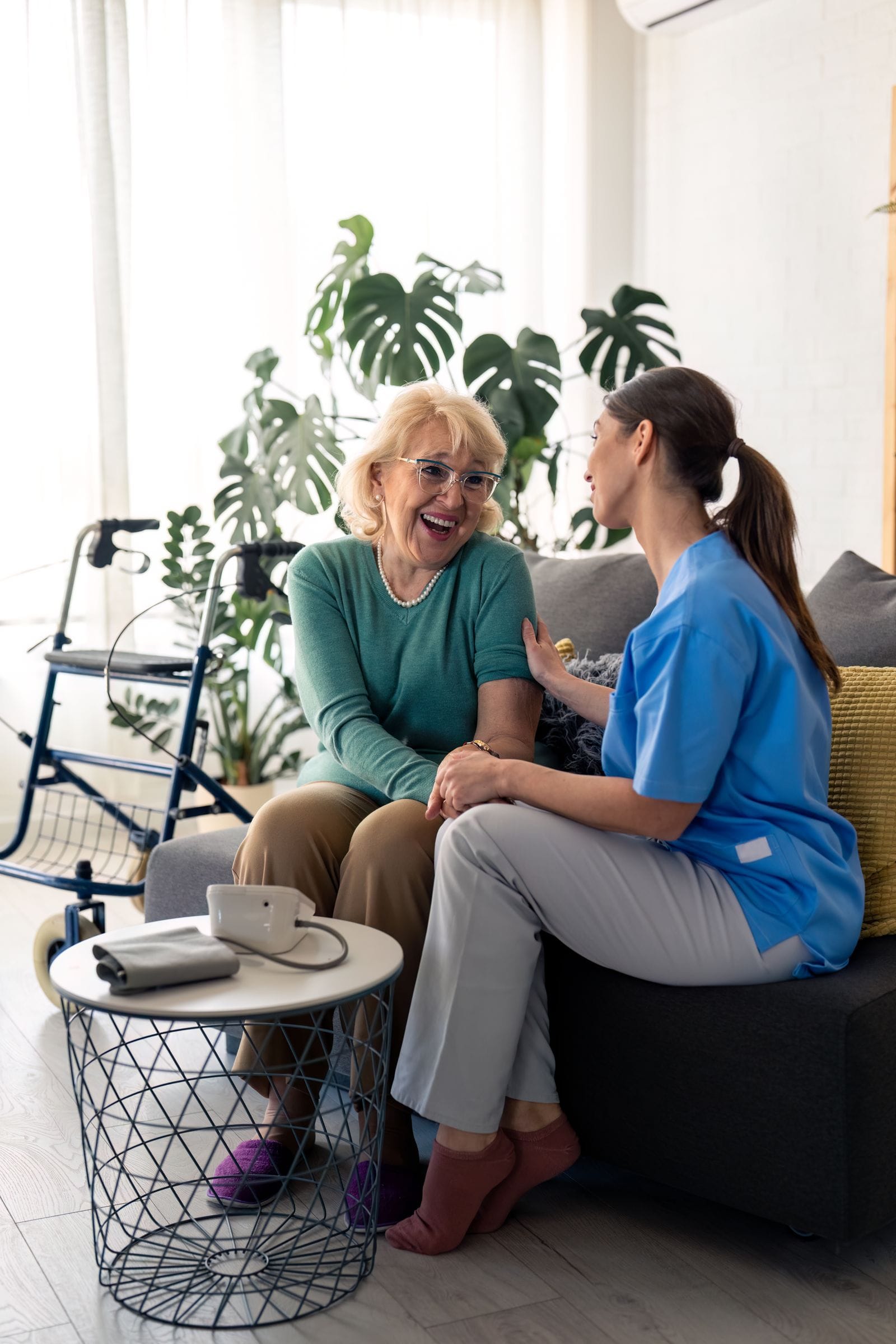
What live-in care is, and who it suits
Live-in home care means a caregiver stays in your parent's home around the clock for several days at a time. They help with the morning routine, cook, keep the medications on schedule, drive to appointments and keep them company, then sleep in the home at night and get up if they're needed.
It suits someone who shouldn't be alone anymore but who mostly sleeps through the night. A widowed father who has fallen twice this year. A mother in the middle stages of dementia who needs someone in the house. A couple where one spouse can no longer manage the other's care alone.
Live-in care isn't the same as 24-hour home care. A live-in caregiver needs a real night's sleep and breaks during the day. If your parent needs help several times every night, we'll say so and recommend 24-hour care, where caregivers take turns working awake shifts.
A second bedroom, or the far ends of the county
Live-in care works when there's somewhere for the caregiver to sleep. If your parent's ranch in Holiday City or Crestwood Village has a second bedroom, it can work well. If home is a one-bedroom condo or a small beach bungalow, 24-hour care in shifts may be the better fit, because each caregiver goes home to sleep.
Live-in care also suits the far ends of the county. In Tuckerton, West Creek or Barnegat Light, one caregiver who stays for several days means fewer handovers and fewer long drives than a string of short shifts.
A day with a live-in caregiver
Every home runs differently, and the nurse writes the care plan around yours. A typical day might go like this.
-
Morning
Help out of bed, a shower with someone steadying them, getting dressed, breakfast, and the morning medications from the organizer, taken on time.
-
Midday
Laundry, a tidy kitchen, a walk to the mailbox or a ride to the doctor, the pharmacy or the hairdresser, then lunch.
-
Afternoon
Time for whatever they enjoy: cards, the garden, a call with the grandchildren, the news. For someone with dementia, a steady routine that keeps the late afternoon calm.
-
Evening
Dinner, the evening medications, washing up, and help getting ready for bed.
-
Overnight
The caregiver sleeps in the home, close enough to hear, and gets up for the occasional bathroom trip or bad dream.
The caregiver calls the office when something changes, so you hear about a poor appetite or a near-fall the same day, not weeks later.

Live-in care or 24-hour care
Both keep someone in the home around the clock. The difference is whether that person sleeps.
Live-in care usually costs less, because one caregiver covers the day and rests at night instead of two or three caregivers each working an awake shift. It also means one familiar face. The trade-off is the nights: a live-in caregiver can get up now and then, but not over and over.
| Live-in care | 24-hour care | |
|---|---|---|
| Who is there | One caregiver who stays in the home for several days at a time | Two or three caregivers working awake shifts in turn |
| At night | The caregiver sleeps and gets up occasionally if needed | A caregiver is awake and on their feet all night |
| Best for | Someone who needs steady help by day and mostly sleeps through the night | Someone who needs help several times a night or can't be left unwatched |
| Cost | Usually less, since one caregiver covers the day | Usually more, since every hour is an awake, paid shift |
If you're not sure which fits, call us. A nurse can usually tell from a short conversation about your parent's nights, and the plan can change if their needs do. If nights are the only worry, overnight care may be enough.
Why families choose live-in care
For many families it's what lets a parent stay home once living alone has stopped being safe.
-
They stay in their own home
Their bed, their kitchen, their neighbors and their routines, instead of a move to a facility.
-
One familiar face
The same caregiver day after day learns how they take their coffee and notices when something is off.
-
Someone in the house at night
A fall or a frightening moment at night doesn't mean lying alone until morning.
-
Help that covers the whole day
Bathing, meals, medications, laundry, errands and company, from one person who knows the plan.
-
Visits feel like visits again
You visit as a daughter or son, not as the night shift.
How live-in care starts
Most families call us right after something has happened: a fall, a hospital stay, a diagnosis. We can often start quickly.
-
A phone call
Tell us what's been happening and what worries you most. We'll ask about nights, walking, memory and who else helps, and tell you honestly whether live-in care fits.
-
A nurse visits
A registered nurse comes to the home for a free assessment, looks at the stairs, the bathroom and the bedroom, and writes the care plan with you.
-
We introduce the caregiver
We choose a live-in caregiver for your parent's needs and temperament. If the match isn't right, tell us and we'll make a change quickly, with no gap in care.
-
The plan keeps up
After a hospital stay, or as dementia progresses, the nurse updates the plan and the caregiver's instructions.
Before a live-in caregiver arrives
A few practical things make the first week go smoothly. We go through them with you at the assessment.
-
A place to sleep
The caregiver needs a bed and a quiet, private place to rest, because they're staying for days at a time.
-
Breaks and days off
Live-in caregivers need time to themselves each day and days off each week. We plan who covers those hours before care starts, because we look after our caregivers and a rested caregiver gives better care.
-
How the house runs
Pets, the thermostat, the TV, meal times, who visits when. The more we know, the better the match.
-
Who to call
The family members we should keep posted, and the doctors and pharmacy your parent uses.
What families are saying
As the daughter of a client, I'm so grateful for the compassionate care givers from Always Responsive Home Care. Their attention to my mom's personal needs and the way they brightened her days meant everything.
Questions about live-in care
Still have a question? Call or text us. Someone is here to talk, any time of day.
(732) 447-9900 What is live-in home care?
Live-in home care is an arrangement where a professional caregiver stays in the client's home around the clock for several days at a time. The caregiver helps with bathing, dressing, meals, medication reminders, housekeeping, errands and companionship during the day, and sleeps in the home at night, getting up if help is needed. Always Responsive Home Care's live-in caregivers follow a care plan written by a registered nurse.
What is the difference between live-in care and 24-hour care?
With live-in care, one caregiver stays in the home and sleeps at night, so it suits someone who mostly sleeps through the night. With 24-hour care, two or three caregivers work awake shifts in turn, so someone is up and alert at every hour. Live-in care usually costs less. 24-hour care is the safer choice for someone who needs help several times a night or can't be left unwatched.
Does a live-in caregiver need their own room?
A live-in caregiver needs a bed and a quiet, private place to sleep and take breaks, because they stay in the home for days at a time. During the free in-home assessment, Always Responsive Home Care looks at the space with you and talks through what will work in your home.
Can a live-in caregiver help at night?
Yes, a live-in caregiver can help at night occasionally, getting up for the odd bathroom trip or a moment of confusion, but sleeps in the home the rest of the night. If someone needs help several times every night, the caregiver can't get the rest they need, and 24-hour care with an awake overnight caregiver is the better fit. A nurse can tell you which one your parent needs.
Does Medicare pay for live-in care?
No, Medicare does not pay for live-in care: it doesn't cover 24-hour-a-day care at home, or personal care such as help with bathing, dressing and using the bathroom when that is the only care someone needs. Always Responsive Home Care is private pay, so families pay us directly for live-in care, and if your loved one has long-term care insurance, we file the claims so the policy reimburses you.
How quickly can live-in care start?
Often within a few days of the first call, and sometimes sooner when someone is coming home from the hospital. The first step is a free assessment visit from a registered nurse, who writes the care plan before the caregiver arrives.
Is live-in care available on Long Beach Island and the barrier island?
Yes. Our Toms River office covers Barnegat Light and Harvey Cedars on Long Beach Island, and Mantoloking, Lavallette, Seaside Heights and Seaside Park on the barrier island. Live-in care often suits these towns, because the caregiver isn't crossing a bridge for every shift, but the home needs a bed and a private place for the caregiver to sleep and take breaks.
Can VA benefits help pay for live-in care in Ocean County?
They can, for wartime veterans and surviving spouses who qualify for a VA pension and need help with everyday activities. The VA's Aid and Attendance payment goes to the veteran or spouse, who can spend it on any care, including ours. The Ocean County Veterans Service Bureau, at (732) 929-2096 in the Ocean County Resource Center in Toms River, helps veterans and their families file VA claims. The VA decides who qualifies, and we are not affiliated with the VA.
Let's talk about care for your family
Send the form and our Ocean County team will call you back to talk about your loved one and set up a free in-home assessment. There's no cost and no obligation.
By submitting this form, you agree to our Privacy Policy and Terms of Service.