
Mobility care that keeps them moving safely at home
Steady hands for getting out of bed, into the shower and across the room, from patient caregivers trained to use walkers, gait belts and lifts the right way.
From our office in Toms River, serving Ocean County, NJ.

What mobility care means day to day
Mobility care is hands-on help with moving: getting out of bed, standing up from a chair, walking to the bathroom, getting in and out of the shower or the car. A caregiver stands where they can catch a stumble, uses the right equipment, and gives your parent time instead of hurrying them.
Families usually call after something changes. A fall. A hip or knee replacement. A stroke, Parkinson's or arthritis that has made the walk to the bathroom feel long. Or a parent who has quietly stopped going upstairs because they're afraid of falling.
That fear is worth taking seriously. The CDC reports that more than one in four older adults falls each year, and that fear of falling can lead people to cut back on everyday activities. Moving less weakens the muscles, which makes the next fall more likely. Good mobility care keeps them moving, with someone beside them.
Step-over tubs in the adult communities
Many of Ocean County's adult-community homes are on one floor, which helps, but the bathrooms tend to be small, with a step-over tub and a doorway a walker barely clears, and the single step at the front door can make leaving the house difficult.
After a fall, many people here spend time in inpatient rehab at Encompass Health in Toms River or the Johnson Rehabilitation Institute at Ocean University Medical Center in Brick before coming home. A mobility caregiver keeps up what therapy started: transfers done the way the therapist taught, walks down the hall, and the exercises between home health visits. For the first weeks back, see hospital-to-home care.
What a mobility caregiver helps with
-
Transfers
Bed to chair, chair to toilet, wheelchair to car, done the way the physical therapist showed, with the caregiver and your parent working together.
-
Walking
A gait belt and a steady arm for the walk to the kitchen, the porch or the mailbox, with the walker or cane they're supposed to be using.
-
Bathing safely
Help in and out of the tub or shower, the shower chair and grab bars used properly, and someone close by on wet floors.
-
Lifts and equipment
Hoyer lifts, sliding boards, transfer benches, wheelchairs and lift recliners, used by caregivers trained on them.
-
Repositioning
Regular turns and shifts for someone who spends much of the day in bed or a chair, to keep skin healthy and joints comfortable.
-
Exercises between therapy visits
Encouragement to do the exercises the physical therapist assigned. Our caregivers don't replace therapy; they help it happen every day.
Making the house easier to move through
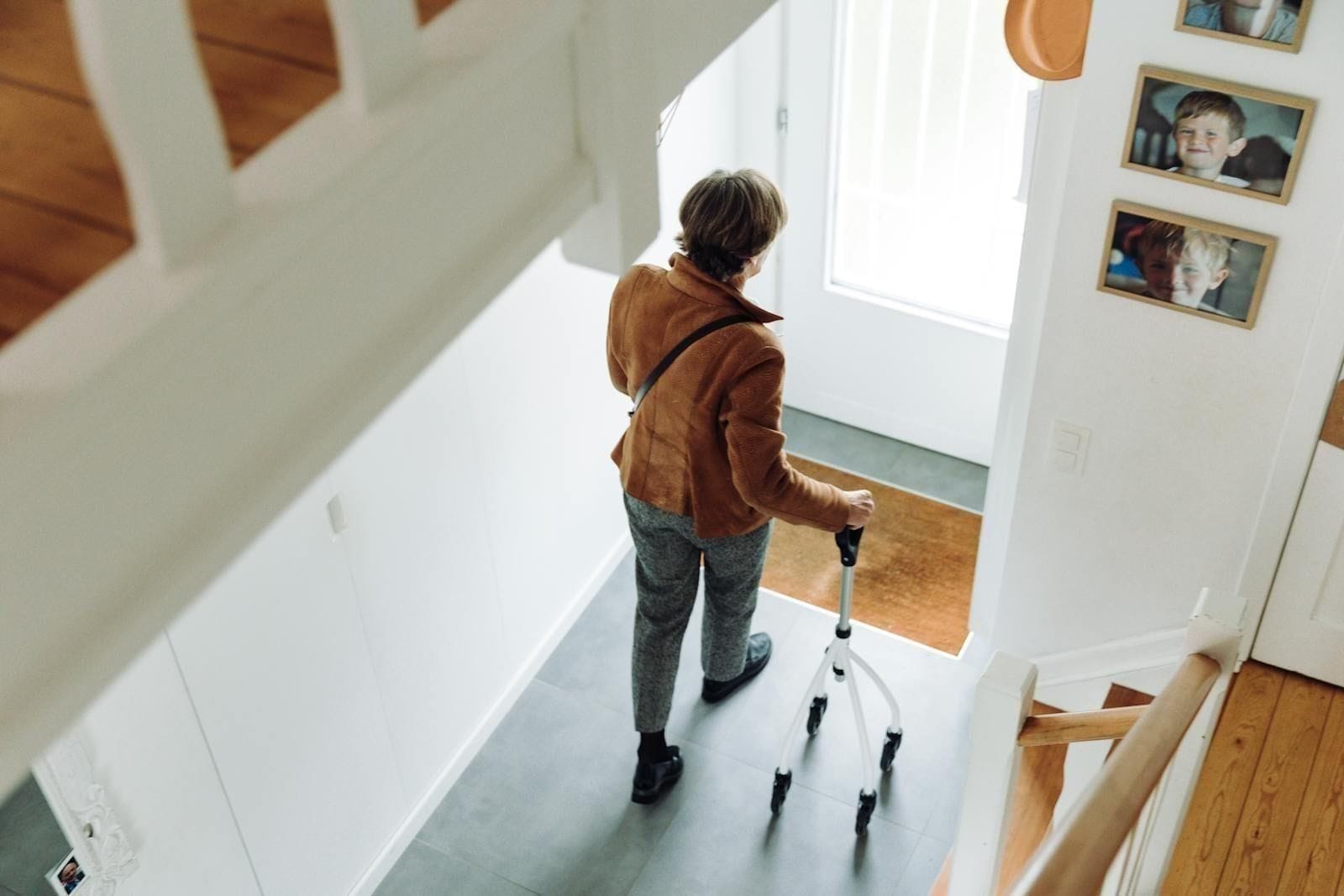
When a nurse visits for the free assessment, they walk the route your parent takes every day: bed to bathroom, kitchen to favorite chair, front door to car. They look for the usual trouble spots, such as loose rugs, cords across walkways, a dim hallway, a bathroom without grab bars, or stairs with only one rail.
Some fixes are small and the caregiver can handle them, like moving a rug or adding a night-light. Others, like grab bars or a raised toilet seat, we'll point out so you can arrange them. Our guides to preventing falls at home and choosing a walker or rollator go into more detail.
What good mobility help changes
-
Help at the risky moments
Transfers, bathing and bathroom trips are the moments that worry families most. A trained caregiver is there for them.
-
More of the house back
The upstairs bedroom, the back porch, the walk to the mailbox: places they'd given up on become possible again.
-
Strength kept up
Moving every day, with help, keeps muscles working. Sitting still to stay safe does the opposite.
-
Less strain on the family
Lifting a parent is hard on a spouse's or adult child's back. Our caregivers are trained to do it safely.
How mobility care starts
If your parent is coming home after surgery or a fall, call before the discharge date if you can, so help is ready on the first day.
-
Tell us what's changed
What happened, what the doctor or therapist said, and what equipment is in the home or on its way.
-
A nurse walks the home
During the free assessment, a registered nurse looks at the bedroom, the bathroom, the stairs and the equipment, and writes the care plan.
-
We match a caregiver
A caregiver experienced with the transfers and equipment your parent needs, with a calm manner that suits them, and the same familiar face whenever we can.
-
The plan changes as they do
As strength comes back after surgery, or as a condition progresses, the nurse adjusts the hours and the help.
Signs a parent needs help getting around
-
They hold on to furniture to cross a room
-
They've stopped using the stairs or the shower
-
They've fallen, or nearly fallen, in the past few months
-
Getting up from a chair takes several tries
-
They're coming home after a joint replacement, a stroke or a hospital stay
What families are saying
As the daughter of a client, I'm so grateful for the compassionate care givers from Always Responsive Home Care. Their attention to my mom's personal needs and the way they brightened her days meant everything.
Questions about mobility care
Still have a question? Call or text us. Someone is here to talk, any time of day.
(732) 447-9900 What is mobility care for seniors?
Mobility care is hands-on help with moving safely: getting in and out of bed, standing from a chair, walking with a walker or cane, using the bathroom and shower, and getting in and out of the car. A trained caregiver uses equipment such as gait belts, transfer boards and Hoyer lifts correctly and gives the person time to move at their own pace. The goal is to keep someone active at home while lowering the risk of a fall.
Can a home caregiver use a Hoyer lift?
Yes, Always Responsive Home Care's caregivers are trained to use Hoyer lifts, sliding boards, gait belts, transfer benches and wheelchairs. Before care starts, a registered nurse reviews the equipment in the home and writes the transfer steps into the care plan, so each caregiver does it the same safe way.
Is mobility care the same as physical therapy?
No. Mobility care is non-medical help with moving day to day, while physical therapy is skilled treatment from a licensed therapist, usually ordered by a doctor and often covered by Medicare while it's medically necessary. The two work well together: the therapist sets the exercises and the safe way to transfer, and the caregiver helps the person practice them between visits.
How can I help an elderly parent who is afraid of falling?
Start by making the home safer: clear loose rugs and cords, add night-lights and grab bars, and make sure they use the right walker or cane. Then make sure help is there for the riskiest moments, such as getting up at night, showering and using the stairs. Many people who have fallen become afraid of falling and start moving less, which weakens them further. A caregiver who walks with them keeps them active safely.
Does Medicare pay for help with mobility at home?
Medicare does not pay for a caregiver to help with walking, transfers or bathing when that is the only care someone needs. It does cover some equipment, such as walkers and wheelchairs, when a doctor orders it, and physical therapy at home for people who qualify for home health care. Mobility care from Always Responsive Home Care is private pay: families pay us directly, and we file any long-term care insurance claims so the policy reimburses them.
Can my parent get to appointments in a wheelchair in Ocean County?
Yes. Every Ocean Ride Reserve-A-Ride vehicle has a wheelchair lift, and the service takes residents 60 and older, and adults 18 and older with disabilities, to appointments inside the county. Book by phone at (732) 736-8989, up to four weeks ahead. Drivers aren't allowed into the home, so your parent has to be at ground level when the van arrives, and a mobility caregiver can help them down the front step and wait with them.
Who can install grab bars for an older adult in Ocean County?
The Ocean County Office of Senior Services lists two programs for small home repairs: Catholic Charities' Fix-It program at (732) 363-5322 and Caregiver Volunteers of Central Jersey's Handy Andy program at (732) 505-2273. Ask each what it covers. A private contractor can do the work too. At our first visit, the nurse walks the house with you and shows you where grab bars and railings would help most.
Let's talk about care for your family
Send the form and our Ocean County team will call you back to talk about your loved one and set up a free in-home assessment. There's no cost and no obligation.
By submitting this form, you agree to our Privacy Policy and Terms of Service.