
Hospital to home care for the first weeks after discharge
A caregiver at home from the day your loved one comes back from the hospital, rehab or surgery, helping with everything the discharge papers don't.
From our office in Cranford, serving Union County, NJ.

The first days home are the hardest
Coming home from the hospital is a relief, and it's also when things tend to go wrong. Your loved one is weaker than before the hospital stay, with new medications, a sheet of instructions, a follow-up appointment next week, and a bathroom that suddenly feels a long way off. The family takes time off work and still can't be there at 3 a.m.
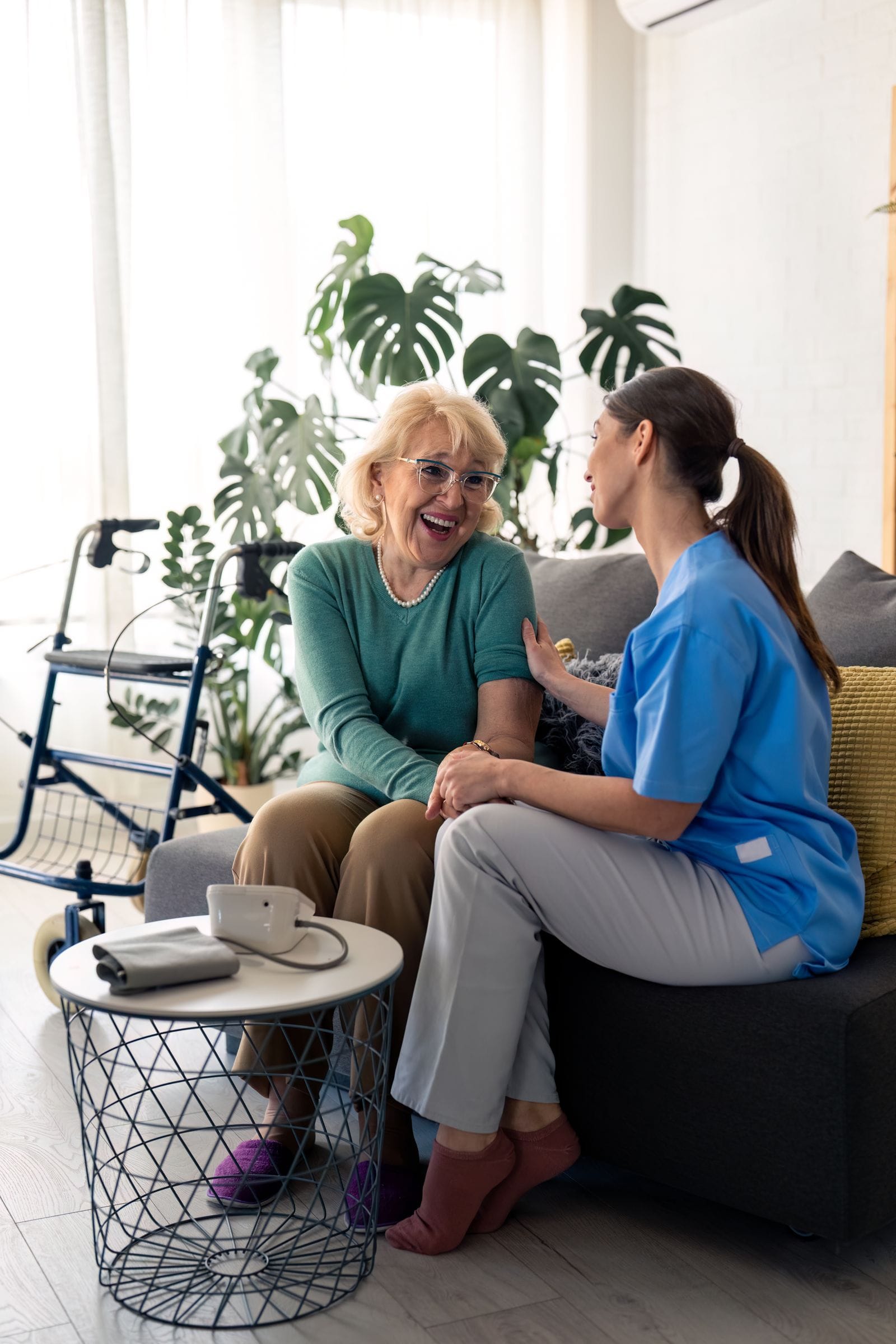
Hospital to home care puts a caregiver in the house through that stretch. We help with getting up and moving safely, bathing and dressing, meals, medication reminders on the new schedule, rides to follow-up appointments and companionship, usually for a few weeks, with the hours tapering off as strength comes back.
We're a non-medical home care agency. If the hospital has ordered home health, a nurse or therapist from a home health agency visits for the medical part, such as wound care and therapy. Our caregivers cover the hours in between and follow the precautions and exercises the therapist sets. Our page on home health care vs home care explains how the two fit together.
Three hospitals, and Plainfield's satellite emergency room
Union County has three general hospitals: Overlook Medical Center in Summit, Trinitas Regional Medical Center in Elizabeth and Robert Wood Johnson University Hospital Rahway. The Rahway campus also holds Kindred Hospital New Jersey's long-term acute care hospital and Care Connection, a subacute rehab unit, so some patients there come home weeks after they arrived, not days.
Plainfield is different. It has no hospital of its own, and its emergency department on Randolph Road is a satellite of JFK University Medical Center in Edison, so a Plainfield patient who needs to stay is transferred elsewhere, and the trip home is longer.
Wherever the stay was, the follow-up appointments start within days. Union County Paratransit takes residents 60 and over to medical appointments for $3 a trip, but it asks for five to seven days' notice, makes out-of-county medical trips only on Mondays and Wednesdays, and stops at the curb. For those first appointments, a caregiver who can drive, or walk your parent to the van and ride along, is often what gets them there.
Discharge day and the weeks after
-
Before discharge
Call us as soon as you hear a discharge date, even from the hospital room. Someone answers day or night, so we can plan the hours and have a caregiver at the house when your parent arrives.
-
The trip home and the first night
Help from the car into the house, settling in, a light meal and a clear path to the bathroom. The first night is when many families most want someone there.
-
The first week
Help with washing while an incision heals, dressing, getting to the toilet and following the surgeon's precautions. Reminders keep the new prescriptions on schedule.
-
Follow-up appointments
Rides to the doctor, therapy and the pharmacy, and someone to write down what the doctor said.
-
Getting back to normal
Fewer hours as your parent gets stronger, with the focus moving to walking, meals and their own routine. Some families keep a few hours a week afterwards; others stop. Either is fine.
Recoveries we help with
We help people home after hip replacement and knee replacement, heart surgery and heart failure, pneumonia, falls and broken bones, and long hospital stays that leave someone weak. After a stroke, our stroke recovery care continues for as long as the recovery takes.
Some people come home after a stay in a rehab facility rather than straight from the hospital. The help is the same, and it's just as needed: rehab ends, but the stairs and the shower are still at home. Many families add overnight care for the first nights, or 24-hour care if someone can't be alone at all yet.
What our caregivers watch for after discharge
Caregivers don't diagnose anything, but they see your parent every day and know what to report. When they notice one of these, they tell you the same day.
-
New confusion
Confusion that wasn't there before can come from an infection, dehydration or a medication, and it's worth a call to the doctor.
-
Not eating or drinking
Appetite often drops after a hospital stay. Caregivers keep track of what goes in, and let you know if it isn't enough.
-
An incision that looks different
Redness, swelling, warmth or drainage around a wound, so you can call the surgeon or the home health nurse.
-
Unsteadiness
Shuffling, dizziness when standing or a near fall, the warnings that come before a fall.
-
Breathlessness or swelling
New shortness of breath, or swollen ankles and legs, which matter especially after heart surgery or heart failure.
How to arrange care before discharge
Care can often start the same day, but a call a day or two before discharge gives us time to plan it well.
-
Call when you hear a discharge date
Tell us where your parent is, what happened and when they're likely to come home.
-
Share the discharge instructions
The medication list, the surgeon's precautions and the therapy schedule shape the care plan.
-
A caregiver is there when they get home
We schedule the first shift around the discharge time, including the first night if needed, so a friendly caregiver is waiting at home.
-
Hours taper as they recover
We review the plan as your parent gets stronger and cut back the hours when they're ready.
Why families call us from the hospital
-
Care that can start quickly
Often the same day you call.
-
No hiring to do from a hospital room
Every caregiver is already our employee, background-checked, bonded and insured.
-
Working with the home health team
Caregivers follow the therapist's exercises and precautions and keep to the medication schedule.
-
Easy to stop
No long-term contract, so when your parent is back on their feet, the care ends without fuss.
What families are saying
As the daughter of an Always Responsive Home Care client, I'm grateful for the compassionate caregivers who helped my mom maintain her independence and dignity at home. Their attentiveness to her needs and warm rapport made a world of difference.
Questions about care after a hospital stay
Still have a question? Call or text us. Someone is here to talk, any time of day.
(908) 691-3660 What is hospital to home care?
Hospital to home care is non-medical help at home for the first days and weeks after a hospital stay, rehab or surgery. A caregiver helps with getting up and moving safely, bathing and dressing, meals, medication reminders on the new schedule, rides to follow-up appointments and companionship, and reduces the hours as the person recovers. It works alongside any home health nursing or therapy the hospital has ordered.
When should I arrange home care before a hospital discharge?
Arrange home care as soon as you hear a likely discharge date. A day or two of notice lets the agency plan the hours and have a caregiver at the house when your parent arrives, including for the first night. If the discharge comes suddenly, call anyway: care can often start the same day.
How long do people need care after a hospital stay?
Most people need care for a week or two after a planned surgery, and several weeks or longer after a stroke, a fall or a long illness. It depends on why they were in the hospital and how strong they were before. Hours usually start high and come down as strength returns, and care can end whenever the person no longer needs it.
Does Medicare pay for a caregiver after a hospital stay?
Medicare pays for home health care after a hospital stay if the person is homebound and needs skilled nursing or therapy, and that can include part-time aide visits. It doesn't pay for a caregiver for longer hours, overnight care or personal care when that's the only help needed. For that help, families pay Always Responsive Home Care directly, and if there's a long-term care insurance policy, we file the claims so it reimburses them.
What's the difference between your care and home health after discharge?
Home health sends a nurse or therapist, ordered by the doctor, for short visits to handle the medical part, while our caregivers are non-medical and stay for hours at a time to help with everything else. Home health might check a wound or run therapy sessions; our caregivers help with bathing, dressing, meals, getting around, medication reminders and companionship. Many families use both.
Can a caregiver help with the exercises from physical therapy?
Yes. Caregivers encourage and help with the exercises the therapist has taught, walk with your parent as the therapist has asked, and follow any precautions, such as hip precautions after a joint replacement. They don't design or change the therapy; that stays with the therapist.
How soon can care start after discharge?
Often the same day. Call as soon as you know your parent is coming home, tell us when and where, and we'll schedule a caregiver to meet them at the house. More notice gives us more time to match the right caregiver.
Can you arrange care for a discharge from Overlook, Trinitas or RWJ Rahway?
Yes. We arrange care for Union County residents coming home from Overlook Medical Center in Summit, Trinitas Regional Medical Center in Elizabeth and Robert Wood Johnson University Hospital Rahway, from subacute rehab, and from hospitals outside the county, such as JFK University Medical Center in Edison. Call our Cranford office at (908) 691-3660 as soon as a discharge date is set. Care often starts within a day or two, and sometimes the same day.
Let's talk about care for your family
Send the form and our Union County team will call you back to talk about your loved one and set up a free in-home assessment. There's no cost and no obligation.
By submitting this form, you agree to our Privacy Policy and Terms of Service.