
Overnight care with a caregiver awake while the house sleeps
A caregiver arrives in the evening, stays awake all night, and is there for the bathroom trips, the wandering and the 3 a.m. worry, so the rest of the family can sleep.
From our office in Cranford, serving Union County, NJ.
What overnight home care is
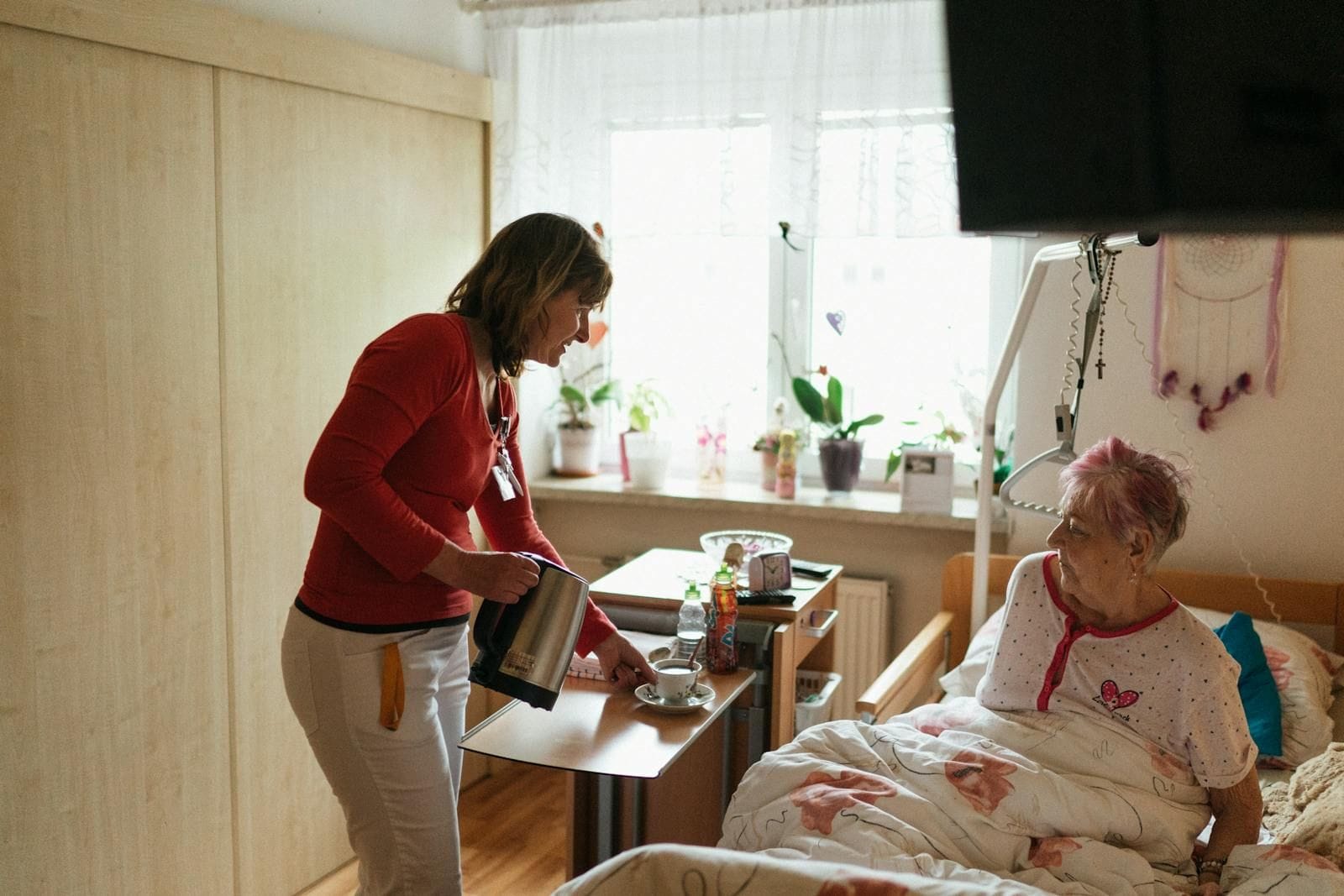
Overnight home care puts an awake caregiver in the home for the night, usually from evening until morning. They help with the bedtime routine, keep an ear out while your parent sleeps, and get up with them for every bathroom trip, every bout of confusion and every attempt to head out the door.
Families usually call when the nights are what's wearing everyone down. A father gets up three times to use the bathroom, and his balance is worst then. A mother with dementia is up at 2 a.m. getting dressed for a job she retired from years ago. Or a husband or wife who has slept with one ear open for months is running on empty.
Our overnight caregivers stay awake the whole shift. Some arrangements let a caregiver sleep and get up only when called. For nights like these, someone awake and listening is what keeps everyone safe.
Which emergency room, written into the plan
Emergency departments open around the clock in Union County include Overlook Medical Center in Summit and its Union campus on Galloping Hill Road, Trinitas Regional Medical Center in Elizabeth, Robert Wood Johnson University Hospital Rahway and the JFK Muhlenberg satellite emergency department in Plainfield.
Tell us which of those your parent's doctors use, and we'll write it into the care plan beside the medication list. If a night turns into an emergency, the caregiver calls 911 first, then you, and can tell the EMTs where your parent is treated and hand them the list.
What happens during an overnight shift
-
Evening
Dinner dishes, the evening medication reminders, washing up, changing into night clothes, and settling into bed the way they like it.
-
Through the night
Help to the bathroom and back, incontinence care and fresh linens if needed, turning someone who can't turn alone, and a calm voice when they wake confused.
-
The quiet hours
While your parent sleeps, the caregiver stays alert, checks on them, and keeps the house quiet and ready for the morning.
-
Morning
Help getting up, washed and dressed, breakfast started, and a handoff to whoever comes next.
Overnight care can stand on its own or sit inside a bigger schedule. Some families add a few morning hours of hourly home care. Others book overnights as respite care for a spouse who needs sleep. If help is needed around the clock, see 24-hour home care.
Why nights get harder
Nights bring risks the day doesn't. Getting up half-asleep in the dark, sometimes after a sleeping pill or a blood pressure medication, makes a fall more likely. Many people with dementia grow more confused and restless late in the day and into the evening, which is called sundowning. And needing the bathroom several times a night becomes common with age.
An awake caregiver doesn't make those things go away. It means someone is there when they happen. Our guides to managing sundowning and why older adults have trouble sleeping explain more.
What families get from overnight care
-
Everyone sleeps
The spouse or adult child who has been on call every night gets to sleep through it.
-
Safer bathroom trips
Someone steadies them on the way there and back, in the hours when balance is worst.
-
Calm when they're confused
Caregivers trained in dementia care redirect gently instead of arguing, and keep an eye on the doors.
-
Only the nights you need
Every night, or only the hardest ones, such as weekends or the nights family is away.
How overnight care starts
Tell us about the nights. That's what the plan is built on.
-
We talk about a typical night
When they go to bed, how often they get up, whether they wander, which medications they take in the evening, and who else is in the house. Call any time; someone answers day or night.
-
A nurse visits
During a free assessment, a registered nurse looks at the bedroom, the path to the bathroom, the lighting and the doors, and writes the overnight plan with you.
-
We introduce the caregiver
We match a kind, dependable overnight caregiver to your parent's needs and temperament. If the match isn't right, tell us and we'll change it quickly.
-
The plan keeps up
The nurse checks in and adjusts the plan as nights change, after a hospital stay or as dementia progresses.
Signs it's time for overnight help
-
They've fallen or nearly fallen at night
-
They get up more than once or twice and are unsteady
-
They wander, try to leave the house, or are frightened at night
-
A spouse or adult child hasn't slept a full night in weeks
-
They've just come home from the hospital
What families are saying
As the daughter of an Always Responsive Home Care client, I'm grateful for the compassionate caregivers who helped my mom maintain her independence and dignity at home. Their attentiveness to her needs and warm rapport made a world of difference.
Questions about overnight care
Still have a question? Call or text us. Someone is here to talk, any time of day.
(908) 691-3660 What does an overnight caregiver do?
An overnight caregiver stays awake in the home through the night. They help with the bedtime routine, assist with bathroom trips and incontinence care, turn someone who can't turn on their own, redirect a person with dementia who wakes confused or tries to wander, and respond right away to a fall. In the morning they help the person get up and ready for the day. Always Responsive Home Care's overnight caregivers follow a care plan written by a registered nurse.
Do overnight caregivers sleep?
Not at Always Responsive Home Care: our overnight caregivers stay awake for the whole shift, so someone is alert and listening at every hour of the night. Some agencies offer sleeping overnight shifts, where the caregiver rests and gets up only when called. Staying awake matters most for people who get up often, wander or are at high risk of falling.
How much does overnight care cost?
The cost of overnight care depends on the length of the shift, how many nights a week you need, and how much hands-on help is involved. Always Responsive Home Care gives you a clear quote after a free in-home assessment, and there is no long-term contract. Medicare does not pay for overnight home care. You pay us directly, and if your loved one has long-term care insurance, we file the claims so the policy reimburses you.
Does Medicare cover overnight care at home?
No, Medicare does not cover overnight care at home: it doesn't pay for 24-hour-a-day care at home, or for personal care such as help with bathing, dressing and using the bathroom when that is the only care someone needs. Overnight home care is non-medical, so Always Responsive Home Care bills you directly, and we handle any long-term care insurance claims so the policy can pay you back.
Is overnight care the same as 24-hour care?
No, overnight care covers the night, usually from evening until morning, while family or other caregivers cover the day. 24-hour care keeps an awake caregiver in the home around the clock, with caregivers working shifts in turn. Many families start with overnights and add daytime hours as needs grow.
Can an overnight caregiver help someone with dementia?
Yes, and nights are often when someone with dementia needs it most, because they may be confused, restless or try to leave the house after dark. Always Responsive Home Care's caregivers are trained in dementia care. They redirect gently, keep the routine familiar, and keep watch so the person stays safe and the family can sleep.
Which emergency rooms are open overnight in Union County?
Overlook Medical Center at 99 Beauvoir Avenue in Summit and its Union campus emergency department at 1000 Galloping Hill Road in Union, Trinitas Regional Medical Center at 225 Williamson Street in Elizabeth, Robert Wood Johnson University Hospital Rahway at 865 Stone Street, and the JFK Muhlenberg satellite emergency department at 1200 Randolph Road in Plainfield are all open 24 hours. In an emergency, call 911 rather than driving. Put your parent's preferred hospital in the care plan so an overnight caregiver can tell the EMTs.
Let's talk about care for your family
Send the form and our Union County team will call you back to talk about your loved one and set up a free in-home assessment. There's no cost and no obligation.
By submitting this form, you agree to our Privacy Policy and Terms of Service.