Arthritis in the Hands: What It Is, What Helps, What Doesn't
What the bumps mean, what the evidence actually backs, and the workarounds that keep arthritic hands working through the day.
The Small Joints That Do the Work of a Day
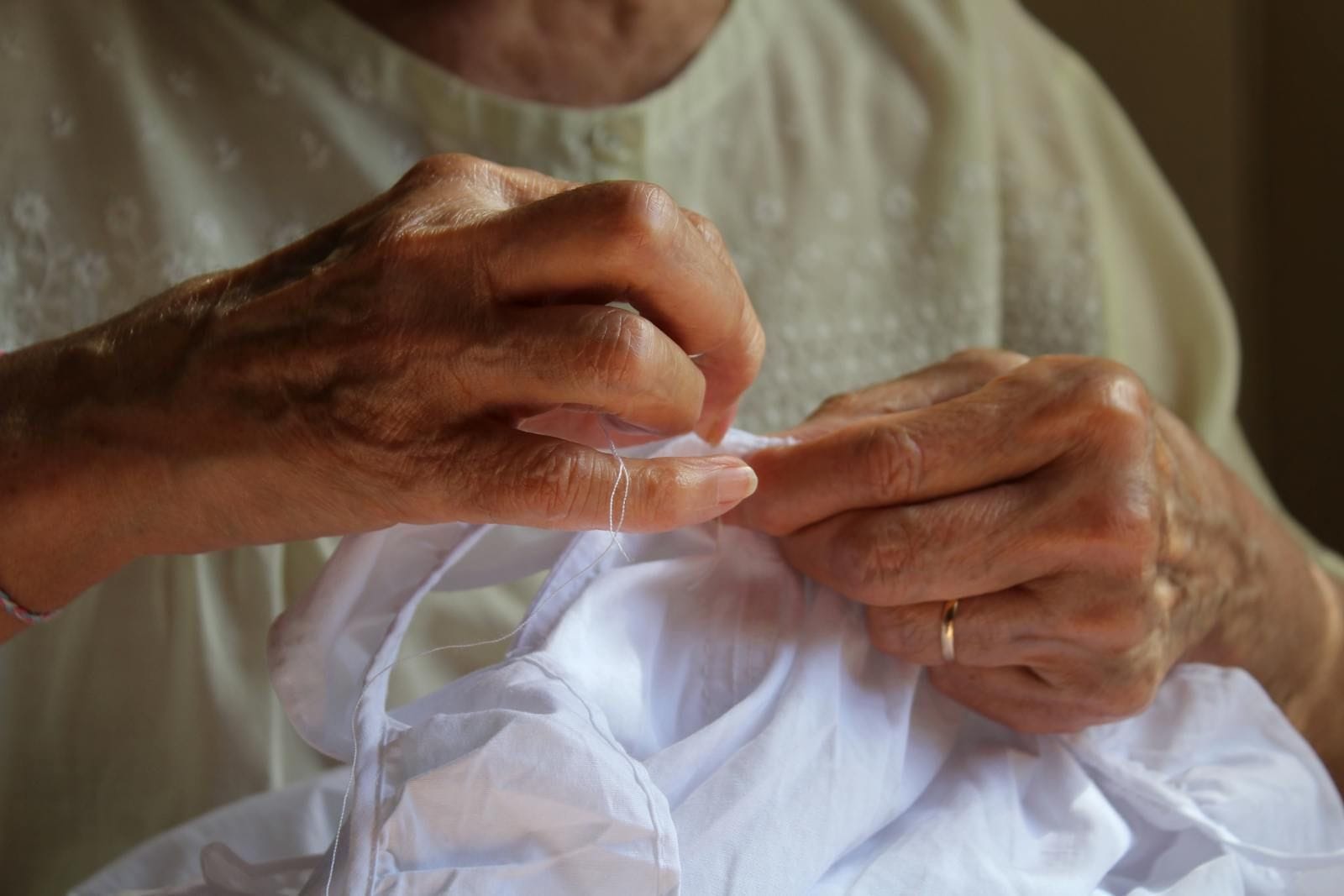
There are twenty-seven bones in each hand and a knot of small joints at the end of every finger and at the base of the thumb. Each one is wrapped in a thin sleeve of cartilage that lets the bones glide silently past each other ten thousand times a day — turning a doorknob, threading a button, gripping a steering wheel, holding a phone, holding a grandchild's hand. Hand arthritis is what happens when that cartilage thins, frays, or in the case of rheumatoid arthritis, gets attacked by the body's own immune system. The bone ends start to rub. The body, trying to stabilize the loosening joint, lays down new bone at the edges. Small lumps form. The fingers begin to drift slightly off-axis. The hand, the most articulate tool in the human body, becomes a quieter and more careful version of itself.
It is also extraordinarily common. The Centers for Disease Control and Prevention's most recent Preventing Chronic Disease analysis of NHANES data found that 67 million American adults have some form of diagnosed arthritis, and roughly 33 million of them have osteoarthritis specifically. Hand osteoarthritis is the most common single-site form. The same dataset shows the prevalence climbs sharply with age: 54 percent of adults aged 75 or older carry an arthritis diagnosis. Among people with osteoarthritis, 62 percent are women, and the thumb-base joint in particular is so often affected in postmenopausal women that hand surgeons see a recognizable demographic pattern in their waiting rooms.
Most of this work is not done by surgeons. The conditions are chronic, the joints in question are small, and the goal of treatment for the vast majority of people is to slow the wear, manage the pain, and keep the hand functional through the next twenty or thirty years. The tools for doing that are clearer than they used to be, and the rest of this guide walks through them.
Heberden's Nodes, Bouchard's Nodes, and the Bumps People Notice First
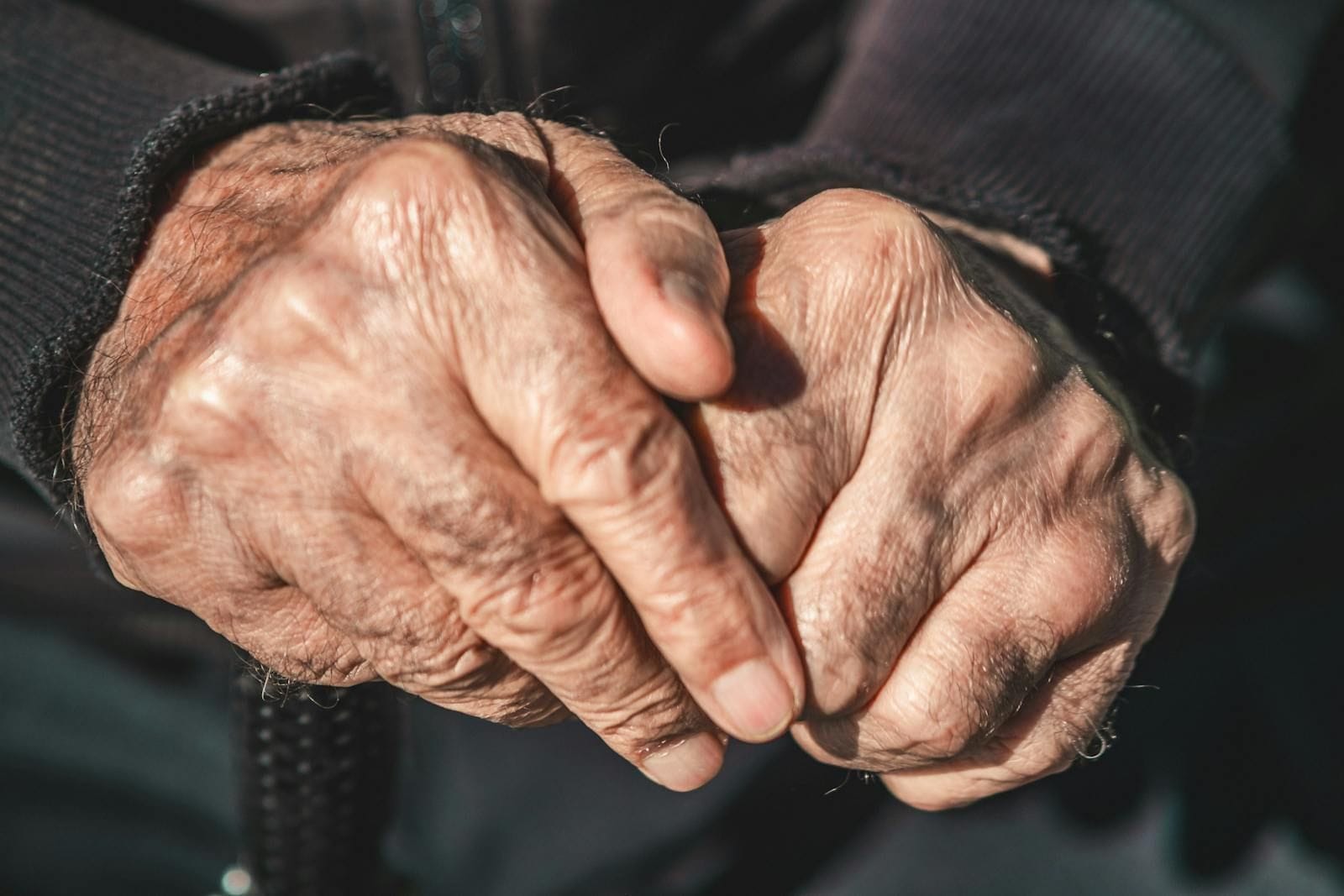
The first physical sign most people notice is a bony lump on a finger joint. There are two named patterns. A swelling on the joint closest to the fingernail — the distal interphalangeal joint — is called a Heberden's node, after the eighteenth-century English physician William Heberden. The same kind of swelling on the middle finger joint is called a Bouchard's node, after the nineteenth-century French clinician Charles-Joseph Bouchard. Both are signs of osteoarthritis, and both come from the body's attempt to stabilize a joint where cartilage has worn down: the bone responds by growing outward in small ridges and spurs called osteophytes, and over years these accumulate into the firm rounded lumps that change the look of a finger.
Heberden's nodes are by far the more common of the two. A 2022 multi-center TLAR-osteoarthritis cohort study of hand osteoarthritis patients found Heberden's nodes in 86 percent of cases and Bouchard's nodes in 37 percent. The third finger was the most frequently involved on both hands. The same study found that the presence of Bouchard's nodes was associated with measurably reduced hand function, while Heberden's nodes by themselves often were not — a useful clinical detail when patients worry that a fingertip lump means imminent loss of grip.
The nodes themselves are usually painless once they have fully formed. The pain comes from the underlying joint and from the inflammation phase when the node is actively developing, which can last months. Anything that develops suddenly, looks red or warm, or appears on a joint other than these two should be evaluated; rheumatoid nodules, cysts, infections, and gout tophi can all mimic the bumps and they have different management.
Osteoarthritis or Rheumatoid Arthritis? How Doctors Tell Them Apart
Three quarters of the hand arthritis a primary care doctor sees is osteoarthritis. The other quarter is mostly rheumatoid arthritis, with smaller fractions of psoriatic arthritis, gout, and a few less common conditions. The two main ones look superficially similar from across the room. They are not the same disease and they are not treated the same way, and the differences show up clearly once a physician knows what to ask.
Osteoarthritis is a wear-related disease. The cartilage breaks down slowly, the joints at risk are the ones a person has used the most, and the pattern is usually asymmetric — one thumb gives out before the other, one index finger develops a Heberden's node before its twin. Morning stiffness exists but fades quickly, usually inside thirty minutes, and gets worse again at the end of a long day of activity. The joints most often involved are the ones closest to the fingertips, the middle finger joints, and the base of the thumb. According to Harvard Health's clinical comparison, osteoarthritis rarely causes the joint to feel warm to the touch and almost never produces fatigue or fever.
Rheumatoid arthritis is an autoimmune disease in which the body's immune system attacks the synovial lining of the joints. It tends to develop over weeks or a few months and tends to involve both hands at once, in mirror-image fashion. The joints it favors are the knuckles, the middle finger joints, and the wrist; it typically spares the joint closest to the fingernail, which is the inverse of the osteoarthritis pattern. Morning stiffness in rheumatoid arthritis lasts an hour or longer and is often accompanied by visible swelling, warmth, a vague flu-like fatigue, and sometimes a low-grade fever. The National Institute of Arthritis and Musculoskeletal and Skin Diseases notes that early diagnosis and treatment with disease-modifying drugs can dramatically slow the joint damage that untreated rheumatoid arthritis produces — which is why a rheumatology referral matters so much more for rheumatoid arthritis than for osteoarthritis.
A rheumatologist's workup combines a careful physical exam, blood tests for rheumatoid factor and anti-cyclic citrullinated peptide (anti-CCP) antibodies, and X-rays. The blood markers are highly specific for rheumatoid arthritis when they come back positive but do not rule it out when they come back negative; about a quarter of patients with rheumatoid arthritis are seronegative.
The Long Slow Start Most People Miss
Hand osteoarthritis almost never announces itself. The early years are a low-grade puzzle: an occasional ache at the base of the thumb when opening a jar, a stiffness in the right index finger the first morning after gardening, a dropped coffee mug that gets blamed on tiredness or hurry. The joint involved may not be visibly swollen and the X-ray may not show much, because cartilage loss is well underway before the bony changes become obvious on imaging.
Three patterns tend to mark the genuine early phase, and noticing them is most of the work. Pain that follows specific activities — pinching a key, wringing out a washcloth, turning a doorknob, gripping the steering wheel during a long drive — and that eases reliably with a day or two of rest. Morning stiffness in the hands that fades within ten to thirty minutes of warm water or movement. A specific joint, often the thumb base or the closest joint to the fingernail on the index or middle finger, that aches when pressed gently from the side. These together, persisting over several months, are enough for a primary care physician to start a conservative management plan; further imaging is rarely needed at this stage unless the pattern is atypical or another diagnosis is in play.
The slow start is also when the cheapest interventions are most effective. Joint protection — using the larger joints for force, distributing weight across the palm rather than pinching with the thumb, switching from a fork to a built-up-handled fork before pain becomes the reason to switch — keeps load off the worn cartilage at exactly the moment when small changes still matter. Hand exercise programs started in this window have better long-run grip outcomes than the same programs started years later, when range of motion has already shrunk.
The Treatment Ladder Rheumatologists Actually Climb
The 2019 update of the American College of Rheumatology and Arthritis Foundation guideline for hand, hip, and knee osteoarthritis is the clearest map of what the evidence supports. For the hand specifically, four interventions earned strong recommendations: exercise, self-management and self-efficacy programs, hand orthoses for the first carpometacarpal joint (the base of the thumb), and oral nonsteroidal anti-inflammatory drugs. Several others earned conditional recommendations: paraffin baths and other heat treatments, intra-articular corticosteroid injections, kinesiotaping for the thumb base, topical NSAIDs, and chondroitin sulfate.
Two interventions earned conditional recommendations against. Topical capsaicin is not recommended for the hand because of the real risk of accidentally rubbing it into the eyes. Acetaminophen got demoted from the 2012 guideline's first-line list because the cumulative trial evidence found its pain benefit small and short-lived; it remains an acceptable short-term substitute for patients who genuinely cannot take an NSAID, though older adults who reach for it daily should understand Tylenol side effects in the elderly and the lower daily ceiling that applies with age. Several once-popular interventions earned strong recommendations against: TNF inhibitors and interleukin-1 receptor antagonists do not benefit osteoarthritis (they are reserved for rheumatoid arthritis and other inflammatory forms), and stem cell injections lack the standardization and evidence to be considered defensible care.
A practical reading of the ladder looks something like this. Start with exercise, joint protection, and weight management where relevant. Layer a thumb-base orthosis when CMC arthritis is the main problem. Use topical diclofenac first for breakthrough pain because of its lower systemic side-effect profile, oral NSAIDs when that is not enough, and corticosteroid injections for stubborn flare-ups in a single joint. Surgery, when it becomes the conversation, comes after six or more months of disciplined conservative care.
Hand Exercises: The Most Underrated Intervention
Exercise is the single best-studied intervention for hand arthritis and the most consistently underused. The SARAH trial published in The Lancet in 2015 randomized 490 adults with rheumatoid arthritis of the hands to either an individually tailored home exercise program or to usual care. After twelve months, the exercise group's improvement in hand function was roughly twice that of the usual-care group; grip strength and dexterity both improved. A follow-up study found the gains disappeared in patients who stopped doing the exercises, which is the single most important practical detail about this intervention. The program works while it is happening. It does not bank.
A separate randomized trial led by Nina Østerås at the Diakonhjemmet Hospital in Oslo enrolled 80 women with hand osteoarthritis and tested a structured exercise program against an education-only control. After three months the exercise group showed significant improvements in grip strength of roughly 54 newtons in the dominant hand and 45 in the non-dominant, a measurable widening of the thumb web space, less pain, and substantially better scores on the FIHOA functional index. The exercises themselves were not exotic: gentle range-of-motion work for the metacarpophalangeal and interphalangeal joints, a thumb-extensor strengthening movement, a grip-strengthening squeeze, and a stretching exercise to protect the thumb web space.
Most rheumatologists and hand therapists will hand out a printed version of the Arthritis Foundation's nine-exercise routine or something similar. The routine takes ten or fifteen minutes and is meant to be done once daily or every other day. It is dull. It works anyway. Patients who get a referral to a certified hand therapist for the first six weeks — to make sure the form is right and to adjust for any active flare-ups — tend to stick with the program at much higher rates than patients who get only the photocopied handout. Most insurance covers an initial occupational therapy evaluation when ordered by a primary care physician.
Splints, Heat, Topical Creams, and What the Evidence Says About Each
A well-fitted splint for the base of the thumb is one of only four interventions the 2019 ACR guideline strongly recommends for hand arthritis. Two main types are common. A thermoplastic splint is moulded from a plastic that becomes pliable when heated; a hand therapist forms it directly to the patient's thumb and wrist, and it sets rigid. A neoprene splint is a softer, lower-profile sleeve that supports the joint without immobilizing the wrist. Both have been shown to reduce thumb-base pain in short trials. Neither has been shown to prevent the eventual need for surgery in patients with advanced disease, which means the splint's role is symptom and function management, not disease modification. Patients tend to wear the soft neoprene more consistently because it interferes less with daily life; the rigid version is more often worn at night or during specific painful activities. For non-CMC joints, the same guideline conditionally recommends orthoses if a particular joint is the main pain generator.
Heat helps. Paraffin baths, warm-water soaks, and microwavable rice or flaxseed packs all loosen the morning stiffness reliably; ten to fifteen minutes before exercises or before a known painful activity is the standard protocol. The mechanism is unglamorous — heat increases tissue extensibility and quiets nociception — and the effect is short-lived but useful.
Topical diclofenac, sold over the counter as Voltaren Arthritis Pain since the FDA approved its OTC transition in February 2020, is the topical with the most evidence behind it. It is a particularly good choice for adults over 75, anyone with a history of gastrointestinal bleeding, and patients on blood thinners or with reduced kidney function — all of whom have reasons to avoid the systemic exposure of oral NSAIDs. The catch is practical: the gel needs to stay on the skin to work, and the hands get washed many times a day. People who use it successfully tend to apply it after the last meaningful handwashing of the morning, before bed at night, or both. Topical capsaicin works for some patients but is not recommended for the hand because of the eye-contamination risk.
Cortisone Injections and the Surgical Conversation
An intra-articular corticosteroid injection — a tiny dose of cortisone delivered directly into the joint capsule with a fine needle — is conditionally recommended for hand osteoarthritis. The evidence base is thinner than it is for knee injections, but the procedure is low-risk and the relief, when it comes, can last weeks to several months. The most common use is a flare in the thumb base or in a single severely symptomatic finger joint. Most physicians limit injections to about three or four per year in any one joint because of concerns that more frequent steroid exposure can accelerate cartilage damage.
Surgery becomes a conversation in two situations. The first is severe thumb-base CMC arthritis that has progressed to what hand surgeons call Eaton stage III or IV — significant joint-space narrowing, subluxation, sometimes the pantrapezial pattern that involves adjacent joints — and that has not responded to a real six-month course of splinting, exercises, anti-inflammatories, and one or two injections. The standard procedure is a trapeziectomy with ligament reconstruction and tendon interposition, often abbreviated LRTI, in which the small trapezium bone at the base of the thumb is removed and a tendon graft is woven into the resulting space for cushioning and stability. Newer variations including suspensionplasty with a synthetic implant (SADI) are gaining traction.
Initial recovery from a trapeziectomy involves four weeks in a forearm-based thumb spica splint, with gentle wrist and thumb range of motion at week one, scar massage, and edema control. Strengthening starts around six to eight weeks, and most patients return to unrestricted activity at ten to twelve weeks — though heavy pinching and grip-intensive work are typically deferred to four months. Full return to gardening, golf, or heavy household work can take six months. Long-term outcomes are generally good, with most patients reporting durable pain relief, though grip strength may remain slightly reduced compared to the unoperated hand.
For non-thumb joints, surgical options are more limited. Joint fusion — arthrodesis — is sometimes performed on a severely arthritic distal interphalangeal joint to give a stable, pain-free finger at the cost of mobility at that single joint. Finger joint replacement exists but is reserved for selected cases.
The Kitchen, the Closet, and the Workarounds That Save Joints
Joint protection is what occupational therapists spend most of their first session teaching, and it changes how much pain a person has every evening more than any medication does. The principle is simple. Larger joints can carry more load than smaller ones. The base of the thumb is a small joint; it should not be the prime mover for opening a jar, turning a key, or wringing out a sponge. The wrist and the side of the palm can do those jobs with help from the right tools.
In the kitchen, a few specific tools change life. An under-cabinet mounted jar opener that grips the lid while the hand turns the jar from below is the single most useful piece of equipment most patients add. A V-shaped or contoured handheld jar opener (the Dycem cone gripper is the occupational-therapist staple noted in CreakyJoints' guide) works for most lids without a mount. An electric can opener replaces the rotary kind. Built-up foam handle wraps slip over forks, knives, peelers, and toothbrushes and increase the diameter of the grip, which sharply reduces the force required to hold them. Keeping kitchen knives genuinely sharp matters more than it sounds — a dull blade demands much more pinch force from a thumb that is already painful. A lazy-Susan in the cabinet means lifting smaller weights at shorter reaches. A food processor or stick blender replaces a whisk for any task with resistance.
In the bedroom and closet, the wins are about leverage. Lever-style door handles replace round knobs and remove the most painful single motion most arthritic patients perform a hundred times a week. A long-handled shoehorn means not bending. Velcro-fastening shoes, magnetic shirt closures, button hooks, and dressing sticks turn dressing from a forty-minute morning frustration into a five-minute one. A bigger-handled key turner attaches to any standard key and turns a thumb-pinch motion into a wrist-rotation motion.
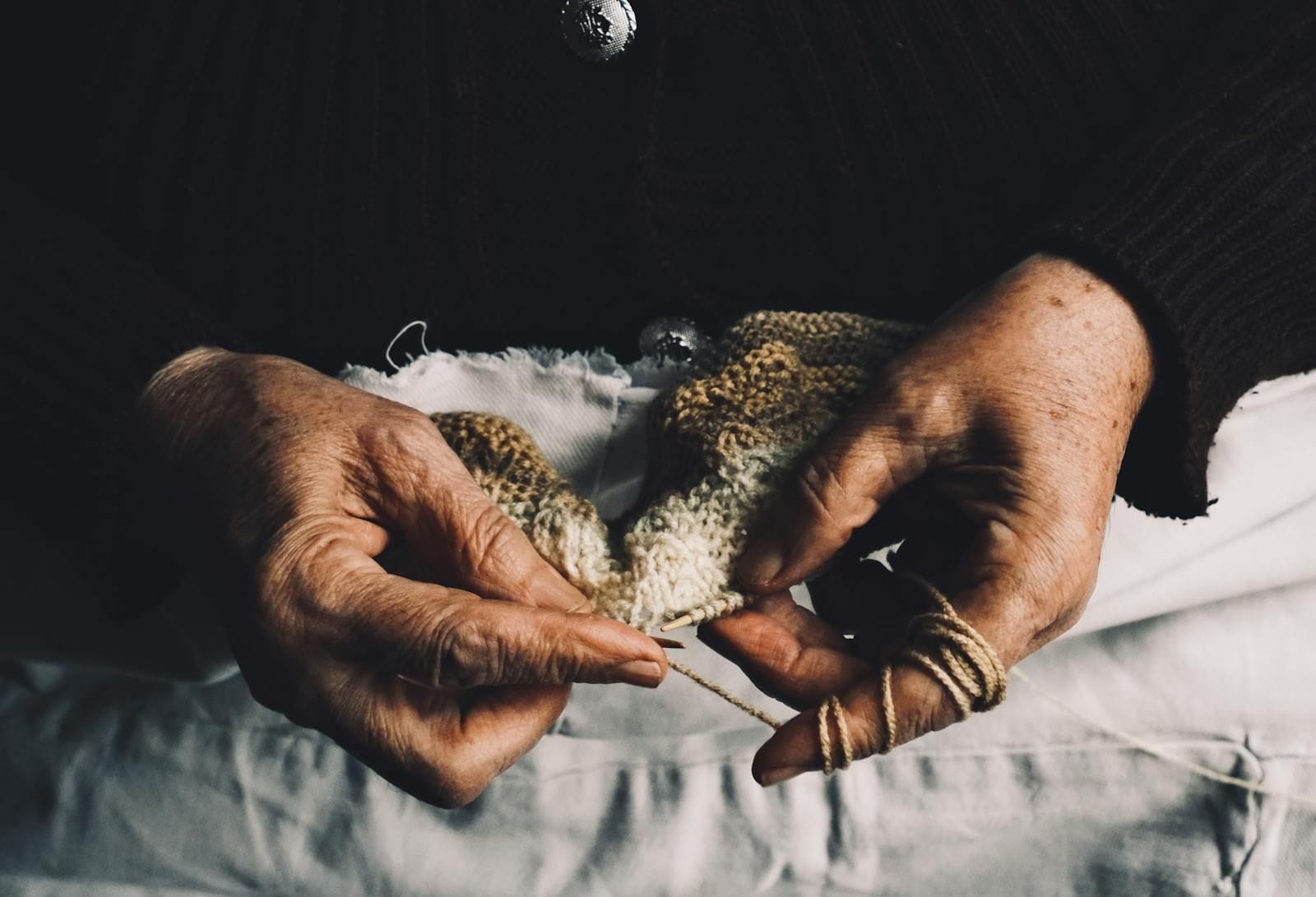
In the car, padded steering wheel covers reduce grip force; pre-cooled cars in summer reduce stiffness on getting in; a wider key fob with a single-finger ignition button is gentler than turning a key in a cylinder. None of these workarounds are dramatic on their own. Together they preserve enough joint capacity to keep a person doing what they want to do — cooking dinner, holding a paperback at bedtime, knitting a scarf for a grandchild — for years longer than they would otherwise.
When pain or stiffness regularly interferes with cooking, dressing, or driving to therapy appointments, a few hours a week of in-home personal care can fill the specific gap — meal prep, help with buttons and zippers, transportation to a hand therapy session — without changing anything else about how a person lives. A companion-care visit is often the right fit when the bigger need is transportation to medical appointments, grocery shopping help, and steady-handed company through the parts of the day that grip strength makes harder.
Frequently Asked Questions
What does arthritis in the hands actually feel like? Two sensations are described most consistently. The first is a deep aching at a joint or two, often the base of the thumb or the joint closest to the fingernail, that gets worse with a day of typing, gripping, or pinching and eases with rest. The second is a stiffness on waking that takes ten to thirty minutes to loosen up. People often describe a vague clumsiness alongside both — dropping a coffee mug, struggling with a key in the door, finding the cap on a water bottle suddenly impossible. The pain rarely arrives all at once; it shows up, fades, and comes back a little louder a few months later.
Are the bumps on my finger joints a sign of arthritis? Most likely yes, and most likely osteoarthritis. Bony swellings on the joint closest to the fingernail are called Heberden's nodes; the same swellings on the middle finger joint are called Bouchard's nodes. Both develop slowly over years as cartilage thins and the body lays down new bone at the joint edge. A 2022 TLAR multi-center cohort study found Heberden's nodes in 86 percent of patients with diagnosed hand osteoarthritis and Bouchard's nodes in 37 percent. The nodes themselves are usually painless once formed; the underlying joint is what hurts.
How do I tell osteoarthritis from rheumatoid arthritis in my hands? Three patterns separate them. Osteoarthritis usually starts on one side, in the joints closest to the fingertips and at the base of the thumb, with morning stiffness that fades in under thirty minutes. Rheumatoid arthritis usually starts in both hands at once, in the knuckles and the middle finger joints, with morning stiffness that lasts an hour or longer and often comes packaged with fatigue or a low-grade fever. RA spares the joint closest to the fingernail in most people. OA does not cause warmth or visible redness; RA often does. A rheumatologist confirms with a physical exam, blood markers like rheumatoid factor and anti-CCP antibodies, and X-ray imaging.
Do hand exercises actually help, or is that just something therapists say? They help, but they have to be done consistently for the benefit to show up and they stop working when you stop. The 2015 SARAH trial in The Lancet randomized adults with rheumatoid arthritis of the hands to a daily home exercise program or usual care, and the exercise group showed roughly twice the improvement in hand function over twelve months. A follow-up the next year found the gains evaporated in people who quit the exercises. A separate randomized trial in women with hand osteoarthritis showed significant improvements in grip strength (about 54 newtons in the dominant hand), in pinch strength, and in performance of daily activities after a structured exercise program. The 2019 American College of Rheumatology guideline strongly recommends exercise for hand osteoarthritis.
What's the best cream for hand arthritis? Topical diclofenac, available over the counter as Voltaren Arthritis Pain gel since 2020, has the most evidence. It is conditionally recommended by the 2019 ACR guideline for hand osteoarthritis and is an especially good choice for adults over 75 or anyone with a history of stomach ulcers, kidney disease, or other reasons to avoid oral NSAIDs. The catch with topical NSAIDs on the hands is practical: they need to stay on the skin to work, and frequent handwashing rinses them off. The ACR guideline conditionally recommends against topical capsaicin for the hands because of the real risk of accidentally getting it in the eyes.
When does someone consider hand surgery? Surgery is usually a conversation after at least six months of conservative care has failed — that means a real trial of exercises, a splint worn during painful activities, topical or oral anti-inflammatories, and often a corticosteroid injection or two. The most common hand surgery for osteoarthritis is a trapeziectomy with ligament reconstruction at the base of the thumb, performed when CMC arthritis has progressed to Eaton stage III or IV with persistent pain and functional loss. Initial recovery takes four to twelve weeks in a thumb spica splint; full return to grip-heavy activities like gardening or heavy lifting can take six months. Outcomes are generally good, but they are not immediate, and the decision belongs to a hand specialist, not a primary care physician.
Can hand arthritis be reversed? No, but progression can usually be slowed and symptoms can be managed for decades. The cartilage that wears down in osteoarthritis does not regrow on any timeline that matters; the body's response with bone remodeling and node formation is also permanent. What changes is how much pain a joint produces and how well it functions, both of which respond well to exercise, splinting during heavy use, weight on the joint distributed differently through tool choice, and the well-timed anti-inflammatory or injection. Rheumatoid arthritis, unlike osteoarthritis, can sometimes be put into clinical remission with disease-modifying drugs, though existing joint damage stays.
Hands That Keep Working
Grip strength is not a vanity metric. Two decades of prospective cohort data, including the 2015 PURE study in The Lancet, show that adult grip strength is a stronger predictor of all-cause and cardiovascular mortality than systolic blood pressure. The hands are also where adults most clearly notice the trade-off between independence and assistance: a person can compensate for a knee that aches by walking less, but a person cannot compensate for a thumb that will not turn a key by turning fewer keys. What hands do — fastening, gripping, holding, signing, writing, cooking — is most of what it means to live in a home.
Hand arthritis, in the long view, is a manageable chronic condition. Most people who develop it in their fifties or sixties live with it for decades and continue doing essentially all the things they were doing before. The factors that separate the people who manage it well from the people it disables are mostly behavioral and mostly boring: a real exercise routine done consistently, a willingness to use the right tools without embarrassment, a primary care physician who knows when to make the rheumatology referral, and the discipline to do conservative care for six months before any surgical consultation. None of those depend on heroic effort. They depend on starting earlier than feels necessary and stopping less often than feels reasonable. At Always Responsive Home Care in Mercer County, NJ and our Union County office, the caregivers we send most often arrive carrying a jar opener, a built-up-handle peeler, and the patience to let the person whose hands hurt do what they can — and only step in for what they cannot.
Photographs by Sara Puig Sanz, Aysegul Aytoren, and a Pexels contributor in Nazilli, Türkiye, via Pexels.
Frequently Asked Questions
What does arthritis in the hands actually feel like?
Two sensations are described most consistently. The first is a deep aching at a joint or two, often the base of the thumb or the joint closest to the fingernail, that gets worse with a day of typing, gripping, or pinching and eases with rest. The second is a stiffness on waking that takes ten to thirty minutes to loosen up. People often describe a vague clumsiness alongside both — dropping a coffee mug, struggling with a key in the door, finding the cap on a water bottle suddenly impossible. The pain rarely arrives all at once; it shows up, fades, and comes back a little louder a few months later.
Are the bumps on my finger joints a sign of arthritis?
Most likely yes, and most likely osteoarthritis. Bony swellings on the joint closest to the fingernail are called Heberden's nodes; the same swellings on the middle finger joint are called Bouchard's nodes. Both develop slowly over years as cartilage thins and the body lays down new bone at the joint edge. A 2022 TLAR multi-center cohort study found Heberden's nodes in 86 percent of patients with diagnosed hand osteoarthritis and Bouchard's nodes in 37 percent. The nodes themselves are usually painless once formed; the underlying joint is what hurts.
How do I tell osteoarthritis from rheumatoid arthritis in my hands?
Three patterns separate them. Osteoarthritis usually starts on one side, in the joints closest to the fingertips and at the base of the thumb, with morning stiffness that fades in under thirty minutes. Rheumatoid arthritis usually starts in both hands at once, in the knuckles and the middle finger joints, with morning stiffness that lasts an hour or longer and often comes packaged with fatigue or a low-grade fever. RA spares the joint closest to the fingernail in most people. OA does not cause warmth or visible redness; RA often does. A rheumatologist confirms with a physical exam, blood markers like rheumatoid factor and anti-CCP antibodies, and X-ray imaging.
Do hand exercises actually help, or is that just something therapists say?
They help, but they have to be done consistently for the benefit to show up and they stop working when you stop. The 2015 SARAH trial in The Lancet randomized adults with rheumatoid arthritis of the hands to a daily home exercise program or usual care, and the exercise group showed roughly twice the improvement in hand function over twelve months. A follow-up the next year found the gains evaporated in people who quit the exercises. A separate randomized trial in women with hand osteoarthritis showed significant improvements in grip strength (about 54 newtons in the dominant hand), in pinch strength, and in performance of daily activities after a structured exercise program. The 2019 American College of Rheumatology guideline strongly recommends exercise for hand osteoarthritis.
What's the best cream for hand arthritis?
Topical diclofenac, available over the counter as Voltaren Arthritis Pain gel since 2020, has the most evidence. It is conditionally recommended by the 2019 ACR guideline for hand osteoarthritis and is an especially good choice for adults over 75 or anyone with a history of stomach ulcers, kidney disease, or other reasons to avoid oral NSAIDs. The catch with topical NSAIDs on the hands is practical: they need to stay on the skin to work, and frequent handwashing rinses them off. The ACR guideline conditionally recommends against topical capsaicin for the hands because of the real risk of accidentally getting it in the eyes.
When does someone consider hand surgery?
Surgery is usually a conversation after at least six months of conservative care has failed — that means a real trial of exercises, a splint worn during painful activities, topical or oral anti-inflammatories, and often a corticosteroid injection or two. The most common hand surgery for osteoarthritis is a trapeziectomy with ligament reconstruction at the base of the thumb, performed when CMC arthritis has progressed to Eaton stage III or IV with persistent pain and functional loss. Initial recovery takes four to twelve weeks in a thumb spica splint; full return to grip-heavy activities like gardening or heavy lifting can take six months. Outcomes are generally good, but they are not immediate, and the decision belongs to a hand specialist, not a primary care physician.
Can hand arthritis be reversed?
No, but progression can usually be slowed and symptoms can be managed for decades. The cartilage that wears down in osteoarthritis does not regrow on any timeline that matters; the body's response with bone remodeling and node formation is also permanent. What changes is how much pain a joint produces and how well it functions, both of which respond well to exercise, splinting during heavy use, weight on the joint distributed differently through tool choice, and the well-timed anti-inflammatory or injection. Rheumatoid arthritis, unlike osteoarthritis, can sometimes be put into clinical remission with disease-modifying drugs, though existing joint damage stays.