Best Dogs for Seniors: 10 Breeds That Fit a Calmer Pace
Ten calm, low-shedding dog breeds that fit life after sixty-five — with honest notes on cost, fall risk, and shelter dogs worth a look.
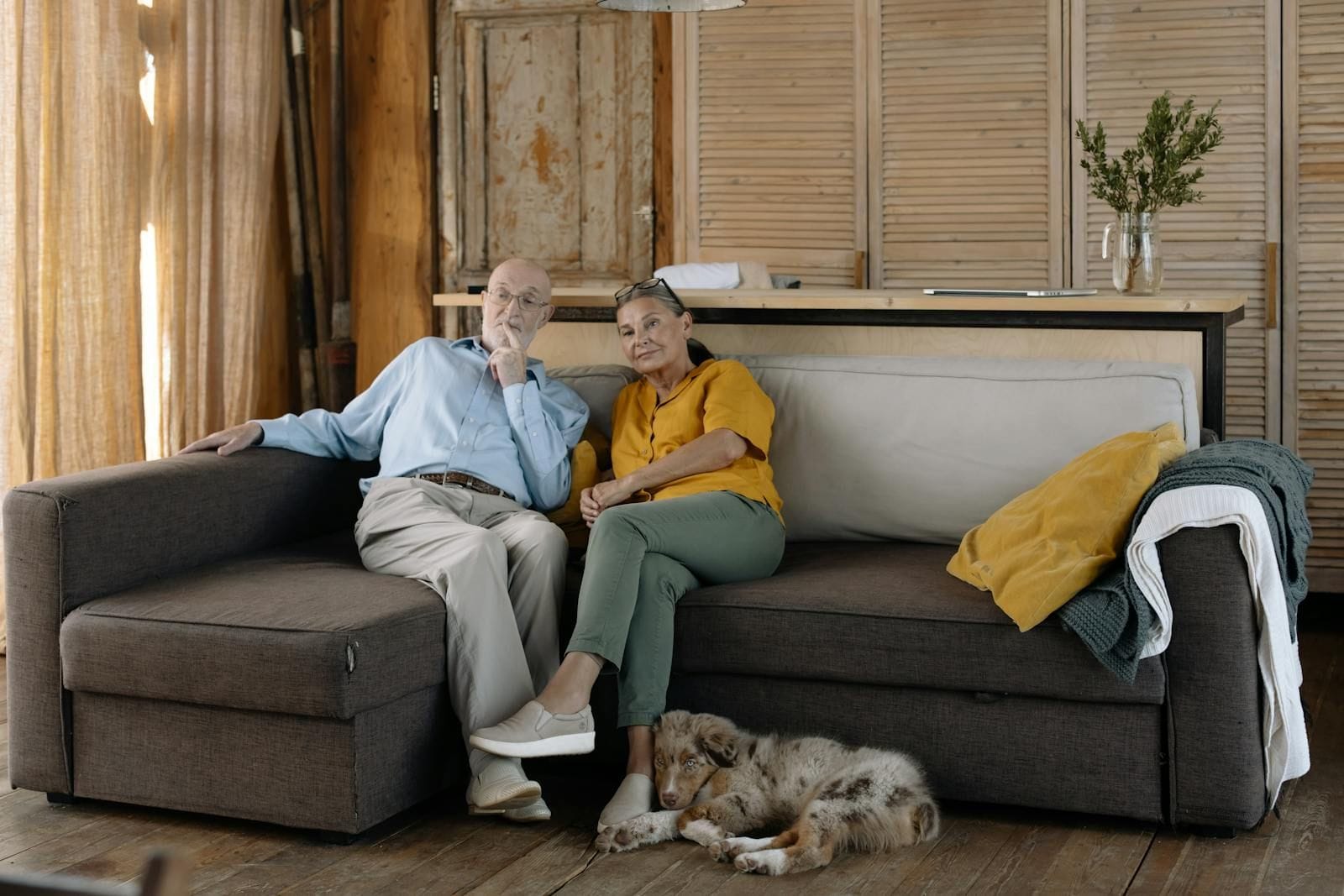
A study published by the National Institutes of Health found that older adults who own a dog report better overall health, take fewer daily medications, and stay measurably more physically active across every season than non-pet-owners of the same age. A separate biopsychosocial review in Frontiers in Veterinary Science found dog ownership associated with lower loneliness, lower self-reported depression, and even a meaningful drop in resting blood pressure during periods of stress. The data on what a calm dog does for someone in their seventies is, at this point, hard to argue with.
And yet most breed lists for seniors read like they were written by someone who has never met one. They recommend Labradors and Golden Retrievers and Cocker Spaniels in the same paragraph, never mentioning that a sixty-pound Lab pulling on a six-foot leash is the single most common cause of senior dog-walking injuries in the emergency-room data. They treat "calm" as a synonym for "old" instead of a real, breed-specific temperament. They forget grooming, vet bills, and the question every adult child eventually has to ask quietly out loud: what happens if Mom cannot walk the dog anymore?
This is the list our families actually use. Ten breeds that fit a calmer pace, in roughly ascending order of size, with the trade-offs that most roundups skip — and a frank section near the end on the dogs already waiting in shelters, who are often the better match than any of these ten.
Why a Dog at This Stage of Life
Loneliness is the quiet epidemic of later life. A dog rewires the daily structure around it: a reason to get out of bed, a body to greet, a schedule that demands two walks a day whether the weather is good or not. The Pets for the Elderly Foundation has helped place more than 100,000 shelter animals with adults over sixty since 1992, on a single thesis: companionship through pet ownership saves both lives at once. Their internal data, and the academic literature behind it, repeatedly land on the same three benefits — fewer depressive symptoms, lower social isolation, and a small but real bump in daily movement.
None of that requires a particular breed. The reasons to be picky about breed are practical, not emotional: weight to manage on leash, grooming the owner can physically do, energy level matched to a household, lifespan that fits the realistic window the human can keep up.
What Actually Makes a Breed Senior-Friendly
Four traits do most of the work. Every breed on the list below scores well on at least three of them, and the breeds that fail on more than one are the ones the lists should be warning you off.
Weight under thirty pounds. The veterinary literature on leash-related injuries is unambiguous: larger and heavier dogs generate more leash tension, and smaller dogs are more suitable for senior-aged handlers. A thirty-pound dog is the upper limit where most adults over seventy can still arrest a sudden pull without going down. The exception is the Greyhound, which weighs more but rarely pulls at all.
Low to moderate exercise needs. Two short daily walks plus indoor play is the realistic ceiling for most retired households. Anything that requires an hour of off-leash running or the kind of mental drive that goes feral without a job (Border Collie, working-line Shepherd, most terriers) is the wrong fit.
Calm temperament, low reactivity. A dog that barks at every doorbell, lunges at every passing cyclist, or spirals into separation anxiety the moment its person leaves the room is exhausting at any age — and dangerous past seventy. Look for breeds bred specifically as companion dogs: the lap-dog toy group rather than the herding or working group.
Grooming the owner can manage. A doodle's coat needs a four-figure professional groom every six weeks. A Shih Tzu's coat needs daily brushing or it mats. A Bichon needs trimming. None of this is a deal-breaker, but it has to fit the hands and the budget. A dog with a short coat (Pug, French Bulldog, Greyhound) is the lowest-grooming option for a senior who cannot physically wrangle a wet, soapy dog in a tub.
The Ten Breeds Most Likely to Fit
1. Cavalier King Charles Spaniel
Bred from the start as a companion dog — the breed standard's whole purpose was to sit in a lap. Twelve to eighteen pounds, affectionate, even-tempered, willing to walk a mile or nap five hours, your call. The temperament reliability is the reason Cavaliers top almost every senior breed list ever published.
The honest caveat: Cavaliers are prone to mitral valve disease, which appears in roughly half the breed by age ten. A reputable breeder will produce certified parents; a rescue Cavalier is often the better value. Lifespan: nine to fourteen years. Grooming: weekly brushing, the silky coat does not mat.
2. Bichon Frise
Small, cheerful, low-shedding — the Bichon is the breed allergists most often green-light for older adults with mild reactivity. Ten to eighteen pounds, playful in short bursts, then content to curl up on a couch. The white powderpuff coat needs trimming every six to eight weeks but does not shed across the furniture.
The trade-off is grooming cost and the breed's tendency toward separation anxiety; a Bichon that is left alone for ten-hour workdays will not thrive. For a retired household where someone is home most of the time, this is the breed Cavaliers are most often compared to and lose against on shedding.
3. Shih Tzu
The name translates roughly to "little lion" and the breed was developed as a lap companion in imperial Chinese households. Nine to sixteen pounds, calm, devoted to one or two people, content with one walk a day and a window to watch.
Watch for two issues: the long coat mats fast and most owners keep it in a short "puppy cut" trimmed every six weeks, and the breed has a stubborn streak that turns short housebreaking into long housebreaking. An adult rescue Shih Tzu already past both problems is the right answer for most older adopters.
4. Maltese
Four to seven pounds, white silk coat, deeply attached to its person. The Maltese is the smallest breed that still earns "easy to live with" honestly — too small for most kids, too fragile for households with large grandchildren visiting, but perfect for a quiet adult home.
The size is also the warning. A four-pound dog underfoot is a legitimate fall hazard, and Maltese can be injured by accidental rough handling or by a fall from a couch. The breed thrives in homes where it learns a routine path through the house and an owner who has trained themselves to notice where the dog is.
5. Havanese
Cuba's national dog and one of the breeds the American Kennel Club specifically recommends for older adults. Seven to thirteen pounds, smart enough to learn cues quickly, friendly to strangers and other dogs, content with moderate walks. The non-shedding silky coat is the most forgiving long coat on this list — slower to mat than a Shih Tzu, lower-allergen than most.
Havanese are sometimes harder to find than the more familiar breeds; expect a waitlist with reputable breeders and a higher price tag, or wait several months for one to appear in rescue.
6. French Bulldog
Twenty to twenty-eight pounds, low exercise needs (a frenchie that has walked twenty minutes is a frenchie ready for a nap), short coat that requires minimal grooming, comically affectionate temperament. Frenchies are popular for good reason: they are arguably the lowest-maintenance medium dog on the market.
The price is health. The flat brachycephalic face creates serious breathing issues, heat intolerance, and a list of common surgeries (BOAS corrective surgery, spinal issues, skin fold infections) that pushes the breed's lifetime vet bill far above any other dog on this list. Pet insurance bought before age two is close to mandatory. For a senior on a fixed income, a Cavalier or a Bichon is the safer financial choice.
7. Pug
Fourteen to eighteen pounds, friendly to a fault, hilarious in the way only Pugs are hilarious. Pugs are the cheapest medium companion dog to feed, the simplest to groom, and the most reliably calm indoors. Two short walks a day satisfies them completely.
The same brachycephalic warning applies as with the French Bulldog: heat intolerance in summer, breathing noise that worsens with age, eye problems, weight gain that compounds the breathing problem. A lean Pug from a reputable breeder, kept indoors during heat, can live to fifteen. An overweight Pug rarely sees ten.
8. Toy or Miniature Poodle
The Poodle's reputation as a fussy show dog hides the fact that it is consistently rated one of the smartest dog breeds in the world and one of the most adaptable. Toy Poodles run four to six pounds; Miniatures run twelve to twenty. Both are highly trainable, low-shedding (the breed allergists recommend most often), and content with daily moderate exercise.
The catch is the haircut. A Poodle's curly coat needs a professional groom every four to six weeks — call it $90 to $150 a visit in most markets. For an owner who is comfortable with that monthly cost, no breed on this list is a more practical long-term match.
9. Greyhound (Retired Racing)
The genuinely surprising entry. Greyhounds weigh sixty to seventy pounds, but they sleep eighteen hours a day, almost never bark, walk politely on leash because that is how they were trained, and ask for one short walk and one short play session a day. Adult retired racers (typically three to five years old when they retire) are placed into homes already housebroken and socialized through breed-specific adoption groups in every U.S. region.
The right caveat: Greyhounds are physically tall, with long legs and a deep chest, and a person with poor balance can absolutely be knocked over by one in a kitchen turn. If you want a big dog without the big-dog drama, this is the breed. If you have a significant balance impairment, stay smaller.
10. Cocker Spaniel
The classic American family dog, twenty to thirty pounds, cheerful, biddable, energetic enough to enjoy a real walk but content to nap most of the afternoon. Cockers are the largest breed on this list still in the senior-friendly weight range, and they remain a popular pick for retirees who want a dog with more presence than a Bichon.
Watch for the ear infections (long pendulous ears trap moisture) and the breed's well-documented anxiety lines — "rage syndrome" in poorly-bred Cockers is rare but exists. As with any popular breed, the difference between a reputable breeder and a backyard breeder shows up two years later in temperament. An adult Cocker from a breed rescue lets you see the temperament before you commit.
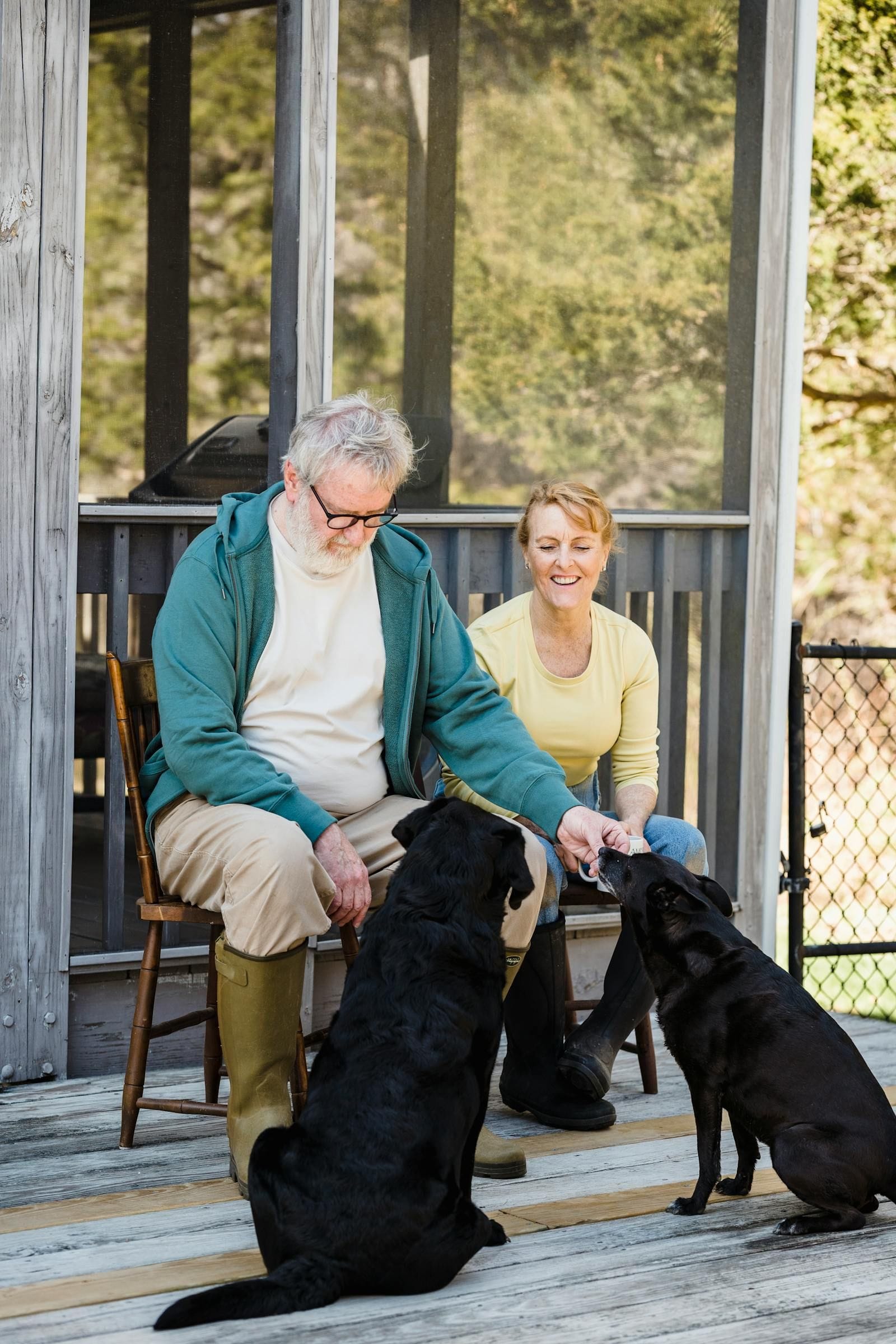
The Smarter Move Most Lists Skip: A Senior Dog From a Shelter
Every breed roundup published on the internet recommends adopting a puppy. Most adult children with aging parents recommend the opposite, and the veterinary teaching faculty at Texas A&M agree with them. A senior dog (seven years and up) is housebroken, leash-trained, calm, and ahead of the curve on basic manners. The calm demeanor that takes a puppy three years to develop is the default state of a senior shelter dog. They sleep more, ask for less, and bond hard with the person who finally took them home.
The catch is, of course, the shorter window. A nine-year-old Cocker adopted by a seventy-five-year-old human is realistically a three-to-five-year companion, not a fifteen-year one. The argument for it anyway is twofold. First, fifteen-year commitments at seventy-five are themselves a kind of denial about the realities of late life. Second, and this is the part our caregivers see in homes every week, an older dog and an older human keep each other gentler. The dog does not pull. The human does not sprint. Both of them get to spend the last chapter of their working bodies with someone who understands the assignment.
Most major U.S. shelter systems run a Seniors-for-Seniors program, in which adopters over 60 or 62 adopt dogs over seven for a steep discount or no fee. The Los Angeles model takes the adopter's age as a percentage off the fee. New Jersey, Florida, and most of the Northeast run similar programs through county shelters and breed-specific rescues. Ask three questions before you sign: does the dog have a known back-up guardian agreement if I cannot keep it, are recent vet records available, can I do a two-week home trial? A good rescue will answer yes to all three.
The Trade-Offs Most Breed Roundups Don't Mention
Three honest trade-offs deserve their own paragraph, because no family decides well without understanding them up front.
Fall risk on the leash. The American College of Emergency Physicians cites CDC data showing about 86,000 fall-related emergency-room visits a year tied directly to pets, with hip fractures the most common serious outcome in adults over 65. The interventions that prevent most of these are mundane: a four-to-six-foot fixed-length leash (never retractable), a harness instead of a collar for any dog prone to lunging, walking on smooth surfaces in daylight, and basic leash training on the dog's end. A dog the owner cannot physically control is the wrong dog regardless of how charming the breed is.
Vet bills can outrun the budget. Routine care for a small dog runs $1,500 to $3,000 a year. A serious diagnosis — cancer, diabetes, cruciate ligament repair, a brachycephalic airway correction — can push a single year past $5,000. Pet insurance bought before the dog turns six, with a $250-to-$500 deductible and 80% reimbursement, is the single highest-leverage hedge an older adult can buy. For a senior on a fixed income, the conversation has to happen before the dog comes home, not after the diagnosis.
Future care matters more than breed. Every reputable rescue requires a named back-up guardian on the adoption paperwork — someone who has agreed in writing to take the dog if the owner is hospitalized, moves to memory care, or dies. Older adopters who skip this step are the ones whose dogs end up in shelters two years later, which is the worst outcome for both ends. If you do not have a family member willing to commit, the better choice is a rescue that contractually guarantees lifetime return — Furry Friends and the Pets for the Elderly Foundation network are the most reliable in this regard.
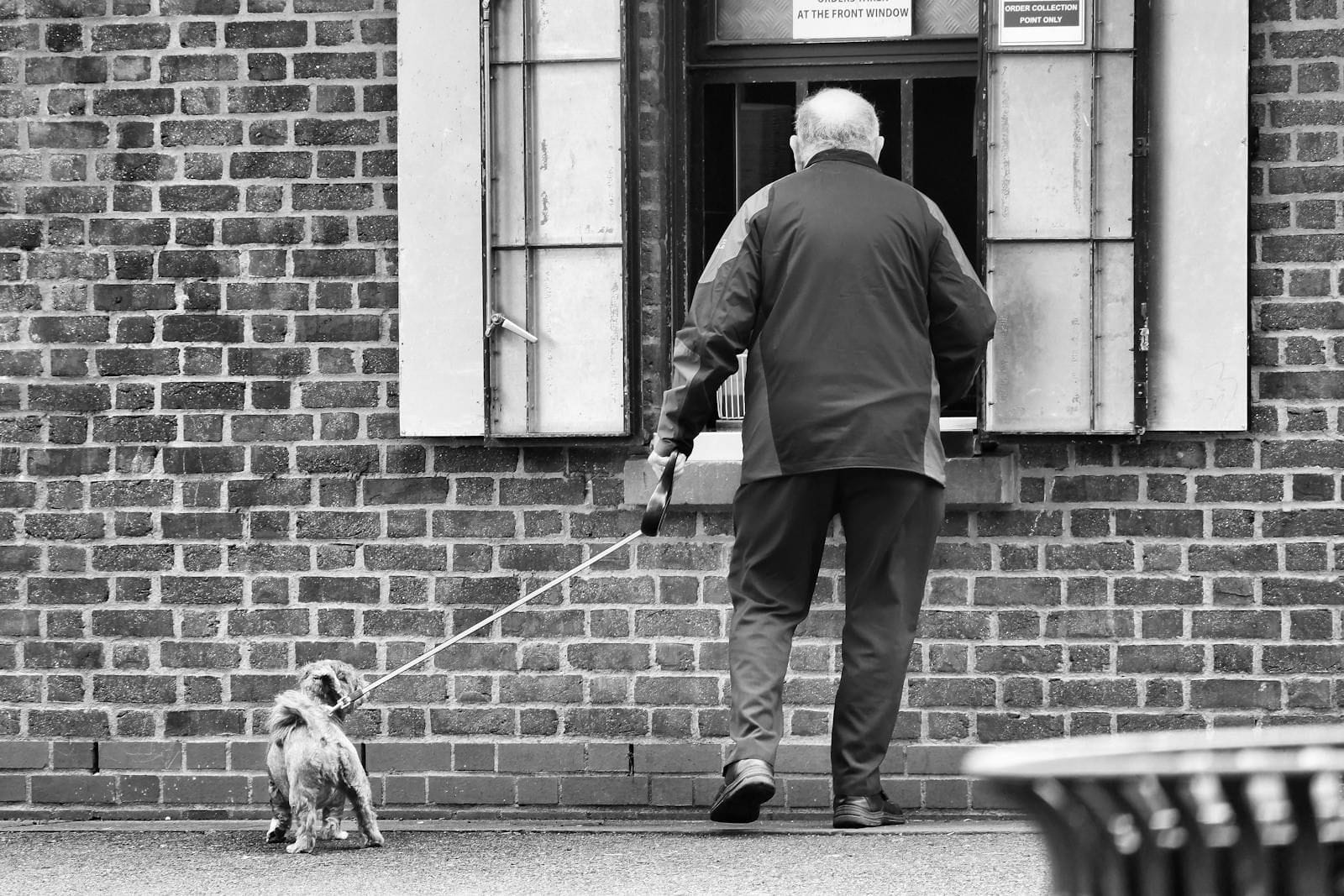
Setting Up the Home Before the Dog Arrives
The first month is a thirty-day adjustment for the dog and for the routine around it. A few preparations make the difference between a dog that integrates and a dog that gets returned.
Flooring and tripping. Lift loose throw rugs, or tape them down. Add non-slip mats by the food bowl, the water bowl, and the door the dog will use to go outside. Most senior pet falls happen in transitions — the doorway, the kitchen island, the route to the bedroom at night.
Feeding station at a sensible height. Raised bowls cut the bending the owner has to do every day. Place them out of the main walking path; food and water spilled in a hallway is the most common cause of a dog-related slip at home.
Crate or quiet corner. Every dog benefits from a decompression space the household understands as off-limits. Older adults who live with adult children visiting on weekends especially benefit — a crate-trained dog has a place to retreat during the noise.
Vet on file before adoption day. Texas A&M's guidance is to get the new dog examined by a veterinarian within the first week, establish a baseline panel, and discuss age-appropriate diet and exercise. For an adopter over seventy with a dog over seven, this is the single highest-yield first step after the adoption.
Walking gear. A four-to-six-foot fixed-length leash, a harness for any dog with a tendency to pull, and walking shoes with real tread on the human end. Skip the retractable leash entirely. Walk in daylight when possible; the same surfaces become treacherous in low light.
Frequently Asked Questions
What is the best dog breed for a senior who lives alone? For most older adults living alone, the Cavalier King Charles Spaniel, Bichon Frise, or Shih Tzu hits the sweet spot: small enough to manage, calm enough to nap through long stretches, affectionate enough to fill a quiet house. A retired racing Greyhound is a quieter option for someone who wants a larger dog with surprisingly low energy. The breed matters less than matching temperament to daily rhythm — a calm dog in a calm home, not the other way around.
Are big dogs ever a good fit for older adults? Yes — but only specific big dogs. Retired racing Greyhounds and adult Standard Poodles are the two breeds most often recommended for seniors who want a larger dog. Both sleep most of the day, walk gently on leash, and have lower-than-expected exercise needs. Avoid herding and working breeds (Border Collies, Australian Shepherds, German Shepherds, Rottweilers) — high drive and pulling strength make them a poor match for older handlers.
Is a puppy or an adult dog better for an older adult? Adult dogs almost always win. Puppies need housebreaking, eighteen months of high-energy training, and the kind of physical commitment that breaks a senior's back. An adult dog (three years and up) walks into the home already housebroken, leash-trained, and emotionally settled. A senior dog from a shelter — seven years and up — is often the best match of all: calm, grateful, and usually adopted for half the fee or free under a Seniors-for-Seniors program.
What about allergies? Truly hypoallergenic dogs do not exist — every dog produces some dander. But certain breeds shed almost nothing and produce less of the Can f 1 protein that triggers most reactions: Bichon Frise, Poodle (all sizes), Maltese, Havanese, and Portuguese Water Dog are the breeds allergists most often green-light. Spend an hour with the specific dog before adopting; reactions are individual.
Can a senior in a retirement community or apartment have a dog? Usually yes, with size and breed limits. Most independent-living and 55-plus communities allow one dog under 25–35 pounds; assisted-living rules vary by operator. Ask three specific questions before adopting: the weight limit, the breed restriction list (some exclude Pugs and Frenchies for liability reasons), and the policy if the resident is hospitalized — who walks the dog, and for how long.
What happens to the dog if I can no longer care for it? Plan this before the dog comes home, not after a crisis. Three options exist: a named back-up guardian in the family (most common), a written agreement with the breeder or rescue to take the dog back (most rescues require this), or a pet trust funded for the dog's care. Rescues like Furry Friends and the Pets for the Elderly Foundation will often serve as a permanent back-up if no family is available.
How much does owning a dog actually cost per year? Budget $1,500–$3,000 a year for a small or medium dog in steady health: food, routine veterinary care, vaccinations, flea and tick prevention, grooming for long-coated breeds, pet insurance, and the inevitable one-off bill. A serious illness (cancer, diabetes, surgery) can push a single year past $5,000. Pet insurance bought before the dog is six is the single best hedge against the worst bills.
A Companion at Home, On Both Sides of the Leash
The honest version of this conversation, especially for adult children reading on a parent's behalf, is that a dog solves one particular problem at this age — loneliness in a quiet house — and creates a different one when the human's body starts to struggle. The dog still needs to be walked when the hip stops cooperating. The food bowl still needs filling when reaching the cupboard is hard. The vet still needs visiting when driving has been given up.
That is the boundary where a good companion caregiver earns the relationship. A few hours a week of in-home help can keep a beloved dog in a beloved home for years after either of them would have managed alone — a caregiver walks the dog on the mornings the owner's knees rule out the block, a caregiver drives both of them to the vet appointment, a caregiver steadies an arm on the slippery porch step. Across our Monmouth County, New Jersey branch and the Sarasota, Florida franchise, the most common scene our caregivers describe at the end of a shift is the same one: an older adult, a small calm dog, and a quieter house than it was an hour ago.
Pick a breed that fits the calmer pace already in front of you. Adopt the adult or the senior dog instead of the puppy. Buy the insurance before the diagnosis. Write down the back-up guardian. And then enjoy the company — which is, in the end, the whole reason this list exists.
Frequently Asked Questions
What is the best dog breed for a senior who lives alone?
For most older adults living alone, the Cavalier King Charles Spaniel, Bichon Frise, or Shih Tzu hits the sweet spot: small enough to manage, calm enough to nap through long stretches, affectionate enough to fill a quiet house. A retired racing Greyhound is a quieter option for someone who wants a larger dog with surprisingly low energy. The breed matters less than matching temperament to daily rhythm — a calm dog in a calm home, not the other way around.
Are big dogs ever a good fit for older adults?
Yes — but only specific big dogs. Retired racing Greyhounds and adult Standard Poodles are the two breeds most often recommended for seniors who want a larger dog. Both sleep most of the day, walk gently on leash, and have lower-than-expected exercise needs. Avoid herding and working breeds (Border Collies, Australian Shepherds, German Shepherds, Rottweilers) — high drive and pulling strength make them a poor match for older handlers.
Is a puppy or an adult dog better for an older adult?
Adult dogs almost always win. Puppies need housebreaking, eighteen months of high-energy training, and the kind of physical commitment that breaks a senior's back. An adult dog (three years and up) walks into the home already housebroken, leash-trained, and emotionally settled. A senior dog from a shelter — seven years and up — is often the best match of all: calm, grateful, and usually adopted for half the fee or free under a Seniors-for-Seniors program.
What about allergies?
Truly hypoallergenic dogs do not exist — every dog produces some dander. But certain breeds shed almost nothing and produce less of the Can f 1 protein that triggers most reactions: Bichon Frise, Poodle (all sizes), Maltese, Havanese, and Portuguese Water Dog are the breeds allergists most often green-light. Spend an hour with the specific dog before adopting; reactions are individual.
Can a senior in a retirement community or apartment have a dog?
Usually yes, with size and breed limits. Most independent-living and 55-plus communities allow one dog under 25–35 pounds; assisted-living rules vary by operator. Ask three specific questions before adopting: the weight limit, the breed restriction list (some exclude Pugs and Frenchies for liability reasons), and the policy if the resident is hospitalized — who walks the dog, and for how long.
What happens to the dog if I can no longer care for it?
Plan this before the dog comes home, not after a crisis. Three options exist: a named back-up guardian in the family (most common), a written agreement with the breeder or rescue to take the dog back (most rescues require this), or a pet trust funded for the dog's care. Rescues like Furry Friends and the Pets for the Elderly Foundation will often serve as a permanent back-up if no family is available.
How much does owning a dog actually cost per year?
Budget $1,500–$3,000 a year for a small or medium dog in steady health: food, routine veterinary care, vaccinations, flea and tick prevention, grooming for long-coated breeds, pet insurance, and the inevitable one-off bill. A serious illness (cancer, diabetes, surgery) can push a single year past $5,000. Pet insurance bought before the dog is six is the single best hedge against the worst bills.