Lower Blood Pressure at the Kitchen Table
The DASH diet was built to lower blood pressure with food. The meal plan, food list, and sodium targets, adapted for an older appetite.
More than 70 percent of adults over 60 have high blood pressure. It is the most common chronic condition of later life, and for most of the people living with it, the first and last word from the doctor is a prescription. What often goes unsaid is that decades ago, government researchers set out to answer a narrower question: could food alone move blood pressure the way a pill does? They built an eating plan, tested it in careful trials, and got an answer. It could. The plan is called DASH, and it remains one of the best-proven and least-hyped tools for bringing blood pressure down.
DASH is not a fad, a cleanse, or a shopping list of superfoods. It is a balanced, ordinary way of eating that you can keep for the rest of your life, put together specifically to lower blood pressure. This guide lays out where it came from, what actually goes on the plate, the one number that matters most, and how to make it work for an older appetite and an older kitchen.
Where DASH Came From
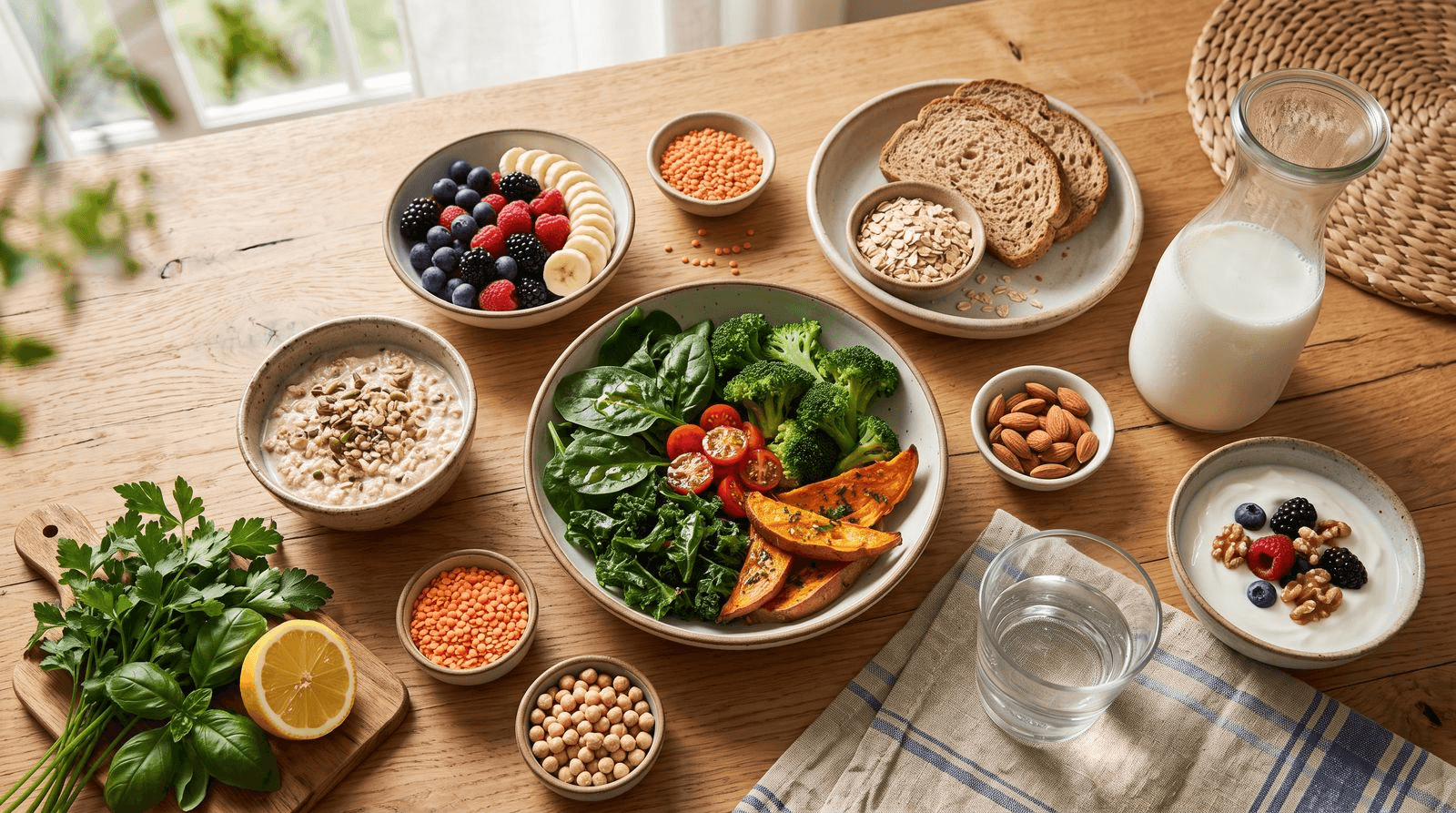
DASH stands for Dietary Approaches to Stop Hypertension, and the name is more literal than it sounds. In the 1990s, the National Heart, Lung, and Blood Institute, part of the National Institutes of Health, funded a study to see whether a particular pattern of eating could lower blood pressure on its own. Researchers fed volunteers carefully controlled diets and measured what happened. The eating pattern that worked best was rich in vegetables, fruit, whole grains, and low-fat dairy, with beans, nuts, and lean protein, and it was low in salt, sweets, and the saturated fat found in fatty meat and full-fat dairy.
The reason it works is not one magic ingredient but the mix. That pattern floods the diet with potassium, calcium, magnesium, and fiber, the nutrients tied to healthier blood pressure, while pulling back on the sodium that raises it. More than twenty years on, DASH is endorsed by the American Heart Association, folded into national guidelines, and consistently ranked among the healthiest ways to eat, period. It has outlasted almost every diet trend that came after it, precisely because it was never a trend.
How Much It Actually Moves the Needle
It is fair to be skeptical of any diet that promises to do a medication's job, so it helps to know what the research actually found. In the original DASH trial and the follow-up study that layered a lower-salt target on top, blood pressure fell within about two weeks of switching to the plan. The drop happened even in people who did not lose any weight, which is unusual and important: many diet effects are really just weight-loss effects in disguise, but this one was the food itself.
The size of the drop varies with where a person starts and how closely they follow the plan, but the reviews behind current heart guidelines put it anywhere from a few points to more than ten points of systolic pressure, the top number. That is a range worth taking seriously; a reduction of that size meaningfully lowers the risk of heart attack and stroke. None of this replaces prescribed medication, and the point of DASH is not to quit your pills. It is that eating this way can work alongside them, sometimes well enough that a doctor can revisit the dose.
The DASH Food List, Group by Group
The plan is easiest to picture as target servings across a day, based on a roughly 2,000-calorie diet. The numbers flex up or down with how much a person eats, but the proportions are the point.
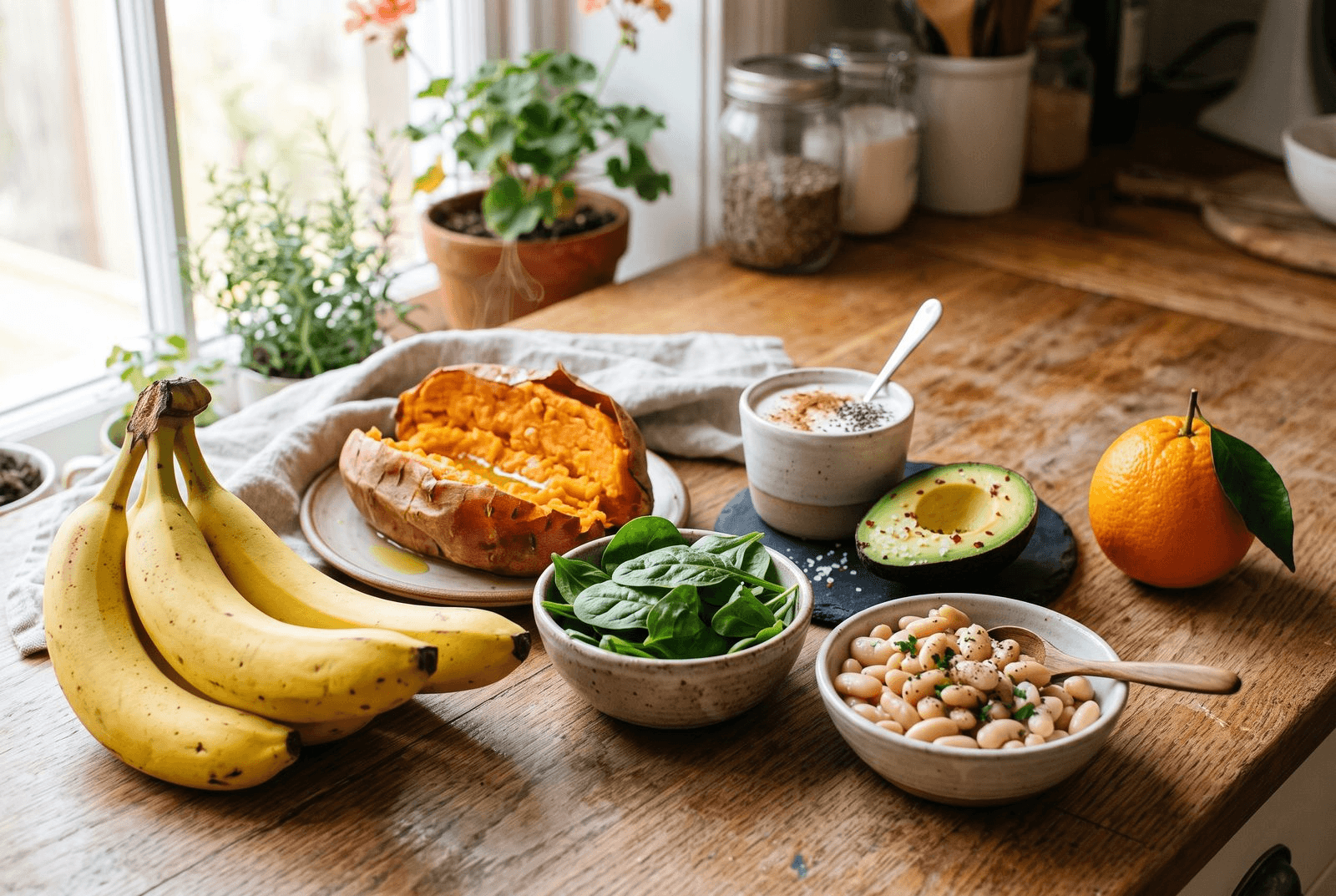
- Vegetables, 4 to 5 servings a day: the broader the range of colors, the better. Leafy greens, broccoli, tomatoes, carrots, sweet potatoes, and squash all count, fresh or frozen.
- Fruit, 4 to 5 servings a day: whole fruit over juice where possible. Berries, bananas, oranges, apples, melon, and grapes are easy, potassium-rich choices.
- Grains, 6 to 8 servings a day, mostly whole: oats, brown rice, whole-wheat bread and pasta, barley. Whole grains carry the fiber that refined grains lose.
- Fat-free or low-fat dairy, 2 to 3 servings a day: milk, plain yogurt, and reduced-fat cheese are major sources of the calcium and protein the plan leans on.
- Lean meat, poultry, and fish, 6 ounces or less a day: roughly two palm-sized portions, trimmed and baked, broiled, or poached rather than fried. Fish a couple of times a week is ideal.
- Nuts, seeds, and legumes, 4 to 5 times a week: unsalted almonds and walnuts, sunflower seeds, and beans and lentils, which are among the richest, cheapest sources of fiber and potassium going.
- Fats and oils, 2 to 3 servings a day: olive or canola oil, small amounts of soft margarine, in place of butter and lard.
- Sweets and added sugars, 5 servings a week or fewer: not banned, just occasional. A little honey, a small dessert, or a modest treat fits; a daily sweet does not.
Nothing on that list is exotic or expensive, and there is no branded product to buy. It is the food already in any grocery store, arranged in a particular balance.
The Salt You Can't See
If DASH has a single most powerful lever, it is sodium. The standard plan holds sodium to 2,300 milligrams a day, about a teaspoon of salt. A lower-sodium version caps it at 1,500 milligrams and produces the biggest drop in blood pressure of all, which is why it is often recommended for people who already have hypertension, are over 50, or have diabetes or kidney disease. For comparison, the average American eats well past 3,000 milligrams a day, often without realizing it.
That last part is the catch. Most people picture the salt shaker as the enemy, but only a small fraction of the sodium in a typical diet is added at the stove or table. The vast majority is already inside packaged and restaurant food before it reaches you. The worst offenders are not the obviously salty snacks so much as the quiet ones: bread and rolls, deli and cured meats, canned soups, jarred sauces, cheese, and frozen dinners. A sandwich and a bowl of canned soup can spend an entire day's sodium budget before dinner.
The workable response is not to eat blandly but to shift where the food comes from. Read the sodium line on labels and compare brands, since two versions of the same product can differ enormously. Choose no-salt-added canned vegetables and beans, or rinse regular canned beans to wash some sodium away. Cook a little more from scratch, where you control the salt. And when eating out, ask for sauces and dressings on the side and skip the extra shake. Flavor comes back through other doors, which is where the next section comes in.
A Day of DASH on a Plate
Servings and milligrams stay abstract until you see them as meals. Here is what a single day near the targets can look like, which also shows how unrestrictive the plan really is.
- Breakfast: a bowl of oatmeal topped with sliced banana and a spoonful of unsalted almonds, a glass of low-fat milk, and a small orange.
- Morning snack: plain low-fat yogurt with a handful of berries stirred in.
- Lunch: a large spinach salad with chickpeas, cherry tomatoes, and cucumber, dressed with olive oil and lemon, plus a slice of whole-grain bread.
- Afternoon snack: an apple and a small handful of unsalted nuts.
- Dinner: a palm-sized piece of baked salmon or skinless chicken, a scoop of brown rice, and generous steamed broccoli and roasted sweet potato, with a squeeze of lemon and fresh herbs instead of salt.
- If you want something sweet: fresh fruit, or a small square of dark chocolate a few times a week.
That is a full, satisfying day of food. It hits the vegetable, fruit, grain, dairy, and protein targets, leans on potassium-rich choices, and keeps sodium low mostly by what it leaves out rather than by tasting of nothing.
Making It Work for an Older Appetite
On paper, DASH is simple. In a real kitchen, and especially for an older adult, a few things get in the way, and each has a straightforward workaround.
A smaller appetite. Eight servings of grains and five of vegetables can feel like a mountain when hunger has faded with age. The trick is that servings are smaller than people assume, and they add up across snacks. A slice of toast, a piece of fruit, and a few crackers already carry several servings without a single large meal.
Taste changes. Taste and smell dull with age, and the instinct is to reach for more salt to compensate, exactly the wrong direction. Herbs, garlic, onion, citrus, vinegar, black pepper, and spice blends bring food back to life without sodium. A squeeze of lemon over fish or vegetables does more than a pinch of salt ever did.
Chewing and cooking for one. Tough raw vegetables and a fridge that spoils faster than one person can eat both push people toward easy, salty convenience food. Softly cooked or canned no-salt-added vegetables, canned fruit in juice, smoothies, and batch-cooked soups frozen in single portions keep the plan realistic when cooking a fresh meal every night is not.
This is also the point where good day-to-day help matters more than any recipe. Keeping a kitchen stocked with fresh produce, whole grains, and low-sodium staples, and actually cooking them, is a lot of small, repeated work. A caregiver providing homemaker services can handle the grocery shopping, read the sodium labels, and prepare DASH-friendly meals, while personal care covers the hands-on daily support that keeps an older adult eating well without leaning on the freezer aisle. Families across our Middlesex County, New Jersey service area use exactly that kind of practical help so that eating for blood pressure does not depend on having the energy to cook from scratch. For the wider picture of feeding an older adult well, our guide to elderly nutrition pairs naturally with the targets here.

Starting Small
The fastest way to abandon DASH is to try to remake every meal on a Monday morning. The plan is a destination, not a switch, and the research groups that designed it suggest changing one habit at a time and adding the next only once the first has stuck.
- Add one extra vegetable and one extra piece of fruit to the day before worrying about the full count.
- Swap white bread and white rice for whole-grain versions at one meal, then another.
- Pick one high-sodium staple, canned soup or deli meat, say, and find a lower-sodium version or a fresher substitute.
- Move a handful of unsalted nuts or a bowl of beans into the week in place of a salty snack.
- Put a fruit bowl where the cookie jar used to sit, so the easy choice is the better one.
Each small change nudges blood pressure the right way, and stacked over a few weeks they become the pattern rather than a project. Before checking any of them against your own numbers, it is worth a conversation with a doctor, particularly about sodium and potassium if you take medication or have kidney trouble.
A Plate Worth Building
What makes DASH quietly remarkable is how unremarkable it looks on the table. There is no powder to mix, no food to fear, no clock to obey. It is vegetables and fruit and whole grains and a reasonable amount of everything else, with the salt turned down and the potassium turned up, arranged in a balance that happened to be tested in a lab and found to lower blood pressure. For the millions of older adults living with hypertension, that is a rare kind of good news: something with real evidence behind it that also just looks like dinner. Build the plate a little differently, one meal at a time, and the numbers tend to follow.
This article is for general education and is not medical advice. High blood pressure is managed differently for each person. Keep taking any prescribed medication, and talk with a doctor or registered dietitian before making major diet changes, especially about sodium and potassium if you have kidney disease or take blood pressure medicine.
Sources: National Heart, Lung, and Blood Institute — DASH Eating Plan; Centers for Disease Control and Prevention — Hypertension Prevalence Among Adults; Mayo Clinic — DASH Diet: Healthy Eating to Lower Your Blood Pressure.
Frequently Asked Questions
What is the DASH diet?
DASH stands for Dietary Approaches to Stop Hypertension. It is an eating plan developed through research funded by the National Heart, Lung, and Blood Institute, part of the National Institutes of Health, specifically to lower blood pressure using food rather than medication alone. Instead of banning a list of foods, it sets a balance: plenty of vegetables, fruit, and whole grains, a moderate amount of low-fat or fat-free dairy, beans, nuts, and lean protein, and only small amounts of salt, added sugar, and saturated fat. The plan is naturally rich in potassium, calcium, magnesium, and fiber, the nutrients research links to healthier blood pressure, and low in the sodium that pushes it up. Major medical groups, including the American Heart Association, recommend DASH as a first step for high blood pressure, and it is regularly rated among the healthiest overall eating patterns.
What foods are on the DASH diet food list?
The DASH food list is built around whole, minimally processed foods grouped by how often to eat them. Daily foods include vegetables of every color (4 to 5 servings), fruit (4 to 5 servings), whole grains such as oats, brown rice, and whole-wheat bread (6 to 8 servings), and fat-free or low-fat dairy like milk and plain yogurt (2 to 3 servings). Lean meat, poultry, and fish are limited to about 6 ounces a day, roughly two palm-sized portions. Nuts, seeds, and legumes such as beans and lentils appear 4 to 5 times a week, and healthy fats and oils 2 to 3 times a day. Sweets and added sugars are held to 5 servings a week or fewer. What you steer away from is the flip side: heavily salted, processed, and fried foods, fatty cuts of meat, full-fat dairy, and sugary drinks. There is no special product to buy; every food on the DASH list is at an ordinary grocery store.
How much sodium is allowed on the DASH diet?
The standard DASH plan limits sodium to 2,300 milligrams a day, about the amount in one teaspoon of table salt. A lower-sodium version caps it at 1,500 milligrams, which lowers blood pressure further and is often advised for people who already have high blood pressure, are over 50, or have diabetes or kidney disease. For reference, the average American eats well over 3,000 milligrams a day. The surprising part for most people is where the sodium comes from: only a small share is the salt you add while cooking or at the table. The bulk is already baked into packaged and restaurant food, with bread, deli meats, canned soups, sauces, and frozen dinners among the biggest sources. That is good news, because it means you can cut a lot of sodium by reading labels and choosing fresh or no-salt-added versions, without eating bland food.
Does the DASH diet really lower blood pressure, and how fast?
Yes. In the original DASH clinical trials and the follow-up DASH-Sodium study, people who ate this way saw measurable drops in blood pressure within about two weeks, and the effect held up regardless of whether they lost weight. Adding a lower-sodium target on top of the DASH pattern produced the largest reductions of all. Later reviews behind the 2025 American Heart Association and American College of Cardiology guidelines put the average drop in the range of a few points to more than ten points of systolic pressure, enough to matter for heart and stroke risk. The plan works best as part of the wider picture, alongside regular activity, a healthy weight, and less alcohol. It is not a replacement for prescribed medication: anyone taking blood pressure pills should keep taking them and let their doctor know they are following DASH, since the two together sometimes allow a doctor to adjust the dose.
Is the DASH diet safe for older adults on blood pressure medication?
For most older adults, DASH is not only safe but especially helpful, since high blood pressure is most common later in life. The one area to clear with a doctor first is potassium. DASH is deliberately high in potassium because that nutrient helps counter sodium, but some blood pressure medications, including ACE inhibitors, ARBs, and potassium-sparing diuretics, cause the body to hold on to potassium, and people with reduced kidney function can struggle to clear it. In those situations, a diet very high in potassium can push levels too high. The fix is not to avoid DASH but to personalize it: keep taking prescribed medicine, mention that you are following the plan, and ask whether your potassium and kidney function should be checked. A physician or registered dietitian can fine-tune the details for the individual.