Dental Care for Seniors: 8 Things That Change After 65
What changes in the mouth after 65 -- dry mouth, gum disease, root cavities, dentures -- and the simple daily care that protects aging teeth and gums.

Start with the good news: Americans are keeping their teeth longer than ever. The share of adults 65 and older who have lost all of their natural teeth fell from about 16 percent in 2012 to under 14 percent by 2020, according to the Centers for Disease Control and Prevention. More people are reaching their eighties and nineties with a real smile to look after.
But looking after an older mouth is a different job than it was at 40. The numbers tell the story plainly. Around 96 percent of older adults with any natural teeth have had a cavity, about one in five are walking around with tooth decay that has never been treated, and roughly three in five adults over 65 have some form of gum disease. The encouraging part is that almost none of this is caused by age itself. It is caused by a handful of specific, nameable changes, and each one has a fix. Here are eight of them, and what to do about each. None of this replaces your dentist. It is the daily-life part that families can actually manage.
1. Dry Mouth Is the Hidden Driver of Almost Everything
If you only fix one thing on this list, fix this one. Dry mouth, which dentists call xerostomia, is not a normal part of aging, but it is extremely common in older adults: the American Dental Association estimates it affects about 30 percent of people over 65 and up to 40 percent of those over 80. The usual culprit is medication. More than 500 prescription and over-the-counter drugs can reduce the flow of saliva, and the common ones for older adults are blood-pressure pills, antidepressants, and bladder-control medicines. Take more than one and the effect compounds.
Saliva is not just spit. It washes away food, neutralizes acid, and carries minerals that keep enamel strong. Take it away and decay accelerates fast. Harvard Health notes that new cavities can begin to form within as little as three months after dry mouth sets in. The fixes are small and they add up: sip water through the day and keep a glass at the bedside, chew sugar-free gum or suck sugar-free lozenges with xylitol to coax out saliva, switch to an alcohol-free fluoride rinse (alcohol dries the mouth further), and run a humidifier in the bedroom, since saliva naturally runs lowest overnight. Then bring a full, current medication list to the dentist and ask whether anything on it is the cause. The dentist or doctor may adjust a dose or suggest an artificial-saliva product, but the medication changes are theirs to make, never something to try on your own.
2. Cavities Come Back, and Now They Start at the Roots
Many people assume cavities are a childhood problem. They are not. Older adults enter a second cavity-prone era, and this time the decay shows up in a new place. As gums recede with age, they expose the roots of the teeth, and root surfaces are softer than the enamel on the crown, so they decay more easily. The ADA reports that roughly half of people over 75 have a cavity on at least one tooth root.
The defense is the same one that works on a child's molars, just aimed lower on the tooth. Brush gently along the gumline where the roots are exposed, and use a fluoride toothpaste every time. Fluoride is not only for kids; it strengthens enamel and can even heal the earliest spots of decay at any age. If you are at higher risk because of dry mouth or receding gums, ask the dentist about a stronger prescription fluoride toothpaste or an in-office fluoride treatment. Treating the dry mouth from the first item on this list does double duty here, because the two problems feed each other.
3. Gum Disease Is Common, Quiet, and Worth Catching Early
Gum disease is the most common serious oral problem in older adults, affecting roughly three in five adults over 65, compared with fewer than one in three of those in their thirties and early forties. What makes it dangerous is that it is usually painless until it is advanced. There is no toothache to warn you. By the time it hurts, the infection may already be eating into the bone that holds the teeth in place.
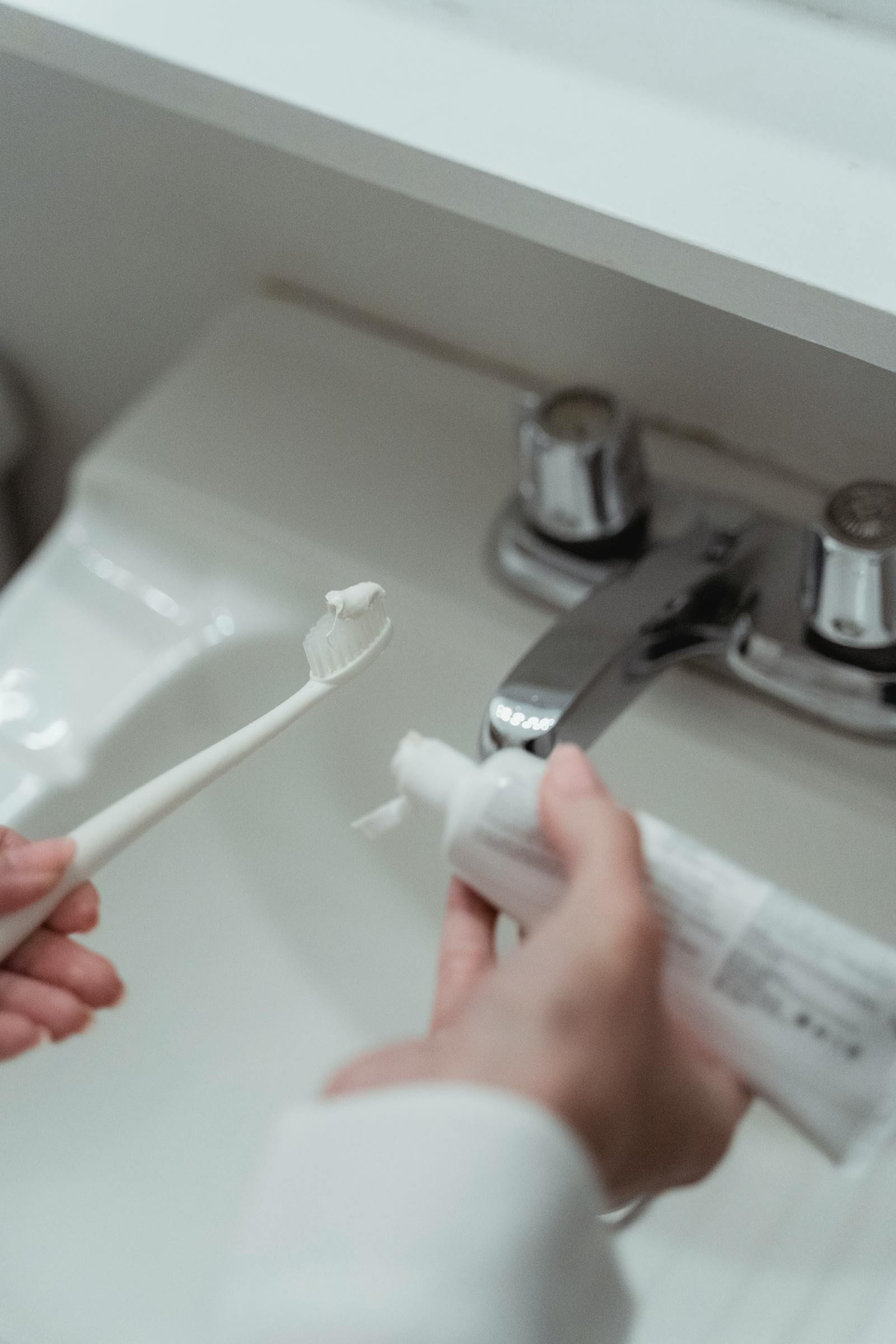
Because pain will not warn you, watch for the visible signs instead: gums that are red, swollen, or bleed when you brush; gums that pull back so teeth look longer; teeth that feel loose or newly sensitive; or breath that stays bad no matter what. The everyday prevention is unglamorous and effective. Brush twice a day, clean between the teeth once a day, and keep professional cleanings on the calendar, because once plaque hardens into tartar, only a hygienist's tools can remove it. Gum disease in older adults is preventable, and even when it has already started, regular care keeps it from getting worse.
4. Tooth Loss Is Falling, but It Is Not Gone
This is the hopeful item. A generation ago, losing all your teeth was treated as a normal part of growing old. Not anymore. Complete tooth loss among adults 65 and older has been falling for decades as fluoride, better dentistry, and daily habits do their work. Still, it climbs with age: about 1 in 10 adults aged 65 to 74 have lost all their teeth, rising to nearly 1 in 5 by age 75 and older.
The lesson is not to fear the dentures. It is that the teeth you have are worth protecting, because keeping your own is now the realistic expectation rather than the exception. Tooth loss is also a flag for the rest of the body: the CDC notes that complete or severe tooth loss is at least 50 percent more common among older adults with conditions like diabetes, heart disease, or emphysema. Caring for the mouth and managing those conditions go together, which is the theme of item seven.
5. Dentures Need Their Own Daily Routine, and a Night Off
For the many older adults who do wear partial or full dentures, the most common mistake is treating them as maintenance-free. They are not. Dentures collect plaque, food, stains, and a sticky film of bacteria and yeast in the same way natural teeth do, and left alone that buildup causes bad breath, gum irritation, and a yeast infection called denture stomatitis, the red, sore tissue that shows up under a denture that is not kept clean. They also need to come out at night so the gums can rest. Because this is where the most common and most damaging daily-care mistakes happen, the full routine, including the habits that quietly wreck a denture, has a section of its own further down.
6. Brushing and Flossing Get Physically Harder
Good oral care assumes two steady hands, decent grip, and the ability to see what you are doing. Age chips away at all three. Arthritis stiffens the fingers, a tremor makes fine movements wander, eyesight dims, and a stroke can leave one side weak. The daily routine does not lapse because someone stops caring; it lapses because the toothbrush became genuinely hard to hold. The fix is to change the tool, not to expect more willpower.
A powered toothbrush is the single best swap, because it is easier to grip and does the brushing motion for you. If a thin handle is the problem, fatten it: push it into a tennis ball, slide on a bicycle grip, or strap it to the hand with a wide elastic band. When string floss is hopeless, switch to floss picks, a floss holder, small interdental brushes, or a water flosser, all of which clean between teeth without two coordinated hands. A two-minute timer keeps the routine honest. This is also where a little help goes a long way. A family member or an in-home personal care aide can make daily oral hygiene part of the morning and bedtime routine, prompting and supervising for someone who can still do most of it, or stepping in for someone who cannot. For a person living with dementia, that steady, patient assistance matters even more; dementia care often includes the simple, repeated cues that keep a mouth clean when memory no longer supplies them.
7. The Mouth Is Connected to the Rest of the Body
A clean mouth is not just about a nice smile or fresh breath. The mouth is a doorway to the body, and in older adults the connections are real. Gum disease and diabetes feed each other: high blood sugar makes gum disease worse, and active gum disease makes blood sugar harder to control. Nearly 25 percent of adults over 50 with diabetes have severe tooth loss, compared with about 16 percent of those without, according to the National Institute of Diabetes and Digestive and Kidney Diseases.
The heart may be involved too. A 2025 scientific statement from the American Heart Association found growing evidence that gum disease is associated with a higher risk of heart attack, stroke, and other cardiovascular problems, while stressing that this is an association, not proof that one causes the other. The clearest link of all is in the lungs. In frail older adults, especially anyone who has trouble swallowing, the bacteria in a neglected mouth can be drawn into the airway and cause pneumonia. A landmark study in nursing homes found that something as simple as brushing residents' teeth after meals reduced both pneumonia and deaths from it. The takeaway is not alarm. It is that five minutes of daily mouth care is quietly protecting more than teeth.

8. Getting to the Dentist Is Half the Battle
All the home care in the world does not replace the chair. Yet fewer than 40 percent of adults 65 and older have seen a dentist in the past year, and the reasons are rarely indifference. They are practical: someone can no longer drive, has no one to ride along, or has quietly grown afraid of the appointment after years away. Each of those is solvable. The trick is to name the obstacle out loud rather than letting visits slide until something hurts, which is the most expensive way to handle a mouth.
If transportation is the wall, it can come down. A companion who drives, a ride arranged in advance, or one of the many senior transportation options turns a checkup back into a routine errand. For homebound elders, mobile dentists who make house calls exist in many areas. Families near our Sarasota, Florida office, where a large share of the community is retired, often build dental appointments into the same weekly rhythm as groceries and the pharmacy. And if fear is the barrier, say so to the dental office; a calm setting, a trusted person in the room, and a dentist used to anxious or older patients can make a visit manageable again. Keep going even after the last natural tooth is gone, because the exam still screens for oral cancer, which grows more likely with age, and confirms that dentures still fit.
Denture Care, Start to Finish
Because so many older adults wear a partial or a full denture, and because the mistakes are so easy to make without knowing it, here is the whole routine in one place. It takes about two minutes a day. Build it around meals and bedtime and it mostly runs itself.
- Rinse after eating. Take the denture out and rinse it under lukewarm running water to wash away loose food before it hardens in place. A quick rinse a few times a day does a surprising amount of the work.
- Brush it once a day, over water. Brush every surface with a soft-bristled denture brush or a soft toothbrush, standing over a sink filled with water or over a folded towel, because dentures crack when they hit a hard basin.
- Use a denture cleanser, not toothpaste. A non-abrasive denture cleanser is the right product, and mild hand soap or dishwashing liquid works in a pinch. Regular and whitening toothpaste do not.
- Rinse it before it goes back in. Especially after an overnight soak. Denture cleansers are not meant to be swallowed, so no residue should go back into the mouth.
The Mayo Clinic's denture-care guidance lands in the same place: clean daily, brush gently with a nonabrasive cleaner, and keep the material from drying out. The National Institute on Aging has plain-language guidance on the same ground worth keeping handy.
Do not stop at the denture. Every morning, before it goes in, use a soft brush to clean the gums, the tongue, the cheeks, and the roof of the mouth, all of which still hold plaque and the bacteria behind bad breath even when no natural teeth are left. With a partial denture, the remaining teeth need brushing and flossing on top of that, because the clasps give plaque an extra place to gather.
At night, the denture comes out and goes into water or a soaking solution. The break lets the gums recover from a full day of pressure, and the storage matters as much as the break: a denture is built to stay moist, and drying out overnight warps it just enough to turn a comfortable fit into one that rubs. There is a safety reason too. A denture worn to bed can loosen and shift, and dental groups warn it can become a choking hazard, which is why it should come out for naps as well as at bedtime.
Most denture damage is not an accident. It comes from small daily habits that look harmless:
- No regular or whitening toothpaste. It is abrasive enough to scratch the acrylic, and stains and bacteria settle into the scratches, so a denture cleaned this way slowly gets dingier and smellier.
- No hot water. Boiling or very hot water warps the denture and permanently changes the fit. Lukewarm or cool only.
- No bleach or gritty household cleaners. Bleach whitens the pink parts, weakens the material, and corrodes the metal clasps on a partial, and powdered cleansers scratch.
- No hard-bristled brushes. Stiff bristles scratch. Soft only.
- No letting them dry out. They live in water whenever they are out of the mouth.
- No home repairs. Household and super glue are toxic and ruin the denture. A crack or a broken tooth is a job for the dentist.
The drugstore aisle is a wall of products, so two rules of thumb. For cleansers and adhesives alike, look for the American Dental Association Seal of Acceptance, which flags products independently reviewed for safety and effectiveness; the ADA's consumer guidance on dentures is a plain-language reference worth bookmarking. And use adhesive sparingly if at all. A well-fitting denture usually does not need it, a thin application can add confidence and help seal out food, and it should never ooze out when the denture is seated. If a denture only stays put with more and more adhesive, the adhesive is masking a fit problem rather than solving it.
That is a cue to call the dentist rather than wait it out, and it is not the only one. A sore spot or raw patch that keeps coming back in the same place means the denture is rubbing and needs an adjustment. A denture that clicks or slips is usually a fit problem, often fixable with a reline. An odor or taste that cleaning does not clear can point to trapped buildup or an infection. Any crack, chip, or loose tooth needs a professional repair. Gums and the bone beneath them slowly shrink with age, so a denture loosens over the years even when nothing has gone wrong; cared for well, most last somewhere around five to seven years before they need relining or replacing.
When the mouth is not your own, the routine needs a little scaffolding. A parent recovering from surgery, living with arthritis in the hands, or in the early fog of memory loss may quietly stop keeping up with something that used to be automatic, and it is rarely the kind of thing anyone volunteers. Make the cleaning part of a fixed morning and evening rhythm so it does not depend on remembering, keep the supplies simple and visible by the sink, and label the denture case with the person's name, which sounds trivial until dentures go missing in a hospital or a rehab facility, where it happens all the time. Someone who is present for those parts of the day also notices the sore spot or the loosening fit that a parent living alone will shrug off, which is often what keeps a small problem from turning into a painful one. Families we work with around Ocean County, New Jersey lean on exactly that kind of steady, unglamorous help.
The Five-Minute Routine That Covers Most of It
Strip away the detail and daily mouth care for an older adult comes down to a short, repeatable routine. None of it is complicated. The hard part is doing it every day, which is exactly where a steady habit, or a steady hand from someone who helps, earns its keep.
- Brush twice a day with fluoride toothpaste, gently along the gumline, using a powered or built-up-handle brush if grip is a problem.
- Clean between the teeth once a day with floss picks, interdental brushes, or a water flosser, whatever the hands can manage.
- Sip water through the day, and treat dry mouth instead of ignoring it.
- For denture wearers, brush and rinse the dentures daily, brush the gums and tongue, and take the dentures out overnight.
- Watch for bleeding, receding, or loose gums and teeth, and do not wait for pain to act on them.
- Keep the dental checkups, every six to twelve months, and solve the ride before it becomes a reason to skip.
An older mouth asks for a little more attention than a younger one, but it gives back something that matters at every age: the freedom to eat what you like, speak clearly, and smile without a second thought. That is well worth five minutes a day.
Images via Pexels: hero by Mehmet Turgut Kirkgoz (photo 14149355); toothbrush by Miriam Alonso (photo 7622556); senior couple by Tristan Le (photo 1642883).
Frequently Asked Questions
Is dry mouth a normal part of aging?
No. Dry mouth is not a normal consequence of getting older. In older adults it is usually a side effect of medication -- more than 500 prescription and over-the-counter drugs can reduce saliva -- and it matters because it speeds up tooth decay and gum disease. It helps to sip water through the day, chew sugar-free gum with xylitol, use an alcohol-free fluoride rinse, run a bedroom humidifier at night, and ask your dentist or doctor to review your medication list. Never stop or change a medication on your own.
Why do older adults get more cavities?
Two reasons. First, dry mouth from medications removes saliva's natural protection against decay. Second, gums recede with age and expose the softer roots of the teeth, which decay faster than enamel. About 96 percent of adults 65 and older with natural teeth have had a cavity, and roughly half of people over 75 have a cavity on a tooth root. Brushing with fluoride toothpaste and keeping up professional cleanings are the main defenses.
How often should a senior see the dentist?
Most older adults do well with a checkup and cleaning every six to twelve months, and more often if they have dry mouth, smoke, or already have gum disease. It is worth keeping up dental visits even after losing all natural teeth, because the exam screens for oral cancer and checks that dentures still fit. Denture wearers should keep up a yearly visit for that reason, and with good care most dentures last around five to seven years before they need relining or replacing.
How do you take care of dentures?
Rinse them after eating, then brush all surfaces daily with a soft brush and a non-abrasive denture cleanser -- not regular toothpaste, which is too abrasive and scratches them. Soak them to keep them moist, and take them out at night so the gums can rest. Never use hot or boiling water, which warps them, and avoid bleach on dentures with metal parts. If the fit changes or sore spots appear, see the dentist rather than filing or gluing them at home.
Should you take dentures out at night?
Yes. Dental groups recommend removing full and partial dentures before bed and storing them in water or a denture-soaking solution overnight. Taking them out lets the gums recover from a full day of pressure, which lowers the risk of sore spots and of a yeast infection called denture stomatitis. Storage matters too, because dentures are built to stay moist and drying out overnight can distort the shape and ruin the fit. Sleeping in dentures also raises the risk that they shift and become a choking hazard, which is why they should come out for naps as well as at bedtime.
How do you get rid of denture odor?
A lasting bad smell almost always means food debris, plaque, and bacteria that daily cleaning is not reaching. Tighten the routine first: rinse after every meal, brush the whole denture once a day with a non-abrasive cleanser, and soak it overnight in a denture solution to loosen deposits. Do not skip the mouth itself, since the tongue, gums, and palate hold odor-causing bacteria too. If the smell persists after a week of consistent cleaning, or the denture also feels loose or is causing soreness, see the dentist, because odor can point to a poor fit or an infection that cleaning alone will not fix.
Can gum disease be reversed in older adults?
Early gum disease, called gingivitis, can usually be turned around with thorough daily brushing, cleaning between the teeth, and a professional cleaning to remove tartar. More advanced gum disease can be controlled and kept from getting worse, but the bone loss it causes cannot be fully undone. That is why catching it early -- before it becomes painful -- makes the biggest difference.