Senior Transportation Services: Every Option, From Free to Premium
Senior transportation services range from free transit and volunteer drivers to NEMT, Medicare rides, and private door-through-door — and what each costs.
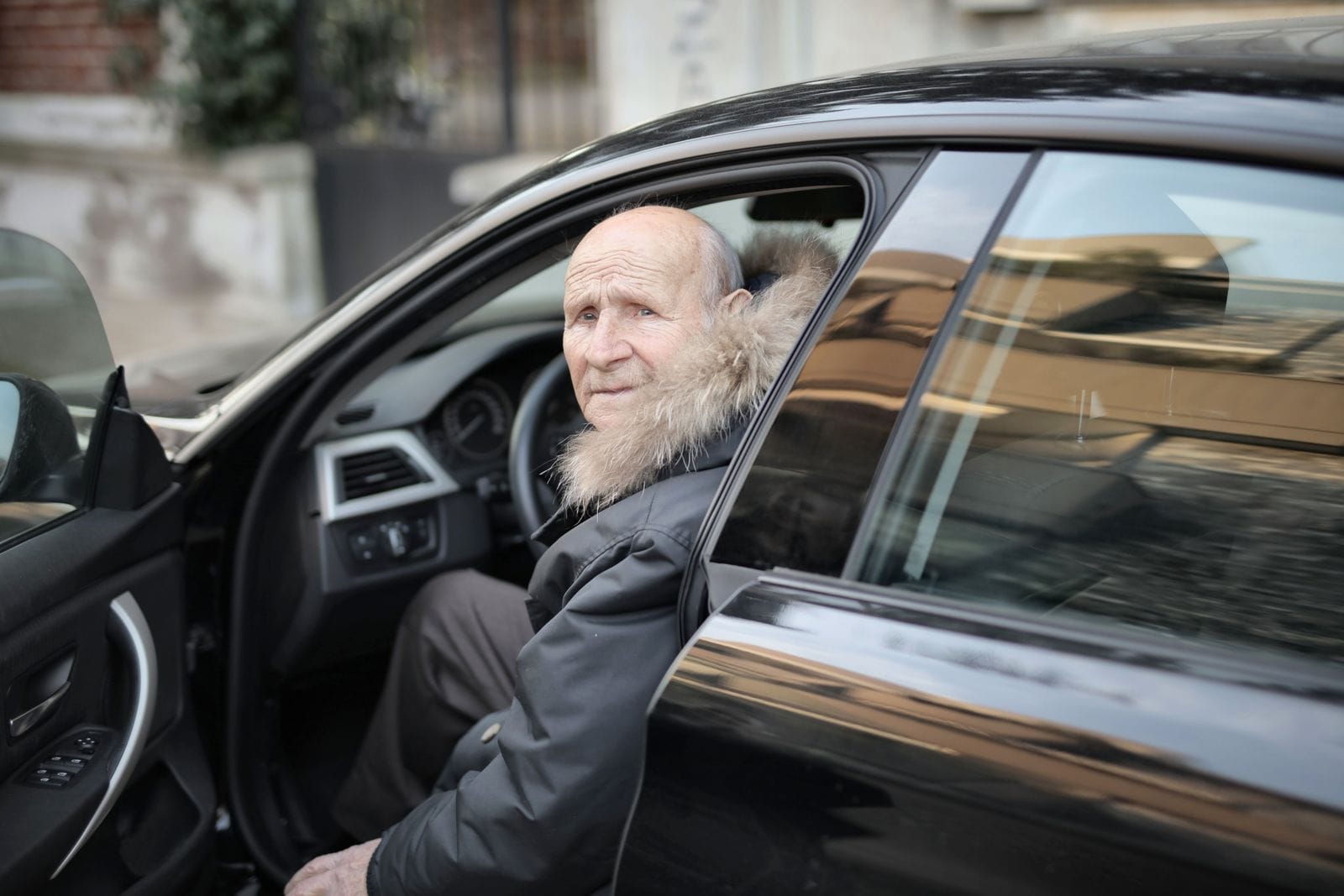
The first conversation about who drives Mom never goes the way it is planned. It happens after the keys have already moved — into a drawer, into a daughter's purse, into the slow process of being moved without anyone formally saying so. The driving conversation everyone dreads is rarely the hard part. The harder part comes a week later, when the question of how anybody is going to get to the cardiologist on Thursday actually has to be answered, and the family discovers that the inventory of options is larger, less expensive, and more confusing than anyone expected.
Eighty percent of family caregivers in the United States — more than forty-two million people — already provide some transportation for an older adult or a person with a disability, according to an AARP and National Alliance for Caregiving analysis. Most of them did not think of themselves as drivers until the appointment volume crossed some quiet threshold. The reason this guide exists is that the inventory of alternatives is much larger than what most adult children initially see. Public transit, county aging-department vans, paratransit, NEMT brokers, Medicare Advantage allowances, volunteer driver networks, rideshare and its phone-based concierges, and private door-through-door services all overlap differently in different counties. The right answer is usually a combination, not a single service. Below is the full landscape, plainly described, with what each one costs and who each one is built for.
What Are Senior Transportation Services?
Senior transportation services are the range of options that get an older adult who no longer drives to appointments, errands, and social trips — from free public transit and volunteer driver programs to Medicaid NEMT, Medicare Advantage ride benefits, rideshare concierges, and paid private door-through-door care. Most families end up combining several rather than relying on any single one.
The main types of senior transportation services include:
- Public transit at the senior reduced fare — the cheapest paid option for fixed-route daytime trips.
- Volunteer driver programs — free or low-cost door-through-door rides through county aging offices and faith-based networks.
- ADA paratransit — curb-to-curb service booked a few days ahead for riders who cannot use the regular bus.
- Medicaid Non-Emergency Medical Transportation (NEMT) — free rides to medical appointments for those who qualify.
- Medicare Advantage ride benefits — a set number of plan-covered one-way trips, where offered.
- Rideshare and phone concierges — Uber, Lyft Silver, and GoGoGrandparent for on-demand trips, no smartphone required.
- Private door-through-door services — paid drivers who escort the rider from inside the home through to the destination.
- A caregiver who drives — an in-home aide who handles the ride plus everything on either end of it.
Public Transit: The First Option Most Families Skip
Most family conversations about senior transportation skip the bus. Many seniors do not, and the buses and trains they ride are usually cheaper and more flexible than the family realizes. NJ Transit, like most public-transit systems in the country, offers a Reduced Fare ID for riders aged 62 and over and for riders with qualifying disabilities; the reduced rate is roughly half the standard fare on buses, trains, and light rail. A Medicare card works at the fare box on bus routes. In New York City, the MTA's Reduced-Fare MetroCard halves subway and bus fares for the same age group. In Philadelphia, SEPTA's Key Senior Card lets adults 65 and over ride free on buses, trolleys, the subway, and Regional Rail.
The barrier most often is not cost but training. Many seniors who used a bus in their thirties have not boarded one in decades, and the route signage and fare technology have changed. Transit agencies know this. Most large systems run a free travel-training program, often through a partnership with the local Area Agency on Aging, that pairs new senior riders with a trained instructor who rides several practice trips alongside them — a stop at the grocery store, a transfer downtown, a Sunday afternoon to the library — until the route feels routine. Travel-training programs are not advertised well; a phone call to the local transit authority's accessibility office or to the county Office on Aging is usually how they are found.
Public transit is best for predictable, daytime, fixed-route trips by riders who walk a few blocks to a stop, climb three or four steps onto a vehicle, and tolerate a wait. It is a poor fit when those conditions break: when winter weather makes the wait a fall risk, when the destination is in a transit desert, when carrying groceries home from the bus stop becomes the day's hardest task.
Volunteer Driver Networks: The Quiet System Most Families Don't Know Exists
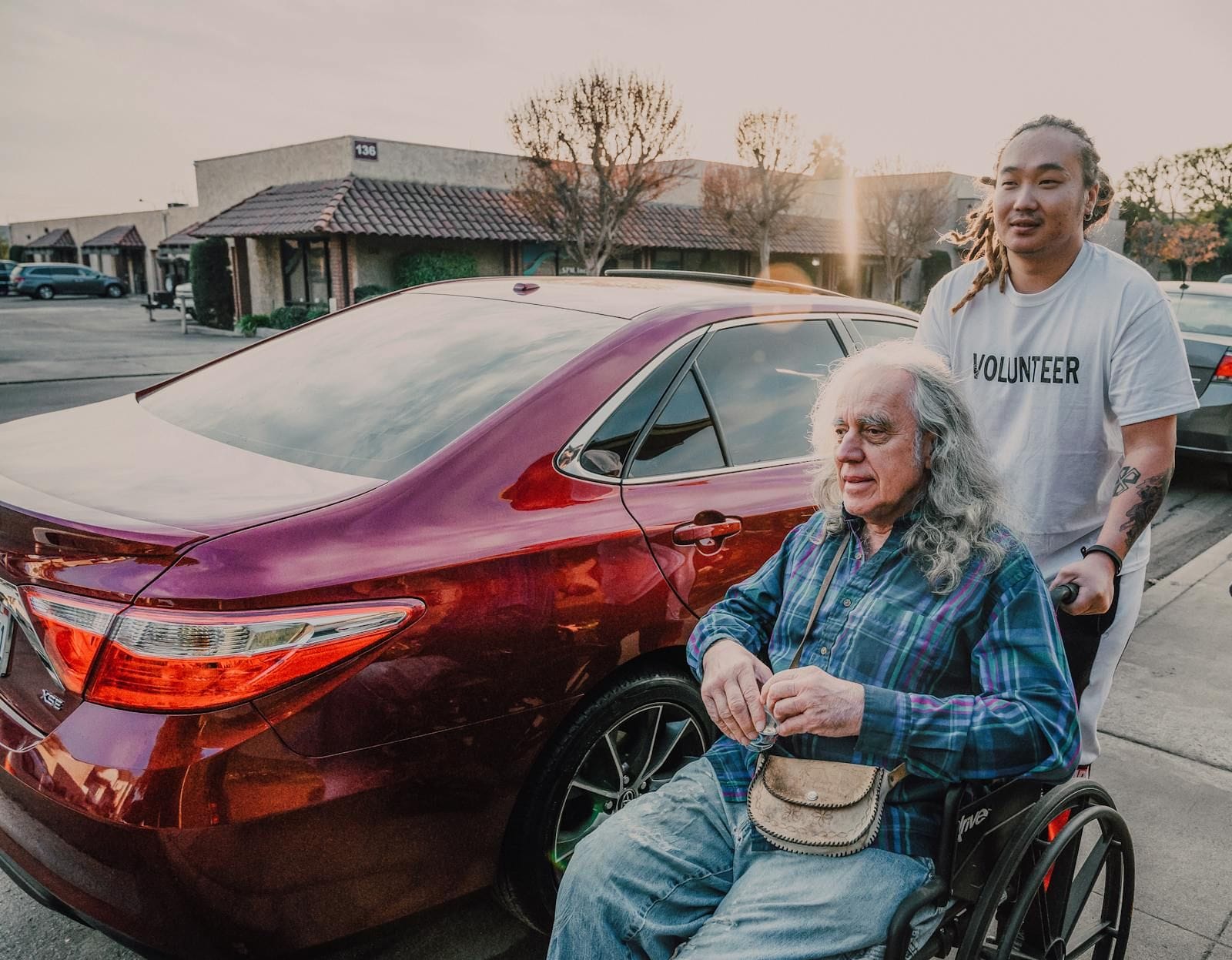
In most American counties, a quiet system of community-based volunteer driver programs runs alongside everything else. The drivers are usually retired adults — a fair number of them volunteer in part because they are banking transportation credits against their own future need to stop driving — and they use their own cars to provide door-through-door rides for seniors and adults with disabilities. Some programs are run by the county Office on Aging or Council on Aging itself, funded through the Older Americans Act and Section 5310 federal grants. Others are run by faith-based networks like Faith in Action, the Volunteer Caregivers Network, or independent nonprofits with names like Drive a Senior or Neighbor Ride. A few are affiliates of ITN America, the national network of community-based transportation services that delivered more than 780,000 rides through its affiliates and trusted partners in 2022 alone.
The cost on volunteer programs runs from genuinely free (sometimes with a suggested donation) up to a modest membership fee plus a per-ride credit — the Lehigh Valley ITN affiliate, for example, has historically charged about half the cost of a taxi for a five-to-seven-mile trip. The trip is unhurried: the driver helps the rider into the car, drives, waits at the appointment, drives home, and helps the rider back inside. For a Tuesday cardiology visit that runs an hour and a half because the rheumatologist is running late, that ability to wait is the whole point.
The shortcomings are real. Coverage is uneven — well-developed in some counties and almost nonexistent in others — and most programs cannot handle high-frequency requests, late-night trips, or the kind of mobility assistance a wheelchair-accessible van provides. The standard intake conversation asks where you live, what days you want rides, and whether you can self-transfer from a chair to a sedan. The federal Eldercare Locator (1-800-677-1116) or the county Area Agency on Aging will point a family to whatever exists locally.
ADA Paratransit: Curb-to-Curb, Booked Three Days Ahead
The Americans with Disabilities Act of 1990 requires every public-transit agency in the United States that runs fixed-route bus or rail service to also operate a complementary paratransit service for people whose disability prevents them from using that fixed route. New Jersey Transit's program is called Access Link; New York's is Access-A-Ride; Philadelphia's is CCT Connect. The federal rule is the same everywhere: paratransit must serve the same three-quarters-of-a-mile corridor around each fixed route, must operate during the same hours as the fixed route, and may charge no more than twice the fixed-route fare. In practice that means three to five dollars per one-way trip.
If your parent is in New Jersey, our county-by-county guide to New Jersey senior transportation lists every county's paratransit and community-transportation program with its phone number, along with Access Link and the statewide reduced-fare program.
Eligibility is the friction. A rider applies through the transit agency — a paper or online form, signed by a physician, sometimes followed by a short functional assessment in person — and is approved as either unconditionally eligible (always able to use paratransit), conditionally eligible (eligible only for specific kinds of trips that the fixed route cannot serve), or denied. Processing takes a few weeks; an appeal is available. Once approved, the rider books a ride one to three days in advance, the dispatcher offers a thirty-minute pickup window, and a shared-ride van picks up several other riders along the route. An hour-long trip for a fifteen-minute errand is common; the time on the vehicle is the cost of the cheap fare.
Paratransit is the right tool when a senior is unable to use the local bus because of a disability, when the trip is local and within the corridor, and when scheduling can happen days in advance. It is not the right tool when scheduling is fluid, when the rider needs help inside the home before the ride or after, or when the trip is outside the standard fixed-route service area. Counties also frequently operate their own non-ADA paratransit-style transportation for seniors — Monmouth County's SCAT (Special Citizens Area Transportation) program is one — that fills geographic gaps the federal-mandated service does not reach.
Medicaid NEMT: The Ride That Comes With the Insurance
Non-Emergency Medical Transportation is the largest single source of senior medical rides in the United States and the one most invisible to families who do not have Medicaid. The federal Medicaid statute (42 CFR 431.53) requires every state Medicaid program to ensure beneficiaries have a way to get to and from covered medical appointments when no other means is available. The benefit is free to the rider. Each state runs the program through a managed broker — MTM, Modivcare, Verida, Veyo, and Access2Care are the largest national operators — and rides are typically dispatched through a network of contracted transportation providers ranging from small sedan operators to wheelchair-accessible van fleets.
The mechanics are uniform from state to state. The rider or a family member calls the broker, gives the Medicaid ID, the appointment date and location, and any accessibility needs. Rides almost always must be scheduled at least three business days in advance — in many programs the lead time is now five days for routine appointments — and the broker assigns a provider. The rider waits at the pickup window, the driver arrives, and the trip is invoiced to the state. NEMT does not generally cover trips outside the medical context: grocery runs, social visits, and church are not eligible. Dialysis runs, oncology infusions, behavioral health visits, and recurring physical therapy are the daily backbone of the system.
The most common error families make with NEMT is assuming Medicaid handles the call from the doctor's office automatically. It does not. A family member or care coordinator has to actively schedule each ride. Many home-health agencies and case managers will do this on behalf of the family; for seniors enrolled in PACE (Program of All-Inclusive Care for the Elderly), transportation to PACE medical appointments is included in the program at no separate charge.
Medicare Advantage Rides: The Benefit That Just Got Tighter in 2026
Original Medicare does not cover non-emergency transportation. Medicare Advantage plans, the private alternatives to traditional Medicare, may offer transportation as one of their supplemental benefits, and roughly half of plans nationally did so as of 2024. The benefit is plan-specific and typically takes the form of a flat allowance — somewhere between 12 and 60 one-way rides per year on the most generous plans, fewer on the average plan — with restrictions on destination (medical, pharmacy, sometimes the grocery store), lead time (24 to 48 hours), and provider (an approved broker, often the same NEMT brokers Medicaid uses).
The benefit got tighter in the 2026 plan year. KFF's 2026 analysis found 22 percent of individual Medicare Advantage enrollees in a plan offering a transportation benefit, down from 28 percent a year earlier, and 73 percent of Special Needs Plan enrollees, down from 80 percent. Some plans reduced annual ride counts; some narrowed eligible destinations; some extended the required scheduling lead time. The relevant document is the Annual Notice of Change a plan sends to every enrollee in September. The transportation section is usually one paragraph long and is one of the most-skipped paragraphs in the entire packet. Read it before October 7, the start of the Medicare Annual Election Period; if the ride count dropped meaningfully, comparing plans during AEP may matter more than usual this year.
The benefit also varies by plan type. Special Needs Plans for Medicare-Medicaid dual eligibles often have more generous transportation benefits because they coordinate with the underlying Medicaid NEMT. Standard MA-PD plans tend to be tighter. Adults on Original Medicare with a Medigap supplement get no transportation benefit at all — the supplement covers cost-sharing on Medicare-covered services, and routine rides are not on that list.
Rideshare Workarounds: Uber Health, Lyft Silver, and the Phone Concierges
Uber and Lyft are usable by many seniors, and the two companies have built specific products for older riders. Uber's senior account uses a simplified app and a phone-based support line. Lyft Silver offers a stripped-down interface with daytime live agents who can help book a trip or troubleshoot a confused ride. Both platforms surface vehicles that are physically easier to enter and exit — taller SUVs and crossovers rather than low-slung sedans — when the rider selects an appropriate ride class. A family member can also book rides on behalf of a senior through Uber Health, the healthcare-organization-facing dashboard that allows ride scheduling without the rider needing to use the app at all. Uber Health's in-house data from a February 2026 survey of 150 healthcare professionals found that 57 percent linked missed visits to transportation barriers and more than 25 percent cited delayed care plans as a downstream consequence.
For seniors who cannot use a smartphone at all, GoGo (formerly GoGoGrandparent) bridges the gap. The rider calls a single toll-free number, presses a digit on the keypad — 1 for a ride home, for example — and a vetted driver from Uber's or Lyft's network is dispatched. No app, no smartphone, no account on the rider's end. GoGo charges a monthly concierge membership (in the range of $10 to $30 depending on plan) and a per-minute surcharge of around 27 cents on top of the base rideshare fare, which goes toward the company's driver-vetting and concierge operations. A typical short urban ride runs $15 to $25 all-in. The convenience is genuine; the per-ride cost is higher than calling Uber directly would be if the senior could.
Rideshare works for spontaneous trips, evening trips, weekend trips, and trips into transit deserts. It does not work well for riders who need help getting into the vehicle, riders with wheelchairs that do not fold (the standard Uber and Lyft drivers are not WAV-equipped — Uber WAV exists but is thin outside major metros), or riders who become confused at the pickup point and miss the car. For those situations, a different category of service applies.
Private Door-Through-Door Services: When Curb-to-Curb Isn't Enough
Paratransit, rideshare, and even most NEMT brokers operate at the curb. The driver pulls up, the rider walks out to the vehicle, and the rest is on them. Private door-through-door services do something different: a driver comes into the home, helps the rider out, walks them to the vehicle, drives them to the destination, walks them in, and stays through the visit. Companies like SilverRide on the West Coast, regional NEMT operators in most metros, and a handful of national specialty operators occupy this tier. So do dedicated WAV (wheelchair-accessible van) services that can secure a power chair with four-point tie-downs and provide a driver trained on safe wheelchair loading.
The cost reflects what you are buying. A typical one-way private door-through-door fare runs between $35 and $115 depending on distance, vehicle type, wait time at the destination, and whether the trip requires WAV-level equipment. The hourly rate model is also common: roughly $30 to $50 per hour with a minimum, which makes the most sense when the appointment runs long. A trip across town to a two-hour infusion appointment is the canonical use case — paratransit will not wait, rideshare drivers will not help into the building, and Medicaid NEMT requires three days' lead time. A private operator solves all three problems simultaneously.
For most non-Medicaid families, private door-through-door is the right tool for the trips that actually matter: the surgical consultation a frail parent cannot navigate alone, the chemotherapy round where waiting room time stretches unpredictably, the first hospital discharge home from an unfamiliar facility. Used selectively for those high-stakes trips, it costs a few hundred dollars a month; used for every trip, it would run thousands. The tradeoff is the whole point of the inventory above it.

A Caregiver Who Drives: What an Hour Buys That a Solo Ride Doesn't
There is a final category that sits outside the transportation industry proper, and it is the one that quietly solves many of the hardest cases. A non-medical caregiver — a Certified Home Health Aide, a Personal Care Assistant, or a companion-care worker — comes to the home for a scheduled visit, helps the senior get ready, drives the senior to the appointment, accompanies them through it, drives them home, and helps them settle. The hourly rate in 2026 for private-pay companion care in most metros runs $30 to $45 per hour, with a four-hour minimum for most agencies. A two-hour cardiology visit, billed at four hours of caregiver time, costs roughly the same as a private door-through-door round-trip ride at the upper end of the door-through-door range — but the caregiver does more.
What the caregiver buys, beyond the ride itself, is continuity. The same person who drives Mom to the rheumatologist next week is the same person who drove her last week; she knows the parking lot, knows which entrance has the elevator, knows what Mom is afraid of. She helps with the post-appointment medication adjustment, reads the discharge instructions out loud in the kitchen, and does the small things that keep an appointment from undoing itself in the next forty-eight hours. For an older adult whose medical schedule is dense and whose home tasks are also slipping — the meal prep, the grocery run, the morning bath that has gotten harder — bundling transportation into a few hours of caregiver time is often cheaper than buying it separately, and reliably better executed. The natural home for this approach is non-medical companion care, which routinely includes accompanying transportation as part of a visit, paired with personal care when the rider also needs help bathing, dressing, or with mobility before and after the trip.
How to Actually Build the Plan
A working transportation plan for an older adult is almost never one service. It is a layered combination that adapts to the kind of trip. The sequence that works for most families is straightforward to assemble:
Start with the inventory call. Phone the local Area Agency on Aging or call the federal Eldercare Locator at 1-800-677-1116 and ask three questions: what county-funded transportation programs exist locally, which volunteer driver programs are active, and whether the area has an ITN America affiliate or a Faith in Action chapter. Write down the names and phone numbers. The answer to "what is available" is local enough that no national guide can give it.
Check the parent's insurance. If the parent is on Medicaid, find the state's NEMT broker and write down the booking number. If on a Medicare Advantage plan, pull the most recent Annual Notice of Change letter from the September mailing and read the transportation paragraph; if they kept the letter, the ride allowance is in it. If the parent is dually eligible, both benefits stack and the better one applies trip by trip.
Sign up for ADA paratransit eligibility even if you don't need it yet. The application takes weeks; doing it during a hospital crisis is too late. Once approved, eligibility lasts years and the membership card sits in the wallet ready for the day it becomes useful.
Open a rideshare account, ideally before the parent needs one. Whether it is a parent-facing Uber senior account, Lyft Silver, or a GoGo concierge subscription that the family pays for, having the rideshare channel ready avoids the worst version of the conversation — the one that happens at 8:15 a.m. on the day of an 8:30 a.m. appointment.
Identify one private operator before the first emergency. A vetted phone number for a local NEMT or door-through-door provider, kept in the contacts list, is the difference between a hospital discharge that goes home gracefully and one that delays an extra night because no one could arrange the ride.
Match the trip to the tool. Routine PT appointments: volunteer driver or NEMT. Weekly grocery run: family, volunteer driver, or paratransit. Specialist consultation: caregiver-driver or private door-through-door. Social visits: family or rideshare. Emergency room follow-up: private door-through-door. The combination is almost always cheaper than any single service used for every trip.
Frequently Asked Questions
What are the transportation options for seniors who can't drive? Seniors who can no longer drive have more options than most families realize: fixed-route public transit at the senior reduced fare, county and faith-based volunteer driver programs, ADA paratransit booked a few days ahead, Medicaid Non-Emergency Medical Transportation for medical trips, Medicare Advantage ride allowances where offered, rideshare and phone concierges like Uber, Lyft Silver, and GoGoGrandparent, paid private door-through-door services, and an in-home caregiver who drives. The right answer is almost always a combination matched to each trip rather than any single service.
How do I find senior transportation services in my area? Start with three free directories. The Eldercare Locator (1-800-677-1116 or eldercare.acl.gov) connects you to your local Area Agency on Aging, which keeps the most complete county-level inventory of senior transportation services. ITN America's Rides in Sight database (ridesinsight.org) is searchable by ZIP code. Your local Aging and Disability Resource Center, listed at acl.gov, can do an intake call. In New Jersey, NJ 2-1-1, NJ Transit's Access Link, and each county Division on Aging keep their own ride directories.
What is the cheapest way for a senior to get around without a car? Fixed-route public transit at the senior reduced fare is the cheapest paid option, typically a dollar or two per trip and free in many cities for adults over 65. Below that, free rides exist: county Office on Aging volunteer driver programs, faith-based driver networks like Faith in Action, and Independent Transportation Network affiliates that ask only for a modest annual membership and a per-ride credit. Medicaid Non-Emergency Medical Transportation covers medical trips at no cost for adults who qualify. The mix usually beats any single paid service on cost.
Does Medicare pay for transportation to doctor appointments? Original Medicare (Parts A and B) does not cover routine, non-emergency rides to medical appointments. Medicare Part B covers medically necessary ambulance transport when no other safe method exists. Many Medicare Advantage plans offer a flat-allowance transportation benefit — often 12 to 60 one-way rides per year, with limits on destination type and lead time — but the benefit was trimmed in many 2026 plan-year renewals, and the specifics vary by plan. Read the Annual Notice of Change letter the plan sends every fall; that is where the cuts are disclosed.
What is Non-Emergency Medical Transportation, and who qualifies? Non-Emergency Medical Transportation (NEMT) is a federally mandated Medicaid benefit that pays for rides to and from medical appointments when no other means of transportation is available. Eligibility requires Medicaid enrollment and a medical-necessity rationale. Each state runs the program through a broker — Modivcare, Verida, MTM, Veyo, and Access2Care are the largest — and rides usually must be booked at least three business days in advance. The ride itself is free to the rider; vehicles range from sedans to wheelchair-accessible vans depending on need.
Can a senior who does not have a smartphone use Uber or Lyft? Yes, three ways. Uber's senior-account experience offers a simplified app and a phone-based help line; Lyft Silver does the same with a daytime live-support team. For seniors who cannot manage either, GoGoGrandparent (now GoGo) takes ride requests by toll-free phone call — no app, no smartphone, no account on the rider's end — and dispatches an Uber or Lyft, charging a small per-minute concierge fee on top of the base fare. The phone-only path costs more per ride than the app path but works for households without compatible devices.
What does private door-through-door transportation cost? Private NEMT operators and companies like SilverRide typically charge $35 to $115 per one-way trip depending on distance, vehicle type, and assistance level. Wheelchair-accessible vans and bariatric vehicles are at the upper end. The cost buys what curb-to-curb services do not: a driver who walks into the home, escorts the rider to the vehicle, drives, and stays through the destination handoff. For an appointment with a clipboard and a long sit, that level of assistance is often what makes the appointment possible at all.
How does ADA paratransit work, and how do I sign Mom up? ADA paratransit is a federally required supplement to fixed-route public transit for people whose disability prevents them from using the regular bus or train. Eligibility is determined by the transit agency through a short application and sometimes a functional assessment; the application form is usually on the agency website. Once enrolled, rides cost about double the standard transit fare (a few dollars), must be booked one to three days in advance, and follow a shared-ride model — the van picks up several riders along a route, so an hour-long trip is common. Service area is limited to within three-quarters of a mile of the fixed-route system.
Should we use a volunteer driver or pay for a service? Volunteer drivers, where they exist, are excellent for predictable non-emergency trips: a Tuesday cardiology appointment, the same-time-every-week grocery run, a regular church service. They are usually free or nearly so, the drivers are vetted and trained, and many seniors prefer the human continuity. They are not a fit for high-frequency trips, last-minute scheduling, after-hours rides, or trips with significant mobility assistance needs. A reasonable mix is volunteer drivers for the rhythmic trips and a paid service held in reserve for everything else.
Where do I look up what is available in my parent's county? Three places. The Eldercare Locator (1-800-677-1116 or eldercare.acl.gov) connects callers to the local Area Agency on Aging, which keeps the most complete county-level inventory. ITN America's Rides in Sight database (ridesinsight.org) is searchable by ZIP code. The local Aging and Disability Resource Center, listed at acl.gov, can do an intake call. In New Jersey specifically, NJ 2-1-1, NJ Transit's Access Link, and each county Division on Aging keep their own directories.
The Last Mile Is People, Not Vehicles
The thing every transportation map for older adults eventually runs into is that the vehicles are the easy part. The hard part is everything on either end. Getting up earlier than usual to be ready. Putting on the right shoes for the weather. Remembering whether the insurance card is in the wallet. Recognizing the driver. Walking down the front steps without anybody watching. Trusting that the door will be unlocked when the ride home arrives. A longitudinal cohort analysis published by the National Institutes of Health found that older adults who stopped driving had roughly twice the odds of moving into a higher category of social isolation in the years that followed; the AAA Foundation's LongROAD analysis links driving cessation to elevated rates of depression independent of underlying health. Neither outcome is about not having a car. Both are about not having a way to keep showing up for the appointments and the lunches and the grandchild's school play that make a life recognizably one's own.
A well-built transportation plan is therefore not really about transportation. It is about making sure that, when the keys eventually do come back, the rest of the life does not quietly contract around their absence. The inventory above is large enough that almost any family can assemble a workable mix; the harder work is in remembering to start before the first missed appointment, and in being willing to pay for the high-stakes trips while using the free options for everything else. At Always Responsive Home Care in Middlesex County, NJ and our Ocean County office, the most common reason a family first calls is not bathing, or meal prep, or even medication management — it is a Tuesday appointment that nobody could figure out how to get Mom to. The caregivers we send arrive a little early, drive a familiar route, and stay through whatever the day actually turns out to be.
Hero photograph by Andrea Piacquadio. In-post photographs by RDNE Stock project and Francisco Ferreira. All via Pexels.
Frequently Asked Questions
What are the transportation options for seniors who can't drive?
Seniors who can no longer drive have more options than most families realize: fixed-route public transit at the senior reduced fare, county and faith-based volunteer driver programs, ADA paratransit booked a few days ahead, Medicaid Non-Emergency Medical Transportation for medical trips, Medicare Advantage ride allowances where offered, rideshare and phone concierges like Uber, Lyft Silver, and GoGoGrandparent, paid private door-through-door services, and an in-home caregiver who drives. The right answer is almost always a combination matched to each trip rather than any single service.
How do I find senior transportation services in my area?
Start with three free directories. The Eldercare Locator (1-800-677-1116 or eldercare.acl.gov) connects you to your local Area Agency on Aging, which keeps the most complete county-level inventory of senior transportation services. ITN America's Rides in Sight database (ridesinsight.org) is searchable by ZIP code. Your local Aging and Disability Resource Center, listed at acl.gov, can do an intake call. In New Jersey, NJ 2-1-1, NJ Transit's Access Link, and each county Division on Aging keep their own ride directories.
What is the cheapest way for a senior to get around without a car?
Fixed-route public transit at the senior reduced fare is the cheapest paid option, typically a dollar or two per trip and free in many cities for adults over 65. Below that, free rides exist: county Office on Aging volunteer driver programs, faith-based driver networks like Faith in Action, and Independent Transportation Network affiliates that ask only for a modest annual membership and a per-ride credit. Medicaid Non-Emergency Medical Transportation covers medical trips at no cost for adults who qualify. The mix usually beats any single paid service on cost.
Does Medicare pay for transportation to doctor appointments?
Original Medicare (Parts A and B) does not cover routine, non-emergency rides to medical appointments. Medicare Part B covers medically necessary ambulance transport when no other safe method exists. Many Medicare Advantage plans offer a flat-allowance transportation benefit — often 12 to 60 one-way rides per year, with limits on destination type and lead time — but the benefit was trimmed in many 2026 plan-year renewals, and the specifics vary by plan. Read the Annual Notice of Change letter the plan sends every fall; that is where the cuts are disclosed.
What is Non-Emergency Medical Transportation, and who qualifies?
Non-Emergency Medical Transportation (NEMT) is a federally mandated Medicaid benefit that pays for rides to and from medical appointments when no other means of transportation is available. Eligibility requires Medicaid enrollment and a medical-necessity rationale. Each state runs the program through a broker — Modivcare, Verida, MTM, Veyo, and Access2Care are the largest — and rides usually must be booked at least three business days in advance. The ride itself is free to the rider; vehicles range from sedans to wheelchair-accessible vans depending on need.
Can a senior who does not have a smartphone use Uber or Lyft?
Yes, three ways. Uber's senior-account experience offers a simplified app and a phone-based help line; Lyft Silver does the same with a daytime live-support team. For seniors who cannot manage either, GoGoGrandparent (now GoGo) takes ride requests by toll-free phone call — no app, no smartphone, no account on the rider's end — and dispatches an Uber or Lyft, charging a small per-minute concierge fee on top of the base fare. The phone-only path costs more per ride than the app path but works for households without compatible devices.
What does private door-through-door transportation cost?
Private NEMT operators and companies like SilverRide typically charge $35 to $115 per one-way trip depending on distance, vehicle type, and assistance level. Wheelchair-accessible vans and bariatric vehicles are at the upper end. The cost buys what curb-to-curb services do not: a driver who walks into the home, escorts the rider to the vehicle, drives, and stays through the destination handoff. For an appointment with a clipboard and a long sit, that level of assistance is often what makes the appointment possible at all.
How does ADA paratransit work, and how do I sign Mom up?
ADA paratransit is a federally required supplement to fixed-route public transit for people whose disability prevents them from using the regular bus or train. Eligibility is determined by the transit agency through a short application and sometimes a functional assessment; the application form is usually on the agency website. Once enrolled, rides cost about double the standard transit fare (a few dollars), must be booked one to three days in advance, and follow a shared-ride model — the van picks up several riders along a route, so an hour-long trip is common. Service area is limited to within three-quarters of a mile of the fixed-route system.
Should we use a volunteer driver or pay for a service?
Volunteer drivers, where they exist, are excellent for predictable non-emergency trips: a Tuesday cardiology appointment, the same-time-every-week grocery run, a regular church service. They are usually free or nearly so, the drivers are vetted and trained, and many seniors prefer the human continuity. They are not a fit for high-frequency trips, last-minute scheduling, after-hours rides, or trips with significant mobility assistance needs. A reasonable mix is volunteer drivers for the rhythmic trips and a paid service held in reserve for everything else.
Where do I look up what is available in my parent's county?
Three places. The Eldercare Locator (1-800-677-1116 or eldercare.acl.gov) connects callers to the local Area Agency on Aging, which keeps the most complete county-level inventory. ITN America's Rides in Sight database (ridesinsight.org) is searchable by ZIP code. The local Aging and Disability Resource Center, listed at acl.gov, can do an intake call. In New Jersey specifically, NJ 2-1-1, NJ Transit's Access Link, and each county Division on Aging keep their own directories.