Caring for Dentures Without Wrecking Them
How to clean and care for dentures: a simple daily routine, the habits that quietly ruin them, overnight soaking, and when a sore spot means the dentist.
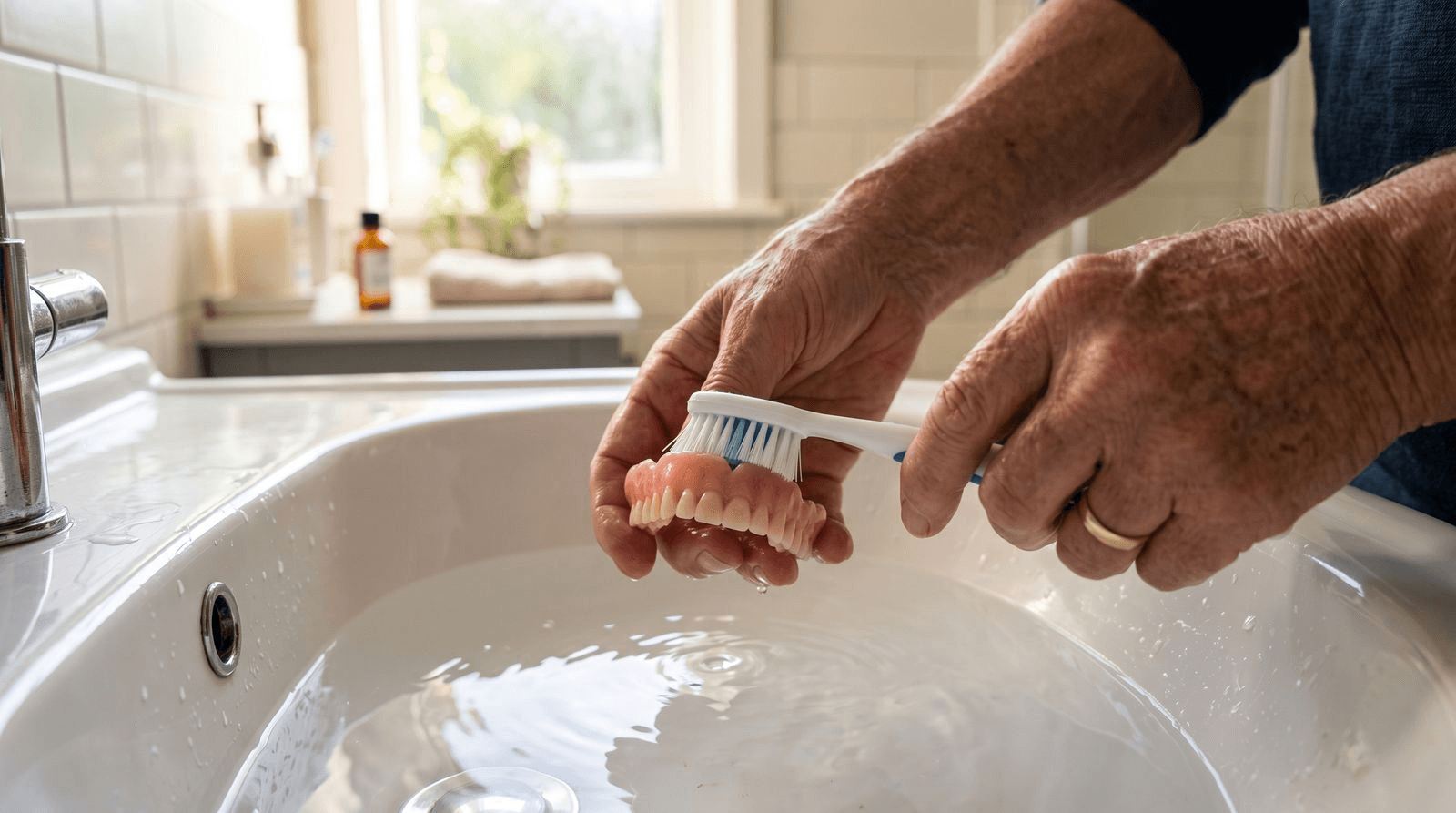
Here is the mistake almost every new denture wearer makes, and plenty of longtime ones too: they clean the denture with the same toothpaste and the same hard brush they used on their natural teeth. It feels obviously right. It is quietly wrong. Regular toothpaste is an abrasive built to scrub tooth enamel, and denture acrylic is softer than enamel, so every brushing leaves a field of tiny scratches. Bacteria and stains settle into those scratches, and a denture that gets cleaned this way slowly turns dingier, smellier, and harder to keep fresh, one well-intentioned scrub at a time.
Dentures are not high-maintenance, but they are particular. The good news is that a genuinely good routine takes about two minutes a day and mostly comes down to a short list of do's and an equally short list of never-do's. Here is the whole thing, from the daily clean to the small signals that mean it is time to call the dentist.
Why a Denture Needs More Care Than It Looks Like It Does
A denture looks inert, a piece of molded plastic and porcelain, so it is easy to assume it just needs a rinse. It does not. A denture collects plaque, food, stains, and a sticky film of bacteria and yeast called biofilm in the same way natural teeth do. Left alone, that buildup causes bad breath, gum irritation, and a common yeast infection of the mouth called denture stomatitis, the red, sore, inflamed tissue that shows up under a denture that is not kept clean. It can also work its way into a poor fit, because deposits change how the denture seats against the gums.
So the goal of denture care is not cosmetic. It is keeping the mouth healthy, and it sits alongside everything else that changes about dental care as we get older. The routine below is what dental groups broadly agree on, and none of it is complicated.
The Daily Clean, Start to Finish
Build the habit around meals and bedtime and it more or less runs itself:
- Rinse after you eat. After meals, take the denture out and rinse it under lukewarm running water to wash away loose food before it hardens into place. A quick rinse a few times a day does a surprising amount of the work.
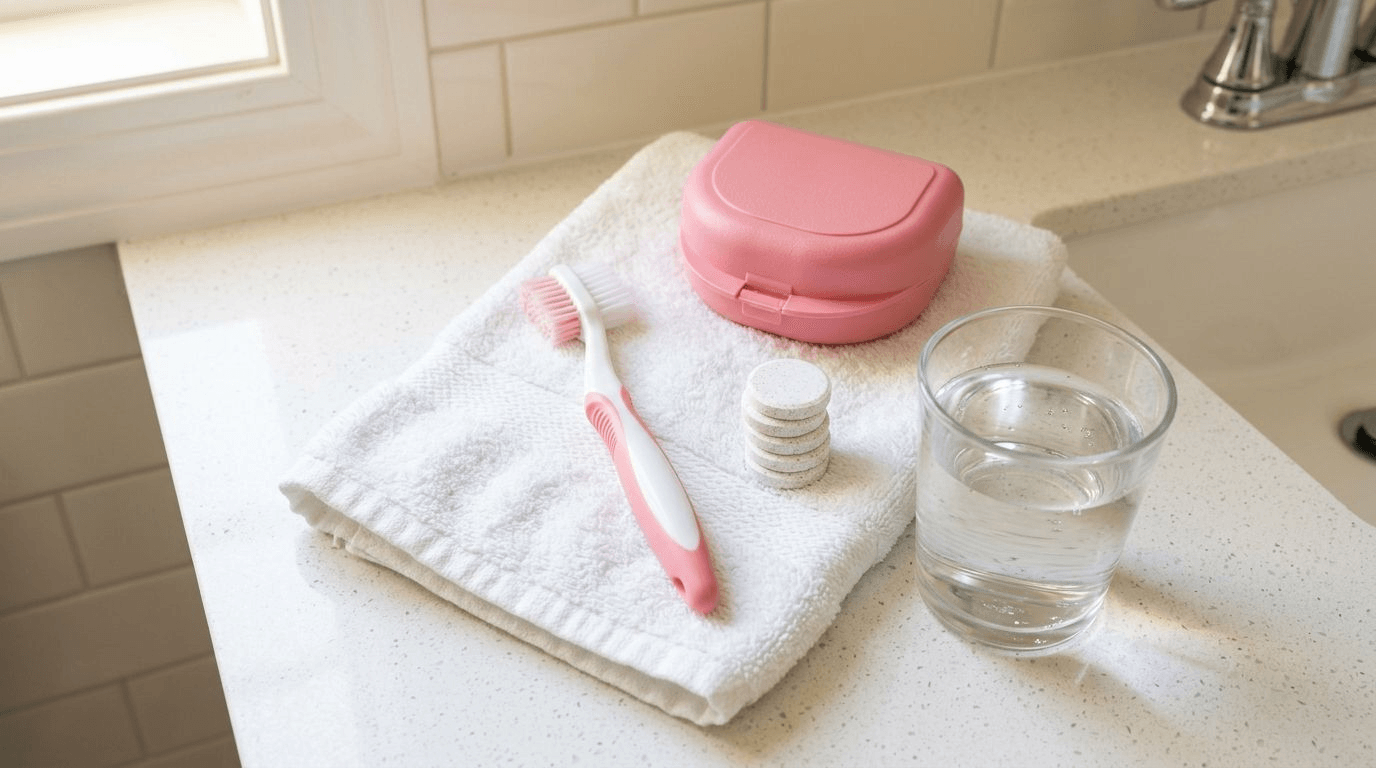
- Brush it once a day, over water. Once daily, brush every surface with a soft-bristled denture brush or a soft regular toothbrush. Do it standing over a sink filled with water or over a folded towel, because dentures crack when they hit a hard basin, and a cushion of water or cloth is cheap insurance.
- Use a denture cleanser, not toothpaste. Apply a non-abrasive denture cleanser, or mild hand soap or dishwashing liquid. Skip regular and whitening toothpaste entirely.
- Rinse before it goes back in. Always rinse the denture thoroughly under cool water before wearing it again, especially after soaking. Denture cleansers are not meant to be swallowed, so no residue should go back in the mouth.
The Mayo Clinic's denture-care guidance lands in the same place: clean daily, brush gently with a nonabrasive cleaner, and keep the material from drying out.
Don't Forget the Mouth Underneath
It is easy to think of the denture as the thing that needs cleaning and stop there. The mouth needs it just as much. Every morning, before the denture goes in, use a soft brush to gently clean the gums, the tongue, the cheeks, and the roof of the mouth. This is true even for someone with no natural teeth left, because those surfaces still hold plaque and the bacteria behind bad breath and gum irritation. For a partial denture, the remaining natural teeth need regular brushing and flossing on top of that, since the denture's clasps give plaque an extra place to gather.
Dry mouth makes all of this harder, and it is common in older adults, often as a side effect of medications. Sipping water through the day and asking the dentist about an alcohol-free rinse can help keep the tissue comfortable and the denture seated.
Give Them the Night Off, Stored in Water
Dentures are built to be worn during the day and rested at night, and the nightly break matters more than most people realize. Taking the denture out before bed lets the gums recover from a full day of pressure, which cuts down on sore spots and lowers the risk of that yeast infection. Leave it out, and store it submerged in water or a denture-soaking solution overnight.

Storage is not just tidiness. A denture is designed to stay moist, and if it dries out overnight it can warp just enough to throw off the fit, turning a comfortable denture into one that rubs. There is a safety reason too: a denture worn to bed can loosen and shift, and dental groups warn it can become a choking hazard, which is why it should come out for naps as well as for the night.
The Everyday Habits That Quietly Ruin Dentures
Most denture damage does not come from accidents. It comes from small daily habits that seem harmless. Keep this short list of never-do's in mind:
- No regular or whitening toothpaste. Too abrasive; it scratches the acrylic and invites stains and bacteria.
- No hot water. Boiling or very hot water can warp the denture and permanently change the fit. Lukewarm or cool only.
- No bleach or gritty household cleaners. Bleach can whiten the pink parts and weaken the material, and powdered cleansers scratch. Only use products meant for dentures.
- No hard-bristled brushes. Stiff bristles scratch the surface. Soft only.
- No letting them dry out. Air-drying overnight distorts the shape. They live in water when they are out.
- No do-it-yourself repairs. Household or super glue is toxic and ruins the denture. A crack or a broken tooth is a job for the dentist.
Adhesives and Cleansers, Without the Guesswork
The drugstore denture aisle is a wall of products, so two quick rules of thumb. First, for cleansers and adhesives alike, look for the American Dental Association Seal of Acceptance, which flags products independently reviewed for safety and effectiveness. The ADA's consumer guidance on dentures is a plain-language reference worth bookmarking.
Second, use adhesive sparingly if at all. A well-fitting denture usually does not need it; a thin application can add confidence and help seal out food, but a few dabs is plenty, and it should never ooze out when the denture is seated. Here is the part worth flagging: if a denture only stays put with more and more adhesive, the adhesive is masking a fit problem, not solving it. That is a cue to see the dentist, not to buy a bigger tube.
When a Sore Spot Is Telling You Something
A denture that has fit comfortably for years is not guaranteed to fit forever. Gums and the bone beneath them slowly shrink and change shape with age, so a denture gradually loosens even when nothing has gone wrong. A few signals mean it is time to book a visit rather than to wait it out:
- A sore spot or raw patch that keeps coming back in the same place usually means the denture is rubbing and needs an adjustment.
- A denture that clicks, slips, or needs more adhesive than it used to is a fit problem, often fixable with a reline.
- An odor or taste that cleaning does not clear can point to infection or trapped buildup.
- Any crack, chip, or loose tooth in the denture itself needs a professional repair.
A yearly dental visit is worth keeping even for someone with a full set of dentures and no natural teeth. The dentist checks the fit, relines or adjusts as needed, and examines the gums and soft tissue for irritation or the early signs of oral cancer. Cared for well, most dentures last somewhere in the range of five to seven years before they need relining or replacing.
When You're the One Helping
Denture care gets more complicated when it is not your own mouth. An older parent recovering from surgery, living with arthritis in the hands, or in the early fog of memory loss may quietly stop keeping up with a routine that used to be automatic, and it is not the kind of thing most people bring up on their own. A few things help. Make the cleaning part of a set daily rhythm, morning and night, so it does not depend on remembering. Keep the supplies simple and visible by the sink. And label the denture case with the person's name, which sounds small until dentures go missing in a hospital or a care facility, where it happens all the time.
This kind of steady, unglamorous personal care is a large part of what in-home caregivers actually do. A caregiver providing hands-on personal care can fold denture cleaning, oral hygiene, and the rest of the morning and evening routine into the day so nothing slips, and can notice the sore spot or the loose fit that a parent living alone might shrug off. For families we work with around Ocean County, New Jersey, that reliable presence, someone who is simply there for the parts of the day that are easy to skip, is often what keeps small problems from becoming painful ones.
Keep a Simple Routine by the Sink
None of this needs to be memorized. Taped inside a cabinet or kept in your head, the whole routine fits on a short list:
- Rinse the denture after meals.
- Once a day, brush every surface over water with a soft brush and a denture cleanser, never toothpaste.
- Brush the gums, tongue, and palate too.
- Take the denture out at night and store it in water or soaking solution.
- Rinse it well before it goes back in.
- Keep hot water, bleach, and glue away from it.
- See the dentist once a year, or sooner for a sore spot or a loose fit.
Dentures are one of those things that ask for a little attention every day and give back a lot: comfortable eating, easy speaking, and a smile that feels like your own. Two minutes at the sink, morning and night, is the whole price of keeping them that way for years.
Frequently Asked Questions
How do you clean dentures the right way?
Rinse the denture after meals to wash away loose food, then take it out and brush every surface once a day with a soft-bristled denture brush and a non-abrasive denture cleanser. Do the brushing over a sink filled with water or over a folded towel, so a slip does not crack the denture on a hard surface. Use lukewarm water, never hot, and rinse the denture thoroughly before putting it back in your mouth. Regular toothpaste is too abrasive and scratches the surface, so reach for a cleanser made for dentures, or mild hand soap or dish soap in a pinch.
Should you take dentures out at night?
Yes. Dental groups recommend removing full and partial dentures before bed and storing them in water or a denture-soaking solution overnight. Taking them out gives the gums a chance to rest and recover from the pressure of a full day, which lowers the risk of sore spots and a yeast infection called denture stomatitis. Storage matters too: dentures are designed to stay moist, and letting them dry out overnight can distort the shape and ruin the fit. Sleeping in dentures also raises the risk that they shift and become a choking hazard, which is why they should come out before naps as well as bedtime.
Can you use regular toothpaste on dentures?
No. Most toothpaste is designed to scrub natural enamel and is too abrasive for denture acrylic. It leaves microscopic scratches, and those scratches give bacteria and stains a place to settle and grow, so a denture cleaned with toothpaste actually gets dingier and smellier over time. Use a cleanser labeled for dentures instead. Mild hand soap or dishwashing liquid with warm water and a soft brush is also acceptable. Whitening toothpaste, bleach, and gritty household cleaners should all be avoided, because they scratch or discolor the material and can weaken a soft liner.
How do you get rid of denture odor?
A lasting bad smell almost always means a buildup of food debris, plaque, and bacteria that daily cleaning is not reaching. Start by tightening the routine: rinse after every meal, brush the whole denture once a day with a non-abrasive cleanser, and soak it overnight in a denture solution to loosen deposits and reduce the bacterial load. Do not skip the mouth itself, since the tongue, gums, and palate hold odor-causing bacteria too. If the smell persists after a week of consistent cleaning, or the denture also feels loose or is causing soreness, see your dentist, because odor can point to a poor fit or an infection that cleaning alone will not fix.
How often should someone with dentures see the dentist?
About once a year, even for a person with no natural teeth left. Gums and the underlying bone slowly change shape over time, so a denture that fit perfectly a few years ago can loosen, rub, and cause sores. A dentist can reline or adjust the denture to restore the fit, check the soft tissue for irritation or early signs of oral cancer, and confirm the denture is still in good condition. With regular care and professional check-ups, most dentures last around five to seven years before they need to be relined or replaced. A denture that has cracked or no longer fits should be repaired by a professional, not glued at home.