Downsizing Tips for Seniors: 8 Myths Worth Letting Go
Eight myths make downsizing harder than it should be. What's actually true: where to start, what to keep, and what your kids really want.
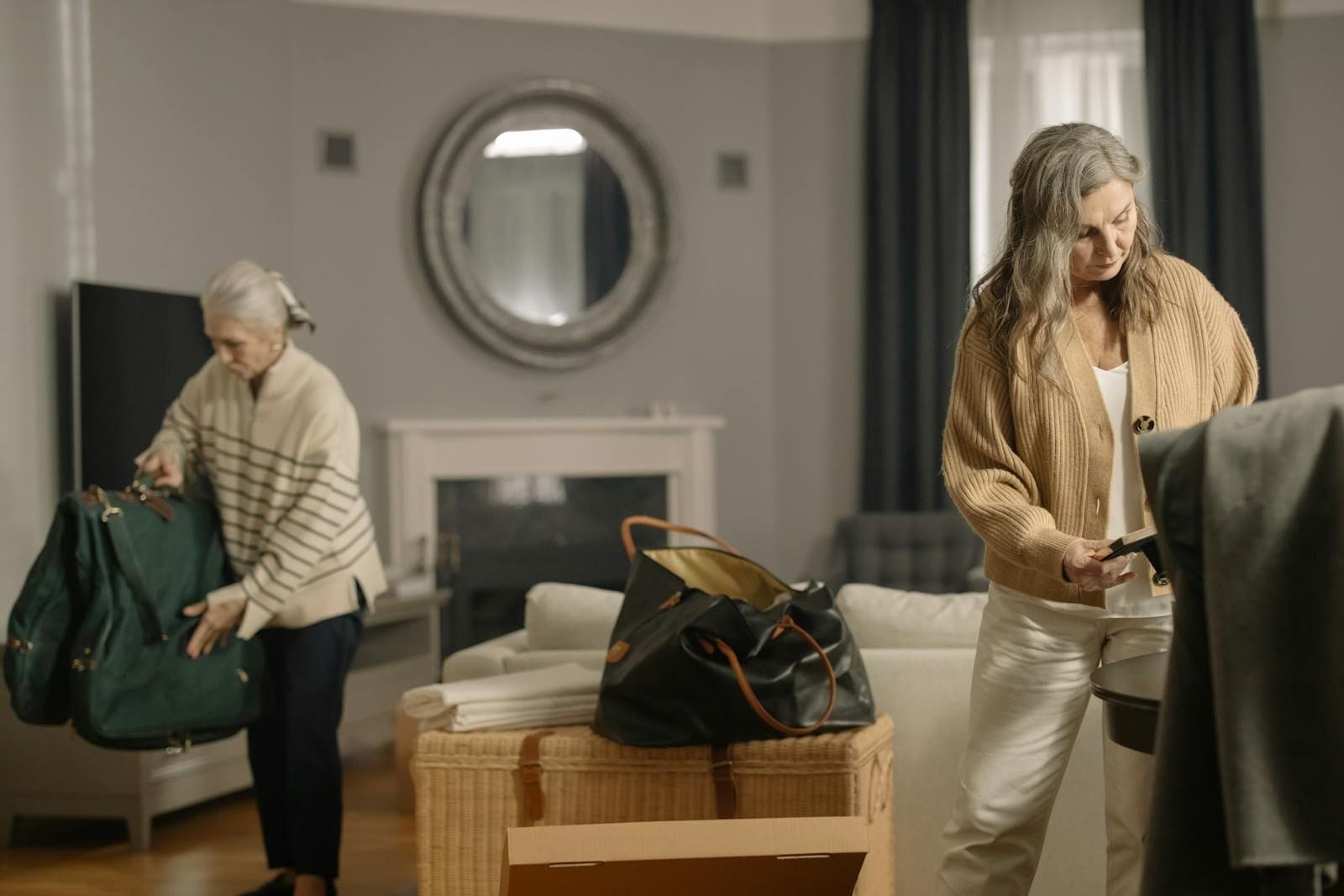
Roughly three out of four adults over fifty say they want to stay in the home they already have as they grow older, according to AARP's research on aging in place. And yet the word downsizing tends to land like a loss — a leaving, a shrinking, the beginning of the end of independence. That framing is the first thing to put down, because it is mostly wrong, and it is what makes the whole project harder than it has to be.
Downsizing is not about leaving the life you built. It is about lightening it — keeping what matters, letting go of what has quietly become a burden, and shaping a home that is easier and safer to live in, whether you stay where you are or move somewhere smaller. The reason so many families dread it, delay it, or do it badly is not the work itself. It is a handful of stubborn myths that turn a manageable project into an overwhelming one. Here are eight worth letting go of, and what is actually true instead.
Myth: You Have to Do It All at Once
The mental image of downsizing is a frantic weekend, a dumpster in the driveway, and the whole house turned inside out. That picture is exactly why people put it off for years. A home lived in for decades cannot be emptied in a weekend, and trying is how mistakes happen — the cherished photograph that gets swept into the donate box, the deed that goes out with the junk mail.
Realistically, downsizing a long-occupied home takes months, not days. Specialists and AARP alike suggest starting at least three months before any deadline, and ideally six to twelve, then working in short, regular blocks — an hour at a closet, a morning at a time. Decluttering forces hundreds of small decisions in a row, and that produces real decision fatigue, the same mental tiredness that makes people abandon the job halfway through. Short sessions beat long ones precisely because the limiting factor is emotional stamina, not hours in the day. Many families find the work goes easier with someone alongside — an adult child, a friend, or a few hours of companion care to keep momentum up and spirits steady through a chore that is as emotional as it is physical.
Myth: Start With the Attic, Basement, or Garage
It feels logical to attack the worst of it first — clear the packed garage, conquer the basement, and the rest will feel easy. In practice this is backwards, and it is one of the most common reasons people stall out in the first week.
Those storage zones are the most emotionally loaded and physically demanding spaces in the house. They hold the heavy, dusty, decades-old things and the very hardest keep-or-let-go calls: the children's school art, the inherited tools, the boxes someone meant to sort in 1998. Leading with them is exhausting and discouraging. The better order is the reverse — begin with low-emotion, low-use spaces like a linen closet, a spare bathroom, or a guest room. The decisions there are easy (expired medicine, mismatched sheets, the third colander), the wins are visible fast, and by the time you reach the attic your decision-making muscles are warmed up. Save the photographs, letters, and heirlooms for last, when the work is easiest and you have had practice letting go.

Myth: Downsizing Means Throwing Everything Away
Downsizing and discarding are not the same thing, and treating them as identical leads to two opposite mistakes: people either freeze, unable to bear the waste, or they speed-purge and later regret tossing something valuable, useful, or meaningful. Neither is necessary.
The fix is a system instead of a single trash pile. The National Institute on Aging suggests sorting belongings into three piles — keep, give away, and toss — and the widely used four-box method adds a fourth: keep, donate, sell, and toss, with a labeled box for each as you move through a room. AARP frames the sequence as sort first, then store: do all the deciding before you buy a single bin or organizer, because buying storage first only guarantees you will keep things you should have let go. A few low-effort tricks make the sorting honest. The "would I buy this again today?" question cuts through sentiment about objects you have simply gotten used to. The reverse-hanger trick — turn every hanger backward, and flip it the normal way only after you wear something — shows you in a few months exactly which clothes you actually use. And for the things you are afraid to part with, a "maybe box," sealed and out of sight, settles the question: if you never go looking for it, you have your answer.
Myth: If You Let the Object Go, You Lose the Memory
This is the myth that does the most quiet damage, because it sounds like loyalty. If you really loved your mother, you would keep her china. If the trip mattered, you would keep the souvenir. So the boxes stay full, and the memory and the object get welded together until letting go of one feels like betraying the other.
They were never the same thing. The memory lives in you, not in the item, and there are gentler ways to honor it than storage. Photograph the object and, where you can, write down the story behind it — researchers at Penn State, publishing in the Journal of Marketing, found that people who took a picture of a sentimental item before donating it were able to give away meaningfully more, because the photo preserves both the memory and the piece of identity tied to the thing. The resistance you feel is not weakness or hoarding, either; psychologists call it the endowment effect, the well-documented way we value what we own more highly simply because it is ours, and treat our belongings as an extension of ourselves. Knowing that lets you work with the feeling instead of fighting it: keep a meaningful handful of truly significant things, choose personally who receives the rest, and photograph the long tail. Some families adopt the Swedish practice of dostadning, or death cleaning — a matter-of-fact tradition of paring down while you are still well enough to decide, so the choices are yours and not a burden left to someone else.

Myth: The Kids Will Want the China and the Good Furniture
For a generation that inherited the dining set, the silver, and the curio cabinet, it is natural to assume the next generation is waiting for them too. They usually are not, and discovering this late — after years of keeping a houseful of furniture in trust for children who never asked for it — is one of the most deflating moments in the whole process.
Most adult children today live in smaller, more casual homes, move more often, and own dishwashers, which makes hand-wash-only heirlooms a chore rather than a treasure. The market agrees: the resale value of traditional dark-wood "brown" furniture has collapsed over the past two decades, and as the New York Times has reported, pieces that once felt like investments now sell for a fraction of their former price. The good silver and china follow the same pattern. Sterling flatware has genuine melt value, but you are paid below the spot price, and silver-plated pieces are worth very little; a full dining-room set is commonly valued at only a few hundred dollars for tax-deduction purposes, per the Salvation Army's published donation guide. The kind, clarifying move is to ask each child and grandchild specifically what they would actually use, accept the real answer, and free yourself to sell or give away the rest. If you do donate, the IRS asks you to value goods at fair-market — thrift-store — value rather than what you originally paid, and a single item you claim above $5,000 needs a qualified written appraisal. For anything you suspect is genuinely valuable, use an independent certified appraiser, and never sell to the same person who appraised it.
Myth: You Have to Move Out to Be Safe
Somewhere in most downsizing conversations sits an unspoken fear: that the only way to be safe as you age is to leave. It is a false choice. Moving is one path; "right-sizing in place" — decluttering and adapting the home you already have — is another, and it is the one most older adults actually want.
The safety case for clearing clutter is unusually strong. Falls are the leading cause of injury for adults sixty-five and older; the CDC reports about one in four older adults falls each year, accounting for roughly three million emergency-department visits and tens of billions of dollars in medical costs. Clutter, loose rugs, and poor lighting are not cosmetic problems — they are fixable fall hazards. A Cochrane review of twenty-two studies found that reducing home hazards cut the overall rate of falls by about a quarter, and by more than a third among people at higher risk — making decluttering one of the best-evidenced fall-prevention strategies there is. The National Institute on Aging lays out the companion changes: brighter lighting, grab bars, removing throw rugs, clear pathways. About a third of older adults told AARP their home would need modifications to age in place safely, and most of those changes are modest. With a clearer, safer home and the right support — from family or a few hours of in-home personal care as needs change — staying in the home you love is a realistic plan, not a gamble.
Myth: A Smaller Place Won't Really Save You Money
"We own the house outright, so staying is free" is a comforting story, and an incomplete one. The mortgage is only part of what a home costs to run.
A National Association of Home Builders analysis found that homeowners spend, on average, around $9,000 a year simply operating a single-family home — property taxes, insurance, utilities, maintenance, repairs — and that figure scales with a home's size and value. In high-tax states the math is starker: New Jersey carries the highest effective property-tax rate in the country, and the average property-tax bill there now tops $10,000 a year, a cost that does not shrink just because the children moved out. Right-sizing changes the equation. Fidelity's worked example of a couple moving to a smaller place showed meaningful, ongoing savings once a larger home's taxes, upkeep, and utilities came off the books — money that can fund the rest of retirement, including care at home. None of this means moving is always cheaper; staying can be the right call. It means "change nothing" is rarely the free option it appears to be, and the single most expensive outcome is an unplanned, injury-driven move on someone else's timeline. Families weighing the numbers in pricey markets like Bergen County, New Jersey — including high-tax suburbs like Ridgewood — often find that right-sizing on their own schedule, or bringing in home care in Ridgewood so a parent can stay put, is the financially calmer path.
Myth: It's Too Late for Me to Bother
After a certain age, the project can feel pointless — too big, too late, not worth the upheaval. It is the most self-defeating myth of the set, and the easiest to disprove.
It is never too late, and you are in good company. Among retirees who recently moved, about half downsized to a smaller home, according to retirement research cited by AARP. More than sixty-one million Americans are now sixty-five or older, a number set to pass seventy million by the end of the decade, and a great many of them are working through exactly this — often in homes they have not left in thirty, forty, or fifty years. And here is the part that reframes the whole effort: even if you never move a single box to a new address, lightening the load now is a gift to the people you love. The alternative is leaving them to clear an entire house under grief and time pressure, guessing at what mattered to you. Doing it yourself, unhurried, means the decisions are yours — which is the most generous version of this work there is. For families who have spread out across the country, a parent right-sizing near our team in Sarasota, Florida and an adult child up north can share the project from a distance, a little at a time.
Begin With One Drawer
If the myths were what stood in the way, the antidote is a small, concrete start — not a plan for the whole house, just the first few moves:
- Pick one low-stakes space and set a timer. A single closet or drawer, thirty minutes, this week. The goal is momentum, not completion.
- Label four boxes — keep, donate, sell, toss — before you touch anything, so every item has somewhere to go the moment you decide.
- Keep your phone nearby to photograph the sentimental things you are ready to release, and jot the story in a note.
- Make two calls. Ask one charity what it accepts and whether it picks up, and ask each child what, if anything, they truly want.
- Handle the unsafe stuff separately. Old paint, batteries, and pesticides are household hazardous waste, and leftover medications belong in a drug take-back program, not the trash or the drain, per EPA guidance.
- Protect the paperwork. Keep tax records at least three years and home-purchase and sale records longer; shred anything with account numbers or a Social Security number rather than tossing it.
Downsizing rewards the people who start early and small, and it punishes the ones who wait for a crisis to force it. You do not have to finish this month. You only have to begin — one drawer, one decision, one box at a time. If a stretch of it feels like more than your family can manage alone, a few hours of steady, compassionate help at home can be the difference between a project that stalls and one that gets done.
Frequently Asked Questions
Where should a senior start when downsizing? Start in the lowest-emotion, least-used spaces — a linen closet, a guest room, the laundry area — never the attic, basement, or the box of photographs. Those storage zones hold the heaviest items and the hardest keep-or-let-go decisions, so leading with them stalls people fast. Beginning small builds momentum and sharpens your decision-making before you reach the keepsakes. Work in short sessions rather than marathon days, and sort as you go into a few labeled boxes (keep, donate, sell, toss) instead of one growing pile.
How long does it take to downsize a home? Far longer than most people expect — generally several months for a long-lived-in home, not a single weekend. AARP and senior-move specialists recommend starting at least three months ahead, and ideally six to twelve, working in short, regular blocks. The biggest reason to begin early is to avoid a crisis-driven clear-out forced by a fall, a hospitalization, or a fast home sale, which is when valuable and sentimental items get lost or thrown out by mistake.
What do I do with belongings my adult children don't want? First, ask each child specifically what, if anything, they would actually use, and accept an honest answer. For the rest, you have routes: estate sales for a whole house, consignment for select higher-end pieces, online marketplaces for individual items, and donation for the bulk. Habitat for Humanity ReStores take gently used furniture and appliances many thrift shops won't. Charities generally refuse mattresses, bedding, and anything broken or stained, so call ahead to confirm what they accept and whether they pick up.
How do you downsize without losing sentimental items? Photograph the object and, where you can, write down the story behind it — a Penn State study found people who took a picture of a sentimental item before parting with it were able to give away noticeably more, because the photo preserves the memory and the piece of identity tied to it. Choose a meaningful handful of things to keep, and personally decide who receives the rest rather than leaving it to chance. The memory lives in you, not in the object.
Is it cheaper to downsize or stay in a larger home? Staying put can be the right choice, but "change nothing" is the expensive version. Beyond the mortgage, operating a single-family home costs thousands of dollars a year in taxes, insurance, utilities, and upkeep, and those costs generally shrink with a home's size and value. In high-tax states the gap is larger — New Jersey has the nation's highest effective property-tax rate. The most expensive outcome of all is an unplanned, injury-driven move, which is why right-sizing on your own timeline tends to cost less than waiting.
Do I have to move to downsize? No. "Right-sizing in place" means decluttering and adapting the home you already have so it is safer and easier to manage — no move required. Roughly three in four adults over 50 want to stay in their current home as they age, and many can, by clearing clutter, making targeted safety changes, and bringing in help as needs grow. The same professionals who manage moves also help people who choose to stay.
What does a senior move manager cost? Senior move managers — specialists who help sort, downsize, organize, and coordinate a move or a stay-put right-sizing — usually bill by the hour. AARP, citing the National Association of Senior and Specialty Move Managers, says to expect roughly $60 to $120 an hour, with higher rates in the Northeast and on the West Coast. Total project cost depends on the size of the home and how much help you want, and many families use a manager for only the hardest parts.
Images via Pexels — Cottonbro Studio (hero), RDNE Stock Project, and Yaroslav Shuraev.
Frequently Asked Questions
Where should a senior start when downsizing?
Start in the lowest-emotion, least-used spaces — a linen closet, a guest room, the laundry area — never the attic, basement, or the box of photographs. Those storage zones hold the heaviest items and the hardest keep-or-let-go decisions, so leading with them stalls people fast. Beginning small builds momentum and sharpens your decision-making before you reach the keepsakes. Work in short sessions rather than marathon days, and sort as you go into a few labeled boxes (keep, donate, sell, toss) instead of one growing pile.
How long does it take to downsize a home?
Far longer than most people expect — generally several months for a long-lived-in home, not a single weekend. AARP and senior-move specialists recommend starting at least three months ahead, and ideally six to twelve, working in short, regular blocks. The biggest reason to begin early is to avoid a crisis-driven clear-out forced by a fall, a hospitalization, or a fast home sale, which is when valuable and sentimental items get lost or thrown out by mistake.
What do I do with belongings my adult children don't want?
First, ask each child specifically what, if anything, they would actually use, and accept an honest answer. For the rest, you have routes: estate sales for a whole house, consignment for select higher-end pieces, online marketplaces for individual items, and donation for the bulk. Habitat for Humanity ReStores take gently used furniture and appliances many thrift shops won't. Charities generally refuse mattresses, bedding, and anything broken or stained, so call ahead to confirm what they accept and whether they pick up.
How do you downsize without losing sentimental items?
Photograph the object and, where you can, write down the story behind it — a Penn State study found people who took a picture of a sentimental item before parting with it were able to give away noticeably more, because the photo preserves the memory and the piece of identity tied to it. Choose a meaningful handful of things to keep, and personally decide who receives the rest rather than leaving it to chance. The memory lives in you, not in the object.
Is it cheaper to downsize or stay in a larger home?
Staying put can be the right choice, but 'change nothing' is the expensive version. Beyond the mortgage, operating a single-family home costs thousands of dollars a year in taxes, insurance, utilities, and upkeep, and those costs generally shrink with a home's size and value. In high-tax states the gap is larger — New Jersey has the nation's highest effective property-tax rate. The most expensive outcome of all is an unplanned, injury-driven move, which is why right-sizing on your own timeline tends to cost less than waiting.
Do I have to move to downsize?
No. 'Right-sizing in place' means decluttering and adapting the home you already have so it is safer and easier to manage — no move required. Roughly three in four adults over 50 want to stay in their current home as they age, and many can, by clearing clutter, making targeted safety changes, and bringing in help as needs grow. The same professionals who manage moves also help people who choose to stay.
What does a senior move manager cost?
Senior move managers — specialists who help sort, downsize, organize, and coordinate a move or a stay-put right-sizing — usually bill by the hour. AARP, citing the National Association of Senior and Specialty Move Managers, says to expect roughly $60 to $120 an hour, with higher rates in the Northeast and on the West Coast. Total project cost depends on the size of the home and how much help you want, and many families use a manager for only the hardest parts.