End-of-Life Signs: A Family's Guide to Recognizing the Final Stages
Mottling death timeline + end-of-life signs: when mottling means days, hours, or less, plus Cheyne-Stokes breathing, death rattle, terminal lucidity.

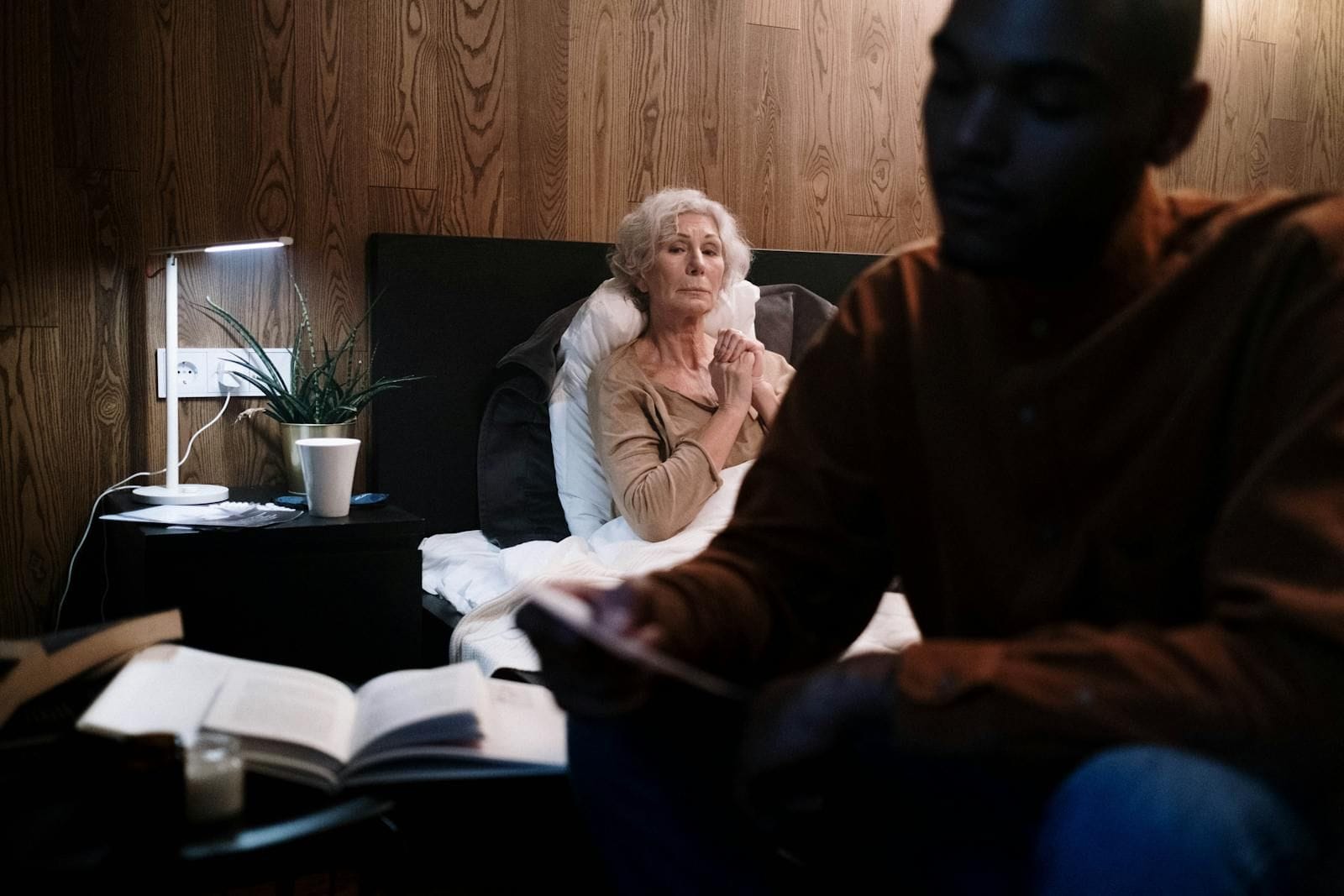
The daughter pulled the kitchen chair close to her mother's bed, the way she had done every afternoon that month, and noticed before she sat down that something had shifted. Her mother was sleeping with her mouth slightly open, the breaths coming in two long inhales and then a pause that lasted longer than her daughter's own breath could hold. The TV was on in the next room — the old baseball game her father used to half-watch on summer Sundays — and the late light through the curtain fell across the blanket in two pale stripes. Nothing about the scene was dramatic. Her mother had been declining for months. But sitting down in that chair, with the tea cooling on the nightstand, the daughter understood for the first time that the door was closer than it had been the day before. She did not yet know how she knew. She just knew.
Families almost always know before the medical record does. Dying, for most people, is not a sudden event. It is a long unfolding, with a recognizable shape and a roughly predictable timeline, and the people who sit closest to the bed catch the small changes before anyone else. This guide is for those people. It walks through what the months, the weeks, the days, and the final hours typically look like, names the specific signs that worry families most, and tries to take some of the strangeness out of a process that almost every family eventually walks through and almost no family is prepared for.
The Shape of the Last Months
The UK National Institute for Health and Care Excellence guidance on recognizing the last days of life, drawing on observational studies of palliative care units around the world, describes a cluster of changes that tend to appear before death. Functional decline. Withdrawal. Loss of appetite. Progressive weight loss. Skin and breathing changes that arrive closer to the end. None of the signs, taken alone, predicts the day. Together, in sequence, they describe a recognizable path. The National Cancer Institute's clinician summary on the last days of life separates these into early signs that appear in the last week and late signs that mostly arrive in the last three days. Both groups matter. The early ones give families time to gather and prepare. The late ones tell you the room is about to grow quieter.
The most common timeline, sketched by hospice teams in every state, runs in four stretches. The first is one to three months before death. The second is the last week or two. The third is the final days. The fourth is the last hours, the phase clinicians call active dying. Each stretch has its own texture. None of them is identical from one person to another, and the timeline can collapse or stretch in ways that no one can predict. But it is a map, and a map is what most families say afterward they wished they had been handed when they began.
One to Three Months Out
The earliest changes are the quietest. The person sleeps more, often dozing through stretches of the afternoon that used to be reserved for activity. They eat less. They stop reaching for foods they used to love, preferring softer textures, smaller portions, sometimes only sips. They withdraw — not unkindly, but visibly — from social rhythms that had defined the years before. The grandchildren's visits are still welcome, but they tire the person faster. The phone calls grow shorter. The conversation thins. The person who has spent eighty years narrating their life to whoever would listen begins to talk less and watch more.
This stage often confuses families because the changes are not catastrophic, and the doctor at the most recent visit may not have said anything definitive. The person can still walk, still sit at the table, still hold a grandchild's hand. They may still be themselves on the good days. But weight is slipping. The Palliative Performance Scale, a clinician's measure of function used widely in hospice, captures this drift in numbers: a person who scored 70 in the spring may be at 50 by autumn, and a steady decline in that score over weeks is one of the more reliable signals of where the arc is bending. Families read the same arc, without the vocabulary, by noticing that mom doesn't get up for the morning paper anymore, or that dad's chair at Sunday dinner has been empty the last three weekends.
Eating and drinking, in particular, become charged. The person may push away food they once loved. They may stop being interested in fluids. Families often experience this as the person "giving up," and the instinct to coax, encourage, or insist runs deep — food, after all, has carried every important conversation in the family for decades. The National Institute on Aging's guidance on care and comfort at end of life is gentle but clear on this point: a person whose body is shutting down does not need the calories the way a healthy body does, and forcing food or fluid can cause more harm than help, including aspiration. Small offerings, ice chips, a moistened swab on the lips, a teaspoon of something cool the person can still recognize — these matter more in this stage than anything on a plate.
The Last Week or Two
As the weeks shorten, the body's organization begins to fray more visibly. The person spends more of the day in bed. Getting up to the bathroom takes longer, sometimes is no longer possible without help, and at some point a bedside commode or incontinence supplies enter the room. Speech grows softer. The voice that has carried the house for half a century begins to drop below the noise of the refrigerator. The person may sleep through visits. They may not recognize, at first glance, the cousin who came in from out of town. The fog comes and goes. Some afternoons they will surface and be themselves; other afternoons they will drift.
Swallowing starts to become difficult. Pills that used to go down easily now take three sips. Liquids start to make the person cough more often than they did. Hospice teams describe this as a normal part of the body's slowing, not a crisis to fight, and the right response is usually to switch medications to forms that don't require swallowing — sublingual drops, dissolvable tablets, patches — rather than to push the person toward harder swallows. Skin may begin to look papery. The hands, especially, take on the cool, thin quality that families come to know.
This is also the stretch in which sleep takes over. A person who used to nap an hour at a time may now sleep most of the day. Wakeful periods grow shorter and more interior. When the person is awake, they may speak briefly, hold a hand for a moment, then drift again. Families sometimes worry that more sleep means something is wrong, and reach for the doctor to fix it. In hospice, more sleep at this stage is usually not a symptom of something wrong; it is the body conserving what little it has for the last work it has to do.
The Last Few Days
In the final days, the signs become more specific, and clinicians have studied them in detail. A prospective bedside study of cancer patients in palliative care units, published in 2015, identified a set of late physical signs that occurred almost exclusively in the last three days of life and were highly specific for impending death. These late signs included pulselessness of the radial artery, breathing with the lower jaw moving (sometimes called mandibular respiration), decreased urine output, Cheyne-Stokes breathing, the death rattle, peripheral cyanosis (a bluish tinge to the hands and feet), and apnea periods. The positive likelihood ratios for several of these signs — Cheyne-Stokes breathing 12.4, mandibular respiration 10, death rattle 9 — are high enough that when a hospice nurse sees two or three of them appear in the same afternoon, they will usually call the family in.
In plain language, what families see is this. The person is now sleeping nearly all the time. When they wake, it is briefly, and they may not speak. They have stopped eating. They are taking only occasional sips of water, or none at all. Urine output drops, and what does pass becomes darker, the color of tea. The hands and feet feel cooler than the body. The skin on the legs and feet may start to look mottled — a marbled pattern of pale and dusky patches that begins at the toes and works its way upward.
Mottling is the change families notice most and ask about most. A hospice nurse will tell you, gently, that mottling means the circulation can no longer push blood reliably to the extremities, and that the body is sending what remains to the organs that need it most. Mottling typically begins in the last week of life, though it can appear days or hours before the end, and when it arrives in earnest — when the marbled pattern has climbed past the ankles, when the bottoms of the feet are dusky and cool — the time remaining is usually measured in days at most, often less. The skin is not painful. The person may feel cold, and a warm blanket helps. The mottling does not need to be treated. It is the body saying what it is doing.
Mottling Death Timeline: When Mottling Means Days, Hours, or Less
The mottling death timeline is the rough relationship between where on the body the marbled, bluish-purple pattern has reached and how much time usually remains. Mottling almost always begins at the toes and the soles of the feet, climbs the feet and ankles through the last week of life, and reaches the lower legs, knees, hands, and skin around the mouth in the final hours. As a general guide: faint mottling at the toes means days to about a week; mottling past the ankles usually means one to three days; mottling that has climbed past the knees or onto the face typically means hours, sometimes less than a day.
Hospice nurses use the timeline as one signal among several, never the only one. A person whose mottling has crossed the ankles but whose breathing is still steady, whose urine is still passing, and who is still occasionally responsive will often have longer than the skin pattern alone might suggest. The opposite is also true: a person whose mottling is still faint but who has begun Cheyne-Stokes breathing, has stopped passing urine, and is no longer rousable can be much closer than the early skin signs alone would predict. The pattern in the table below is the most common shape — not a clock, but a map.
| Stage | Where on the body | What families see | Typical time remaining |
|---|---|---|---|
| Early | Toes and soles of the feet | Faint blue-purple marbling appears; feet are cool | Days to about one week |
| Spreading | Top of feet, around the ankles | Marbled pattern becomes obvious; soles dusky and cold | One to three days |
| Advanced | Lower legs up toward the knees | Bluish-purple network climbs the legs; feet very dusky | Hours to about one day |
| Generalized | Knees, thighs, hands, around mouth and nose | Marbling on multiple body areas; nose and lips dusky | Hours, sometimes less |
Two practical notes for families. First, mottling can come and go in the early stages — a person who shows faint marbling at the toes in the afternoon may look pinker by morning, especially if the room has warmed. Once the pattern is climbing past the ankles, however, it does not usually retreat. Second, mottling alone is not enough to call the family in. The signal is the combination: mottling that has spread, breathing that has changed to Cheyne-Stokes, urine that has stopped, and a person who is no longer rousable. When two or three of those arrive in the same afternoon, hospice teams will usually pick up the phone.
Active Dying: The Last Hours
The final phase, sometimes called active dying, is the one families most often ask hospice nurses to describe in advance. Knowing what to expect will not make it easier, exactly. It will make it less unfamiliar.
Breathing changes are the most consistent feature of active dying. The pattern doctors call Cheyne-Stokes — first described by the Scottish physician John Cheyne in 1818 and the Irish physician William Stokes in 1854 — moves in a slow oscillation: a stretch of faster, deeper breaths that crescendos to a peak, then declines, then stops altogether for ten or twenty or even thirty seconds before the cycle begins again. Families watching this for the first time often hold their own breath through the pauses, certain each silence is the last, then weep with relief at the small in-breath that begins the next cycle. The pattern is not painful. The person is not aware of it. It is the brainstem's rhythm-keeping apparatus losing the ability to keep the rhythm smooth, and it is one of the more reliable signs that death is hours, not days, away.
The death rattle is the other sound that families remember. As the person grows too weak to swallow or clear their throat, saliva and the natural moisture of the airway pool in the back of the mouth, and breaths begin to pass through that small reservoir with a wet, gurgling sound. It can be loud. It can be alarming. Hospice teams are nearly unanimous that the patient is not suffering — the sound is in the throat, not the lungs, and the person is far below the level of consciousness at which they would feel it. The National Cancer Institute clinician summary notes that the death rattle appears in roughly half to two-thirds of patients in the last days of life, with a median onset somewhere between sixteen and fifty-seven hours before death. Repositioning the person on their side so secretions can drain, swabbing the mouth gently, and reducing or stopping IV fluids if any remain are the standard responses. Suctioning almost always causes more discomfort than the sound itself, and experienced hospice teams advise against it.
Other changes arrive in the same window. The eyes may become glassy, or partially open even during sleep, because the muscles that close the lids have weakened. The jaw may drop. The pulse, taken at the wrist, may become hard to feel. Blood pressure falls. Urine output may stop entirely. The skin around the mouth and nose can take on a slightly darker, dusky tone in the last hours. The breathing slows further, and the pauses lengthen, and eventually a long pause comes that does not end. The exact moment of death is sometimes hard to identify in the room; the breathing becomes so shallow that families often realize, only after sitting in a silence that has gone on too long, that what they are hearing now is no longer breathing.
Terminal Lucidity: The Surge Families Remember
There is one final pattern worth naming, because so many families experience it and so few are warned about it. Some people, in the hours or days before they die, briefly become more themselves than they have been in weeks. They wake up. They look around. They recognize the people in the room. They ask, in their own voice, for a particular grandchild, or for the song they used to dance to with their spouse, or for a glass of water and a few honest words about what is happening to them. The clearness can last minutes or hours. Then it fades.
Researchers have been studying this phenomenon, called terminal lucidity or paradoxical lucidity, with increasing seriousness over the past decade. A study supported by the National Institute on Aging at the University of Pennsylvania interviewed caregivers of people with dementia and documented brief episodes of clarity at the end of life — half lasted only seconds, others a few minutes, the longest about forty-five minutes. In one striking case, a man with advanced dementia asked for and had a cigarette and a beer, sang songs with his caregiver and friends, and talked with them before going to bed. The next morning, he died. A Korean prospective cohort study of 338 terminally ill patients found that about four percent experienced a recognizable lucid episode in the last days of life, lasting from a few hours up to four days, with death following anywhere from one to nine days later. No patient characteristic predicted who would experience it. The episodes were not predictable, but they were real, and they were not the family's imagination.
When the surge comes, it is one of the most precious windows families ever get. The advice from hospice nurses who have seen it many times is simple. Be there. Say the things you most want the person to know that you have been carrying. Listen to what they want to say. The clarity does not mean recovery is beginning. It means the door is briefly easier to see through. In many families this conversation, more than any other moment in the long illness, becomes the one that is told and retold for the rest of the family's life.
What Caregivers and Families Can Actually Do
The single most useful thing to know about end-of-life care at home is that almost none of what helps is medical. The medical part — symptom management, the rare medication adjustment, the occasional clinical reassurance — belongs to the hospice nurse and the on-call physician. The much larger work belongs to the family and the caregivers in the room, and it is the work of presence.
Mouth care matters more than anything else in the last days. Lips dry. The tongue gets tacky. A moistened swab passed gently across the inside of the mouth, a thin layer of lip balm, a sip of water if the person can still take one — these small acts are the most reliable comfort the family has to offer. Repositioning every couple of hours, when the person is no longer turning themselves, prevents the soreness that comes from long stillness. Light blankets help with the coolness. A washcloth on the forehead helps with the warmth. The NIA's guidance on care and comfort describes all of this in detail, and most of it is intuitive once you have seen a hospice nurse do it once.
Talking to the person, even when they appear unresponsive, matters in a way that the medical literature has not fully accounted for but every hospice nurse will affirm. Hearing is widely believed to be among the last senses to fade, and many people who have recovered from a near-death event have later described hearing the voices of the people in the room. Say what you want to say. Say the names. Tell the stories. Tell the person it is all right to go when they are ready, if that is what your family believes; some people seem to wait, in ways that no one can quite explain, for permission. Tell them they are loved. None of this is performance. It is the last form your love takes that they can receive.
Light, sound, and crowd all matter too. A dim room is easier on the eyes. Familiar music played softly is calming, especially music the person loved when they were young. Too many people in the room at once can agitate; one or two close family members, taking turns, is often gentler. If a faith tradition matters to the family, calling the chaplain, the priest, the rabbi, or the imam — most of whom have walked this road many times — gives shape and language to a stretch of time that otherwise has neither. None of this requires expertise. All of it requires attention.
The Question of Comfort, Not Cure
Families who have not yet sat with a dying person often imagine that the end will be a kind of medical event — a series of decisions to be made about treatments, a sudden crisis requiring the right intervention. In practice, most peaceful deaths at home are the opposite. They are a steady release. The work of the hospice team in those last days is not to do more, but to do less, and to do the smaller things well: managing pain so the person is comfortable, treating the death rattle if it is distressing the family even though it is not distressing the patient, reassuring everyone in the room that what they are seeing is the ordinary unfolding of an ordinary mortal life and not something they have failed to prevent.
This is the territory we wrote about in our guide to the difference between hospice and palliative care — both of those programs exist to make this stretch of life gentler than it would otherwise be, and to keep families from having to make decisions on the worst days that should have been made on calmer ones. Both also live alongside what a family can do at home, and neither replaces the presence that a person dying at home actually needs around them in the final hours.
Where Home Care Fits
Most families do not realize, until they are inside it, how much time the last days of a person's life actually contain. The hospice nurse comes a few times a week. The on-call team is reachable by phone. The doctor calls in to check. But the hours between visits, especially in the last week, are long, and they are when the family is most tired and the person needs the most attention. This is where private-pay home care quietly does some of its most meaningful work — not replacing hospice, but filling the long stretches between the clinical visits with trained, calm hands the family can lean on.
Our companion care exists for exactly the quiet bedside hours — sitting with the person so the family can step away to shower, eat a meal, sleep for a few hours, or simply stand outside for ten minutes without feeling that the room has been left alone. Our overnight care covers the night shift, which is when families most often collapse from exhaustion and when the body's slow changes most often unfold. And our live-in care brings a caregiver into the home around the clock for the final stretch, with the family able to rest knowing that someone experienced and steady is in the room when they cannot be.
For families in Monmouth County, New Jersey and across our other service regions including Bergen County , this is one of the most common moments at which families first reach out to us — not at the diagnosis, not at the early decline, but in the week when it becomes clear that the spouse, the daughter, the son cannot stay awake any longer, and someone needs to be in the room so the family can stay in the family. The call usually starts with the same sentence: "I don't know exactly what I need, but I know I can't do this alone anymore."
The Last Thing Worth Saying
Dying is one of the small handful of universal human experiences that almost no one in modern life is taught to recognize. Hospitals have professionalized it. Funeral homes have arranged the after. Television has dramatized the moment itself into something it almost never is. What is actually true is that most people, given good care and a willing room, die slowly and quietly, surrounded by the small details of the life they made — the chair their spouse always sat in, the quilt their mother pieced together fifty years ago, the lamp that has lit the bedside through ten thousand evenings, the voices of the people who love them speaking softly nearby.
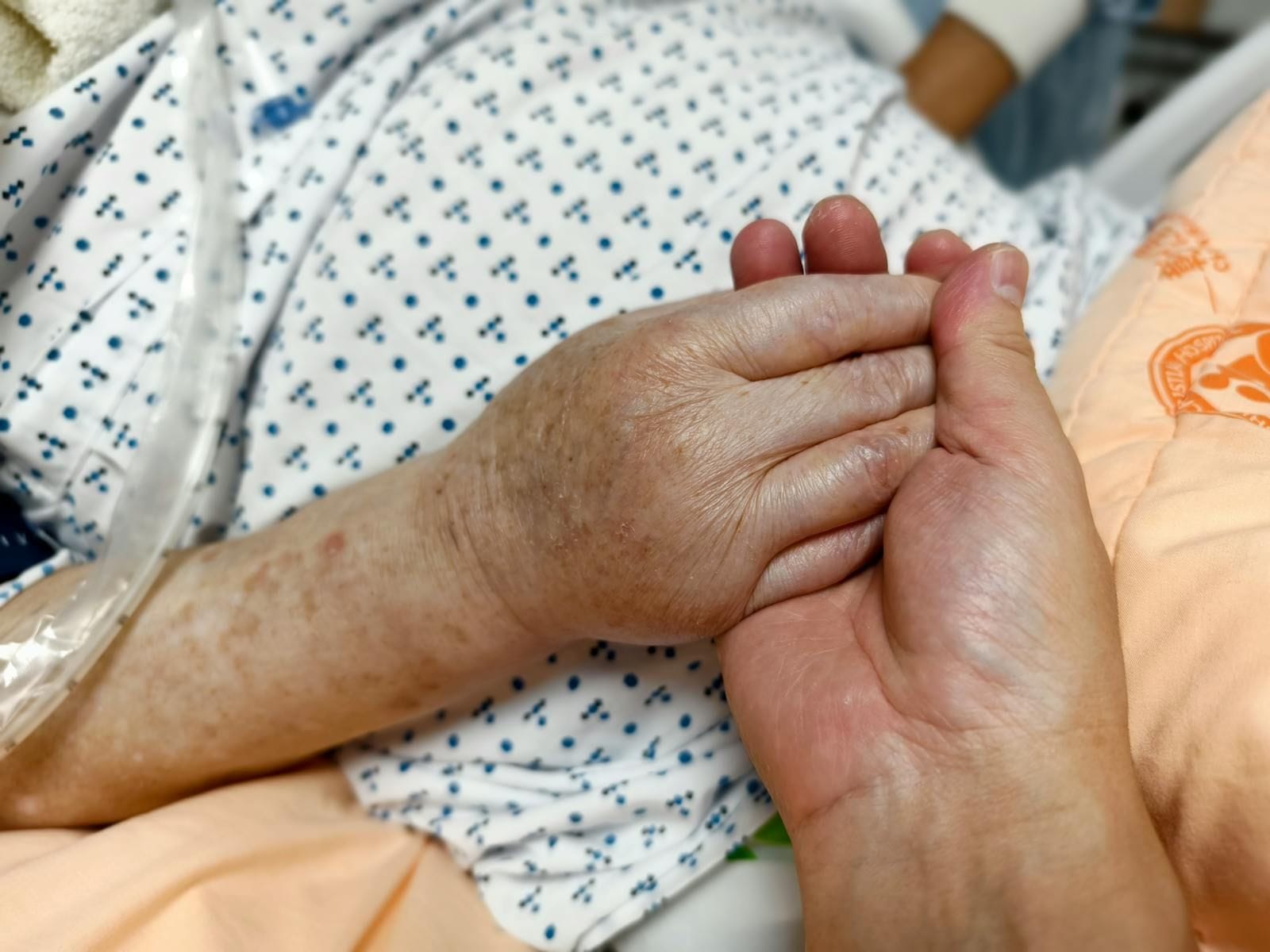
The signs are recognizable once you know how to read them. The timeline is roughly mappable. The work is mostly presence. The fear most families bring into this room — that they will somehow miss the moment, that they will not know what to do, that they will fail their person at the last — is almost always unfounded. The work they have already done, in the months and weeks before, was the harder work. The last days ask only for what families have been giving all along: the holding of a hand, the speaking of a name, the steady, unhurried attention of one person who has chosen to be in the room with another.
If your family is in this stretch — if the changes you are noticing match the ones in this guide, if you are not sure how much help you need but you know you need some, if the nights have started to feel too long for one person to handle alone — our team is here . We will listen first. We have walked these last weeks with many families, in many homes, and we know how to be quietly, competently useful in a room where the work is no longer about fixing and is entirely about being present. The dying person is yours. The room is yours. We come, when you want us, to make sure you can stay in it.
Photographs by Pavel Danilyuk, Ron Lach, and Vivo Ken, licensed under the Pexels free-use license.
Frequently Asked Questions
What is the mottling death timeline?
The mottling death timeline describes when bluish-purple marbled patches on the skin typically appear in the dying process and how much time usually remains once they do. Mottling almost always starts at the toes and soles of the feet, climbs the feet and ankles over the last week of life, and reaches the lower legs, knees, hands, and face in the final hours. As a rough guide: faint mottling at the toes means days to a week; mottling past the ankles means one to three days; mottling that has climbed past the knees or appeared around the mouth typically means hours. Hospice nurses use the timeline as one signal among several, never the only one.
What is mottling before death?
Mottling before death is a marbled blue-purple pattern that appears on the skin as the dying body slows its circulation to the arms, legs, and face so that more blood stays around the vital organs. It usually begins at the toes and soles of the feet in the last week of life, climbs upward as the body weakens further, and is one of the more recognizable physical signs that someone is now in the final days or hours. Mottling itself is not painful and does not need to be treated; a warm blanket helps if the person feels cold.
How long after mottling does death occur?
How long after mottling death occurs depends on where on the body the mottling has reached. Faint mottling at the toes can appear days or even a week before death. Mottling that has climbed past the ankles to the lower legs usually means one to three days remaining. Mottling that has spread past the knees, onto the hands, or around the mouth and nose typically means hours, sometimes less than a day. The pattern is a general guide rather than a clock — every dying person follows it slightly differently, and hospice teams weigh it alongside breathing changes, urine output, and consciousness level.
What does mottling skin look like before death?
Mottled skin before death looks like a marbled or net-like pattern of pale, dusky, and bluish-purple patches, most visible on the soles of the feet, the toes, the ankles, and eventually the lower legs. The pattern is splotchy rather than uniform — almost like a road map of broken lines tracing the small blood vessels under the skin. The mottled areas usually feel cool to the touch, even when the rest of the body is warm. As death approaches, the marbling spreads upward and may also appear on the knees, the hands, and around the mouth and nose.
Where does mottling start on the body?
Mottling almost always starts at the toes and the soles of the feet. From there it climbs slowly upward over the last days of life — first across the top of the foot, then around the ankle, then up the lower leg toward the knee. In the final hours it can spread to the thighs, the hands, the arms, and the skin around the mouth and nose. The upward progression is consistent enough that hospice nurses use it as a rough timeline: the higher the mottling has climbed, the less time typically remains.
Does mottling always mean death is near?
In a person who is already actively dying, mottling almost always means the end is within days or hours rather than weeks. In other contexts — newborns, people who are very cold, people with certain circulatory conditions, or people on some medications — mottled skin can appear without any connection to dying. The signal is the combination: mottling appearing in someone whose appetite has stopped, who is sleeping nearly all the time, whose urine output has dropped, and whose breathing has changed is a strong indicator that the body has entered its final phase.
Is mottling painful for the dying person?
Mottling is not painful. The marbled pattern is the body redirecting circulation away from the skin and toward the organs, not a wound or injury. The mottled areas may feel cool, and a light warm blanket can be a comfort if the person seems cold, but warming the skin will not reverse the underlying process and is not necessary. Mottling does not need to be treated medically. Families sometimes find it helpful to know that the change they are seeing is the body's own quiet way of finishing its work, not a new symptom to fix.