Hospice vs Palliative Care: What's the Difference, and How Families Decide
Hospice vs palliative care, plainly explained: what each one is, when each begins, and how families navigate the transition without waiting too long.

The two words show up on the same page of the discharge paperwork. The social worker says one of them, the doctor says the other, and somewhere in the parking lot afterward the family realizes that nobody quite knows which word means what. Hospice. Palliative. They sound like the same thing said twice. They are not.
Most American families meet these terms in a hurry — a hospital corridor, a phone call from the oncologist, a quiet aside from a primary-care doctor during a visit that was supposed to be about something else. The difference between them is not technical trivia. It changes who pays for what, who comes to the house, what treatments continue, and how long any of it can last. Misunderstanding the difference is one of the most common ways American families end up with the wrong kind of support at exactly the moment they need the right kind most.
The good news is that the difference is not that complicated. The two programs were built for different problems, by different parts of the healthcare system, and they answer different questions. Once you can hear the difference, the rest of the conversation gets easier — the one with the doctor, the one with the siblings, the one you have with yourself at the kitchen table at eleven at night.
Two Names for Two Different Promises
Palliative care is the broader of the two. It is comfort-oriented medical care for anyone living with a serious illness — cancer, heart failure, COPD, kidney disease, dementia, Parkinson's, ALS, and many others — and it can begin the day someone is diagnosed. A person on palliative care can still be on chemotherapy, still pursuing a transplant, still hoping for a cure. Palliative care is the team standing next to all of that, focused on managing pain, nausea, fatigue, breathlessness, anxiety, insomnia, and the slow grinding stress of treatment itself. The National Institute on Aging describes it as quality-of-life care that can run alongside curative treatment for as long as someone needs it — years, in many cases.
Hospice is narrower, and it begins later. It is a specific kind of palliative care designed for people whose illness is no longer expected to be cured and whose physician believes they have roughly six months or less to live if the disease follows its expected course. To enroll in hospice through the Medicare benefit, a person agrees to stop pursuing treatment aimed at curing the underlying illness. They are not giving up medical care — they are accepting a different aim for it. The Medicare hospice benefit defines this in plain language: hospice begins when curing the illness is no longer the goal, and comfort is.
The way the Yale School of Medicine explains it, in a helpful primer aimed at families, is that hospice is a subset of palliative care, not a separate species. All hospice is palliative; only some palliative care is hospice. The shorthand that helps most families is this: palliative care asks how do we make you more comfortable while you continue treatment, and hospice asks how do we make this time as good as it can possibly be, now that treatment is no longer the answer.
Where the Line Actually Sits
The three lines that separate the two are eligibility, treatment, and payment. They are worth taking one at a time, because most of the confusion in family conversations starts when one of them gets blurred.
Eligibility for palliative care is loose. There is no prognosis requirement, no waiver to sign, no specific stage of illness that opens the door. A person with newly diagnosed cancer can be referred to a palliative team in the same week as their first chemotherapy infusion. A person with advanced heart failure can be on a palliative service for years before anything changes. The eligibility threshold is essentially the existence of a serious illness and the presence of symptoms or stress that someone, somewhere, should be helping to manage.
Hospice eligibility is tighter. Two physicians — the patient's own doctor and the hospice medical director — must certify that the patient's life expectancy is six months or less if the illness runs its expected course. That six-month line is not a ceiling; people who live longer than expected (and many do) can be recertified and continue receiving hospice as long as a physician confirms they still meet criteria. But the door has to be opened by that initial certification, and the patient must consent.
The second line is the question of curative treatment. Palliative care lives comfortably alongside it. Hospice does not. Enrolling in hospice under the Medicare benefit means agreeing that aggressive, curative treatment for the terminal illness will stop. That does not mean medical care stops — far from it. Hospice patients still receive medications, get treated for unrelated problems, have minor procedures for comfort. But chemotherapy aimed at shrinking the tumor, dialysis aimed at extending life with end-stage kidney disease, an ICU admission aimed at reversing the dying process — those are not part of hospice. Choosing hospice is choosing to redirect medical effort toward comfort rather than cure.
The third line is who pays. This is the part that surprises most families, and it is the one most worth understanding. Hospice has a dedicated, all-inclusive Medicare benefit — Medicare Part A pays for the hospice team, the medications related to the terminal illness, durable medical equipment (a hospital bed, a wheelchair, oxygen), supplies, twenty-four-hour access to a nurse on call, social work and chaplain visits, and short-term respite care for the family caregiver. The Caring Info overview from the National Hospice and Palliative Care Organization walks through this coverage in detail, and the headline is the same whether you read it on Medicare.gov or in a hospice brochure: under the Medicare hospice benefit, families generally pay nothing out of pocket for hospice-related services.
Palliative care has no equivalent benefit. It is covered piecemeal, through whatever parts of Medicare or private insurance happen to apply to the visit, prescription, or service in question. A palliative consultation in the hospital is billed like any other specialty consultation. A palliative team visit at home may be covered under Part B, or under a separate program your insurance offers, or only partially. Families pursuing palliative care often need to do a bit of insurance-side homework that hospice families do not.

The Hospice-Too-Late Problem
If you talk to hospice nurses long enough, one regret comes up again and again. It is not the families who used hospice. It is the families who did, but only at the very end — three days, sometimes hours, before death. That regret is not a guess. It is in the data. According to the most recent National Hospice and Palliative Care Organization figures , the median length of stay on hospice in the United States is around seventeen or eighteen days. Half of all hospice patients receive hospice care for less than three weeks. A substantial share enroll in the last week of life.
That brevity is not what hospice was designed for. The benefit was built for months of support, with the explicit goal of helping people live better through the time they have left, not simply to manage the final days. Families who enroll early consistently describe the experience differently than families who enrolled at the last minute — more peace, more time to say what they wanted to say, fewer hospital trips, less of the chaotic improvisation that families fall into when they are managing symptoms they do not understand on their own.
Why do so many families wait? The reasons compound. Doctors hesitate to raise hospice because they do not want to take hope away. Families hesitate to accept it because they hear hospice as giving up. Patients themselves often want to keep trying one more treatment. And the medical system, structured around acute care and intervention, has fewer practiced ways to slow down and reframe the conversation. The result is a benefit that, used too late, becomes a brief and bewildered experience instead of the steady support it was meant to be.
This is where palliative care quietly does some of its most useful work. Families who begin with a palliative consultation early in a serious illness — sometimes years before hospice is on the horizon — are generally better prepared, when the time comes, to make a clear-eyed decision about hospice. They have already met clinicians whose job is to talk about symptoms, goals, and what matters most. The conversation about hospice, when it comes, is a continuation rather than a sudden pivot.
When Palliative Becomes Hospice
The transition from one to the other is rarely a single moment. It is usually a gradual recognition, sometimes by the patient and sometimes by the family, that the treatments that used to feel worth it have started to feel like a tax. Side effects begin to outweigh benefits. Hospital trips begin to feel like setbacks instead of progress. The patient themselves sometimes says it plainly — they are tired, they want to be home, they do not want another round.
A good palliative team is built for this conversation. They will ask what matters most. They will ask what a good day looks like, and what a bad day looks like, and what trade-offs the patient is and is not willing to make. They will run through the prognosis honestly and help the family understand what the next month and the next six months are likely to look like under each path. When hospice becomes the right next step, they make the referral. Hospice care in turn can be provided at home in the vast majority of cases — about ninety-seven percent of hospice care days in the United States are delivered as routine home care, the level of hospice care provided in the patient's own residence.
It is worth saying, too, that hospice is not a one-way door. The hospice benefit can be revoked. If a patient's condition stabilizes or improves, or if a new curative option opens up that the patient wants to pursue, they can leave hospice and re-enter the regular Medicare benefit. People do this every year. It is not common, but it is allowed, and knowing it is allowed often lowers the emotional cost of saying yes to hospice in the first place.
What Each Actually Looks Like at Home
The textbook definitions only carry families so far. What most people want to know, sitting across from a doctor with a folder of paperwork, is what the next week is actually going to look like.
Palliative care at home, in most cases, is a series of regular visits from a palliative team — usually a nurse, sometimes a physician or nurse practitioner, sometimes a social worker — focused on symptom management, medication review, and family education. The patient continues their regular treatments with their regular doctors. The palliative team is the extra layer of support that makes the rest of it tolerable. Visits may be weekly, biweekly, or as needed. Between visits, the patient and family stay in close contact with their primary medical team for anything that is not specifically a symptom or comfort issue.
Hospice at home looks different, and the difference is largely the intensity and breadth of the team. A hospice patient gets an interdisciplinary team that typically includes a hospice nurse who visits multiple times a week, an aide who can come to help with bathing and personal care, a social worker, a chaplain (if welcomed), trained volunteers, and a physician overseeing the plan. Medications related to the terminal illness are delivered to the house. Medical equipment is brought in. There is a twenty-four-hour nurse line. Bereavement support for the family is included for thirteen months after the death.
Both kinds of care, importantly, are designed around the family as much as the patient. The hospice and palliative care world has long recognized that the people doing the day-to-day work in the house — the spouse, the adult children, the in-laws — are part of the patient's ecosystem and have to be supported as such. Education on what to expect. Help recognizing changes. Permission to ask questions that feel too basic to ask anyone else. That family-centered design is one of the quiet strengths of both programs, and one of the reasons families who use them tend to describe the experience, even in the hardest moments, as something they would do again.

The Decision Conversation
Some of the heaviest moments in any family caregiving journey happen around this decision, and the heaviness is usually not about the paperwork. It is about what the choice means. Accepting hospice feels, to many families, like saying out loud that someone they love is going to die soon. The reluctance is not irrational — it is grief arriving early.
The reframing that helps most families is one many hospice nurses use themselves: hospice is not about ending hope; it is about changing what hope is for. Hope that a parent makes it through the week without pain. Hope that they get to see the grandchildren one more time. Hope that they die at home, in their own bed, surrounded by their people, the way most Americans say they want to and most do not get. Those are attainable hopes, and hospice is built to deliver them. They are smaller than the hope of cure, but they are not lesser.
The practical version of the conversation, when you are ready to have it, can start very plainly with a doctor: I want to understand what the next six months are likely to look like under our current plan, and what it would look like if we shifted toward comfort-focused care instead. That single sentence does the work of several. It asks for a prognosis. It asks for a comparison. And it gives the doctor explicit permission to talk about something that, in their training, they may have been taught to approach cautiously.
If you are not sure whether you are ready for that question, an earlier one works well: Are we at a point where a palliative care consultation would make sense? Palliative care is rarely the wrong answer. It does not require a decision about hospice. It does not require giving anything up. It simply adds a team that specializes in exactly the kinds of conversations a family is about to have several more of.
Where Non-Medical Caregivers Fit
Here is a piece of the picture that often goes unmentioned in the hospice-versus-palliative debate, and it matters more than the brochures let on. Both hospice and palliative care are medical services. They deliver clinical care — nursing, medication management, symptom control, family education — on a visiting schedule. They do not, in most cases, put a person in the house for the long, in-between hours when a patient needs a hand to walk to the bathroom, a meal warmed and eaten in company, a bath managed with dignity, a calm voice through a long afternoon.
That gap — the gap between the hospice nurse's Tuesday visit and the aide's Friday morning shower — is where most families discover they need a different kind of help. A nurse coming three times a week does extraordinary work. So does a hospice aide. But neither of them is the one helping at four in the morning, or sitting with the patient while the spouse takes their first walk in a week, or quietly cooking the lunch that allows the family to have a normal afternoon for the first time since the diagnosis.
This is the territory where private-pay, non-medical home care lives, and where the work overlaps most usefully with hospice and palliative programs. Our founder, Teresa Sajkowski, RN, came to this work after more than a decade of geriatric and hospice nursing — long enough to see the specific shape of the gap and to build a company designed to fill it. Our caregivers do not replace hospice nurses or palliative teams; they sit beside them. They are the consistent presence that lets a fragile household continue to function.
Practically, this can look like a few hours a day of companion care — someone to share meals, manage the quiet, drive to appointments, read aloud, watch a familiar movie, hold a hand. It can look like hands-on personal care for bathing, toileting, dressing, and mobility — the daily work that wears spouses out faster than anything else. For families dealing with the complications of late-stage illness, it can mean overnight presence so the spouse can sleep, or live-in coverage when symptoms shift unpredictably. Our palliative and end-of-life care support is designed specifically to complement existing hospice and palliative programs, not to duplicate them — to handle the long hours that are not on anyone else's visiting schedule.
Families we serve across Bergen County and Monmouth County often come to us with a hospice nurse and a palliative team already in place, and the question they are quietly asking is simply: who is going to be in the house. That question is one we know how to answer.
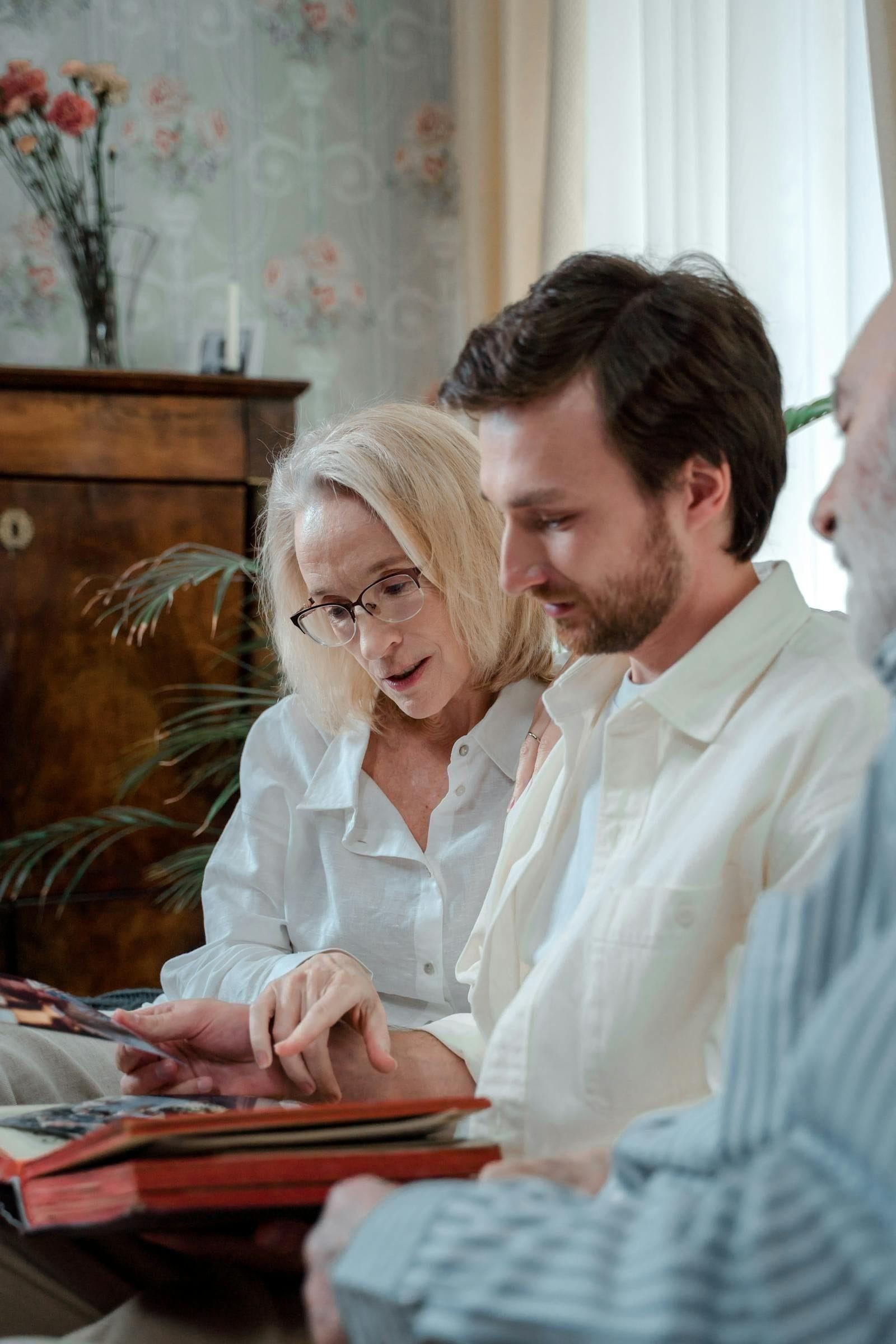
What Families Remember
Years after the funeral, families do not usually remember the details of the benefit they used. They remember whether the person they loved was comfortable. They remember whether the death felt rushed and frightening or whether it felt slow and held. They remember whether they had permission to sit by the bed instead of running to the pharmacy.
Those memories are not random. They are downstream of choices made weeks and months earlier, often without the family quite realizing how consequential the choices were. The choice to ask for a palliative consultation early. The choice to consider hospice while there was still time to use it well. The choice to bring in steady help so the spouse was not the only one staying upright through the long stretch. None of these choices erase the loss. All of them shape what the loss feels like to live through.
If you are at the beginning of one of these conversations now — for a parent, a spouse, a friend you are caring for — the most useful first step is usually the simplest. Ask the doctor about palliative care. Ask it before you think you are ready to. Palliative care is rarely the wrong answer at any stage of a serious illness, and the families who start the conversation earlier almost always say they wish they had started it earlier still.
When the time comes to add a steady hand in the house — for either program, or for the long lead-up to either — our care team is here to think it through with you. There is no right answer that works for every family, and there is no decision so heavy it cannot be made with someone walking beside you. That is the part we know how to do.
Photographs by Kampus Production, Gustavo Fring, and cottonbro studio, licensed under the Pexels free-use license.