Muscle Loss After 60 Isn't Inevitable. Here's the Proof
Age-related muscle loss is reversible. A 30-second self-test, how much protein older adults need, and the strength work that rebuilds it.
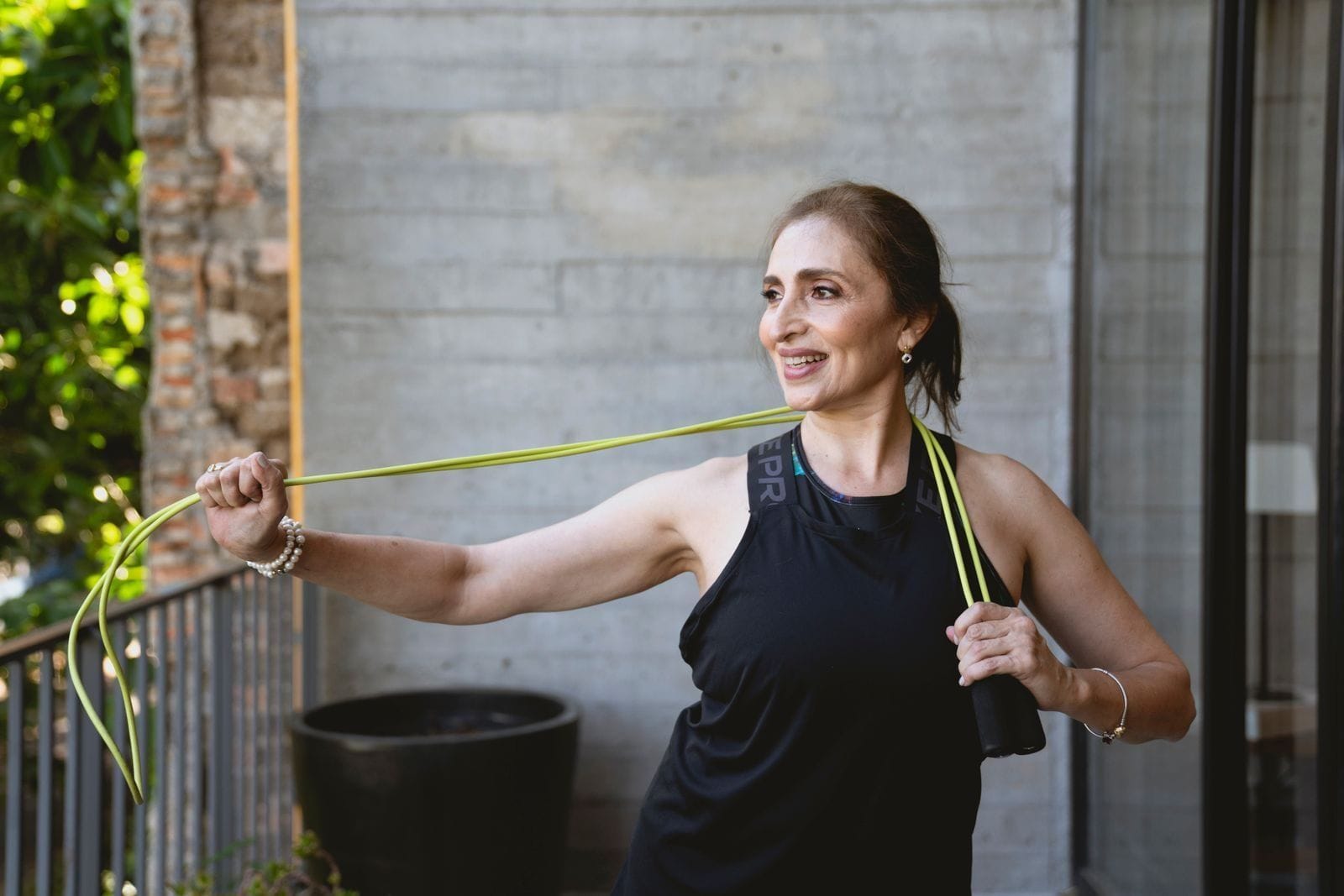
In 1994, a study in the New England Journal of Medicine set out to test something that, at the time, sounded close to reckless. Researchers at a Boston long-term-care facility took 100 residents, average age 87, many of them frail enough to lean on a walker, and put them on a program of progressive weight training. Doctors worried about hearts and hips. What they got instead was a 113 percent average increase in leg strength, faster walking, easier stair climbing, and more spontaneous movement through the day. An earlier pilot in the same population was even starker: nine residents between 87 and 96 years old gained an average of 174 percent in strength over just eight weeks.
Hold onto that number, because it quietly demolishes the assumption underneath so much of how we treat aging bodies. The slow weakening that creeps in with the decades has a name, sarcopenia, the age-related loss of muscle mass and strength. It is common, it is consequential, and it is one of the biggest reasons older adults lose their independence. But it is not a one-way door. The same muscle that fades from disuse responds to the right stimulus at 90 nearly as willingly as it does at 50. The story of sarcopenia is less a story of decline than a story of what happens when we stop asking anything of our muscles, and what happens when we start again.
The Quiet Math of Muscle After 30
Muscle peaks earlier than most people think. Somewhere in your 30s, the slow leak begins: adults lose roughly 3 to 5 percent of their muscle mass per decade, and the rate tends to accelerate after 60. By the time it interferes with everyday life, climbing stairs, carrying groceries, rising from a low couch, it earns the clinical label. The Cleveland Clinic's overview of sarcopenia notes that without intervention the weakening continues, and that over time some people lose enough function to need full-time care.
The scale of it is easy to underestimate. Estimates put sarcopenia in somewhere between a quarter and nearly half of American seniors, with the share climbing steeply in the oldest age groups. What makes it so easy to ignore is that it arrives without an event. There is no fall, no diagnosis day, no single bad week, just a gradual narrowing of what feels doable, until one afternoon a person realizes they have quietly stopped doing something they used to do without thinking. That silence is exactly why it is worth naming early.
A 30-Second Test at the Kitchen Table
You do not need a lab to get a rough read on lower-body strength. Clinicians use a simple sit-to-stand test, and a version of it works at home. Sit in a sturdy, armless chair against a wall, cross your arms over your chest, and count how many times you can stand up fully and sit back down in 30 seconds without pushing off with your hands. The exact "good" number varies by age and sex, but the pattern is what matters: if standing requires a rocking head start, a push off the thighs, or a count well below what felt normal a year ago, that is lower-body weakness showing itself.
Two other everyday signals point the same direction. A walking pace that has noticeably slowed, the kind where you fall behind on a sidewalk you used to lead, is one of the most reliable markers of muscle decline. So is grip: jars, bottle caps, and bag handles that suddenly feel like a negotiation. None of these is a diagnosis, and none should set off alarm. They are simply an invitation to mention the change to a doctor, who can confirm it with the same kinds of measures and rule out other causes. The point of the test is not to score yourself. It is to notice, while noticing still buys you time.
Why Slowing Down Speeds It Up
Aging does shift the biology. Hormones that support muscle, like testosterone and growth factors, decline; the body becomes less efficient at turning dietary protein into new muscle, a phenomenon researchers call anabolic resistance; and the nerves that fire muscle fibers thin out. All of that is real. But layered on top of the biology is a behavioral spiral that does far more damage, and it is the part within reach. Less activity leads to less muscle. Less muscle makes movement harder and more tiring. Harder movement leads to still less activity. Around it goes, each turn a little tighter, until a person who simply moved less for a few years finds themselves genuinely unable to do more.
This is the hopeful hidden in the discouraging. If a large share of the loss is driven by disuse rather than destiny, then the same lever that tightened the spiral can loosen it. Two interventions do the heavy lifting, and they work best together: asking the muscle to work against resistance, and giving it enough protein to rebuild. Everything else is detail.
Lever One: Lift Something Heavy Enough to Matter
Of all the things studied, resistance training is the one with no real substitute. Walking, swimming, and gardening are wonderful for the heart and the mood, but they do not signal the muscle to grow the way lifting against meaningful resistance does. "Resistance" does not mean a barbell. It means body weight in a sit-to-stand or a wall push-up, a loop of elastic band, a pair of light dumbbells, a loaded grocery bag, anything that makes the muscle work a little harder than it wants to, with the load nudged up over time as strength returns.
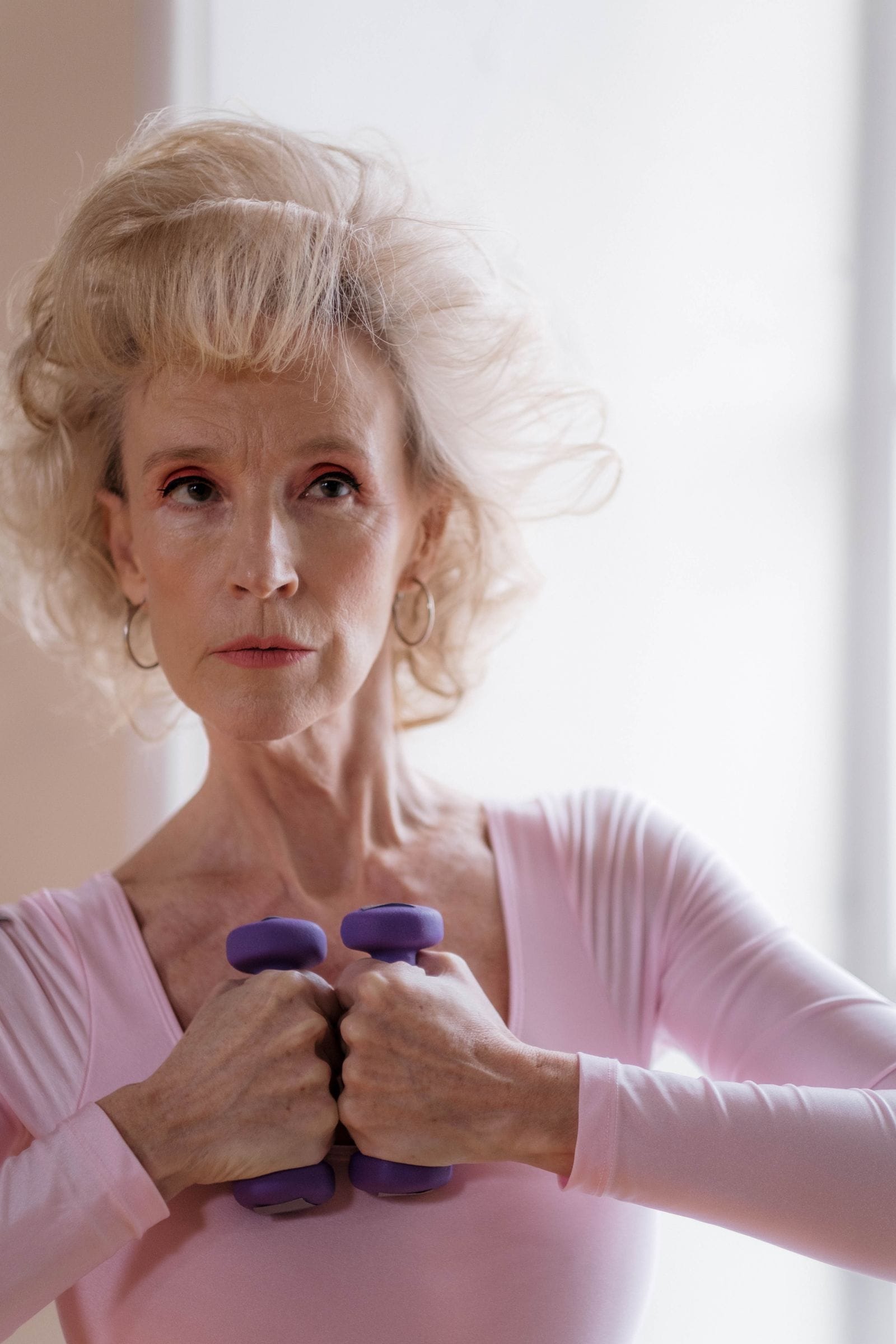
The dose is gentler than people fear. Two or three short sessions a week, hitting the major muscle groups, is enough to produce the kind of gains the nursing-home studies recorded. The National Institute on Aging, describing the work of researchers who reverse frailty in older adults, calls resistance training the most important component of the mix, precisely because it builds muscle and slows its loss. The honest caution is about form, not intensity: anyone new to it, or managing a chronic condition, does best starting with a physical therapist or trainer, working from chair-based moves up to light weights as strength returns. Steadiness deserves its own practice alongside the lifting, and our leveled routine of balance exercises for seniors is the natural companion to it.
Lever Two: Protein, Spread Through the Day
Muscle is built from protein, and the standard adult target turns out to be too low for keeping it in later life. The Recommended Dietary Allowance of 0.8 grams per kilogram of body weight was set to prevent deficiency, not to protect aging muscle. The federal nutrition guidance for older adults points instead toward roughly 1.0 to 1.2 grams per kilogram a day, and many sports and aging researchers go higher for someone who is ill, recovering, or already losing muscle. For a 150-pound adult, that is somewhere around 70 to 80 grams a day rather than 55, or, as a working rule that needs no arithmetic, about half a gram of protein per pound of body weight.
That inversion is the part almost nobody is told. The advice most older adults have absorbed over a lifetime, eat less, go easy on the meat, keep it light, is reasonable for the heart and exactly backward for the tissue that keeps a person upright. The anabolic resistance described earlier is why: a serving that would trigger muscle building in a 25-year-old falls just short at 75, so the older body needs the larger push at precisely the age when eating enough of anything gets harder. The gap shows up in the data. In a study of nearly 12,000 adults aged 51 and up, about 46 percent fell short of even the low RDA. When appetite is already fading, the squeeze comes from both sides at once.
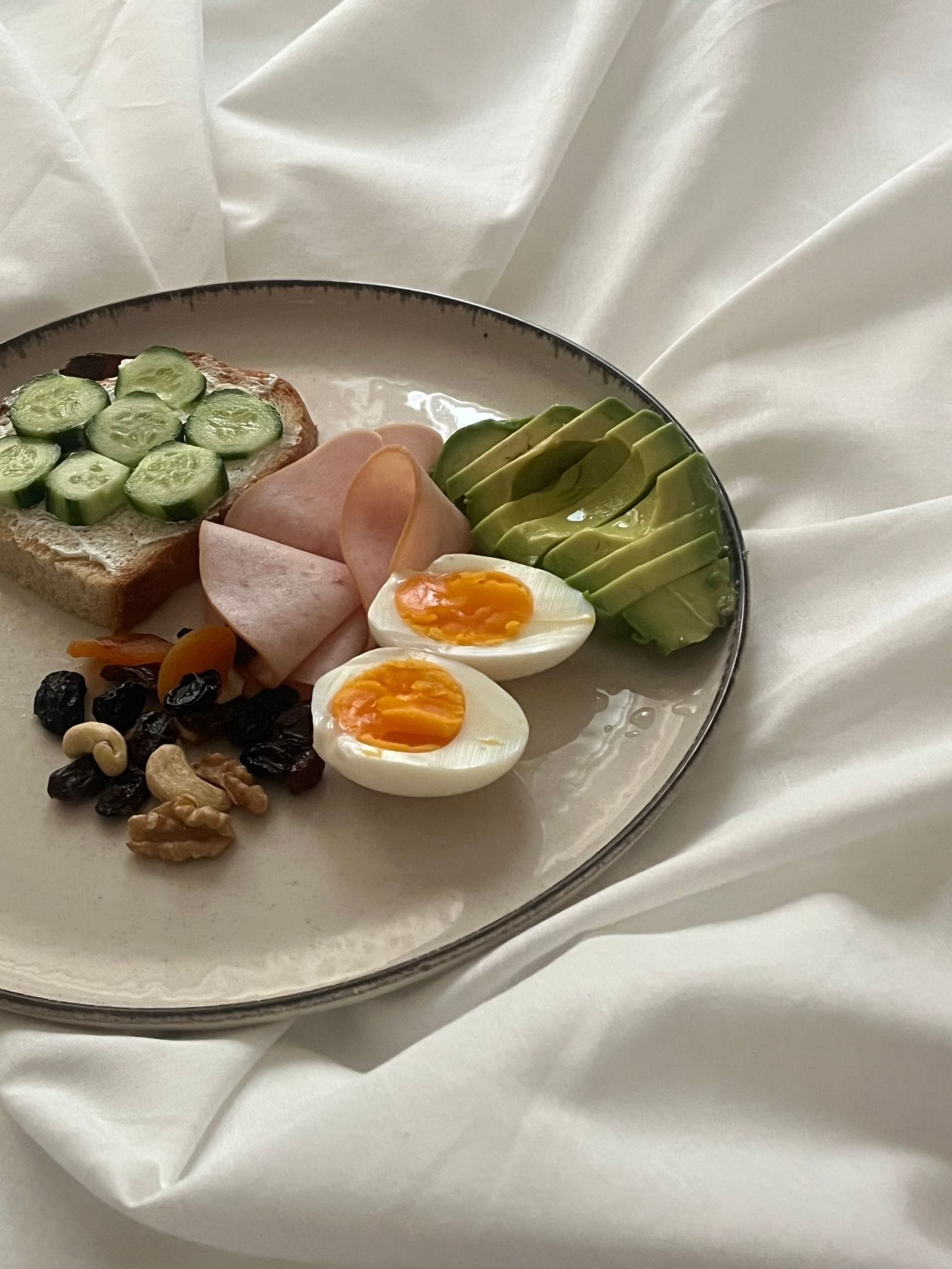
How you spread it matters as much as the total. Because aging muscle responds less efficiently to a given dose of protein, a single large hit at dinner is partly wasted, while the toast-and-coffee breakfast leaves the morning empty. The better pattern is to anchor each meal with about 25 to 30 grams, a couple of eggs and Greek yogurt at breakfast, fish or beans at lunch, meat, tofu, or lentils at dinner. Pairing that protein with the strength work amplifies both.
Hitting that mark is easier than it sounds once you know what ordinary food actually delivers.
| Food | Typical serving | Protein |
|---|---|---|
| Chicken or turkey breast | 3 oz, cooked | ~26 g |
| Canned tuna or salmon | 3 oz | ~20 g |
| Lentils or beans | 1 cup, cooked | ~18 g |
| Greek yogurt | 6 oz | ~17 g |
| Cottage cheese | 1/2 cup | ~14 g |
| Two large eggs | 2 eggs | ~12 g |
| Milk | 1 cup | ~8 g |
| Peanut butter | 2 tbsp | ~7 g |
One caveat belongs here in plain sight. Everything above assumes healthy kidneys, which for most older adults holds, and there is no good evidence that a higher-protein diet harms normal kidney function. For anyone with chronic kidney disease or a history of kidney stones the math runs the other way, and a doctor or dietitian usually recommends limiting protein rather than raising it. Very high intakes can also contribute to dehydration, which older adults are already prone to. If a kidney condition is anywhere in the picture, set the number with a professional before changing anything.
When a Shake Earns Its Place
Food first is the right default, and there are still situations where a protein drink is the smart move rather than a shortcut. When appetite has shrunk to a few bites, when chewing hurts or swallowing is difficult, when someone is recovering from surgery or an illness and needs more protein than a small plate can hold, a shake delivers 20 to 30 grams in a form that goes down easily. For an older adult who tires halfway through dinner, that can be the difference between meeting the day's target and missing it again.
The framing that keeps it useful is simple: a drink fills a gap, it does not replace meals, because whole food brings fiber, vitamins, and the plain pleasure of eating that a carton cannot. Many products sold as nutrition shakes also carry as much added sugar as a soda, which matters for anyone managing diabetes. A ready-to-drink carton and a scoop of powder stirred into milk both work; the one that actually gets finished is the one that counts.
The Muscle Hiding Under a "Healthy" Weight
Here is the version of sarcopenia that slips past everyone, including doctors. Muscle and fat are not interchangeable, but on the scale they can look that way. As muscle quietly disappears, fat often moves into the space it leaves, so the number on the scale holds steady, the clothes still more or less fit, and nothing seems wrong, even as strength drains away underneath. When the two travel together, the condition has its own name, sarcopenic obesity, and geriatricians consider it the worst of both worlds: too little muscle to carry a body that now weighs more relative to what is left to move it.
It is more common than it sounds, since a sizable share of older adults carry extra weight, and it is easy to miss precisely because the usual red flag, weight loss, never appears. The fix is the same two levers, with one emphasis: crash dieting in this situation backfires, because losing weight without resistance training sheds muscle along with fat and deepens the problem. Strength work protects muscle while the body loses fat, which is why every serious program for it pairs the two rather than relying on the scale alone.
When Weakness Becomes a Safety Problem
For most people sarcopenia is a fitness and nutrition project, handled at home over months. But there is a threshold past which weakness stops being a wellness goal and starts being a safety issue: when a parent can no longer rise from the toilet unaided, when the walk to the kitchen leaves them winded and unsteady, when a near-fall becomes a weekly event. At that point the muscle work still matters, but it has to happen alongside support that keeps the day safe while strength slowly returns.
This is where steady, non-medical help earns its place, and where the line stays clear. A caregiver does not diagnose or prescribe; what they do is make the rebuilding possible. Companion care can mean the ride to a physical therapy appointment, a grocery run that actually comes home with protein, and a hand preparing the meals that the plan depends on. In-home mobility support covers the wobbly days, the safe trip to the bathroom, and the encouragement to do the exercises on a low-energy afternoon. For families near our Monmouth County, New Jersey team, that can be as simple as folding a strength routine and a steadier walk into a week already on the calendar. The aim is never to do things for someone who can still do them. It is to hold the floor steady while they get strong enough not to need the help.
The Second-Best Day Is Today
The nonagenarians who gained 174 percent of their strength in two months were not exceptional people. They were ordinary, frail, late-in-life bodies that had simply not been asked to do anything hard in a long time, and they answered the moment they were. That is the whole lesson, compressed. Muscle is not a fixed account that only draws down with age; it is a living tissue that responds to demand for as long as you are alive to make it.
So the move is small and unglamorous and available right now. Stand up from a chair ten times tonight. Put eggs and yogurt on the breakfast table tomorrow. Loop a resistance band over a doorknob and pull. None of it requires a gym membership or a perfect plan, only the willingness to ask a little of the body and then a little more next week. The earlier a family starts, the more strength there is to keep, but the studies are unambiguous that it is rarely too late to begin. The best day to start was years ago. The second-best is today.
This article is general information, not medical advice. Before starting a new exercise or significantly changing protein intake, especially with heart, kidney, or other chronic conditions, check with a doctor.
Photographs via Pexels: Los Muertos Crew (hero), Ron Lach (older woman with dumbbells), and şule (protein plate).
Frequently Asked Questions
What is sarcopenia?
Sarcopenia is the age-related loss of muscle mass, strength, and function. Adults begin losing muscle slowly in their 30s, at a rate of roughly 3 to 5 percent per decade, and the loss tends to speed up after about age 60. When enough muscle and strength are lost that everyday tasks like climbing stairs, carrying groceries, or rising from a chair become difficult, it is considered sarcopenia. Estimates suggest it affects somewhere between a quarter and nearly half of older adults, and it is a major driver of falls, frailty, and loss of independence. Importantly, it is not simply an unavoidable part of aging; inactivity and inadequate protein are large, modifiable contributors.
What are the signs and symptoms of sarcopenia?
The earliest signs are usually functional rather than dramatic: feeling weaker, tiring sooner, a slower walking pace, trouble opening jars or carrying bags, needing to push off the armrests to stand up, and poorer balance or a fear of falling. Some people notice their arms or legs look thinner, or that they have lost stamina for activities they used to do easily. Because these changes come on gradually, they are easy to dismiss as normal aging. A persistent decline in strength or steadiness is worth mentioning to a doctor, who can assess grip strength, walking speed, and a sit-to-stand test.
Can sarcopenia be reversed?
Muscle loss can be slowed, and a meaningful amount of strength and function can be regained at almost any age. Research on long-term-care residents in their 80s and 90s found large gains in leg strength and walking ability after a structured program of progressive resistance training. While you may not fully prevent some age-related decline, the combination of strength training and adequate protein can rebuild muscle and reverse much of the functional loss. The earlier you start the better, but it is rarely too late to benefit; people who have never lifted a weight can still get stronger.
How much protein do older adults need to prevent muscle loss?
The standard adult recommendation of 0.8 grams of protein per kilogram of body weight per day appears to be too low for preserving muscle in later life. Many researchers now suggest older adults aim for roughly 1.0 to 1.2 grams per kilogram daily, and up to about 1.5 for someone who is ill, recovering, or already losing muscle. A simpler working rule is about half a gram of protein per pound of body weight, so a 150-pound person lands near 70 to 80 grams a day rather than 55. Because aging muscle responds less efficiently to protein, spreading intake across the day, with about 25 to 30 grams at each meal, works better than loading it all into dinner. People with kidney disease should set their target with a doctor, since higher protein is not appropriate for everyone.
What is the best exercise for sarcopenia?
Resistance training, also called strength training, is the single most effective activity for slowing and reversing muscle loss. That includes body-weight moves like sit-to-stands and wall push-ups, resistance bands, and light dumbbells, with the resistance gradually increased as you get stronger. Walking and other cardio are valuable for the heart and overall health but do not build muscle the way resistance work does. A common starting point is two or three sessions a week targeting the major muscle groups, ideally guided at first by a physical therapist or trainer to ensure good form.
Is losing muscle a normal part of aging?
Some muscle loss with age is expected, but the rapid, disabling kind is not inevitable. A large share of what people assume is unavoidable decline is actually driven by becoming less active and eating too little protein, both of which can be changed. Treating weakness as a signal to act, rather than a verdict to accept, is the difference between gradually losing independence and holding onto it for years longer.
What are the best high-protein foods for older adults?
The most reliable sources are also the most ordinary. Eggs, Greek yogurt, cottage cheese, milk, poultry, fish, and canned tuna all deliver a lot of protein in a small, easy-to-eat portion, and dairy has the added advantage of being soft and simple to swallow. Beans, lentils, tofu, and nut butters add plant protein along with fiber, which helps digestion. For an older adult with a small appetite, the trick is to lead with the protein at each meal, the eggs before the toast, the yogurt before the fruit, so the most valuable food goes in while hunger lasts. Building each meal around one of these staples, rather than around bread, pasta, or potatoes, is the easiest way to hit a daily target without a supplement.
Are protein drinks good for seniors?
They can be genuinely useful as a supplement rather than a replacement for food. A ready-to-drink shake or a scoop of powder in milk is an easy way to add 20 to 30 grams of protein when a full meal feels like too much, which is common when appetite fades, chewing is difficult, or someone is recovering from an illness or a hospital stay. The cautions are simple. Many drinks marketed as nutrition shakes are also high in added sugar, which matters for anyone managing diabetes. And a shake should fill a gap, not crowd out real meals, since whole foods bring fiber, vitamins, and the pleasure of eating that a carton cannot. For most healthy older adults a daily protein drink is safe; for anyone with kidney disease, check with a doctor first.
Can too much protein harm an older adult's kidneys?
For someone with healthy kidneys, the higher protein intake that benefits aging muscle is considered safe, and there is no good evidence it damages normal kidneys. The picture is different for anyone with chronic kidney disease or a history of kidney stones, where a high-protein diet can add strain and usually needs to be limited rather than increased. Very high intakes, well above what these targets call for, can also contribute to dehydration. The practical answer is that most older adults should worry about getting too little protein, not too much, but that raising intake is a conversation to have with a doctor or dietitian when a kidney condition is in the picture.