Water Aerobics for Seniors: Sorting Fact From Fear
Water aerobics is one of the safest, most effective workouts after 65 — and you don't need to swim. The myths that keep seniors out of the pool, debunked.
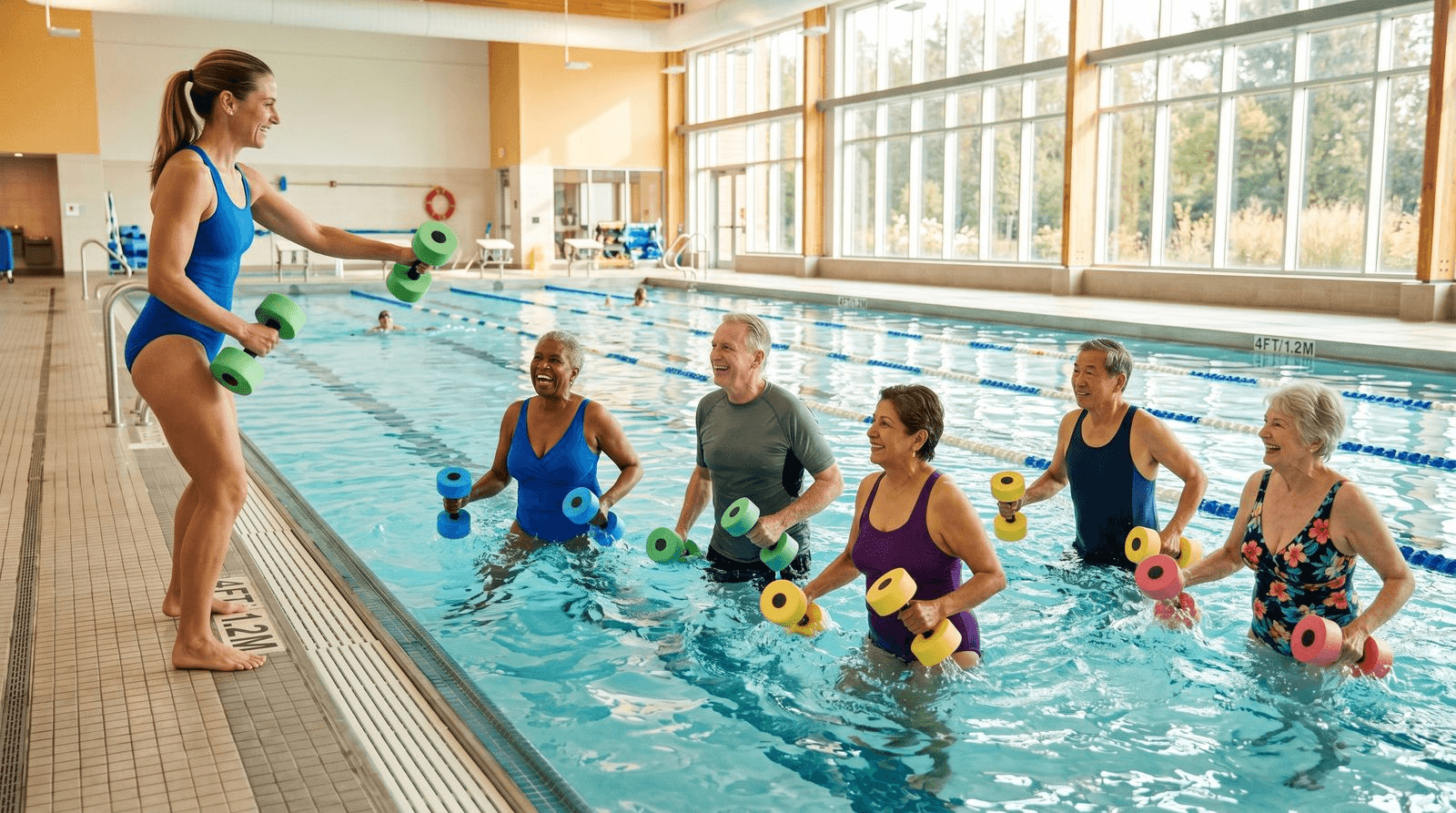
By the time we reach our late seventies, fewer than one in three of us is still getting the exercise the body needs — federal surveys put the share of adults 75 to 84 who meet aerobic activity guidelines at about 31 percent. The usual reasons are familiar: a knee that complains on the stairs, a back that won't tolerate a treadmill, a fear of falling that makes any new class feel like a gamble. Here is the quietly remarkable thing about a swimming pool: it answers nearly every one of those objections at once. Step into chest-deep water and your body sheds roughly 90 percent of its weight. The knee stops complaining. The fall stops being dangerous. What's left is movement that finally feels good.
And yet the pool sits half-empty, because the same handful of beliefs keep older adults on the deck — or out of the building entirely. Most of those beliefs are wrong. Here are the ones worth letting go of.
"But I Never Learned to Swim"
This is the single most common reason seniors skip water aerobics, and it rests on a misunderstanding. A water aerobics class is not a swimming class. Sessions are held in shallow water — usually waist- to chest-deep — and your feet stay planted on the pool floor for the entire workout. You walk, march, kick, and lift against the water; you never have to put your face in it or push off into the deep end.
If even standing in water feels unsteady at first, that is easily solved. Most programs keep flotation belts on hand that hold you comfortably upright, and many instructors will start a nervous newcomer with simple water walking in the shallow end until the water stops feeling foreign. The skill of swimming and the ability to benefit from water aerobics are two entirely separate things. Plenty of devoted regulars have never swum a lap in their lives.
"Isn't That Just for People Recovering From Surgery?"
Water's reputation as rehab-only equipment comes from physical therapy, where pools really are used to bring people back from hip replacements and serious injuries. But that is a narrow slice of what the water does. Aquatic exercise spans everything from a gentle range-of-motion routine to a genuinely hard cardio workout, and community classes are built for healthy older adults who simply want to stay strong, not only for patients in recovery.
The confusion is worth clearing up because it discourages exactly the people who would benefit most. According to the Arthritis Foundation, a review of 20 randomized controlled trials found that water workouts reduced pain and joint dysfunction and improved quality of life for people with osteoarthritis — and in several studies, relieved pain better than the same exercises done on land, likely because warm water relaxes muscles and eases the nervous system. You do not need to be recovering from anything to want that.
"Splashing Around Can't Be Real Exercise"
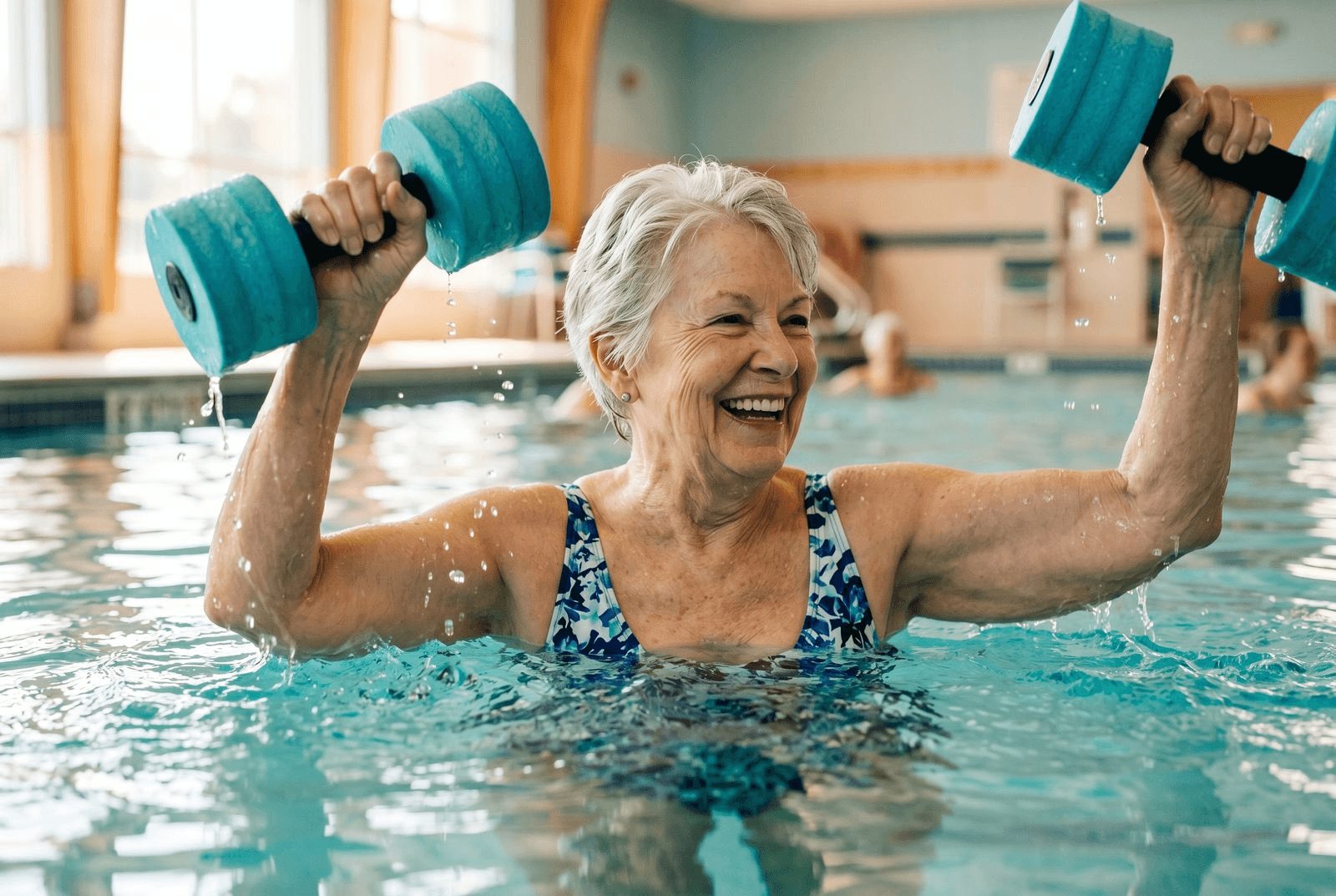
If the workout feels easy, that is the point — not a sign that nothing is happening. The reason it feels easy is the same reason it works: buoyancy carries the weight your joints would otherwise absorb, so the effort goes into movement instead of pain. Meanwhile, water is far denser than air, which means every push, kick, and arm circle meets resistance in every direction. The foam dumbbells you see in class aren't there to add weight; they add drag, forcing the muscles to work to pull them through the water.
The result is a workout that quietly hits all the targets a senior needs. It raises the heart rate for cardiovascular fitness, builds strength against the water's resistance, improves flexibility through a full range of motion, and trains balance as you stabilize against gentle currents — the same balance system covered in our guide to balance exercises for seniors. A meta-analysis of aquatic exercise trials indexed in the National Library of Medicine found measurable improvements in pain, joint function, and quality of life. The pool is gentle on the body and serious about results — those are not a contradiction.
"My Heart and My Balance Won't Handle It"
This fear deserves a more careful answer than the others, because it contains a grain of truth. Water pressure does change how the heart and lungs work — that is precisely why anyone with a heart condition, uncontrolled blood pressure, or another chronic illness should talk to their doctor before the first class. For most people, that conversation ends with a green light; the point is to have it.
But for balance specifically, the water is on your side. On land, a stumble ends in a fall, and the fear of that fall is rational. In chest-deep water, a stumble ends in a gentle, slow-motion wobble that you have ample time to recover from. The water itself becomes a spotter — supportive enough to catch you, resistant enough to make your stabilizing muscles work and grow stronger. For an older adult who has stopped trusting their own footing, that combination is hard to find anywhere else. It is one of the safest places to practice the very skill that fear has been eroding.
"The Whole Production Isn't Worth the Hassle"
Sometimes the obstacle isn't the exercise at all — it's the changing room, the cold walk to the car with wet hair, the logistics of getting to a pool twice a week. These are real, and dismissing them doesn't help. But they are also the most solvable objection on this list, because they are about getting there, not about the water.
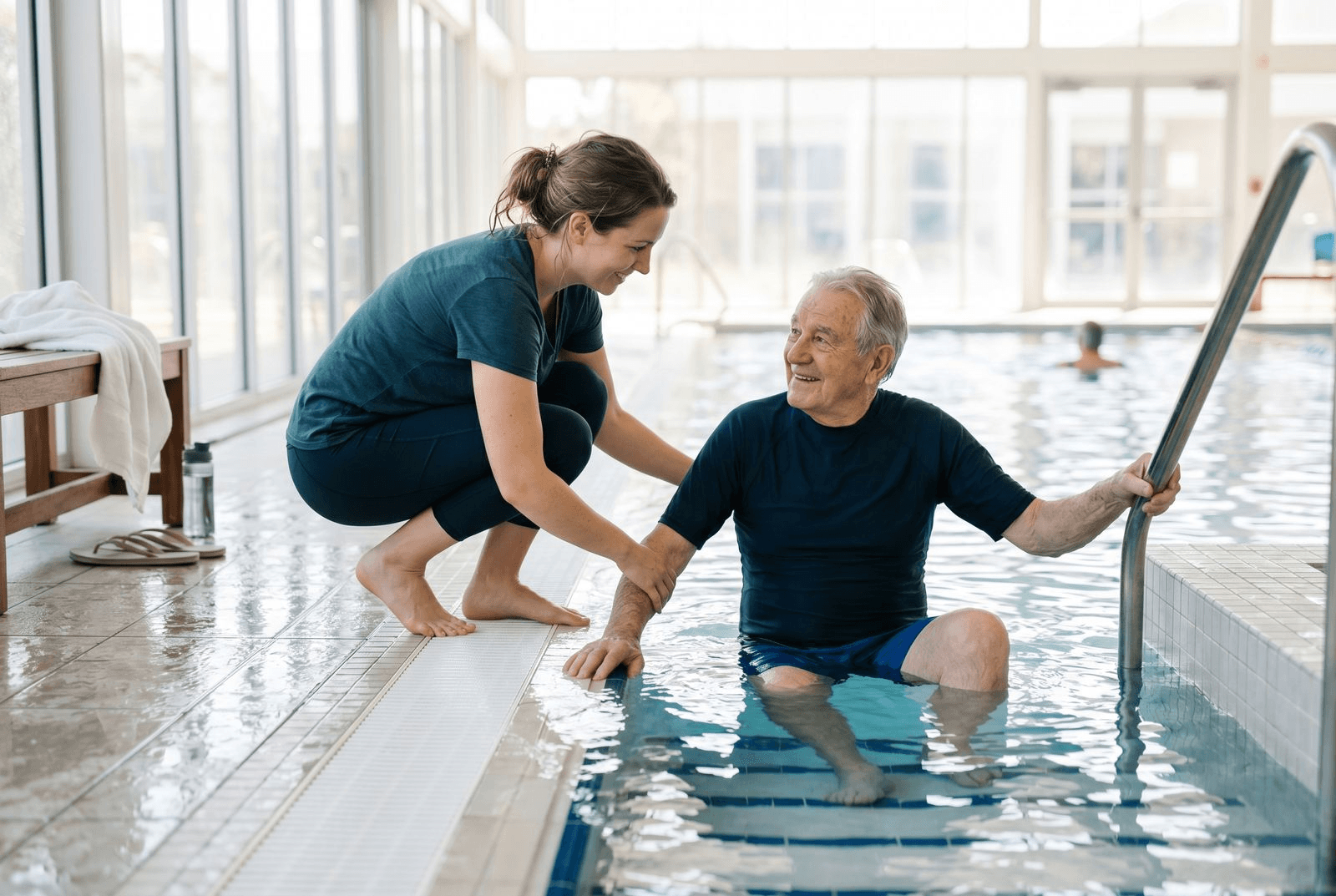
A few small things shrink the hassle considerably. Pack a bag the night before. Wear non-slip sandals for the wet deck, where most pool-area slips actually happen. Choose a class with an accessible, zero-entry pool or sturdy handrails if steps are hard. And recognize that the social side is part of the medicine: water aerobics classes are famously friendly, and the people who keep coming back usually stay for the company as much as the cardio. For an older adult living alone, that standing appointment with a familiar group can do as much for the spirit as the body.
What a First Class Actually Feels Like
Walking into a senior water aerobics class for the first time is far less intimidating than it sounds from the deck. You'll find a group in waist- to chest-deep water, an instructor calling out moves from the pool's edge, and a basket of foam dumbbells and noodles to grab. A typical session opens with a gentle warm-up of water walking and arm swings, builds into a stretch of cardio — marching, kicking, jumping jacks made weightless by the water — adds a few minutes of resistance work with the foam weights, and winds down with slow stretches the warm water makes easy.
Bring a swimsuit you can move in, a towel, those non-slip sandals, and a water bottle — people genuinely do get dehydrated in a pool without noticing the sweat. Arrive a few minutes early to claim a spot near the wall or the instructor, tell the instructor it's your first time so they can offer modifications, and give it three or four sessions before you judge it. Nearly everyone underestimates how good they'll feel walking out.
Making the First Trip the Easy Part
The honest truth is that the hardest part of water aerobics is rarely the exercise — it's the front door. Getting dressed, getting into the car, getting to the pool, and feeling steady enough to try something new are exactly the points where a good first experience either happens or quietly gets postponed for another month. That's where a little practical support changes the whole equation.
A caregiver who drives an older adult to a class, walks them to the locker room, and is waiting with a dry towel afterward turns an intimidating outing into a pleasant standing date. Our companion care is built for exactly this kind of accompaniment — the transportation, the encouragement, and the company that gets someone out the door instead of talking themselves out of it. For those who need a steadier hand with walking and transfers around the wet pool deck, mobility care adds that physical support. Families near our Monmouth County, New Jersey team can fold a couple of pool mornings a week into a routine that's already in place, so the only thing left to do is enjoy the water.
Strip away the myths and water aerobics is close to an ideal senior workout: it builds the heart, the muscles, and the balance, it's kind to arthritic joints, it's nearly impossible to fall hard in, and it comes with built-in company. The pool was never the obstacle. The beliefs about it were.
This article is general wellness information, not medical advice. Before starting any new exercise program — especially with a heart condition, uncontrolled blood pressure, or another chronic illness — talk with your physician about whether aquatic exercise is right for you.
Frequently Asked Questions
Is water aerobics good for seniors?
Yes. Water aerobics is one of the best forms of exercise for older adults because it delivers real cardiovascular, strength, and balance benefits while the water's buoyancy removes most of the impact on knees, hips, and the spine. Reviews of clinical trials show aquatic exercise reduces pain and improves function and quality of life in older adults with osteoarthritis — sometimes more than land-based exercise. It also lowers fall risk during the workout itself, because you cannot fall hard in chest-deep water. For most seniors, including those with arthritis, joint replacements, or excess weight, the pool is gentler on the body than a treadmill or a class on dry land.
Do you need to know how to swim to do water aerobics?
No. Most senior water aerobics classes are held in shallow, waist- to chest-deep water where your feet stay on the pool floor the entire time, so swimming is never required. If standing in the water still feels uncertain, many classes offer a flotation belt that keeps you upright, and water walking in the shallow end is a comfortable place to start. The ability to swim and the ability to do water aerobics are two completely different things — plenty of regular participants never swim a stroke.
How often should seniors do water aerobics?
Aim for two to three sessions a week, roughly 30 to 45 minutes each, which lines up with how most studied programs were run and with federal guidance of 150 minutes of moderate activity per week for adults 65 and older. If you are just starting out, begin with one or two shorter sessions and build up — some activity is far better than none, and even 10 to 15 minutes counts. Spreading sessions across the week, rather than doing everything in one day, makes the routine easier on the body and easier to keep.
Is water aerobics safe for someone with arthritis or a heart condition?
For most people with arthritis it is not only safe but actively recommended; the warm water relaxes stiff muscles and the buoyancy lets painful joints move without bearing full weight. People with heart conditions, uncontrolled blood pressure, or other chronic illnesses should check with their doctor first, because the water's pressure does change how the heart and lungs work, and a doctor can confirm the pool is appropriate. As a rule, anyone starting a new exercise program after 65 — especially with an existing diagnosis — should clear it with their physician before the first class.
What should a senior bring to a water aerobics class?
Bring a swimsuit you can move freely in, a towel, and non-slip pool sandals or water shoes for the deck, since wet tile is where most pool-area slips happen. Goggles are optional because your head usually stays above water. The class typically provides foam dumbbells, noodles, or flotation belts. It also helps to bring a water bottle — people sweat in the pool without noticing and can still get dehydrated — and to arrive a few minutes early to find a spot near the wall or the instructor.
What is the difference between water aerobics and water therapy?
Water aerobics is a group fitness class for general health, energy, and staying active, usually led by a fitness instructor at a community pool. Water therapy, or aquatic physical therapy, is a prescribed, one-on-one treatment delivered by a licensed physical therapist to rehabilitate a specific injury, surgery, or condition, often in a heated therapy pool. They use the same medium and overlap in their gentleness, but one is ongoing wellness and the other is targeted medical rehabilitation. Many people graduate from water therapy into a regular water aerobics class to maintain what they regained.