What It Really Takes to Stay in Your Own Home
Wanting to stay home is not a plan. A whole-life aging-in-place checklist covering the home, health, in-home help, money, and legal paperwork.

Ask almost anyone in their seventies where they want to spend the next twenty years and the answer is the same: right here, in this house. About 75 percent of adults 50 and older say they want to remain in their current home as they age, a figure that has held steady for more than a decade, according to AARP's 2024 Home and Community Preferences Survey. The house holds the memories, the neighbors, the coffee mug in its exact spot. Nobody dreams of a facility.
Here is the uncomfortable part. Wanting to stay home is not the same as being able to, and it is nowhere near the same as having a plan. Only about one in ten American homes is actually designed to be lived in safely by someone with limited mobility, and roughly 70 percent of us will need help with daily activities at some point, for an average of about three years. The families who manage to stay home successfully are not the lucky ones. They are the ones who treated aging in place as a project with moving parts, and started on it long before anything went wrong.
This is that project, broken into six pillars. You do not have to tackle all of them this month. You do have to look at all of them, because a house that is beautifully fall-proofed but empty of help, or a devoted family with no legal paperwork, is only half a plan.
It Starts as a Wish, Not a Plan
The single most common way aging in place goes wrong is timing. Most families do not sit down and plan it; they get pushed into it. A parent falls in the shower, spends a week in the hospital, and suddenly everyone is making enormous decisions in a discharge meeting, exhausted and out of time. The options that survive that kind of scramble are always fewer and usually costlier than the ones you would have on a calm Tuesday a year earlier.
There is a rule of thumb worth borrowing, sometimes called the 40/70 rule: when the adult children are around 40 and the parents around 70, it is time to start the conversations, before a crisis makes them for you. Nothing about that first talk needs to be dramatic. It is just naming the goal out loud, staying in this home, and agreeing to look honestly at what would have to be true to make it last. Everything below is what "true" looks like.
Pillar One: A Home That Works With You
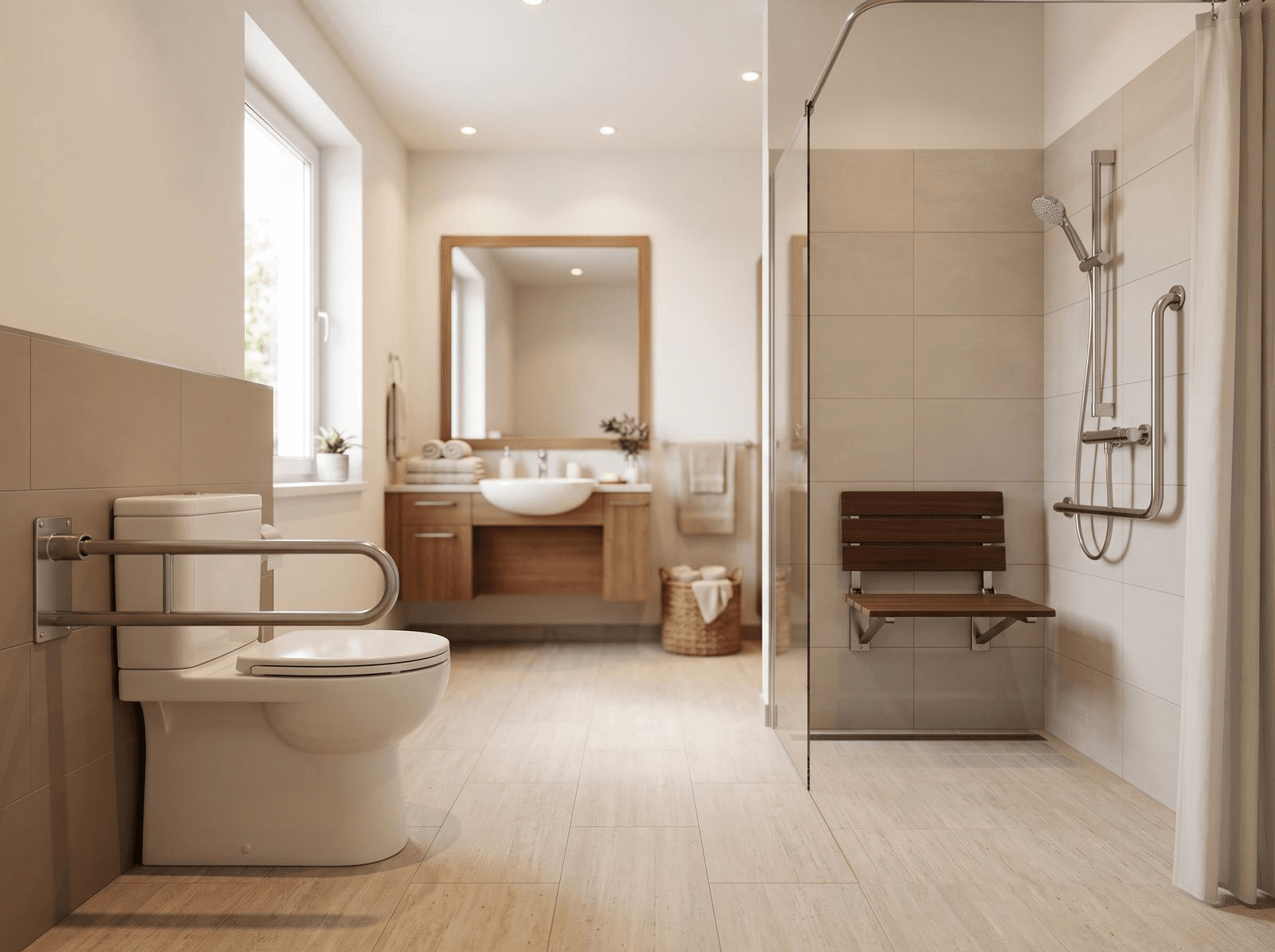
The house that raised a family is rarely the house that ages well. Stairs, narrow doorways, a slick tub, dim hallways, a laundry room in the basement: the very features nobody noticed at 55 become the reasons a home stops being safe at 80. The good news is that most of the highest-impact fixes are cheap and fast.
In the AARP survey, the modifications people most expect to need are bathroom grab bars (cited by 72 percent) and easier entry such as ramps or wider doorways (71 percent). A sensible starting order looks like this:
- Start in the bathroom. It is where most serious falls happen. Grab bars by the toilet and in the shower, a non-slip mat or textured tile, and a shower bench address the biggest risk for the least money.
- Fix the lighting everywhere. Brighter bulbs, motion-sensor nightlights on the path to the bathroom, and light switches at both ends of a hallway prevent the stumbles that lighting causes.
- Clear the floor. Loose rugs, cords, and clutter are the cheapest hazards to remove and the easiest to ignore.
- Aim for one-floor living. If a bedroom, a full bathroom, and the kitchen can all live on the main floor, stairs stop being a daily gamble.
- Handle entries. A ramp, a sturdy railing, and good exterior lighting keep the front door from becoming a barrier.
This is the pillar with the most detail, so rather than cram a full renovation guide here, we wrote a room-by-room walkthrough separately. If you are ready to start marking up the house, our guide to preventing falls at home is the checklist to print out and carry from room to room.
Pillar Two: A Health Routine That Holds Up
A safe house does not help much if the health inside it is drifting. The second pillar is the quiet infrastructure of staying well: the appointments kept, the pills taken correctly, the small declines caught early instead of after a fall.
- Keep up preventive care. Regular checkups, vision and hearing tests, and a yearly medication review with a doctor or pharmacist catch problems while they are still small and fixable.
- Build a medication system. Missed and doubled doses are one of the most common reasons an older adult ends up in the hospital. A weekly organizer, a reminder routine, and a single up-to-date list of everything they take go a long way; our guide to medication management for seniors lays out who should be doing what.
- Watch mobility and strength. Balance and leg strength are what keep someone on their feet. Simple daily movement, and a physical therapist's input after any change, protect the ability to move safely through the home.
- Have a plan for the bad day. A medical alert system, an emergency contact list on the fridge, and a known route to the doctor turn a scary moment into a manageable one.
Pillar Three: Help Lined Up Before You Need It
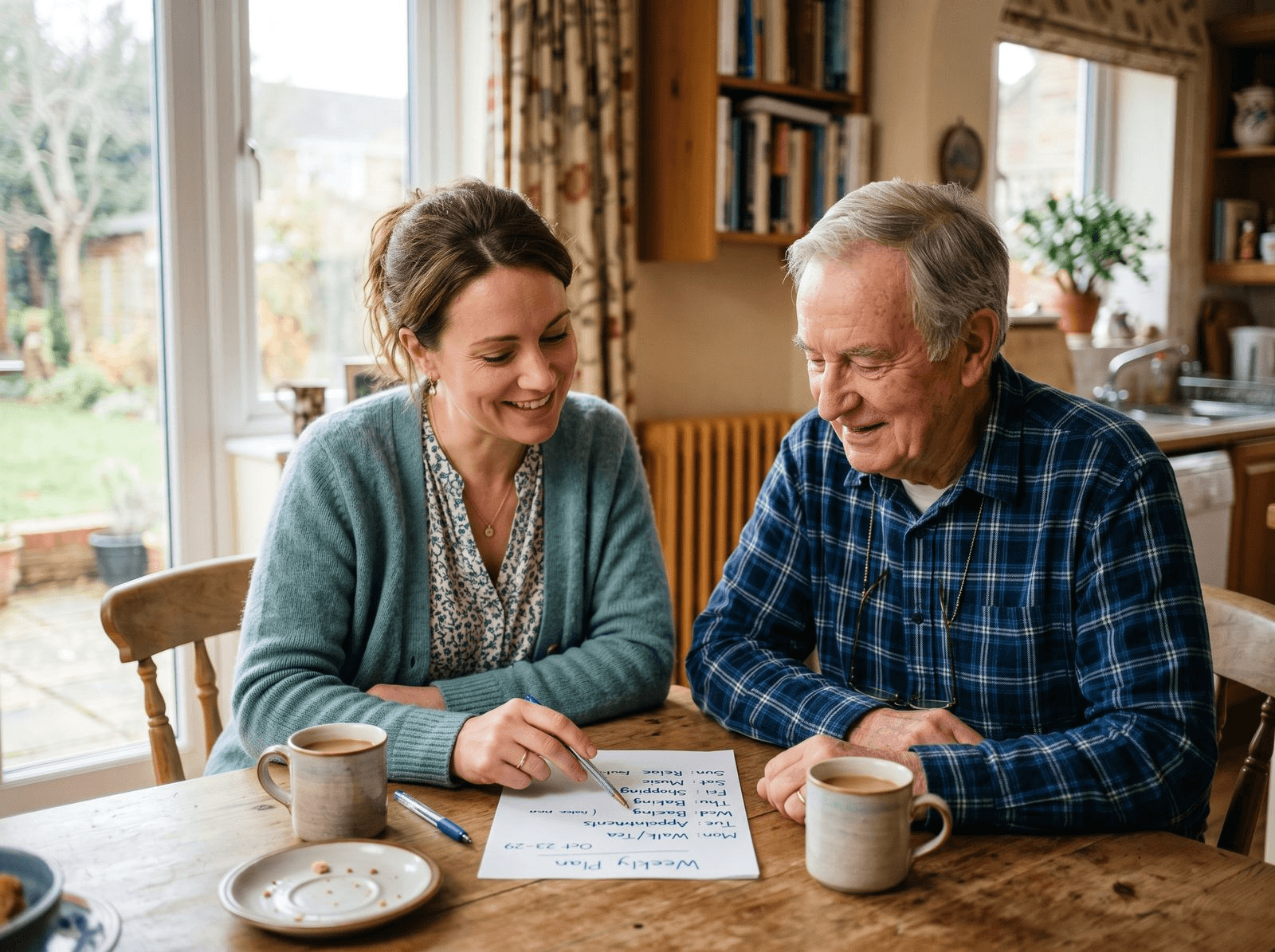
Here is the pillar families most often skip, and the one that quietly decides whether aging in place lasts. Almost no one goes from fully independent to needing a nursing home overnight. There is a long middle stretch where someone is still themselves, still at home, but needs a hand with the shower, the groceries, the driving, the hours that are hard to fill alone. Filling that gap is exactly what keeps the move to a facility from becoming the only option.
Some of that help comes from family, and some of it should not, because burning out the daughter who lives twenty minutes away is its own kind of crisis. Community resources fill part of the gap: your local Area Agency on Aging can point you to meal delivery, transportation, and senior programs, and the federally funded Eldercare Locator connects families to services by zip code. And professional in-home care fills the rest. A companion caregiver can handle the meals, the errands, the reminders, and the simple company that makes a house feel less empty, often starting with just a few hours a week and scaling up only as needs grow. Lining that support up early, while it is a choice rather than an emergency, is the difference between a plan that stretches for years and one that collapses after a single hard week.
Pillar Four: The Money Behind Staying Put
Aging in place is often cheaper than assisted living, especially for someone who owns their home outright, but it is rarely free, and the costs sneak up in pieces. There are three to budget for: the one-time home modifications, the in-home help if and when daily support is needed, and the ordinary maintenance that gets harder to do yourself every year.
Standard Medicare does not cover most of this, which surprises a lot of families at the worst possible moment. Planning ahead means knowing where the money would come from before you need it. For some households that is savings; for others it is home equity. The federal Home Equity Conversion Mortgage program lets qualifying homeowners 62 and older convert part of their equity into income while staying in the house, though it is a serious decision with real trade-offs; the Consumer Financial Protection Bureau's plain-language explainer on reverse mortgages is a good place to understand it before talking to anyone selling one. Veterans and surviving spouses may also qualify for benefits that help pay for in-home care. New Jersey homeowners can also lower the yearly bill through state property-tax relief; our guide to the Senior Freeze, ANCHOR, and Stay NJ programs lays out who qualifies for each. The point is not to solve the money question today; it is to know the answer exists before a crisis asks it.
Pillar Five: The Paperwork Nobody Wants to Do
This is the least pleasant pillar and the one that causes the most anguish when it is missing. If a parent has a stroke or a sudden decline and no legal documents are in place, the family can be locked out of decisions and accounts at exactly the moment they need to act. Getting a handful of documents done, while everyone is well and clear-headed, spares a future version of your family an enormous amount of pain.
- Durable power of attorney. Names someone to handle finances if your parent cannot, without a court battle.
- Healthcare proxy. Names someone to make medical decisions if your parent is unable to speak for themselves.
- Advance directive or living will. Puts their wishes about care in writing so no one has to guess.
- An up-to-date will. Keeps the eventual estate from becoming a source of conflict.
- A document map. One page listing where everything lives: accounts, insurance, deeds, passwords, key contacts. It is the single most useful thing an older adult can leave for the people helping them.
Pillar Six: A Life Beyond the Front Door
A house can be perfectly safe and still be a bad place to grow old, if the person inside it is lonely. Isolation is not a soft, sentimental concern; it is linked to real declines in physical and mental health, and it creeps in quietly when driving stops, friends move or pass, and the days start to blur.
So the last pillar is a life, not just a shelter. That means solving transportation before it becomes a trap, whether through family, ride services, senior transit, or a caregiver who drives. It means protecting the standing appointments that give a week its shape: the coffee group, the place of worship, the class, the grandchild's game. And it means noticing, honestly, when someone has quietly stopped leaving the house, and treating that as the warning sign it is. Aging in place should mean staying in a life, not just staying in a building.
Knowing When the Plan Has to Change
A good aging-in-place plan includes the humility to know it might not last forever, and that admitting so is not a defeat. It is the plan working as designed. Watch for the signs that home has stopped being the safest place, even with support:
- Repeated falls, or a fall that causes real injury.
- Wandering, getting lost, or confusion that creates danger, such as leaving the stove on.
- Medications consistently missed or doubled despite a system.
- Noticeable weight loss, a decline in hygiene, or a home that has stopped being cared for.
- Deepening isolation, or a caregiver stretched past what is safe or sustainable.
- A level of care that family and hired help together can no longer safely provide.
Reaching one of these does not automatically mean moving. Often it means adding more in-home hours, bringing in overnight support, or leaning harder on the health pillar. Sometimes it does mean a move to a setting with more care, and choosing that calmly and early, before an emergency chooses it for you, is one of the most loving decisions a family can make. The goal was never the house for its own sake. It was safety, dignity, and a good life, wherever those are best protected.
Start Before the Crisis Does
Aging in place is not a decision you make once; it is a plan you build and keep adjusting. The families who pull it off are simply the ones who started early, looked at all six pillars instead of just the pretty ones, and were willing to bring in help before they were desperate for it. None of it requires doing everything at once. It requires starting, this year, with a conversation and a single honest walk through the house.
When the moment comes to add real support, that is where we come in. Our caregivers across Middlesex County, New Jersey and beyond help older adults do exactly the small, steady things that keep a home livable: the meals, the errands, the reminders, the driving, and the company that keeps a house from feeling empty. Reach out while it is still a choice, and staying home can be a plan that holds for years, not a wish that runs out of time. New Jersey is aging fast, and if you want to see how your own county is changing and reach its Office on Aging, our county-by-county look at how New Jersey is aging has the numbers and the phone numbers in one place.
This article is general information, not medical, financial, or legal advice. Costs, benefit programs, and eligibility rules change and vary by state; confirm current details with a qualified professional before making decisions.
Frequently Asked Questions
What is aging in place?
Aging in place means living in your own home and community safely, independently, and comfortably as you grow older, instead of moving to assisted living, a nursing home, or another care setting. It is the option most older adults prefer. In AARP's 2024 Home and Community Preferences Survey, about 75 percent of adults 50 and older said they want to stay in their current home as they age. But aging in place is more than a house; it involves your health, finances, transportation, social connections, and legal planning, all of which have to be considered together for it to work over the long term.
What should an aging-in-place checklist include?
A good aging-in-place checklist goes well beyond grab bars. It should cover six areas: the home (fall-proofing, lighting, a main-floor bedroom and bathroom, wider doorways or ramps if needed), health (preventive care, medication management, mobility and vision checks), support (family help, in-home caregivers, and community services like your Area Agency on Aging), finances (budgeting for modifications, in-home care, and ongoing maintenance), legal documents (a will, power of attorney, advance directive, and healthcare proxy), and social life (transportation and staying connected to people). Reviewing all six, rather than only the physical house, is what separates a real plan from a wish.
How much does aging in place cost?
It varies widely with the person's health and how much help they need, but the honest answer is that aging in place is rarely free. Costs fall into three buckets: one-time home modifications (grab bars and better lighting are inexpensive, while walk-in showers, ramps, or a first-floor bathroom can run into the thousands), ongoing in-home care if daily help becomes necessary, and routine home maintenance that gets harder to do yourself over time. Many of these costs are not covered by standard Medicare. Planning for them early, and exploring options like a home equity conversion mortgage or veterans' benefits, keeps a fall or sudden decline from forcing a rushed and expensive decision.
What are the benefits of aging in place?
Staying at home lets older adults keep their independence, routines, and sense of identity, and remain close to neighbors, friends, and familiar surroundings, all of which support emotional well-being. For homeowners who have paid off a mortgage, it can also cost less than assisted living. Research links remaining in a familiar environment to better mental health and social connection. The catch is that these benefits only hold when the home is genuinely safe and the right support is in place; aging in place in an unsafe or isolating home carries real risks, which is why the planning matters as much as the preference.
What is the 40/70 rule for aging parents?
The 40/70 rule is a simple prompt to start the hard conversations early: when adult children are around 40 and their parents are around 70, it is time to begin talking about health, finances, legal documents, and future care. It is not a strict deadline, just a nudge to raise these questions before a crisis forces everyone to make decisions quickly. Starting early means aging in place can be a deliberate plan built over years, rather than a scramble in a hospital hallway.
When is aging in place no longer safe?
Aging in place is not all-or-nothing, and there is a point at which home may stop being the safest place. Warning signs include repeated falls, wandering or getting lost, medications being missed or doubled, a stove left on, noticeable weight loss or a decline in hygiene, growing isolation, or a level of care that family and hired help can no longer safely cover. Reaching that point is not a failure of the plan; it is the plan working, because you built in the honesty to reassess. Sometimes the answer is more in-home support, and sometimes it is a move to a setting with more care. Revisiting the question calmly, before an emergency, keeps the choice in the family's hands.