Best Walking Shoes for Seniors: What to Look For
How to choose safe, comfortable walking shoes for older adults — the features that lower fall risk, fit rules, and what works for swollen feet.
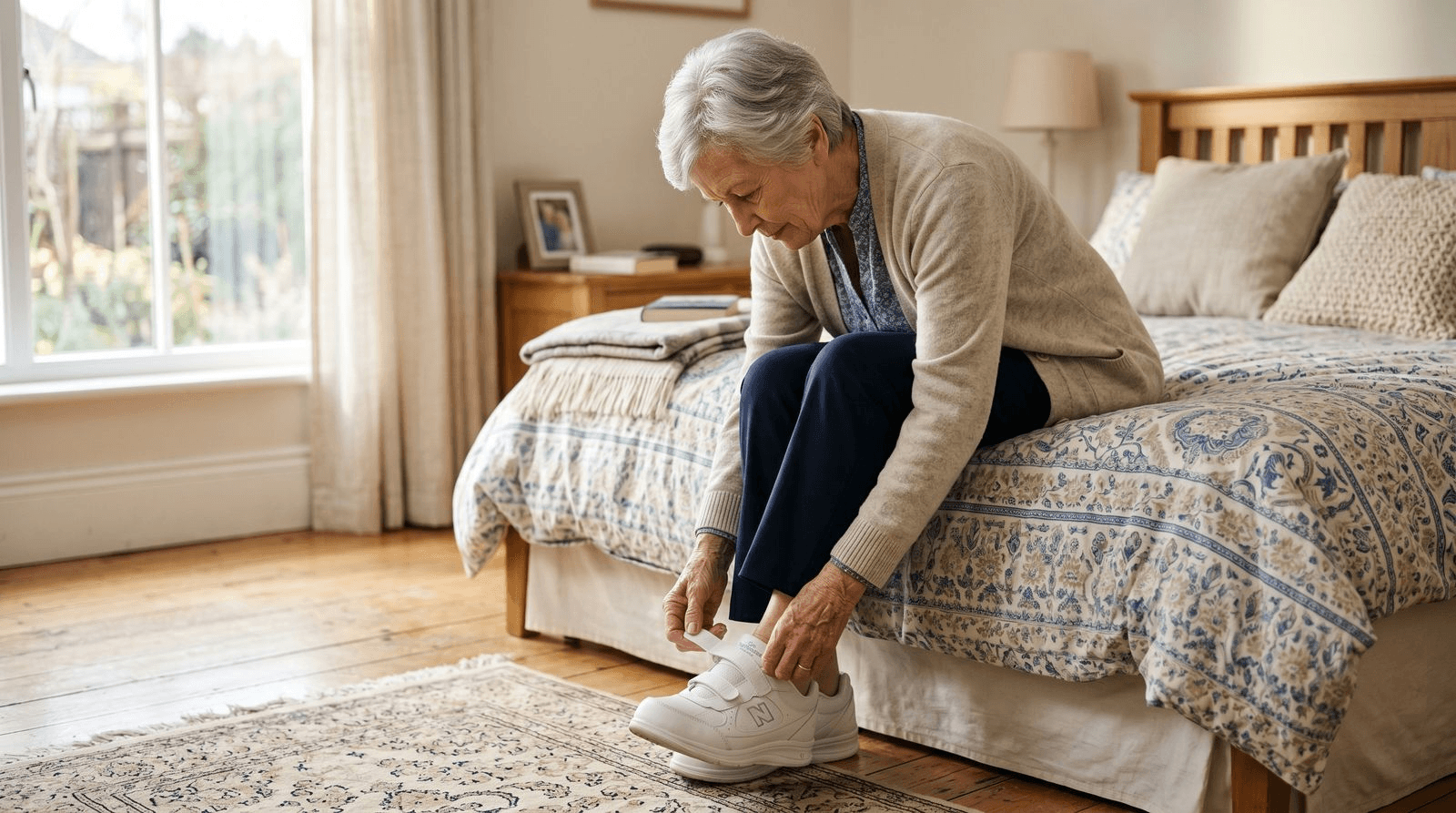
Falls are the leading cause of injury for adults over 65 — and the shoes on a person's feet are one of the very few fall risk factors you can change in a single afternoon. You cannot rebuild a knee or undo a stroke before lunch, but you can retire a pair of worn, backless slippers and replace them with shoes that hold the foot steady. The CDC's fall-prevention program lists footwear alongside vision and home hazards as a modifiable risk, which is a quietly hopeful idea: the right pair of shoes is preventive care you can buy off a shelf.
The hard part is that "the right pair" is not a brand name. It is a short list of features — and once you know them, you can read any wall of sneakers and tell in a few seconds which shoes are built to keep an older adult upright and which only look the part. Here is the whole checklist, plus how to handle the feet that do not fit the standard mold: swollen, unsteady, or numb.
Footwear Is a Fall Risk You Can Actually Change
Researchers who study why older adults fall keep landing on the same unglamorous variables: how the shoe fits, how it fastens, how high the heel sits, how much grip the sole has, and how firm the sole is underfoot. A 2024 review in the Annals of Geriatric Medicine and Research went through the evidence on each of those features and concluded that good footwear is "a relatively simple, efficient, and cost-effective means of enhancing safety." Translation: this is one of the highest-return, lowest-effort changes a family can make.
It matters more with age, not less. Feet lose some of their protective fat padding, joints stiffen, and nerve sensation can fade — so the foot relies on the shoe to supply the stability it used to manage on its own. A shoe that slides, flops, or tips becomes a hazard the moment balance is already a little uncertain.
7 Features That Make a Walking Shoe Safe
Run any shoe past these seven checks. The more boxes it ticks, the safer it is on an older foot.
- A true, snug fit. The single most important feature. A shoe that is too loose lets the foot slide and roll; one that is too tight causes pain that changes how a person walks. Neither is safe. The foot should sit secure with room only at the very front.
- A secure fastening. Laces, a strap, or hook-and-loop closures that actually hold the shoe onto the foot. A shoe with no fastening — the kind you step into and out of — lets the foot shift and slip out, which is exactly how trips happen.
- A low, broad heel. Skip anything over about an inch, and skip narrow heels entirely. A low heel with a wide, slightly flared base keeps weight stable and maximizes contact with the ground. A beveled (gently rounded) heel edge also helps prevent catching and slipping.
- A thin, firm sole. This one surprises people. A thick, pillowy sole feels luxurious but it dulls the foot's sense of where the ground is, which undermines balance. A thinner, firmer midsole lets the foot "feel" the floor and react — better for steadiness, even if it feels less plush.
- A slip-resistant tread. Look at the bottom: it should have a textured, grippy pattern, not a smooth flat surface. Good tread channels away water and grips on wet tile, kitchen floors, and morning dew — the surfaces where older adults slip most.
- A firm heel counter. Squeeze the back of the shoe — the cup that wraps the heel. It should resist, not collapse. A firm heel counter holds the rearfoot in a stable position; a soft, floppy one lets the ankle wobble.
- Light overall weight. Heavy shoes encourage a shuffling, foot-dragging gait, and a dragged foot catches on thresholds and rugs. A lighter shoe lets the foot clear the ground cleanly with each step.
The Shoes to Retire Tonight
Just as useful as knowing what to buy is knowing what to throw out. If any of these are in daily rotation, they are working against steady footing — and replacing them is the fastest safety win in the house.
- Backless slippers and mules. To keep them on, the toes have to claw and grip, which tires the foot and creates a shuffling gait. They slip off at the worst moments. Indoors counts — most falls happen at home, often in slippers or socks.
- Smooth-soled or worn-out shoes. Balding tread is a balance hazard, especially on wet floors. A favorite old pair with a slick, compressed sole is doing less than it looks.
- High or narrow heels. Anything over an inch, and anything that balances weight on a small heel, shifts the body forward and shrinks the base of support.
- Loose, fastener-free styles. Slip-ons the foot can slide out of, or stretched-out shoes the foot swims in, let the foot move independently of the shoe.
- Floppy, unstructured slippers. Soft house slippers with no heel counter and no grip provide no stability and snag easily on carpet edges.
- Walking in socks or bare feet. Not a shoe at all, but worth naming: padding around the house in socks is one of the slipperiest things an older adult can do. A supportive indoor shoe or a non-slip sock is safer.
How to Get the Fit Right
The best-designed shoe in the world is unsafe in the wrong size, and feet change with age — they widen, flatten, and often grow a half-size or more. The last fitting from a decade ago is not the current foot. A few rules make the difference:
- Shop in the late afternoon. Feet swell over the day and are at their largest by evening. A shoe fitted in the morning can be painfully tight by dinner.
- Have both feet measured, standing up. Most people have one foot slightly larger; fit the bigger one. Width matters as much as length — don't size up in length to chase width you should be getting from a wider shoe.
- Leave a thumb's width at the toe. About a finger's width of room between the longest toe and the front of the shoe lets toes spread and prevents pressure on the nails.
- Try shoes on with the usual socks — and any orthotics or inserts. A shoe that fits over a thin dress sock may be tight over a cushioned walking sock or a prescribed insole.
- Trust comfort over the number on the box. Sizes vary by brand. A shoe should feel right immediately; a long "break-in" period usually means the wrong size.
Fit and foot health go hand in hand. Bunions, hammertoes, thick or ingrown nails, and numb spots all change what a comfortable shoe feels like, and they are easy to overlook. Our guide to foot care for older adults covers the routine checks that keep small problems from becoming shoe problems.
Matching Shoes to a Specific Problem
The seven-feature checklist is the foundation. But three common situations call for a few extra considerations — and they are exactly the searches families type at midnight.
Swollen Feet and Edema
When feet swell from edema, heart or kidney conditions, or simply a long day on the feet, the goal is a shoe that adapts instead of compressing. Look for extra depth and wide or extra-wide widths, stretchable uppers that expand with the foot, a roomy toe box, and adjustable closures — Velcro, elastic laces, or a bungee system — so the fit can loosen as swelling rises. Non-binding, soft materials matter, because a tight upper digging into already-strained skin is both painful and bad for circulation. Measure late in the day, and don't try to solve swelling by buying a longer shoe; you want width and depth, not length.
Poor Balance and a History of Falls
For unsteady feet, stability beats softness every time. Favor a wide, flat base, a low heel, a firm heel counter, and that thinner, firmer sole that keeps the foot in contact with the ground. Resist the instinct to buy the most cushioned shoe on the shelf — plush midsoles feel safe but reduce the ground feedback that balance depends on. Shoes are only half the equation: the strongest evidence for fewer falls pairs good footwear with simple balance exercises and, where mobility is genuinely limited, the right support at home. Our mobility care helps with safe walking, transfers, and the daily movement that keeps balance from fading further.
Diabetes and Numb or Sensitive Feet
Reduced sensation from diabetic neuropathy is its own category of risk: a person may not feel a rubbing seam or a too-tight toe box until it has caused a blister or sore. Here the priorities are a seamless, soft interior, extra depth and room in the toe box, and protection against pressure points. Many diabetic and "extra-depth" shoes are built for exactly this, often with space for a prescribed insole. Anyone with diabetes, numbness, or recurring foot wounds should choose footwear with their podiatrist or physician — the wrong shoe on an insensate foot is a wound waiting to happen.
When the Hard Part Is Getting Them On
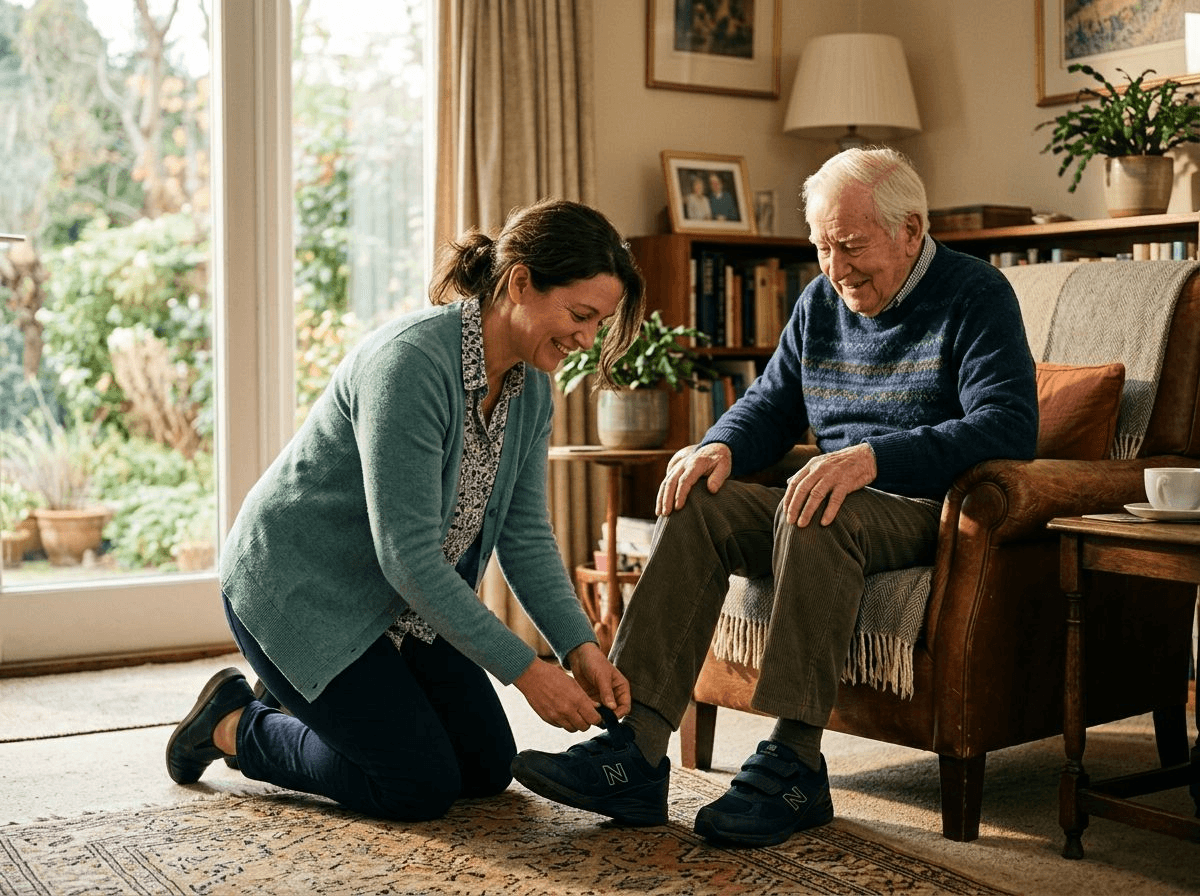
All of this assumes the shoe gets onto the foot in the first place — and for a lot of older adults, that is the real obstacle. Arthritic hands cannot manage fine laces. Bending to the floor is hard after a hip or knee replacement, and risky for someone who gets dizzy on the way back up. So the "safe" lace-ups end up in the closet and the unsafe slip-ons win by default, simply because they are the only pair a person can put on alone.
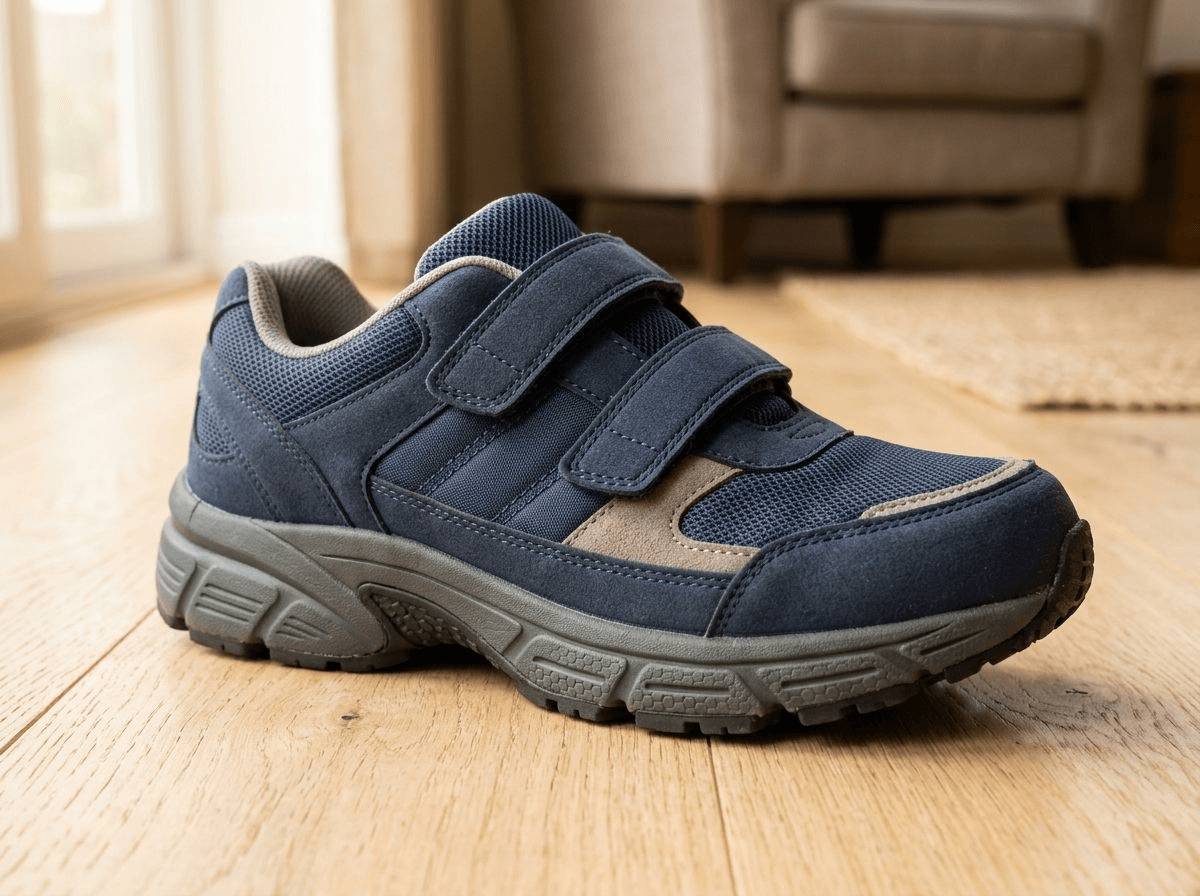
The fix is to choose security that is also easy: hook-and-loop straps, no-tie elastic laces, or hands-free designs that still wrap the whole foot. A shoe only protects if it gets worn. And when even those are a daily struggle, a little help with dressing makes all the difference between a person wearing their good shoes and abandoning them. Personal care covers exactly that kind of help — putting on shoes and socks, checking feet for sores, and steadying someone through the first unsure steps of the day. For families near our Ocean County, New Jersey team, that support can fold into a morning routine that is already in place.
None of this requires a perfect, expensive shoe. It requires a shoe that fits, holds the foot, grips the floor, and actually gets worn — and the willingness to retire the worn-out, backless, slippery pairs that quietly raise the odds of a fall. For a fuller picture of why the right shoes matter, the National Council on Aging's explainer on how the right pair of shoes can prevent a fall is worth sharing with a parent. The shoes by the door are a small thing that carries a lot of weight.
This article is general wellness information, not medical advice. For diabetes, neuropathy, persistent swelling, foot pain, or recurring falls, consult a physician or podiatrist about appropriate footwear.
Frequently Asked Questions
What are the best walking shoes for seniors?
There is no single best brand, but the best walking shoe for an older adult shares the same handful of features no matter who makes it: a snug, true-to-size fit that does not let the foot slide; a secure fastening like laces, a strap, or hook-and-loop; a low, broad heel rather than a high or narrow one; a thin, firm sole that lets you feel the ground; a textured, slip-resistant tread; a firm heel counter that does not collapse when you press it; and light overall weight. Match those features to your own feet — width, swelling, arch — and the specific model matters far less than the checklist.
What shoes are best for seniors with balance problems?
For poor balance, prioritize stability over softness. Look for a wide, flat base, a low heel, a firm heel counter that holds the rearfoot steady, and a thin, firm midsole. A very thick, plush, cushioned sole feels comfortable in the store but dulls the foot's sense of the ground and can actually make balance worse. A secure fastening matters too, because a shoe that stays put under the foot is a shoe the body can trust. Pair the right shoes with simple balance training for the biggest reduction in fall risk.
What are the best shoes for elderly people with swollen feet?
Swollen feet need shoes that adapt rather than fight back. The features that help most are extra depth and wide or extra-wide widths, stretchable uppers that expand with the foot, a roomy toe box, and adjustable closures — Velcro straps, elastic laces, or a bungee system — so the fit can be loosened as swelling rises through the day. Shop in the late afternoon when feet are at their largest, and avoid stiff, narrow uppers that dig into swollen skin.
Are slip-on or lace-up shoes better for older adults?
Both can be safe; what matters is whether the shoe stays secured to the foot. A backless slipper or a loose slip-on that the foot can slide out of is a fall hazard. A lace-up gives the most adjustable hold, but for someone who struggles to bend or has limited hand strength, hook-and-loop straps, elastic no-tie laces, or a hands-free design that still wraps the whole foot offer the same security with far less effort. The goal is a shoe that holds firmly and is still realistic to put on without a struggle.
How often should older adults replace their walking shoes?
Replace walking shoes roughly every 300 to 500 miles, or every six to twelve months for someone who walks daily, but let condition decide rather than the calendar. Worn-out shoes lose their grip and support: check for smooth or balding tread, a midsole that is cracked or compressed, uppers that have stretched so the foot slides, or a shoe that no longer sits flat and rocks when set on a table. Any of those signs means the shoe has become a balance hazard and should be retired.
Why is the right footwear important for preventing falls?
Falls are the leading cause of injury for adults over 65, and footwear is one of the few fall risk factors a person can change in an afternoon. The wrong shoes — smooth soles, high or narrow heels, loose or backless styles — make slips and trips more likely, while supportive, well-fitted, slip-resistant shoes give the foot a stable, predictable platform. Footwear will not prevent every fall, but combined with foot care, strength and balance work, and a safer home, it removes a hazard that is entirely within reach.