The Clear Liquid Diet, Made Safe for Older Adults
A clear liquid diet before a colonoscopy or surgery gets riskier with age. What older adults can safely eat and drink, how long, and when to worry.
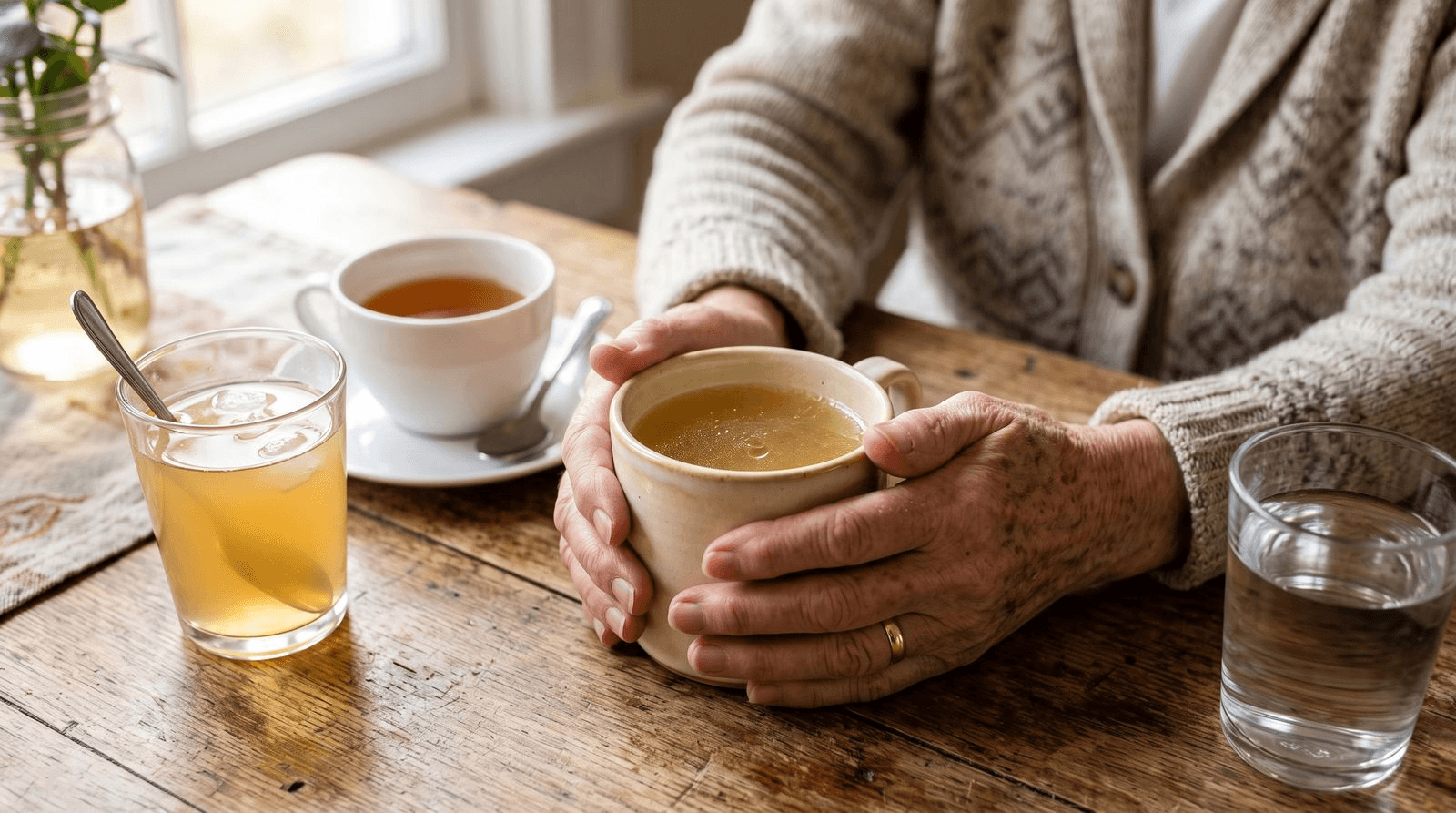
Two words on a prep sheet sound simple enough: clear liquids. Then the questions start. Is coffee allowed? What about the pulp in orange juice? Does Jell-O count, and if so, why not the red kind? A clear liquid diet looks like the easiest instruction a doctor ever gave, right up until someone is standing in the kitchen the night before a colonoscopy, holding a carton of something and not sure whether it breaks the rules.
For an older adult, though, the food list is the least of it. The harder part is that a full day on nothing but broth and juice asks more of an aging body than a younger one. Dehydration comes on faster. Blood sugar drifts. Regular medications suddenly need a plan. Get those three things right and the diet is genuinely no big deal. Get them wrong and a routine prep can end in dizziness, a fall, or a canceled procedure. This guide sorts the food question first, then spends most of its time on the part that actually matters after seventy.
What exactly counts as a clear liquid?
The test is right there in the name. A clear liquid is anything you can see through, plus foods that melt into a see-through fluid at room temperature. According to the Mayo Clinic, these fluids are easy to digest and leave no food bits behind in the digestive tract, which is exactly why they are used to empty the gut before a test or to rest it afterward. Color is allowed as long as you can still see through the liquid, so a pale-yellow apple juice qualifies and a glass of milk does not.
What you can eat and drink, and what has to go
This is the chart most people actually come looking for. When in doubt, hold the item up to the light: if you cannot read a newspaper through it, it does not belong on a clear liquid diet.
| Allowed on a clear liquid diet | Not allowed |
|---|---|
| Water, plain or lightly flavored | Milk, cream, and non-dairy creamer |
| Fat-free broth or bouillon | Any soup with noodles, rice, or vegetables |
| Strained juices without pulp (apple, white grape) | Orange or tomato juice, nectars, anything with pulp |
| Clear sodas and ginger ale | Alcohol of any kind |
| Plain tea and black coffee (no milk) | Smoothies, milkshakes, and frozen yogurt |
| Sports drinks and electrolyte waters | Ice cream, sherbet, and pudding |
| Plain gelatin and clear ice pops (no fruit or pulp) | Oatmeal or anything you have to chew |
| Honey, sugar, and hard candy | Anything you cannot see through |
One asterisk for colonoscopy prep: even among allowed drinks, skip anything colored red, purple, or orange. Those dyes can look like blood on the camera and obscure the view, so most gastroenterologists ask patients to stay with yellow, green, and blue shades. The National Institutes of Health's MedlinePlus guide puts it plainly: follow the exact list your provider gives you, because the details differ from one procedure to the next.
Why a doctor might prescribe it
A clear liquid diet is almost never about weight or nutrition. It is a tool with three common jobs. The first is preparation: before a colonoscopy or certain surgeries, the intestines have to be empty so the doctor can see clearly or operate safely, and a day of clear liquids is how the gut gets there. The second is recovery: after an operation on the stomach or bowel, the digestive system is eased back into work with liquids before solids are reintroduced. The third is rest: during a bout of nausea, vomiting, or diarrhea, clear fluids keep a person hydrated without asking an irritated gut to break down real food.
What makes it trickier after 70
A twenty-year-old can coast through a day of clear liquids and barely notice. An older body has less margin. Age thins the body's water reserves and blunts the thirst signal, so dehydration in older adults can set in before anyone feels thirsty, bringing confusion, weakness, and a higher risk of a fall. Fewer calories mean less steady energy, which shows up as lightheadedness on standing, exactly the moment a bathroom trip during colon prep turns risky. And the medicine cabinet that a younger person can ignore for a day becomes the central question after seventy. This is where a family member or a personal care aide earns their keep, watching for the early signs and keeping fluids moving when the person themselves may not notice the deficit.
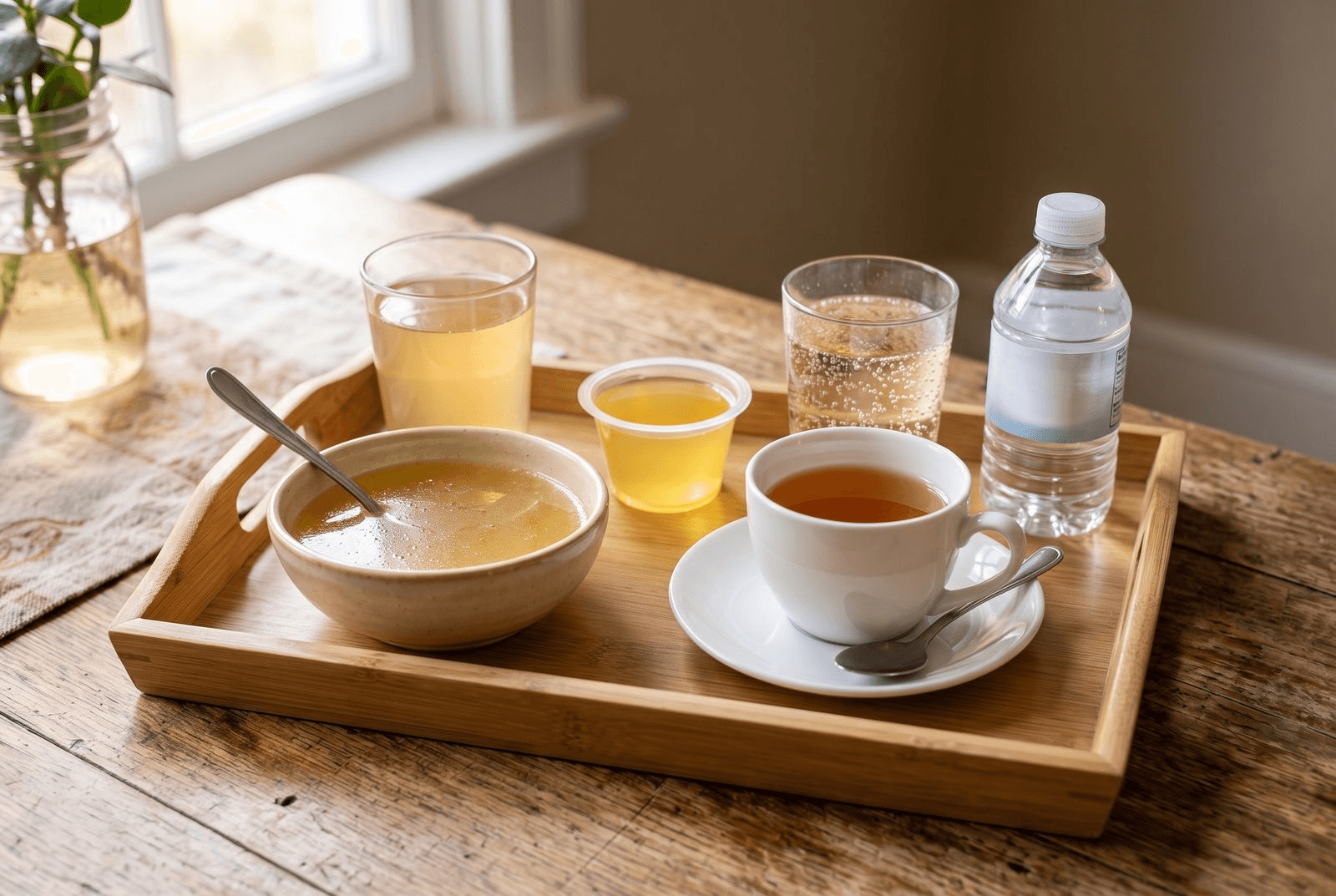
Staying hydrated and steady on so few calories
The goal on a clear liquid day is not to survive on the least amount of fluid but to take in a steady stream of it. Small sips through the day beat a big glass every few hours, and alternating plain water with a broth or an electrolyte drink replaces the sodium and potassium that water alone does not. Warm broth is worth leaning on: it feels like a meal, delivers salt, and gives the day some structure around what would otherwise be three skipped meals. A little sugar or honey in tea is not cheating; it is a few welcome calories that help hold off the shakes.
Watch for the tipping points. A racing heart, a headache that will not quit, very dark urine, muscle cramps, or new confusion all say the balance has slipped and it is time to call the doctor's office rather than push through. For families who cannot be there for the whole prep day, this is a common reason a few hours of respite care get booked, so someone reliable is refilling the glass and watching for trouble. Our caregivers do exactly this kind of quiet monitoring for families across New Jersey, from Monmouth County to Florida's Gulf Coast through our Sarasota office.
What to do about daily medications
This is the one item on this page you should never guess at. Some medications need to keep going, some need to pause, and some change timing on the day of a procedure, and the answer depends on the drug and the person. Blood thinners such as warfarin, apixaban, or clopidogrel usually require a conversation with the prescribing doctor a week or two ahead, never a solo decision to stop. Diabetes medications and insulin almost always need adjusting on a no-food day. Blood pressure pills and diuretics may be held or taken with a small sip of water. The rule is simple even if the details are not: bring the full medication list to the doctor who ordered the diet and let them tell you what to do with each one. Write the plan down, because a hungry, under-caffeinated morning is not when anyone remembers instructions well.
How long clear liquids are safe
Not long. Because the diet gives almost no protein and few calories, it is not built to sustain anyone for more than a short stretch. The Cleveland Clinic advises staying on it for no more than about three days, and adding a nutritional supplement if a doctor needs you on it longer. For a colonoscopy the window is short by design, often just the day before. The caution matters more with age: an older adult who stretches clear liquids into a fourth or fifth day, perhaps because a stomach bug is dragging on, can slide into real malnutrition and muscle loss quickly. If a digestive flare is the reason for the diet, and it is not resolving, that is a call to the doctor, not a cue to keep sipping broth. The same logic applies to managing a chronic gut condition like diverticulitis, where our guide to a diverticulitis diet walks through the fuller staircase from liquids back to fiber.
Getting back to solid food
The last stretch is one people rush and then regret. After a procedure or a gut-resting spell, the digestive system has been idling, and the way back is a ramp, not a switch. Most doctors advise stepping from clear liquids to a full liquid diet, then to soft, low-fiber foods like toast, eggs, or plain rice, and only then to a normal plate. Going straight from broth to a heavy meal invites cramping and nausea in anyone, and an older gut is slower to forgive it. After a colonoscopy specifically, the sedation adds its own rule: someone has to drive the person home and, ideally, stay a while, because the grogginess and the empty stomach are a poor combination for being alone. That escort home, the first real meal, the check that fluids and medications are back on track, is precisely the hand-off where having a second set of hands turns a stressful day into an ordinary one, and lets an older adult get back to normal eating without a stumble.
Frequently Asked Questions
What can you eat on a clear liquid diet?
You can have anything you can see through, plus foods that melt to a clear fluid at room temperature. That means water, fat-free broth or bouillon, strained fruit juices without pulp such as apple and white grape, clear sodas and ginger ale, plain tea and black coffee without milk, sports drinks and electrolyte waters, plain gelatin, clear ice pops without fruit or pulp, and honey, sugar, or hard candy to add a few calories. Anything cloudy or chewable is off the list: milk, creamers, orange or tomato juice, smoothies, creamy soups, ice cream, pudding, and all solid food. Before a colonoscopy your provider will usually also ask you to skip anything colored red, purple, or orange, because those dyes can be mistaken for blood.
How long can you stay on a clear liquid diet?
Only a few days. A clear liquid diet supplies fluids and a little energy but almost no protein and far too few calories to live on, so it is not nutritionally complete. Most guidance, including from the Cleveland Clinic and MedlinePlus, sets the ceiling at about three days for otherwise healthy adults, sometimes up to four. If a doctor needs you on liquids longer than that, they will usually add a nutritional supplement or move you to a full liquid diet that includes milk-based drinks. For older adults the shorter the better, because the weakness, dizziness, and dehydration that come with too few calories arrive faster and hit harder with age.
Is a clear liquid diet safe for someone with diabetes?
It can be, but only for a short time and with the doctor closely involved. Skipping meals and living on liquids can send blood sugar swinging in either direction, so a person with diabetes should ask their provider two questions before starting: which clear liquids to choose, since regular (not sugar-free) juice, gelatin, and soda may be needed to keep blood sugar from dropping, and how to adjust diabetes medications or insulin while not eating normally. Blood sugar should be checked more often than usual during the diet, and any reading that is very high or very low, or any confusion, shakiness, or sweating, is a reason to call the doctor right away.
What is the difference between a clear liquid diet and a full liquid diet?
A clear liquid diet includes only fluids you can see through, such as water, broth, apple juice, and plain gelatin. These leave little or no residue, which is why they are used before a colonoscopy or surgery. A full liquid diet is a step up: it allows anything with no solid pieces, including things you cannot see through such as milk, cream soups, smoothies, and frozen yogurt. A full liquid diet provides more calories, protein, and nutrients, so it is often the bridge a person moves onto as they transition from clear liquids back toward regular meals.
Can you drink coffee or tea on a clear liquid diet?
Yes, as long as it is plain. Black coffee and plain tea are allowed because they are see-through; sugar, honey, and lemon are fine to add. What is not allowed is milk, cream, or any non-dairy creamer, which make the drink cloudy and count as solids for this purpose. Before a colonoscopy, a plain coffee or tea can be a welcome bit of routine, though some people limit caffeine on prep day because it is mildly dehydrating and the goal is to take in plenty of fluid.
Why do you have to avoid red and purple liquids before a colonoscopy?
Red and purple dyes, and sometimes orange, can stain the lining of the colon or pool as colored fluid that a doctor could mistake for blood or inflammation during the exam. That can obscure the view or lead to a false alarm. So even though a red gelatin or a purple sports drink is technically a clear liquid, colonoscopy prep instructions ask you to skip those colors and stick to light shades like yellow, green, and blue. Always follow the exact list your gastroenterologist provides, since prep instructions vary.