Dehydration in Older Adults Rarely Starts With Thirst
The symptoms of dehydration in older adults rarely look like thirst. They look like confusion, falls, and fatigue. How to spot the signs and prevent it.
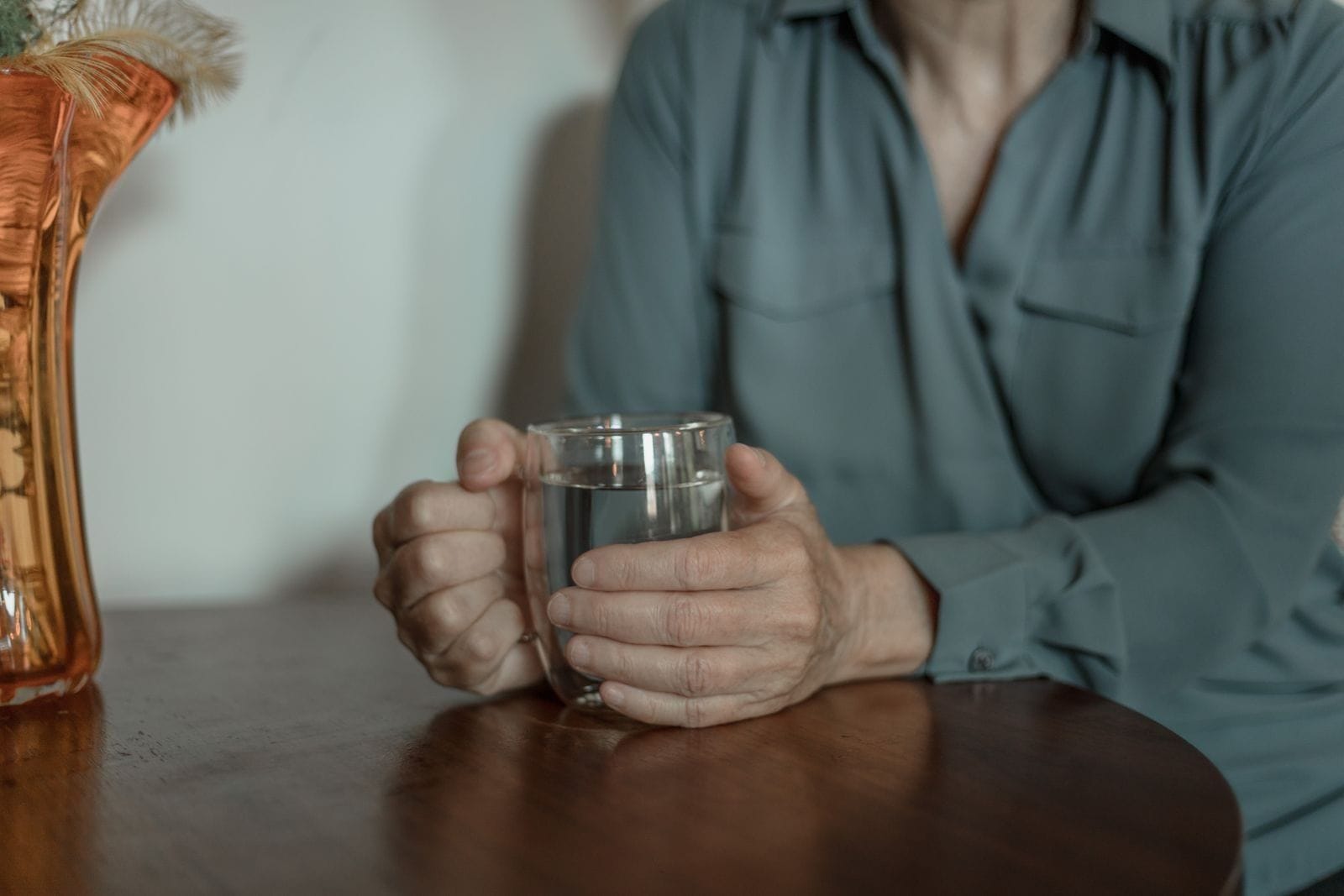
Thirst is the body's low-fuel light. It comes on, you drink, the light goes off. In older adults, that light dims. The sense of thirst fades with age, which means the one cue most of us trust to tell us to drink stops being trustworthy at exactly the age it matters most. An older person can be genuinely low on fluids and feel nothing at all.
That single fact explains why the symptoms of dehydration in older adults are so easy to miss, and why dehydration is a common and largely preventable reason older adults end up in the hospital. The good news is buried in the same sentence: preventable. This is a problem you can usually head off with a glass of water and a little routine. What follows is how dehydration hides in later life, the signs that do not look like dehydration, what you can actually check at home, and the simple habits that keep it from ever becoming a crisis. None of it replaces your own doctor's advice, especially for someone with diabetes, kidney disease, or heart failure.
Why the Body's Thirst Alarm Goes Quiet
Three changes arrive together with age, and each one tilts the odds toward dehydration. The first is thirst itself. In a now-classic study published in the New England Journal of Medicine, healthy older men went a full day without water and still felt less thirsty, and drank less afterward, than younger men, even though tests showed their blood had grown more concentrated. As a Cleveland Clinic geriatric nurse specialist puts it, by the time an older adult feels thirsty, that is already a sign of early dehydration.
The second change is the size of the tank. Total body water falls from roughly 60 percent of body weight in younger adults toward about 50 percent in later life, largely because aging trades water-rich muscle for fat, which holds almost none. A smaller reserve means the same missed glass of water hits harder and faster than it would at forty. The third change is the kidneys, which slowly lose their knack for concentrating urine and holding water back, so more slips away even when the body is running low. Add the common medicines that pull fluid out, diuretics, laxatives, some blood-pressure drugs, and you have a body primed to dry out quietly. And it does not take much: losing as little as two percent of body weight in fluid is enough to dull thinking and steadiness.
The Symptoms That Don't Look Like Dehydration
Here is the part that catches families off guard. In an older adult, dehydration rarely announces itself as a parched throat. It wears disguises, and the disguises are what send people to the doctor for the wrong reason.
The most common mask is the mind. Dehydration is a well-known trigger of delirium, a sudden, often fluctuating change in attention and thinking that looks, to a worried family, exactly like dementia taking a turn. The difference is the speed: delirium comes on over hours or a day or two, and it is frequently reversible once the cause is fixed. Other disguises are physical but indirect: a fall, new wobbliness, a wave of dizziness on standing, or a flat, bone-deep tiredness that gets written off as "a bad day." A particularly stubborn trap is the urinary tract infection reflex. When an older person suddenly turns confused, the instinct is to assume a UTI, but geriatric specialists, including physicians at Northwestern Medicine, caution that confusion on its own is not enough to diagnose one, since a real UTI almost always brings urinary symptoms too. Dehydration is one of the alternatives worth ruling in or out first. We wrote more about that mix-up in our guide to why confusion is often the first sign of a UTI in the elderly, and the same lesson applies here: in an older adult, a sudden change in how they think or move can be the body's first word about fluids, long before anyone feels thirsty.
What You Can Actually Check at Home
Most articles hand you a tidy checklist here: pinch the skin, look at the mouth, check the urine. The honest answer is that those classic tests are surprisingly unreliable in older people. A 2015 Cochrane review of dozens of simple checks in adults over 65 concluded that thirst, dry mouth, heart rate, and urine color should not be relied on to detect dehydration, because they miss too many people who are dehydrated and falsely flag people who are fine.
Take the famous skin pinch. Aging skin loses its snap and is slow to flatten back even when a person is perfectly hydrated, so a slow rebound on the back of the hand proves very little. If you check turgor at all, the skin over the collarbone is more dependable than the hand, but it should never be your only read. Urine color is the same story: medicines, B vitamins, and even beets change the shade, and aging kidneys concentrate urine less reliably, so dark urine is a gentle nudge to offer a drink rather than proof of anything, and pale urine does not prove someone is well hydrated. A genuinely useful clue, oddly, is a dry armpit, which tends to show up when dehydration is real, though a moist one does not rule it out. But the single most reliable instrument you have is attention. Watch function and behavior, the new confusion, the unsteadiness, the eating and drinking less, and do not wait for a textbook sign that may never come.

The Everyday Habits That Dry a Person Out
Dehydration in later life is usually not one dramatic event. It is a slow leak from ordinary habits. The one families miss most often is deliberate: an older person who drinks less on purpose to cut down on bathroom trips, or to avoid leaks. It feels sensible and it backfires, because more concentrated urine actually irritates the bladder, and the body still needs the water. The fix is easier bathroom access and a clearer path, not less fluid.
The rest of the leaks are quieter. Limited mobility means someone simply cannot get up to fetch a drink and waits, and waits. Swallowing trouble, which becomes more common with age, makes drinking a chore. Dementia removes the prompt entirely, which is why people living with it need fluids offered on a schedule rather than on request, the kind of steady supervision built into in-home dementia care. A fading appetite matters too, because roughly a fifth of our daily water normally comes from food, so someone who is eating less is also drinking less without realizing it; if a parent's appetite has dropped, our guide to loss of appetite in elderly parents is worth a read. Then there is the season. Heat is the single biggest accelerant, and older bodies regulate temperature less well, which is why the CDC flags adults over 65 as especially vulnerable in hot weather. A humid afternoon plus a water pill is a fast road to trouble.
How Much Water Is Actually Enough
The eight-glasses-a-day rule is the first thing to let go of. It is not evidence based; a kidney physiologist traced it back decades and found no scientific basis, and the original 1940s note it likely came from said most of that water comes from food anyway. So forget the magic number. A practical guideline for older adults suggests at least about six cups of fluid a day for women and eight for men from drinks, with more in heat, illness, or activity, while the UK's NHS keeps it simple at six to eight glasses of fluid daily. United States figures run a little higher.
The exact target matters less than the truth underneath it: thirst will not get an older adult there, so habit has to. And because a real share of our water comes from what we eat, the plate counts as much as the cup.
What Counts Besides a Glass of Water
Water is not the only thing that hydrates, which is a relief for anyone trying to coax fluids into a parent who finds plain water boring. Milk pulls double duty with electrolytes and protein. Soups and broths count, ideally low-sodium. And the long-feared tea and coffee do, in fact, count for habitual moderate drinkers; the idea that they dry you out is overstated, though water should still be the main drink. Food carries water too. As Harvard Health notes, cucumber, lettuce, and celery are about 95 percent water, with watermelon, strawberries, tomatoes, zucchini, and yogurt not far behind.
This is a gift when appetite or memory is the obstacle. A bowl of soup, a fruit smoothie, a cup of yogurt, or a couple of ice pops can do real hydrating work for someone who will not finish a glass. For a person with dementia who refuses a cup, water-based jelly sweets, which are roughly 95 percent water, are a clever bridge. Save the electrolyte and oral-rehydration drinks for the days that call for them, vomiting, diarrhea, fever, or heavy sweating, when replacing salts matters as much as replacing water. Plain water handles the ordinary days just fine.
A System That Keeps the Day on Track
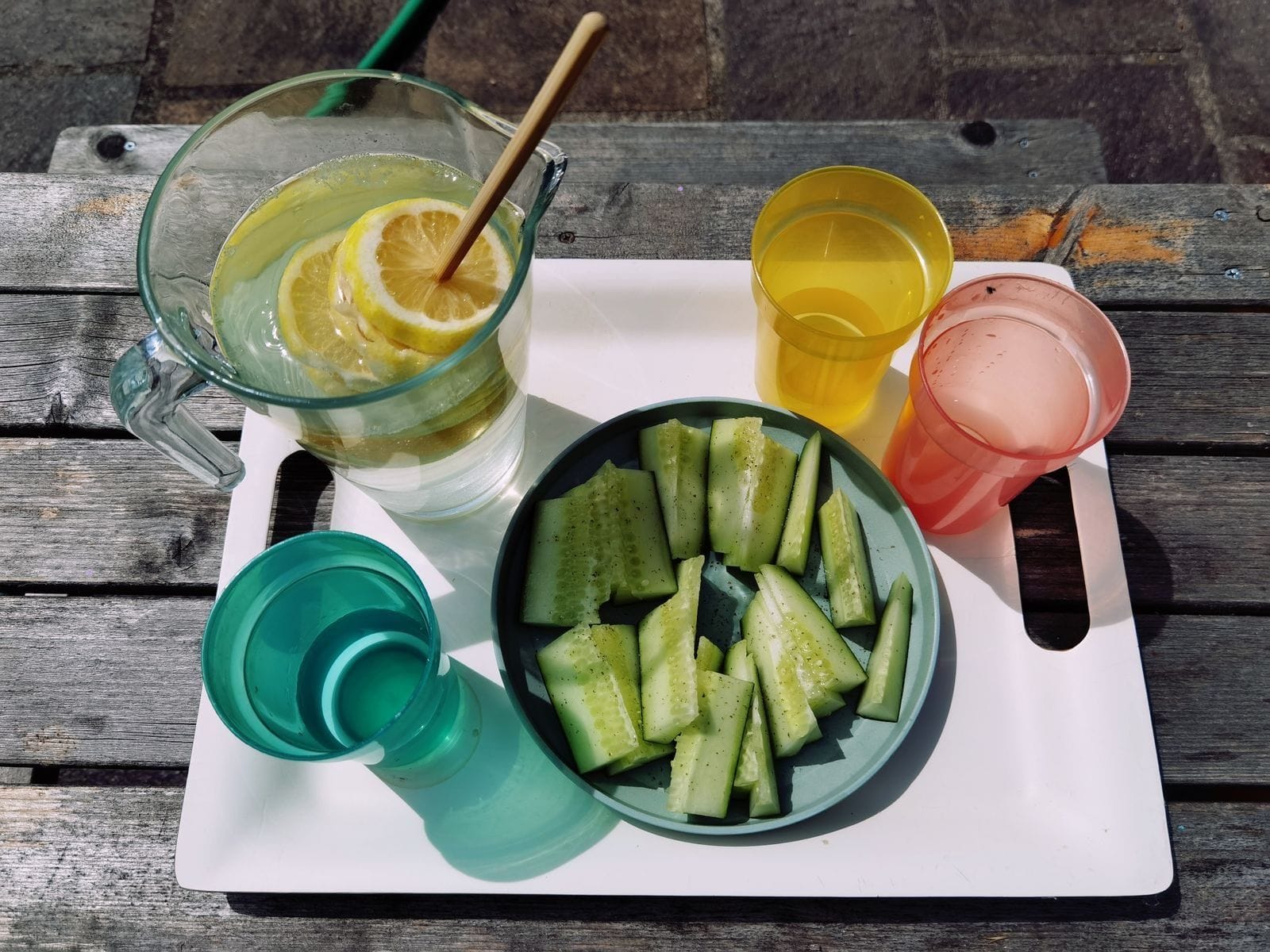
If thirst will not do the reminding, the day has to. The most reliable approach is to attach fluids to things that already happen on a schedule: a glass with every meal, a few sips with every medication, a full glass first thing in the morning. Keep a bottle, ideally one marked with the day's targets, within actual arm's reach rather than across the room. Flavor the water with lemon, cucumber, or a few berries if plain water gets ignored. Offer drinks rather than waiting to be asked, and with dementia in the picture, do not assume a full cup means it went undrunk or that an empty one means it was finished.
This is where a second person quietly changes the math. A spouse, an adult child, or an in-home companion caregiver who refills the glass, offers a drink on a rhythm, and notices the first flicker of confusion is doing some of the most valuable, least dramatic work in all of senior care. For families who live far away or are stretched thin, that steady presence is often the difference between a manageable habit and a 2 a.m. emergency room visit, and in a humid New Jersey summer it matters even more. It is one reason families across Somerset and Hunterdon Counties fold a simple hydration routine into a parent's week of care, because the caregiver already there for the day is also the person who makes the glass of water actually happen.
When to Worry, and When to Call 911
Most dehydration never gets near an emergency, but it is worth knowing the line so the rest of the time you can relax. Call the doctor, short of an emergency, if an older adult has had diarrhea for more than a day, cannot keep fluids down, is passing very dark urine or going much less than usual, feels newly dizzy on standing, or is running a fever. Call 911 or head to the emergency room for the serious signs: marked confusion or slurred speech, fainting, little or no urination, a rapid weak pulse, cold or pale or blotchy skin, or being hard to wake. Those can point to shock, the most dangerous complication of dehydration.
Geriatricians offer a clean rule for seniors, echoed by the National Institute on Aging and the American Geriatrics Society: if the person does not feel better after drinking fluids, call 911; if they do feel better but take a water pill or have heart failure, still call their provider for a follow-up. While you wait for help on a hot day, move them somewhere cool and offer small sips only if they can swallow safely, and never force fluids on someone who is confused or drowsy. Mild dehydration usually turns around within a day on steady sips; the severe cases are the ones that need intravenous fluids in a hospital, which is exactly what the habits above are meant to prevent.
The Cheapest Protection There Is
Hydration is the rare fix that is free, needs no prescription, and simply works. The only reason it gets overlooked is the same reason it is dangerous: it does not announce itself, least of all through thirst. So do not wait to be told you are thirsty, and do not put your faith in one tidy sign. Build the habit, keep the glass in reach, and pay attention to how an older parent thinks and moves on a warm afternoon. With summer settling in, that ordinary glass of water is one of the simplest things keeping a person steady, clear-headed, and at home in their own kitchen.
Images via Pexels: hero by RDNE Stock project, in-post by Mikhail Nilov and Vero Lova.
Frequently Asked Questions
What are the signs of dehydration in older adults?
In older adults the most telling signs are often behavioral rather than physical: sudden confusion, new unsteadiness or a fall, dizziness on standing, and unusual tiredness or weakness. Drier mouth, darker urine, and sunken eyes can show up too, but they are unreliable on their own in older people. Thirst is the least dependable sign of all, because the sense of thirst fades with age. The most useful clue is a change in how someone thinks, moves, or feels, even when they say they are fine.
Why are older adults more likely to get dehydrated?
Three changes stack up with age. The sense of thirst dulls, so an older person can be low on fluids without feeling thirsty. The body holds a smaller water reserve, because total body water drops from roughly 60 percent in younger adults toward about 50 percent, so any shortfall hits harder. And the kidneys lose some of their ability to conserve water, so more is lost in urine. Common medicines such as diuretics, laxatives, and some blood-pressure drugs add to the loss.
Can dehydration cause confusion in the elderly?
Yes. Dehydration is a well-recognized trigger of delirium, a sudden, often fluctuating change in attention and thinking that can look like dementia getting worse. Unlike dementia, it comes on over hours to days and is frequently reversible once the cause is treated. Sudden confusion is often blamed on a urinary tract infection, but geriatric specialists caution that confusion alone is not enough to diagnose a UTI, and dehydration is one of several causes worth checking first.
How much water should an older adult drink a day?
There is no single magic number, and the familiar eight-glasses-of-water rule is not evidence based. A widely used guideline for older adults suggests at least about six cups of fluid a day for women and eight for men from drinks, with more in hot weather, illness, or activity. The UK's NHS frames it simply as six to eight glasses of fluid daily. Because thirst is an unreliable guide in later life, a steady daily habit matters more than hitting an exact figure.
Is the skin-pinch test a reliable way to check for dehydration in older adults?
No. With age, skin loses elasticity and is slow to spring back even when a person is well hydrated, so the skin-pinch (skin turgor) test often misleads. A 2015 Cochrane review found that skin turgor, dry mouth, thirst, and urine color should not be relied on to detect dehydration in people over 65. If turgor is checked at all, the skin over the collarbone is more dependable than the back of the hand, but it should never be the only thing you go by.
What is the best drink for dehydration in older adults?
For everyday hydration, plain water is usually all that is needed, and milk, soup, and moderate tea or coffee all count toward fluids too. Oral rehydration solutions or electrolyte drinks are more useful when there are extra losses from vomiting, diarrhea, fever, or heavy sweating, because they replace salts as well as water. Many sports drinks are high in sugar, and anyone with heart failure or kidney disease should follow their doctor's individual advice rather than general targets.
When is dehydration in an older adult an emergency?
Call 911 or go to the emergency room for marked confusion or slurred speech, fainting, little or no urination, a rapid weak pulse, cold or blotchy skin, or being hard to wake, which can signal shock. Call the doctor, short of an emergency, for diarrhea lasting more than a day, an inability to keep fluids down, very dark urine, new dizziness, or fever. A useful rule for seniors: if they do not feel better after drinking fluids, call 911; if they do but take a water pill or have heart failure, still call their provider.