How to Buy Hearing Aids Without a Prescription in 2026
OTC hearing aids in 2026 — how they work, who they fit, the brands worth comparing, and when to skip them and book an audiologist instead.
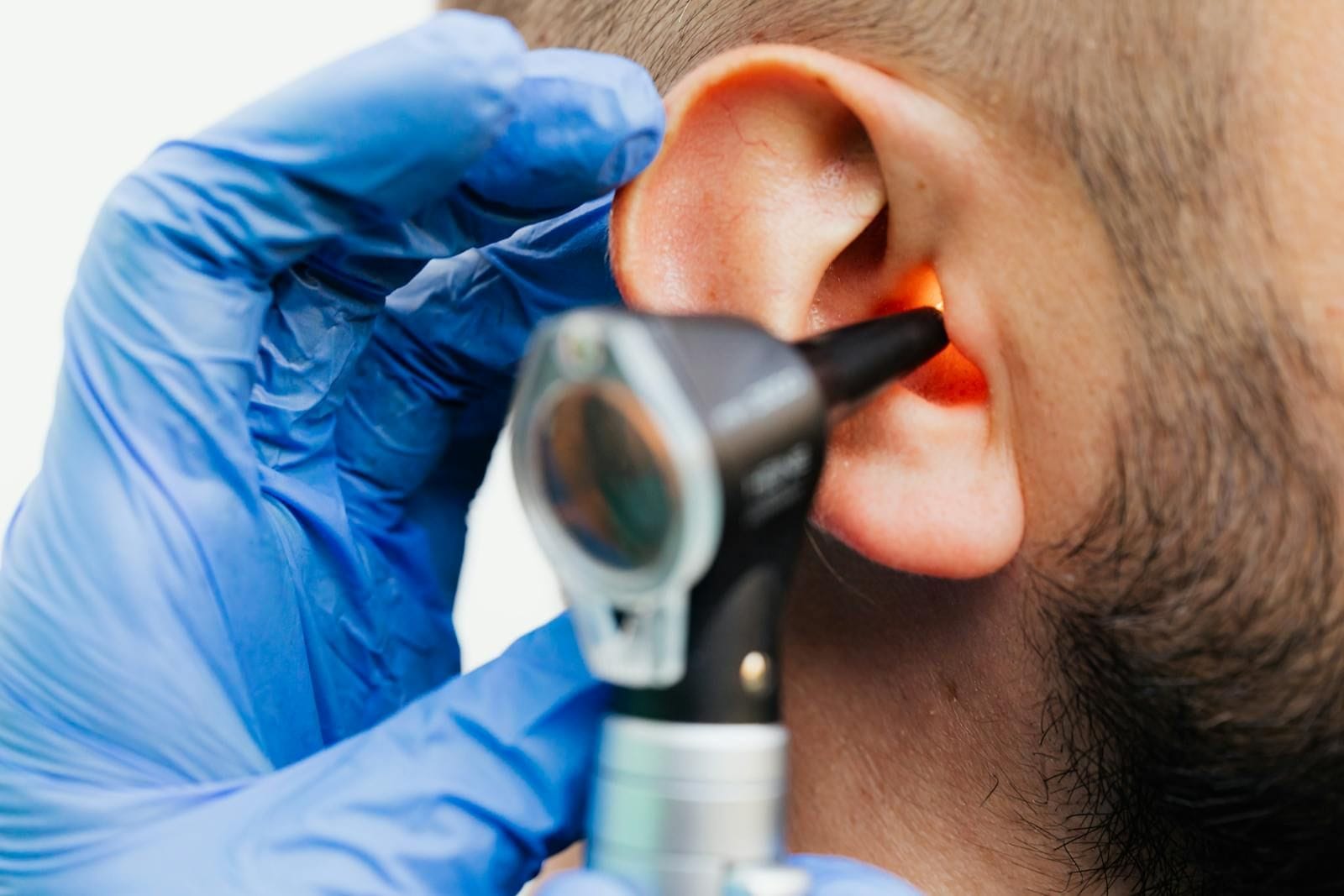
For most of the last half-century, buying a hearing aid in the United States looked roughly the same. The adult child noticed Mom turning the television up. A family doctor referred her to an audiologist. The audiologist sat her in a soundproof booth, ran her through an audiogram, and three weeks later sent her home with two devices and a receipt for somewhere between four and six thousand dollars. About two-thirds of older adults who needed hearing aids never got that far. The cost was prohibitive, the process felt medical when the problem felt cosmetic, and the social stigma of a visible device kept the rest from picking up the prescription they had already paid for.
In October 2022 the Food and Drug Administration broke the arrangement open. A new federal rule created an over-the-counter category for hearing aids aimed at adults with self-perceived mild to moderate hearing loss, allowing direct sale at pharmacies and electronics retailers and online without a prescription, audiogram, or audiologist visit. Three and a half years on, the category has matured into a serious consumer-electronics market — eight credible brands, two big-box retailers stocking them, FDA-authorized AirPods software running on a hundred million pairs of earbuds, and starting prices that begin at $249 a pair. The fifty-six million Americans who have at some point declined to get fitted because the price tag started with a comma now have something else to consider. What follows is a step-by-step guide to buying well in the new market, with the small set of brands worth comparing, the questions the marketing copy will not answer, and the moments when the right answer is still to drive to an audiologist instead.
What Changed in 2022, and What It Bought Families
The FDA's over-the-counter hearing aid rule, finalized in August 2022 and effective that October, did three specific things at once. It carved out a separate device class — distinct from the prescription category that had existed since 1977 — for adults 18 and over with self-perceived mild to moderate hearing loss. It allowed those devices to be sold without a prescription, hearing exam, or fitting by a licensed professional. And it set technical limits on maximum output (a 110-decibel ceiling for adjustable devices) and on the depth of insertion into the ear canal, so that OTC products could not credibly serve people with more serious losses.
The economic effect was immediate. According to the most recent epidemiologic review in Annual Review of Public Health, over sixty-five percent of adults aged 71 and older in the United States have some hearing loss — about 21.5 million people — and historically fewer than one in five with treatable loss had ever obtained a hearing aid. Cost was the single most cited barrier. Within twelve months of the OTC rule taking effect, multiple retailers were selling self-fitting devices for under a thousand dollars, and a handful were under $300. By September 2024 the FDA had gone a step further and authorized the first OTC hearing aid software — Apple's Hearing Aid Feature for AirPods Pro 2 — turning $249 earbuds into a regulated hearing-aid platform with a five-minute setup.
None of this changed the underlying clinical reality. Hearing loss is the largest modifiable risk factor for dementia identified by the Lancet Commission on Dementia Prevention, contributing an estimated 7 percent of global cases. Mild loss roughly doubles the risk of incident dementia in older adults; moderate loss triples it; severe loss raises it as much as fivefold. A 2023 Johns Hopkins study of 2,413 community-dwelling older adults found hearing aid use associated with a 32 percent lower prevalence of dementia in the subgroup with moderate-or-greater loss. Falls, depression, and social isolation all track similarly with untreated loss. The point of the OTC category was not to lower a luxury price; it was to remove a friction in a treatment with cognitive consequences.
Step One — Tell Mild from Moderate from Severe
OTC hearing aids are designed and regulated for mild-to-moderate hearing loss only. They are not adequate for anything more advanced, and trying to use them past that point produces frustration and a credit-card return rather than a hearing solution. The clinical definitions use decibel thresholds across the frequencies of speech: mild loss is 26 to 40 dB, moderate is 41 to 55 dB, moderately severe is 56 to 70 dB, severe is 71 to 90 dB, and profound is anything beyond 90 dB.
In plain terms, someone with mild loss has trouble hearing soft voices, follows poorly in restaurants, and asks for repetition once or twice a meal. Moderate loss means struggling to follow normal conversation in quiet rooms, missing the doorbell, and turning the television up to a volume the rest of the house finds loud. Moderately severe and beyond means difficulty hearing even raised voices close-up, missing speech entirely without lip reading, and an inability to use the phone reliably. The first two are OTC territory. The rest belong with a licensed professional.
The cheapest reliable test is online. The National Hearing Test, developed with NIH support, takes about ten minutes and is free once a year for AARP members. The iPhone Hearing Test built into iOS 18 takes about five minutes and stores results in the Apple Health app. Both screen for severity well enough to know whether to keep shopping OTC or to book an audiologist. They do not replace a clinical audiogram, but for the first decision they are sufficient.
Step Two — OTC, Prescription, or Costco
Three paths run in parallel. OTC is the cheapest and fastest: self-purchased, self-fitted, no professional involvement, between $249 and $2,699 a pair. Prescription is the most personalized and the most expensive: an audiologist runs the audiogram, fits the device, programs the response curve to the person's specific loss pattern, and follows up. Total cost typically runs $3,000 to $6,000 a pair when the fitting is bundled in, which is the standard model. And then there is Costco, which is neither one nor the other.
Costco Hearing Aid Centers sell their store-brand Kirkland Signature aids for roughly $1,600 a pair, fitted and programmed by a licensed hearing-aid dispenser on staff. The aids themselves are made by a major manufacturer (most recently Sonova, which also makes Phonak) and are functionally prescription-class devices at a fraction of the prescription price. The trade-offs are real: appointment availability varies by warehouse, the membership is required, and the brand selection is limited to what Costco stocks. But for a person with moderate-to-moderately-severe loss who wants professional fitting without a four-thousand-dollar bill, Costco is often the right answer and an OTC purchase would be the wrong one.
The decision rule that works for most families: if the National Hearing Test or iPhone test shows mild to moderate loss and the person is comfortable with a smartphone, start with OTC. If the test shows worse than moderate, or the person has noticeable asymmetry between ears, or there is any sign of an underlying condition (tinnitus that is new, dizziness, sudden change, ear pain or drainage, hearing loss on one side only), see an audiologist first. If the loss is in the moderate-to-moderately-severe band and OTC sits at the edge of its useful range, Costco is the under-discussed middle path.

The Five Form Factors, in Plain English
Hearing aids come in five standard shapes, and the marketing copy uses initialisms in place of plain words. Knowing the five helps a buyer read product descriptions without having to translate.
Behind-the-Ear (BTE). The body of the device sits behind the outer ear; a thin tube or wire carries sound into the canal through a small dome or earmold. BTE aids have the longest battery life, the largest controls, the most amplification headroom, and the highest visibility. They are the easiest to handle for someone with reduced finger dexterity. Most of the well-reviewed OTC devices — Jabra Enhance Select, Lexie B2 Plus, Sennheiser All-Day Clear, Elehear Beyond Pro — are BTE.
Receiver-in-Canal (RIC). A close cousin of BTE in which the speaker itself sits inside the ear canal rather than behind the ear, connected to the over-the-ear body by a thin wire. RIC aids are the dominant style in the prescription market because they balance amplification with discreetness. Several premium OTC aids are RIC.
In-the-Ear (ITE). The whole device sits in the bowl of the outer ear, custom-shaped to the wearer in prescription versions or one-size in OTC. Less visible than BTE; more visible than the in-canal styles.
In-the-Canal (ITC). Smaller than ITE, fitting partway into the ear canal. Visible only on close inspection.
Completely-in-Canal (CIC). The smallest format, sitting fully inside the canal, essentially invisible from arm's length. Battery life is shortest; controls are minimal because there is no room for them. Eargo's product line and Sony's CRE-C series are CIC. A CIC is a hard fit for a person with arthritis in the hands because the device is small enough to be difficult to grip during daily insertion and removal.
Self-Fitting Versus Preset Programs
OTC hearing aids tune themselves to the user's hearing in one of two ways. Self-fitting devices use an app-based hearing test, or an audiogram uploaded by the user, to build a personalized frequency response — quieter where the user hears well, louder where the user does not. The result is closer to what an audiologist would program. Self-fitting OTC products include Jabra Enhance, Lexie B2 Plus, Sennheiser All-Day Clear, Elehear Beyond Pro, and the Apple AirPods Pro 2 and 3.
Preset-based devices ship with one to four factory-tuned programs designed to cover the most common hearing-loss patterns. The user picks the one that sounds best and switches between them using a button on the device. Preset OTC products include MDHearing NEO XS, Sony CRE-C20 (no app required), and a number of the under-$300 entries. Presets are easier to set up — useful for a parent who is uncomfortable with smartphones — but they amplify less precisely. Independent lab work by HearAdvisor and others suggests self-fitting OTC devices, properly tuned, perform meaningfully closer to prescription aids than preset devices do.
The practical implication is straightforward. A buyer who has a smartphone, or has a family member willing to set up the smartphone for them, should buy a self-fitting device. A buyer who genuinely will not use a phone should buy a preset device and accept the trade-off, or take the Costco path for professional fitting.
The Eight OTC Brands Worth Comparing in 2026
After three years of category maturation, the OTC field has consolidated into a small set of serious contenders. The list below is built from independent reviews by HearingTracker, Wirecutter, Consumer Reports, and the National Council on Aging, cross-referenced against the HearAdvisor lab's standardized audiologic testing.
Jabra Enhance Select 700 — $1,995. Behind-the-ear, self-fitting, with the longest return window in the market (100 days) and three years of telecare from a licensed U.S. audiologist included in the price. Owned by GN, the parent company of prescription brands ReSound and Beltone, so the underlying hardware is closer to a prescription aid than most OTC competitors. The most cited overall pick for buyers who want professional support without the audiologist appointment.
Eargo 8 — $2,699. Completely-in-canal, nearly invisible at arm's length, with four situational sound profiles that can adjust automatically. Eargo is the brand most often picked by people for whom visibility is the dominant concern. The price is at the top of the OTC range; the 45-day return window is shorter than Jabra's.
Sony CRE-C20 — $999. Completely-in-canal, with the highest speech-in-noise scores in independent lab testing among devices in its price range. App optional. Sony's audio engineering background shows in the signal-processing quality. Less discreet than Eargo, more discreet than any BTE.
Sennheiser All-Day Clear — $999. Behind-the-ear, self-fitting, with iPhone and Android Bluetooth streaming. Sennheiser's audio reputation is reflected in the music-listening quality, which is a meaningful differentiator for buyers who already listen to a lot of music or podcasts. Battery life is among the longest in the category.
Lexie B2 Plus Powered by Bose — $999. Behind-the-ear, self-fitting, with the Bose-engineered acoustic design that originally launched as Bose Hearphones. Strong choice for a buyer who wants brand-name recognition at a mid-range price.
Elehear Beyond Pro — $649. Behind-the-ear, self-fitting, with AI-powered noise reduction and direct audiogram upload support. The category's best value among devices the lab-test world takes seriously. A 2025 review pegged it as the strongest sub-$700 device in head-to-head testing.
MDHearing NEO XS — $297. Completely-in-canal, preset, no app required. The strongest budget-tier device for buyers who will not use a smartphone. Setup is twist-and-go. The amplification is less precise than self-fitting devices in the same price range and the maximum output is at the low end.
Apple AirPods Pro 2 or 3 — $249 (Pro 2) or $249–$269 (Pro 3). Earbud-style with FDA-authorized Hearing Aid Feature in iOS 18 and later. Five-minute setup from a hearing test on the iPhone. The lowest-friction entry in the category for anyone already in the Apple ecosystem. Battery life in Hearing Aid Mode is 6 to 10 hours, so all-day wear requires recharging mid-day, and the earbuds look like earbuds — which is either a virtue (no stigma) or a vice (no signal to others that conversation needs to be louder), depending on the wearer.
The AirPods Wrinkle
In September 2024 the FDA authorized the first OTC hearing aid software, the Apple Hearing Aid Feature for AirPods Pro 2, after the company submitted clinical data showing the earbuds could deliver clinical-grade amplification when tuned to a user's audiogram. The feature carried into the AirPods Pro 3 released later that year and remains, as of 2026, the only software-only OTC hearing aid on the market. The FDA's announcement framed it as the largest step yet in expanding access — about a hundred million AirPods users worldwide were suddenly one software update away from owning a regulated hearing aid.
For a family helping an older parent try amplification for the first time, AirPods Pro have three meaningful advantages. The price is roughly an order of magnitude lower than the next-cheapest credible OTC device. The setup is five minutes from a self-administered hearing test taken in a quiet room. And the social signaling is identical to any of the parent's grandchildren's earbuds, which removes the visibility friction that keeps many adults from wearing a dedicated hearing aid even after they buy one.
The disadvantages are equally real. Battery life is short — six to ten hours in Hearing Aid Mode against fourteen to twenty-eight hours for dedicated devices. The fit can be uncomfortable for a parent with smaller ear canals. The earbuds occlude the canal, which is fine for amplification but problematic for the kind of intermittent listening many older adults actually want. And the entire system requires an iPhone or iPad — Android equivalents do not exist as of 2026.
The practical recommendation: AirPods Pro 2 or 3 are an excellent first try and a poor long-term solution for moderate loss. A parent who tries them and likes them but finds the battery or fit limiting can graduate to a dedicated device having learned something about which amplification settings they actually prefer. A parent who tries them and dislikes the feel will at least know whether amplification helps before spending $1,000 to find out.
What the Price Buys, and What It Doesn't
The $250-to-$2,700 spread in OTC pricing maps onto four meaningful variables, not just brand polish. Hardware quality rises with price: better microphones, more processing channels, longer battery life, better Bluetooth implementation. App and customization rises with price: more bands of frequency adjustment, richer environmental presets, better integration with audiograms. Return window and customer support rises with price: Jabra's hundred-day return and three years of audiologist telecare are functionally a service contract bundled into the device price. And warranty length rises with price: one year is standard at the low end; three years comes only at the top of the category.
Things the higher price does not buy: the ability to handle severe or profound hearing loss (regulatory ceiling), the ability to handle highly asymmetric loss (OTC presumes both ears are similarly affected), or the kind of in-person follow-up tuning that prescription fitting includes. A buyer who needs any of those three should not buy at the top of the OTC price band; they should buy from an audiologist instead, because the money is better spent on a less expensive prescription device with the fitting included than on a more expensive OTC device that cannot be fitted at all.
Setup Week One — The Adjustment Period
The single most common reason new hearing aid owners abandon their devices is the first week. The brain that has not heard high-frequency consonants clearly in five years suddenly hears them all at once — the rustle of paper, the hum of the refrigerator, the buzz of fluorescent lights — and the experience is overwhelming rather than restorative. The fix is not the device; it is the rollout.
The standard audiologist-recommended adjustment protocol calls for wearing the aids two to four hours the first day, in a quiet room, with one person speaking at a normal volume. Day two adds a couple of hours and one new environment — the kitchen, the porch. Day three adds the television at a normal volume. Day four adds a phone call. By the end of the first week the aids are worn most of the waking day; by the end of the second week the brain has remapped its expectations and the device stops feeling like a foreign object. Skipping the gradient — putting the aids in and walking immediately into a crowded restaurant — is the most reliable way to end up with a returned product and a renewed conviction that hearing aids do not work.
The self-fitting calibration usually needs a second pass. Most apps invite the user to adjust amplification by frequency band a few days into wear, and that second tuning matters: the initial test was taken in an unfamiliar setting under cognitive load, and the user's preferences after a week of real-world use are more accurate. Buyers who set up the device on day one and never open the app again typically have a worse experience than buyers who recalibrate at the one-week mark.
Many families benefit from a third party in the room for the first setup. The companion caregivers our families work with through Always Responsive Home Care in Somerset and Hunterdon counties and our Ocean County office often help with the initial hearing test, the app pairing, and the week-one ramp simply by being present for a scheduled hour each morning. The device gets worn because someone helped put it in on day one, helped reach for the app on day three, and helped adjust the volume during a phone call with the granddaughter on day six. A caregiver does not need to be technical for this to work; they need to be present.
When to Skip OTC and See an Audiologist
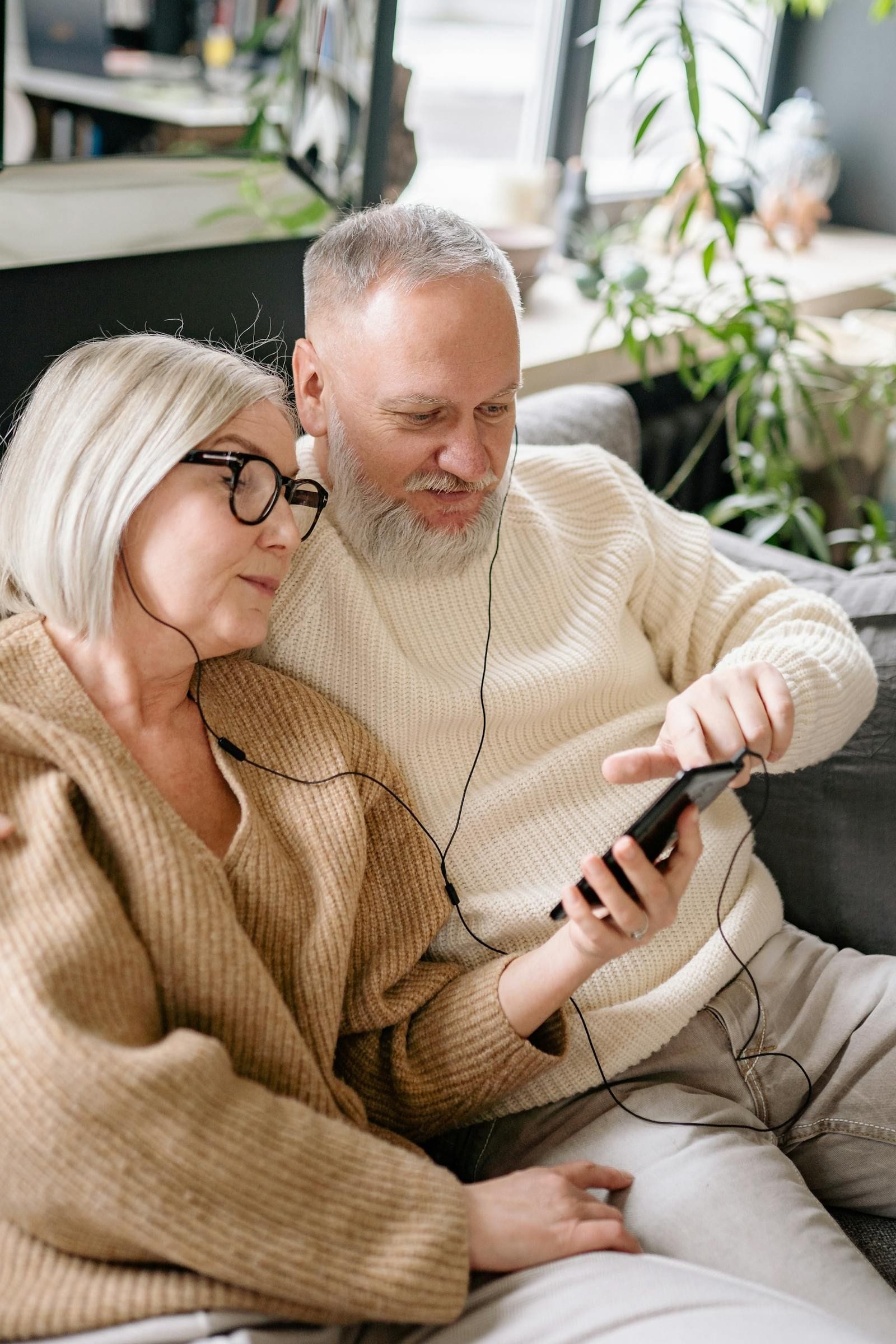
Three categories of buyer should not start with OTC at all. The first is anyone with hearing loss worse than moderate — the OTC output ceiling will leave them frustrated, and the better move is a prescription fitting that can prescribe sufficient gain. The second is anyone with notable asymmetry between ears, since OTC devices are calibrated assuming roughly similar loss on both sides. The third is anyone with a sign of an underlying medical issue that hearing loss can mask: sudden change in either ear, ear pain, drainage, vertigo, tinnitus that began recently or worsened recently, or hearing loss on a single side. The FDA's OTC consumer guide lists these as red flags explicitly. Each one points at a condition — sudden sensorineural loss, cholesteatoma, vestibular schwannoma — that responds to treatment if caught early and quietly progresses if missed.
Two practical signals tip a buying decision out of OTC mid-shopping. If the first self-administered hearing test produces results worse than mild to moderate, stop and book an audiologist; the OTC device will not have the headroom. And if the first OTC device tried at full setup still produces an experience the buyer describes as "muffled" or "I can hear it amplifying but I still cannot understand the words" — particularly in quiet — the loss profile is probably more complex than an OTC device can serve, and the correct next step is a clinical audiogram rather than a different OTC purchase. The National Institute on Deafness and Other Communication Disorders estimates that adults wait an average of seven to ten years between first noticing hearing loss and treating it. A two-week trial of an OTC device is not the bottleneck; the bottleneck is the time after the trial fails when the buyer concludes hearing aids do not work and waits another four years to revisit. An audiologist visit is the correct fallback, not a different price tier of OTC.
The Buying Checklist
An end-to-end OTC purchase for an older parent or for oneself can be reduced to a small sequence of decisions, none of which require an audiologist appointment. The list below covers the questions worth answering before clicking buy, the things worth budgeting for, and the moment to call professional help. Families who would rather have a second set of hands for the test, the unboxing, and the first week often work with the kind of in-home companion caregivers who help with the practical pieces of new health technology — the routines around the device matter as much as the device itself. And families navigating hearing loss alongside cognitive changes should pair the hearing decision with a separate conversation about dementia-aware care planning, because the two intersect more than the brochures suggest.
- Take a free test before shopping. The National Hearing Test (free for AARP members), the iPhone Hearing Test built into iOS 18, or a Costco screening (free, no membership required for the test) all answer the threshold question of whether the loss is in OTC territory.
- Watch for the red flags that mean see a doctor first. Sudden change, asymmetry, ear pain, drainage, dizziness, or new tinnitus — any of those means an ENT or audiologist visit before an OTC purchase.
- Pick form factor by lifestyle, not vanity. A buyer with arthritic hands should not buy a CIC, no matter how invisible it is. A buyer who streams music daily should pay attention to Bluetooth quality.
- Default to self-fitting if a smartphone is available. Preset devices are a fine fallback when a smartphone is not in play, but they leave amplification quality on the table.
- Buy where the return window is generous. Jabra Enhance offers 100 days. Lexie, Sennheiser, and Elehear offer 45 to 60. Amazon and Best Buy typically honor 30 to 45 days. Do not buy from a retailer whose return window is shorter than three weeks; the adjustment period alone will eat that.
- Plan the first-week ramp before the box arrives. Schedule three quiet hours in a familiar room for day one. Add environments slowly. Recalibrate the app at the seven-day mark.
- Buy a $15 dehumidifier puck. Moisture is the single biggest preventable failure mode for OTC hearing aids; a puck-sized desiccant in the charging case nightly extends useful life by years.
- Set a 90-day reassessment. If the device is still uncomfortable, still unclear, or still abandoned in a drawer after three months, the next step is an audiologist visit — not a different OTC brand.
The OTC category in 2026 is not a panacea. It does not handle every kind of hearing loss, it does not replace clinical follow-up, and it does not fix the social and behavioral pieces of wearing a device every day. What it has done is take a treatment with measurable dementia-prevention, fall-prevention, and depression-prevention upside and made it accessible at a price that lets a family try amplification before committing to a four-thousand-dollar bill. That alone is reason enough to walk into the category with the right expectations and the right device — and to know which moments warrant skipping it entirely.
Photo credits: hero by Karola G (Pexels 5206951); intra-post photos by thedollasyn (Pexels 36670377) and Yan Krukau (Pexels 6817733). All via Pexels.
Frequently Asked Questions
Can I buy a hearing aid without seeing an audiologist in 2026?
Yes, if your hearing loss is in the mild-to-moderate range and you are 18 or older. The FDA created the over-the-counter hearing aid category by rule in August 2022, and it took effect that October. Since then, qualifying devices have been sold directly at pharmacies, electronics retailers, and online without a prescription, hearing test, or audiologist visit. If your loss is severe, profound, or only on one side — or you have ear pain, sudden hearing loss, dizziness, or drainage — OTC is not the right path and you need an audiologist or ENT instead.
What is the price difference between OTC and prescription hearing aids?
OTC hearing aids in 2026 range from about $250 a pair at the low end (Apple AirPods Pro 2 or 3, MDHearing NEO XS at $297) to about $2,700 at the upper end (Eargo 8). Most serious OTC contenders cluster between $649 and $1,995 a pair. Prescription hearing aids dispensed by an audiologist typically run $3,000 to $6,000 a pair when bundled with the fitting and follow-up. Costco's prescription line, the Kirkland Signature aids, fall between the two at roughly $1,600 a pair including professional fitting.
Are AirPods Pro really hearing aids now?
For mild-to-moderate hearing loss, yes — the AirPods Pro 2 and AirPods Pro 3 have been FDA-authorized OTC hearing aid software since September 2024. You take an Apple-provided hearing test on your iPhone or iPad, the software builds a personalized profile, and the earbuds amplify speech tuned to your audiogram. Battery life is short relative to dedicated hearing aids (about 6 to 10 hours in Hearing Aid Mode), and the earbuds are obvious in the ear. But for $249, with a five-minute setup, they are the lowest barrier to entry the category has ever had.
Which OTC hearing aid is best for an older parent in 2026?
There is no single answer because the right device depends on the parent's hearing profile, budget, comfort with technology, and whether anyone will be available to help with adjustments. As of 2026, the most cited overall pick from independent labs is the Jabra Enhance Select 700 at $1,995, which bundles a behind-the-ear device with three years of telecare from a licensed audiologist. Eargo 8 at $2,699 wins on invisibility. Sony CRE-C20 at $999 is the best speech-recognition device at mid-price. MDHearing NEO XS at $297 and Apple AirPods Pro 2 at $249 are the strongest budget choices.
How do I know if my parent's hearing loss is mild, moderate, or severe?
The clinical definition uses decibel thresholds across speech frequencies: mild loss is 26 to 40 dB, moderate is 41 to 55 dB, moderately severe is 56 to 70 dB, severe is 71 to 90 dB, and profound is above 90 dB. The practical version: someone with mild loss has trouble hearing soft voices in noisy rooms; moderate loss means struggling to follow normal conversation in quiet; severe loss means difficulty hearing even raised voices close-up. OTC hearing aids are designed only for the mild-to-moderate band. The cheapest path to a real answer is a free online hearing test like the National Hearing Test (developed with NIH support) or the test built into iPhones running iOS 18.
Will my parent need a smartphone to use OTC hearing aids?
Most of the better OTC options expect one. Self-fitting devices like Jabra Enhance, Lexie, Sennheiser, Elehear, and AirPods all use a smartphone app to take a hearing test, adjust amplification, and switch listening environments. Preset-based devices like MDHearing NEO XS and some Sony models work without a phone using onboard buttons but offer less customization. For a parent who refuses or cannot manage a smartphone, the most workable answer is usually a preset OTC device set up once by a family member, or a Costco Kirkland fitting that includes professional adjustments.
Does Medicare cover OTC hearing aids?
Original Medicare (Parts A and B) does not cover any hearing aids — OTC or prescription — and has not since the program was created in 1965. Some Medicare Advantage plans include a hearing-aid benefit, usually a fixed allowance between $500 and $2,500 per ear every two or three years, and that benefit can typically be applied to either OTC or prescription devices. Check the plan's evidence of coverage before assuming the allowance applies to a specific brand. Veterans receive hearing aids through the VA at no cost; some state Medicaid programs cover hearing aids for adults, most do not.
How long do OTC hearing aids last?
Most OTC hearing aids carry a one-year manufacturer warranty; premium models like the Jabra Enhance Select line carry three years. The realistic useful life of an OTC hearing aid is between three and five years, similar to prescription devices, before either the rechargeable battery degrades meaningfully or the device falls behind on software updates. The single biggest preventable failure mode is moisture — sweat, humidity, or accidentally being left near a sink — so a basic dehumidifier puck (about $15) sized for the model is the cheapest insurance policy a buyer can add.