The Disease You Won't Feel Until a Bone Breaks
Osteoporosis has no symptoms until a fracture. The risk factors, when to get a bone-density scan, and the daily habits that keep bones strong.
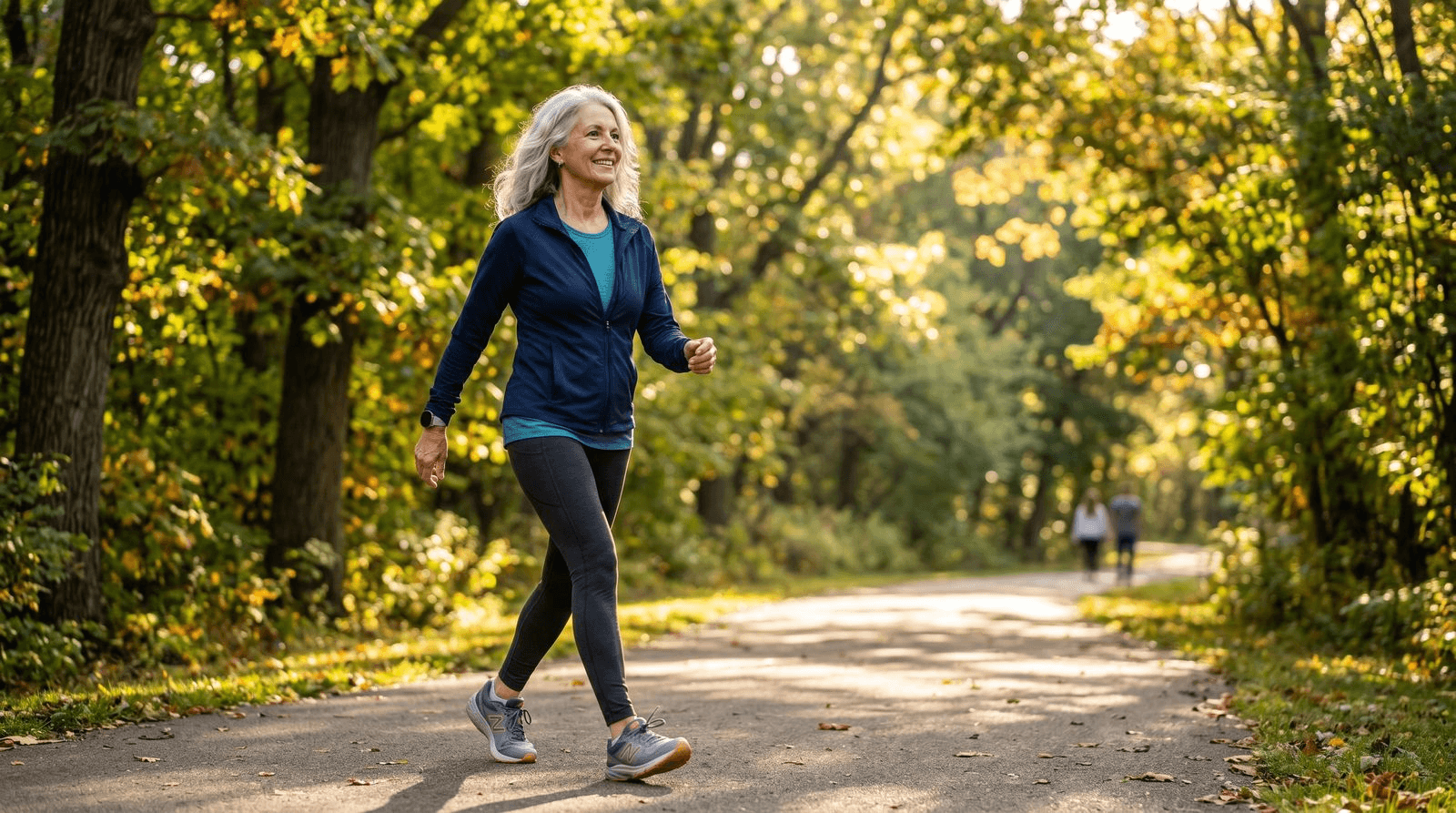
Half of all adults over 50 in the United States have bones weak enough to put them at risk of a break, and most of them have no idea. Roughly 10 million Americans already have osteoporosis and another 44 million have the low bone density that precedes it, according to the Bone Health and Osteoporosis Foundation. The disease is responsible for about two million broken bones a year, and yet nearly four in five older adults who fracture a bone are never tested or treated for the condition that caused it. It is, in the plainest sense, a problem hiding in plain sight.
What makes osteoporosis unusual among serious diseases is that it announces itself only at the worst possible moment. There is no ache, no fatigue, no number you feel climbing. The first sign, for far too many people, is the snap of a wrist on an icy step or a hip that gives way during a routine fall. This guide is about getting ahead of that moment: understanding who is at risk, what a bone-density scan can tell you, and the daily habits that keep a skeleton strong enough that an ordinary stumble stays ordinary. None of it replaces your own doctor, but all of it is worth knowing before the first break, not after.
A Disease That Works in the Dark
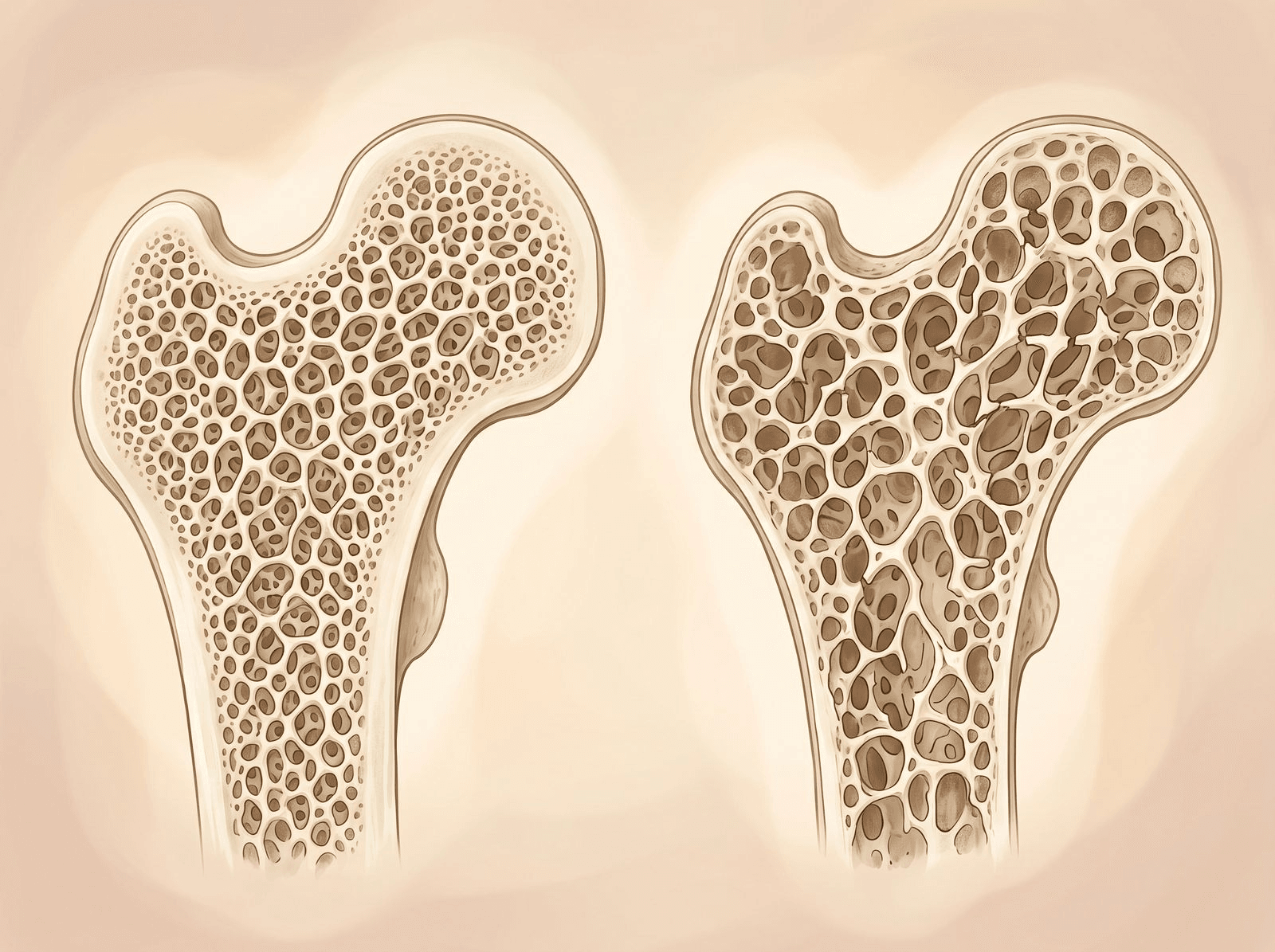
Bone does not feel like a living thing. It feels permanent, like the frame of a house. But bone is constantly being torn down and rebuilt, a quiet remodeling that runs your whole life. In youth, the building outpaces the breakdown and the skeleton grows dense and strong, reaching peak bone mass in the mid-twenties. After that the balance slowly tips the other way, and for women the loss accelerates sharply in the years around menopause as estrogen, a hormone that protects bone, falls away. Osteoporosis is simply what happens when that withdrawal goes too far: the bone becomes porous, its internal scaffolding thinned and full of gaps, until it can crack under loads it once shrugged off.
The scale of the consequences is easy to underestimate because the word sounds mild. It is not. For a woman, the lifetime risk of an osteoporosis-related fracture is greater than her combined risk of heart attack, stroke, and breast cancer. One in two women and up to one in four men over 50 will break a bone because of the disease. And the breaks themselves can cascade: roughly a quarter of people over 50 who fracture a hip die within the year that follows, and six months out, only about 15 percent can still walk across a room unaided. A broken bone in an older adult is rarely just a broken bone. It is a hinge on which independence turns.
The People Most Likely to Be Caught Off Guard
Some risk factors you cannot change, and knowing them is the point. Being a woman is the single largest one, because women start with less bone mass and lose it faster after menopause. Advancing age raises the odds for everyone. A family history matters too, especially a parent who broke a hip, and so does a small, thin frame, since there is simply less bone to spare. People of white and Asian descent face higher rates, though osteoporosis affects every group, and men are widely overlooked: they account for a quarter of hip fractures and, once fractured, are more likely than women to die in the year after.
The risk factors you can influence are where prevention lives. Smoking weakens bone directly, and heavy alcohol use does too. A diet short on calcium and vitamin D starves the remodeling process of its raw materials. A sedentary life lets bone fade for lack of the loading that tells it to stay strong. Certain medical conditions, including some intestinal and autoimmune disorders, interfere with how the body absorbs nutrients, and long-term use of steroid medication such as prednisone is one of the most common and underappreciated causes of bone loss. If several of these describe you or your parent, that is not cause for alarm so much as a reason to have the conversation about screening sooner rather than later.
The Scan That Answers the Question
Because osteoporosis is silent, the only way to measure bone strength before a break is to look. The standard tool is a DEXA scan, short for dual-energy X-ray absorptiometry, a painless, low-radiation test that takes a few minutes while you lie still on a padded table. It reports a T-score: a reading of -1.0 or better is normal, between -1.0 and -2.5 is osteopenia, the in-between zone of lower-than-ideal density, and -2.5 or lower meets the definition of osteoporosis. The U.S. Preventive Services Task Force recommends screening for all women at 65, and earlier for younger postmenopausal women with elevated risk.
In practice the thresholds are simple to remember. Women should be scanned at 65, men at 70, and either sex between 50 and that age if they carry risk factors. Anyone who breaks a bone after 50 should be tested regardless, because the fracture is itself the evidence. Many doctors also use an online calculator called FRAX, which folds your age, weight, history, and scan into a ten-year estimate of fracture risk to decide whether treatment is warranted. If you are due for a scan and have not had one, asking for it is among the highest-value things you can do for your future mobility, precisely because the disease will not ask for you.
The Raw Material: Calcium and Vitamin D
Bone is built largely from calcium, and the body cannot make its own, so it must come from what you eat or, failing that, from your own skeleton, which it will quietly raid to keep blood levels steady. The Bone Health and Osteoporosis Foundation recommends about 1,200 mg of calcium a day for women over 50 and men over 70, and around 1,000 mg for younger men. Food is the better source, and the list is broader than a glass of milk: yogurt and cheese, canned salmon and sardines eaten with their soft bones, tofu set with calcium, leafy greens like kale, collards, and broccoli, and the many cereals, juices, and plant milks now fortified with it.
Calcium, though, is useless to bone without vitamin D, which the gut needs to absorb it in the first place. Most adults over 50 need roughly 800 to 1,000 IU a day. The catch is that vitamin D is scarce in food, found mainly in fatty fish and fortified products, and the body's other source, sunlight on skin, dwindles with age because older skin simply makes less of it. That combination is why deficiency is so common in seniors, and why a modest supplement is one of the few that bone specialists routinely endorse. As with any supplement, run it past your doctor first, since the right dose depends on your blood levels and what else you take. Our guide to the daily vitamins that support healthy aging puts calcium and vitamin D in the broader context of a senior's nutrition.
Bone Is Living Tissue, and It Responds to Load
Here is the most hopeful fact about bone: it answers to demand. Stress it within reason and it lays down more material to meet the load; leave it idle and it lets density slip away. That is why exercise is not a side note in bone health but one of its central levers, and why the right kind of movement can slow loss and, in some studies, modestly rebuild it even in later life. Two types do the work. Weight-bearing exercise, where your legs carry your body against gravity, includes brisk walking, dancing, stair climbing, hiking, and tennis. Resistance training, where muscles pull on bone, includes lifting weights, using resistance bands, or moves that use your own body weight like squats and wall push-ups.
The United Kingdom's National Health Service recommends muscle-strengthening activity on at least two days a week alongside regular weight-bearing movement, a pairing echoed by exercise guidelines worldwide. Worth knowing: swimming and cycling, wonderful as they are for the heart and joints, do not load the skeleton the way walking does, so they supplement bone work rather than replace it. And a caution that matters once density is already low: if you have been diagnosed with osteoporosis, check with a doctor or physical therapist before starting, because certain deep twists, toe-touches, and high-impact jumps can do more harm than good. For most people the place to begin is gentler and closer to home, and our guide to strength training for seniors lays out a safe, equipment-light routine to build from.
Catching the Fall Before It Catches You
Prevention has two halves. The first is making bone as strong as it can be. The second, just as important once bone is already thin, is making sure it never has to absorb the impact of a fall. Most fragility fractures happen because someone goes down, so steadier balance and a safer home do as much to prevent a broken hip as any supplement. Practicing balance retrains the body to catch a stumble, and clearing the floor of throw rugs and cords, adding grab bars in the bathroom, and improving the lighting on stairs removes the hazards that turn a wobble into a break. Our routine of balance exercises for seniors is a direct, practical complement to everything above.
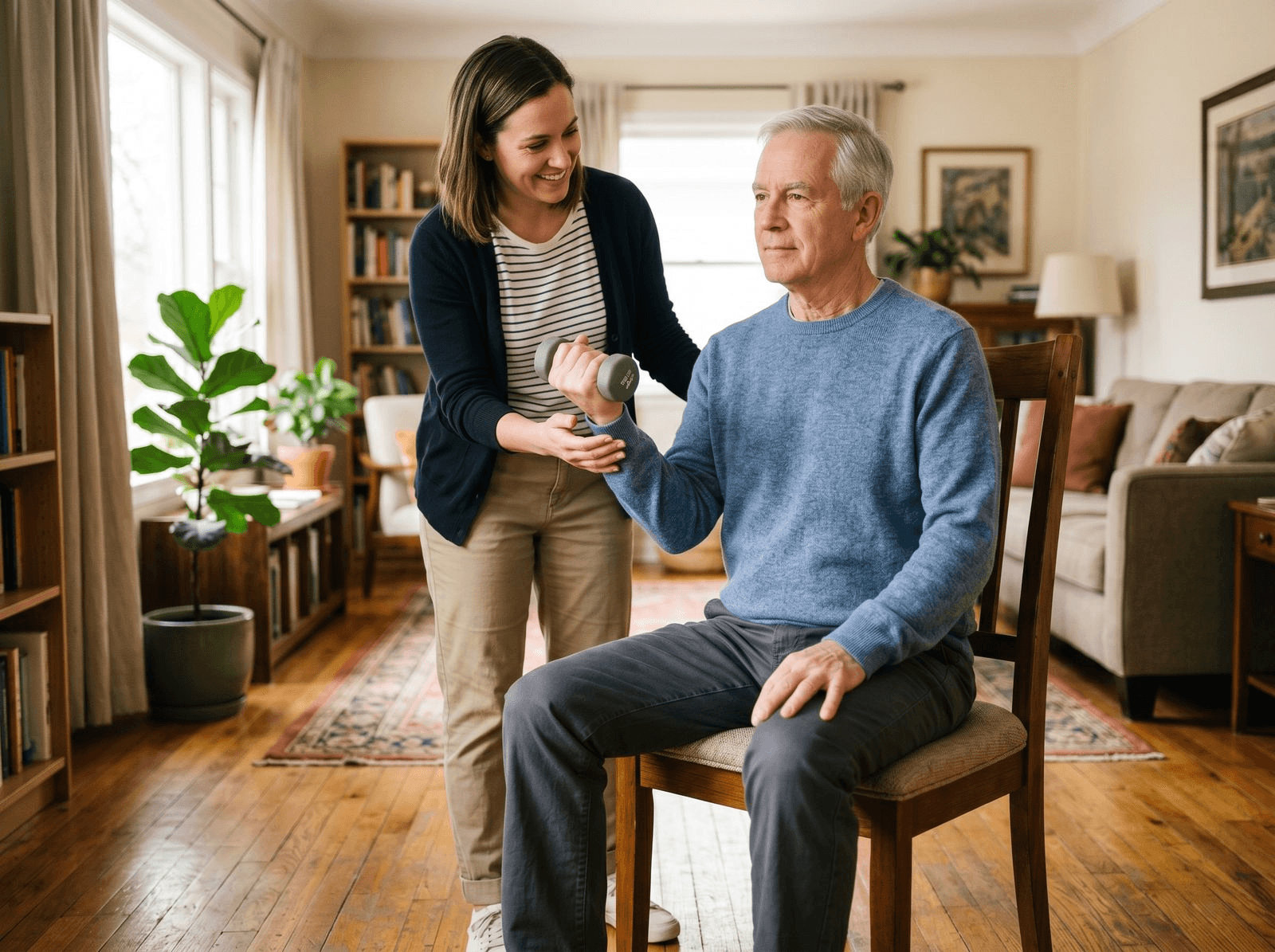
This is also where steady, in-home support quietly changes the odds. For an older adult living with low bone density, the daily margin between safe and not often comes down to small things: a hand on the stairs, help in and out of the shower, the rugs that actually got moved, the strength and balance practice that actually happened this week instead of slipping off the calendar. An in-home personal care aide helps with exactly these daily-living tasks, and where unsteadiness is the larger worry, our mobility support pairs that consistency with hands-on help moving safely through the day. Families near our Mercer County, New Jersey office often build this kind of routine around a parent who has been told their bones are thinning, precisely because the caregiver already there for the day is the one who keeps prevention from becoming an afterthought.
When Lifestyle Isn't Enough
Sometimes diet, exercise, and a safer home are not enough on their own, and that is not a failure. When a scan shows osteoporosis, or when FRAX puts fracture risk high, doctors can prescribe medications that slow bone breakdown or actively help build it back. The most common are a family of drugs called bisphosphonates, with other options for people who cannot take them or who need more. These are decisions for you and your physician, weighing your scan, your history, and your other health conditions, and they fall outside what any article should advise. The point worth carrying away is simpler: effective treatment exists, it works best started before a first fracture rather than after, and the four-in-five statistic at the top of this page describes people who never got the chance to use it because no one was looking.
Bone Health Is Built in Decades, Not Days
There is an old line among bone specialists that the best time to prevent osteoporosis was thirty years ago, and the second-best time is now. It captures something true and freeing. You cannot undo a lifetime of bone loss in a month, but the skeleton keeps responding to good inputs at every age, and the steps that protect it, eating for your bones, loading them with movement, knowing your numbers, and keeping the floor clear, compound quietly the longer you keep at them. A fracture can turn a full life small in an afternoon. The unglamorous habits that prevent it are some of the highest-return choices an aging body can make, and the first one is the easiest: find out where your bones stand, and start from there.
Frequently Asked Questions
What are the early warning signs of osteoporosis?
For most people there are none, which is why osteoporosis is called a silent disease. Bone loss causes no pain and no symptoms until a bone actually breaks, often from something minor like a stumble, a hard cough, or bending to lift a bag. A few quiet clues can show up over time, including losing height, a gradual stoop or rounding of the upper back, or back pain from a spinal fracture you did not realize you had. Because the disease hides, the only reliable way to know your bone strength before a break is a bone-density scan.
At what age should you get a bone density (DEXA) test?
Major guidelines recommend a DEXA bone-density scan for all women at age 65 and all men at age 70. Screening earlier, between 50 and 64 for women and 50 and 69 for men, is advised for anyone with risk factors such as a parent who broke a hip, low body weight, smoking, heavy alcohol use, or long-term steroid medication. Anyone who breaks a bone after age 50 should also be tested, because the fracture itself is a warning sign. Ask your doctor whether your history warrants a scan sooner.
Can osteoporosis be reversed, or only slowed?
You cannot return aging bone to the density of your thirties, but the picture is far from hopeless. With the right combination of nutrition, weight-bearing and strength exercise, and, when needed, medication, many people stop further bone loss and some measurably rebuild bone density. Just as important, these steps sharply lower the odds of the fracture that actually changes a life. The goal is not a perfect scan; it is keeping your bones strong enough that an ordinary fall stays ordinary.
What exercises are best for osteoporosis?
Two kinds matter most. Weight-bearing exercise, where your legs carry your body against gravity, includes brisk walking, dancing, stair climbing, and tennis, and it signals bone to stay strong. Resistance or strength training, using weights, bands, or your own body weight, pulls on bone through the muscles and is one of the most effective ways to maintain density. Aim for strength work on at least two days a week. Swimming and cycling are excellent for the heart but are not weight-bearing, so they do not build bone on their own. Anyone already diagnosed should check with a doctor or physical therapist before starting, since certain twisting and high-impact moves can be risky.
How much calcium and vitamin D do older adults need?
Most women over 50 and men over 70 need about 1,200 mg of calcium a day, while men up to 70 need around 1,000 mg. Food is the best source, including dairy, canned salmon or sardines with the bones, leafy greens like kale and broccoli, and fortified cereals or juices. Adults over 50 also need roughly 800 to 1,000 IU of vitamin D daily, which the body needs to absorb calcium at all and which is hard to get from food alone. Because older skin makes less vitamin D from sunlight, many seniors benefit from a supplement, but check with your doctor before adding one.