How to Start Pickleball After 65 — Without Getting Hurt
Pickleball isn't only a senior sport anymore — and starting at 65 has never been easier. A practical first-year guide, with the injuries to dodge.
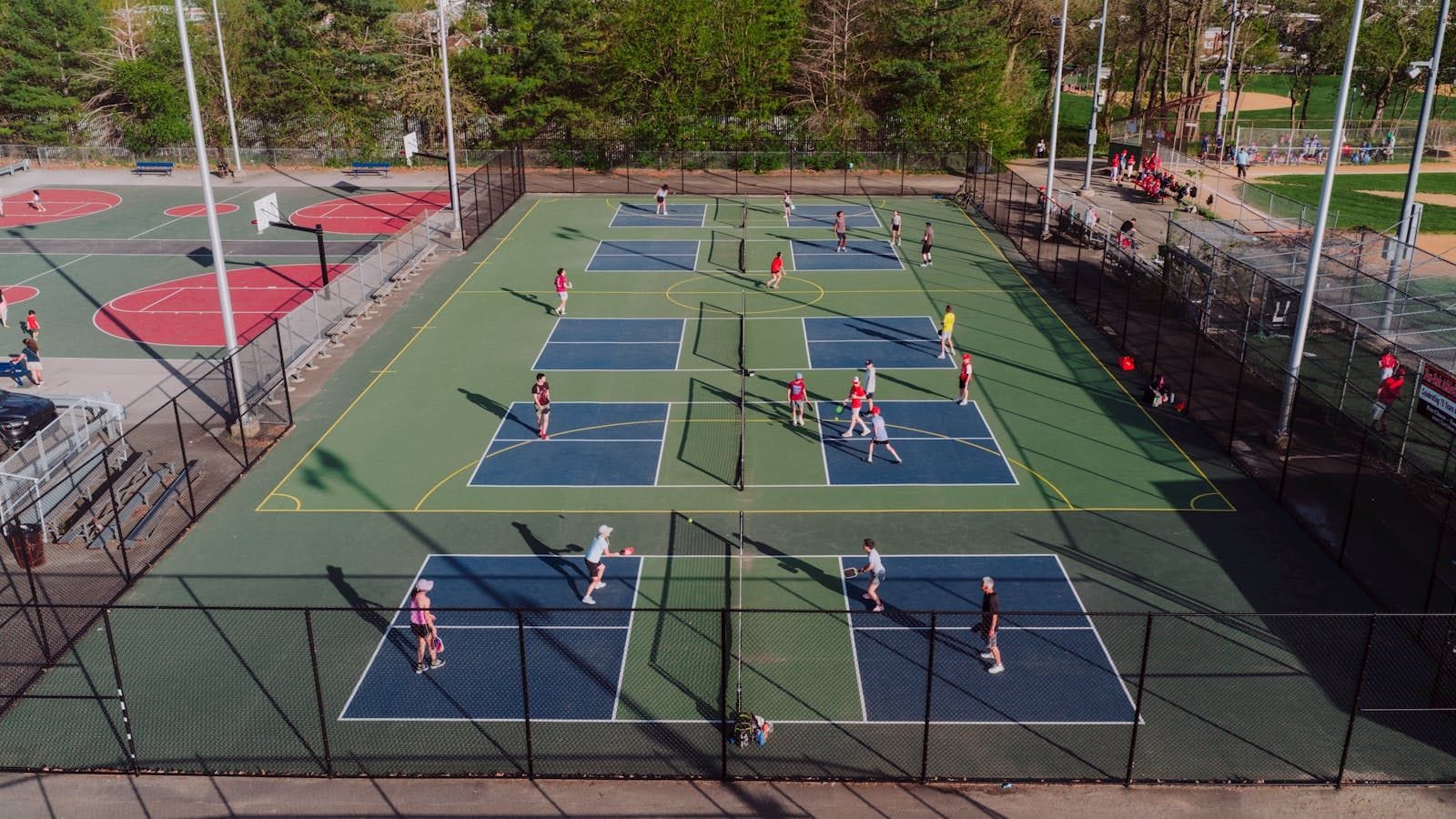
The number to start with is 22.7 million. That is the count of Americans who played pickleball at least once during 2025, according to the Sports and Fitness Industry Association's annual growth report — a 311 percent increase across three years and the fourth consecutive year pickleball has been named the fastest-growing sport in the country. The other number worth knowing is the average player age, which has fallen from 41 in 2020 to 34.8 in 2026 as twenty- and thirty-somethings have taken the sport in numbers no one predicted. The 65-and-older share of players is now around 13 percent. Pickleball, in other words, is not a senior sport anymore.
Which is exactly why this is the best moment yet for a beginner at 65 to start. The infrastructure that grew up around the senior-pickleball era — public courts in nearly every park, free open-play sessions at senior centers and YMCAs, lightweight paddles built specifically for older hands, beginner clinics in nearly every county — is still in place. What is gone is the stereotype that the sport belongs to one demographic. Walk into open play at any decent court and the people across the net are as likely to be in their twenties as in their seventies, which removes the slight self-consciousness many older beginners report. What follows is a practical first-year guide written for someone walking into the sport in late life — what the body does differently on a pickleball court at 65, the two injuries that actually take older beginners to the emergency room, and the equipment and habits that prevent both.
The Sport Stopped Being a Senior Sport. That's Why It Got Better.
For most of pickleball's first three decades the sport lived in two places — the public courts of Sun City, Arizona, and the activity directors' calendars at retirement communities across the country. That changed during the pandemic. Backyard play soared, college campuses installed temporary courts, and the under-35 demographic discovered the sport almost overnight. The Pickleheads industry report now puts the 25-to-34 age bracket as the largest single segment of US players, with the under-35 group representing about 40 percent of the total. The 65-and-older base — once the sport's defining demographic — is now a stable 13 percent.
A beginner over 65 inherits the upside of both eras at once. The senior-pickleball infrastructure built between 2010 and 2020 — the rec-center clinics, the senior-center round-robins, the rated leagues that welcome 2.5 and 3.0 players — is still operating. The post-pandemic surge added 82,600-plus dedicated courts nationwide, a 25 percent annual growth in court construction, a competitive paddle market that drove prices down, and the kind of mainstream attention that turned beginner instruction from a folding-chair affair into a budgeted YMCA program with a full curriculum. Starting now means walking into a sport that has more entry ramps than at any point in its history, with less of the "this is for old people" baggage that quietly kept some older adults from trying it in 2015.
The Body Plays Differently at Sixty-Five, and Pickleball Knows It
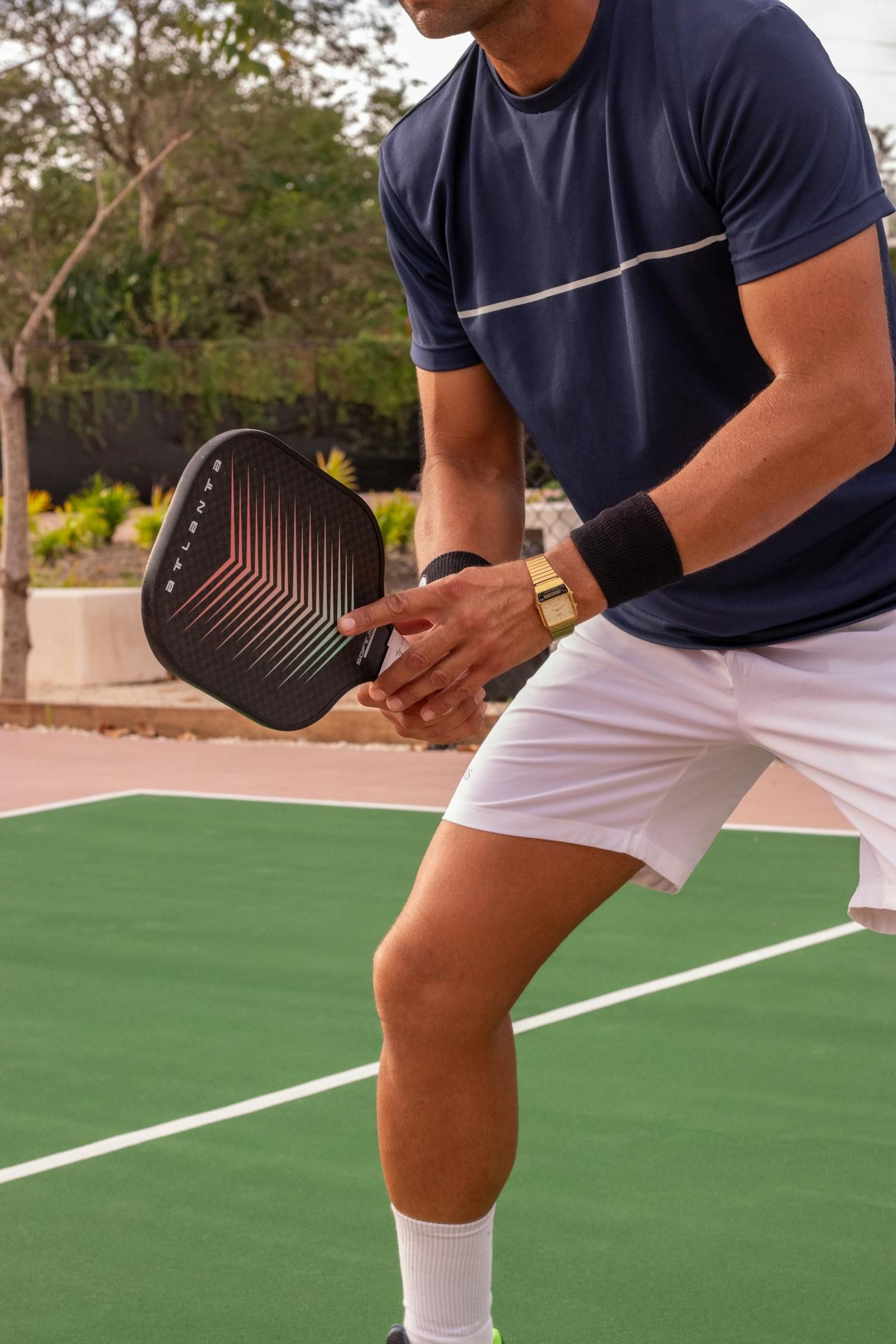
The reason pickleball became the senior sport in the first place is mechanical. The court is 44 feet end to end and 20 feet wide — about a third the playing area of a tennis court. The ball is a plastic wiffle that travels at roughly half the speed of a tennis ball. The non-volley zone (the seven-foot strip on either side of the net colloquially known as the "kitchen") forces players to rally from deeper court positions and largely eliminates the smash-and-volley game that defines tennis. Doubles, which is how most pickleball is played, gives every player a 10-by-22-foot box of responsibility — small enough that footwork, not sprinting, decides most points.
All of which adds up to a sport that asks much less of the cardiovascular system than tennis, basketball, or singles racquetball. What it does ask for is intact lateral movement, ankle stability, and the ability to plant and reverse direction in a 1-to-2-foot range. Those are the capacities that change after 60. The fat pad under the heel thins, ligaments stretch slightly, calf muscles lose elasticity, and proprioceptive feedback from the sole of the foot becomes noisier. None of that disqualifies an older adult from the sport — it just shifts where the injuries come from. The standard pickleball injury at 30 is a sore elbow from too many overheads. The standard injury at 65 is a strained Achilles or a fractured wrist from a fall.
The Two Injuries Beginners Over Sixty Actually Get
Aggregate emergency-department data for pickleball-related visits between 2010 and 2022 tells a remarkably consistent story. A 2023 narrative review in Cureus pooled the available retrospective data and found that 63 percent of all pickleball injuries are slip-trip-fall-dive events, with the remaining share split among strains and sprains (33 percent), fractures (28 percent), and contusions (11 percent). Among adults 60 and older the picture concentrates further: fall-related trauma accounts for over 40 percent of senior pickleball injuries, and the UT Southwestern orthopedic group reports senior men are roughly three times more likely to sustain a sprain or strain, while senior women are roughly three times more likely to break a bone — usually the wrist.
The first injury that takes an older beginner to the ER is a Colles fracture of the wrist after a fall. Players running backward to chase a lobbed shot trip over their own feet, fall, and instinctively throw a hand out to brace. The wrist, weakened by age-related loss of bone density, breaks. The fix is often a plate-and-screw surgery and a long rehab. The single most effective prevention is the same rule pickleball coaches drill into every clinic: never run backward. Turn the body sideways and shuffle, or let the lob fly and start the next point.
The second is a strained or ruptured Achilles tendon, almost always sustained during the lunging step for a low ball at the kitchen line. The Achilles in a 65-year-old is roughly 30 percent stiffer than the same tendon at 45, with less ability to absorb a sudden load. A 2024 multi-site case series found that picklers presenting with Achilles injuries were significantly older than picklers with other injuries, with a high surgical-repair rate. The prevention is unglamorous: a 5-to-10 minute dynamic warm-up before every session that includes ankle circles, slow heel raises, and walking lunges. Static calf stretches before play actually make a stiff Achilles more vulnerable, not less; the Hospital for Special Surgery's pickleball guidance explicitly recommends dynamic over static.
Lateral epicondylitis — "pickleball elbow" — is the third notable injury but rarely sends anyone to the ER. It develops over weeks of repetitive paddle play with poor mechanics or a too-heavy paddle. Treatable with rest, a strap, and a lighter paddle, and almost completely preventable with a 7.6-to-8.2-ounce paddle and good follow-through technique.
Finding a Court Without Driving an Hour
USA Pickleball's free directory at places2play.org is the most complete national listing of courts, with filters for indoor, outdoor, public, and membership-required. The free Pickleheads app (web and mobile) does the same job with better filters for skill level, open-play windows, and live court availability. Most users find that the nearest pickleball court is closer than they expected — public parks have aggressively converted underused tennis and basketball courts to pickleball over the last three years, and most counties now have at least a half-dozen public sites with permanent lines.
For a true beginner, the right entry point is not a public open-play session but a beginner clinic. Senior centers, YMCAs, the JCC network, and county recreation departments routinely run four-to-six-week beginner programs at $40 to $120 total — a coach demonstrates the strokes, walks beginners through the rules, and runs supervised drills that build a usable doubles game in a month. Many programs include paddles and balls for the first few sessions, which is a useful low-commitment way to test the sport before buying gear. After the clinic ends, the same site usually has a posted open-play schedule with a designated 2.0-to-2.5 (beginner) window where new players are explicitly welcome.
The Paddle Question, Settled in Three Sentences
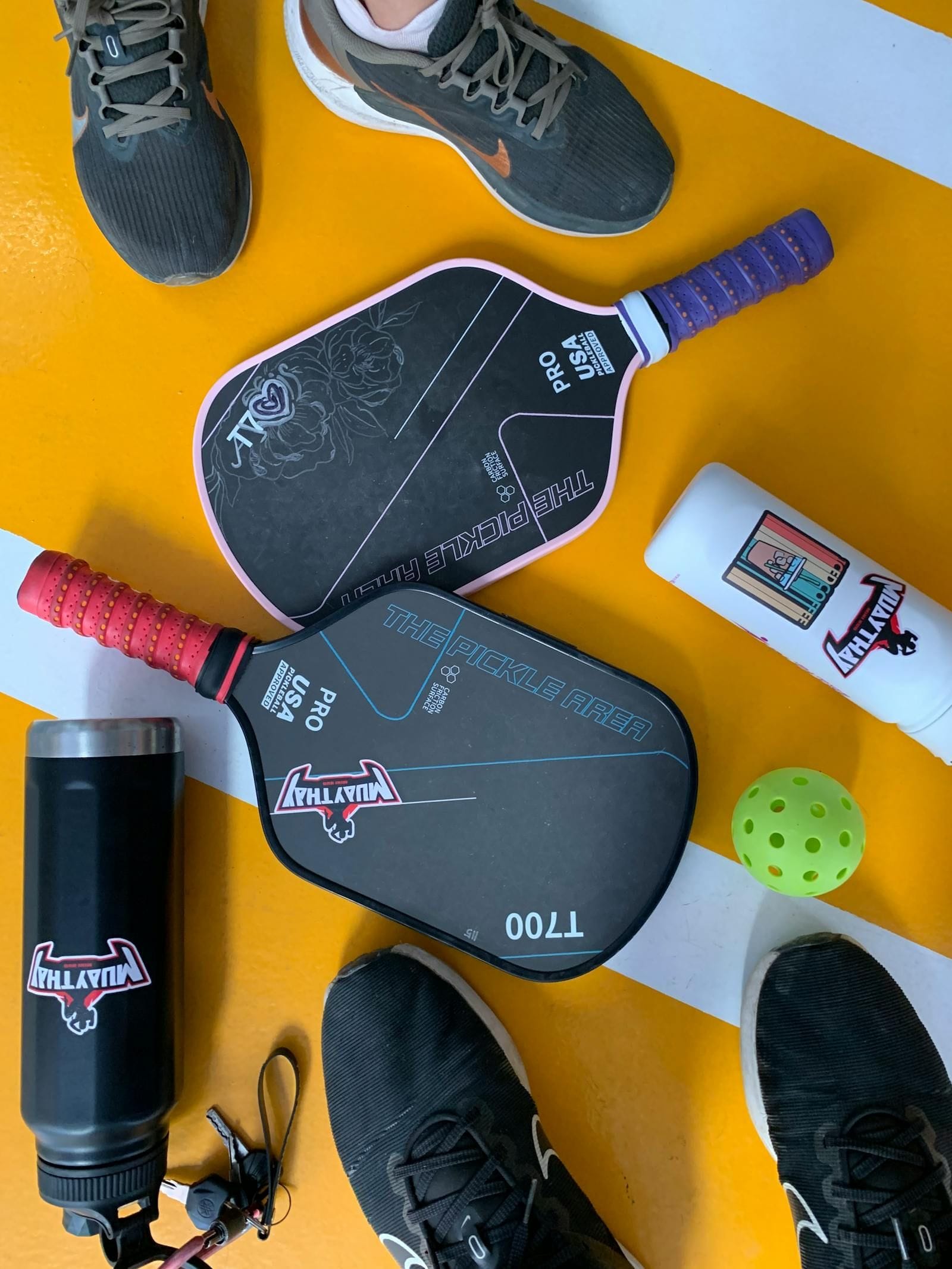
The first sentence is the budget: a beginner does not need to spend more than $100 on a paddle, and probably should not. The second is the spec: a 7.6-to-8.2-ounce paddle with a 14-to-16-millimeter polypropylene core and a 4.25-to-4.5-inch grip will fit most older adults and play well across the first year. The third is the brand-agnostic truth: the Wired roundup of beginner paddles and most independent reviewers converge on a handful of names — the Vatic Pro Prism Flash around $90, the Selkirk SLK Evo Power XL 2.0 around $80, the 11SIX24 Pegasus Jelly Bean around $90, the Franklin Sports series under $50, and the various Amazon-house starter sets under $40 — any of which will serve a beginner well for the first six to twelve months. Spending $250 on a Joola Ben Johns or a Diadem Warrior at this stage is buying capacity an early-game player cannot use.
Grip size matters more than most beginners realize. A grip too small forces extra muscle effort to keep the paddle from twisting in the hand on contact, which is the root cause of pickleball elbow. To measure: open the hand flat and find the middle crease that runs across the palm; measure from there to the tip of the ring finger. That measurement in inches is the right grip circumference. Most adults land between 4.25 and 4.5 inches, with smaller hands at 4 and larger hands at 4.5 to 4.75. Over-grip tape can add a quarter inch; reducing a grip size requires a paddle change.
Court Shoes Are the One Thing Worth Buying Right
Of every piece of equipment in the sport, the shoes have the largest measurable effect on injury rate, and they are the one place a beginner over 65 should not save money. Running shoes are designed for sustained forward motion and have flared, soft midsoles that absorb forward impact at the cost of lateral stability. Pickleball footwork is the opposite — a series of short cuts, lateral slides, and direction reversals — and a flared running-shoe midsole folds sideways on the first sharp pivot. That is the most common mechanism of ankle sprain on the court, the most common pickleball injury HSS surgeons see, and one of the easier injuries to prevent.
A real pair of court shoes — tennis-specific or pickleball-specific — costs between $80 and $150 and lasts roughly a year of recreational play. The outsole should be flat with a non-flared midsole; the upper should hold the foot snug; and the shoe should be matched to surface. Outdoor hard court calls for a durable firm-rubber outsole; indoor wood or sport-court calls for gum-rubber for grip without scuffing. Wearing an outdoor shoe on an indoor wood floor produces a skating sensation that fells about one beginner in twenty in their first indoor session. The Pickleball Warehouse buying guide is the most thorough free reference for matching shoe to surface and provides surface-by-surface model recommendations updated each season.
The First Hour, From Walking In to Walking Out
A first session, done well, runs about an hour. Ten minutes of dynamic warm-up before stepping on the court: ankle circles in both directions, ten slow heel raises, leg swings forward and back ten times per leg, walking lunges across a 20-foot stretch, arm circles forward and backward, gentle upper-body twists. Skip the static calf stretches — research from sports physiotherapy now consistently shows that static stretching cold tendons before lateral-cutting activity increases acute injury risk rather than reducing it.
The first session itself should be doubles, never singles. Doubles is how 95 percent of recreational pickleball is played, halves the ground a player has to cover, and lets beginners learn court positioning from the partner across the net. Stay in the 30-to-45-minute range; beginners who play two-hour sessions on day one are the same beginners who develop pickleball elbow or an Achilles flare during week two. Drink water between games. If the body's first signal — a tight calf, a sore elbow, a vague ankle ache — appears, it is the signal to stop for the day, not push through. The court will be there tomorrow.
Most clinics teach four shots in the first hour: the serve (underhand, struck below the waist, from behind the baseline), the return of serve, the dink (a soft shot that lands in the opponent's kitchen), and the third-shot drop. The last is the shot that separates beginner-pickleball from intermediate-pickleball; it is the soft drop after the return that lets the serving team approach the kitchen line. A beginner can have a usable game with just the first two for a few weeks. The dink and the third-shot drop come over the first six to ten sessions.
When the Body Says No, and What to Do With It
Most pickleball injuries are the body's first warning shot, not its last. A calf that starts whispering at minute 35 wants the player off the court at minute 36, not at minute 90. The same is true of elbow tightness, knee ache, and shoulder soreness — the early signal is the one to listen to. Picklers who pause for a week at the first warning almost always come back at full play; those who try to play through tend to need a six-week recovery and physical therapy.
Two conditions deserve a one-time medical clearance before starting. Anyone with a hip replacement should ask the surgeon about pivots that adduct the operated leg across the body's midline — a position the dinking game produces often, and one that some prosthesis designs do not tolerate. Most modern total-hip patients are cleared for full pickleball at six months, with the specific caution to avoid sharp pivot-and-twist motions. Anyone with a knee replacement is usually cleared for recreational pickleball at four to six months, with the understanding that singles play is not recommended at any point. Anyone with an untreated cardiac arrhythmia, recent angina, or active orthopedic injury should clear with their physician first; the sport's modest cardiovascular demand is not modest if the cardiovascular system is compromised.
For an older adult recovering from a fall, a surgery, or a hospitalization, the bridge back to the court is often the same kind of light, practical support that gets the rest of life going again — a ride to the rec center, help carrying gear on the first session back, an extra set of eyes during early play. Companion-care visits routinely handle exactly this kind of low-acuity bridge in places like Bergen County, NJ and Ocean County, NJ, and for families managing recovery from a more significant injury, the personal-care side picks up the bathing, dressing, and meal prep that frees the rest of the day for the physical therapy that actually gets a player back on the court.
For the broader fall-prevention picture that pickleball fits into, the same balance and strength work that protects against a court fall protects against a household one — the tai chi practice covered in last week's post has the strongest single evidence base of any senior exercise for reducing fall risk, and the two practices — one slow, one fast — pair well across a week.
A Year In, the Friends Outlast the Score
Most regulars at any pickleball court will tell you that the reason they keep showing up is not the game. It is the people. The standard rec-center round-robin rotates partners every fifteen minutes for two hours, and across a season a regular plays with thirty or forty other people — the same coffee-shop or church-coffee-hour mix, on a court. By month three most beginners have a handful of names; by month six there is a group text and a standing Tuesday-and-Thursday morning. Researchers studying older-adult exercise adherence have long observed that group activities with built-in social structure are the ones that last; pickleball is a particularly clean example.
The first-year arc most beginners experience looks like this. Weeks one through four feel awkward and a little humbling — the rules take a few sessions to internalize, the dink game is hard, and the body is sore in unfamiliar places. Weeks five through twelve are when the strokes start to feel natural, when the third-shot drop occasionally lands, and when the first real friendships at the court take root. Months four through twelve build skill more slowly but compound socially — the games get longer, the rotation widens, the texts increase. Most picklers who make it to the one-year mark stay in the sport for decades. The 70-and-80-year-olds at any decent court are usually the players who started ten or twenty years ago, kept showing up, and watched the sport — and the people around them — grow up alongside.
Starting at 65 is not late. It is, by every reasonable measure, the best time the sport has ever been started. The infrastructure is there, the equipment is sized for older hands, the social mix is more interesting than it has ever been, and the body, treated with even modest respect, will return the favor for a long time.
Frequently Asked Questions
Is pickleball safe to start after 65?
For most adults in reasonable health, yes — pickleball's injury rate is roughly in line with other recreational racket sports, and far below tennis on a per-hour basis. The two real risks are a fall (the source of about 63 percent of all pickleball injuries) and overuse tendinopathy in the elbow or Achilles. Both are largely preventable with proper court shoes, a dynamic warm-up, doubles play over singles, and never running backward to chase a lob. People with untreated heart conditions, acute joint injuries, or recent surgery should get a one-time clearance from their physician before starting.
What is the best paddle for a beginner over 65?
Stay in the 7.6-to-8.2-ounce weight range, with a 14-to-16-millimeter thermoformed polypropylene core and a 4.25-to-4.5-inch grip. Specific paddles that fit this profile and play well: the Vatic Pro Prism Flash (around $90), the Selkirk SLK Evo Power XL 2.0 (around $80), and any sub-$50 set from Franklin Sports or Amazon-house brands if budget is tight. Grip size matters more than brand — measure from the tip of your ring finger to the middle crease of your palm; that measurement in inches is your grip circumference.
Do I need pickleball shoes, or are running shoes fine?
You need court shoes. Running shoes are designed for forward motion and have flared soles that fold sideways during the side-to-side cutting that fills a pickleball point — the most common mechanism of ankle sprain on the court. A pair of tennis-style or pickleball-specific court shoes ($80 to $150) is the single most important piece of injury-prevention gear in the sport. If you play mostly on outdoor hard court, buy outdoor-rated outsoles; if you play mostly indoors on wood or polished concrete, buy gum-rubber indoor shoes.
Where do I find a court and an open-play session?
USA Pickleball's free directory at places2play.org is the most complete national listing, and the free Pickleheads app does the same job with better filtering for skill level and open-play windows. Most public parks now have permanent pickleball lines on tennis or basketball courts; senior centers, YMCAs, and county recreation departments host beginner clinics and open play on a posted schedule. Many beginners find a court within 10 minutes of home that they never knew existed.
How often should a beginner over 65 play?
Start with two or three sessions of 30 to 45 minutes per week, with at least one rest day between sessions. The most common beginner mistake is back-to-back two-hour sessions before the body has adapted to lateral movement — that is what produces the Achilles strain and the pickleball-elbow flare-ups that send first-month players to a sports medicine clinic. After eight weeks of steady play, the body has usually adapted enough to handle three to four hour-long sessions per week comfortably.