Loss of Appetite in Elderly Parents: When to Worry and How to Help
Why an aging parent suddenly stops eating, what doctors call anorexia of aging, and the small, practical changes that help more than appetite stimulants do.
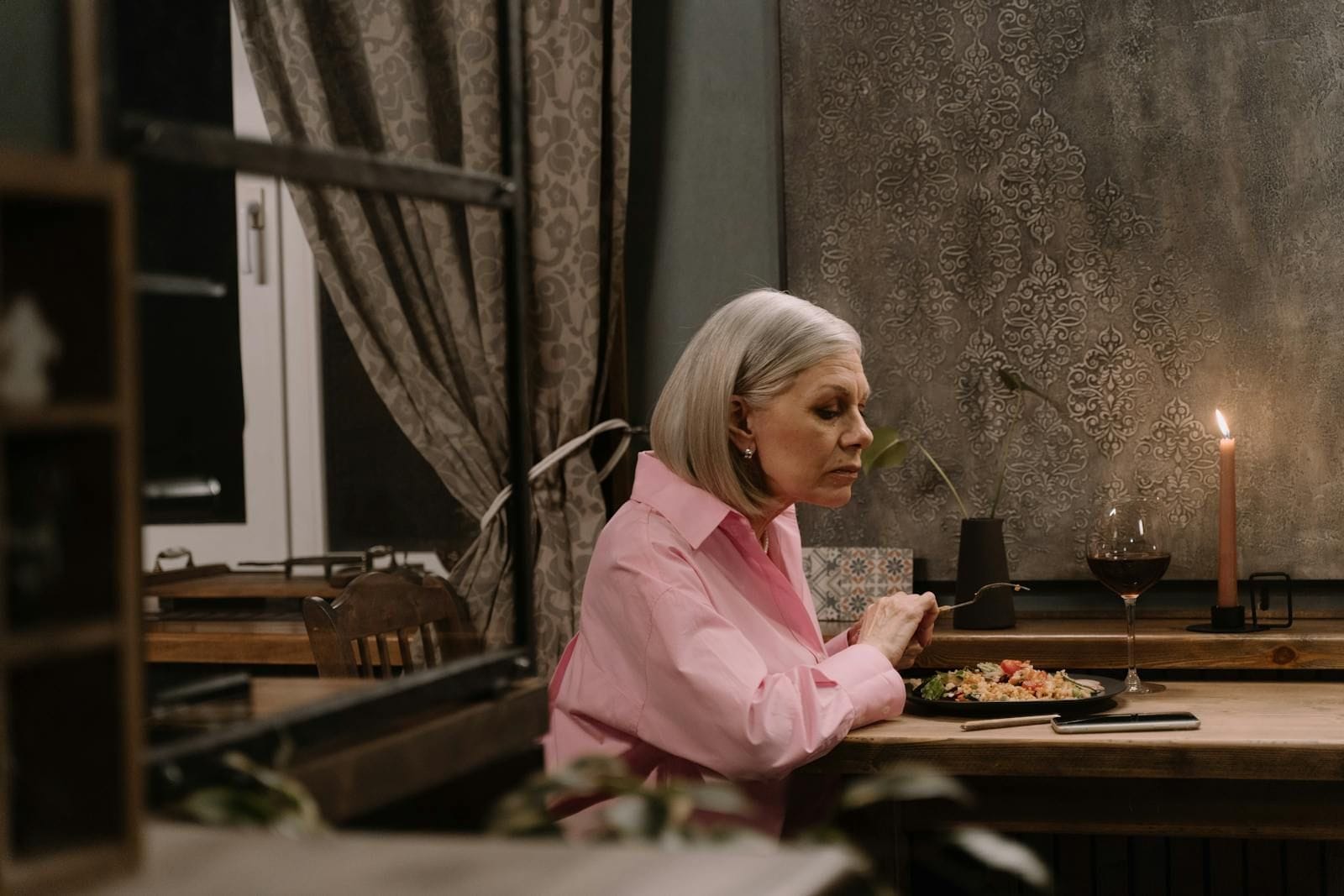
The dish goes back in the refrigerator with most of it untouched. You made it the way she liked it. The chicken was the right kind, the noodles came out tender, the soup smelled the way the kitchen used to smell on a Sunday afternoon. She picked at it for ten minutes, said it was lovely, and pushed the plate forward an inch. That was lunch. Dinner will be a few crackers, maybe yogurt, maybe nothing.
If you are the one keeping track, this is the moment you start counting. How many days has it been like this. How much weight she has lost since Thanksgiving. Whether the looser cardigan is because the cardigan was always loose or because she is not the same size she used to be. You bring it up carefully on the phone with your sister, who tells you Mom was always a small eater, and you decide to stop counting for a week and see if you are imagining it.
You are probably not imagining it. Loss of appetite in older adults is one of the most common, most under-discussed, and most consequential changes a family will witness as a parent ages. It has a clinical name almost no one has heard of. It has causes that are mostly fixable. And it tends to look exactly like what you are seeing: not a refusal, not a complaint, just a quiet drift away from food.
The Quiet Condition With a Real Name
Geriatricians have a phrase for the long, gradual slide in appetite that often shows up in someone's seventies and eighties. They call it anorexia of aging. It is not the same condition as anorexia nervosa, the eating disorder. It is the medical shorthand for a sustained loss of interest in food that is common enough to qualify as a syndrome of later life, and serious enough that the people who study it have spent decades trying to convince clinicians not to dismiss it as a normal consequence of getting old.
A 2022 task force report published in The Journal of Frailty & Aging placed the prevalence of anorexia of aging at fifteen to thirty percent of community-dwelling older adults — and substantially higher among older adults living in hospitals or long-term care. That is not a rounding error. In a typical American family with an aging parent, it is more or less even odds that appetite is part of the picture.
The reason it gets missed is that nobody complains about it the way they would complain about a knee or a backache. A person whose appetite is fading does not usually announce it. They just eat less. They lose weight slowly, in pounds the bathroom scale records but the family does not see until the cardigan starts swimming. By the time someone in the family thinks to mention it to a doctor, the person has often lost five or ten percent of their body weight, which in geriatrics is a meaningful threshold — the point at which the risk of falls, hospital admissions, and infection begins to climb.
The Reasons This Is Happening
The honest answer is that loss of appetite in an older adult is almost never one thing. The kind of person who has stopped eating much by their early eighties usually has three or four overlapping reasons for it, and the only way to make progress is to start naming them one at a time.
Some of the reasons are gentle and inevitable. The aging body needs less food than it used to, especially if it is moving less. The senses of smell and taste begin to fade in the seventies, and food simply does not taste the way it used to. The stomach empties more slowly, so the feeling of being full arrives sooner and stays longer. None of this is alarming on its own. It is the baseline.
Layered on top of the baseline are the things that are worth investigating because they often respond to treatment. Depression is the single biggest one and the one most likely to be missed. An estimated thirteen percent of older adults have clinically significant depression, and one of its most common faces in the geriatric population is not sadness but loss of appetite. A parent who has slowed down, lost interest in things that used to bring pleasure, and stopped eating much at the same time is showing what geriatricians call the “anorexia of depression,” and a conversation with a primary-care doctor about that possibility is often the highest-leverage thing a family can do.
Medications come next. Many of the prescriptions that older adults take every day — including some blood pressure pills, certain diabetes medications, opioids, anticholinergics, and a long list of antibiotics — blunt appetite or change the taste of food. The American Academy of Family Physicians' review of unintentional weight loss in older adults identifies medication side effects as one of the first culprits a clinician should examine, ahead of more aggressive testing. A pharmacist or geriatrician reviewing a parent's entire medication list — including vitamins and over-the-counter products — frequently finds something that can be reduced, swapped, or eliminated.
Then there are the small physical reasons that family members are uniquely positioned to notice. Ill-fitting dentures that turn every meal into work. A sore tooth that nobody mentioned. Difficulty swallowing that has been there for months but never made it onto a problem list. Constipation, which is far more common than families realize and which kills appetite quickly. Chronic pain that flares at mealtimes. A simple fact of geography: the stove is too far from the chair, the casseroles are too heavy to lift, the silverware does not fit a hand that has lost grip strength. None of these are dramatic. All of them, in combination, can quietly close the door on a meal.
When to Worry and When to Watch
The pace of the change is the most useful piece of information a family can give a doctor. A gradual decline in appetite over months — five pounds here, the loosened belt notch there — is rarely an emergency, but it is always a reason to bring up at the next primary-care visit. A drop that happened in a week or two is something different.
A sudden loss of appetite in someone who was eating fine a month ago is often the body raising a flag about something else: an infection, a new medication, an undiagnosed cancer, a thyroid problem, a flare of chronic illness, a depression that finally tipped past the threshold. We have written about urinary tract infections that present in older adults as confusion rather than urinary symptoms; a sudden disinterest in food sometimes presents the same way, as the brain's only available signal that something is off. The right response to a sudden change is to call the doctor in the next day or two, not to wait for the next scheduled appointment.
Other patterns worth flagging early: weight loss of more than five percent in three months or ten percent in a year; a parent who is sleeping more than usual and eating less; a parent who has lost interest in foods they used to love specifically; or a parent who is suddenly turning away from meals they have eaten without complaint for fifty years. The Cleveland Clinic's overview of loss of appetite as a symptom emphasizes the same point, in plainer language: a sudden change is a reason to be seen, not a reason to wait.

The Dementia Complication
Loss of appetite in a parent who is also living with dementia deserves its own paragraph, because the playbook is different. As Alzheimer's and related dementias progress, the simple machinery of eating begins to come apart in ways that have less to do with hunger than with the brain itself.
A person in the middle stages may not recognize what is on their plate. Or they may recognize the food but lose track, halfway through, of what to do with the fork. They may forget that they have already eaten and ask for a meal an hour later, or forget that they have not eaten and refuse one. They may eat readily for a caregiver they trust and refuse food entirely from someone they don't. Sweet foods become more appealing as the disease progresses; the savory dishes a parent used to love can begin to taste like nothing at all. The Alzheimer's Association has a careful, practical page on food and eating with dementia that is worth bookmarking, because the strategies are not intuitive unless someone walks you through them.
Many of the strategies are quieter than they sound. A bright, high-contrast plate against a plain placemat helps a person with cognitive impairment actually see the food. A single dish at a time, instead of a full table setting, prevents the visual overload that ends with everything pushed away. Finger foods make eating possible long after a fork has stopped making sense. A radio off, the television off, the conversation gentle — all of it gives the brain a chance to do the one thing the meal is asking of it. The National Institute on Aging's caregiver-facing guidance on helping a person with Alzheimer's eat well covers more of these adjustments than this paragraph can hold, and is the page we point families toward most often.
In the late stages, eating slows down further, and a difficult question begins to surface for many families: how hard to push. The answer is not the same for every family, and it is rarely the answer to be made alone. It is the conversation that geriatricians, palliative-care doctors, and dementia-specialist nurses are trained to help families work through. The framing that helps most caregivers is that food, late in dementia, is no longer fuel in the way it once was; it is comfort, ritual, and connection, and a family's job is to make those parts as easy as possible, not to measure calories.
What Actually Helps
The instinct, when a parent stops eating, is to push more food at them. It almost never works. Bigger portions feel daunting; richer dishes feel heavy; a stack of supplement shakes lined up on the counter feels like an assignment. The strategies that move appetite in older adults are smaller, gentler, and counterintuitive enough that they take a little practice.
Smaller plates, more often, is the one most caregivers come back to. Five small meals across the day land more food in the body than three large ones, because the older stomach was never going to finish the large one to begin with. The richest part of the meal — the protein and the fat — goes on the plate first, when energy is highest. Soft, warm, familiar foods beat ambitious ones. A peanut butter sandwich, a bowl of oatmeal with butter and brown sugar, a small portion of last night's dinner gently reheated, will outperform a beautiful but unfamiliar new recipe almost every time.
Flavor, surprisingly, is one of the most useful levers. As the senses of smell and taste fade with age, food can taste flat without anyone naming why. Salt, where blood pressure allows it. Lemon, vinegar, mustard. Garlic and herbs. A drizzle of olive oil. Cinnamon and brown sugar on the oatmeal. Older adults often respond more to flavor than to volume — the meal does not need to be larger; it needs to taste like something. The Harvard Health overview on increasing appetite in older adults covers the same ground in more detail, including the surprisingly consistent finding that twenty to thirty minutes of light activity before a meal — a walk to the mailbox, gentle stretches, even washing the dishes — raises appetite measurably.
Company at the table is the lever that gets named least and matters most. Older adults who eat alone, study after study confirms, eat less. They eat faster, they eat more passively, and they tire of the meal sooner than they would if there were someone across from them. A parent who has recently lost a spouse, or whose social circle has thinned, or whose hours in the house are mostly silent, is fighting more than a fading sense of taste — they are fighting an environment that has stopped making meals feel like meals.
One thing the geriatric literature is consistent about is what does not work, and that is the prescription appetite stimulant. The American Geriatrics Society's Choosing Wisely campaign explicitly recommends against routinely prescribing appetite stimulants for older adults with poor appetite, and the AAFP guideline above echoes the same guidance. The trials that have been done show modest weight gain at best and meaningful side effects at worst, and the evidence keeps pointing back to the same alternatives: address the medications that may be blunting appetite, treat the depression if it is present, fix the dentures, manage the pain, and surround the meal with the human company and gentle ritual that drives most older adults to eat.
The Conversation Worth Having With the Doctor
Most primary-care visits are short. Twenty minutes, often less. The way a family presents a parent's appetite changes determines whether that twenty minutes turns into action or into a polite shrug.
The phrase that opens the most useful door is something like: I am noticing she is eating less than she used to. She has lost about fifteen pounds in the last six months. I would like us to look at why, and what we can do. That single sentence does three things at once. It names the change. It quantifies it. And it asks for a workup rather than reassurance.
The doctor will likely ask about timeline, about which foods have lost appeal, about mood, sleep, energy, and bowels. They may want to do a basic blood panel — thyroid, electrolytes, kidney function, blood count, vitamin levels, sometimes a swallow assessment. They will go through the medication list with new eyes. If depression is on the table, they will screen for it, and the screen takes ninety seconds. None of this is invasive. All of it is part of the standard workup that geriatricians do for unintentional weight loss, and a family asking for it is asking for exactly the right thing.

Where Consistent Caregivers Quietly Move the Needle
This is the part of the conversation we know best. Most of what helps an older adult eat better at home is not a treatment in the medical sense; it is what happens in the kitchen between meals and at the table during them. And most of what makes that hard is not the meal itself — it is the conditions around it.
A spouse exhausted from being a full-time caregiver does not have a fresh meal in them every afternoon. An adult child living three states away cannot make sure breakfast happens. A parent who lives alone with a fading appetite cannot become their own dinner companion. The single most consistent thing we hear, in the months after a family begins working with us, is that meals got easier — not because the food got fancier, but because the meal became something that happened with somebody, in a predictable rhythm, with a hand to help if the can opener stopped cooperating.
Our caregivers are trained for the long, quiet work of mealtimes. They shop with the family's preferences in mind, prep meals that are small and recognizable and warm, manage the dentures and the medications and the pre-meal walk, and — maybe most importantly — sit at the table and eat with the person they are caring for. The personal-care service we provide covers the practical end of all this: bathing, toileting, meal preparation, feeding assistance for those who need it. The companion-care service covers what families often need more of — the company at the meal, the conversation, the small reason to eat.
For families managing dementia at home, where appetite changes can be baffling and progressive, our dementia-trained caregivers bring the specific patience and the specific small adjustments — the high-contrast plates, the finger foods, the calmer environment, the redirection that gets a meal back on track when it has stalled — that most families have to learn the hard way.
The families we serve across Monmouth County and Somerset and Hunterdon Counties often come to us through this exact door — a daughter who has noticed her mother is not eating, a son who lives too far away to make breakfast, a husband who has stopped trusting his own observations about his wife. Sometimes the answer is a few hours a day. Sometimes it is overnight coverage. Sometimes it is just someone at the table for lunch, three times a week, until lunch starts being a meal again.
The Long Quiet of Eating Less
Most of what a family is going to do for a parent who has lost interest in food is going to be slow. There is no single intervention that turns it around. There is no perfect recipe, no supplement, no clever trick. There is the patient stack of small things — the smaller plates, the warmer food, the company at the table, the medication review, the depression screen, the dentist, the walk before lunch — and there is the willingness to do them in combination over weeks rather than days.
The hardest part is often not the practical work. It is the fear of what the change might mean. A parent who is eating less is a parent whose body is changing, and there is no way to watch that without some part of the family bracing for what comes next. That fear is reasonable. But it is not, in most cases, the right organizing principle. The right organizing principle is the one most geriatricians will tell you, and that the literature has been telling them for years: in older adults, loss of appetite is a treatable problem far more often than it is a terminal one, and the way you find out which kind you are facing is to start looking.
If you are watching a parent push another plate forward and not sure whether to call the doctor or wait, call the doctor. If you are watching yourself try to do all of it from out of state and falling behind, you are not failing — you are encountering the math of modern caregiving at distance, and there are people whose work it is to fill in the gaps. Our care team is here when you would like to think out loud about what that looks like for your family. We will listen first.
Photographs by cottonbro studio, Katerina Holmes, and Jsme Mila, licensed under the Pexels free-use license.