Multigenerational Living, Without the Friction
More families are bringing aging parents home. How to decide if multigenerational living fits, then set up the house, money, and boundaries to last.

For most of the last century, American families spread out. Children grew up, moved away, and the generations met on holidays. That long drift has reversed. A quarter of U.S. adults now live in a multigenerational household — two or more adult generations under one roof — and the share is near a record high after decades of steady growth, according to the Pew Research Center. Some of that is young adults staying home longer. A growing share is the other direction entirely: aging parents moving in with their grown children.
The reasons are practical. Finances drive most of it — about two-thirds of people in these homes cite money as a reason — but caregiving is close behind, and it climbs as parents age. In a quarter of multigenerational households, someone is actively caring for another adult or a child who needs it. None of that is a sign of a family in trouble. Done deliberately, sharing a home can be one of the most rewarding decisions a family makes, and a real way to help a parent keep aging in place rather than moving to a facility. The difference between the version that works and the version that quietly comes apart is almost never love. It is planning.
A Quiet Boom, Not a Last Resort
It helps to start by retiring the idea that a parent moving in is what happens when everything else has failed. For a large and rising number of families, it is a first choice. The upsides are well documented. Pooling a household lowers costs for everyone, and Pew's analysis finds that people in multigenerational homes are measurably less likely to live in poverty — the advantage is largest for the families who need it most.
The benefits are not only financial. An older adult who shares a home has built-in company against the loneliness that erodes health as surely as any illness, plus everyday help with rides, meals, and medications. Grandparents and grandchildren get time together that neither would trade. And most people who live this way say it is working: Pew found a clear majority describe it as positive, with most calling it convenient and rewarding. Notably, the parents who move in tend to rate the experience more positively than the adult children hosting them — a useful reminder of who is shouldering the adjustment, and a theme worth keeping in view.
The Questions to Ask Before Anyone Packs a Box
The arrangements that struggle are usually the ones nobody planned. A fall, a hospital stay, a diagnosis — and suddenly a parent is in the guest room with no conversation ever having happened. Whenever it is possible, decide on purpose. A handful of honest questions, asked before the move, prevent most of the friction that shows up later.
- What level of care does your parent actually need — and where is it heading? Occasional help with errands is a different commitment than daily personal care, and advanced dementia or skilled medical needs are different again. Be realistic about the trajectory, not just today.
- Is everyone under the roof genuinely on board? A spouse, a partner, teenagers who may give up a bedroom — this is their home too. Quiet resentment from someone who was never really asked is corrosive.
- How does this fit your work and your week? Many family caregivers cut hours or leave jobs to manage the load. Know what you can sustain before you promise it.
- Roughly how long is this meant to last, and what is the exit? Naming that it might change — that needs may someday exceed what the home can offer — is not betrayal. It is what keeps the door open to other options without guilt later.
Setting Up the Space (You Don't Have to Remodel)
Families often stall on the picture of a major renovation. In practice, a safe, comfortable setup is mostly small changes, and you can phase the bigger ones in over time. The single best move is location: a bedroom on the main floor, close to a full bathroom, so stairs never become the daily hazard.
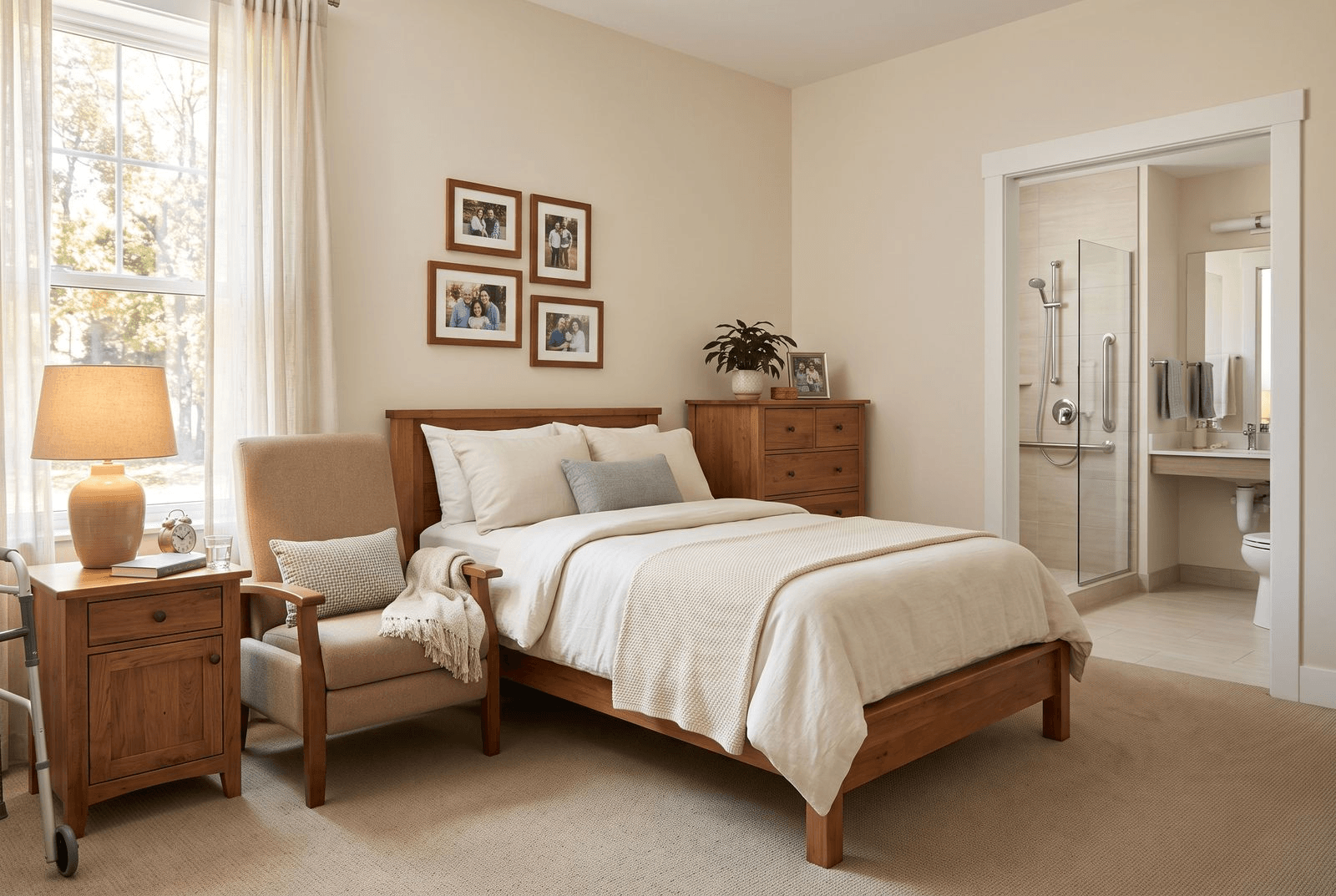
From there, the priorities are the same ones the National Institute on Aging flags for aging at home safely. Add grab bars by the toilet and in the shower. Brighten the lighting and add night lights along the route to the bathroom. Clear the walkways — loose rugs and trailing cords are the classic falls waiting to happen. If a walker or wheelchair is in the picture now or later, check that doorways are wide enough, roughly 32 inches at a minimum. A deeper guide to the bathroom in particular lives in our piece on bathroom safety for seniors, since that is the room where most of the risk concentrates.
Just as important as the safety fixes is privacy. Give your parent a space that is genuinely theirs — a door that closes, their own chair, their own things on the walls. A retreat each person can disappear into is what makes a shared house feel like a home to everyone rather than a waiting room to one.
The Money Conversation No One Wants
Money is the most common reason families move in together, and also the most common thing they never talk about clearly. That combination is exactly how resentment builds. Have the conversation out loud, early, and ideally on paper.
There is no universal formula. In some families the parent pays a set monthly amount; in others they cover specific bills or the groceries they share; in others they fund the home modifications their move requires in lieu of rent. Any of these can be fair. What matters is that the arrangement is agreed on openly, that it is sustainable for both your retirement and your parent's, and that it does not quietly blow up your own financial future. A simple written understanding is not cold or transactional — it is the thing that protects the relationship. It also heads off a second tension: siblings who are not hosting but have opinions about money, time, and inheritance. Naming who contributes what, while everyone is calm, is far easier than untangling it during a crisis.
Privacy, Roles, and Not Sliding Back Into Parent-and-Child
Put two adults who once had a parent-and-child relationship back under one roof and old dynamics resurface fast. The mother who reorganizes the kitchen. The grown child who starts policing the thermostat. The trick is to consciously meet as adults sharing a household — not as a guest you wait on hand and foot, and not as a child you manage.
Boundaries are how that works in practice. Be clear and kind about what you need: a private hour after work, your bedroom as off-limits space, a few topics not worth relitigating, the freedom to say no sometimes. Extend your parent the same respect — their own routines, their own space, a real voice in how the household runs. The strain is real and worth naming: Pew found that adults living with a parent are noticeably more likely to describe the situation as stressful than parents are. Boundaries set early and stated without drama are what keep that stress from hardening into conflict.
Don't Forget the Caregiver in the Middle
Every multigenerational household built around an aging parent has one person who carries the most — usually an adult daughter, often squeezed between her own children and her parent at the same time. The recent Pew Research Center survey on family caregiving puts numbers to it: among Americans with a parent 65 or older, about a quarter consider themselves caregivers, women more often than men, and the demands rise sharply once a parent reaches 75. That person's wellbeing is not a side issue. It is the load-bearing wall of the whole arrangement.
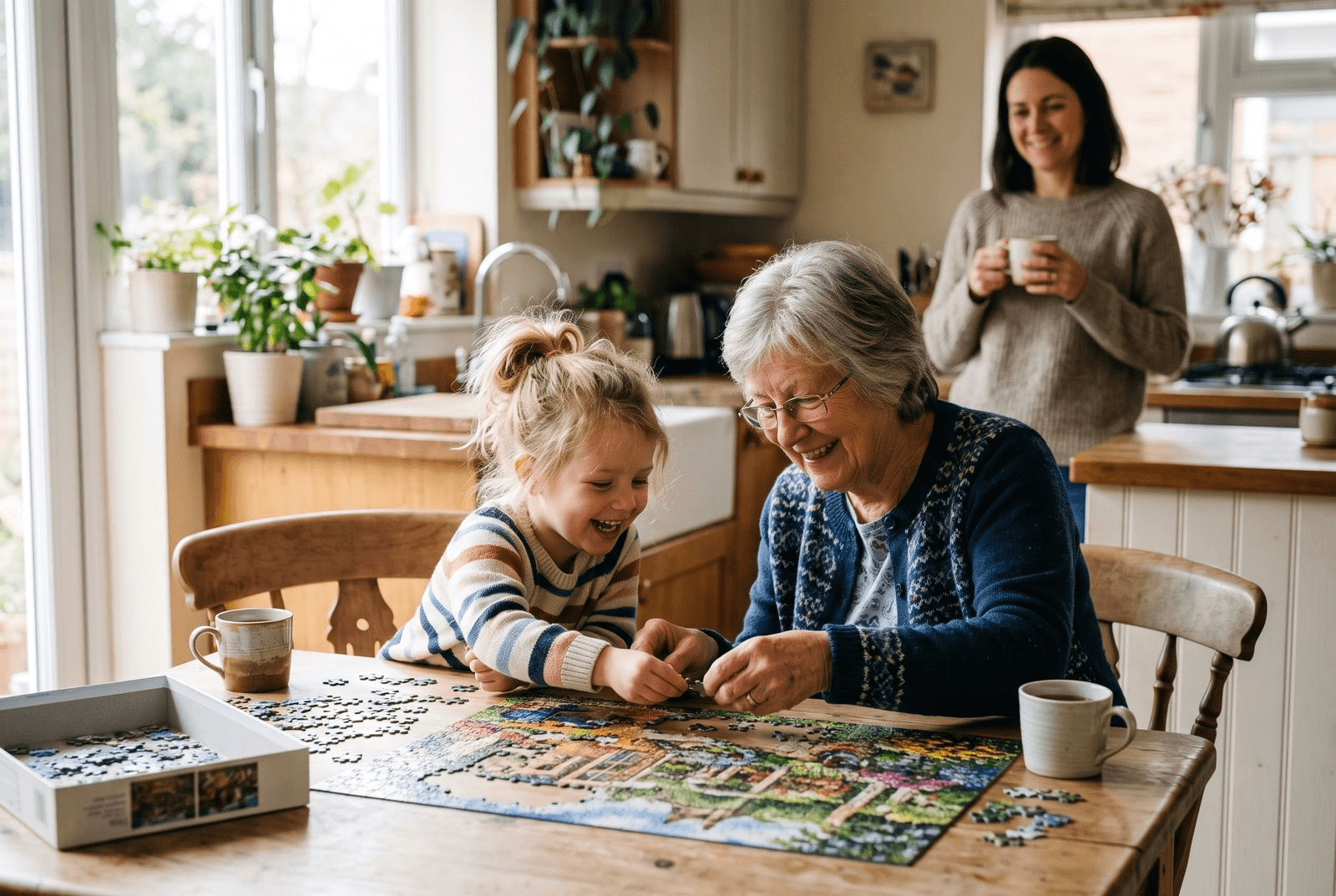
Protecting the caregiver starts with refusing the myth that one person should do it all. Share the work across the family, rotate responsibilities, and ask siblings for money or time even when it is uncomfortable. Outsource what you can — delivered groceries and prescriptions, rides to appointments. And bring in professional help before the strain peaks, not after: a few hours a week of personal care or companion care can cover the hands-on tasks and the company while you breathe, and scheduled respite care lets you step away for a weekend without guilt. Families across our Monmouth County, New Jersey service area lean on exactly this kind of support to keep a parent at home without burning out the person who loves them most. If you recognize the warning signs in yourself already, our guide to caregiver burnout is worth reading before things get heavier.
When Sharing a Roof Isn't the Right Answer
Honesty cuts both ways. Moving a parent in is generous, but it is not always the safest or healthiest choice, and pretending otherwise helps no one. Some needs outrun what any home can offer — around-the-clock skilled medical care, or supervision for advanced dementia that no untrained family member can safely provide. Some homes cannot be made accessible, or have no space that preserves anyone's privacy. And some parent-child relationships carry a history that close quarters will only inflame.
In those cases, choosing differently is not a failure of love. Heavy in-home needs can often be met with paid caregivers instead of a move. When a facility is the safer answer, that can be the clear-eyed, loving call. Our comparison of home care versus assisted living walks through how families weigh the two when living together is not the right fit.
Building a Household That Holds
The families who make multigenerational living last are not the ones with the biggest houses or the easiest parents. They are the ones who decided on purpose, talked about the hard things before they became emergencies, set up a space that respects everyone, named the money plainly, and refused to let one person quietly drown. That is the whole formula — and none of it requires perfection, only honesty and a willingness to ask for help.
Bringing a parent home can give an older adult years of company, safety, and dignity they would not have had alone, and give a family time together it can never get back. The way to keep it that way is to build the support in from the start — so the arrangement is carried by the household and the help around it, not by one exhausted person hoping to hold the line. Done with care, three generations under one roof is not a burden a family survives. It is a season many look back on as a gift.
This article is general information, not legal, financial, or medical advice. For decisions about care needs, finances, or estate planning, consult the appropriate qualified professional.
Frequently Asked Questions
How do I prepare my home for an elderly parent moving in?
Start with the basics that prevent falls and protect dignity rather than a full renovation. The ideal setup is a bedroom on the main floor near a full bathroom, so stairs are never the daily obstacle. Add grab bars by the toilet and in the shower, brighter lighting and night lights along the path to the bathroom, and clear, snag-free walkways by removing loose rugs and cords. Make sure doorways are wide enough for a walker now or a wheelchair later — about 32 inches at minimum. Just as important as the safety fixes is a private retreat that is genuinely your parent's own: a door that closes, a comfortable chair, and a spot for their own things. You can phase the bigger changes in over time; the goal at move-in is safe, accessible, and private.
What are the benefits of multigenerational living for aging parents?
The advantages are practical and emotional at once. Sharing a household pools income and expenses, which research consistently links to lower rates of poverty for everyone involved. Older adults get built-in companionship that pushes back against the loneliness and isolation that quietly harm health, plus everyday help with rides, meals, medications, and home upkeep. Many grandparents find real purpose in time with grandchildren, and that closeness flows both ways. Surveys from the Pew Research Center find most adults in multigenerational homes describe the experience as positive, convenient, and rewarding — and parents living with an adult child tend to rate it even more positively than the adult children do. The catch is that the benefits show up reliably only when the arrangement is planned and the caregiving load is shared.
Should an aging parent pay rent or contribute financially?
There is no single right answer, but there is a wrong way to handle it: leaving it unspoken. Most multigenerational households share costs in some form, and money is the most common source of friction when expectations are never said out loud. Some parents pay a set monthly amount, some cover specific bills or groceries, and some fund the home modifications their move requires instead of paying rent. What matters is that you agree on it openly and ideally in writing before the move, that the arrangement is sustainable for both your retirement and theirs, and that it feels fair to any siblings who are not hosting. A short written understanding is not cold; it is what protects the relationship from the resentment that builds when one side quietly feels taken advantage of.
How do you set boundaries when your aging parent lives with you?
Boundaries are what let everyone share a home without losing themselves in it. The shift that helps most is treating your parent as an adult member of the household — not an honored guest you wait on, and not a child you manage. Be clear and kind about the things you need: private time after work, your own bedroom as off-limits space, certain topics you would rather not relitigate, and the right to say no sometimes. Give your parent the same: their own space, their own routines, and a real say in the household. Agree on a few house guidelines together the way adults would, and expect to renegotiate as needs change. Boundaries set early and stated calmly prevent far more conflict than they cause.
How do I avoid caregiver burnout when a parent moves in?
Assume from the start that you cannot do it all alone, and build help in before you are exhausted rather than after. Share the load across the family so one person is not silently carrying it — divide tasks, rotate responsibilities, and ask siblings for money or time even when it is awkward. Outsource what you can: grocery and prescription delivery, transportation, and a few hours of professional in-home care for personal care, companionship, or a regular break. Use respite care so you can step away without guilt. And protect your own health the way you would protect your parent's, because caregiver burnout — the exhaustion, resentment, and declining health that come from unrelenting strain — is the single most common reason these arrangements fall apart.
When is multigenerational living not a good idea?
Living together is generous, but it is not always the safest or healthiest choice. If your parent needs around-the-clock skilled medical care or supervision for advanced dementia that no one in the home can realistically provide, a memory care or assisted living setting may keep them safer. If the home cannot be made accessible, if there is no space that preserves anyone's privacy, or if the parent-child relationship is genuinely toxic or abusive, forcing everyone under one roof can harm more than it helps. Heavy in-home care needs can also be met with paid caregivers rather than a move. Choosing not to share a home is not a failure of love; sometimes it is the most loving and clear-eyed decision a family can make.