A Hot-Weather Safety Plan for Older Adults
Older bodies sense heat late and shed it slowly. Spot heat exhaustion and heat stroke in seniors, set up the home, and act fast on dangerous days.

The body has two main ways to throw off heat. It moves blood toward the skin, where the warmth can radiate away, and it sweats, cooling itself as the moisture evaporates. Both of those systems run a little slower with age. The skin is less quick to flush, the sweat glands produce less, and the brain's thirst signal, the alarm that should send a person to the sink, grows quiet. The practical effect is a body that warms up faster than a younger one and is slower to notice. That is the whole reason a hot afternoon that merely annoys a forty-year-old can put an eighty-year-old in the hospital, and it is why heat deserves a plan rather than a shrug.
Why Heat Reaches Older Bodies First
Three things stack up. Cooling becomes less efficient, so heat builds. Thirst dulls, so fluids fall behind without warning. And most older adults carry at least one chronic condition, heart failure, lung disease, diabetes, kidney trouble, that makes the heart and circulation work harder in heat and raises the danger of any overheating. The National Institute on Aging makes the point families most often miss: the temperature inside or outside does not have to be high to be dangerous. A stuffy, closed-up apartment on a humid 88-degree day is a real risk, even though nobody would call it a heat wave.
Dehydration is the thread running through all of it, and it sets in earlier and more quietly than people expect, precisely because the thirst that should warn them has faded. We wrote a fuller guide to the signs of dehydration families miss; in summer, treat steady fluids as the foundation everything else is built on.
The Medications That Quietly Raise the Risk
This is the part that catches careful families off guard. The same prescriptions that keep a chronic condition under control can also undercut the body's defenses against heat. A study supported by the National Institute on Aging looked at nearly 400,000 older Medicare beneficiaries with chronic conditions and found that several common drug classes were linked to a higher rate of heat-related hospitalization during heat waves. The usual suspects:
- Diuretics (water pills) increase fluid loss, which compounds dehydration.
- ACE inhibitors and ARBs for blood pressure can blunt the sense of thirst.
- Anticholinergic medicines, found in some bladder, allergy, and sleep products, can reduce sweating.
- Antipsychotics and some antidepressants can interfere with the brain's temperature control.
None of this is a reason to skip a dose. Stopping a prescription on your own is far more dangerous than the heat. It is a reason to ask the doctor or pharmacist a simple question before summer settles in: which of these raise the risk on hot days, and is there anything to watch for? Heat also spoils the medicines themselves. Insulin loses potency when it gets warm, and inhalers and EpiPens can fail after hours in a hot car or a sunny windowsill, so storage is part of the plan too.
Heat Exhaustion and Heat Stroke: Where the Line Is
Heat illness comes in two stages, and knowing which one you are looking at decides what you do next. The first stage is heat exhaustion, the body's warning that it can no longer keep up. The person feels thirsty, dizzy, weak, and maybe nauseated. They are usually sweating heavily, their skin can feel cool and clammy, and the pulse may be fast, but they are still thinking clearly. This is the moment to act, and usually the moment you can fix things at home: move to a cool place, sip fluids, rest, and cool the skin.
The second stage is heat stroke, and it is a true emergency. The defining change is in the brain: confusion, agitation, strange behavior, slurred speech, or fainting. The skin is often hot and flushed and may have stopped sweating altogether, and body temperature can climb past 104 degrees. The clearest rule families can carry is the half-hour test. If someone with heat exhaustion is not plainly better after about 30 minutes of cooling and fluids, or if confusion appears at any point, stop treating it as exhaustion. That is heat stroke, and it needs 911.
Set the House Up Before the Hot Spell
Most heat trouble in later life happens indoors, in homes that hold warmth and lack good cooling. The work that matters most is done before the forecast turns, not during it. A short setup checklist:
- Find the cool room, and the backup. Identify the most reliably cool space at home, and know where the nearest air-conditioned refuge is, a library, a mall, a senior center, or an official cooling center, for the days the home cannot keep up.
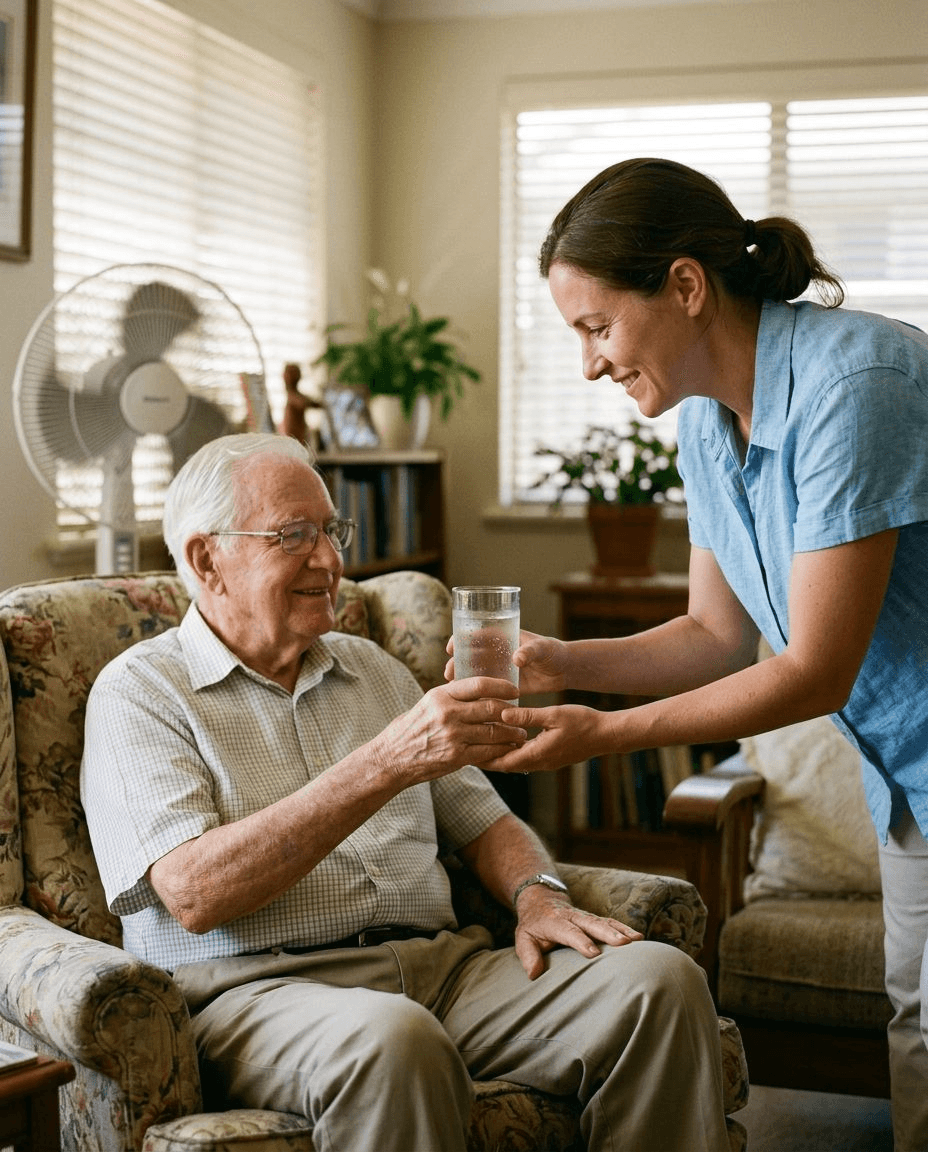
- Know the limits of a fan. A fan helps in moderate heat, but once the air passes the mid-90s it mostly circulates hot air and can give a false sense of safety. On those days, getting to cooled air matters more than any fan.
- Block the sun. Close blinds and curtains on the sunny side during the day, and open the house up at night if it cools off outside.
- Stage the fluids. Put water where it will be seen and reached, a filled pitcher on the counter, a bottle by the chair, so drinking does not depend on remembering to be thirsty.
- Check the medicine storage. Move insulin, inhalers, and other heat-sensitive medicines out of hot cars, windowsills, and unconditioned rooms.
The Daily Rhythm of a Hot Day
When a hot stretch arrives, the goal is a steady routine rather than a scramble. Front-load the day: any errands, gardening, or a walk belong in the early morning or after the sun drops, not at midday. Keep fluids constant and skip the alcohol and extra caffeine, which work against hydration. Dress for it, in loose, light, breathable clothing. And reach for the quick cool-downs that work fast, a cool shower, or a damp cloth on the neck, wrists, and ankles.
The most protective habit of all is simple presence. The CDC advises checking on an older adult at least twice a day during hot weather, with four questions in mind: are they drinking enough, do they have a way to stay cool, do they know how to keep cool, and are there any signs of heat stress? For an older adult who lives alone, that is exactly the gap a steady caregiver fills. Our companion care includes those daily check-ins, drink reminders, and a ride to a cooler place when the house gets too warm, while personal care can help with cool showers and the kind of close, daily attention that catches early heat exhaustion before it turns into something worse.

When to Cool Fast and Call for Help
If heat exhaustion appears, act before it escalates. Move the person to the coolest place available and have them lie down. Give cool water in small, steady sips if they are alert enough to drink. Loosen or remove heavy clothing. Cool the skin actively: a cool shower or bath, or wet cloths, with extra attention to the neck, armpits, and groin where large blood vessels run close to the surface. Most cases turn the corner within half an hour.
Call 911 right away, and keep cooling while you wait, if you see any of the heat stroke signs: confusion or unusual behavior, fainting or trouble staying awake, a body that has gone hot and dry and stopped sweating, a seizure, or a fast or pounding pulse. Do not wait to see if it passes, and do not assume a missing fever means all is well, the danger here is the brain and the core temperature, not a thermometer reading. The sooner cooling begins, the better the odds.
Build the Plan Before the Forecast Does
Heat is one of the few serious summer risks that is almost entirely preventable, and the prevention is unglamorous: cool air, steady fluids, a shaded morning, and someone keeping an eye out. The mistake families make is treating each hot day as a one-off to be powered through, when the better move is a standing plan that switches on whenever the CDC's heat guidance for older adults flags a high-risk day. Decide now where the cool place is, who is checking in and when, which medications need a second look, and what the signal is to leave a too-warm home.
Build that plan before the first heat advisory of the season, not during it. For families near our Middlesex County, New Jersey office, part of that plan can be a standing summer check-in, a reliable ride to somewhere cool, and a caregiver who knows what early heat trouble looks like, folded into a week that is already on the calendar. The forecast will take care of the rest of the warning.
This article is general information, not medical advice. If you suspect heat stroke, call 911. For questions about how specific medications affect heat risk, talk with your doctor or pharmacist.
Images generated for Always Responsive Home Care.
Frequently Asked Questions
Why are older adults more sensitive to heat?
Aging changes the two systems the body relies on to cool itself. Older adults sweat less, and their skin is slower to send blood to the surface where heat escapes, so the body sheds heat less efficiently. At the same time, the sense of thirst dulls, so an older person can be dehydrated well before they feel like drinking. Add common chronic conditions like heart, lung, or kidney disease and several routine medications, and the result is a body that both overheats faster and notices it later. As the National Institute on Aging puts it, the temperature does not have to be extreme to put an older adult at risk.
What are the signs of heat stroke in an older adult?
Heat stroke is a medical emergency in which body temperature climbs above 104 degrees Fahrenheit. The warning signs are confusion or acting strangely, fainting, skin that is hot and flushed but often no longer sweating, and a pulse that is either strong and rapid or weak. Slurred speech, agitation, and loss of consciousness can follow. The single most important clue is a change in thinking or alertness on a hot day. If you see it, call 911 and begin cooling the person immediately while you wait.
What is the difference between heat exhaustion and heat stroke?
Heat exhaustion is the warning stage: heavy sweating, thirst, dizziness, weakness, nausea, and skin that may feel cool and clammy. The person is uncomfortable but still mentally clear. It usually resolves with rest in a cool place and fluids. Heat stroke is the emergency stage, defined by the brain being affected: confusion, strange behavior, or fainting, often with skin that has stopped sweating. The practical rule is the 30-minute mark. If someone with heat exhaustion is not clearly better after about half an hour of cooling and fluids, or shows any confusion, treat it as heat stroke and call for help.
Can medications make seniors more vulnerable to heat?
Yes, and this surprises many families. A National Institute on Aging study of nearly 400,000 older Medicare beneficiaries found that several common drug classes were tied to a higher risk of heat-related hospitalization, including diuretics, ACE inhibitors, anticholinergic medicines, and antipsychotics. These can blunt thirst, reduce sweating, disrupt fluid balance, or interfere with temperature control. Heat also degrades the medicines themselves: insulin loses potency, and inhalers and EpiPens can fail if left in a hot car. Never stop a prescription because of the heat, but do ask the doctor or pharmacist which ones raise the stakes.
How can you keep an older person cool without air conditioning?
A fan alone is not enough once the air temperature climbs into the mid-90s, because it just moves hot air around. The most reliable fix is getting to a cooled space for a few hours: a library, a mall, a senior center, or an official cooling center. At home, close blinds against the sun during the day, use cool showers or damp cloths on the neck and wrists, keep fluids constant, and move activity to the early morning. If the home cannot be kept safe, do not tough it out, relocate the person until the heat breaks.
How hot is too hot for an older adult?
There is no single safe number, because humidity, the indoor temperature, the person's health, and their medications all matter. A useful habit is to check the local heat forecast rather than the thermometer alone. The CDC's HeatRisk dashboard turns the day's combined heat and humidity into a color-coded risk level by zip code, with recommended actions. When the forecast reaches the orange or red range, treat it as a day that needs an active plan, not just an open window.