What Swollen Ankles and Legs Are Telling You
Swollen ankles and legs are common with age and usually harmless. The everyday causes, the red flags that need a doctor, and what actually brings it down.

By the end of an ordinary day, a great many older adults look down and find that their socks have left deep rings around the ankle, their slippers no longer slide on easily, or the tops of their feet have lost their usual shape. Lower-limb swelling, which doctors call edema, is one of the most common physical changes of later life, and studies of family-medicine practices find it turns up constantly among patients over 65. Most of the time it is more nuisance than danger. But because the very same puffiness can occasionally be the first quiet signal of a heart, kidney, or vein problem, it is worth understanding what separates the ordinary kind from the kind that needs attention.
The reassuring headline first: roughly 70 percent of leg swelling in older adults comes from chronic venous insufficiency, a mechanical wearing-out of the leg veins that is manageable and rarely an emergency. The goal of this guide is to help you tell the everyday version apart from the small number of cases that are trying to tell you something, and to know what genuinely brings the swelling down once you do.
How Fluid Ends Up in the Legs
Blood has an easy trip down to the feet and a hard trip back up. To return against gravity, leg veins rely on two things: a series of one-way valves that stop blood from sliding backward, and the calf muscles, which squeeze the deep veins like a pump every time you take a step. When that system works, fluid keeps moving. When it falters, fluid lingers in the lowest tissues and leaks out of the small vessels into the surrounding space, which is the swelling you see.
Aging works against both parts of the pump. Vein valves stiffen and leak, the calf muscles weaken and get used less, and the kidneys, which fine-tune how much salt and water the body keeps, become a little less efficient. That is why swelling so often shows up in the ankles and feet, worsens as the day goes on, and eases overnight when the legs are level with the heart for hours. Understanding this simple plumbing makes the rest of the picture, both the harmless causes and the worrying ones, much easier to read.
The Ordinary Reasons Legs Swell
Most swelling has a plain, fixable explanation. The usual suspects are:
- Long stretches of sitting or standing. A long car ride, an afternoon in a recliner, or hours on the feet all let fluid settle because the calf pump is idle.
- Hot weather. Heat widens blood vessels, so summer months and warm rooms reliably make ankles puffier. This is why swelling often gets worse in July than in January.
- Salt. A salty meal makes the body hold extra water for a day or two, and swelling follows.
- Medications. Several common ones list swelling as a side effect, including certain blood-pressure drugs (especially calcium channel blockers like amlodipine), anti-inflammatory painkillers, steroids, and some diabetes and nerve medications. If swelling started after a new prescription, that is worth mentioning to the prescriber.
- Simply being less active. The less the legs move, the less the calf pump works, and a more sedentary stretch of life quietly invites more swelling.
What these have in common is that the swelling tends to be gentle, even on both sides, painless, and better after a night's rest. That pattern is the signature of the ordinary kind. If a new medication is the trigger, the answer is never to stop it on your own; it is a conversation with the doctor about alternatives. Reviewing everything a person takes is a good habit anyway, and our guide to medication management for seniors walks through how to keep that list current and safe.
When Swelling Points to Something Bigger
A smaller share of swelling is the body flagging a problem in one of its major organs. These causes are worth knowing not to cause alarm, but because catching them early makes them far easier to manage:
- Heart. When the heart pumps less forcefully, blood backs up and fluid is pushed into the tissues. Heart-related swelling usually affects both legs, starts at the ankles and climbs, and often travels with breathlessness (particularly lying down), fatigue, and quick weight gain.
- Kidneys. Kidneys manage the body's salt and water balance. When they underperform, fluid builds up, sometimes showing not only in the legs but around the eyes in the morning.
- Liver. Advanced liver disease lowers a blood protein that normally keeps fluid inside the vessels, letting it seep into the legs and abdomen.
- Lymphedema. When the lymph system that drains tissue fluid is damaged or overwhelmed, often after cancer treatment or lymph-node surgery, swelling builds up, usually in one limb, and does not ease with simple elevation.
The through-line is that swelling from these causes tends to be persistent, to worsen over time, and to come with other symptoms. It does not clear overnight the way a salty dinner does. That persistence is the cue to get it looked at.
One Leg or Both? The Distinction Doctors Ask About First
When a clinician assesses swelling, one of the very first questions is whether it is in one leg or both, because the answer points in different directions. Swelling in both legs, roughly symmetrical, usually reflects a whole-body cause: venous insufficiency, heart, kidney, liver, medications, heat. It is the more common and generally less urgent pattern.
Swelling in one leg is the one to take seriously, especially if it came on quickly. A single swollen, painful leg, sometimes with warmth, redness, or a cramping ache that feels like a pulled muscle but does not ease with rest, can be a deep vein thrombosis, a blood clot in a deep leg vein. That is a same-day medical concern, because a piece of the clot can break loose and travel to the lungs. Notably, one survey found that only about 28 percent of people said they would recognize what a blood clot in the leg feels like, which is exactly why the one-leg-versus-both distinction is worth carrying in your head.
The Signs That Mean Call Today
Most swelling can wait for a routine appointment. A short list cannot. Treat the following as reasons to seek urgent or emergency care rather than to wait and see:
- Sudden swelling in one leg, particularly with pain, warmth, redness, or tenderness in the calf.
- Leg swelling together with shortness of breath, chest pain, or lightheadedness — this is a call-emergency-services situation, as it can signal a clot in the lungs.
- Swelling that appears rapidly alongside sudden weight gain over a day or two.
- Skin over the swelling that is broken, weeping, blistered, or looks infected (hot, spreading redness), since fragile swollen skin is prone to sores and infection.
- Swelling that keeps worsening despite elevation, movement, and a few days of care.
When none of these are present and the swelling is gentle, even, and better by morning, it is reasonable to start the at-home measures below while arranging a routine check to confirm the cause.
What Actually Brings the Swelling Down
For the common venous kind of swelling, the treatments that genuinely help are unglamorous, mechanical, and free or inexpensive. They work by helping the legs do what the calf pump and veins are struggling to do on their own.
- Move often. Walking is the single best remedy, because every step squeezes the calf pump. When walking is hard, seated ankle pumps and circles, done a few times an hour, still move fluid. Gentle activity beats bed rest for this.
- Elevate the legs. Raise the legs to roughly heart level for about 30 minutes, three or four times a day. Propping the feet on a low stool is better than nothing, but getting them level with the heart is what lets gravity drain them.
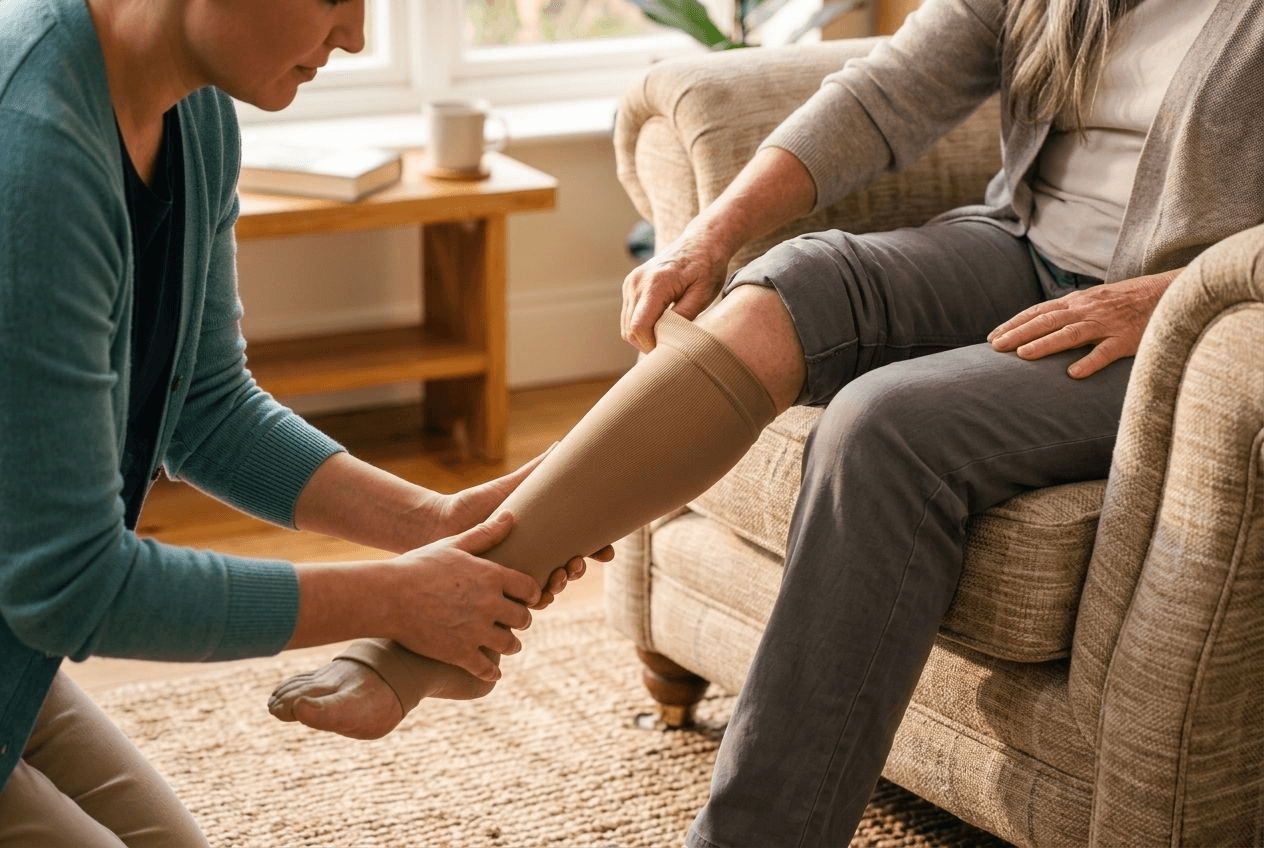
- Use compression. Graduated compression stockings are firmest at the ankle and looser up the leg, nudging fluid upward. Mild over-the-counter strengths (about 15 to 20 mmHg) suit early swelling; heavier swelling may need a fitted, higher-strength pair. Because compression is unsafe for people with certain artery problems, clear it with a clinician first.
- Ease off salt. Cutting back on processed and salty foods reduces how much water the body holds. This, not fluid restriction, is the dietary lever that matters.
- Care for the skin. Skin over swollen legs stretches thin and cracks easily, and cuts there heal slowly and invite infection. Daily moisturizing and prompt attention to any break in the skin keep small problems small.

The Fixes That Backfire
A few well-meant instincts make swelling worse or mask a problem, and they are worth naming plainly:
- Drinking less water. The most common mistake. Dehydration makes the body cling to salt and fluid, so cutting back on water tends to worsen swelling, not fix it. Older adults are already prone to dehydration; the fix is less salt, not less water. Our look at dehydration in older adults covers why this trips so many families up.
- Reaching for water pills on your own. Diuretics have a role in some conditions, such as heart failure, but for ordinary venous swelling they are generally not the answer and can cause dehydration and electrolyte problems. They are a doctor's decision, not a self-prescribed one.
- Ignoring one-sided or painful swelling. Waiting out a single hot, swollen, painful leg to see if it settles is the instinct most worth resisting, given the clot risk.
- Buying the tightest compression available. More pressure is not better. Stockings that are too strong or poorly fitted can hurt circulation; they should feel snug, never painful.
Living Well When Legs Swell
For many older adults the swelling itself is manageable; the harder part is the daily choreography around it. Compression stockings are notoriously stubborn to pull on, especially for anyone with arthritic hands or a stiff back. Remembering to elevate the legs several times a day, keeping the skin checked and moisturized, and staying gently on the move all take a bit of structure. Swelling also nudges up the risk of falls and makes ordinary shoes fit poorly, so the right footwear matters more than people expect; our guide to foot care for older adults covers keeping feet and skin healthy.
This is where a steady hand at home makes an outsized difference. A caregiver can get compression stockings on correctly in the morning and off at night, build leg elevation into the day, keep an eye on the skin for the first sign of a sore, and encourage the short, frequent walks that do more than any pill. That kind of consistent, practical support is the heart of personal care, and for clients whose swelling affects steadiness on their feet, our mobility care keeps daily movement safe. Families across our Monmouth County, New Jersey service area and beyond lean on that day-to-day help precisely so the small, repeated tasks that keep swelling in check actually get done.
A Two-Minute Check Worth Doing Weekly
The simplest way to stay ahead of leg swelling is a brief, regular look. Once a week, press a thumb gently into the swollen area for a few seconds: if it leaves a dent that slowly fills back in, that is pitting edema worth tracking. Note whether both legs match or one is bigger, whether the skin is intact, and whether things are steady, better, or creeping worse from week to week. Even, both-sided, stable-or-improving swelling that clears overnight is the reassuring pattern. A leg that is newly one-sided, painful, warm, or paired with breathlessness is the pattern that means pick up the phone.
Swollen ankles are such an everyday part of aging that they are easy to wave off entirely, and most of the time waving them off would be harmless. But a couple of minutes of attention, plus the plain habits of moving, elevating, and compressing, turns a vague worry into something you can actually manage, and makes sure the rare swelling that matters does not slip by unnoticed.
This article is for general education and is not medical advice. Leg and ankle swelling has many causes, some serious. Talk with a doctor or nurse about new, worsening, or one-sided swelling, and seek emergency care for swelling with chest pain or shortness of breath.
Sources: Harvard Health Publishing — Edema, A to Z; American Academy of Family Physicians — Edema: Diagnosis and Management; World Thrombosis Day — Deep Vein Thrombosis.
Frequently Asked Questions
Why are my ankles swelling as I get older?
The most common reason is chronic venous insufficiency, which accounts for roughly 70 percent of leg swelling in older adults. Veins carry blood back up from the legs against gravity using one-way valves and the squeezing action of the calf muscles. With age those valves weaken and the muscles do less pumping, so blood and fluid pool in the lowest part of the body, which is the ankles and feet by the end of the day. On top of that baseline, older adults tend to sit more, take more medications that can cause fluid retention, and have less efficient kidneys, all of which add to the swelling. That is why so many people notice their socks leaving marks or their shoes feeling tight in the evening and better again by morning after a night lying flat.
When should I worry about swollen ankles?
See a doctor promptly, rather than waiting, when swelling comes on suddenly, affects only one leg, is painful, or comes with skin that is warm, red, or discolored, because that combination can mean a deep vein clot. Also seek urgent help if leg swelling arrives with shortness of breath, chest pain, or lightheadedness, which can signal a clot that has traveled to the lungs or a heart problem. Even without those alarm signs, book a routine appointment if swelling is new and persistent, keeps getting worse, does not improve overnight or with elevation, or is accompanied by weight gain, because it may be the first outward sign of a heart, kidney, or liver condition that is easier to manage when caught early.
How do you get rid of swollen ankles in the elderly?
For the common venous type of swelling, the measures that work are simple and mechanical. Move the legs often, since walking and even seated ankle pumps use the calf muscles to push fluid upward. Elevate the legs above the level of the heart for about 30 minutes a few times a day. Wear graduated compression stockings, starting with a mild over-the-counter strength if a doctor agrees they are safe. Ease off salty foods, which make the body hold water, and keep the skin moisturized to prevent cracking. It is important to have the cause confirmed first, because the right treatment depends on it, and because compression is not safe for everyone, particularly people with poor arterial circulation in the legs.
Does drinking less water help swollen ankles?
No, and cutting back on fluids is one of the most common mistakes. It seems logical that less water in would mean less swelling, but dehydration actually prompts the body to hold on to sodium and fluid more tightly, which can make edema worse rather than better. The fluid in swollen legs is not simply the water you drank; it is fluid that has leaked from the circulation into the tissues, and restricting drinking does not draw it back. The measure that does reduce fluid retention is lowering salt intake, not water intake. Older adults are already prone to dehydration, so the safer approach is to keep drinking normally, cut back on salty foods, and let movement and elevation do the work.
Can swollen ankles be a sign of heart failure?
Yes. When the heart cannot pump strongly enough, blood backs up in the veins and fluid is forced out into the tissues, often appearing first as swelling in the ankles that gradually creeps up the calves. Heart-related swelling usually affects both legs and is frequently paired with other clues such as shortness of breath, especially when lying flat, fatigue, and rapid weight gain over a few days. Kidney and liver disease can produce similar both-legged swelling. None of this means every swollen ankle is a heart problem, and most are not, but it is exactly why new or worsening swelling should be evaluated rather than dismissed as just getting older.
Do compression socks help swollen ankles?
For swelling caused by venous insufficiency they are one of the most effective treatments, because they apply graduated pressure that is firmest at the ankle and eases higher up the leg, helping the veins move fluid back toward the heart. Mild over-the-counter stockings, around 15 to 20 mmHg, are available at most pharmacies and are usually enough for early swelling; more significant swelling may need a higher strength and a proper fitting. The important caution is that compression is not safe for everyone. People with peripheral arterial disease or certain other circulation problems can be harmed by it, so it is worth a quick check with a doctor or nurse before starting, and stockings should never feel painfully tight.