Which Vaccines Do Older Adults Actually Need?
The vaccines that matter most after 50, what recently changed with the pneumonia and RSV shots, and a simple way to track what you are due.

It is easy to file vaccines under childhood, a thing you finished long ago, like braces or learning the alphabet. For older adults, the truth runs the other way. The immune system ages along with the rest of us. It grows slower to notice an unfamiliar germ and slower to answer one, which is the quiet reason a short list of vaccines does its most important work after sixty. It is also why several of those shots now come in stronger, senior-specific versions built to push a slower system a little harder.
The good news is that the list is shorter than it looks, and most of it is the kind of thing you handle once and forget. The complicating news is that the rules have moved in the last two years: the pneumonia vaccine now starts earlier, the RSV vaccine is new enough that few families know who it is for, and the COVID guidance keeps changing. Here is what is currently recommended for older adults, sorted not by disease but by how often you actually have to think about each one.
Why the Shots Change as You Get Older
Around the time the rest of the body starts asking for reading glasses, the immune system loses a step too. Scientists call it immunosenescence; in plain terms, the cells that recognize and fight invaders grow fewer and less responsive. That has two practical consequences. The first is that illnesses a younger body would shrug off, the flu, a bout of pneumonia, a shingles flare, land harder and clear more slowly after sixty-five. The second is that a standard vaccine may not provoke as strong a response as it once did, which is why some shots now come in versions made specifically for older adults: a high-dose flu vaccine, for instance, or an added ingredient called an adjuvant that gives the immune system a firmer nudge. Vaccinating later in life is not box-ticking. It is shoring up a defense that is quietly weakening. The CDC's adult immunization schedule lays out the full picture by age; what follows is the short version that matters most after fifty.
The Ones You Get Just Once
Start with the satisfying part of the list: the vaccines you deal with once, or close to it, and then largely stop thinking about. Three of them matter most for older adults.
Shingles. The shingles vaccine, sold as Shingrix, is two doses given two to six months apart for every adult fifty and older, even if you had shingles years ago and even if you remember the older single-dose vaccine, which has since been retired. Shingles is the chickenpox virus reigniting decades later as a band of blistering, burning rash, and its real menace is what it can leave behind: a nerve pain called postherpetic neuralgia that can outlast the rash by months or years. The vaccine is highly effective, and the most common way people undercut it is simple. They get the first dose, the arm is sore, and they never go back for the second. Both doses are the protection. Put the second one on the calendar the day you get the first.
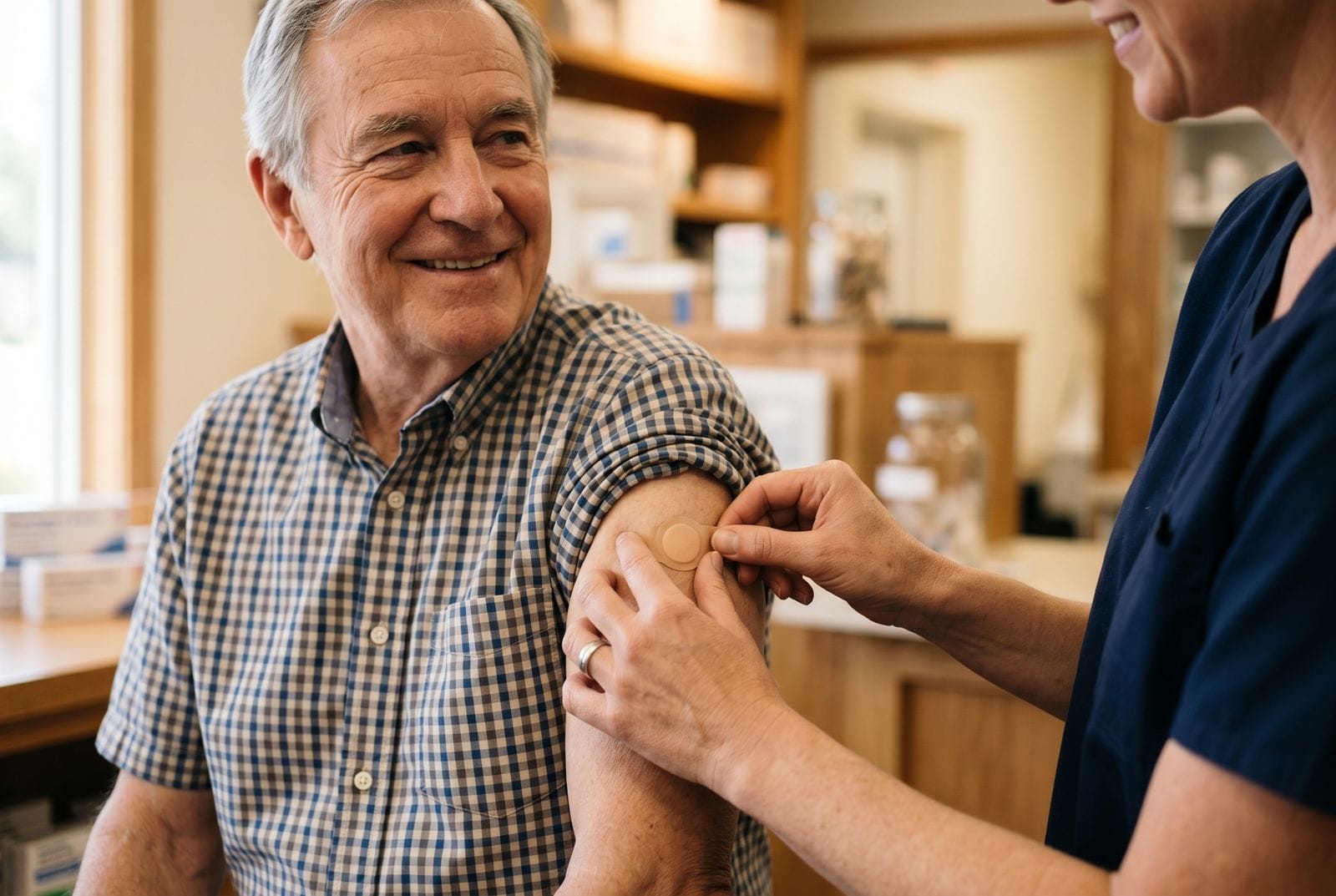
The pneumonia vaccine. This is the one whose rules just changed. For years the pneumococcal vaccine was a sixty-fifth-birthday shot; in late 2024 the CDC lowered the routine age to fifty. Pneumococcal bacteria cause more than pneumonia, reaching the bloodstream and the lining of the brain in the worst cases, and for most adults a single dose of the current conjugate vaccine is the whole job. There are a couple of versions, and one of them needs a follow-up shot a year later, so this is a thirty-second question for your pharmacist rather than something to memorize. If you are over fifty and have never had it, you are almost certainly due.
RSV. The newest arrival, and the one that confuses families most, because the guidance has narrowed since it launched. RSV is a respiratory virus that is a winter nuisance for young children and a real hazard for older lungs. The CDC recommends a single dose, not a yearly one, for every adult seventy-five and older, and for adults fifty to seventy-four with higher-risk conditions such as chronic heart or lung disease, diabetes, a weakened immune system, or life in a nursing home. If you have already had it, you do not need another dose right now. Late summer or early fall, before RSV season builds, is the moment to ask.
The Two That Come Around Every Fall
Two vaccines do not stay handled. They need refreshing as the calendar turns toward winter, which makes early autumn the natural time to take care of both in one stop.
Flu. Everyone six months and older needs a flu shot every year, but here the senior-specific versions earn their keep. For adults sixty-five and up, the CDC preferentially recommends one of the stronger formulations, high-dose, adjuvanted, or recombinant, because they tend to protect this age group better than a standard shot. You do not need to learn the names. You need to tell the pharmacist your age and let them reach for the right vial. Skip the nasal-spray version, which is not meant for this age group. September or October is the sweet spot, early enough to be covered when flu arrives, late enough to last the season.
COVID. COVID is the moving target. An updated dose is offered each year, and for older adults the recommendation has lately shifted toward a shared decision with your doctor or pharmacist rather than a blanket rule. For most people sixty-five and older it is still advised, but because the guidance has changed more than once, the honest answer is to ask your clinician what is recommended for you this season and check the current CDC guidance rather than last year's. It can usually be given in the same visit as the flu shot.
The Booster a Garden Cut Can Move Up
One vaccine sits outside the seasonal rhythm and tends to be forgotten until it is suddenly urgent: the tetanus booster, usually given as Td or Tdap. Every adult needs one every ten years, and if you have never had the Tdap version as an adult, you are due for it once, since it adds protection against whooping cough, which is miserable and on the rise. The catch is that the ten-year clock can be cut short. A deep or dirty wound, and the garden, the toolshed, and a stumble on the back step supply plenty of those in summer, can call for a booster sooner if it has been more than five years. Far better to know your date in advance than to dig for it while an urgent-care clerk waits with a tetanus-prone cut in front of you.
Getting Several at Once Without a Rough Few Days
If that list looks like a lot of trips, here is the reassuring part: most adult vaccines can be given together, at the same visit, in different arms. There is no medical prize for spacing them out, and bundling them turns four errands into one. The trade-off is that a busy immune system can leave you a little more tired or sore the next day, so some people choose to split the most reactive shots, the high-dose flu and the shingles dose, say, across two visits a couple of weeks apart, purely for comfort. A day of a sore arm or feeling run-down is the ordinary sound of a vaccine working, not a reason for alarm; serious reactions are rare. Your pharmacist can read your record, tell you what you are due for, and map out whether to do it all at once or in two short stops.
The Part Families Forget: Keeping the Record
The hardest part of senior vaccination is rarely the needle. It is the record-keeping. Most adults cannot say off the top of their head when they last had a tetanus booster, whether they ever went back for the second shingles dose, or which pneumonia vaccine they received. A one-page immunization record, kept right alongside the medication list since the two answer the same question of what a person already has on board, clears up most of the confusion. Ask the pharmacy to print what they have on file; a pharmacy that gives the shots usually keeps a tidy history.

This is also where a little everyday help quietly pays off. A companion caregiver who is part of a parent's week is well placed to notice that the second shingles dose never happened, to keep the record current, and to provide the ride to the pharmacy that is often the only thing standing between meaning to get a shot and actually getting it. For families near our Middlesex County, New Jersey office, that can be as simple as folding the fall flu-and-COVID visit into an errand already on the calendar. The payoff is concrete: a vaccinated older adult is far less likely to land in the hospital with pneumonia or the flu, and the smoothest return home from a hospital stay is the one that never has to happen.
An Afternoon Now, a Quieter Winter Later
None of this has to happen in one heroic push. If you are starting from scratch, the simplest plan is to book a single appointment this fall, bring whatever record you can find, and let the pharmacist sort the rest into now and later. The shingles and pneumonia shots are the once-and-done foundation; the flu and COVID doses are the autumn ritual; the tetanus booster is the one to date-check before a wound dates it for you. What the whole list adds up to is not really paperwork or appointments. It is a run of ordinary winters spent at home instead of in a hospital bed, which, for an aging body with a slower immune system, is one of the plainest gifts modern medicine has to offer. The best afternoon to sort it out is an unremarkable one, before the season makes the decision for you.
This article is general information, not medical advice. Vaccine recommendations change and depend on your health history, so confirm what applies to you with your doctor or pharmacist and the current CDC adult immunization schedule.
Illustrative images generated with AI.
Frequently Asked Questions
What vaccines do older adults need?
Most adults over 65 need a yearly flu shot and an updated COVID dose, a one-time pneumococcal (pneumonia) vaccine, two doses of the shingles vaccine, and a tetanus booster every ten years. A single RSV dose is recommended for everyone 75 and older and for adults 50 to 74 with higher-risk health conditions. The exact list depends on your age, your health history, and which shots you have already had, so a pharmacist can confirm what you are due for.
At what age should you get the pneumonia vaccine?
In late 2024 the CDC lowered the routine age for the pneumococcal (pneumonia) vaccine from 65 to 50. Most adults need only a single dose of a current conjugate vaccine. One version requires a follow-up dose about a year later, so it is worth asking your pharmacist which one you are getting. If you are over 50 and have never had it, you are likely due.
Who should get the RSV vaccine?
The CDC recommends a single dose of RSV vaccine for all adults 75 and older, and for adults 50 to 74 who are at increased risk of severe RSV because of conditions like chronic heart or lung disease, diabetes, a weakened immune system, or living in a nursing home. It is not a yearly shot. If you have already received it, you do not need another dose right now. Late summer or early fall is the best time to get it.
Do adults over 65 need a special flu shot?
Yes. For adults 65 and older, the CDC preferentially recommends one of the stronger flu vaccines, a high-dose, adjuvanted, or recombinant version, because these tend to protect this age group better than a standard-dose shot. Adults 65 and older should not get the nasal-spray flu vaccine. The flu shot is needed every year, ideally in September or October.
How many doses of the shingles vaccine do you need?
The shingles vaccine, Shingrix, is given as two doses two to six months apart for adults 50 and older, including people who had shingles in the past. Both doses are needed for full protection, and the most common mistake is getting the first dose and skipping the second. Adults 19 and older with weakened immune systems are also recommended to get it.