Too Stiff for Yoga? The Myths Keeping Seniors Off the Mat
Too old or stiff for yoga? A senior's guide to the myths, the real benefits, gentle styles, and how to start safely at almost any age.
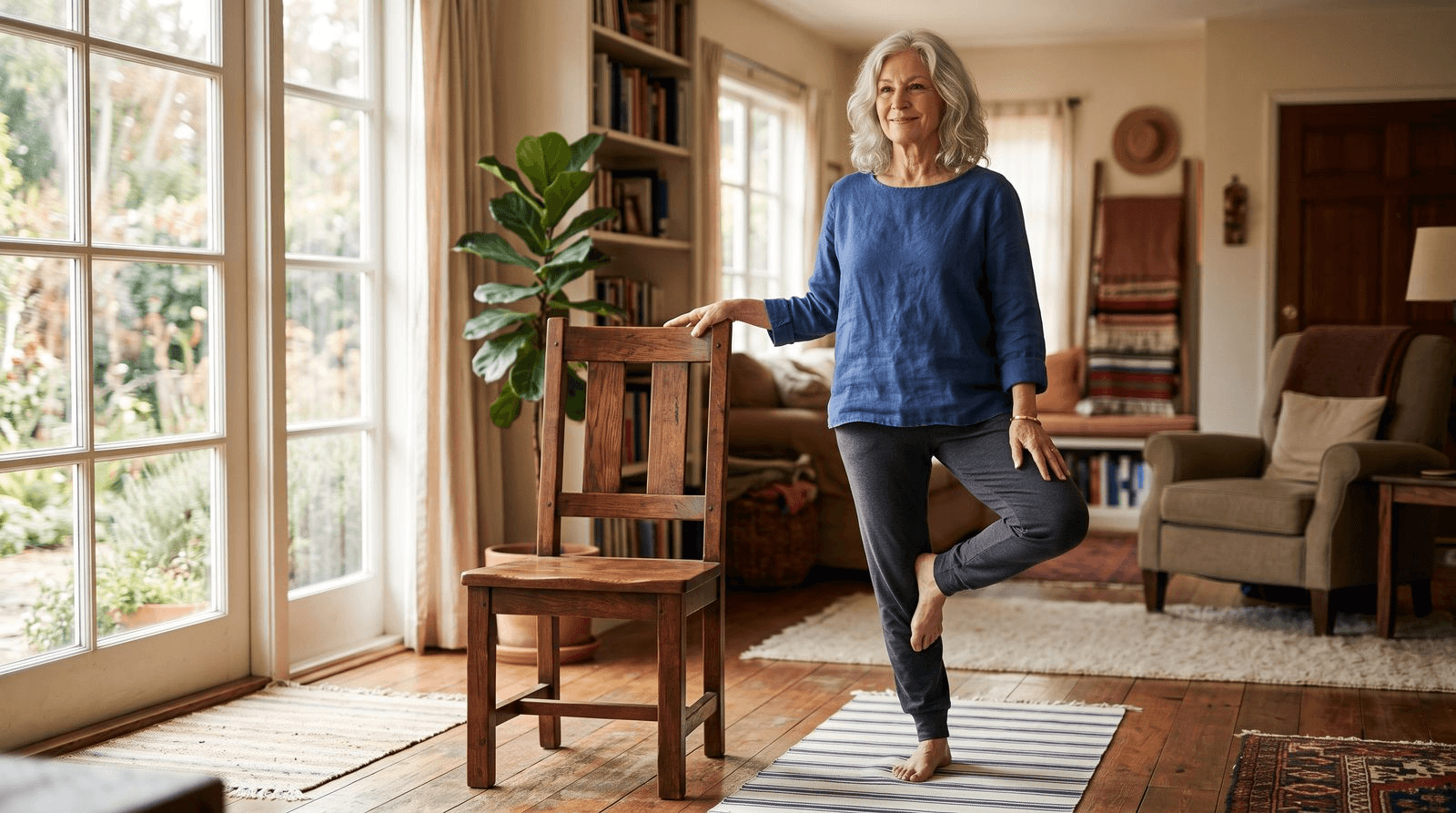
You have probably already decided yoga is not for you. Too stiff. Too old. Bad knees. A picture in your head of a twenty-five-year-old folded into a pretzel, and no version of that involves you. So the idea gets filed away with the other things that are technically good for you and never actually happen.
Here is the problem with that. Almost every reason people your age give for skipping yoga is either wrong or backwards. The stiffness is the reason to start, not the reason to skip. The pretzel poses are one narrow corner of a practice that is mostly slow, seated, and gentle. And the thing yoga builds, steady balance and lower-body strength, happens to be the exact thing that keeps an older adult on their feet and out of the hospital. So before you file it away for good, let us take the five beliefs that keep seniors off the mat and look at what is actually true.
What Yoga Actually Does for an Older Body
Start with what is at stake, because it is more than touching your toes. As we age, three things quietly erode: flexibility, muscle, and balance. Yoga works on all three at once. It moves stiff joints through their range so daily tasks, reaching a high shelf, twisting to check a blind spot, get easier. It builds and preserves muscle, including the lower-body strength that lets you rise from a chair without using your arms. And it sharpens balance and proprioception, your body's sense of where it is in space, which is the difference between a stumble and a fall.
None of that is wishful thinking. The National Institutes of Health lists yoga as a core flexibility exercise for older adults, alongside strength, balance, and endurance work. And studies keep finding the same thing: roughly twelve weeks of twice-weekly yoga produces measurable improvements in balance, lower-body strength, and flexibility in adults over 65, often with the biggest gains in those who started with the least. There is a mental side too. The slow breathing at the center of yoga lowers stress and anxiety, lifts mood, and gives people something most describe after a few weeks: a quiet sense of feeling more at home in their own body.
Myth: You Have to Be Flexible to Start
This is the big one, and it has the logic exactly reversed. Saying you are too stiff for yoga is like saying you are too out of shape to exercise. Flexibility is not the ticket you need to get in the door. It is what you walk out with.
Every pose has a modification, and a good beginner class is mostly modifications. Cannot reach your toes? You bend your knees or use a strap. Cannot get to the floor? You do the whole thing in a chair. The point was never to hit a shape from a magazine. It is to move a joint a little further than it wanted to go, breathe, and repeat. Do that twice a week and the range comes back, slowly and then noticeably. Stiffness is the starting condition yoga is designed for, not a disqualification from it.
Myth: Real Yoga Means Getting Down on the Floor
The image in most people's heads, mats on the ground, deep folds, standing on one's head, is one intense style out of many, and not the one built for you. The styles that suit older bodies are slow, supported, and often entirely off the floor.
- Chair yoga. The gentlest entry point. You sit in a sturdy chair, or use it for support while standing, and move through seated versions of classic poses. It is ideal if you have balance concerns, arthritis, or limited mobility, and it is where a lot of people start. We walk through it in our guide to practicing chair yoga safely.
- Gentle or beginner hatha. Slow-paced classes that hold basic seated and standing poses, with the instructor offering modifications for every level. A good on-ramp once you have a little confidence.
- Restorative yoga. The most relaxing of all. You settle into a few supported shapes propped up with bolsters and blankets and hold them while you breathe. Very little exertion, most of the mental and stress-relief payoff.
What to avoid is just as simple. Skip anything labeled hot or Bikram, where the room is heated to 90 or 100 degrees, and leave fast-moving vinyasa, ashtanga, and power yoga for later, if ever. When you read a class description, look for the words gentle, beginner, restorative, or chair. Those four words do most of the filtering for you.
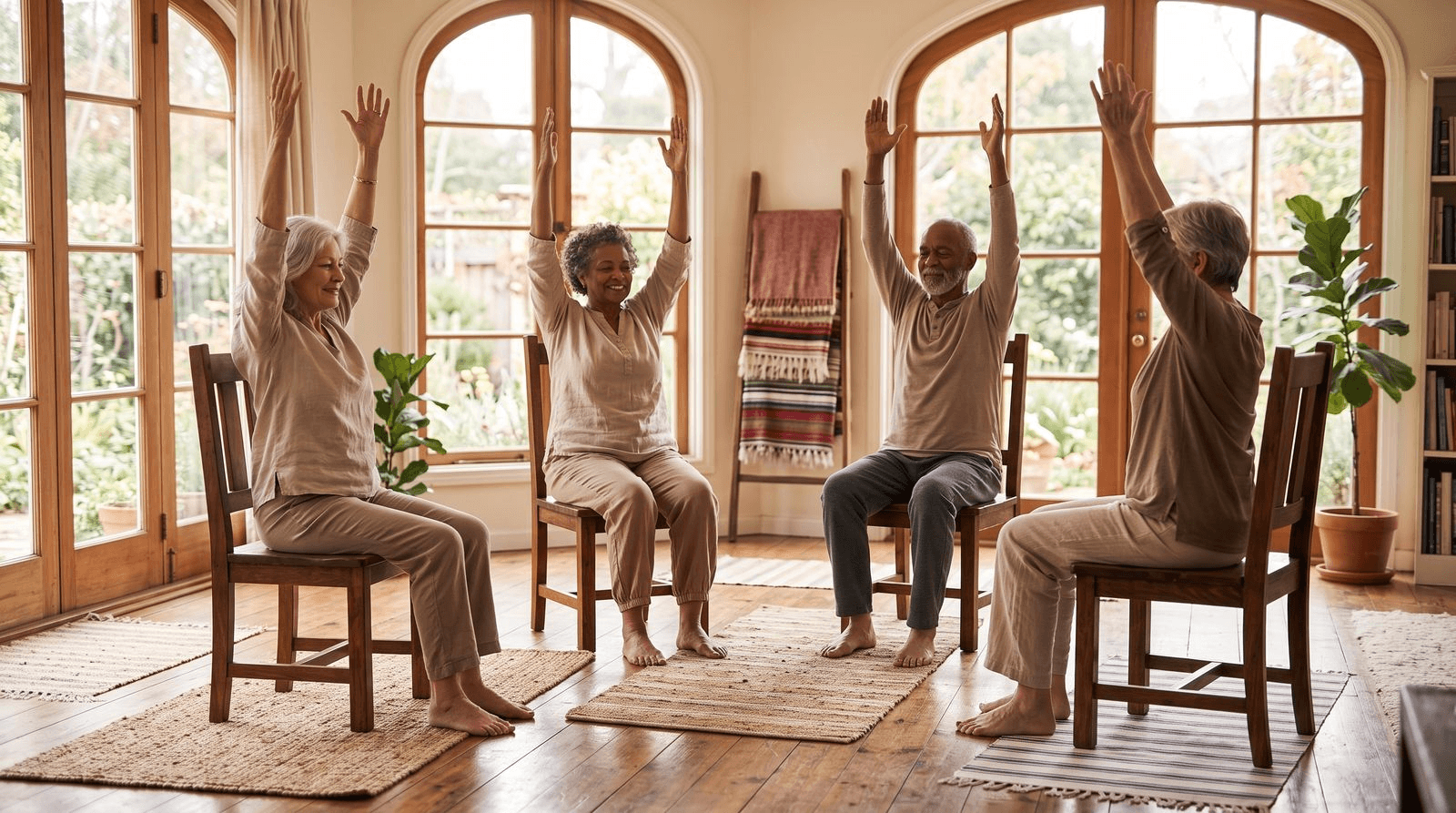
Myth: It's Stretching, Not Real Exercise
It is easy to look at a slow, seated class and conclude nothing much is happening. Plenty is. Holding a gentle pose is quiet resistance work: your muscles are supporting your body weight, which is exactly how yoga builds and preserves strength and helps protect bone density. The balance training is real training, not a warm-up for it.
And the payoff lands where it matters most for an older adult. Falls are the leading cause of injury for people 65 and older, and the Centers for Disease Control and Prevention reports that about one in four seniors falls each year. Yoga works directly on the systems that prevent those falls, which is why it belongs in the same conversation as dedicated balance exercises and fall-proofing the home. Think of it as one of the highest-return forms of exercise available to an aging body, disguised as something gentle.
Myth: Yoga Is a Religion
This one keeps a lot of people away, and it is a misunderstanding worth clearing up. Yoga has roots in ancient practice, but the version taught at your local senior center, YMCA, or on a beginner video is a secular system of movement and breathing. No belief is required and nothing is being asked of your faith.
If a class uses a word like namaste or a moment of quiet at the end and that is not for you, take what helps and leave the rest. The parts doing the real work, the movement, the breath, the attention to your body, are yours to keep no matter what you believe. Millions of older adults of every background practice yoga purely as gentle, effective exercise.
Myth: You're Bound to Get Hurt
The fear is understandable, and it usually comes from picturing the wrong kind of yoga. Done gently and with a few precautions, yoga is far safer than the inactivity it replaces. The trouble comes from pushing too hard, moving too fast, or landing in an advanced class by mistake, all of which are avoidable.
A handful of habits keeps it safe. Move slowly and mindfully. Keep a sturdy chair or a wall within arm's reach for standing poses. Wear comfortable clothing and either stable footwear or bare feet for grip. Breathe through the poses rather than holding your breath, and the moment something pinches or sharpens into pain, back off, because discomfort at the edge of a stretch is fine but pain is a stop sign. And check with your doctor before you begin if you have a heart condition, uncontrolled high blood pressure, glaucoma, severe osteoporosis, or a recent hip or knee replacement, so they can point out any specific poses to skip. In most cases they will not just clear you, they will encourage it.
How to Actually Start This Week
The gap between reading about yoga and doing it is smaller than it looks. You do not need a studio membership, special clothes, or any equipment beyond a chair you already own. A short, honest first step:
- Pick a gentle format. Search for a beginner, gentle, restorative, or chair class, whether that is at a nearby senior center or a free video at home. The label does the screening for you.
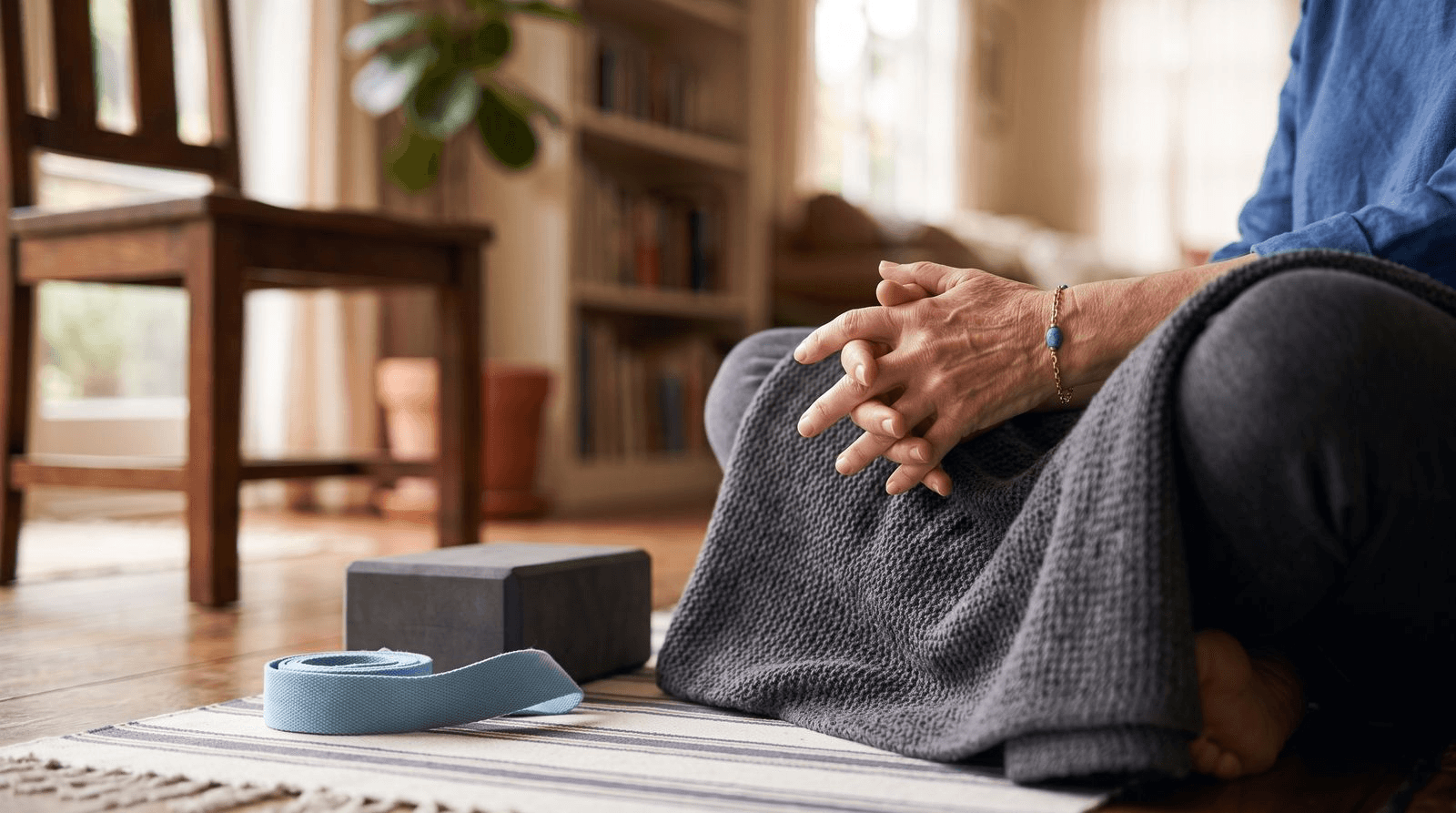
- Set the scene. Clear a small space, put a sturdy chair within reach, use a mat or a folded blanket for grip, and keep water nearby.
- Start with ten to fifteen minutes. A short session you finish beats a long one you quit. You can always add time as it gets easier.
- Aim for twice a week. That is the amount the research is built on. Consistency, not intensity, is what moves the needle.
Getting started is often easier with a second person in the room, and that is a place in-home care fits naturally. A companion caregiver can queue up a class video and steady the chair, offer the bit of encouragement that turns a good intention into a habit, or handle the drive to a class across town so a parent who no longer drives is not shut out of it. For families we serve around Monmouth County, New Jersey, that kind of steady, unglamorous presence, someone there twice a week so the practice actually happens, is frequently what turns yoga from a nice idea into a real routine.
The Only Pose That Counts Is the First One
Every myth on this page points back to the same fear: that yoga is for other people, younger and bendier and more coordinated than you are. It is not. It was, in a real sense, designed for exactly the body you have now, the one that is a little stiffer and a little less steady than it used to be. The people who benefit most are the ones who start with the least.
So do not wait to be ready, because ready is what the practice produces, not what it requires. Sit down in a chair, find a gentle class, breathe, and move a little further than felt possible a minute ago. That is the whole thing. The only pose that counts is the first one, and it is a lot closer than the myths led you to believe.
Frequently Asked Questions
Is yoga safe for seniors?
For most older adults, yes, and it is safer than the inactivity it replaces. The key is matching the style to your body: gentle, chair, and restorative yoga are slow-paced, use props for support, and are designed to be modified. Avoid hot or Bikram classes, where rooms are heated to 90 to 100 degrees, and steer clear of fast vinyasa or power yoga until you have a base. Move slowly, keep a sturdy chair or wall within reach, and never push into pain. If you have a heart condition, uncontrolled high blood pressure, glaucoma, severe osteoporosis, or a recent hip or knee replacement, talk with your doctor before starting so they can flag any poses to skip.
What is the best type of yoga for seniors?
There is no single best style, only the best fit for where your body is today. Chair yoga is the gentlest entry point, keeping you seated or using the chair for support, and it suits anyone with balance concerns, arthritis, or limited mobility. Gentle or beginner hatha yoga moves slowly through basic seated and standing poses with modifications. Restorative yoga uses bolsters and blankets to hold relaxing shapes for the mental and breathing benefits with very little exertion. Most seniors do best starting with chair or gentle hatha and adding standing balance work as confidence grows.
Can you start yoga at 70 or 80?
Yes. There is no age that is too old to begin, and the research is clear that the benefits are often greatest in the people who start latest, because they have the most to gain in balance and strength. Adults in their 70s, 80s, and beyond take up gentle and chair yoga regularly. Begin with short sessions of ten to fifteen minutes, choose a class labeled beginner, gentle, restorative, or chair, and let the instructor know your age and any conditions so they can offer modifications. Consistency matters far more than intensity.
How often should seniors do yoga?
Twice a week is the threshold most studies use, and it is enough to produce measurable gains in balance, flexibility, and lower-body strength within about twelve weeks. Two or three sessions a week is a realistic and effective target. If that feels like a lot, remember that even ten to fifteen minutes on most days adds up, and a short daily stretch or breathing practice is better than one long weekly class you dread. Build slowly, and let comfort rather than a calendar set the pace.
Does yoga help with balance and preventing falls?
It does, and this is one of the most researched benefits of yoga for older adults. Falls are the leading cause of injury for people 65 and older, and about one in four seniors falls each year. Yoga trains the exact systems that prevent falls: lower-body strength, balance, and proprioception, which is your sense of where your body is in space. A person with better balance can catch themselves before a stumble becomes a fall. Studies have found that a twelve-week yoga program can improve balance and reduce fear of falling, and reducing that fear matters on its own, because anxiety about falling often leads to less movement and faster decline.