Most Falls Are Preventable. Here's Where They Start.
Most falls after 65 are preventable. A room-by-room, whole-body guide to the fixes that work and what they cost, from under $100 to $2,000.
Here is a set of numbers that ought to get more attention than it does. More than one in four adults over 65, roughly fourteen million people a year, falls at least once. Falls are the leading cause of both fatal and nonfatal injury in that age group. In 2024, more than 43,000 older Americans died from a fall, and the fall death rate has been climbing, not falling, for years. About three million older adults land in an emergency room after a fall annually, at a medical cost near eighty billion dollars, most of it shouldered by Medicare.
And yet the word that public-health researchers keep attaching to all of this is preventable. A fall is not weather. It is not simply what happens when a body gets old. It is the end point of a short chain of risks, most of them known, many of them fixable in an afternoon or across a few weeks of effort. This is a practical guide to where falls actually start and how to close each gap, at home and in the body, before a stumble becomes a hospital stay. None of it replaces a doctor's assessment, particularly for anyone who has already fallen or feels unsteady.
Why a Fall Changes Everything
It helps to be clear-eyed about the stakes, because they are what make the small fixes worth the trouble. A fall in an older adult is rarely just a bruise and an embarrassed laugh. Around one in five falls causes a serious injury, and the two that families dread most, a broken hip and a head injury, are both strongly tied to falling. Nearly all hip fractures in seniors come from a fall, usually a sideways one, and falls are the number one cause of traumatic brain injury in this age group.
The deeper damage is often what follows. A hip fracture can mean surgery, weeks of rehab, and, for many, a permanent step down in independence. Even a fall that leaves no broken bone can plant a fear that quietly shrinks a life, and we will come back to that near the end, because it turns out to be a risk factor of its own. The point is not to frighten anyone into stillness. It is the opposite: because the consequences are heavy and the causes are known, the effort spent preventing falls pays off more than almost anything else you can do for an aging parent.
Falls Have Causes, Not Bad Luck
The single most useful shift in thinking is to stop treating a fall as an accident and start treating it as a symptom. Clinicians who study this, including the team behind the CDC's STEADI initiative, sort the causes into two buckets. There are the risks inside the person, weaker leg muscles, slower reflexes, dimming vision, a blood-pressure dip on standing, the side effects of medication. And there are the risks in the environment, the loose rug, the dark stair, the low chair that is hard to rise from, the cord across the hall.
Almost no fall traces to just one of these. It is the pileup that does the damage: a person whose legs have quietly weakened, wearing socks on a wood floor, getting up too fast in a dim room after a new sleeping pill. The good news hiding in that math is that you do not have to fix everything to change the odds a lot, but you do have to look in more than one place. Fixing the bathroom while ignoring the medication list, or building strength while leaving three throw rugs down, leaves the chain half-intact. The rest of this guide walks each link in turn.
Room by Room, the Fixes That Matter Most
Start with the house, because it is the cheapest lever and the fastest. The National Institute on Aging publishes a good room-by-room walkthrough, and a weekend of small changes covers most of it. Do it as a walk through the home, in the order a person actually moves through it.
Floors and walkways. Throw rugs and small area rugs are the most common trip hazard in the house, so remove them or tape them down flat. Keep electrical and phone cords along walls, out of the path. Move low coffee tables and clutter out of walking lanes, and make sure a clear route runs from the bedroom to the bathroom, the trip most likely to happen half-asleep in the dark.
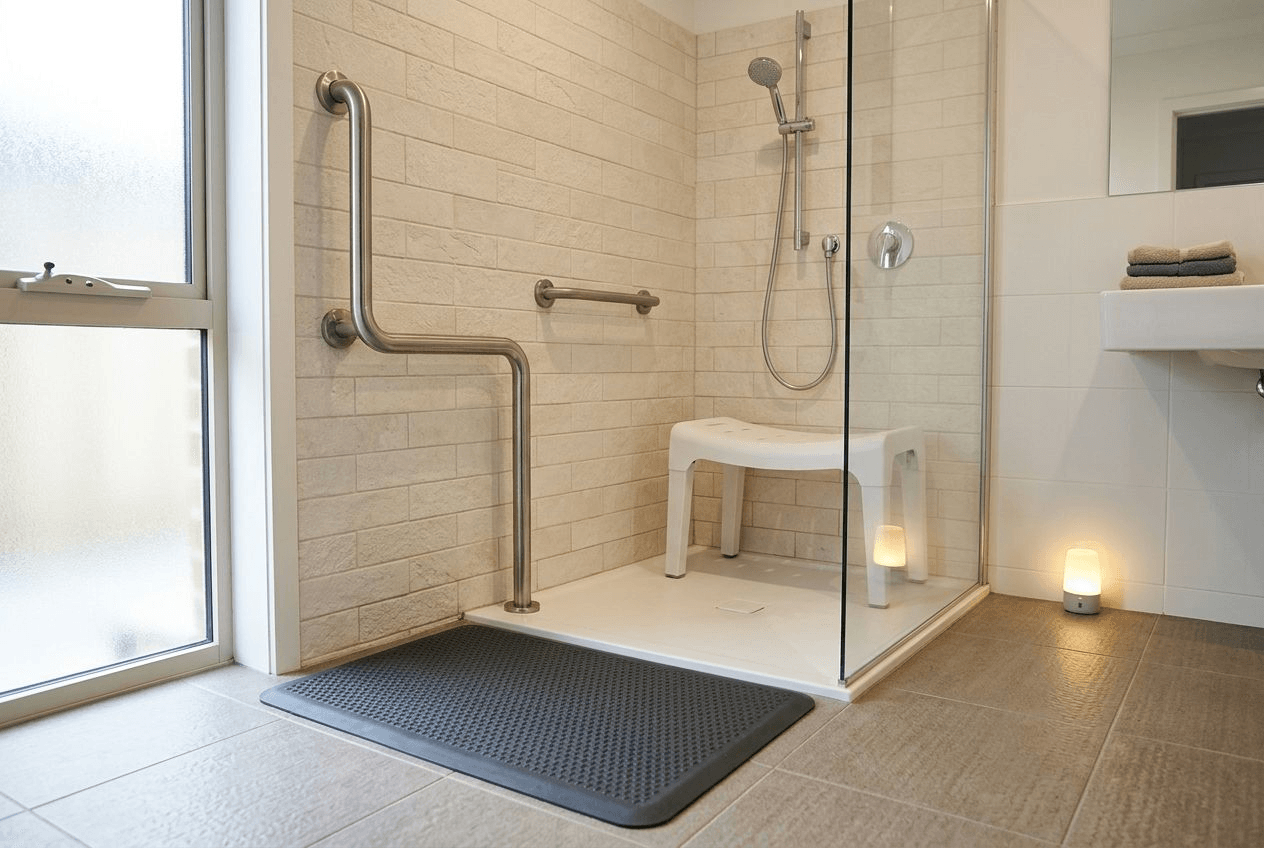
The bathroom. This is the highest-payoff room, because wet tile turns a small slip into a hard landing. Mount grab bars beside the toilet and on both the inside and outside of the tub or shower, screwed into studs or solid blocking so they hold real weight. Add non-slip mats or strips on every surface that gets wet, consider a shower seat, and leave a night light on. Our bathroom safety guide walks the room in detail, including what not to bother buying.
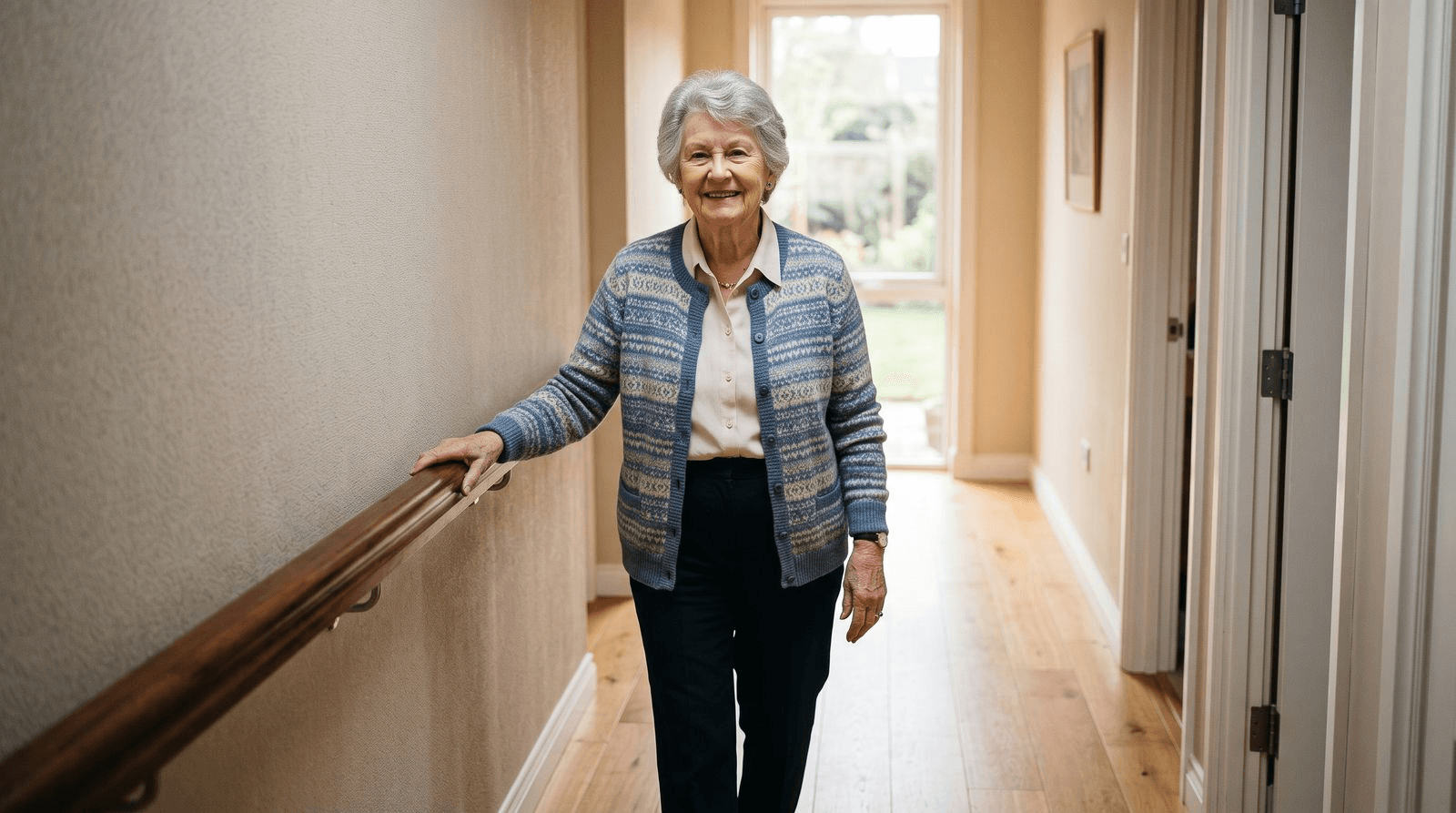
Stairs and lighting. Fit sturdy handrails on both sides of any staircase, and keep the steps clear and well lit with switches at the top and bottom. Brighten dim hallways, and put night lights in the bedroom, hall, and bathroom so no one navigates by memory at 3 a.m.
Bedroom and kitchen. Keep a lamp and a charged phone within reach of the bed. In the kitchen, move everyday pots and dishes to waist height so no one is climbing or stretching, wipe spills the moment they happen, and prep meals seated when standing brings on fatigue. And retire the step stool for anything high, a reach stick is safer and cheaper than a broken wrist.
What the Fixes Actually Cost
Families often stall on this list because they picture a renovation. Almost none of it is. The tier that prevents the most falls is the cheapest one: anti-slip strips for the tub, motion-sensor LED night lights that come on when a foot hits the floor, a toilet riser, a shower stool, a handheld shower head, and non-slip mats to replace the loose rugs. That is one hardware-store trip, under a hundred dollars, and an afternoon of work. If the budget conversation is what has been holding up the whole project, start here and have it later.
The next tier is smaller than people expect. The Eldercare Locator puts most minor home modifications in the $150 to $2,000 range, which covers grab bars anchored into studs, better lighting with switches at both ends of the stairs, doorways widened with offset hinges, and the motion-sensor fixtures that light a hallway without anyone hunting for a switch. If you would rather not guess at the order, a professional home safety assessment runs roughly $199 to $399 depending on the size and location of the home, and takes 60 to 90 minutes to work through about 240 points. Occupational therapists and medical social workers do these too, and a therapist who watches how one particular person moves through one particular house will usually beat a generic checklist.
Only the structural projects reach into the thousands. A ramp should be built at a 1:12 slope, twelve inches of run for every inch of rise, which is why a few porch steps turn into a long ramp. A stairlift runs about $2,500 to $8,000, with straight staircases at the low end and curved ones higher because the track has to be built to the stairs. These are worth pricing when the stairs have become the daily obstacle, and worth postponing until the cheap tier is done, because a stairlift in a house that still has three throw rugs is thousands of dollars spent on the wrong risk.
The Risks You Can't See on the Floor
A tidy home is only half the job. The other half rides along inside the body, and the biggest hidden culprit sits in the pill organizer. Sedatives and sleep aids, some antidepressants and antihistamines, blood-pressure pills and water pills, and a number of other drugs can bring on drowsiness, dizziness, or a pressure drop that buckles the knees, and the risk climbs with each additional medication. The Mayo Clinic advises bringing the full list, prescriptions, over-the-counter drugs, and supplements, to a doctor who can weed out or re-time the ones that make a person unsteady. Never stop a prescription alone, but do put the whole list on the table.
Two more quiet risks are worth naming. Vision matters more than people expect, so keep eye exams current, update glasses, and be wary of the first weeks in new bifocals, which distort where the floor appears to be. And blood pressure that dips on standing can drop someone before they have taken a full step, one reason a low reading in a senior deserves attention rather than a shrug. Even footwear plays a part: floppy slippers and stocking feet are a common trip story, while a firm, non-slip supportive shoe gives the foot something to trust.
Strength Fixes the Faller, Not Just the Floor
If home fixes are the fastest win, strength and balance work is the most powerful one, and it is the only step that improves the person rather than the house. Legs weaken quietly with age and inactivity, and weak legs plus poor balance is the engine under most falls. The reassuring part is that both respond to training at any age. Programs built around leg strength and balance, along with practices like tai chi, are among the best-proven ways to cut falls, and they need no gym, just consistency.
You do not have to design this from scratch. A doctor or physical therapist can point to the right starting level, and gentle, senior-specific balance exercises can be done in a kitchen holding the counter. The goal is not athleticism. It is the ability to catch yourself, to rise from a chair without a heave, to stand on one leg long enough to pull on a sock. That margin, built a few minutes at a time, is what turns a stumble into a recovery instead of a fall.
What to Do in the First Minutes After a Fall
Even a careful household should rehearse this, because the instinct to spring up or to yank someone upright is usually the wrong one. If you find a parent on the floor, stay calm and check first for serious injury, a blow to the head, severe pain, a hip or limb that looks wrong, an inability to move. If any of that is present, or they cannot get up, call 911 and keep them still and warm rather than moving them.
If there is no sign of a serious injury and the person feels able, help them up slowly and in stages: roll onto one side, rest a moment, come up onto hands and knees, crawl to a sturdy chair, and use it to rise into a seat. Then call the doctor even if everything seems fine, because a hairline fracture, a slow head bleed, or an underlying cause like a pressure drop can announce itself hours later. A charged phone kept within reach, or a wearable alert for someone who lives alone, is what keeps a manageable fall from becoming a long wait on a cold floor.
The Alarms Worth Having Before You Need Them
That wearable alert deserves more than a passing mention, because for someone who lives alone the gap between the fall and the phone call is the part that does the lasting damage. Medical alert systems work through a pendant, wristband, or wall button that connects to a monitoring center, where staff can talk to the person and send the right help. Four things separate a system that gets used from one that sits on the nightstand: it should be rated to be worn in the shower, since that is where the falls are; it should offer automatic fall detection, for the fall that leaves someone unable to press anything; it should include GPS if the person still walks out to the mailbox or the store; and it should alert by light or vibration, not tone alone, for anyone with hearing loss. Most now pair with an app so a family member two towns over can see that everything is fine.
Smoke and carbon monoxide alarms. These are not fall hardware, but they belong on the same walkthrough, because nobody does them twice. Working smoke alarms cut the risk of dying in a home fire by about half, according to the National Fire Protection Association, and interconnected units are better still, since one that senses smoke in the basement sets off the one beside the bed. Put an alarm on every level, inside each bedroom, and just outside the sleeping areas, add carbon monoxide alarms on every level and near where people sleep, and follow the placement the manufacturer specifies. Test them monthly and change batteries twice a year. One caution that belongs in a fall-prevention guide: climbing onto a chair to reach a ceiling alarm is itself a fall waiting to happen, so make that a job for a visiting family member or a caregiver.
What the responders will need. Keep an emergency contact list by the phone and on the refrigerator door, where crews are trained to look, along with a written page of medications, allergies, and medical conditions, the same information the Red Cross recommends every older adult's emergency plan spell out. A lockbox with a spare key, its code registered with the medical alert company, is the small detail that finishes the chain: help arrives, gets in without breaking a door, and knows what it is walking into.
The Fear That Sets Up the Next Fall
Here is the risk factor almost no one lists, because it hides as caution. After a fall, or sometimes just a close call, many older adults start to move less, skip the walk, hold the arms of every chair, stay in. It feels safe. It is quietly the opposite. Less movement means weaker legs and duller balance, which is exactly the ground the next fall grows in. Fear of falling is itself a predictor of falling, and breaking that loop is part of the work.
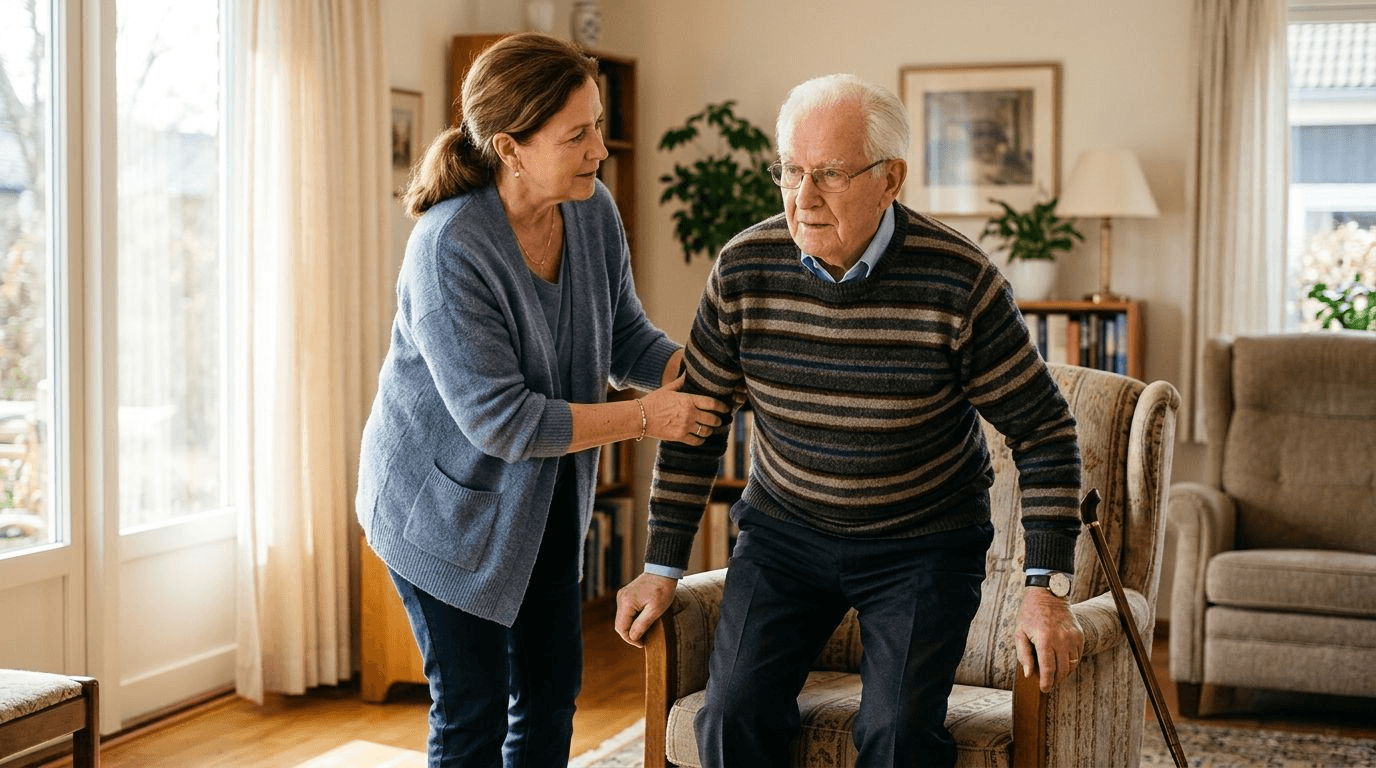
This is often where a steady pair of hands earns its place. A caregiver helping with bathing, dressing, and moving safely around the house does two things at once: they make the risky moments, the shower, the stairs, the middle-of-the-night trip, safer, and they give a nervous parent the confidence to keep moving instead of freezing up. That same person is usually the first to notice a new unsteadiness, a rug that crept back into the hall, or a medication that suddenly leaves someone woozy. It is why families across Bergen County and beyond lean on in-home care not for anything dramatic but for the daily, watchful presence that keeps a small wobble from turning into a fall.
Start With One Room This Week
The length of a full fall-prevention list can make it easy to do nothing, so do not try to do all of it at once. Pick the bathroom this week: pull the loose mat, add a night light, get grab bars quoted. Book the annual eye exam. Put the medication list in a bag for the next doctor's visit. Do five minutes of balance work by the counter each morning. None of these is heroic, and that is precisely the point.
Falls carry an outsized weight in later life, but so does the ordinary, unshowy work of preventing them. A cleared hallway, a bar in the shower, a stronger pair of legs, a medicine list someone actually looked at, these are the quiet things that let a person keep the run of their own home. If you would like a second set of eyes on a parent's home or their daily routine, our caregivers do this walk-through every day, and are glad to help you find the fixes that matter most.
Frequently Asked Questions
How can you prevent falls at home for the elderly?
Fall prevention works best on three fronts at once. First, fix the home: remove throw rugs, clear walkways, add grab bars in the bathroom and railings on stairs, and brighten hallways with night lights. Second, address the body: keep up strength and balance exercise, have vision and hearing checked, wear supportive non-slip shoes, and stay hydrated. Third, review the medicine cabinet with a doctor or pharmacist, since sedatives, blood-pressure pills, and several other drugs raise fall risk. No single fix carries the whole load, but together these steps cut the odds substantially, and most of them cost little or nothing.
What is the number one cause of falls in the elderly?
There is rarely a single cause. Most falls in older adults come from a stack of overlapping risks: weaker leg muscles and slower reflexes, impaired vision, a blood-pressure drop on standing, medication side effects, and a home hazard like a loose rug or a dark stairway. Muscle weakness and balance problems are the most common thread, which is why strength and balance exercise is the most consistently effective single intervention. But a fall usually happens when two or three of these line up at once, so treating only one and ignoring the rest leaves the door open.
What should you do immediately after an elderly person falls?
Do not rush to lift them. Stay calm and check first for signs of serious injury such as head trauma, severe pain, a hip that looks out of place, or an inability to move a limb. If any of those are present, or they cannot get up, call 911 and keep them still and comfortable. If there is no obvious serious injury and they feel able, help them up slowly and in stages: roll onto one side, rest, come up onto hands and knees, crawl to a sturdy chair, and use it to rise into a seat. Then contact their doctor even if they seem fine, because hidden fractures, a slow bleed, or an underlying cause like a blood-pressure drop can surface later.
How often should older adults have a fall risk assessment?
Adults 65 and older should have a fall risk screening at least once a year, and more often if they have already fallen, feel unsteady, or worry about falling. A basic screen asks three questions: Have you fallen in the past year? Do you feel unsteady when standing or walking? Do you worry about falling? A yes to any of these is worth raising with a doctor, who can check gait and balance, review medications, and look at blood pressure and vision. The CDC's STEADI framework, used in many clinics, builds this into routine care.
Do grab bars and home modifications really prevent falls?
Yes. Home modifications are among the better-studied fall-prevention steps, and the bathroom is the highest-payoff room because wet, hard surfaces turn a small slip into an injury. Properly anchored grab bars near the toilet and in the shower, non-slip mats, a shower seat, brighter lighting, night lights, and clear walkways all lower risk, especially when paired with strength and balance work. Grab bars must be screwed into wall studs or solid blocking, not just drywall or a suction mount, to bear a person's weight. A physical or occupational therapist can walk the home and flag the fixes that matter most for one person's needs.
How much does it cost to make a home safer for an older adult?
Less than most families assume, because the cheapest tier does most of the work. Anti-slip strips for the tub, motion-sensor night lights, a toilet riser, a shower stool, a handheld shower head, and non-slip mats to replace loose rugs come in under $100 together, on one hardware-store trip. Beyond that, most minor modifications, including properly anchored grab bars, better lighting, and doorways widened with offset hinges, fall in the $150 to $2,000 range. A professional home safety assessment runs about $199 to $399 depending on the size and location of the home, and takes 60 to 90 minutes to work through roughly 240 points; occupational therapists and medical social workers perform them as well. Only structural work goes higher, with a stairlift generally running $2,500 to $8,000 depending on whether the staircase is straight, curved, or outdoors.
What should someone who lives alone have in place in case of a fall?
A way to call for help that does not depend on reaching a phone. Medical alert systems use a pendant, wristband, or wall button to connect the person to a monitoring center; look for one rated to be worn in the shower, with automatic fall detection for a person who might be knocked out or unable to press, GPS if they still walk outside, and light or vibration alerts if hearing is poor. Alongside it, keep an emergency contact list by the phone and on the refrigerator, a written page of medications, allergies, and conditions for responders, and a lockbox holding a spare key with its code registered to the alert company so a crew does not have to force the door. Interconnected smoke and carbon monoxide alarms, tested monthly, round out the basics.