Cooking for One Without the Sad Sandwich
Cooking for one stops feeling like a chore with a few shifts — practical ways for seniors living alone to eat well, waste less, and enjoy meals again.
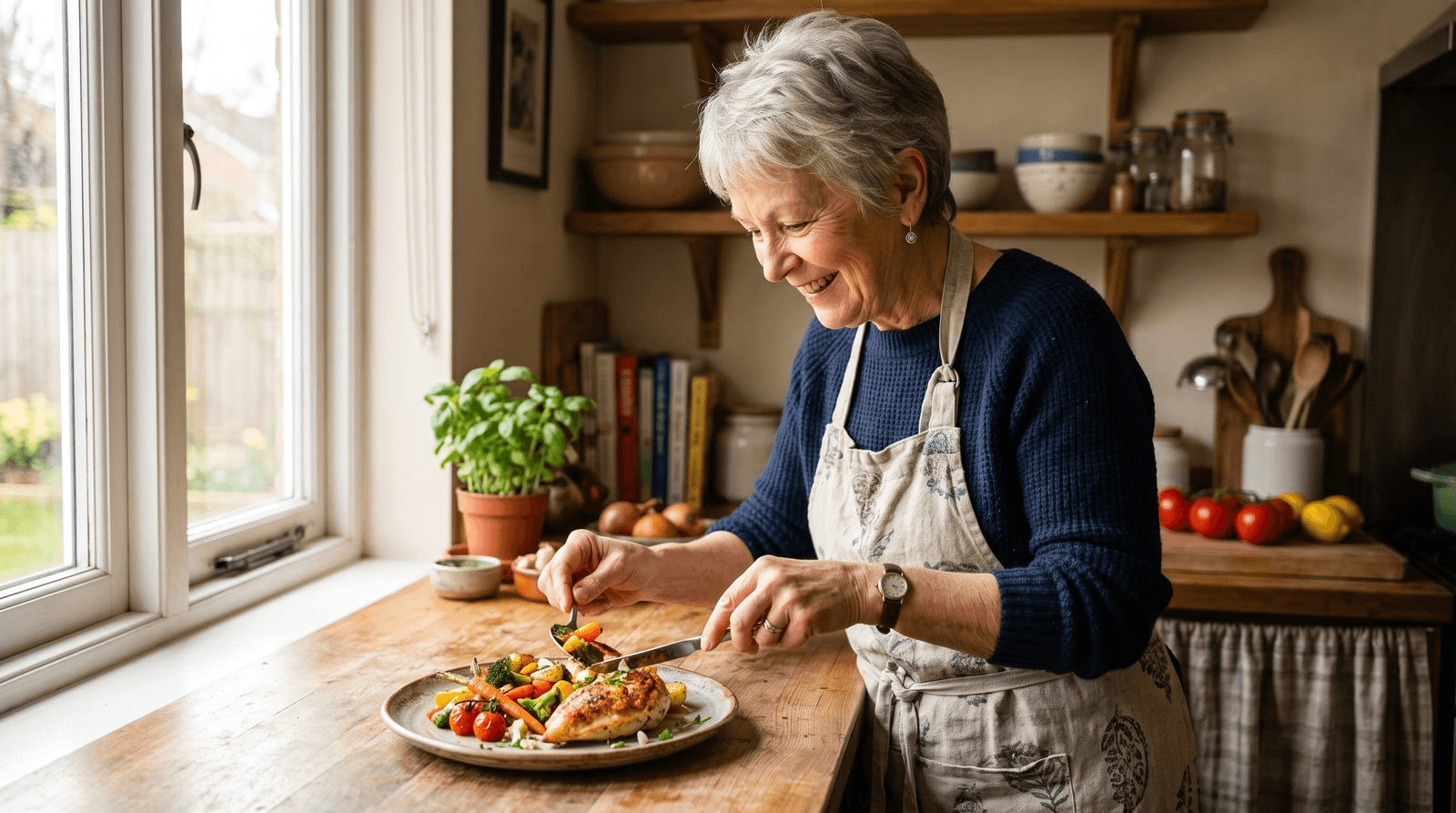
Ask an older adult who lives alone what they had for dinner, and the honest answer is often "not much." A bowl of cereal. Toast. Crackers and cheese standing at the counter. The skill was never the problem — most people who cook for one spent decades cooking for a whole family. What changes is the math and the motivation. Halving a recipe is fiddly, a full one leaves a week of the same leftovers, and the simple question of who you are cooking for has lost its easy answer.
This matters more than it sounds. About 28 percent of Americans 65 and older live alone — roughly 16 million people, and according to the federal Profile of Older Americans, about two-thirds of them are women. Research summarized by McMaster University's Optimal Aging Portal finds that people who routinely eat alone tend to eat fewer meals a day and lean harder on ready-made foods — a pattern linked over time to weight loss and frailty. Good news, though: cooking for one gets genuinely easier with a handful of small shifts, none of which involve a single sad sandwich.
Why Cooking for One Quietly Gets Skipped
The first thing to understand is that this is rarely about laziness or even appetite. It is about friction. Every step that makes cooking feel like a project — the planning, the chopping, the cleanup for a meal no one will admire — is a small reason to skip it. Multiply that by the quiet of an empty kitchen and the absence of anyone to cook for, and the easy default becomes whatever requires nothing: the cereal box, the crackers, the toast.
The cost shows up slowly. When meals shrink and variety narrows, protein is usually the first thing to go, and protein is exactly what older bodies need to hold on to muscle. Skipped meals and thin, beige plates are how a perfectly capable person drifts toward unintended weight loss without anyone noticing. The aim of everything that follows is to remove the friction — to make the good-enough meal the easy one, so eating well stops depending on a burst of motivation that may not come.
Cook Once, Eat Three Times
The single biggest shift is to stop trying to cook small. Cooking for one is far easier when you cook for several and let your past self do the work. Make a full pot of soup, a pan of chili, a tray of roasted vegetables, or a whole chicken — then portion the extra into single servings, refrigerate what you will eat in the next few days, and freeze the rest. A Sunday afternoon of cooking can quietly stock a week of dinners that need only reheating.
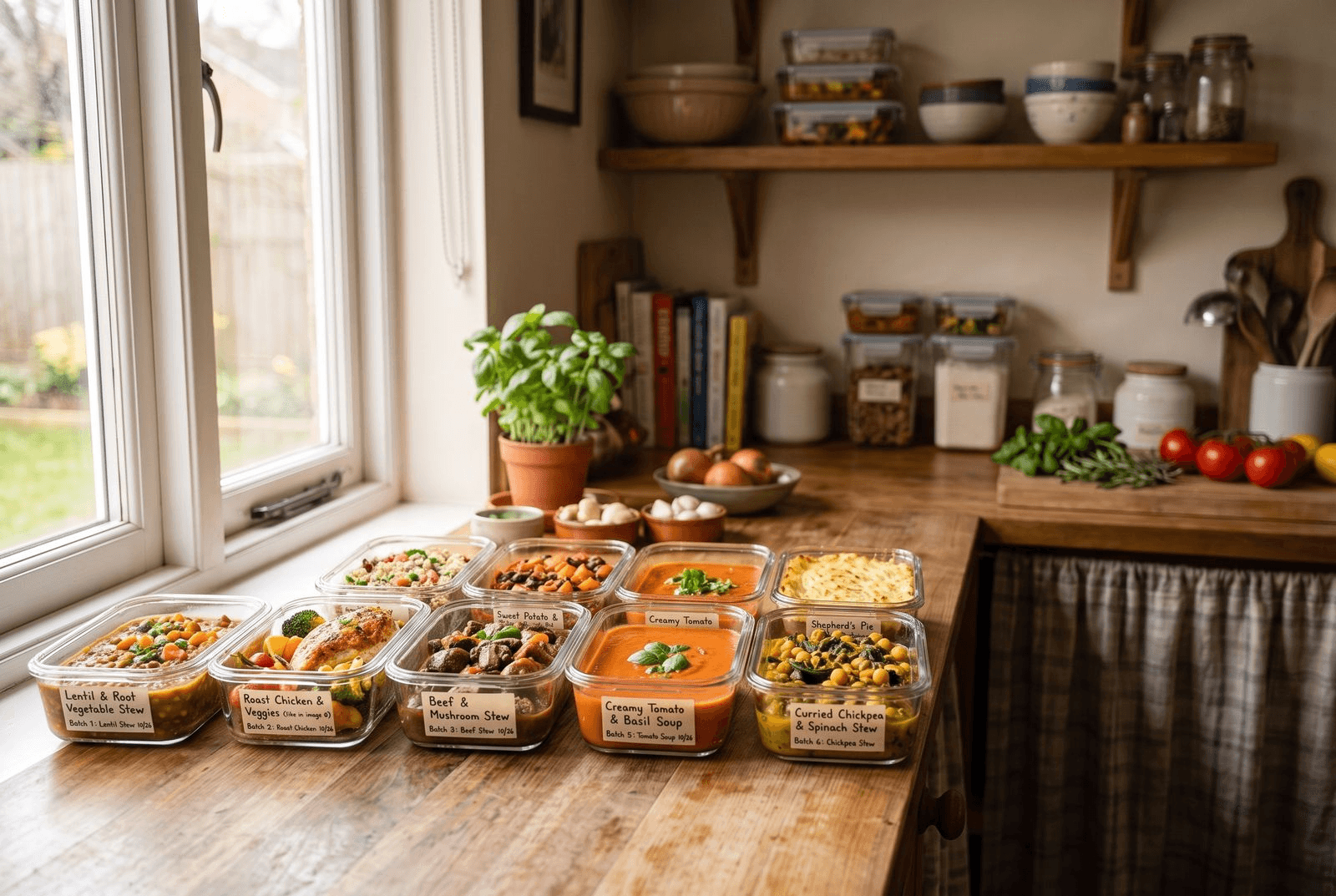
Doing this safely is simple once you know the rules. U.S. food-safety guidance from FoodSafety.gov is worth pinning to the fridge: cooked leftovers keep 3 to 4 days in the refrigerator and 2 to 6 months in the freezer. Refrigerate food within two hours of cooking, cool it in small, shallow containers rather than one deep pot so it chills quickly, and reheat each portion until it is steaming hot all the way through. Label every container with what it is and the date — a five-second habit that turns a crowded freezer from a mystery into a menu. "Planned-overs," not leftovers: you cooked extra on purpose, and now dinner is already made.
Build Meals, Don't Follow Recipes
Single-serving recipes are a trap. They send you hunting for the one dish scaled exactly to one person, when the easier path is to drop recipes altogether and build a plate from a formula: a protein, a vegetable, and a starch, assembled more than cooked. Once that pattern is second nature, you can make a balanced meal out of whatever is on hand without a recipe at all.
Lean on staples that keep and stretch. Eggs cook in minutes and go with anything. A rotisserie chicken is three meals — dinner tonight, a sandwich tomorrow, a quick soup after that. Canned beans, tuna, and salmon deliver protein with no cooking; frozen vegetables are already washed, cut, and ready, with none of the half-a-head-of-cabbage waste that makes fresh produce feel pointless for one. The federal National Institute on Aging makes the same point in its meal-planning tips for older adults: keep a stock of nutritious, easy-to-prepare basics, and look for pre-cut and frozen produce when chopping is a chore. A good pantry means a real meal is always five minutes away — and managing the shopping, cooking, and kitchen is one of the everyday instrumental activities of daily living that quietly signals how someone is really doing at home.
Make the Kitchen Work With You
Small frictions in the kitchen itself can decide whether a meal happens. Arthritic hands, low energy, or unsteady balance turn standing at a stove into a real obstacle, and a kitchen set up for a younger, busier cook works against an older one. A few changes tilt the odds back.
- Buy the prep already done. Pre-cut vegetables, bagged salad, rotisserie chicken, pre-cooked grains, and frozen produce remove the most tiring steps. Spending a little more to skip the chopping is money well spent if it means a real meal instead of toast.
- Use the small appliances. A toaster oven, microwave, slow cooker, or air fryer is easier and safer for one person than a full stove and oven, and a slow cooker turns a few thrown-together ingredients into days of dinners with no standing required.
- Cook sitting down. There is no prize for standing. Pull a stool to the counter for chopping and mixing so fatigue or balance never becomes the reason to skip the meal.
- Keep the staples in reach. Move everyday pots, plates, and ingredients to waist height so nothing depends on a step stool or a deep reach into a low cupboard.
When the shopping and cooking themselves become too much, a little hands-on help keeps a kitchen running rather than going dark. Our homemaker services cover exactly this kind of support — grocery shopping, meal preparation, and light kitchen tidying — so a parent keeps eating home-cooked food even when doing all of it alone has stopped being realistic.
Set a Table Worth Sitting At
Here is the part the recipes never mention: for many people who live alone, the problem was never the cooking. It is sitting down to eat by yourself, night after night, in a quiet house. When a meal feels like a non-event, it gets treated like one — eaten standing up, half-attended, or skipped. So make the meal an occasion small enough to keep.
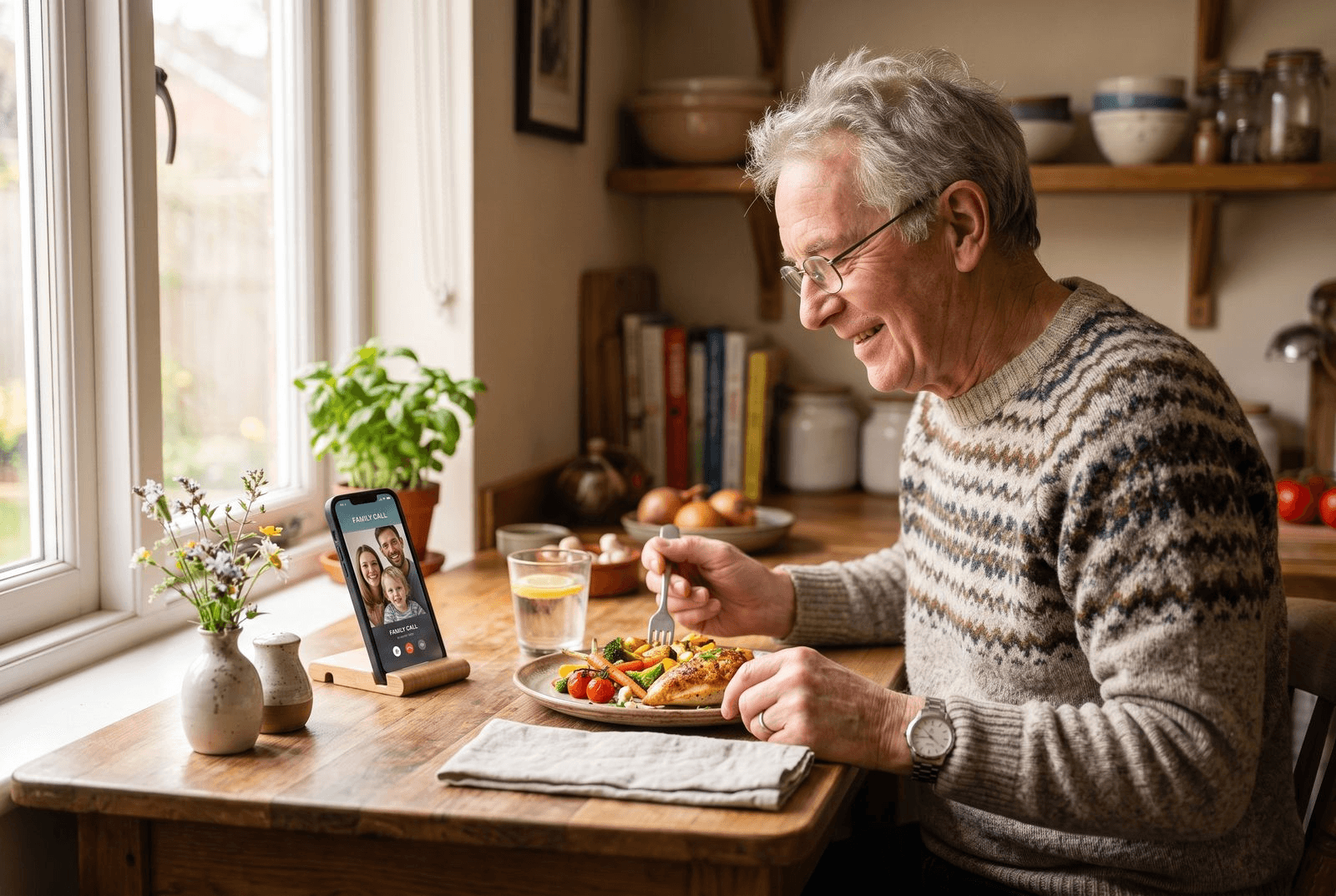
Set a real place at the table, by a window if you have one, instead of eating over the sink. Put on music or a favorite show. Time dinner to a phone or video call so the meal is shared even across a distance. Where it is an option, a senior center's congregate lunch or a standing meal with a neighbor turns eating into something social again. None of this changes what is on the plate, but all of it changes whether the plate gets finished — and a shared meal does more for appetite than any recipe. A regular companion-care visit can be exactly that: someone to share the cooking and the table with, so meals stop being a solitary task. For families across our Bergen County, New Jersey service area, where so many older residents live on their own, that steady company at mealtime is often what brings appetite back.
Five Meals With No Recipe at All
On the days when motivation is thin, the goal is simply a real, balanced plate with as little effort as possible. Keep a short mental list of meals that need no cooking and no recipe — assemble, not cook:
- Eggs three ways. Scrambled, fried, or hard-boiled, with whole-grain toast and a sliced tomato or a handful of spinach wilted in the pan. Protein and produce in under ten minutes.
- The loaded baked potato. Microwave a potato or sweet potato, top with cottage cheese or canned chili and a scoop of frozen broccoli steamed alongside. Filling, warm, and almost entirely hands-off.
- Tuna or bean bowl. Canned tuna, salmon, or white beans over a bag of pre-washed greens, a drizzle of olive oil and lemon, and some crackers or bread. No stove at all.
- Rotisserie chicken plate. A few slices of store-cooked chicken, a microwaved sweet potato, and steamed frozen green beans. Tomorrow the same chicken becomes a sandwich or a quick soup.
- Savory or sweet oatmeal. Rolled oats with frozen berries, nut butter, and a splash of milk for breakfast or a light supper — cheap, warm, and gentle on a small appetite.
Keep the ingredients for two or three of these on hand at all times, and there is always a real meal between you and the cracker box.
A Hand in the Kitchen, When It Helps
Most of cooking for one comes down to lowering the effort and lifting the pleasure: cook in batches, build from a formula, stock a forgiving pantry, and make the table somewhere you actually want to sit. For a lot of older adults, those small shifts are all it takes to eat well again on their own.
For others, a steady loss of appetite or weight is a sign worth paying attention to rather than a habit to fix — our guide to loss of appetite in older parents walks through when it is time to call a doctor. And when shopping, cooking, and eating alone have simply become too much to manage solo, a few hours of help in the kitchen each week is often the difference between a parent who eats well and one who quietly stops. Either way, no one should have to choose between a real meal and the effort of making it for one.
This article is general wellness information, not medical advice. For ongoing loss of appetite, unintended weight loss, or difficulty chewing or swallowing, consult a physician or registered dietitian.
Frequently Asked Questions
How do you cook for one person without wasting food?
The trick is to stop shrinking recipes and start scaling them up on purpose. Cook a full pot of soup, chili, stew, or a tray of roasted vegetables, then portion the extra into single-serving containers for the fridge and freezer. Buy ingredients that stretch across several meals — a rotisserie chicken becomes dinner, then a sandwich, then a soup — and favor produce that keeps, like onions, carrots, cabbage, apples, and frozen vegetables. Frozen and canned staples waste nothing because you use only what you need and the rest waits. Between batch cooking and a well-stocked freezer, almost nothing has to be thrown out.
What are easy meals for elderly people living alone?
The easiest meals follow a simple formula rather than a recipe: a protein, a vegetable, and a starch, assembled more than cooked. Think scrambled eggs with toast and tomato; canned tuna or beans over a bagged salad; a baked potato topped with cottage cheese and steamed frozen broccoli; rotisserie chicken with microwaved sweet potato; or oatmeal with fruit and nuts. None requires real cooking, all deliver protein and produce, and each comes together in well under fifteen minutes. Keeping the bar that low is what keeps an older adult eating real food on the days motivation runs short.
Is it unhealthy to eat alone?
Eating alone is not unhealthy in itself, but for older adults it can quietly nudge eating habits in the wrong direction. Research finds that people who regularly eat alone tend to eat fewer meals each day, choose less variety, and rely more on ready-made foods, which over time is linked to poorer diet quality, weight loss, and frailty. The food is only half of it; the loss of the social ritual matters too. That is why making solo meals more pleasant — and sharing them when you can, even by phone or video — is worth as much attention as the menu.
How can seniors stay motivated to cook for themselves?
Motivation is usually the real obstacle, not skill, so the fixes are about lowering effort and raising pleasure. Keep meals genuinely simple, so cooking never feels like a project. Set a proper place at the table, by a window if you can, rather than eating standing at the counter. Put on music or a favorite show, or time a meal to a phone or video call with family. Shop a little more often for small treats you actually look forward to. And on the days nothing appeals, a five-minute assembled plate still counts — the goal is to keep eating well, not to cook impressively.
What pantry staples make cooking for one easier?
A small, reliable stock of long-keeping basics means a real meal is always within reach. Useful staples include eggs; canned beans, tuna, and salmon; bagged and frozen vegetables; frozen fruit for oatmeal or yogurt; rolled oats; whole-grain bread and tortillas you can freeze; rice and pasta; nut butter; canned tomatoes and broth; and shelf-stable or long-life milk. With those on hand, you can build dozens of quick, balanced meals without a special trip to the store, and you only ever use the portion you need.
How long do leftovers last in the refrigerator?
Cooked leftovers are safe in the refrigerator for 3 to 4 days, and in the freezer for 2 to 6 months, according to U.S. food-safety guidance. Refrigerate food within two hours of cooking, store it in small, shallow containers so it cools quickly, and reheat leftovers until they are steaming hot all the way through before eating. Labeling each container with its date takes the guesswork out of what is still good — a small habit that makes batch cooking for one both safe and effortless.