It's Never Too Late to Take Up a Hobby
A study of 93,000 older adults links hobbies to more happiness and better health. How to find one that sticks and start it after 65.
A few years ago, a team of researchers set out to test a simple-sounding idea: does having a hobby actually make later life better, or does it just feel that way? To answer it, they pooled data on 93,263 people aged 65 and older, drawn from five long-running studies in England, Japan, the United States, China, and a dozen European countries. It is one of the largest looks at the question ever done.
The answer, published in the journal Nature Medicine in 2023, was unusually clear. People with a hobby reported fewer symptoms of depression and higher happiness, life satisfaction, and self-reported health — and the pattern held across all 16 countries, cultures as different from one another as Denmark and China. As Harvard Health summarized it, hobbies bundle together creativity, self-expression, relaxation, and mental stimulation, and the group kind add social connection on top. For something so pleasant, that is a remarkable return.
Which raises the real question for anyone reading this at 68 or 74 or 81, perhaps with more empty hours in the week than there used to be: if a hobby is that good for you, how do you find one worth keeping — and is it too late to start?
What 93,000 Older Adults Showed
The most striking thing about the study was not that hobbies helped, but how universally they did. Hobby engagement itself varied enormously by country — only about half of Spanish respondents had one, compared with 96 percent of people in Denmark — yet wherever people did have a hobby, their wellbeing was measurably higher. Of all the outcomes measured, life satisfaction was the one most consistently tied to having something absorbing to do.
It is worth being precise about what this does and does not prove. The research was observational: it tracked people over four to eight years rather than assigning hobbies at random, so it cannot say hobbies alone caused the happiness. But the researchers did find that hobby engagement tended to come before the improvements in mood, which points in the direction of cause rather than coincidence. Combined with the sheer size of the sample and the consistency across cultures, it makes hobbies one of the best-supported and lowest-risk investments a person can make in their own later years.
It Really Isn't Too Late
The quiet worry behind so much hesitation is the belief that the window has closed — that new skills belong to the young. It is simply not true. The brain keeps forming and reshaping connections throughout life, which is why people take up the piano at 75 and paint their best work in their eighties. The National Institute on Aging is blunt about it in its guidance on participating in activities you enjoy as you age: staying engaged in things that interest you is part of aging well, not a luxury you age out of.
Older beginners even hold some advantages. They tend to practice with more patience and less ego than younger learners, they are not chasing a career or a grade, and they can measure progress against nobody but themselves. Being a beginner at 70 is not embarrassing; it is one of the few genuinely low-stakes things left. The worst outcome of a pottery class that does not take is an afternoon spent and a story to tell.
Four Kinds of Hobbies Worth Trying
Faced with an open week, most people freeze at the size of the choice. It helps to stop thinking about specific activities and think instead in four broad families. A satisfying life usually touches more than one.
Hobbies that move you. Anything that gets the body going, gently or otherwise: walking, swimming, cycling, dancing, and the low-impact classes built for older joints. Tai chi is a standout here because it trains balance while it relaxes, and gardening hides real exercise inside something that feels like tending, not training. Movement hobbies do double duty, protecting mood and mobility at the same time.
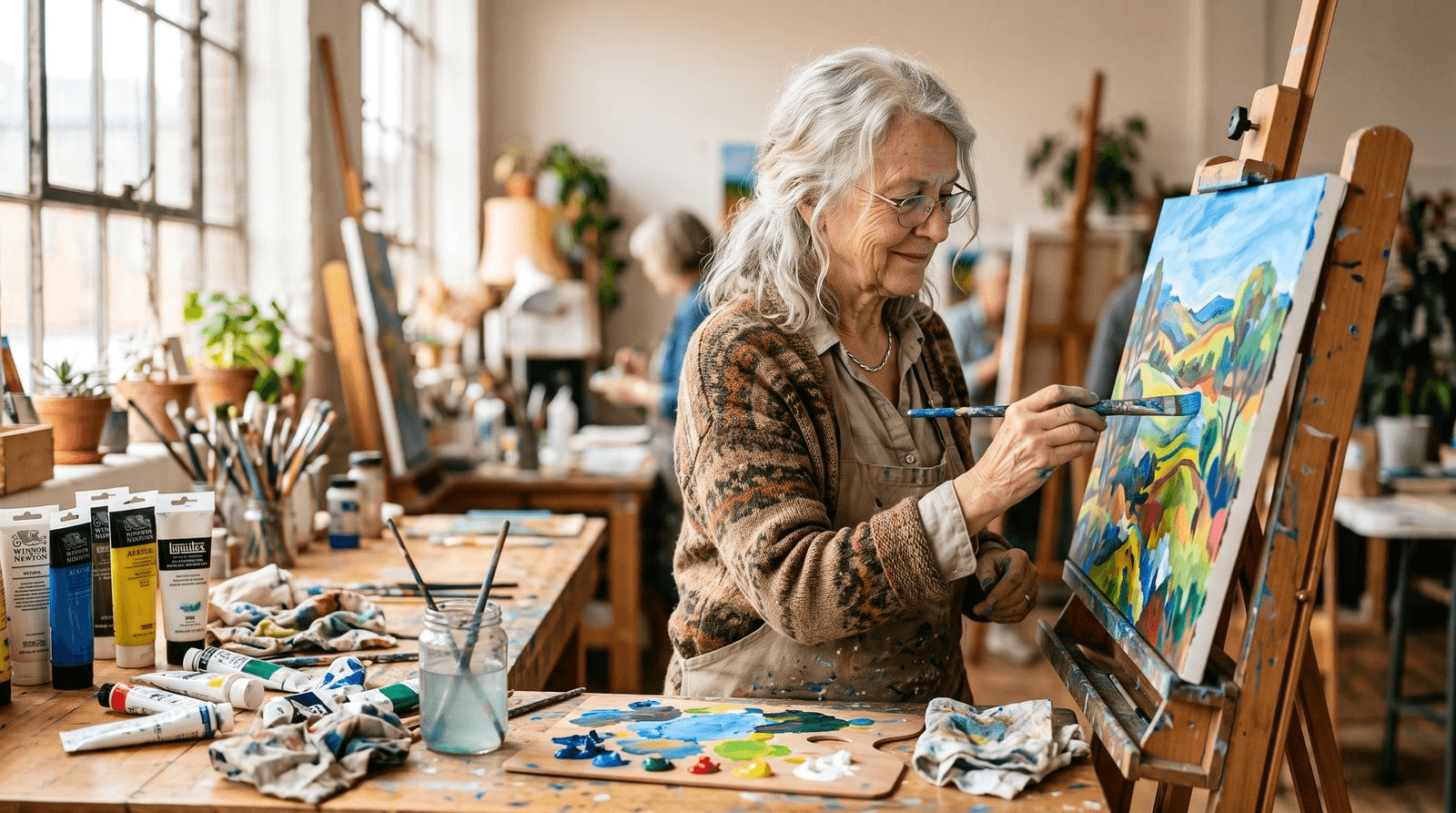
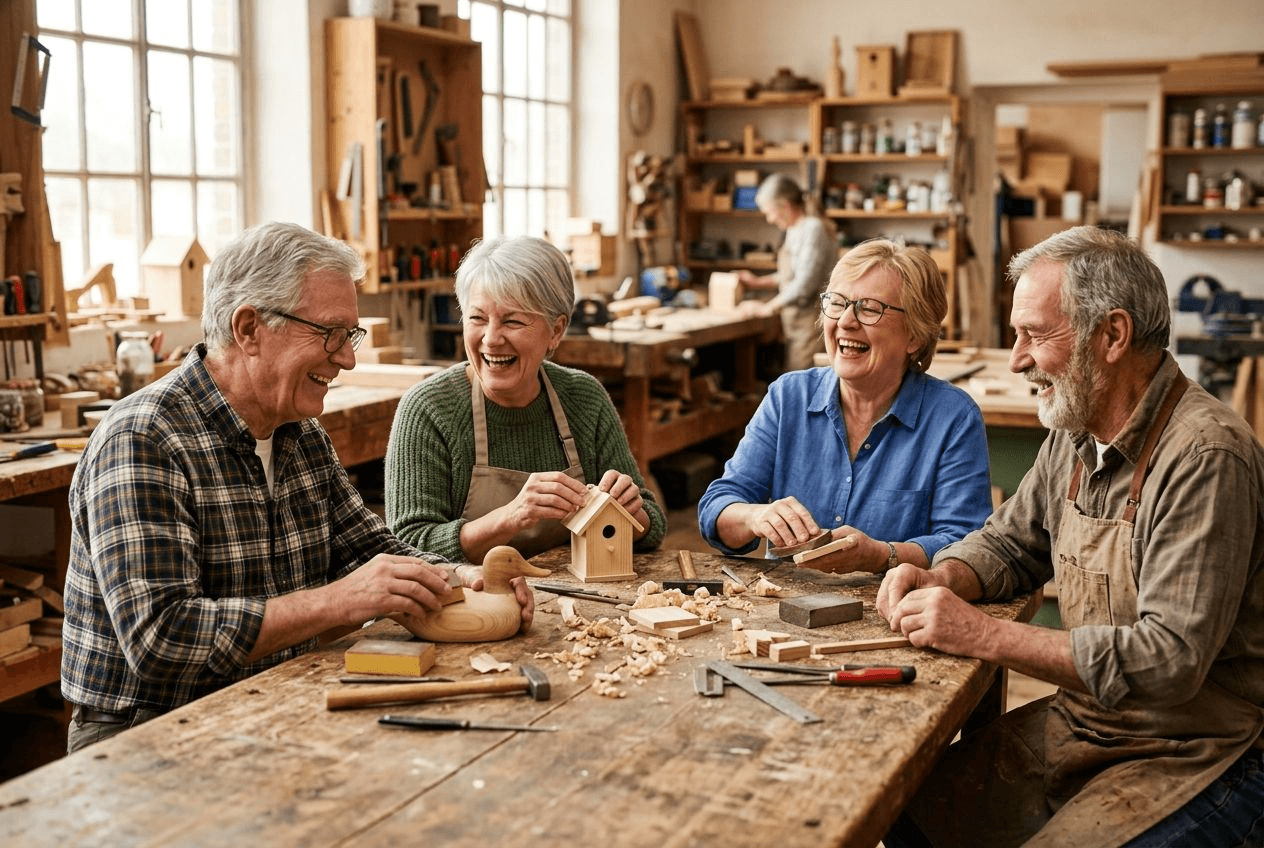
Hobbies that make something. The pleasure of finishing a thing with your hands is ageless — painting, knitting, woodworking, baking, pottery, photography. Our roundup of joyful crafts is a good place to browse if nothing obvious calls to you. Making hobbies give the week a small, visible result, which is its own quiet antidote to the feeling that the days blur together.
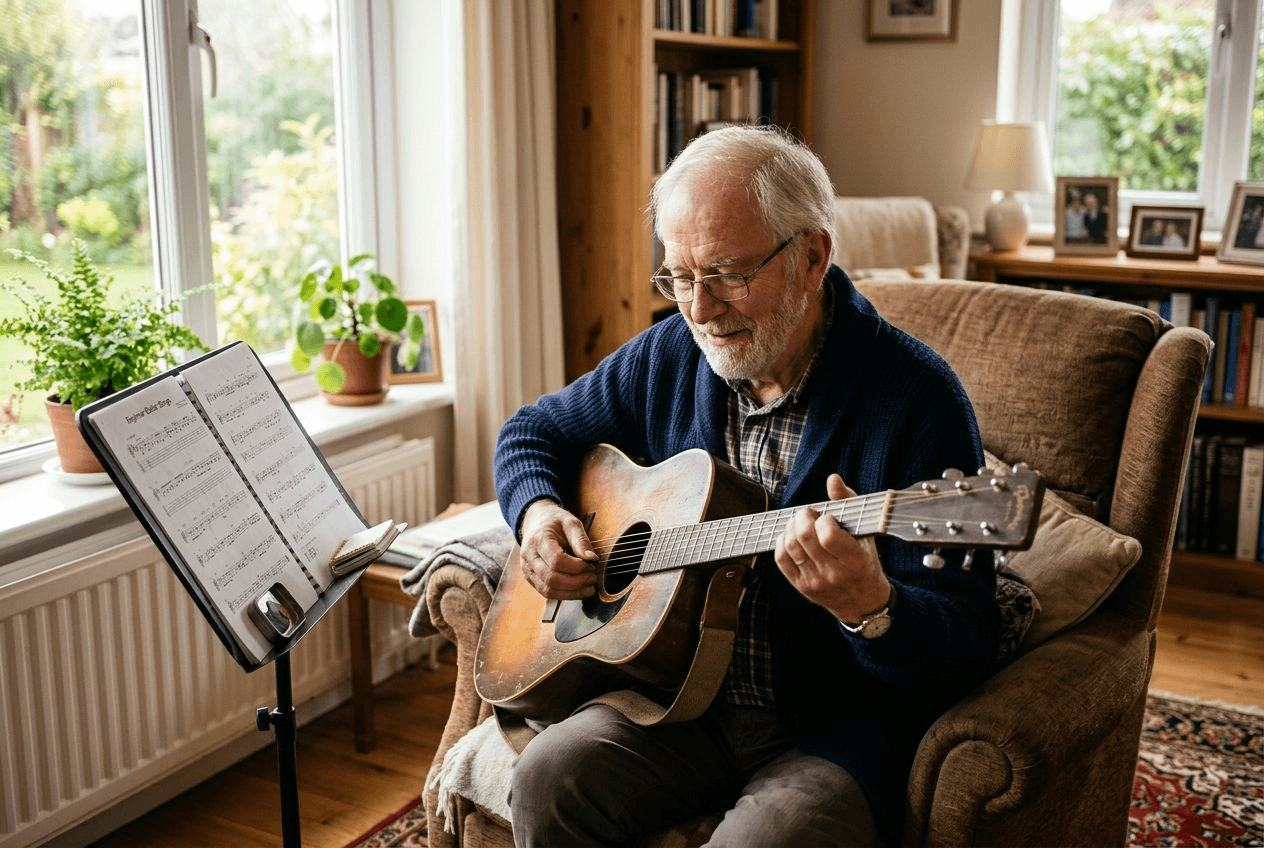
Hobbies that teach you. Learning something is where later life can genuinely surprise people: a new language, an instrument, family genealogy, a book club, or the deeply rewarding project of writing down a life story before the details fade. The point of a learning hobby is not mastery but the pleasant, humbling state of being a student again.
Hobbies that connect you. Some pastimes are worth choosing mostly for the people. Volunteering, a choir, a walking group, a weekly card game — these are hobbies whose real product is company. If loneliness is the problem you are actually trying to solve, start here and let the activity be the excuse.
Finding the One That Sticks
The best hobby is not the most impressive one on the list; it is the one you will keep coming back to. Finding it is less about inspiration than about a few practical moves.
- Mine your own past. Two questions surface more good hobbies than any list: what did you love before work and family filled the calendar, and what were you always a little curious about but never had time for? Interests with a history behind them come with motivation built in.
- Lower the stakes before you commit. Borrow the equipment, take a single drop-in class, check out a library book, watch one tutorial. Trying should cost almost nothing, so a false start is just information, not a wasted purchase.
- Put it on the calendar. A hobby pinned to a specific day and hour survives; a hobby left to spare time quietly evaporates. If it is painting every Tuesday at ten, go every Tuesday, even the weeks you would rather not.
- Give it a month. Almost everything is awkward and unrewarding at first. Decide in advance to stick with a new pursuit for four sessions before judging whether it fits — the early clumsiness is not a verdict.
When the Body Sets Limits
Arthritis, low vision, fatigue, and limited mobility are real, but they far more often reshape a hobby than end it. The instinct to give up an interest because the old form no longer works is worth resisting; usually the tools and the setting are what need to change, not the interest.
Arthritic hands do better with larger grips, lightweight tools, and shorter sessions, which keeps painting, gardening, and cooking within reach. When eyes tire, large-print cards, audiobooks, and voice-controlled speakers keep reading and games open. Limited mobility opens a whole seated world: chair-based exercise, container gardening raised to waist height, birdwatching from a favorite window, photography, writing, and video calls that turn a club meeting or a grandchild's afternoon into something you can join from your own chair. The principle is simple — fit the hobby to the body, build in rest, and it stays a pleasure instead of becoming a strain.
Turning a Hobby Into a Social Life
A hobby's most underrated ingredient is other people. Much of what makes later-life hobbies protective is that they give a reason to gather that has nothing to do with age or health — a class, a club, a shared bench in a community garden. That matters beyond mood: social isolation and loneliness are tied to poorer health and shorter life spans in older adults, and a standing weekly activity is one of the most reliable ways to rebuild connection.
So when there is a choice between the solitary and the group version of something you enjoy, and company is what you are short on, lean toward the group. A garden becomes a garden club; reading becomes a book club; a daily walk becomes a walking group. The activity is the same; the difference is that now it comes with a table of familiar faces and a place on someone else's calendar too.
The First Few Weeks
Every new hobby has a fragile stretch at the beginning, before it becomes a habit and while it is still easy to skip. A few things carry a person through it. Tell someone — a friend, a spouse, an adult child — because a hobby other people know about is harder to quietly abandon. Keep the equipment out and visible rather than tucked away, so starting takes no setup. Pair it with something you already do, like the coffee you have anyway or the day you already leave the house. And measure progress against last week, not against anyone else; the only comparison that helps is your own.
If the first attempt does not take, that is not failure — it is a narrowing of the field. Plenty of people try three hobbies to find the one that stays. The trying itself is doing quiet good.
Room to Begin Again
The research lands on something most people already half-know: a life with something absorbing in it is a better life, and that stays true well past 65. The obstacle is rarely a lack of interest. More often it is the practical friction around the interest — the ride to the class across town, the energy to get out the door on a low day, the wish for a little company on the way. Those are exactly the things that quietly shrink a week down to the walls of one room.
That is where a bit of steady help keeps a hobby within reach. Across our Monmouth County, New Jersey service area and beyond, our companion-care caregivers drive clients to the art class and the garden club, sit alongside them at the craft table, and turn a promising idea into a standing part of the week. The point of care at home has never only been safety; it is having the room, and the company, to keep beginning things. It is genuinely not too late — and the next hobby is usually a single low-stakes afternoon away.
This article is for general information and is not medical advice. Check with a doctor before starting a new physical activity, especially with a heart, joint, or balance condition.
Frequently Asked Questions
Is it too late to start a new hobby at 70 or older?
No. The largest study on the question, published in Nature Medicine in 2023, followed 93,263 adults aged 65 and older across 16 countries and found that having a hobby was consistently linked to fewer depressive symptoms and higher happiness, life satisfaction, and self-reported health — with no upper age at which the benefit disappeared. The adult brain keeps forming new connections throughout life, which is why people in their seventies, eighties, and beyond routinely learn instruments, languages, and crafts. Older learners often have an advantage younger ones lack: patience and a more disciplined approach to practice. The only real requirement is a genuine interest and a low-pressure way to begin.
What are good hobbies for seniors?
The best hobbies fall into four broad families, and a well-rounded life usually touches more than one. Moving hobbies include walking, tai chi, swimming, gardening, cycling, and pickleball. Making hobbies include painting, knitting, woodworking, photography, baking, and pottery. Learning hobbies include studying a language, taking up an instrument, joining a book club, tracing family genealogy, or writing down life stories. Connecting hobbies include volunteering, joining a club, or singing in a choir. The right choice is less about the activity itself and more about fit — pick something that matches your energy, your budget, and how much company you want, and you are far more likely to stick with it.
Do hobbies really improve mental health in older adults?
The evidence is strong. The 2023 Nature Medicine analysis of more than 93,000 older adults found that hobby engagement predicted subsequent decreases in depressive symptoms and increases in happiness and life satisfaction, and the effect was remarkably consistent across countries with very different cultures. Researchers point to several reasons: hobbies provide creativity, sensory engagement, self-expression, relaxation, and cognitive stimulation, and group hobbies add social connection that reduces loneliness. The study was observational, so it cannot prove hobbies alone cause better health, but the size and consistency of the finding make hobbies one of the best-supported, lowest-risk investments in later-life wellbeing.
What hobbies are good for seniors with arthritis or limited mobility?
A physical limit usually changes the form of a hobby rather than ruling it out. For arthritic hands, larger tools, foam grips, and shorter sessions make painting, gardening, and cooking comfortable again; card and board games with big print, audiobooks, and voice-controlled devices keep reading and games open when eyes or hands tire. For limited mobility, seated options are plentiful: chair-based exercise, container gardening at waist height, birdwatching from a window or porch, photography, writing, music, and video calls with far-flung family or clubs. The key is to adapt the tools and setting to the body rather than abandoning the interest, and to build in rest so the activity stays a pleasure instead of a strain.
How do I find a hobby I'll actually stick with?
Start from your own history rather than a list of trending activities. Ask what you loved before work and family filled the calendar, and what you were always a little curious about but never had time for — those two questions surface hobbies with built-in motivation. Then lower the stakes: borrow the equipment or take a single drop-in class before buying anything, so trying costs almost nothing. Finally, anchor it to a fixed time — the same weekday and hour each week — because a hobby on the calendar survives, while a hobby left to spare time quietly disappears. Expect to be a beginner, and give any new pursuit a month before deciding whether it fits.
How can hobbies help with loneliness in older age?
Hobbies are one of the most natural cures for isolation because they give people a reason to gather that has nothing to do with their age or their health. A weekly class, a garden club, a choir, a card group, or a volunteer shift creates regular contact with others who share an interest, which is the raw material of friendship. That matters medically as well as emotionally: social isolation and loneliness are linked to poorer health and shorter life spans in older adults, and shared activity is a reliable way to rebuild connection. Choosing a group version of a hobby you enjoy turns a private pastime into a standing appointment with other people.