How to Travel With an Aging Parent This Summer
A stage-by-stage guide to traveling with an aging parent: planning around stamina, packing, airports, pacing the journey, and what a visit can reveal.

Summer is the season of family trips, and a growing number of them now include an aging parent: a flight east for a grandchild's graduation, a long drive to the lake, a week back in the house you grew up in. These are some of the best hours you will get together. They are also more work than they used to be, and the work goes easier when you plan for it. If you are still deciding where to go, some destinations are simply gentler on an older traveler than others — our guide to the most relaxing vacation spots for seniors favors flat, walkable places with direct flights and accessible hotels.
The numbers say you are far from alone. In its Destination Aging research, AARP found that 29 percent of travelers over 50 are managing a condition that makes travel harder, most often a problem with mobility. More than half have quietly changed how they travel because of it, and many now lean on the predictability of a car. None of that has to keep a parent home. It just means the trip rewards a little forethought, and the forethought is mostly common sense, not logistics wizardry.
Plan for the Parent You Have Now, Not the One You Remember
The most common planning mistake is sweet and understandable: we build the trip around the parent we picture, the one who powered through airports and closed down the family reunion. Start instead from an honest read of this week. How far can your mother walk before she needs to sit? How is she on stairs? Does the afternoon flatten her? Can your father manage a long stretch in a car seat, or does his back seize after an hour?
Once you know the real answers, design the days around them. Build in rest. Treat one full outing as plenty for a day, not the warm-up. Leave whole afternoons unscheduled. It feels like underplanning, and it is exactly right, because the version of the trip that decides whether everyone has a good time is the slowest, most tired version of the day. If your trip is built around an organized excursion, the same honesty applies before you commit; our guide to planning tours around limited mobility walks through the questions worth asking before you book.
Drive or Fly? An Honest Look at the Trade-offs
A flight is shorter, and that is most of its appeal. The trouble is that once you reach the airport you control almost nothing: not the security line, not the gate change two concourses away, not the cramped seat or the timing of the bathroom. For a parent who tires easily or gets anxious in crowds, the speed can cost more than it saves.
A car takes longer, but it hands you back the schedule. You stop when you want, keep the cabin warm, throw the walker and a cooler in the trunk, and pull over the moment something is wrong. AARP's data shows older travelers leaning more on cars for exactly this reason. There is no universally right answer. A two-hour flight may beat a ten-hour drive for one parent and be far worse for another. Match the mode to the person in front of you, not to the route that looks fastest on a map.
What to Pack: Medicine, Papers, and the Comforts of Home
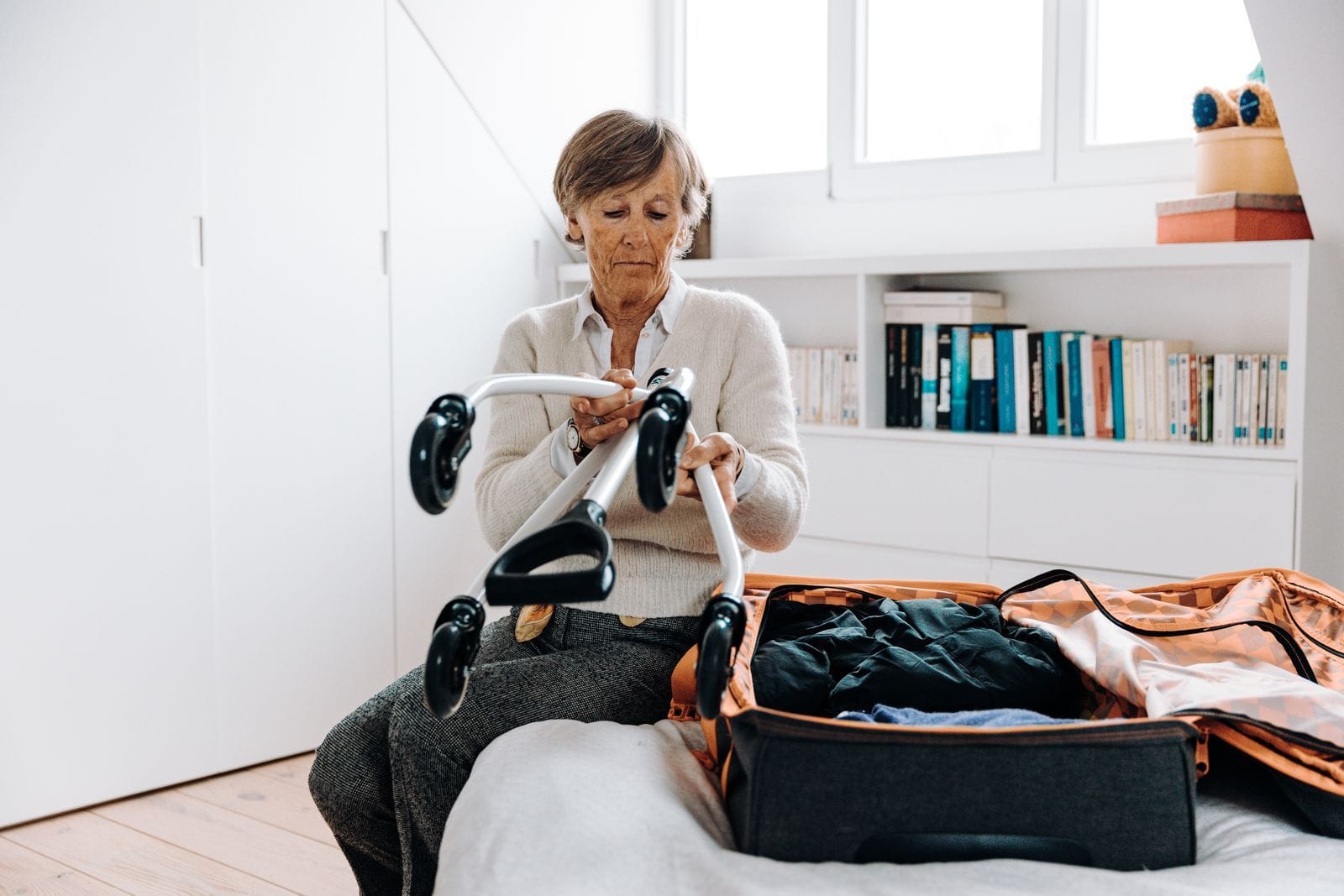
Packing for an older traveler is less about clothes than about continuity. The single most important bag is the one with the medications, and it belongs in a carry-on, never a checked suitcase that can vanish to another city. Bring a few days more than the trip needs, keep the original labeled bottles, and tuck in a written list of every drug and dose. If your parent juggles a long list, the habits in our guide to managing several medications travel well and keep the routine from unraveling on the road.
A short list covers most of what families forget:
- Medications in a carry-on, with extra days and a written dose list
- ID and insurance cards, plus a copy of the health care proxy
- Doctor and pharmacy phone numbers, somewhere easy to reach
- Mobility aids and a backup, from a folding cane to walker tennis-ball glides
- Small comforts: a familiar pillow, favorite snacks, and a sweater for over-cold planes and restaurants
Getting Through the Airport Without the Scramble
For flyers, the airport is the most stressful hour of the day, and two things make it dramatically easier. The first is wheelchair assistance. Request it from the airline when you book, even if your parent can walk a block at home, because the distance from curb to gate is far longer and an attendant moves you to the front of the security line. There is no shame in it, and it is free.
The second is TSA Cares, a free federal program that helps travelers with disabilities, medical conditions, and seniors prepare for screening; you can call roughly 72 hours ahead to arrange support. Travelers 75 and older can usually leave their shoes and a light jacket on. And if your parent is living with dementia, the Alzheimer's Association recommends telling the officer about the diagnosis and asking for a calmer, unhurried screening rather than being rushed through.
Pacing the Journey: Leave Early, Stop Often, Drink Water
Whichever way you go, slow it down. On a road trip, stop every couple of hours to let your parent stand, take a few steps, and use the bathroom. Sitting still for hours raises the risk of blood clots in older legs, and a stop costs ten minutes while a crisis costs the day. Older bodies also feel thirst less and dry out faster, so it is genuinely easy to get dehydrated on a travel day without anyone noticing until a parent is dizzy or confused. Offer water at every stop, even when no one asks. A relaxed late-afternoon arrival beats a dawn departure that leaves everyone frayed before the trip has begun.
Booking a Room That Won't Trip Your Parent Up
Call the hotel; do not trust the website's cheerful photos. Ask for a room on the ground floor or near the elevator, a walk-in shower instead of a tub to climb over, and grab bars if they have them. Ask how far the room is from the lobby and the dining room, because a long interior hike to breakfast wears a parent out before the day starts.
If you are staying with family, take five minutes the first night to walk the space with a phone flashlight the way your parent will move through it. Loose throw rugs, a dark hallway to the bathroom, the unlit step down into the den: these are the places people fall in an unfamiliar house. A cheap plug-in nightlight and a rolled-up rug solve most of it before anyone gets hurt.
Keeping the Day's Rhythm on the Road
A trip scrambles the small routines that quietly hold a day together: meals at familiar times, which often anchor medications; an afternoon rest; a regular bedtime. Travel does not have to become a clinical operation, but those anchors are worth protecting. Keep pills on home time where you can, guard a quiet hour in the afternoon even when there is more to see, and resist the urge to cram the itinerary. Too much novelty is tiring, and an overtired older adult gets unsteady, foggy, and far more prone to a fall. A slower trip is not a lesser trip; it is the one your parent will remember fondly instead of as the week that wore them out.
When the Visit Becomes a Window
For families spread across the country, a summer trip is often the first close look in months. The landmark MetLife and National Alliance for Caregiving study found that long-distance caregivers live an average of 450 miles from their parent, about seven hours away. A phone call hides a great deal across that distance. A few days under the same roof does not.
You notice that your mother fades by two o'clock, that your father grips the furniture to cross the room, that the pill organizer is a muddle and the refrigerator holds expired milk and little else. The mail is stacked unopened. The stairs have become an expedition. None of this is failure, and none of it is a verdict to deliver over dinner. It is information. Resist the urge to fix everything in a weekend. Note what you see, compare quietly with your siblings, and raise it gently with your parent and their doctor once you are home, when there is room to listen rather than react.
Sharing the Load So You Actually Enjoy It
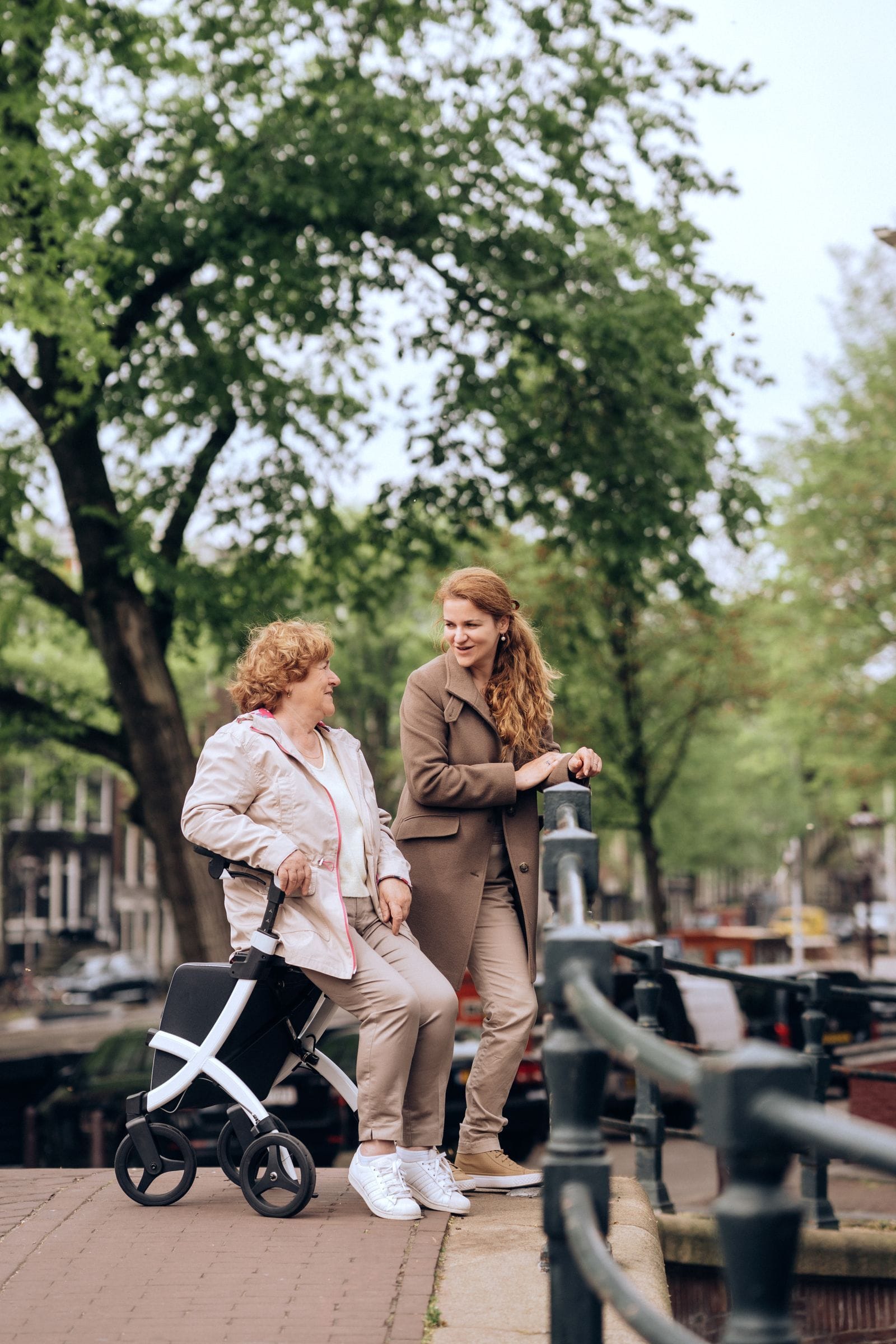
Here is the part families forget to plan: you. If you are the driver, the navigator, the medication reminder, the watchful eye, and the activities director all at once, you will come home needing a vacation from the vacation, and you will have spent the trip managing your parent instead of being with them. The fix is to share the work before you leave, not to grit your teeth through it.
If your parent has a regular family caregiver who is not coming along, a planned stretch of respite care keeps that person rested while you are away. For the trip itself or the busy days bracketing it, a companion caregiver can share the driving and the watching so the whole job does not land on one person, and an aide experienced in mobility assistance can help with transfers and the unfamiliar thresholds, curbs, and bathtubs that a strange place is full of. A little support turns you back into a daughter or a son for a few days instead of a one-person travel agency.
A Calmer Trip Starts Before You Pack
Almost everything that goes wrong on a trip with an aging parent traces back to a plan built for someone faster. Build for the real pace, protect the routines that hold the day together, and share the work, and the trip stops being a logistics problem and goes back to being what it was meant to be: time together, while you still have it to spend.
Whether your parent is around the corner or you are flying down to see them in Sarasota, Florida, the planning is the same and so is the payoff: a few unhurried days you will both be glad you spent. And if the visit shows you that your parent could use a steadier hand at home after you leave, that is worth acting on while you are still there to help set it up.
Photographs via Pexels: Isabel Ponce (hero), Wheeleo Walker (packing), and Rollz International (mother and daughter outdoors).
Frequently Asked Questions
How do you travel with an elderly parent?
Plan the trip around your parent's current stamina rather than the energy they had years ago. Keep medications in a carry-on with a few extra days' supply and a written dose list, request airport or mobility assistance ahead of time, pace the journey with frequent stops for standing and water, book a room without stairs or a tub to climb over, and protect daily anchors like meal times, an afternoon rest, and a regular bedtime. The goal is to design for the slowest, most tired version of the day, because that is the version that decides whether everyone enjoys the trip.
Is it better to drive or fly with an elderly parent?
It depends on the parent and the distance. Driving takes longer but hands you control over the schedule, the temperature, how often you stop, and how much mobility equipment you bring. Flying is faster but you control almost nothing once you are at the airport, and the walk to the gate is longer than most people expect. AARP's research shows older travelers increasingly choosing the predictability of a car for exactly these reasons. Match the mode to your parent's stamina and patience, not to what is quickest on paper.
What should I pack when traveling with an aging parent?
Pack for continuity, not just for the weather. Put all medications in a carry-on (never a checked bag) with a few days' extra supply, the original labeled bottles, and a written list of drugs and doses. Bring ID and insurance cards, a copy of the health care proxy, and the phone numbers of the parent's doctor and pharmacy. Include mobility aids and a backup, plus small comforts that make a strange place feel calmer, like a familiar pillow, snacks, and a sweater for over-cold planes and restaurants.
How do I get an elderly parent through airport security?
Request wheelchair assistance from the airline when you book, even if your parent can walk, because terminals are long. Use TSA Cares, a free federal program that helps travelers with disabilities, medical conditions, and seniors; you can call about 72 hours ahead to arrange help through screening. Travelers 75 and older can usually leave their shoes and a light jacket on. If your parent has dementia, the Alzheimer's Association suggests telling the TSA officer about the diagnosis and asking for a calmer, less rushed screening.
How do I keep my parent's medication schedule while traveling?
Keep pills in a carry-on so a delayed bag never separates your parent from a dose, and anchor doses to meals on home time wherever you can, since meals are the easiest reminder to keep. Bring a written schedule and the original bottles in case anything needs replacing. If you are crossing time zones or the trip is long, ask the pharmacist before you leave how to adjust the timing, especially for medications that must be taken at set intervals.
What should I watch for when visiting an aging parent?
A few days in the same house reveal what a phone call hides. Watch for new fatigue or unsteadiness, a muddled pill organizer, expired food in the fridge, stacks of unopened mail or unpaid bills, weight loss, or a home that is harder to navigate than it used to be. None of this is a verdict; it is information. Note what you see, compare with your siblings, and raise it gently with your parent and their doctor rather than trying to fix everything in one weekend.