When Pneumonia Doesn't Look Like Pneumonia
In older adults, pneumonia often skips the fever and cough and shows up as confusion, falls, or appetite loss. The signs to catch early and how to recover.
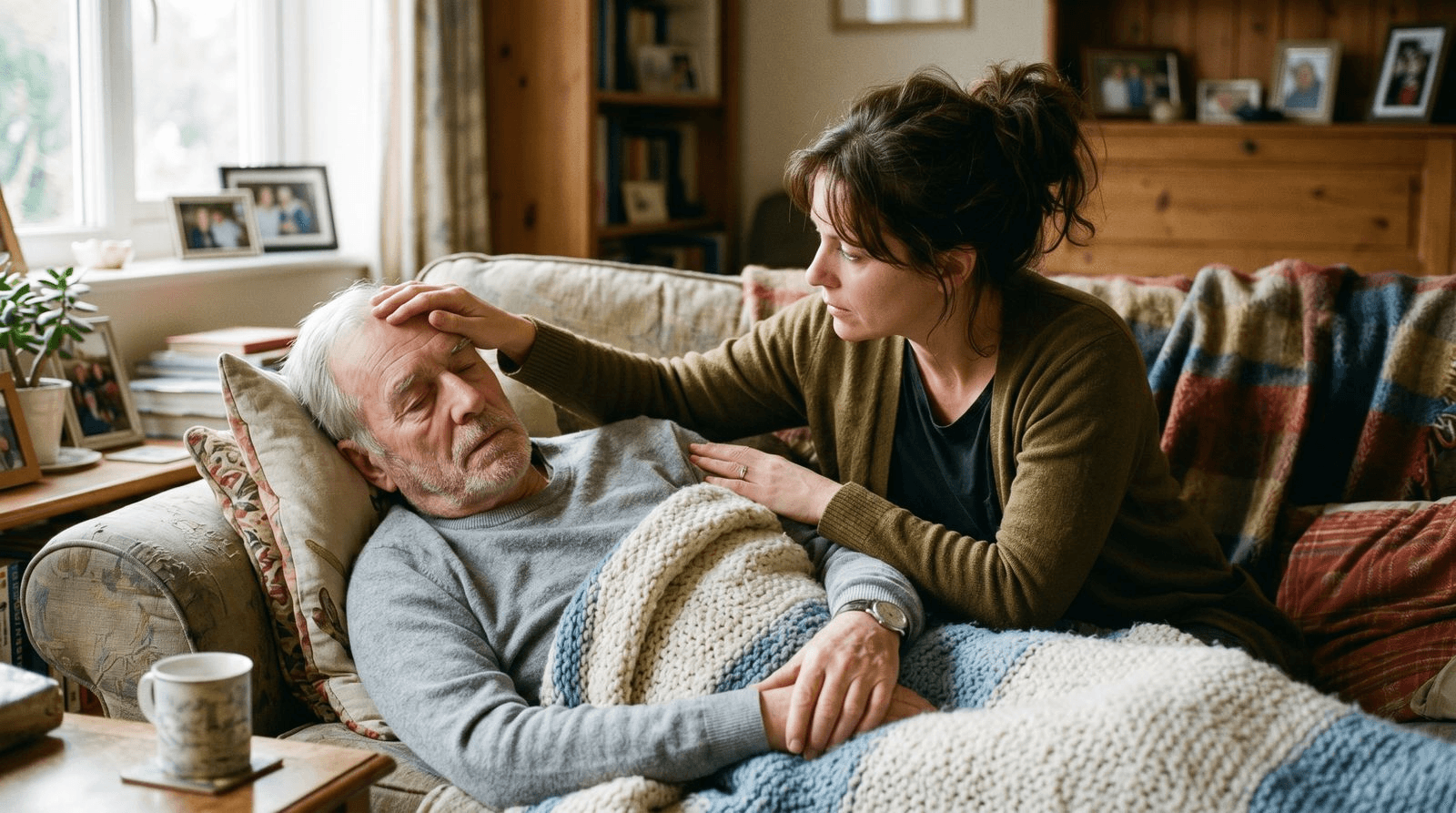
Here is a number worth sitting with: the great majority of deaths from flu and pneumonia in the United States happen to adults age 65 and older, and the death rate climbs sharply with each passing decade, roughly tripling between the late sixties and the mid-eighties, and tripling again after that. Pneumonia remains one of the most common reasons an older adult lands in the hospital. Yet the most dangerous thing about it in later life is not the infection itself. It is how quietly it arrives.
In a younger body, pneumonia tends to announce itself: a hacking cough, a high fever, the unmistakable feeling of being knocked flat. In an older one, it often slips in wearing a disguise, no real fever, barely a cough, just a grandmother who seems a little confused and is not eating much. Families wait for the textbook signs, the signs never come, and treatment starts days late. The good news is that this is a problem of recognition, and recognition is something a family or caregiver can learn. What follows is why pneumonia behaves differently after 65, the signs that do not look like pneumonia, when a quiet decline becomes an emergency, and how recovery and prevention actually work. None of it replaces a doctor's judgment, especially for someone with heart, lung, or kidney disease.
Why It Hits Harder After 65
Several defenses fade at once. The immune system slows with age, a shift scientists call immunosenescence, so the body is both more likely to catch an infection and slower to clear it. The cough reflex that normally scours the lungs grows weaker, leaving debris and bacteria to settle. Swallowing becomes less reliable, which makes it easier for food, drink, or even saliva to slip down the wrong way and seed an infection in the lungs. And most older adults carry at least one chronic condition, heart failure, COPD, diabetes, that raises the stakes of any lung infection and can mask it besides.
Put those together and you get an illness that is more common, more severe, and harder to spot, all at the same time. In one analysis of hospital data, the Centers for Disease Control and Prevention found that among adults 65 and older admitted for pneumonia, about one in nine died during that hospital stay, and only a little more than half were still alive a year after they went home. That long tail is the part families rarely hear about, and it is the strongest argument for catching the infection early and taking recovery seriously.
The Textbook Signs, and Why Older Adults Skip Them
Classic pneumonia is a loud illness. There is a productive cough, often bringing up green or rust-colored mucus. There is fever and shaking chills. There is sharp chest pain that bites when you breathe in, and a clear, obvious shortness of breath. If an older adult shows that full picture, it is no harder to recognize than in anyone else, and it should be acted on right away.
The trouble is how often that picture goes missing. The aging body frequently mounts a weaker fever response, so the temperature may stay low or never rise at all. A blunted cough reflex means there may be little coughing and not much mucus. The result is a real, sometimes severe pneumonia hiding behind almost none of the symptoms everyone is trained to look for. Here is the contrast worth memorizing.
| The textbook case | How it often looks after 75 |
|---|---|
| High fever and shaking chills | Low-grade fever, or no fever at all |
| Wet, productive cough | Little or no cough, scant mucus |
| Sharp chest pain on breathing in | Vague weakness, or "just not right" |
| Obviously short of breath | Faster, shallower breathing the person may not mention |
| Clearly knows they are unwell | New confusion, drowsiness, or a sudden fall |
| Keeps eating and drinking | Loss of appetite, pushing meals away |
The Changes Families Notice First
When pneumonia goes quiet, it tends to speak through behavior and function rather than the chest. The most common opening line is the mind. An infection can tip an older adult into delirium, a sudden, often fluctuating change in attention and thinking that, to a worried family, looks exactly like dementia taking a turn. The tell is the speed: delirium arrives over hours or a day or two, not months. A peer-reviewed review of pneumonia in older adults lists confusion, disorientation, and loss of appetite among its core atypical signs, and warns against waving away new confusion in someone with dementia as "just their baseline." It may be the lungs talking.
The other early signals are physical but indirect. A flat, bone-deep tiredness. A new wobbliness or an unexplained fall, sometimes the very first thing anyone notices. A parent who suddenly will not finish a meal. In someone who already lives with dementia, new incontinence can be an early flag of the strain an infection is putting on the body. None of these screams "pneumonia," which is precisely the point. The skill is not memorizing a symptom list. It is noticing a change from the person's ordinary self, and refusing to explain it away as a bad day.
Counting the Breaths: When a Quiet Decline Is an Emergency
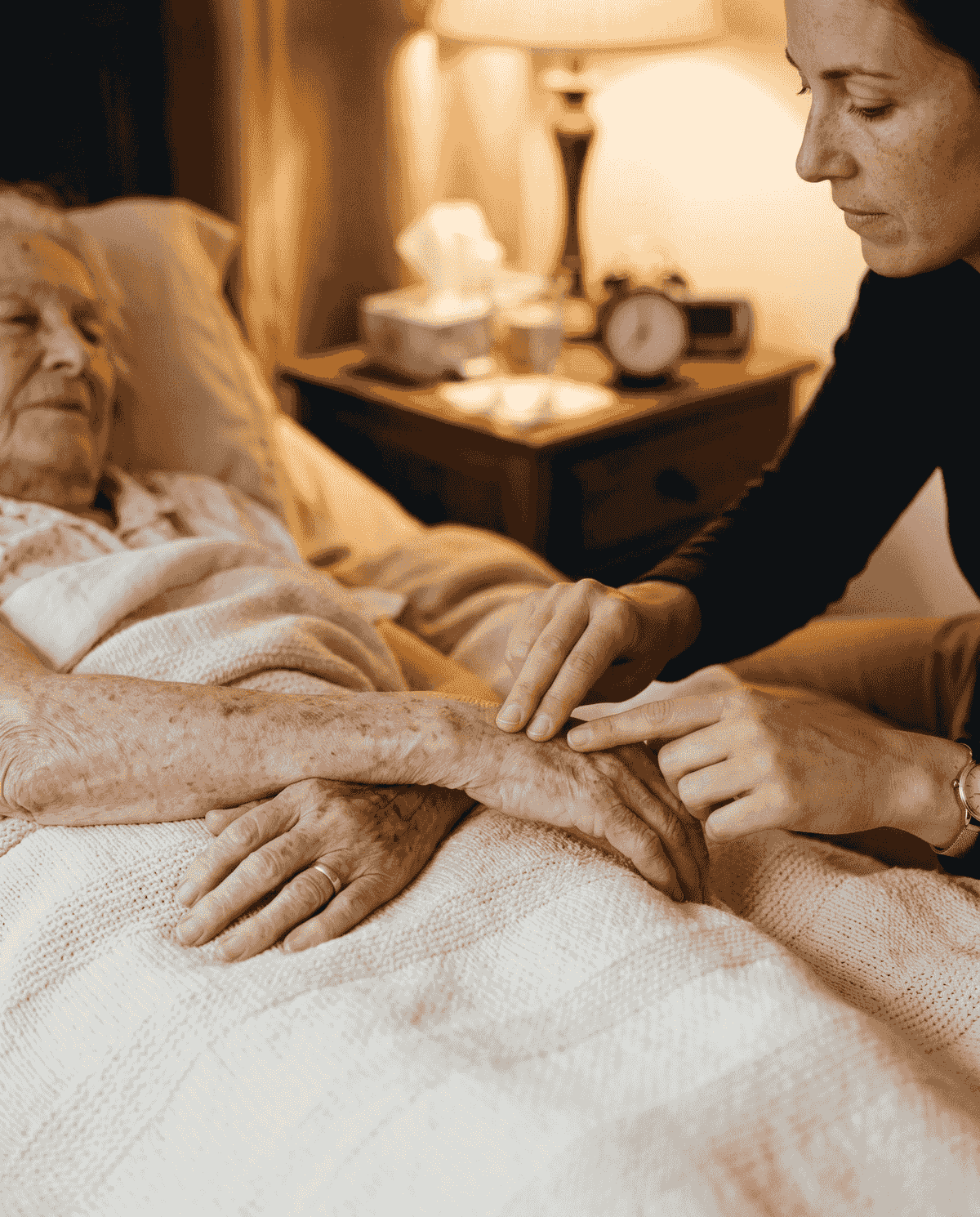
Because the usual alarms are unreliable, it helps to have one measurement you can take yourself. Watch the chest rise and fall for a full minute. A calm, resting adult usually breathes somewhere between 12 and 20 times a minute. Breathing that is faster than that, more than about 20 to 22 breaths a minute at rest, is one of the earliest and most sensitive signs that the lungs are in trouble, and it often shows up before anything else does. A breathing rate you can count is worth a call to the doctor on its own.
Some signs cannot wait for an appointment. Call 911 or head to the emergency room for bluish lips, gums, or fingertips, severe breathlessness or gasping, chest pain, a racing or pounding heart, or marked confusion and trouble staying awake, all of which can mean the body is not getting enough oxygen. Short of that, call the doctor the same day for a fever that will not break, a cough that is getting worse, an inability to keep fluids down, or any new confusion, weakness, or fall in an older adult who has seemed under the weather. Older bodies tip from "a bit off" to "seriously ill" faster than younger ones, so an early phone call is never an overreaction.
Recovery Outlasts the Antibiotics
Families often assume that once the antibiotics are finished, the illness is over. With older adults, it rarely works that way. The National Heart, Lung, and Blood Institute notes that while some people bounce back in one to two weeks, for many it takes a month or longer, and most feel tired for weeks after the infection itself has cleared. A hospital stay stretches that timeline further: regaining full strength after being hospitalized for pneumonia can take anywhere from one to six months. A lingering cough and a short fuse on energy are normal, not signs of failure.
The quieter danger of recovery is deconditioning. Days spent in bed cost an older body strength quickly, and that lost strength is what leads to falls, a slide in independence, and sometimes a second trip back to the hospital. The aim is a careful middle path: real rest in the early days, then a gradual return to moving, sitting up, walking a little farther each day, eating and drinking enough to fuel the repair. This is the stretch where steady help at home earns its keep, and it is the heart of hospital-to-home care, a caregiver who keeps the recovery on its rails: encouraging gentle activity without overdoing it, watching for the cough or fever that signals a relapse, and making sure the follow-up medications are taken on schedule. For the medication side of that routine, our guide to medication management for seniors lays out a simple system that keeps doses from slipping through the cracks.
Lowering the Odds Before It Starts
Pneumonia is never fully preventable, but the odds are surprisingly movable. The single most effective step is vaccination. The pneumococcal vaccine targets the most common bacterial cause, and the yearly flu shot matters too, because influenza often clears a path for the pneumonia that follows. The rules for the pneumonia shot changed recently, so it is worth a quick check with a pharmacist, who can confirm what is currently recommended and who is due.
Then there is the surprising one: the mouth. A great deal of pneumonia in later life is aspiration pneumonia, caused when bacteria-laden saliva slips into the lungs, and the mouth is the reservoir those bacteria come from. The evidence here is strong. A landmark trial in nursing homes found that brushing residents' teeth after meals, paired with regular professional cleaning, cut pneumonia significantly, and a later review concluded that as many as one in ten pneumonia deaths in frail older adults could be prevented by better oral hygiene alone. That makes daily care of teeth and dentures a genuine lung-protecting habit, not just a cosmetic one, the throughline in our piece on dental care for seniors. The rest of the list is the familiar foundation of aging well: treat swallowing trouble, stay active to keep the lungs and cough strong, keep well hydrated, manage chronic conditions, and do not smoke.
The Advantage of a Familiar Eye
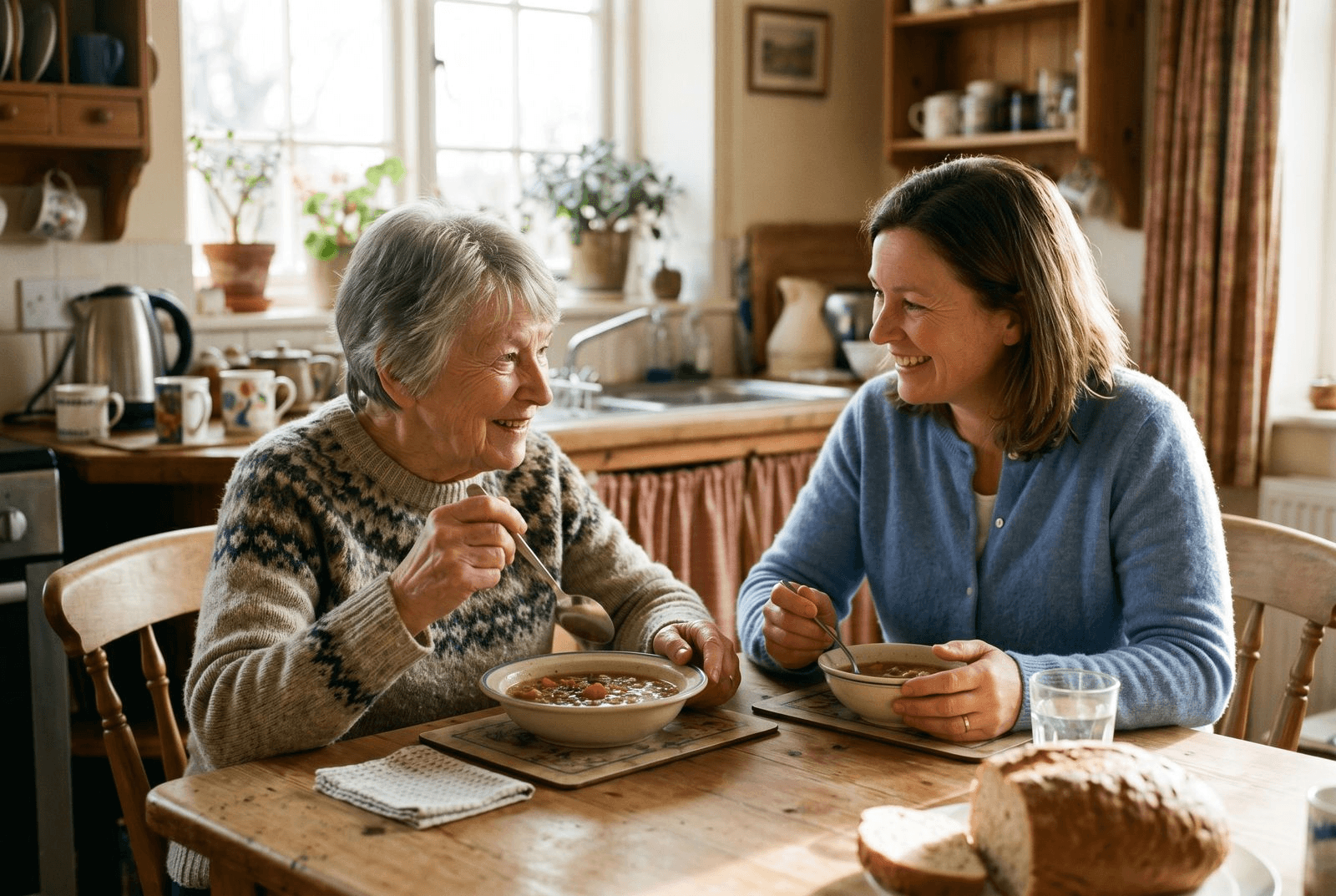
Almost everything that makes pneumonia survivable in an older adult comes down to one thing: someone noticing the change early. Not a symptom from a list, but a difference from how this particular person usually is, the appetite that is suddenly off, the conversation that does not quite track, the breathing that has picked up while they slept in the chair. That kind of noticing is hardest, oddly, for the people who love someone most, because they see them every day and the slow drift can be invisible up close. It often comes more easily to someone slightly outside the daily blur, who knows the person's baseline and is watching for the change on purpose.
That is the quiet, unglamorous value of in-home support. A companion caregiver who shares enough mornings to know what "normal" looks like, or a personal care aide who helps with the daily oral care, hydration, and gentle movement that keep the lungs ahead of trouble, is doing some of the most preventive work in all of senior care, long before anything becomes a crisis. For families across Ocean County and the Jersey Shore who cannot be there every day, that steady, familiar presence is often the difference between an infection caught on Tuesday and one discovered, much harder to treat, the following weekend. If pneumonia tends to arrive in disguise, the best protection is simply someone close enough to see through it.
Frequently Asked Questions
What are the signs of pneumonia in older adults?
In older adults the most telling signs are often not the classic cough and fever. Watch instead for new confusion or drowsiness, a sudden loss of appetite, unusual weakness or a fall, and faster, shallower breathing the person may not mention. A cough may be light or missing, and the fever blunted or absent. The most reliable clue is a change from the person's normal self: someone who seems suddenly off, foggy, or unsteady deserves a closer look, even if they insist they are fine.
Can pneumonia cause confusion in the elderly?
Yes, and it is one of the most common ways pneumonia announces itself in later life. An infection can trigger delirium, a sudden, often fluctuating change in attention and thinking that can look like dementia getting worse. Unlike dementia, it comes on over hours to a day or two. Because the classic chest symptoms are often muted in older adults, new confusion is sometimes the first and loudest sign that something is wrong in the lungs.
Can you have pneumonia without a fever or cough?
In older adults, yes. The aging immune system often mounts a weaker temperature response, so the fever may be low-grade or absent, and the cough can be light or missing entirely. This is exactly why pneumonia is so easy to miss in seniors: families wait for the textbook signs that never arrive, while the real clues, confusion, weakness, poor appetite, and faster breathing, are quietly building.
Why is pneumonia more dangerous for the elderly?
Several changes stack up with age. The immune system responds more slowly, the cough reflex that clears the lungs weakens, swallowing problems make it easier for food or saliva to slip into the airway, and chronic conditions like heart disease, COPD, and diabetes raise the stakes. Because symptoms are also muted, treatment often starts later. The majority of deaths from flu and pneumonia in the United States occur in adults age 65 and older, and the risk climbs steeply with each decade of life.
How long does it take an older adult to recover from pneumonia?
Longer than most families expect. Some people feel better in one to two weeks, but for many it takes a month or more, and recovery from a hospital stay can run from one to six months. Fatigue and a lingering cough are normal for weeks after the infection clears. The bigger risk for older adults is deconditioning, the loss of strength that comes from too much bed rest, so gentle, gradual return to activity matters as much as the antibiotics.
How can you prevent pneumonia in seniors?
The strongest single step is staying current on vaccines, especially the pneumococcal and yearly flu shots. Good oral hygiene matters more than most people realize, because bacteria from the mouth are a major source of pneumonia in older adults; brushing teeth and dentures daily measurably lowers the risk. Beyond that: treat swallowing problems, stay active, stay hydrated, keep chronic conditions well managed, and do not smoke. None of it guarantees protection, but together these steps meaningfully shift the odds.
When is pneumonia an emergency in an older adult?
Call 911 or go to the emergency room for bluish lips or fingertips, severe shortness of breath or gasping, chest pain, a fast or pounding heartbeat, or marked confusion and difficulty staying awake. Short of an emergency, call the doctor promptly for a fever that will not break, a worsening cough, breathing that is faster than about 20 to 22 breaths a minute at rest, an inability to keep fluids down, or any new confusion, weakness, or fall in someone who has been unwell. When in doubt, it is always reasonable to call.