Birdwatching Starts at Your Window
A gentle guide to birdwatching for seniors: how to start at your window, the gear you actually need, and the backyard birds you will meet first.
Here is the quiet secret of birdwatching: you can start it this morning, from exactly where you are sitting, without buying a thing. No hike, no gear, no expertise. A window that looks onto a tree or a yard, and a few minutes of paying attention, is genuinely all it takes to begin. That is why so many people find their way to this hobby in their sixties, seventies, and eighties, and why so few of them ever set it down.
It turns out the appeal runs deeper than a pleasant view. In a 2022 study using a smartphone app, researchers found that seeing or hearing birds was linked to improvements in mental wellbeing that lasted up to eight hours, and the lift held even for people already living with depression. Birds, it seems, are good for us in a way that a screen or a photograph is not. This is a practical guide to letting more of them into your days: where to start, what little you actually need, which birds you will meet first, and how to keep the hobby going as eyesight, hearing, and stamina change.
Why Birding Finds People Later in Life
Retirement hands you time, and time without shape can weigh on a person. Birding fills it with small, renewable pleasures. There is always a next bird, a next season, a change at the feeder to notice. It rewards patience rather than speed, curiosity rather than strength, which is exactly the trade later life tends to favor.
The benefits are real and well studied. Time spent with birds is tied to lower stress and steadier mood, and the gentle work of telling one species from another keeps attention and memory lightly exercised. It pulls people toward the outdoors and toward each other. For an older adult at risk of long, quiet, solitary days, a hobby that offers a reason to look up, get to the window, or step onto the porch is worth more than it first appears. It is one of those rare pastimes that asks little and gives back steadily.
You Can Start Without Leaving the House
Forget the image of the birder trekking through a marsh at dawn. Most birdwatching, for most people, happens close to home, and a good deal of it happens indoors. A window that frames a tree, a shrub, or a stretch of yard is a front-row seat. Crack it open and the birdsong comes in with the light, which is often the best part.
The trick is to bring the birds to you. A feeder or a birdbath set within view of a favorite chair does the work, and within a week or two the regulars will start arriving on a schedule you come to recognize. Keep a pair of binoculars and a notepad on the sill. That is the whole setup. For someone who tires easily or does not get out as much as they used to, this window-side version of the hobby is not a lesser one; it is the heart of it. Watching the same few birds day after day, learning their habits and quarrels, is where a lot of the quiet joy actually lives.
The Only Three Things You Really Need
Birding has a reputation as a gear hobby. Ignore it. The National Park Service puts the true starter list at three items, and it is hard to improve on: a way to identify birds, a way to see them up close, and a bit of patience. Here is how that translates into a first kit that costs very little.
- One pair of binoculars. This is the purchase that matters. A pair marked 8x42 hits the sweet spot for beginners, with steady magnification and a bright, wide view that is forgiving to find a bird through. Good starter pairs run fifty to a hundred dollars, and some libraries lend them out for free if you would rather try before you buy. Look for adjustable eyecups, which make a real difference for eyeglass wearers.
- A free identification app. The thick paper field guide has been replaced, for most people, by Merlin Bird ID from the Cornell Lab of Ornithology. It names a bird from a photo, from a few questions, or from its song picked up through the phone. It is free and works offline once you download your region.
- A simple feeder. A basic feeder and a bag of seed are what turn a bare view into a busy one. More on choosing one below, but it need not be fancy or costly to work.
That is the entire barrier to entry. No membership, no lessons, no expensive optics. You can add to it over the years if the hobby takes hold, but plenty of contented birdwatchers never buy more than this.
The Birds You'll Meet First
The fastest way to feel like a birdwatcher is to learn a handful of common birds cold, so that spotting one becomes instant recognition rather than a puzzle. These bold, everyday visitors show up across most of the country and are hard to mistake for anything else. Start here.
- Northern cardinal. The unmistakable one. Males are brilliant red with a black mask and a crest; females are a warm tan with red touches. They love feeders and often come at dawn and dusk.
- Chickadee. A tiny, round, endlessly busy bird with a black cap and bib, named for its chick-a-dee-dee call. Tame and curious, and usually among the first to find a new feeder.
- Mourning dove. A soft gray, plump bird with a gentle, mournful coo that many people know without knowing its source. Often feeds on the ground beneath a feeder.
- American robin. The classic red-breasted bird of lawns, tugging worms from the grass. A sure sign of the seasons turning.
- Blue jay. Big, loud, and a vivid blue. Bossy at the feeder and impossible to overlook.
Learn those five and you will notice you are already reaching for the app less. From there the house finches, sparrows, and little downy woodpeckers start to sort themselves out. There is no prize for rare birds. The everyday ones, watched closely, are the whole reward, and getting to know them by name is the part that quietly hooks people.
Setting Up a Feeder They'll Actually Visit
A feeder is what brings the birds within easy view, which is exactly what you want when the goal is to watch from a chair or a window. A little care in setting it up makes the difference between a busy feeder and one the birds ignore.
- Keep it simple to start. A basic tube or platform feeder filled with black-oil sunflower seed attracts the widest range of common birds. One good feeder beats several fussy ones.
- Place it where you can see it, and where birds feel safe. Within view of a favorite window, ideally near a shrub or tree the birds can duck into. A spot that is easy for you to reach for refilling matters too.
- Mind the window. To prevent birds striking the glass, feeders are safest either within a few feet of the window or well out in the yard. Decals or screens on a troublesome window help.
- Keep it clean. A feeder needs an occasional wash with a diluted bleach solution and a good rinse to keep the birds using it healthy. If refilling or scrubbing is hard on the hands or the balance, this is a natural task to hand to a family member or caregiver.
- Add water. A shallow birdbath often draws even more visitors than food, and it works in every season.
Give it a week or two. Birds are cautious about anything new, but once they find a reliable feeder they return like clockwork, and the view out that window is never quite empty again.
Making It Easier on Aging Eyes, Ears, and Hands
One of the best things about birding is how well it bends to fit the person. As eyesight, hearing, dexterity, or stamina change, the hobby adapts rather than closing off. A few small adjustments keep it comfortable and open.
- For changing eyesight. Choose binoculars with a wide field of view and adjustable eyecups, and lean on the app's sound identification, which names birds you can hear but cannot quite see. A feeder placed close to the window keeps the subjects large and near.
- For hearing changes. The visual side of birding, color, shape, movement, carries the hobby entirely on its own. And Merlin's on-screen list of what is singing nearby can surface birds that a softer ear would miss.
- For hands and grip. A pair of lightweight binoculars on a comfortable neck strap, or compact ones that are easy to hold, spare stiff or arthritic hands. Feeders that refill from the top without fiddly parts are kinder too.
- For limited mobility. The whole hobby works seated. Organizations devoted to accessible birding have mapped wheelchair-friendly trails and gathered adaptations for birders with a range of disabilities, so getting outside stays possible too.
For an older adult who wants to spend more time outdoors but needs a steady arm to get to the porch or the park path safely, this is the kind of small, meaningful outing a caregiver can help make happen. Getting someone to the bench where the birds are, and home again without a fall, is everyday mobility care at its most rewarding.
Better With Company
Birding is a fine solitary pleasure, but it grows when it is shared. It is one of the easiest hobbies to enjoy with a grandchild, who will happily race to spot the cardinal first, and it gives the generations something to do together that does not depend on keeping up. A shared feeder, a shared list of who visited today, a shared pair of binoculars passed back and forth: the activity does a lot of the talking.
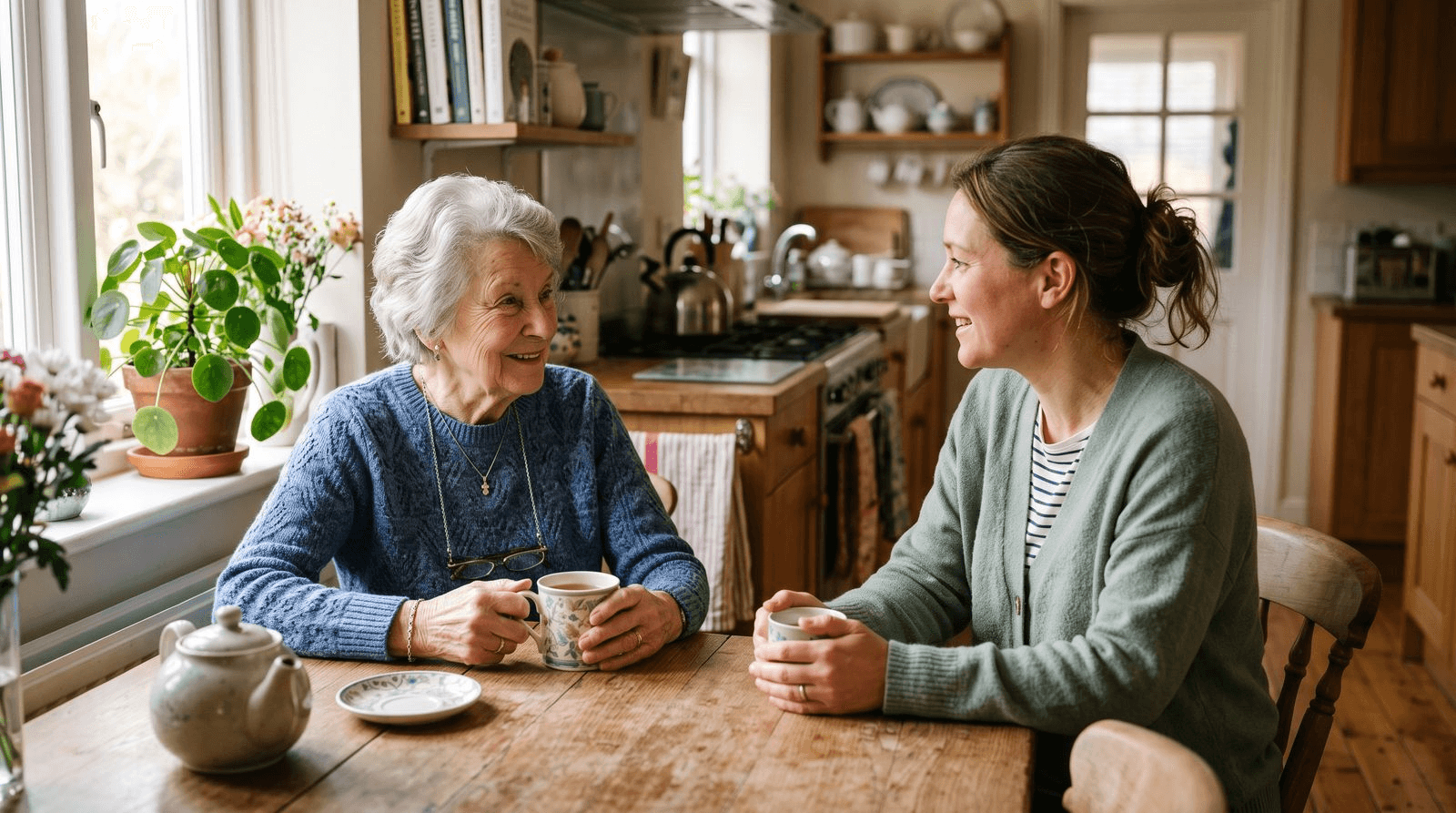
It reaches outward too. Local birding clubs and Audubon chapters run gentle group walks that welcome beginners and offer a low-key way to make friends around a common interest, an antidote to the isolation that can settle over later life. And for an older adult who spends part of the week with a caregiver, birding turns easily into shared time, filling the feeder together, watching for the day's visitors, naming what shows up. That kind of unhurried companionship is the quiet center of good companion care. Across our Ocean County, New Jersey service area, where the Edwin B. Forsythe refuge and the shore draw remarkable birdlife, a morning at the window watching for the regulars is exactly the kind of small, good hour a visit can be built around.
A Small Window on a Larger World
What makes birdwatching such a durable companion into later life is how little it demands and how much it returns. It does not care how far you can walk or how sharp your eyes are. It meets you at the window, asks only for a few minutes of attention, and hands back a bright red bird against green leaves, a song through the open glass, a reason to look up. On the harder days, that is not a small thing.
So hang a feeder where you can see it. Download the app. Keep the binoculars on the sill. You do not need to become an expert or travel anywhere or master a single Latin name. You only need to start noticing, and let the birds do the rest. If you are looking for one more low-effort, high-reward way to spend the days, birding belongs near the top of any list of hobbies for seniors, and it begins the moment you glance outside.
Sources: Scientific Reports (Hammoud et al., 2022) - Smartphone-based ecological momentary assessment reveals mental health benefits of birdlife; National Park Service - Birding for Beginners; Cornell Lab of Ornithology - Merlin Bird ID; Birdability - Accessible Birding.
Frequently Asked Questions
Is birdwatching a good hobby for seniors?
It is one of the best. Birdwatching is low-cost, gentle on the body, and can be done at whatever pace and level of activity suits the person, from a vigorous morning walk in a park to a few minutes at a chair by the window. It gives structure and small daily pleasures to a retirement that can otherwise feel shapeless, it draws people outdoors and toward one another, and it gently exercises attention and memory as you learn to tell one bird from another. Researchers have also connected time with birds to lower stress and better mood. Because it flexes to fit failing eyesight, stiff hands, or limited stamina, it stays possible long after more demanding hobbies have to be set aside.
What equipment do you need to start birdwatching?
Less than most people expect. You can begin with nothing at all by simply watching the birds outside a window. When you want to see more detail, a single pair of binoculars is the one purchase that matters, and an 8x42 pair in the fifty-to-hundred-dollar range is plenty to start; some public libraries even lend them out. Beyond that, a free phone app such as Merlin Bird ID will name almost any bird from a photo or its song, replacing the thick printed field guide of years past. A basic feeder and a bag of seed will bring birds close enough to enjoy from indoors. That is the whole kit: binoculars, an app, and a feeder, none of it expensive.
What are the best birds for beginners to identify?
Start with the bold, common backyard birds that show up almost everywhere and are hard to confuse. In much of the United States that means the bright red northern cardinal, the round little chickadee with its black cap, the soft gray mourning dove, the red-breasted American robin, and the blue jay. House finches, sparrows, and downy woodpeckers are common visitors too. These are the birds a feeder will draw first, and learning just a handful of them well, their colors, their sizes, the way they move, builds the eye and the confidence to notice the less familiar ones later. There is no need to rush toward rare species; the everyday birds are plenty to enjoy.
Can you birdwatch with limited mobility or from indoors?
Absolutely, and this is part of what makes birding such a durable hobby into later life. A window that looks onto a tree, a yard, or a feeder is a perfectly good place to watch birds, and much of the pleasure, especially birdsong, comes through simply by opening it. A feeder or birdbath placed within view brings the activity to you. For those who can get outside, a seat on a porch or a bench at an accessible park trail works well, and organizations devoted to accessible birding have mapped routes and set up adaptations for wheelchair users and people with low vision or hearing. You do not need to hike or travel to be a birdwatcher.
What is the best bird identification app?
Merlin Bird ID, a free app from the Cornell Lab of Ornithology, is the one most beginners reach for and the easiest to learn. It can identify a bird from a photo, answer a few simple questions about size and color, or, most usefully, listen through the phone's microphone and name the birds singing nearby in real time. That sound feature is a gift for anyone whose eyesight is not what it was, since it turns a chorus you cannot see into a labeled list. The app is free, works without a data connection once regional bird packs are downloaded, and doubles as a gentle way to learn the birds of your own backyard.