Why Does Sleep Get Harder as We Age?
Why older adults wake at night, rise before dawn, and sleep lighter, the real causes behind aging sleep, and when broken nights are worth a doctor.
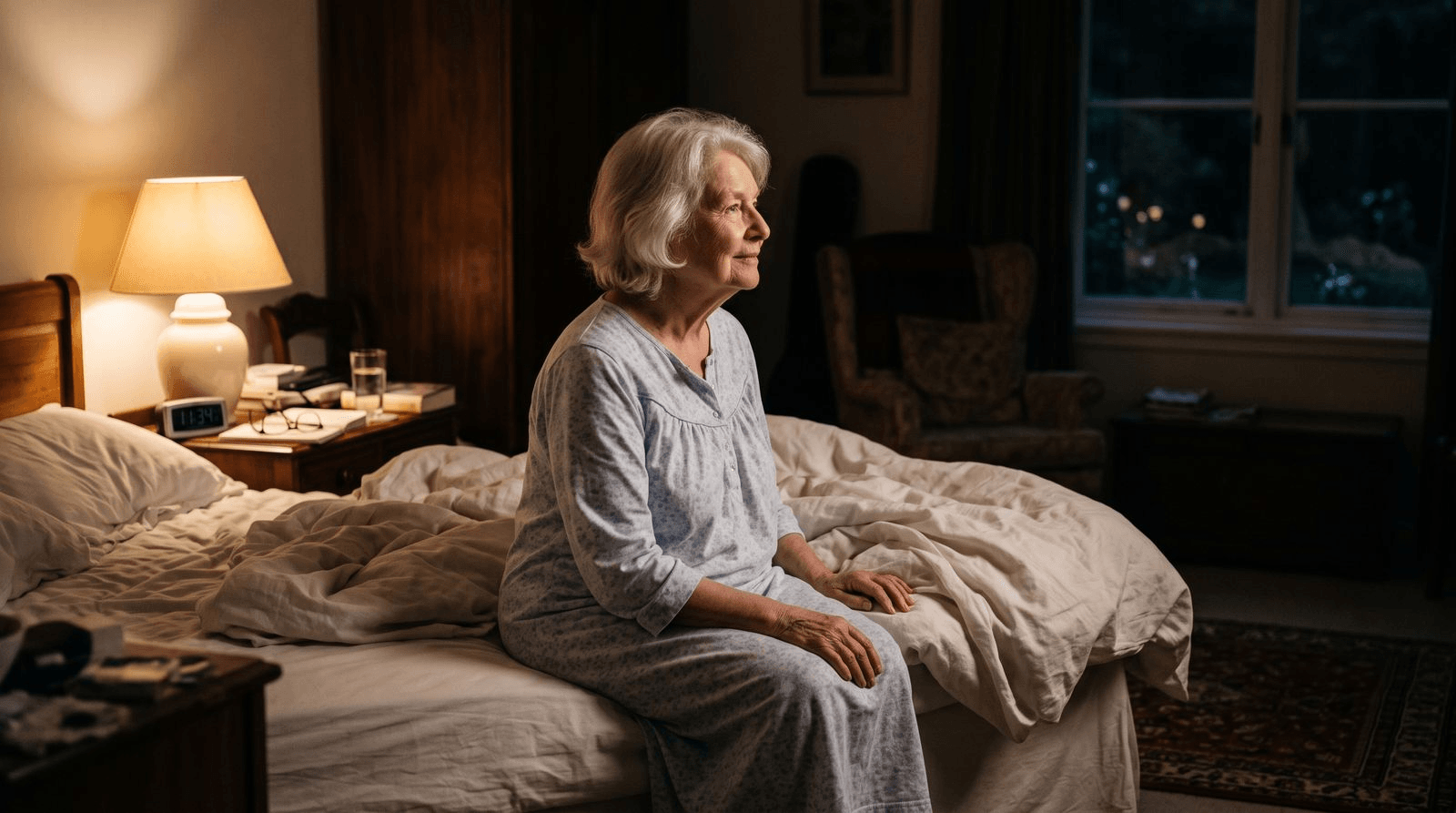
Here is a fact that surprises most families: by one national count, adults over 65 are the age group most likely to log a healthy seven hours of sleep, yet roughly half of them also report trouble sleeping. Both things are true at once. Plenty of older adults sleep just fine, and a great many spend their nights waking at 3 a.m., watching the ceiling, or dozing off at dinner and snapping awake before the sun.
So which is it, a normal part of aging or a problem to fix? The honest answer is some of each, and telling them apart is the whole point. This is a plain-language look at why sleep genuinely changes as the body ages, which of those changes are worth simply accepting, and which broken nights are a sign of something a doctor can actually help.
Do Older Adults Really Need Less Sleep?
No, and this is the myth that causes the most trouble. An older adult needs about the same seven to nine hours as a younger one. What changes is not the amount of sleep the body requires but the ease of getting it in one clean stretch. When a parent says they "only need five hours now," they are usually describing what they are managing to get, not what their body actually needs, and the gap shows up as afternoon fatigue, irritability, and nodding off in the armchair.
That distinction matters because chasing the wrong target leads nowhere. If someone is genuinely sleeping eight hours but in broken pieces, the goal is a smoother, more continuous night, not more time in bed. If they are truly short on sleep, the fatigue is real and worth taking seriously rather than waving off as old age.
What Happens to Sleep as We Age
Sleep is not a single flat state; it moves through stages, from light sleep into deep, restorative slow-wave sleep and then into dreaming REM sleep, cycling several times a night. With age, the architecture of that night shifts. Older adults spend less time in deep and REM sleep and more in the lighter stages, and light sleep is easy to break. A creaking floorboard, a full bladder, or a twinge of arthritis that a younger sleeper would never notice is now enough to surface into wakefulness.
This is why an older adult can spend eight hours in bed and still feel short-changed. The total may be close to right, but it is chopped into fragments, with more time drifting near the surface and less down in the deep sleep that leaves a person feeling genuinely rested. Understanding that the night is lighter, not necessarily shorter, reframes a lot of the frustration.

Why Bedtime Keeps Creeping Earlier
One of the most common complaints, falling asleep in front of the evening news and then waking at four, comes down to the body's internal clock. Deep in the brain sits a master timekeeper that governs the daily rhythm of sleepiness and alertness, cued by light and by the hormone melatonin. As we age, that clock weakens and drifts earlier, a pattern doctors call advanced sleep phase. Melatonin, the signal that tells the body it is nighttime, is also released in smaller amounts than it once was.
The result is a whole night simply shifted forward. Sleepiness arrives at eight instead of eleven, and a full night's sleep from that start naturally ends before dawn. Early waking is only a problem when the evening sleepiness gets fought off, with a late show or a second wind, but the early-morning wake still fires on schedule, quietly shrinking the night. Bright light in the late afternoon and a dimmer, screen-free hour before bed can nudge the clock a little later.
Why One Bathroom Trip Can Cost an Hour of Sleep
Ask an older adult what wakes them and the answer is often simply the bathroom. Nighttime urination, called nocturia, becomes far more common with age; studies find that around a third to nearly half of people over 65 get up two or more times a night, and it is one of the strongest drivers of broken sleep in later life. The culprits range from an aging bladder and, in men, an enlarged prostate, to heart or kidney conditions and the very medications meant to treat them.
The cruel part is not the trip itself but what follows. A younger person pads to the bathroom and falls back asleep in minutes; an older adult in lighter sleep can lie awake for an hour afterward. Small adjustments help more than people expect, such as easing up on fluids in the last two or three hours before bed, taking a prescribed water pill earlier in the day rather than the evening, and keeping a clear, softly lit path to the bathroom so the trip itself does not fully wake the body, or invite a fall in the dark.
When the Cause Is Pain, Reflux, or a Medication
A great deal of older-adult insomnia is not really a sleep problem at all but the body's daytime troubles carrying over into the night. Arthritis and back pain flare when a person lies still. Acid reflux worsens lying flat. Restless, uncomfortable legs, breathlessness from heart or lung conditions, and the low mood and racing worry of depression and anxiety all keep sleep at bay. Later life also tends to bring the very conditions that most disrupt sleep, so it is rarely just one thing.
Medications deserve special mention, because the fix is sometimes as simple as timing. Diuretics taken in the evening send a person to the bathroom all night. Beta-blockers, prescribed widely for blood pressure and heart conditions, lower the body's own melatonin and can bring night wakings and vivid dreams. Steroids, decongestants, and some antidepressants are mildly stimulating and better taken in the morning. It is worth sitting down with a doctor or pharmacist to review the whole list, both for what might be disrupting sleep and for what is being taken to force it, since the over-the-counter sleep aids and antihistamines many older adults reach for can cause next-day grogginess, confusion, and falls, and are a poor long-term answer.
When It's a Sleep Disorder Hiding in Plain Sight
Some broken nights are not aging at all but a treatable disorder that goes unnamed for years. Obstructive sleep apnea, in which the airway repeatedly collapses and breathing pauses through the night, is strikingly common in older adults and frequently missed, partly because it can show up without the classic loud snoring and instead as plain daytime exhaustion, morning headaches, or foggy thinking. Restless legs syndrome, an urge to move the legs that peaks at night, and a condition in which people physically act out their dreams are also more common with age.
These are worth catching because they respond to treatment, and because untreated sleep apnea in particular is linked to heart problems and to the daytime sleepiness that leads to falls and accidents. The signs to mention to a doctor are loud snoring with pauses or gasping, kicking or thrashing in sleep, and an overwhelming urge to nap during the day. A sudden change in sleep paired with new confusion or low mood is its own red flag, and can overlap with the restlessness of evening agitation in dementia, which has its own approaches.
The Fixes Worth Trying First
Before any prescription, the most effective tools are unglamorous and free. They work on the two systems behind the trouble above, the internal clock and the pressure to sleep that builds across a waking day.
- Keep the schedule fixed. The same wake time every morning, weekends included, is the single strongest lever, because it anchors the whole clock.
- Chase the light. Morning and afternoon time outdoors or by a bright window strengthens the day-night rhythm that fades with age; a dim, screen-free hour before bed lets melatonin do its job.
- Guard the nap. A short early-afternoon rest is fine, but a long or late-day nap steals the sleep pressure needed for bedtime.
- Move during the day. Even a daily walk deepens nighttime sleep; just keep vigorous activity out of the last couple of hours.
- Mind the evening cup and glass. Caffeine lingers for hours in an older body, and alcohol brings sleep on fast but fractures it later in the night.
- Get out of bed when sleep won't come. Lying awake and frustrated teaches the brain that bed is for wakefulness; better to rise, sit quietly in dim light, and return when drowsy.
How to Use Light on Purpose
Of everything on that list, light does the most work, and it is the piece most older adults are quietly short of. The aging eye passes less of it through, so that up to ninety percent less light reaches the brain's clock than in youth. Add a day spent indoors, where lighting runs a few hundred lux against the several thousand of even an overcast morning outside, and the signal that separates day from night gets faint. A faint signal makes for a blurry night.
The useful dose is roughly half an hour to an hour of genuinely bright light, and outdoors beats any indoor room, cloud or no cloud. In one study, older adults given ninety minutes of bright light each morning for five days slept better and thought more clearly, and the gains held after the sessions stopped. Regularity matters more than length: a short spell on the porch every single morning does more than one long session on a Sunday.
Timing decides which way the clock moves, and this is where it pays to match the light to the problem. Light early in the day pulls the clock earlier; light in the late afternoon and early evening pushes it later. When the trouble is a dim indoor life and a night that never quite consolidates, morning light is the fix. When the trouble is the early drift described above, asleep by eight and awake at four, the same light works better weighted toward the late afternoon.
Then protect the other half of the signal. Evening light, especially a bright screen held close to the face, tells the brain it is still daytime. Reading on a lit e-reader before bed delays melatonin release by about ninety minutes compared with a printed book, and half an hour of screen time is enough to do it. A workable evening is screens off an hour or so before bed, the overhead lights traded for a low lamp, and a soft amber night light on the path to the bathroom, bright enough for safe footing without ending the night.
None of it is instant. Bright mornings and dim evenings tend to show up in sleep within about a week, with the fuller shift taking two to three weeks, which is why the experiment deserves a real run before anyone decides it did not work.
The Bedroom Itself
Because older sleep runs lighter, the room matters more than it used to. A bedroom someone slept through for thirty years can now be full of small things with the power to surface them, and the three usual culprits are all cheap to fix.
Temperature. Aging blunts the body's own thermostat, and the room that suits an older sleeper is warmer than the cool bedroom usually recommended to younger ones, with the research pointing to roughly 70 to 74 degrees for older adults. It is worth setting deliberately rather than leaving to whatever the house does overnight.
Light. The bedroom should be genuinely dark once the lamp is off, and the evening light everywhere else low and warm. Warm red and amber tones suppress melatonin far less than the blue-white of a screen or an overhead fixture, which is why one small lamp after dinner beats the ceiling light.
Noise. Sound does not have to wake a person to cost them sleep. Nighttime noise pushes the night toward its lightest stage and away from the slow-wave and REM sleep that does the restoring, which is the same shift aging has already made. Rugs, lined curtains, and upholstered furniture soften a hard room, and a fan or a white noise machine covers the irregular sounds that carry; steady background sound helps people fall asleep faster than ordinary environmental noise does. Earplugs are worth a try for a sound that will not go away. So is silencing the phone overnight and repairing the appliance that has started to rattle.
Two Weeks in a Notebook
Sleep is hard to judge from the inside. Nights blur together, one bad one colors the memory of a decent week, and the briefest wakings leave no memory at all. A cheap notebook on the nightstand settles the argument. Each morning, write down the time in bed and the time up, roughly how long it took to fall asleep, how many times the night broke and for how long, any naps, and what the day before held: caffeine, alcohol, time outdoors, activity, and when the evening medications were taken.
Two weeks of that turns a vague complaint into a pattern. It usually shows which change is doing the work and which disruptor keeps coming back, and it is the most useful thing a family can bring to a doctor's appointment, far better than reconstructing a month of bad nights from memory.
Given a fair trial of a few weeks, these habits move the needle for most people. When they do not, that is itself useful information, a sign the cause is medical rather than behavioral and that a doctor's visit is the next step.

When Broken Nights Need More Than a Better Routine
For some families the sleep problem is not really the sleeper's; it is the worry that comes with it. A parent who is unsteady on the walk to the bathroom at 3 a.m., who wanders when they wake disoriented, or who cannot be left alone overnight turns the small hours into the most anxious part of a caregiver's day. No bedtime routine fixes the fear of what happens between midnight and dawn when no one is there.
This is where a steady presence overnight changes things. An overnight caregiver can help with the safe trip to the bathroom, respond if someone wakes confused, and simply be awake and nearby so a fall or a wander does not become an emergency, while the family down the hall finally sleeps. For those who need someone through the day as well, that support folds naturally into companion care. Families we support across Ocean County, New Jersey often find that the point of overnight help is not only the person sleeping poorly, but everyone else in the house who has been sleeping poorly on their behalf.
Most of the time, though, better nights start with a plain question: which of these causes is at work here? Some of it is the ordinary drift of an aging clock, to be understood and worked around. The rest, the pain, the pills, the bathroom trips, the disorders hiding in plain sight, is fixable more often than families expect. Broken sleep is common in later life, but it is rarely nothing and rarely hopeless, and that is the most useful thing to know.
Frequently Asked Questions
Is it normal for elderly people to have trouble sleeping at night?
Some changes are normal; chronic insomnia is not. As people age, the internal clock shifts earlier and sleep becomes lighter, so waking a bit earlier and stirring once or twice in the night is expected and not a problem in itself. What is not a normal part of aging is lying awake for long stretches, waking unrefreshed most mornings, or fighting sleep three or more nights a week for months. Studies find roughly half of adults over 65 report some insomnia symptoms, but a large share of older adults still sleep well, which tells us poor sleep is common without being inevitable. When bad nights become the rule rather than the exception, they usually have a treatable cause, so it is worth raising with a doctor rather than accepting it as the price of age.
How many hours of sleep does a senior need?
About the same as any adult: seven to nine hours a night. The idea that older people need markedly less sleep is a myth. What changes is not the amount required but the pattern, since older adults tend to fall asleep earlier, wake earlier, and get that sleep in a lighter, more interrupted form. If a senior is sleeping seven or eight hours but broken across the night, the fix is usually about quality and continuity, not squeezing in more total hours. If they are genuinely sleeping only four or five and feel tired all day, that gap is worth investigating.
Why do elderly people wake up so early in the morning?
It is mostly the internal clock shifting earlier with age, a pattern doctors call advanced sleep phase. The brain's master clock, along with the melatonin that signals nightfall, weakens and moves forward, so an older adult grows sleepy in the early evening and naturally wakes before dawn. If they went to bed at eight or nine, waking at four or five simply completes a full night on an early schedule. It becomes a problem only when evening sleepiness is fought off but the early waking still happens, which shortens the night. Getting bright light in the late afternoon and early evening, and dimming lights before bed, can nudge the clock a little later.
What is the best way to help an older person sleep better at night?
Start with the daytime and the causes, not with a pill. Consistent wake and sleep times, morning and afternoon light, physical activity, limited late-day caffeine and alcohol, and short or skipped naps do more for older-adult sleep than most people expect. Then address the specific disruptors: treat pain, review medications with a doctor to see whether a diuretic or stimulating drug can be moved earlier in the day, and manage nighttime bathroom trips. If snoring, gasping, or leg restlessness is part of the picture, ask about a sleep evaluation. Over-the-counter sleep aids and antihistamines are a poor choice for older adults because they can cause confusion, next-day grogginess, and falls, so any sleep medication should be a doctor's decision.
When should I worry about an older adult's sleep?
Worry when poor sleep is persistent, when it changes suddenly, or when it comes with warning signs. Trouble falling or staying asleep three or more nights a week for over a month deserves a medical look. So does loud snoring with pauses or gasping, which can signal sleep apnea, and irresistible daytime sleepiness that interferes with meals, driving, or conversation. A sudden change in sleep, especially paired with new confusion, low mood, or appetite loss, can be the first sign of illness, depression, or a medication problem rather than a sleep issue at all. When sleep loss starts to affect safety, mood, or thinking during the day, it has crossed from a nuisance into something worth a doctor's attention.