Caretaker or Caregiver? The Difference Isn't Just Grammar
Caretaker vs. caregiver: what the words really mean, why professionals distinguish them, and which one to use for your family.
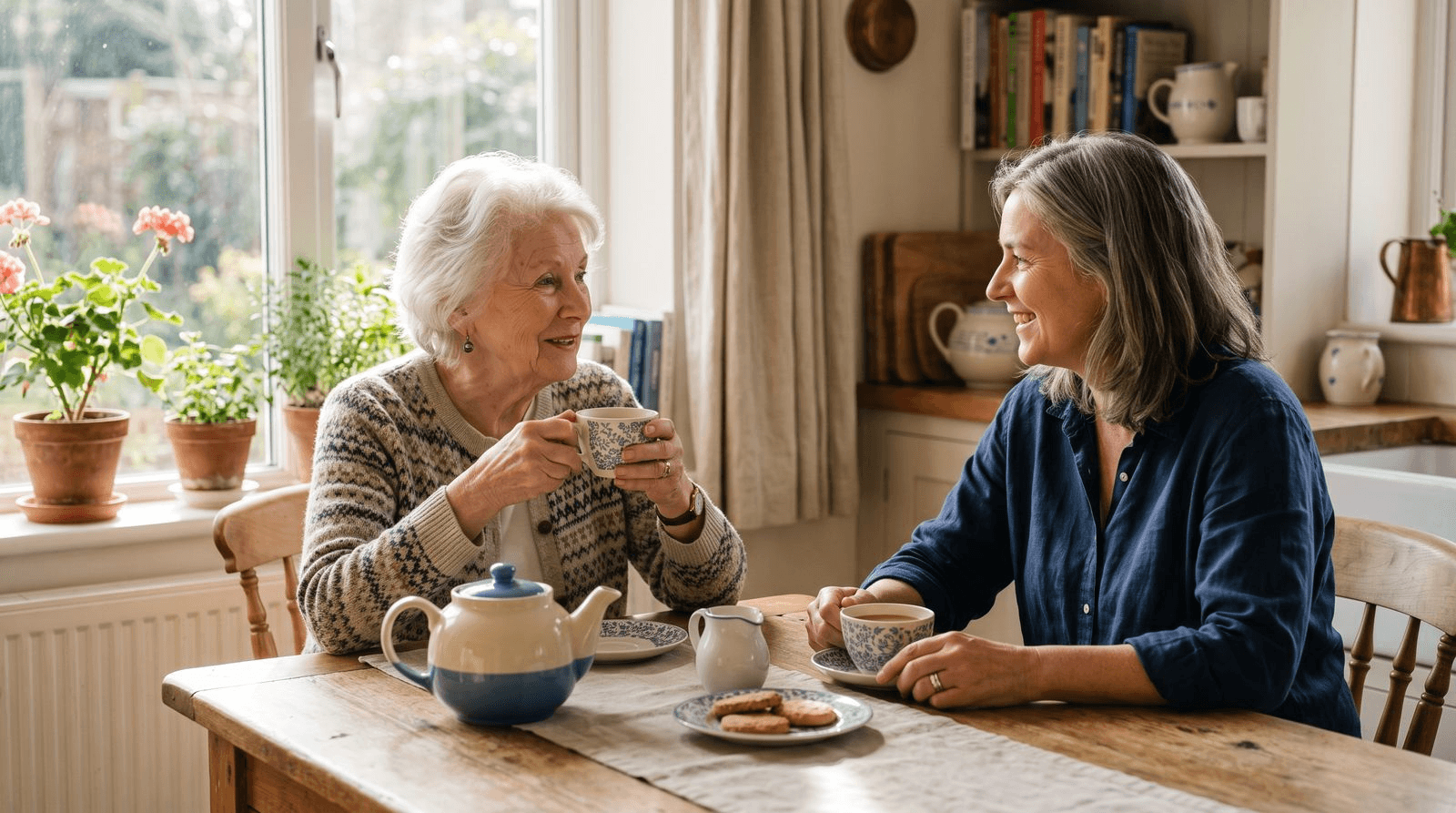
More than 53 million Americans, over one in five adults, are quietly looking after an aging parent, a spouse, or a friend, according to a report from AARP and the National Alliance for Caregiving. Ask any of them what to call the job, and a surprising number pause. Am I a caregiver, or a caretaker? The two words get swapped freely on hospital forms, in support groups, and around family kitchen tables, and most people assume they mean the same thing.
They mostly do, but not entirely, and the gap between them turns out to be quietly useful. This is a plain-language look at where the two words come from, why senior-care professionals draw a line between them, and which one actually fits the work of helping an older adult stay safe and independent at home.
Start With the Dictionary
The cleanest place to begin is the plain meaning. Merriam-Webster defines a caretaker, a word in use since around 1801, first as someone who takes care of a house or piece of land for an owner who is away, alongside custodians, keepers, and watchmen. A caregiver, a newer word dated to about 1886, is defined as a person who gives direct care to someone, such as a child, an elderly person, or a person who is ill.
So in standard American English, the split is simple: a caretaker looks after things, and a caregiver looks after people. That is why senior care, child care, and disability support all lean on the word caregiver, while the person who minds an empty summer cottage or a cemetery is a caretaker. It is worth noting the geography, though. In British English the usage flips: there, a caretaker is the person who maintains a school or apartment building, the role Americans call a custodian or janitor. Language rarely stays in its lane, which is exactly why the confusion exists.
Why the Words Blur in Real Life
If the dictionary is that tidy, why does anyone hesitate? Because in the actual world of elder care, the two terms are used loosely and even contradictorily. Read a handful of home-care blogs and you will find some that call the paid professional a caretaker and the unpaid relative a caregiver, and others that argue the exact opposite. Older adults and their families often use whichever word they grew up with, with no particular logic behind the choice.
The honest takeaway is that you should not over-interpret someone's word choice. If a neighbor says she is her husband's caretaker, she is not confessing to anything, and she almost certainly means what the rest of us mean by caregiver. The label on the tin matters far less than what is inside it. But there is one distinction, drawn by people who do this work professionally, that is genuinely worth carrying with you.
The Line Care Professionals Actually Watch
Look closely at the two words and the difference is right there in the second half. A caregiver gives care. A caretaker takes care of. It sounds like a coincidence of grammar, but organizations that support family caregivers treat it as a meaningful difference in posture. The Caregiver Action Network describes caregiving as help offered out of empathy that aims to empower the other person, while caretaking leans toward performing tasks and maintaining control, sometimes at the cost of the other person's independence.
Put concretely, giving care means helping someone do as much as they still can for themselves: steadying an arm rather than lifting the whole person, laying out the pills but letting them take them, sitting with a slow task instead of swooping in to finish it. Taking care of, in the cautionary sense, means doing it all for them, often faster and more efficiently, but in a way that leaves the older adult more dependent and less in charge of their own day. The first protects dignity. The second, however well intended, can slowly shrink it.
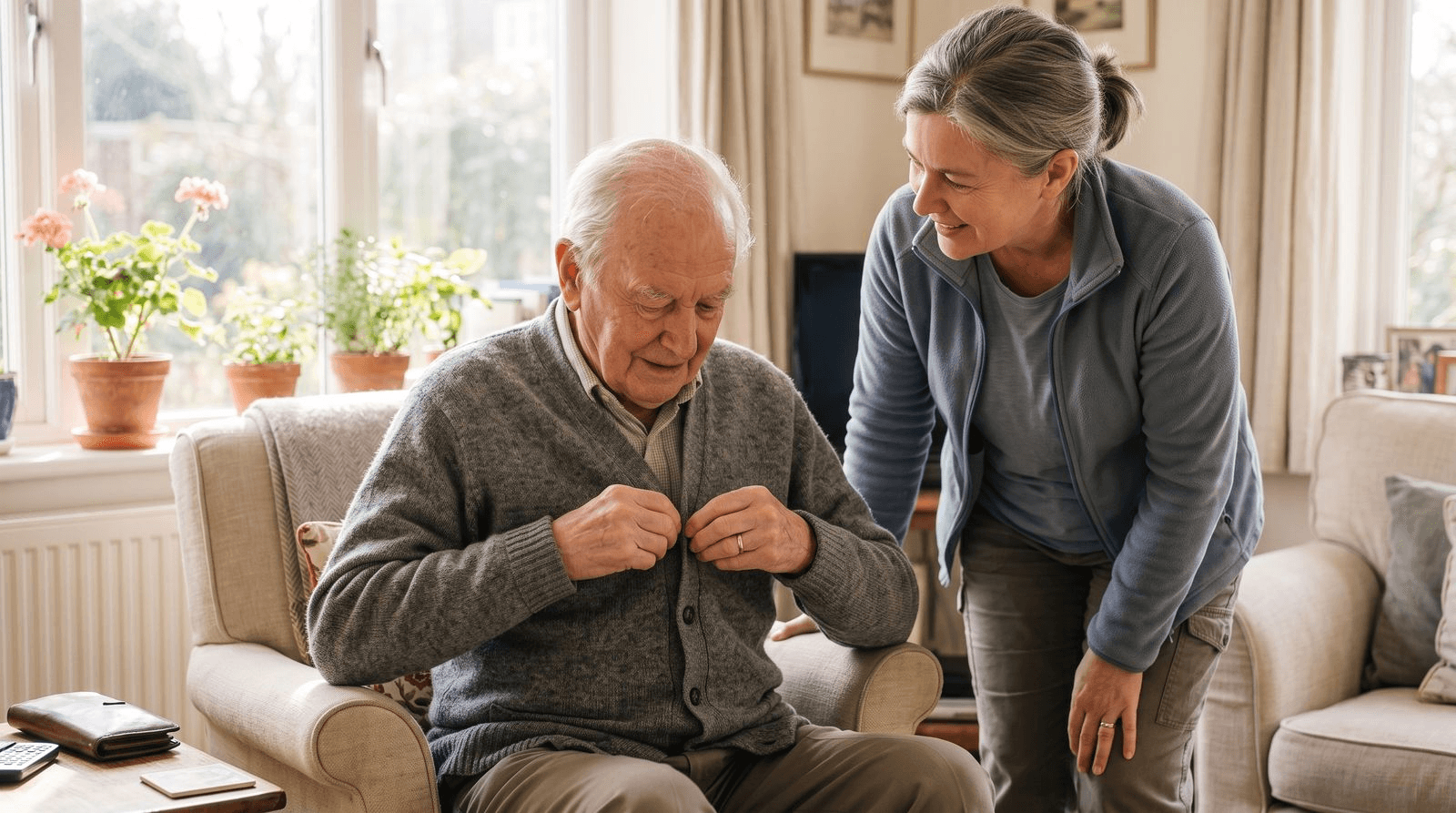
When "Taking Care Of" Becomes "Taking Over"
This is not an abstract worry. It is one of the most common ways devoted family members burn themselves out. The slide usually happens gradually and with the best of intentions: a daughter starts by driving to appointments, then takes over the checkbook, then the cooking, then the pills, then the decisions, until she is managing every hour of her father's life and quietly resenting it, and he has stopped doing things he could still manage. Neither of them chose that. It accreted.
A few honest signals suggest care has tipped from giving to taking over. You find yourself doing tasks the person could still do, because it is quicker. You feel you always know best and struggle to let them make their own choices, even small ones. Resentment and exhaustion creep in, and you have no boundaries left between your life and theirs. That last one matters most, because caretaking in this sense tends to run in a straight line toward caregiver burnout. Pulling back toward giving care, letting the other person keep the tasks and choices they can still handle, is better for them and very often the thing that keeps the caregiver standing.
So Which Word Should You Use?
For most families, the practical answer is easy: use caregiver. It is the term doctors, discharge planners, benefit programs, and support groups all expect, and it points clearly at a person rather than a property. If you are helping an aging parent, you are their family caregiver, whether or not you ever thought of yourself in those words. If you hire someone to help, the job title will almost always be caregiver, home care aide, or personal care aide.
Caretaker is not wrong, and no one should feel corrected for using it around the house. Keep the deeper distinction in your back pocket, though, less as a vocabulary rule than as a quiet gut check: whatever you call it, is the help you are giving keeping the person as independent and in charge as they can be? That question is worth far more than the label.
Where a Professional Caregiver Comes In
One of the reasons an outside caregiver can help so much is that a trained, non-family helper often finds the giving-not-taking balance more easily than an exhausted relative does. A professional has no forty-year history of habits to fight, no guilt driving them to do everything, and clear boundaries built into the arrangement. Good non-medical home care is designed around exactly that: assisting with the tasks a person genuinely needs help with while encouraging everything they can still do themselves.
It also takes the sheer volume of work off the family. A few hours of companion care a week, help with bathing and dressing through personal care, or a planned stretch of respite care so a family caregiver can rest, all lighten the load enough that the relationship can go back to being a relationship rather than a duty roster. Families we support across Monmouth County, New Jersey and beyond often describe the relief less as "someone is doing the tasks now" and more as "I get to be a daughter again instead of a caretaker."
The Bottom Line for Families
The difference between a caretaker and a caregiver is partly grammar, a caretaker minds things, a caregiver minds people, and partly something more useful than grammar. Giving care supports a person while leaving them in charge of their own life; taking over, however loving, gradually takes that charge away. In senior care, caregiver is both the standard word and the better aspiration.
So use whichever term feels natural, and spend your real attention on the thing underneath it. Are you helping someone live their life, or slowly living it for them? Keep the answer on the giving side, share the load before it flattens you, and the word you use to describe it will take care of itself.
Frequently Asked Questions
What is the difference between a caretaker and a caregiver?
In standard American English, a caretaker is someone who looks after property, land, animals, or a building, while a caregiver is someone who looks after a person, such as a child, a disabled adult, or an aging parent. The dictionary treats them this way, and in the world of senior care the word you will almost always hear from agencies, hospitals, and support organizations is caregiver. Many care professionals also use the two words to mark a difference in style: caregiving means providing support in a way that keeps the other person as independent and dignified as possible, while caretaking can imply taking over and doing things for someone that they could still do themselves. The words are often used interchangeably, so do not read too much into which one a given person chooses, but if you want the term that fits senior home care best, it is caregiver.
What do you call a family member who takes care of an elderly parent?
A family member who helps an aging parent or relative is usually called a family caregiver, or sometimes an informal or unpaid caregiver, to distinguish them from a paid professional. It is one of the most common roles in the country: an AARP and National Alliance for Caregiving report estimates that more than 53 million Americans, over one in five adults, provide unpaid care to an adult or child with special needs. You may still hear the older word caretaker used the same way in casual conversation, and there is nothing wrong with it, but caregiver is the term used by most doctors, benefits programs, and support groups you are likely to encounter.
What are the four types of caregivers?
People often group caregivers into a few broad types. Family caregivers are relatives or friends who help without pay. Professional caregivers, sometimes called home care aides or personal care aides, are trained and hired to provide non-medical help with daily tasks. Independent or privately hired caregivers work directly for a family rather than through an agency. And volunteer caregivers help through faith communities, nonprofits, or respite programs. A separate category, skilled medical caregivers such as nurses and therapists, provides hands-on medical care that a non-medical caregiver does not. Which type a family needs depends on the level of help involved, from companionship and errands up to full daily personal care.
Is calling someone a caretaker an insult?
No. In everyday speech, caretaker is not an insult, and plenty of loving, devoted people describe themselves that way without a second thought. The mild caution some care professionals raise is not about the word itself but about a pattern it can describe: caretaking that slips into taking over, where a well-meaning helper does everything, sets no boundaries, and slowly erodes the other person's independence and their own health. If a relative calls themselves a caretaker, it says nothing bad about them. The distinction is only worth keeping in mind as a gentle check on how the care is being given, not as a label to police.
Should I write caregiver or caretaker on medical and benefit forms?
Use caregiver. On medical paperwork, benefit applications, hospital discharge instructions, and support-group intake forms, caregiver is the standard term for the person responsible for helping someone with their daily needs, and it is the word staff will recognize immediately. Caretaker may be understood, but it can also be read as referring to a building or property custodian, which introduces needless ambiguity. When a form asks who the patient's caregiver is, that is you, whether you are a paid professional or a family member helping out of love.