New Jersey, statewide
Home Health Aide and Home Care in New Jersey
What the state's CHHA certification actually requires, what an aide costs here, and how hiring through an agency differs from hiring privately.

What a Home Health Aide Actually Is in New Jersey
Almost nobody searches for a home health aide in NJ out of curiosity. They are three days out from a parent’s discharge, or they have just worked out that Mom has not showered in a week, and they need to know what the job is called, who is allowed to do it and what it costs — today, not eventually.
In New Jersey the job title has a precise legal answer. The credential is the Certified Homemaker-Home Health Aide, written CHHA, issued by the New Jersey Board of Nursing inside the Division of Consumer Affairs. A CHHA works from a written care plan created by a registered nurse and carries out the tasks that nurse delegates. That single fact explains most of the paperwork you are about to see, and why a friend in another state was offered a “personal care aide” while every quote you get here says CHHA.
Day to day, a home health aide handles:
- Bathing, showering, dressing, grooming and oral care
- Toileting and incontinence care
- Safe transfers, walking, and getting in and out of bed or a chair
- Meal preparation, help with eating, and following a prescribed diet
- Medication reminders — reminders, not administration
- Light housekeeping, laundry, linens, groceries and errands
- Company, conversation, and a second set of eyes that notices when something changes
What a home health aide does not do: give injections, change a wound dressing, manage an IV or make a clinical judgment. Board of Nursing rules limit a CHHA to tasks a registered nurse has delegated. If a doctor has ordered skilled nursing or physical therapy, that is Medicare-certified home health — short visits a few times a week for a defined recovery period, and a different service entirely. We set the two side by side in home health care vs home care, and the role itself is covered in more depth on our home health aide services page.
What New Jersey Requires Before Someone Can Do This Job
New Jersey regulates home health aides more tightly than most states, which is good news on the day you hand a stranger a key to your mother’s house. To be certified, an aide must:
- Complete 76 hours of approved training. A Board of Nursing-approved homemaker-home health aide program runs at least 76 hours — 60 hours of classroom instruction and 16 hours of clinical instruction in a skills laboratory or patient-care setting (N.J.A.C. 13:37-14).
- Pass a competency evaluation. A written examination plus a hands-on skills demonstration.
- Clear a criminal history background check before the certification is issued.
- Be at least 18 and hold a government-issued photo ID.
- Renew every two years. New Jersey certifications expire on a two-year cycle and lapse without a renewal application.
- Appear in the public register. Every active aide is listed in the state’s online license verification directory under the profession “Homemaker - HHA.”
There are two shorter routes to the same certification: a nursing student who has completed a Fundamentals of Nursing course can apply without the 76-hour program, and a certified nurse aide can take a bridge course instead. The credential at the end is identical.
Two things follow for families. First, New Jersey does not sell a cheaper, lesser-trained tier of hands-on care: a registered health care service firm may only place actively certified home health aides. Second, you can check the claim rather than trust it. Ask any agency for the name of the aide it intends to send and look the certification up yourself before the first shift.
How Home Care Agencies in New Jersey Are Licensed
New Jersey splits oversight of home care between two different state agencies, and families lose real weeks to the confusion.
Non-medical home care — everything described above — is provided by Health Care Service Firms, which register with the New Jersey Division of Consumer Affairs under N.J.S.A. 34:8-45.1 and N.J.A.C. 13:45B rather than holding a Department of Health license. That registration renews annually, requires a $10,000 surety bond (N.J.A.C. 13:45B-13.3), and — unusually among states — requires the firm to obtain accreditation from a state-recognized accrediting body within 12 months of registering. Firms also file financial statements with the Division each year, with audits required above set thresholds.
Skilled home health — the doctor-ordered nursing and therapy Medicare pays for — is licensed separately by the New Jersey Department of Health under N.J.A.C. 8:42 and gated by a Certificate of Need, which is why new licenses of that kind are rare.
If you are comparing home care agencies in New Jersey, four questions separate the serious ones quickly, and every one of them has a checkable answer:
- Are you registered as a Health Care Service Firm, and who accredits you?
- Are your caregivers your W-2 employees, or independent contractors I would be employing?
- Is every aide an active CHHA, and will you give me names so I can verify them with the state?
- Who writes and supervises the care plan, and how often does a nurse actually come to the house?
An agency that answers all four without hesitating is telling you something real about how it operates. Our longer walkthrough is how to choose a home care agency.
Care We Provide Across New Jersey

Live-In Care
Live-in care provides seniors with the consistency of having the same dedicated caregiver daily, allowing them to build trust and familiarity in their care routine. This arrangement enables seniors who need assistance with most activities of daily living to remain comfortably at home, maintaining their independence while receiving comprehensive support from their live-in caregiver.

Hourly Care
Hourly care provides flexible, scheduled support for seniors in their homes. Caregivers visit for set periods, offering assistance with daily tasks, personal care, and companionship tailored to the client's specific needs and preferences. This service can range from short shifts a few days a week to full 24/7 around-the-clock care, accommodating a wide spectrum of care requirements and ensuring seniors receive the right level of support.

Overnight Care
Overnight care offers peace of mind with an awake caregiver present during nighttime hours. This service ensures assistance is available for nighttime needs, emergencies, or early morning routines, allowing clients needs to be met overnight, enabling family members or daytime caregivers to have uninterrupted sleep.
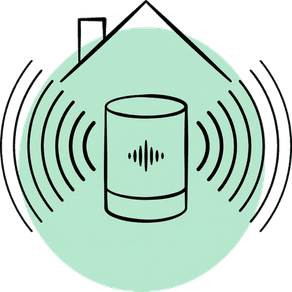
Always On Virtual Care
Always On Virtual Care pairs our caregivers with Sensi, an AI-powered audio sensor that detects falls, distress, early UTI signs, and other care events around the clock. Sensi alerts our team the moment something changes — so families gain a second set of eyes during the hours a caregiver isn't physically in the room, and seniors stay safer at home for longer.
Not sure which kind of care your parent needs?
Tell us what happened and what you are worried about tonight. We will tell you what we can cover and what we cannot.
-
Call Us
609-208-1111 -
Contact Us
Get Started
Hiring an Agency Versus Hiring a Caregiver Privately in NJ
Plenty of New Jersey families hire someone directly. It can cost less per hour, and when you already know and trust the person it can be exactly the right call. What has changed is the paperwork.
New Jersey’s Domestic Workers’ Bill of Rights (P.L. 2023, c.262, codified at N.J.S.A. 34:11-69 et seq.) took effect on July 1, 2024 and applies to a caregiver you hire into your own home. Hire privately and you are the household employer, which means:
- A written contract in the worker’s own language for anyone working five or more hours a month who is not doing casual work (N.J.S.A. 34:11-71). The New Jersey Department of Labor publishes a model contract for exactly this.
- Paid rest and meal breaks, including an uninterrupted paid 30-minute meal break every five hours of work (N.J.S.A. 34:11-72).
- A 24-hour rest period for a live-in worker, who cannot be required to work more than six consecutive days without one. It may be unpaid (N.J.S.A. 34:11-73).
- Notice before termination — at least two weeks, and four weeks for a live-in worker (N.J.S.A. 34:11-74). Skip it and the worker may be owed severance.
- Employer registration, tax contributions, workers’ compensation coverage, and hour and pay records. Two households sharing one caregiver can be joint employers, jointly liable for violations.
None of that is an argument that agencies are morally superior. It is an argument about who carries the load. Through an agency, the agency is the employer: it runs the background check, employs the aide as a W-2 employee, carries the insurance and workers’ compensation, supervises the care plan and finds the replacement at six in the morning when your caregiver has the flu. Hire privately and every one of those is yours, including the morning nobody shows up.
What Home Care Costs in New Jersey
The CareScout 2025 Cost of Care Survey, which collected provider rates between July and November 2025, put New Jersey’s median non-medical caregiver rate at $38 an hour — roughly $7,245 a month, or $86,944 a year, on the survey’s standard basis of 44 hours a week. The national median was $35. New Jersey ranked 17th among the states, which surprises people: this is a genuinely expensive state for nursing home care and only modestly above average for care at home.
One change to know about if you are comparing quotes against older articles. For 2025, CareScout merged “homemaker services” and “home health aide” into a single non-medical caregiver figure because the two rates had converged. Asking an agency for a cheaper homemaker rate mostly no longer saves money in New Jersey.
What actually moves your bill is hours, not the hourly rate. Three mornings a week is a different budget from nightly overnight coverage, which is a different budget again from live-in care. Get the schedule right before you negotiate the rate.
Medicare does not pay for this kind of daily help. Long-term care insurance usually does, and New Jersey funds several routes for families who qualify:
- NJ FamilyCare MLTSS, New Jersey’s Medicaid managed long-term services and supports, for people who meet both the financial test and the nursing-home level-of-care test.
- JACC (Jersey Assistance for Community Caregiving), a state-funded program for residents 60 and over who need help with at least three activities of daily living and are not enrolled in Medicaid.
- The Statewide Respite Care Program, which buys a family caregiver a break on a sliding scale of nothing to 25 percent of the cost of services.
The single number worth writing down is New Jersey’s Aging and Disability Resource Connection line, 1-877-222-3737, run by the New Jersey Division of Aging Services. They screen for all of the above at no charge. Our own breakdown of the private-pay side is paying for home care in NJ.
24-Hour Home Care and Live-In Caregivers in New Jersey
These two get used interchangeably on the phone and they are not the same arrangement.
24-hour care means caregivers working in shifts around the clock, awake the whole time. It is what you want when someone wanders at night, needs repositioning, or genuinely cannot be left alone for an hour.
Live-in care means one caregiver living in the home with sleeping hours and defined breaks. It costs less per day and gives your parent one familiar face instead of three, but it only works if they sleep through most nights and there is somewhere for the caregiver to sleep.
In New Jersey the live-in version carries extra rules worth knowing before anyone moves in. A live-in worker cannot be required to work more than six consecutive days without a 24-hour rest period, and ending the arrangement requires four weeks’ notice. Federal sleep-time rules under the Fair Labor Standards Act can, in some situations, exclude up to eight hours of on-site sleep from paid time. All of which is a long way of saying the terms should be written down before the first night, not argued about after it.
See 24-hour home care, live-in care and overnight care for how each is scheduled and staffed, or hourly care if a few shifts a week is where you are starting.
Senior Home Care in a State That Is Aging Quickly
In 2024 there were 1,706,665 New Jersey residents aged 65 or older — 18.0 percent of the state, up from 13.5 percent in 2010. Across those fourteen years the number of older New Jerseyans grew by 43 percent.
The statewide average hides how differently this lands county by county. Nearly one in four Ocean County residents is 65 or older, at 24.0 percent, with Hunterdon close behind at 23.4 percent, while Union County sits at 15.6 percent. Caregiver availability, wait times and the mix of care families ask for are not the same in a county where a quarter of the population is retired as in one where a sixth is.
We keep the full figures for all 21 counties, alongside each county’s Office on Aging, on how New Jersey is aging, county by county. Two related guides families use constantly: senior transportation in every New Jersey county, and New Jersey senior property tax relief, which compares Senior Freeze, ANCHOR and Stay NJ.
Where We Provide Home Care in New Jersey
Always Responsive Home Care has been doing this since 2010. It was founded by Teresa Sajkowski, a registered nurse with more than two decades of hospital and hospice experience, and we run 6 New Jersey offices. Care is private pay and non-medical, caregivers are background-checked W-2 employees supervised by a registered nurse, and there are no deposits, no long-term contracts and no cancellation penalties — you pay only for care already delivered.
Pick your county for the local office, the towns it covers and caregivers who already work those streets:
- Home care in Mercer County — 11 towns, from our office at 116 Village Boulevard in Princeton. Residents 65 and over: 17.0 percent. Call (609) 208-1111.
- Home care in Middlesex County — 29 towns, from our office at 348 Applegarth Road in Monroe Township. Residents 65 and over: 17.4 percent. Call (609) 208-1111.
- Home care in Monmouth County — 45 towns, from our office at 78 Court Street in Freehold. Residents 65 and over: 21.4 percent. Call (732) 201-4141.
- Home care in Ocean County — 29 towns, from our office at 1400 Hooper Avenue in Toms River. Residents 65 and over: 24.0 percent. Call (732) 447-9900.
- Home care in Somerset & Hunterdon County — 55 towns, from our office at 220 Davidson Avenue in Franklin Township. Residents 65 and over: 18.9 percent in Somerset, 23.4 percent in Hunterdon. Call (609) 208-1111.
- Home care in Union County — 22 towns, from our office at 20 Jackson Drive in Cranford. Residents 65 and over: 15.6 percent. Call (908) 691-3660.
Not sure which office covers your parent’s address? The locations and service areas page has a ZIP-code lookup for every town we serve. If you would rather just talk to someone, contact us or call 609-208-1111.
Home Health Aide and Home Care in NJ: Common Questions
What is a home health aide in New Jersey?
In New Jersey a home health aide is a Certified Homemaker-Home Health Aide (CHHA), certified by the New Jersey Board of Nursing within the Division of Consumer Affairs. A CHHA provides non-medical, hands-on help at home — bathing, dressing, transfers, meals, medication reminders, light housekeeping and companionship — working from a written care plan and performing tasks delegated by a registered nurse. It is a different service from Medicare-certified home health, which is short-term skilled nursing or therapy ordered by a doctor.
How many hours of training does a home health aide need in NJ?
At least 76 hours: 60 hours of classroom instruction and 16 hours of clinical instruction in a skills laboratory or patient-care setting, under N.J.A.C. 13:37-14. The aide then has to pass a competency evaluation, which is a written examination plus a hands-on skills demonstration, and clear a criminal history background check. Certification renews every two years. Nursing students who have completed a Fundamentals of Nursing course, and certified nurse aides, can reach the same certification by a shorter route.
How much does a home health aide cost in New Jersey?
The CareScout 2025 Cost of Care Survey put New Jersey's median non-medical caregiver rate at $38 an hour, against a national median of $35. On the survey's standard basis of 44 hours a week that is about $7,245 a month, or $86,944 a year. Your actual cost is driven far more by how many hours you book than by the hourly rate, so a few mornings a week, nightly overnight coverage and live-in care produce very different bills.
Does Medicare pay for a home health aide in New Jersey?
Generally no. Medicare can cover short-term skilled nursing or therapy through a certified home health agency when a doctor orders it, but not the ongoing daily help with bathing, meals, supervision and companionship most families are looking for. Long-term care insurance often does cover it. New Jersey also funds Medicaid MLTSS through NJ FamilyCare, the state-funded JACC program for residents 60 and over who are not enrolled in Medicaid, and the Statewide Respite Care Program. The state's Aging and Disability Resource Connection line, 1-877-222-3737, screens for all of them at no charge.
Do home care agencies have to be licensed in New Jersey?
Non-medical home care agencies register as Health Care Service Firms with the New Jersey Division of Consumer Affairs under N.J.S.A. 34:8-45.1 and N.J.A.C. 13:45B. The registration renews annually, requires a $10,000 surety bond, and requires the firm to obtain accreditation from a state-recognized accrediting body within 12 months of registering. Agencies that provide doctor-ordered skilled nursing and therapy hold a separate New Jersey Department of Health license under N.J.A.C. 8:42 and need a Certificate of Need. Ask any agency which one it holds and who accredits it.
What is the difference between 24-hour home care and a live-in caregiver in NJ?
24-hour care uses caregivers working shifts around the clock, awake the entire time, which is what you want when someone wanders at night or cannot be left alone. Live-in care is one caregiver living in the home with sleeping hours and defined breaks: it costs less per day and gives one consistent face, but it depends on your parent sleeping through most nights. Under New Jersey's Domestic Workers' Bill of Rights a live-in worker cannot be required to work more than six consecutive days without a 24-hour rest period, and ending a live-in arrangement requires four weeks' notice.
What happens if I hire a caregiver privately in New Jersey instead of through an agency?
You become the household employer. New Jersey's Domestic Workers' Bill of Rights, in effect since July 1, 2024, requires a written contract in the worker's own language for anyone working five or more hours a month, paid rest and meal breaks, and at least two weeks' notice before termination — four weeks for a live-in worker. You also register as an employer, make tax contributions, carry workers' compensation and keep hour and pay records, and you cover the shift yourself when your caregiver is sick. Through an agency, the agency carries all of that.
Which New Jersey counties does Always Responsive Home Care serve?
Always Responsive Home Care serves Hunterdon, Mercer, Middlesex, Monmouth, Ocean, Somerset and Union counties from 6 New Jersey offices. Care is private-pay and non-medical: hourly, overnight, live-in and 24-hour caregivers, plus dementia, Parkinson's, mobility and hospital-to-home support. Call 609-208-1111 to confirm coverage for a specific address or ZIP code.
Why Choose Always Responsive Home Care
We provide compassionate, personalized in-home care services tailored to each client's unique needs. With a team of highly trained home care providers available 24/7, we offer peace of mind to families and help seniors maintain their independence and quality of life in the comfort of their own homes.
Learn More About UsGet Started with Always Responsive Home Care
Complete the form below and our team will get back to you to set up a time to talk about working together.
What Families Are Saying
Testimonial: As the son of a client, I'm grateful for the compassionate care Always Responsive Home Care provides. Their caregivers make my dad feel at ease, and their attention to his daily needs gives me peace of mind.