How to Become a Caregiver With No Experience
How to become a caregiver with no experience: the real duties, the training New Jersey and Florida require, and how agencies hire and train you.
If you have ever quietly wondered whether you could do this work, here is a number worth sitting with. The federal government projects about 765,800 openings for home health and personal care aides every year through 2034, more than any other job at its education level, growing about four times faster than the average American occupation. Roughly one in every eight new jobs added to the entire economy this decade is expected to be a caregiver. The country is short on people willing to help older adults stay in their homes, and it is not close.
So the honest starting point is this: the door is wide open, and it is far easier to walk through than most people assume. You do not need a nursing degree. You do not need years of experience. What you need is a clear picture of the actual work, the modest requirements in your state, and a sense of where to send the first application. This guide walks through all three, with the specifics for New Jersey and Florida, where our own caregivers work.
No, You Don't Need a Nursing Degree
The single biggest thing that stops good people from applying is a misunderstanding of what the job is. They picture medical work, feel unqualified, and never fill out the form. But most home care is non-medical, and that distinction changes everything about who can do it.
Non-medical caregiving, sometimes called personal care or companion care, is help with the ordinary activities of daily living: bathing, dressing, cooking, moving safely around the house, remembering to take pills, getting to the doctor, and having someone around who notices and cares. It is not wound care, injections, or anything that belongs to a licensed nurse. Because it is not skilled medical work, the barrier to entry is genuinely low. According to the Bureau of Labor Statistics, the typical requirement for these roles is a high school diploma or its equivalent, no prior experience, and short-term training you receive after you are hired. The parts that make someone good at this job are not the parts you learn in a classroom.
What a Caregiver Actually Does All Day
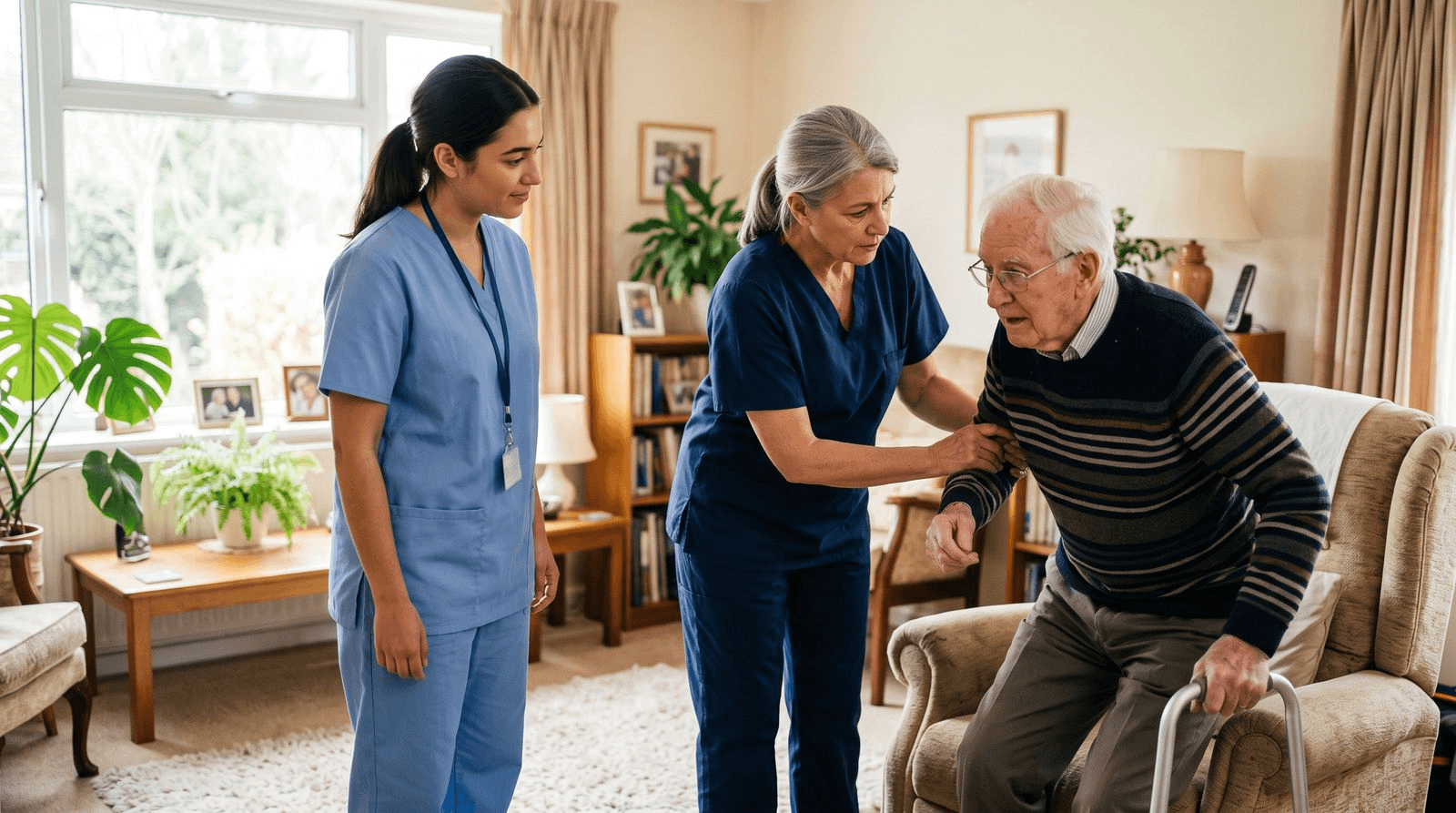
A shift rarely looks like the dramatic scenes people imagine. It looks like ordinary life, made possible. You might arrive in the morning to help someone shower and dress with dignity, then make breakfast the way they like it and sit with them while they eat. You might run a load of laundry, tidy the kitchen, and drive to a pharmacy or a cardiology appointment. You remind a client it is time for their medications, you steady an arm on the walk to the mailbox, and you keep an eye out for the small changes, a new unsteadiness, a skipped meal, a bruise, that a family living an hour away would miss.
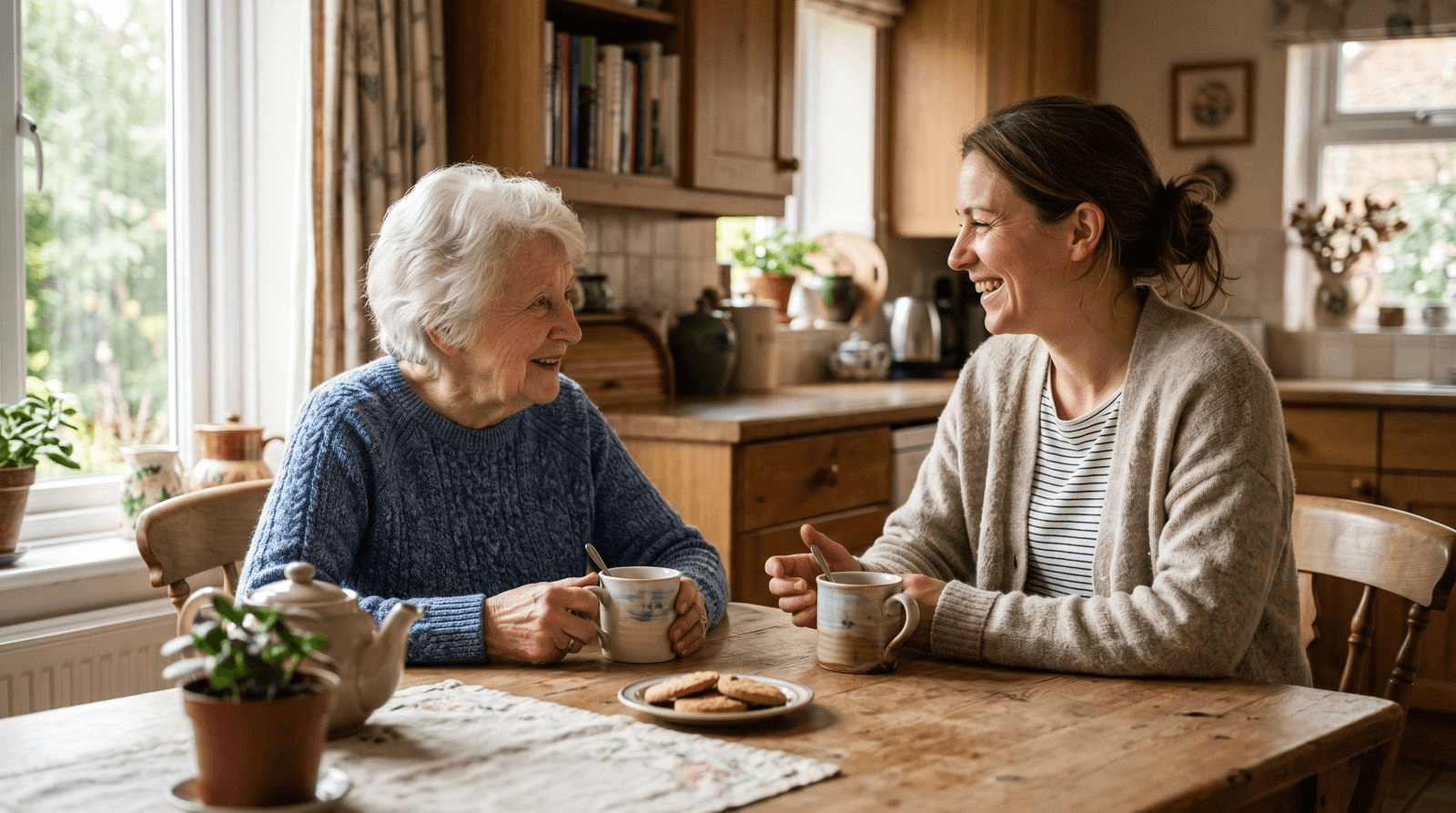
Much of the value, though, is simply presence. A great deal of what companion care provides is conversation, a familiar face, and the quiet reassurance that someone will notice if things go wrong. The tasks matter, but the relationship is often what keeps an older adult out of a facility and living in the home they love. If you have ever been the person a relative counted on, you already understand the core of the job.
The Skills That Matter More Than a Résumé
When agencies describe their best caregivers, they almost never lead with credentials. The Bureau of Labor Statistics itself notes that strong interpersonal skills, adaptability, and attention to detail are what these aides need most. In plain terms: show up when you say you will, stay calm when a plan falls apart, and pay attention to the person in front of you.
Patience is the quiet engine of the whole job. So is a certain steadiness, the ability to help someone through a hard moment, bathing, a fall, a confused afternoon, without making them feel like a burden. Physical stamina helps, since there is standing, walking, and gentle lifting involved. And a clean, reliable way to get to work matters, because many clients need help getting to appointments. None of this requires a special background. Some of the finest caregivers come to the work in their fifties and sixties, after a lifetime of raising families or caring for their own parents.
What Training and Certification Really Require
Here is where the specifics depend on your state, so let us take the two where we operate. The requirements are real, but they are measured in weeks, not years, and you rarely have to navigate them alone.
In New Jersey, a paid aide working for a licensed home care agency must become a Certified Homemaker-Home Health Aide (CHHA) through the State Board of Nursing. That means completing an approved training course of about 76 hours, usually a blend of online or classroom instruction and 16 hours of hands-on clinical practice, passing a competency evaluation through a licensed agency, and clearing state and federal criminal background checks. You must be at least 18. The certification is renewed every two years. It is worth understanding what this credential is and is not: it is the state's standard for non-medical aides, and a registered nurse still develops and oversees each client's care plan. You are not being asked to become a nurse.
In Florida, the path is even more open. The state's Agency for Health Care Administration is explicit that home health aides are not licensed or certified by any state agency. To work for a state-licensed home care agency, you complete at least 40 hours of training or pass a competency test the agency administers, along with a Level 2 background screening. Many people finish the training in a week or two. In both states, the theme is the same: modest, hands-on training, a background check, and a starting line you can reach quickly.
How Agencies Actually Hire (and Why to Start There)
You could piece this together yourself, pay for a course, get certified, then go looking for work. But the smoother path, especially with no experience, is to reverse the order and let a good agency carry you through it. Reputable home care companies routinely hire people who have never done this work, provide the required training, often at no cost, and even pay you while you learn. They handle the background check, they pair you with an experienced caregiver for your first shifts, and they match you to clients whose needs fit your strengths and your schedule.
Starting with an agency solves the two problems that trip up newcomers: how to get trained without floating the cost yourself, and how to find clients when no one knows your name yet. It also means you are supported. There is a coordinator to call when a situation is over your head, a nurse supervising the care plan, and backup when you are sick. That structure is exactly why we keep our caregiver hiring open year-round, and why we would rather teach the skills to a patient, reliable person than hire an experienced one who is not. Families across Monmouth County, New Jersey and around Sarasota, Florida need more hands than the field currently has.

What the Work Pays, and What It Costs You
Be clear-eyed about the money. The Bureau of Labor Statistics put the median annual wage for home health and personal care aides at about $34,900 in 2024, roughly $16 to $17 an hour, and it varies with region, shift, and experience. Overnight and live-in work, weekend and holiday differentials, and full-time hours with benefits can push that meaningfully higher, and pay tends to climb as you take on clients with heavier needs. It is not a path to wealth, and anyone who tells you otherwise is selling something.
What it costs you is more honest to name. The work can be physically tiring and emotionally heavy. You will grow attached to people, and some of them will decline or pass away. There will be hard mornings. But caregivers stay in this field, often for decades, because the trade is real: you are paid to be kind, useful, and present, and you go home most days knowing that someone's parent was safer, cleaner, and less alone because you showed up. Few jobs offer that so directly.
The First Move, If You're Serious
If any of this has landed, do not overthink the next step, because it is small. You do not need to enroll in a course, buy scrubs, or have your answers ready. The most efficient first move is to apply to a local home care agency that trains its own people, and let them tell you exactly what your state and their clients require. From there the pieces, training, background check, certification if your state calls for it, and your first shifts, tend to fall into place with far less friction than doing it solo.
A caregiver shortage this large is, from where you sit, an open invitation. If you are patient, dependable, and drawn to older adults, you are most of the way there already. When you are ready to take the step, we would be glad to talk with you about joining our team of caregivers and what your first weeks would actually look like. The skills can be taught. The heart for it, you either have or you don't, and if you have read this far, you probably do.
Frequently Asked Questions
Do you need a certification to become a caregiver?
It depends entirely on your state and the kind of care you provide. For non-medical home care, help with daily living rather than skilled medical tasks, many states have no separate license at all. Florida, for example, does not license or certify home health aides through any state agency; to work for a state-licensed home care agency you complete at least 40 hours of training or pass a competency test the agency gives you. New Jersey is stricter: paid aides working for a licensed agency must become Certified Homemaker-Home Health Aides through the Board of Nursing, which means completing an approved training course of about 76 hours, passing a competency evaluation, and clearing a background check. The good news is that in both states you do not have to arrange this alone, because most agencies fold the training into hiring.
Can you become a caregiver with no experience?
Yes. The federal Bureau of Labor Statistics lists no prior work experience as the requirement for home health and personal care aides, and only a high school diploma or equivalent as the typical entry-level education, with short-term on-the-job training after that. Agencies routinely hire people coming from retail, food service, childcare, or years of unpaid family caregiving, then teach the specific skills the job needs. What matters far more than a résumé is reliability, patience, and genuinely liking older adults.
How long does it take to become a caregiver?
Faster than most people expect. In Florida, a 40-hour training course can often be completed in one to two weeks, and some agencies let you start with an in-house competency test. In New Jersey, the 76-hour Certified Homemaker-Home Health Aide course typically runs three to four weeks, blending online instruction with hands-on clinical hours, followed by the state competency step and a background check. Because many agencies train new hires directly, the classroom time and the job search often happen at once rather than one after the other.
How much do caregivers get paid?
The Bureau of Labor Statistics reported a median annual wage of about $34,900 for home health and personal care aides in 2024, which works out to roughly $16 to $17 an hour, though pay varies widely by region, shift, experience, and whether you take on overnight or live-in work. Many agencies pay you during training, offer higher rates for weekends and holidays, and provide benefits once you reach full-time hours. Pay tends to rise as you gain experience and take on clients with more complex needs.
What does a non-medical caregiver actually do?
A non-medical caregiver helps an older adult manage the ordinary business of the day so they can stay safely at home. That includes bathing, dressing, and grooming, preparing meals, light housekeeping and laundry, running errands and driving to appointments, reminding a client to take medications on schedule (not administering them), steadying someone as they walk or transfer, and, just as importantly, providing company and conversation. It does not include skilled medical tasks like wound care, injections, or managing IVs, which are the work of licensed nurses.