When Getting Dressed Becomes a Struggle
Adaptive clothing makes dressing easier for seniors with arthritis, Parkinson's, or limited mobility. What to look for and techniques that help.
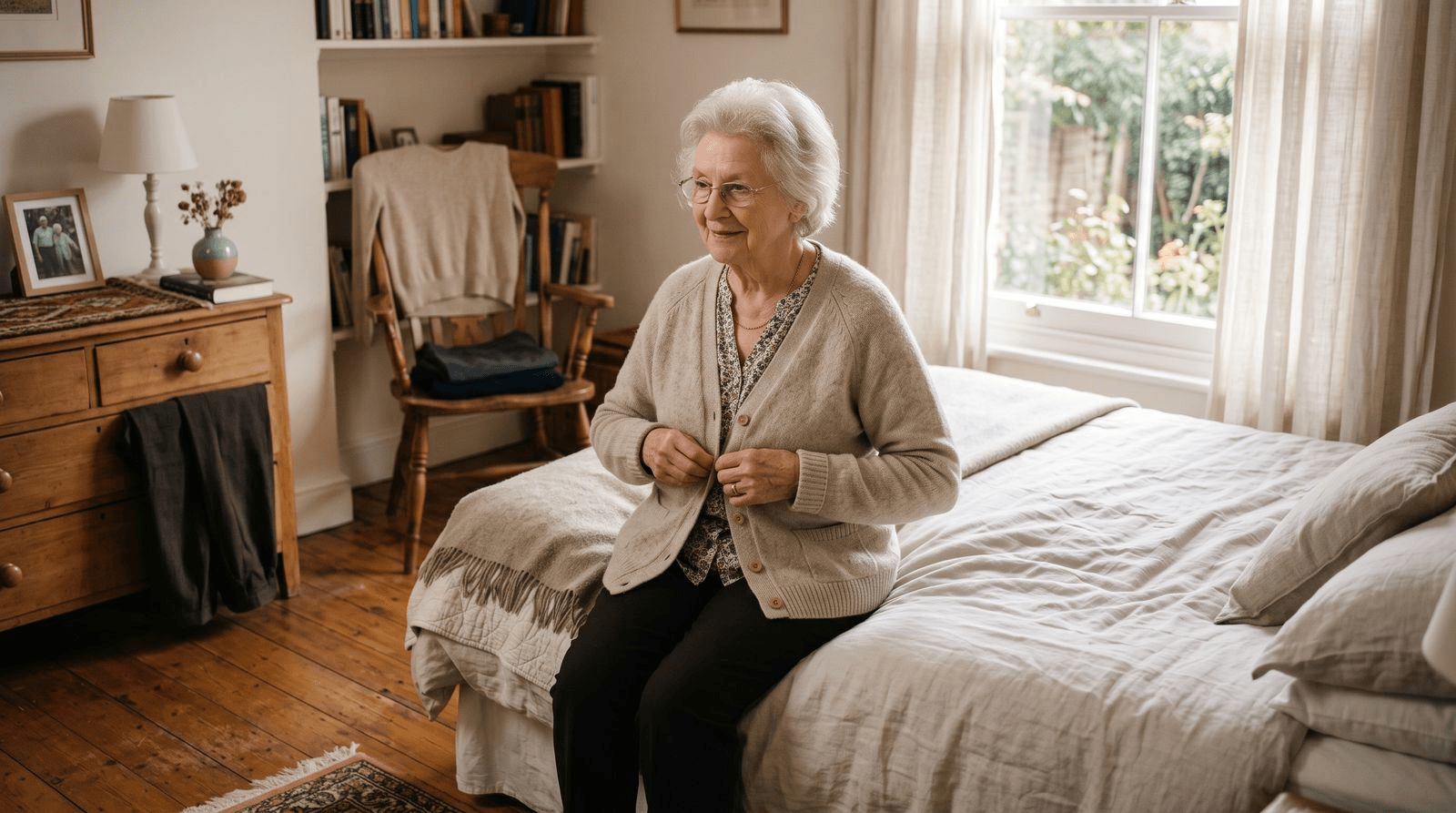
Getting dressed is one of the first things a person quietly stops doing well. Not all at once, and rarely with any announcement. A blouse with small buttons moves to the back of the closet. A favorite pair of jeans gets skipped because the zipper has become a fight. Someone starts sleeping in the clothes they will wear tomorrow, just to avoid doing the whole thing twice. Long before a family sits down to talk about care, dressing has often already narrowed, from a full wardrobe to the two or three things that are easy to manage.
Adaptive clothing exists to widen that closet back out. It is ordinary clothing, shirts, pants, dresses, shoes, redesigned so that the parts that cause pain or frustration are gone. The point is not to signal that someone is frail. It is the opposite: to let a person keep dressing themselves, in clothes they like, for as long as possible.
The Hidden Difficulty in a Simple Task
Dressing looks effortless because most of us stopped noticing how much it asks. Occupational therapists, who treat exactly this kind of everyday activity, describe getting dressed as a surprisingly complex task: it needs range of motion in the shoulders and hips, grip strength and fine motor control in the fingers, enough balance to stand or shift while pulling clothes on, and the mental sequencing to do the steps in the right order. Take away any one of those, and a routine that took two minutes can turn into a ten-minute ordeal.
Different conditions take away different pieces. Arthritis makes buttons, zippers, and tight cuffs painful to manipulate. Parkinson's disease brings tremor and stiffness that make small, precise movements unreliable, some days more than others. A stroke can leave a person dressing with one working hand. Dementia tends to disrupt the order of things, so the difficulty is less about the hands and more about which step comes next. And plain deconditioning after an illness or a fall can leave someone too weak or too unsteady to bend, reach, and balance the way dressing demands. In every case, though, difficulty is not the same as dependence. The right clothing, and a few good habits, can hand much of the task back.
What Makes Clothing "Adaptive"
The magic is almost always in the fasteners and the openings. A handful of design changes account for most of the difference:
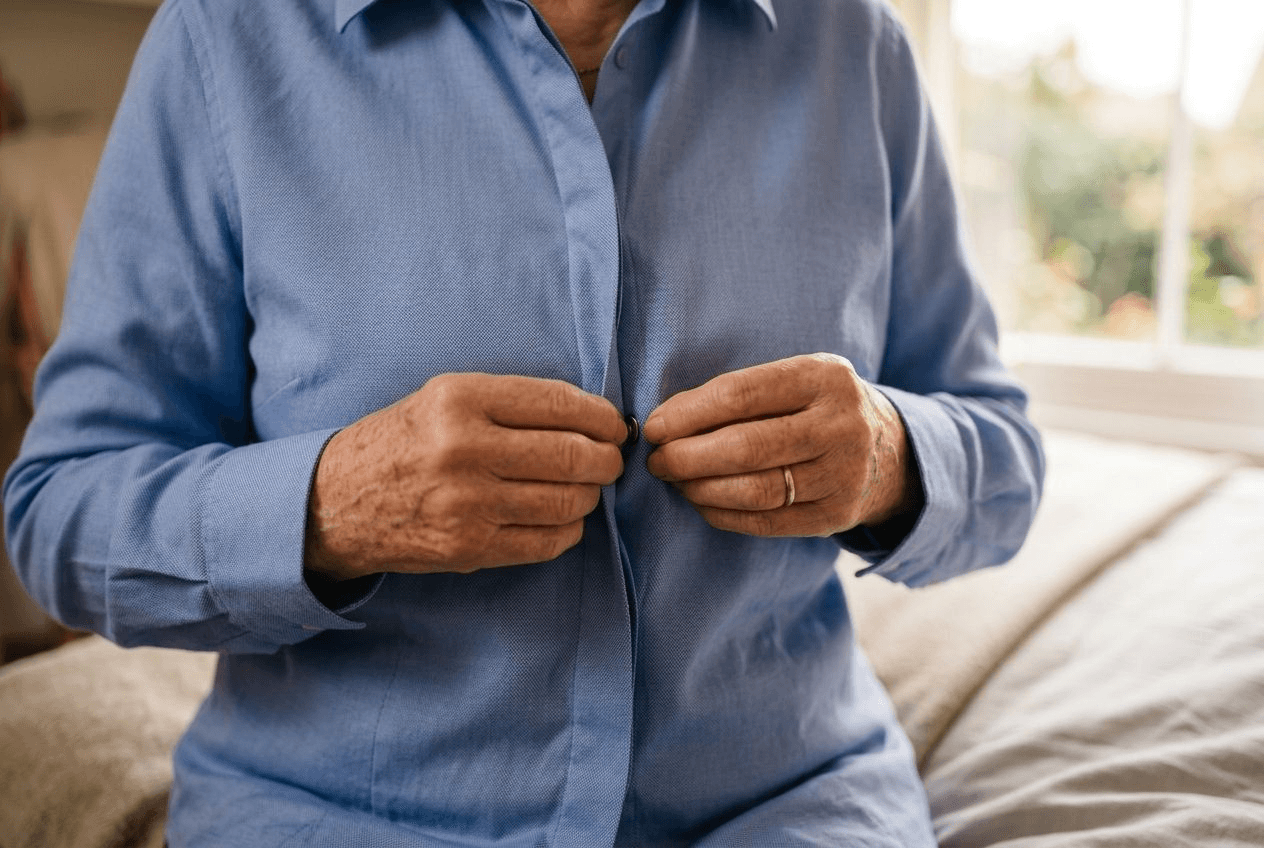
- Magnetic closures. Hidden magnets that look exactly like a row of buttons but snap shut with one hand, no pinching or aligning required. They are the single most useful feature for arthritis, tremor, and one-handed dressing, and because the garment still looks like a normal shirt, the wearer never feels like they are wearing equipment.
- Hook-and-loop tabs. The familiar touch-and-close fastening, useful where magnets are not an option and no fine motor skill is available.
- Elastic waistbands. Pants that pull on and sit comfortably without a belt or a button, ideal for anyone who dresses seated or has trouble with their hands.
- Front- and open-back tops. Shirts that open all the way down the front, or fully across the back, so nothing has to be lifted overhead, a huge help for stiff or painful shoulders and for caregivers assisting a seated person.
- Side-opening pants and seated cuts. Trousers that open along the side and are shaped for a sitting body, with a higher back to prevent gapping, made for wheelchair users and anyone who cannot stand to dress.
- Side and inseam zippers. Discreet access points that make room for catheters, compression garments, or post-surgical care.
- Slip-on, non-slip footwear. Shoes with wide hook-and-loop straps or a step-in design that skip laces entirely and reduce the risk of a fall.
- Flat seams and tagless designs. Small comforts that matter enormously for fragile or sensitive skin.
- Discreet back-closing styles. For a person with dementia who removes clothing at the wrong moments, closures that fasten out of easy reach help clothes stay on without looking institutional.
Matching the Feature to the Challenge
The mistake people make is shopping by diagnosis. It is far more useful to shop by the specific thing that has become hard. The same feature helps many conditions, and one person may need two or three. This table maps the most common challenges to what to look for:
| Situation | The main difficulty | Features to look for |
|---|---|---|
| Arthritis | Buttons and zippers are painful or impossible | Magnetic closures, pull-on styles, elastic waistbands |
| Parkinson's disease | Tremor and rigidity make fine movements unreliable | Magnetic closures, wide openings, elastic waists; dress during good medication windows |
| Stroke recovery | Dressing with one working hand | Open-front tops, side snaps, nothing that pulls overhead |
| Dementia | Sequencing breaks down; clothing removed at the wrong times | Simple pull-on styles, minimal fasteners, discreet back closures |
| Wheelchair use or seated dressing | Cannot stand; fabric bunches while sitting | Side-opening pants, higher-cut backs, open-back tops |
One safety point deserves its own line. Magnetic closures are wonderful, but the magnets can interfere with a pacemaker or an implanted defibrillator. If the person you are shopping for has either device, choose hook-and-loop or snap closures instead, or check with their cardiologist before buying anything magnetic.
The Low-Tech Aids That Pair With It
Before replacing a wardrobe, it is worth knowing that a drawer of inexpensive tools solves many of the same problems, often for a few dollars. Occupational therapists reach for these constantly, and they pair naturally with adaptive clothes:
- Button hooks and zipper pulls. A hook does up small buttons for weak or sore hands; a large ring or loop turns a tiny zipper tab into something a whole hand can grip.
- Dressing sticks. A long rod with a hook that pulls clothing into place without bending or reaching, useful after hip or shoulder surgery.
- Sock aids. A frame that holds a sock open so it can be slipped on without bending to the foot, one of the tasks people lose earliest.
- Long-handled shoehorns. Slip shoes on while seated upright, no bending required.
- Elastic shoelaces. Turn any lace-up shoe into a slip-on, no daily tying.
- Reachers. Grab clothing from a shelf, the floor, or a low drawer without stretching or losing balance.
For some families, a handful of these aids is the whole solution. For others, they bridge the gap while adaptive clothing is chosen. Either way, they are a low-risk, low-cost first step, and a good reason to ask a doctor for a referral to occupational therapy, which can assess exactly what would help.
Techniques That Cost Nothing
Some of the most effective changes are not products at all. Rehabilitation clinicians teach a short list of dressing techniques that reduce pain, effort, and risk, and they work with ordinary and adaptive clothing alike:
- Dress the harder side first. Put the weaker, stiffer, or more painful arm or leg into the garment first, and take it out last. It means less twisting and reaching when the difficult limb is involved.
- Sit down to dress. A stable chair with armrests removes the balance demand entirely and makes a fall far less likely.
- Lay clothes out in order. Setting garments in the sequence they go on takes the mental sorting out of the task, which helps enormously with memory changes.
- Time it well. For someone with Parkinson's, dressing when medication is working best, rather than during an "off" period, can transform how the whole routine feels, as the Parkinson's Foundation advises.
- Choose roomy and simple. Looser fits, slippery or stretchy fabrics, and V-necks slide on more easily than snug, structured clothing. When there are buttons, starting from the bottom keeps them aligned.
- Allow more time. Much of the frustration in dressing comes from the clock, not the clothes. A few unhurried extra minutes change everything.
Helping Someone Dress, With Dignity
When a family member or caregiver steps in, the instinct is often to take over the whole task to save time. The better approach, and the one occupational therapists recommend, is selective help: assist only with the specific steps that have become impossible, and leave the rest to the person. Someone who can still choose their shirt and get their arms into it, but cannot manage the buttons, should be doing everything except the buttons. That preserved independence is not a small thing. It is the difference between being dressed and dressing oneself.
Two small habits protect dignity further. Offer a choice between two specific outfits rather than asking the open-ended "what do you want to wear," which can overwhelm a person with memory changes. And narrate gently rather than correct, keeping the tone of a shared routine rather than a task performed on someone. Adaptive clothing makes all of this easier for the helper too: open-back tops and side-opening pants mean far less lifting and turning, which lowers the risk of strain and injury for the caregiver and the discomfort for the person being dressed.
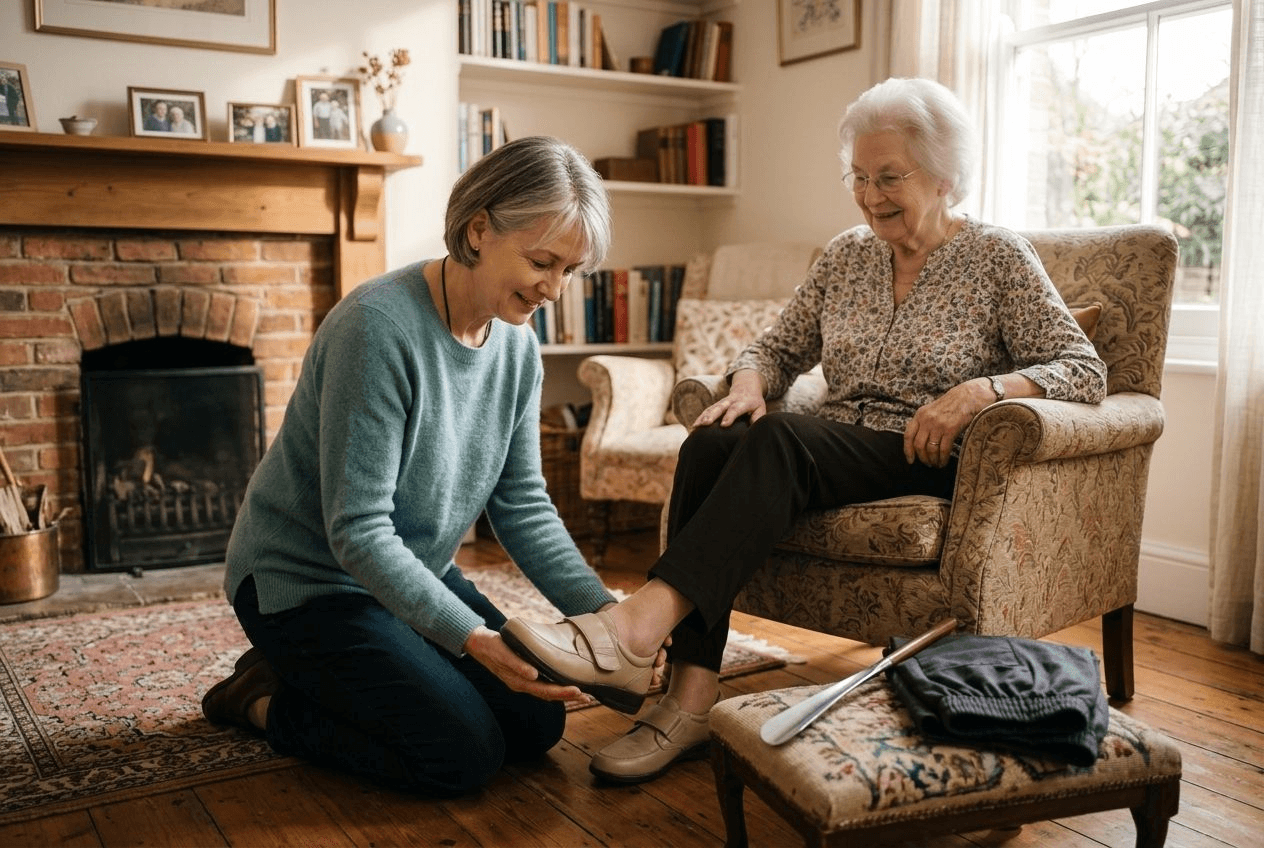
Dressing assistance is one of the most common reasons families bring in help at home. It is a core part of personal care, alongside bathing and grooming, and a caregiver who knows how to help someone dress, patiently, in the right order, without rushing, turns a daily flashpoint back into an ordinary morning. For conditions like Parkinson's, where the difficulty shifts hour to hour with medication, that steady, informed hand is part of good Parkinson's care. Across our Monmouth County, New Jersey service area and beyond, helping a person start the day dressed, comfortable, and in clothes they chose is part of the ordinary shape of a visit.
Dressing, Made Easy Again
The quiet loss of a wardrobe is not inevitable. Between clothing designed around the actual difficulty, a few inexpensive aids, and techniques that cost nothing but a little patience, most of what makes dressing hard can be smoothed away. A shirt that closes with a press instead of a fight. A chair to sit in while the socks go on. The harder arm in first. None of it is dramatic, and that is exactly the point: the goal is for getting dressed to fade back into the background of the day, something a person does without a second thought, the way they always have.
This article is for general education and is not medical advice. An occupational therapist can assess an individual's specific needs and recommend the right clothing, aids, and techniques; ask a doctor for a referral.
Sources: Parkinson's Foundation - Getting Dressed; American Occupational Therapy Association - Adaptive Fashion; University of Delaware - Adaptive Clothing Manual (2024).
Frequently Asked Questions
What is adaptive clothing for seniors?
Adaptive clothing is regular clothing that has been redesigned to make dressing easier for people with physical or cognitive limitations. From the outside it looks like an ordinary shirt, blouse, or pair of pants, but the details are changed to remove the parts of dressing that cause pain or frustration. Small buttons and zippers are replaced with hidden magnetic closures or hook-and-loop tabs, waistbands are made elastic, tops may open fully at the front or back so nothing has to be pulled over the head, and shoes use wide straps or a step-in design instead of laces. The aim is to let an older adult dress with as little struggle and as much dignity as possible, whether they dress themselves or a caregiver helps.
Who benefits from adaptive clothing?
Adaptive clothing helps anyone for whom ordinary dressing has become slow, painful, or unsafe. That includes people with arthritis, who find small buttons and zippers hard on stiff or sore hands; people with Parkinson's disease, whose tremor and rigidity make fine movements unreliable; stroke survivors dressing with the use of one hand; and people with dementia, who may struggle with the order of steps or pull at clothing that is hard to remove. It also helps wheelchair users and anyone who dresses while seated, people recovering from surgery, and those with swelling in the legs or feet. Even a mild case counts. Someone who can still dress independently on a good day but fumbles with buttons on a bad one benefits from magnetic closures.
What features should I look for in adaptive clothing?
Start from the specific difficulty rather than the diagnosis. If buttons and zippers are the problem, look for magnetic closures or hook-and-loop tabs and elastic waistbands. If raising the arms overhead is painful or impossible, choose front-opening tops. If the person dresses sitting down or uses a wheelchair, side-opening pants and a higher-cut back reduce bunching and make the job easier. If a caregiver does most of the dressing, open-back tops let them dress the person with little lifting or twisting. For sensitive or fragile skin, look for flat seams and tagless designs. And for someone who tends to remove clothing at the wrong times, discreet back-closing styles help clothes stay on.
Is adaptive clothing with magnetic closures safe for someone with a pacemaker?
Not always, and this is worth checking before you buy. The magnets used in magnetic-closure shirts and pants can interfere with the function of a pacemaker or an implanted cardioverter-defibrillator if they sit close to the device. For a person with either implant, it is safer to choose adaptive clothing that uses hook-and-loop tabs, snaps, or elastic openings instead of magnets, or to confirm with their cardiologist first. Magnetic closures are excellent for arthritis, tremor, and one-handed dressing, but they are one feature to skip when a cardiac device is involved.
What is the best way to help an elderly person get dressed?
Help with the hard parts and let them do the rest. Watch for the specific steps that cause trouble, fastening buttons, pulling up socks, managing a zipper, and assist with those while leaving the steps they can still manage to them. Have the person sit in a stable chair with armrests, lay the clothes out in the order they go on, and dress the weaker or more painful side first, then undress it last. Offer a choice between two outfits rather than asking the open question of what they want to wear, which can be overwhelming for someone with memory changes. Above all, work at their pace. Rushing turns dressing into a source of stress, while a calm, unhurried routine keeps it a shared, dignified part of the day.