What Poor Circulation Does to Aging Legs
Cold feet, aching legs, and slow-healing sores can signal poor leg circulation in older adults. The causes, warning signs, and what actually helps.
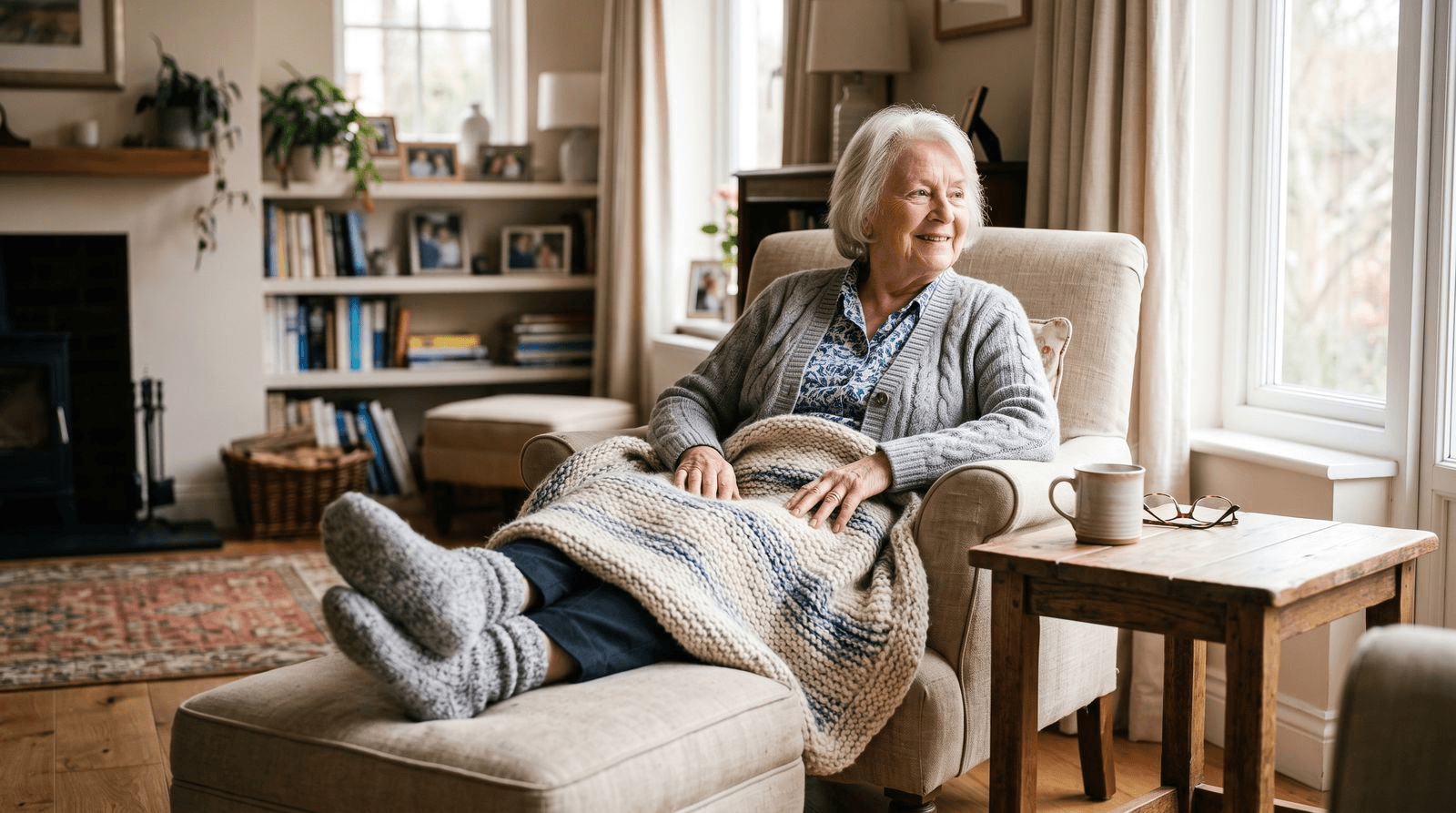
The legs are the far end of the circulatory line. Every heartbeat has to push blood downhill to the feet against gravity and then, harder still, coax it all the way back up to the heart. In a young body that round trip happens without a thought. With age, the arteries stiffen, the small valves inside the veins wear out, and the miles of plumbing in the lower legs become the first place the system shows its strain. It is common: roughly one in twenty adults develops the venous version, and peripheral artery disease affects a large share of people past sixty, many of whom never realize it, because the early signs are so easy to write off as ordinary aging.
That is the trap. Cold feet, a cramp that stops you halfway to the mailbox, a scrape on the shin that lingers for weeks, all of it gets filed under "getting older" when it is often the legs asking for attention. The good news is that circulation is one of the most improvable problems in the aging body, and much of what helps costs nothing. This is a plain-language look at what poor leg circulation actually is, how to tell the two main kinds apart, and the everyday habits that keep the blood moving.
The Signs That Something Is Slowing Down
Poor circulation rarely announces itself. It accumulates, and the body quietly adapts around it, which is exactly why the early signs get missed. The most useful thing a family can do is learn to recognize the pattern before a small problem becomes a serious one.
The classic tell is leg or calf cramping that comes on with walking and fades within a few minutes of resting, a pattern doctors call claudication. Beyond that, watch for feet that are persistently cold, especially one foot colder than the other; skin on the lower legs that looks shiny, pale, or unusually red or brownish; toenails that grow slowly or thicken; a loss of hair on the shins; and legs that feel heavy, tired, or achy by the end of the day. The single most important sign is a sore, blister, or scrape on the foot or lower leg that is slow to heal, because blood is what carries healing to a wound. As Cleveland Clinic's specialists note, many people mistake these changes for normal aging and wait too long to mention them, when a simple conversation with a doctor is exactly what is called for.
Two Opposite Problems With the Same Name
Here is the part that clears up most of the confusion, and it matters because the advice for one can be wrong for the other. "Poor circulation" in the legs almost always comes down to one of two conditions that are, mechanically, opposites.
The first is peripheral artery disease, or PAD. This is a supply problem: fatty plaque builds up inside the arteries that carry oxygen-rich blood down to the legs, narrowing them the same way plaque narrows the arteries of the heart. Less blood gets through, so the muscles ache when they work, the feet run cold, and wounds heal slowly. Because it is the same disease process behind heart attacks and strokes, the Mayo Clinic describes PAD as a warning flag for trouble in the arteries elsewhere in the body, which is one reason it deserves a real diagnosis rather than a shrug.
The second is chronic venous insufficiency, or CVI. This is a return problem: the one-way valves inside the leg veins, which are supposed to keep blood moving upward toward the heart, weaken and let some of it slide back down and pool. That pooling produces swelling around the ankles that is worse by evening, a heavy or itchy feeling, reddish-brown staining of the skin near the ankle, varicose veins, and, in time, stubborn ulcers. It overlaps with the everyday leg swelling many older adults notice, which we cover in more depth in our guide to swollen ankles in older adults. The distinction between arterial and venous is worth holding onto, because elevating the legs and wearing compression help the venous kind and can be exactly the wrong move for severe arterial disease.
Why It Happens More With Age
Time is the common thread. Arteries lose their elasticity and collect plaque over decades, and vein valves that have fought gravity for seventy or eighty years simply wear out. But age only sets the stage; several things push a body across the line, and most of them are the same familiar culprits behind heart trouble.
Smoking is the heaviest hitter for artery disease, damaging vessel walls directly. Diabetes runs a close second and does double harm, injuring both the vessels and the nerves that would otherwise sound the alarm. High blood pressure, high cholesterol, and carrying extra weight all narrow the margins further. And then there is the quiet one: sitting. Hours in a chair let blood settle in the legs and give the calf muscles no chance to do their job as a second pump. It is not a coincidence that the same numbness people blame on circulation sometimes traces back to the nerves instead, a distinction we untangle in our piece on neuropathy in the feet. Either way, the remedy starts in the same place.
Movement Is the Medicine
If there is one intervention that earns top billing, it is walking. The calf muscles act as a pump, squeezing the veins with every step and helping drive blood back up the leg, and for artery disease the effect is close to therapeutic. Regular walking prompts the body to open up small collateral vessels that route blood around the narrowed sections, which is why the National Heart, Lung, and Blood Institute lists supervised walking programs as a first-line treatment that improves how far a person can walk before the pain sets in.
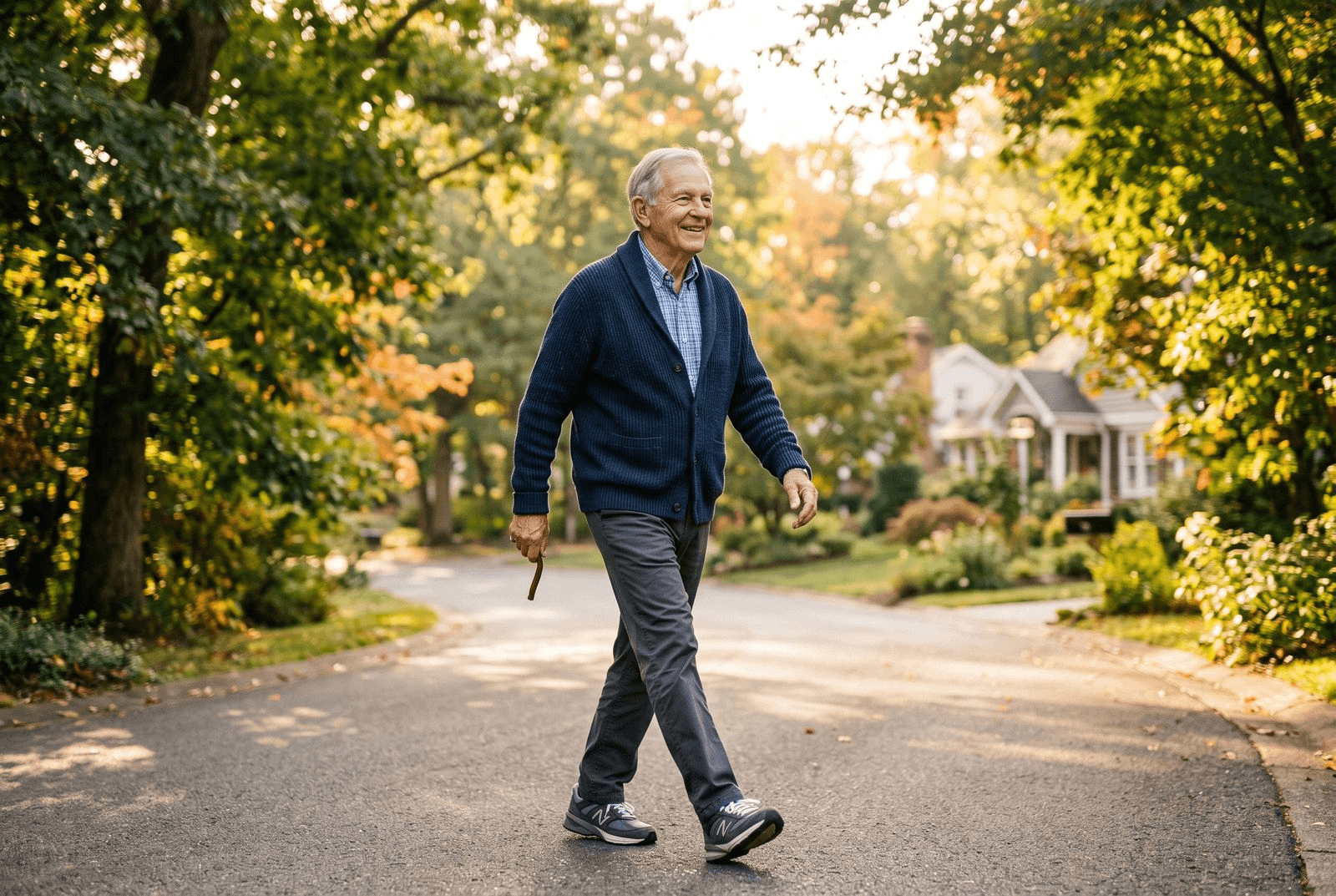
The approach that works for PAD is a little counterintuitive: walk until the cramp begins, rest until it passes, then walk again, several times per session, most days of the week. Over weeks that pain-free distance stretches out. For anyone who cannot get out on foot, the same pump can be worked from a seat, with ankle pumps, heel raises, and marching in place. The goal is not athletic performance. It is simply to interrupt the sitting and give the legs a reason to move blood, which is also where a steady companion helps: a caregiver who turns a daily walk into a shared routine makes the habit far more likely to stick than good intentions ever do.
The Everyday Habits That Keep Blood Moving
Beyond movement, a handful of small, low-cost habits add up. Break up long stretches of sitting or standing by getting up, or at least flexing the ankles, every hour. Stay hydrated, since thicker blood flows less easily. Keep the feet warm, but be cautious with heating pads and hot water on feet that may be numb, because a burn can go unnoticed. And if there is a smoker in the picture, quitting does more for the arteries than any supplement on the shelf; the pills and powders marketed for circulation rarely earn their price.
For the venous kind, two moves genuinely help. Elevating the legs above heart level for a stretch each day lets gravity assist the return trip and eases the swelling. And graduated compression stockings, snug at the ankle and looser higher up, gently push pooled blood upward. Here is the crucial caveat: compression and elevation are made for venous problems, and, as Cleveland Clinic warns, people with significant artery disease may be told to use them carefully or not at all, because squeezing an already under-supplied leg can do harm. Never start compression stockings for an older adult on your own judgment; get the diagnosis first.
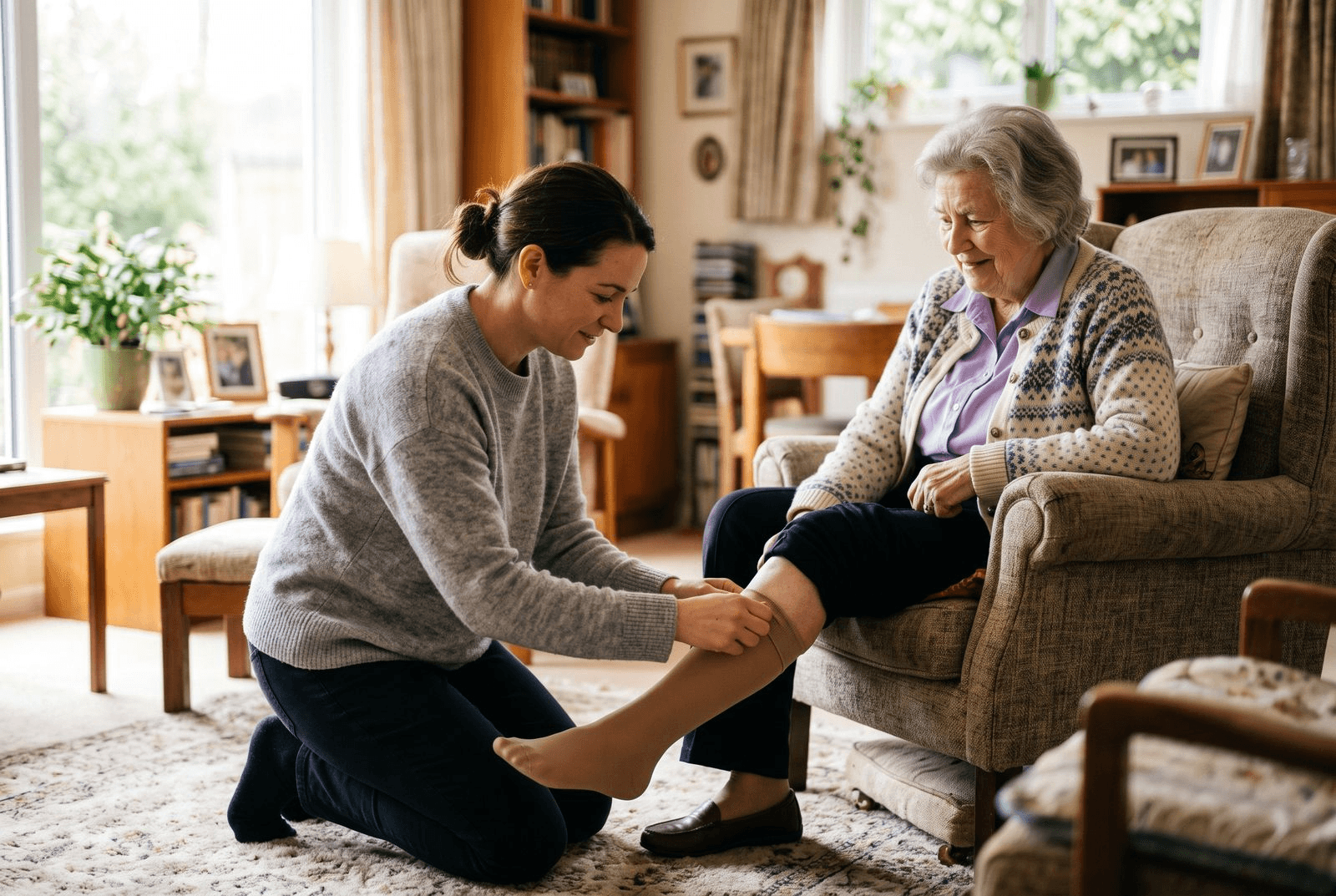
Compression stockings are also famously hard to put on, especially for hands slowed by arthritis, which is one of the quiet, practical ways in-home help earns its keep. A caregiver who assists with dressing and daily routines can get the stockings on correctly each morning, keep the walks on the calendar, and, just as importantly, lay eyes on the feet every day. That daily look is what catches a new sore or a color change while it is still small, and it is one reason families across Ocean County and beyond lean on a steady caregiver for exactly this kind of unglamorous, consistent attention.
The Warning Signs That Can't Wait
Most circulation problems build slowly and are managed calmly over time. A few, though, are genuine emergencies, and knowing them is the point of this section.
Call the doctor promptly about leg pain that shows up at rest, particularly a burning or aching in the feet at night that improves when the legs hang down, because that can signal severely restricted blood flow. Any wound, sore, or ulcer on the foot or leg that is not healing deserves attention within days, not weeks. And treat it as urgent, an emergency-room matter, if a leg or foot suddenly becomes cold, pale or bluish, numb, and painful, which can mean an artery has become blocked. On the venous side, a calf that turns swollen, red, warm, and tender, especially on one side, can indicate a blood clot and also needs same-day evaluation. When in doubt, the safe move is always to have it looked at.
Getting It Looked At
The reassuring reality is that leg circulation is very checkable and very treatable. A doctor can often tell a great deal just by feeling the pulses in the feet and looking at the skin. The standard next step for suspected artery disease is a quick, painless test called the ankle-brachial index, which compares the blood pressure at the ankle to the pressure in the arm; for venous problems, an ultrasound maps how the blood is flowing. From there the plan usually centers on the same movement and habits described here, often alongside medication to manage cholesterol, blood pressure, or clotting.
If you are noticing these changes in an aging parent, the most useful thing you can bring to that appointment is specifics: when the cramping starts, how far they can walk before it does, whether one foot is colder than the other, and how long any sore has been there. Write it down beforehand, because the details are easy to lose in the room. Poor circulation is not something to accept as the price of getting older. It is a signal, usually a fixable one, and legs that are moving, warm, and watched over tend to keep an older adult on their feet and in their own home for a good while longer.
Frequently Asked Questions
What are the first signs of poor circulation in the legs?
The earliest signs are easy to mistake for ordinary aging. Watch for calf or leg cramping that comes on while walking and eases within a few minutes of rest, feet that stay cold or that feel colder on one side than the other, heavy or aching legs by evening, shiny or discolored skin on the lower legs, slow-growing or thickened toenails, and hair loss on the shins. The most important single sign is a scrape, blister, or sore on the foot or lower leg that is slow to heal, since blood is what delivers healing to a wound. Any of these is worth raising with a doctor rather than writing off.
What is the difference between peripheral artery disease and venous insufficiency?
They are mechanically opposite problems. Peripheral artery disease (PAD) is a supply problem: fatty plaque narrows the arteries carrying blood down to the legs, so the muscles ache when they work, the feet run cold, and wounds heal slowly. Chronic venous insufficiency (CVI) is a return problem: weakened valves in the leg veins let blood pool instead of flowing back up to the heart, causing swelling around the ankles that worsens by evening, heaviness, itching, reddish-brown skin staining, and varicose veins. The difference matters because elevating the legs and wearing compression help the venous kind but can be harmful with significant artery disease.
How can an elderly person improve blood circulation in their legs?
Movement is the most effective step. Regular walking uses the calf muscles as a pump and, for artery disease, can extend how far someone walks before pain begins; a walk-rest-walk pattern most days of the week works well. For those who cannot walk far, seated ankle pumps, heel raises, and marching in place help. Beyond movement, break up long stretches of sitting or standing, stay hydrated, keep the feet warm, and stop smoking. For venous problems specifically, elevating the legs and wearing graduated compression stockings ease the pooling. Managing diabetes, blood pressure, and cholesterol with a doctor rounds out the plan.
Are compression socks good for poor circulation in the elderly?
It depends on the cause. Graduated compression stockings genuinely help chronic venous insufficiency by pushing pooled blood upward and easing swelling. But for someone with significant peripheral artery disease, compression can be unsafe because it squeezes a leg that is already under-supplied with blood, and doctors may advise using it carefully or not at all. That is why you should never start compression stockings for an older adult on your own judgment; get the diagnosis first so the treatment matches the problem.
When is poor circulation in the legs an emergency?
Seek prompt care for leg pain that appears at rest, especially burning or aching in the feet at night that improves when the legs hang down, and for any wound or sore on the foot or leg that will not heal. Treat it as an emergency if a leg or foot suddenly turns cold, pale or bluish, numb, and painful, which can mean an artery is blocked. A calf that becomes swollen, red, warm, and tender on one side can signal a blood clot and needs same-day evaluation. When in doubt, have it checked rather than wait.