Protecting Feet You Can't Fully Feel
Foot care for older adults with neuropathy: daily foot checks, socks and shoes, nail and callus care, what Medicare covers, and when to call the doctor.
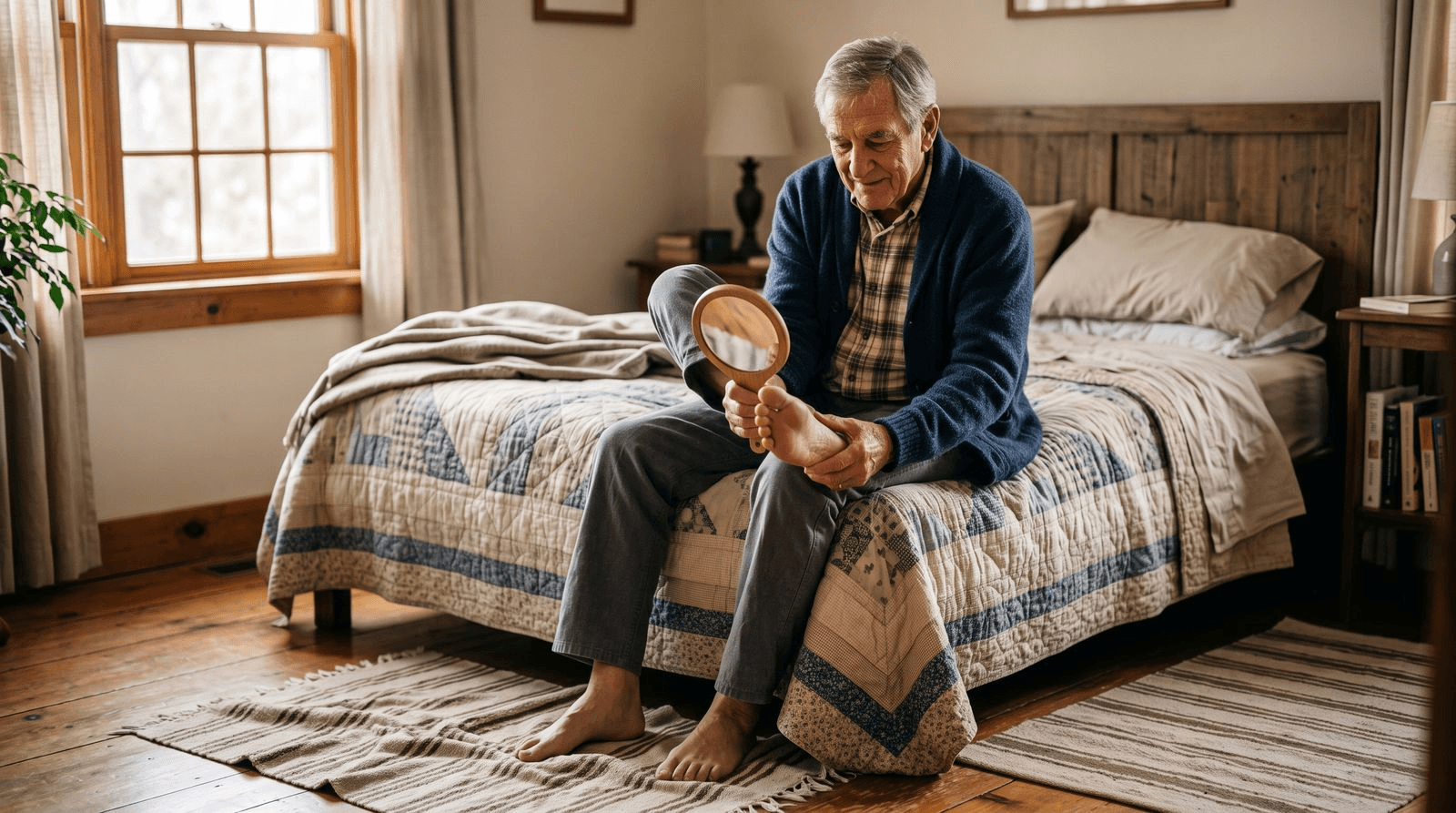
A numb foot does not hurt. That is exactly the problem. Pain is a warning system, and neuropathy quietly switches part of it off, so a blister rubbing inside a shoe, a pebble underfoot, or bathwater that is too hot can do real harm before anyone notices. Most people worry about the burning and tingling that neuropathy is known for. The far bigger risk is the feeling that goes missing.
The reassuring part is that most of the damage is preventable, and the prevention happens at home in habits that take only a few minutes a day. This is a practical guide to those habits: how to check feet that cannot fully feel, how to dress and protect them, how to keep the blood moving, how to ease the discomfort, and when a change means it is time to call.
The Real Risk of a Foot You Can't Feel
Peripheral neuropathy is common and becomes more so with age. In a large analysis of two US population studies, researchers found that reduced sensation to a standard monofilament test affected roughly 27 percent of adults aged 70 and older, climbing higher still past 80. Among people with diabetes, the lifetime odds are at least one in two. For many, the first stage is annoying but harmless: tingling, prickling, a sense of walking on padding. It is the next stage that carries the danger, when the foot stops reporting injury at all.
When protective sensation is gone, the ordinary feedback that keeps a foot safe disappears with it. A too-tight shoe, a small cut, a burn from a heating pad, a shard of glass on the floor, none of it registers, so the injury goes untended and has time to worsen. This is why loss of sensation sits behind the majority of diabetic foot ulcers, wounds that can turn serious quickly. Neuropathy also blunts the feet's sense of where the ground is, which unsteadies balance and gait and adds a real risk of falls. None of that is inevitable. It is what daily foot care exists to prevent.
Why Nerves in the Feet Go Quiet
Nerves reach the feet by the longest route in the body, which is part of why the feet are usually first to be affected and why the numbness tends to start at the toes and creep upward on both sides at once. The causes are varied. Diabetes is by far the most common, but the list also includes a vitamin B12 deficiency, heavy alcohol use, chemotherapy, kidney disease, thyroid problems, and certain autoimmune conditions. In a fair number of older adults no single cause is ever pinned down, and the neuropathy is called idiopathic.
The distinction matters because a few of those causes are treatable. Correcting a B12 deficiency or bringing blood sugar under better control can slow the damage and sometimes ease it, which is why any new numbness or tingling in the feet deserves a medical evaluation rather than a shrug. Even when the underlying cause cannot be reversed, knowing what is driving the neuropathy shapes how aggressively the feet need to be protected.
The Two-Minute Foot Check
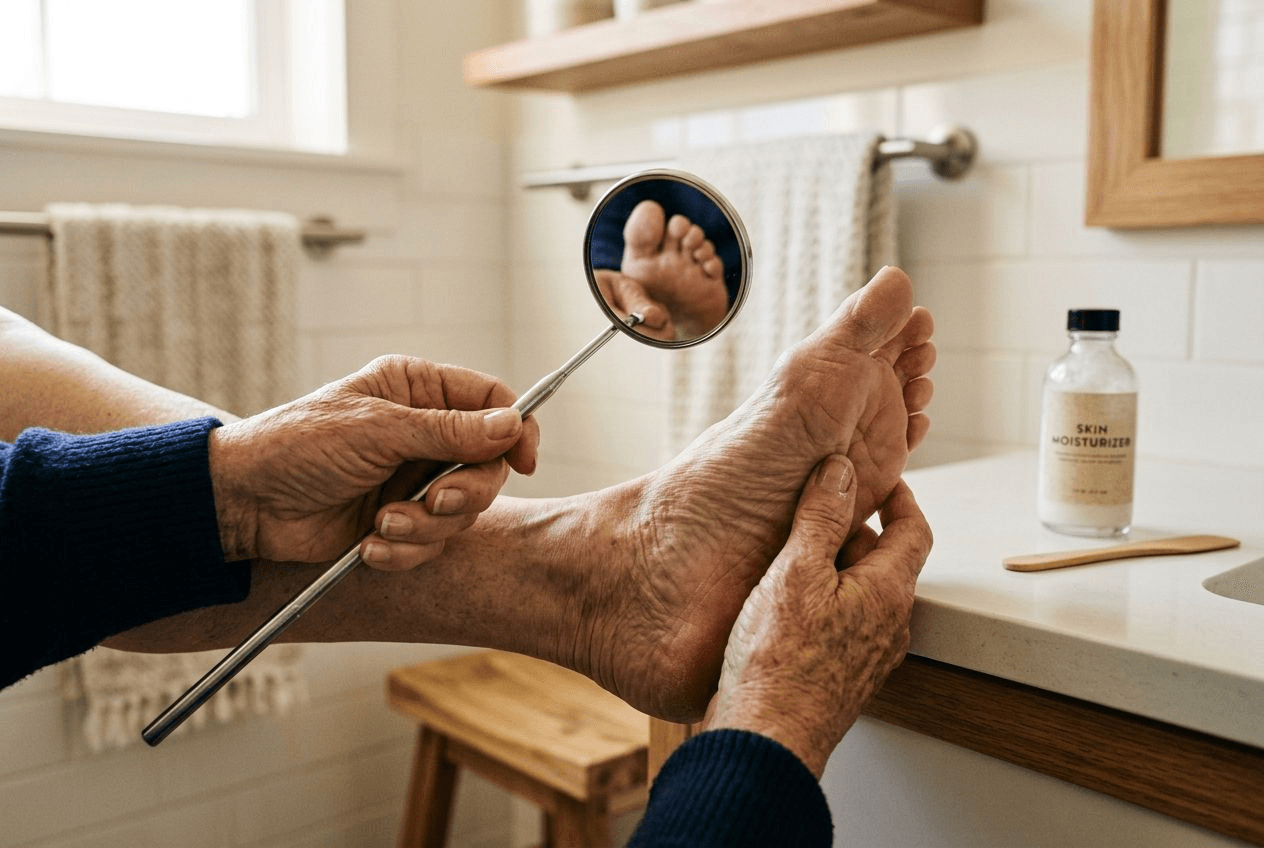
The single most valuable habit for anyone with numb feet is a daily look. Sensation cannot be relied on to raise the alarm, so the eyes have to do the job the nerves no longer can. Pick a consistent time, after a morning wash or before bed, and check both feet top to bottom. It takes about two minutes and it is the difference between catching a problem at the blister stage and finding it once it has become a wound.
- Look everywhere. Tops, soles, heels, and between every toe. Use a hand mirror or a long-handled inspection mirror to see the bottoms, or ask a family member or caregiver to look for you if bending or eyesight makes it hard.
- Watch for the small things. Cuts, blisters, redness, swelling, calluses, cracks, blue or pale patches, or any warm spot. On numb skin these are easy to miss and important to catch.
- Feel for temperature and moisture. A patch that is warmer than the rest of the foot can signal irritation or infection brewing underneath.
- Note anything new. A fresh callus, a nail digging in, a shoe leaving a red mark. Small changes are the early warning a numb foot cannot give on its own.
For an older adult who cannot comfortably reach or see their feet, this is one of the quiet, essential jobs a caregiver takes on. Help with bathing, foot inspection, moisturizing, and safe nail care is part of everyday personal care, and having a second set of eyes on the feet each day is often what keeps a small problem small.
Dressing Feet That Can't Feel
What goes on the feet matters more than usual when the feet cannot report discomfort. The goal is simple: no pressure points, no seams digging in, no bare skin exposed to hazards, and no heat the foot cannot gauge.
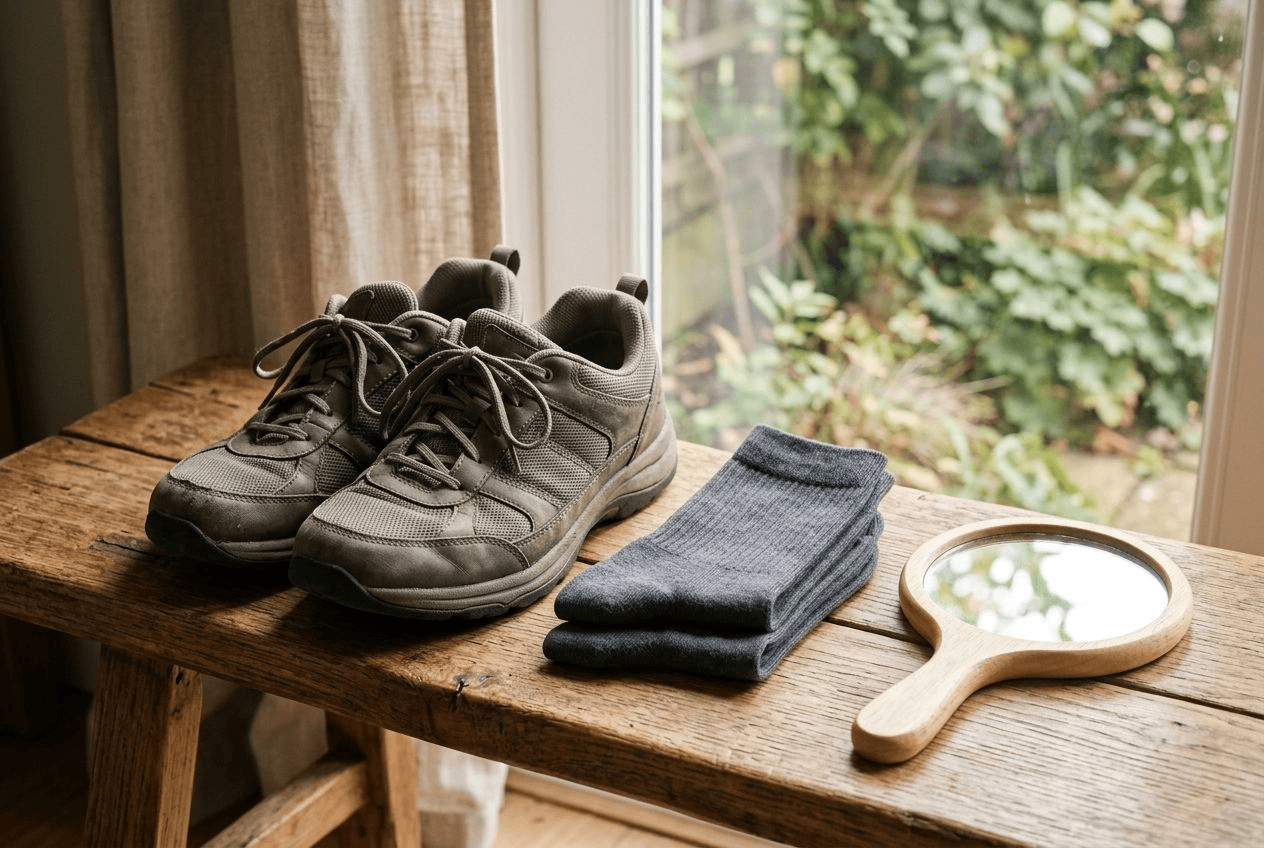
- Choose seamless, moisture-wicking socks. A seam or a tight elastic top can press a groove into skin you cannot feel. Socks made for diabetes are built to avoid exactly that.
- Fit shoes with room and support. A wide, deep toe box, a cushioned supportive sole, and a secure closure protect the foot without rubbing. Shop in the afternoon when feet are largest, and break new shoes in slowly.
- Never go barefoot, even at home. Slippers or shoes indoors guard against the stubbed toe or dropped object a numb foot will not feel.
- Check inside shoes first. Shake them out and run a hand inside before putting them on, since a pebble or bunched insole can cause damage before it is noticed.
- Mind the temperature. Wash in warm, never hot, water and test it with a hand or elbow first. Skip heating pads and hot water bottles on the feet, which are a common cause of burns in people who cannot feel the heat.
These are the everyday points the CDC's guidance on healthy feet comes back to again and again, and they apply to anyone with reduced sensation, diabetic or not.
Shoes are also the cheapest fall-prevention purchase a family ever makes. The CDC's STEADI footwear guide sets out the specification in a paragraph: a shoe measured for both length and width, with about half an inch in front of the longest toe, a firm sole with a tread that grips wet and dry floors, a heel no higher than an inch and broad rather than stacked, a collar that holds the heel so the foot cannot slide forward, and a lace or Velcro closure rather than a slip-on. Backless slippers are the footwear most often found on older adults who fall at home; worn-out athletic shoes whose foam has flattened and whose tread has gone smooth are nearly as bad, and walking in socks alone on tile or hardwood is a documented risk in the same guidance. A midsole compresses out of usefulness after roughly a year of daily wear, so a properly measured replacement pair each year is one of the highest-value things on any plan for preventing falls at home.
Keeping the Blood Moving
Good circulation helps the feet stay healthy and heal, and gentle movement is one of the most reliable ways to support it. None of this needs to be strenuous. A few minutes woven through the day is plenty.
- Ankle circles and toe curls. Seated, roll each ankle slowly in both directions and gently curl and spread the toes. Easy to do while watching television.
- Heel and toe raises. From a sturdy chair, rise onto the toes and back onto the heels to pump blood through the lower leg.
- A short daily walk. In well-fitting shoes, walking keeps circulation up and muscles working, as long as the feet are checked afterward.
- Elevate when resting. Putting the feet up for a while helps ease swelling that can otherwise strain fragile skin.
Because neuropathy also dulls the feet's sense of the ground, working on steadiness is worth the effort too. A gentle routine of balance exercises for seniors pairs naturally with foot care and helps counter the added fall risk that numb feet bring.
Easing the Burning and Tingling
For the painful side of neuropathy, the burning, tingling, and electric jabs that are often worst at night, comfort measures at home can take the edge off, though they will not repair the nerves. A warm foot soak, kept warm rather than hot, soothes some people. Loose bedding that keeps sheets off sensitive skin helps at night. Over-the-counter topical creams give partial relief for some. Staying active, keeping the underlying condition well managed, and avoiding alcohol and smoking all help hold symptoms steady over time.
When home measures are not enough, this is a conversation to have with a doctor rather than something to push through. There are prescription medications specifically shown to help nerve pain, and a physical therapist can add targeted exercises for strength and balance. Non-medical caregivers do not manage medication, but they are often the ones who notice that the evenings have gotten harder and prompt the call that gets someone real relief.
A Home That's Kind to Numb Feet
If the feet cannot always sense the floor, the floor has to be made safer to meet them. Small changes to the home lower the odds of both a hidden injury and a fall.
- Clear the walking paths. Loose rugs, cords, and clutter are trip hazards for anyone, and doubly so when the feet do not read the ground well.
- Light the way. Good lighting and a nightlight on the route to the bathroom prevent stepping on the thing that was not seen.
- Keep floors free of small objects. A dropped pin, tack, or shard is exactly the kind of thing a numb foot will not feel until it has done harm.
- Steady the risky spots. Grab bars in the bathroom and a stable chair for dressing make the moments most tied to falls safer.
Steadiness on the feet is its own project, and the help of someone trained to spot fall risks and lend a hand at the right moment matters. That is a core part of good mobility care, the difference between an older adult navigating a home cautiously alone and doing it with confidence. Across our Middlesex County, New Jersey service area and beyond, that everyday support, checking feet, steadying a walk, keeping the path clear, is woven into the rhythm of a visit.
Foot Care for Older Adults, Numb Feet or Not
Neuropathy arrives in feet that are already changing, and the ordinary business of aging feet matters alongside it. Roughly one in three adults over 65 has foot pain, stiffness, or aching bad enough to limit daily activity, according to the American Geriatrics Society's HealthInAging primer, which also puts the share of adults who have had painful feet at some point as high as 87 percent. Most of it never gets mentioned at an appointment: the pain is filed under old age, the visit is for something else, and nobody sees the limp. That silence is costly, because foot pain sits alongside stiff ankles, weak calves, and neuropathy itself on the list of foot-related fall risks.
Some of the changes are invisible in a mirror. The fat pad under the heel and the ball of the foot thins by about a third between 40 and 70, taking away the body's built-in shock absorber. Ligaments stretch, the arch settles, and the foot lengthens and widens over the same decades, which is why the size someone has bought for thirty years can quietly stop being the right one. Having both feet measured at the shoe store every couple of years is not vanity; it is the cheapest way to find out.
Calluses build where the foot carries more load than it should, over a bunion, under a fallen arch, beneath a hammertoe, at the back of a heel taking the brunt of a stiff sole. The drugstore aisle answers with pumice stones, callus shavers, and salicylic-acid callus removers, and none of them address the reason the callus is there. The stone takes off a layer of skin and the body, still under the same mechanical stress, rebuilds it within a week or two; the acid products thin the skin unevenly and can erode healthy skin next to the callus, which is why the CDC tells adults with diabetes never to use them and why podiatrists steer their other older patients away as well. On a foot that cannot feel, grinding or burning a callus down at home is exactly how a small problem becomes a wound. The durable fix is a shoe with a wider toe box, a metatarsal pad, or an orthotic that moves the pressure off the spot, plus an occasional in-office reduction by a podiatrist, who can also look under the callus for the skin breakdown that is not visible from outside.
A toenail that has grown thicker, harder, yellower, and more crumbly over a couple of years is a diagnosis rather than a cosmetic complaint. Onychomycosis, a fungal infection of the nail bed, is common with age and more common still with diabetes, and it works from underneath, disorganizing the keratin until the nail loses its shape. The reason to treat it is mechanical as much as anything: a thickened nail presses upward inside the shoe and causes pain, callus, and sometimes a pressure sore at the nail bed, while a loosened nail bed traps moisture and gives bacteria a way in. On a numb foot, that is the opening move toward an ulcer.
Get it diagnosed before treating it, because psoriasis and an old injury can leave the same yellow nail and are managed differently. When it is fungal, topical prescriptions such as efinaconazole and tavaborole handle mild to moderate cases over six to twelve months, and oral terbinafine is the most effective option for more advanced ones, with periodic liver-function blood tests during its three-month course. Laser treatment is cleared only for a temporary increase in clear nail, and the published evidence for lasting clearance is weaker than the advertising suggests. Whatever the treatment, trim nails straight across rather than down into the corners, or hand the job to a podiatrist, which is the safer arrangement for anyone whose feet are numb or hard to reach.
What Medicare Will and Will Not Pay For
Original Medicare covers more podiatry than most families expect, but the rules are specific. Medicare Part B does not cover what it calls routine foot care, meaning trimming healthy toenails, removing healthy calluses, paring corns, and general hygienic care of the feet, for adults without a complicating condition. The reasoning is that a healthy adult can do those things at home, an assumption that stops holding the moment reaching, seeing, or safely handling clippers becomes difficult.
The exclusion lifts when a documented systemic condition makes self-care dangerous. Medicare's local coverage determinations list the qualifying diagnoses, among them diabetes with peripheral neuropathy or vascular disease, peripheral arterial disease, chronic venous insufficiency, end-stage renal disease, and rheumatoid arthritis affecting the feet. With a qualifying diagnosis, Medicare typically covers a podiatry visit for nail and skin care roughly every nine weeks; the CMS coverage determination for debriding fungal nails spells out the criteria in detail. Medicare separately covers one pair of therapeutic shoes and inserts a year for adults with diabetes and documented foot disease.
Where the visits are not covered, they are usually affordable out of pocket, a routine nail-and-callus appointment running roughly forty to ninety dollars in most markets, which is a small fraction of what an emergency department visit for a foot infection costs. For a family caring for a parent who cannot safely cut their own nails, the podiatry appointment is best treated the way the dental cleaning is: scheduled, routine, and not optional.
When a Change Means Calling the Doctor
Because a numb foot hides the usual warning signs, a few changes should never be watched and waited on. Call promptly for a sore, blister, cut, or callus that is not healing; for redness, warmth, swelling, or drainage that could mean infection; for a change in the color of the skin or toes; for a foot that suddenly looks swollen or out of shape; or for any wound at all in a person with diabetes. And any new numbness, weakness, or balance trouble that has not been evaluated deserves a first visit, since the cause occasionally turns out to be one that treatment can reverse.
It is also worth asking for the test that measures how much feeling is left. A clinician presses a 10-gram monofilament, a thin plastic strand calibrated to bend at ten grams of pressure, against several spots on the sole of each foot while the patient's eyes are closed; missing it at one or more sites means protective sensation is gone. The check takes two minutes in a primary care office, and the monofilament test is the strongest single predictor of foot ulceration in adults with diabetes, who should have it at least once a year. Plenty of offices skip it, and it is a reasonable thing to ask for by name.
What looks minor on a foot that cannot feel can advance fast. The instinct to give it a few days is the instinct to override here. Prompt care is what keeps a small problem from becoming a serious one.
The Quiet Work of Keeping Feet Safe
Neuropathy rarely announces itself with a crisis. It works in the background, trading away a little feeling at a time, and the harm it does is usually the harm that could have been caught. That is oddly encouraging, because it means the everyday habits, the two-minute look, the right socks, the warm bath tested first, the cleared floor, are not busywork. They are the actual medicine here, the part that prevents the complications that matter most.
For families managing this alongside everything else, sharing the load helps, and a good caregiver folds foot care into the ordinary rhythm of a day, checking, steadying, noticing what a numb foot cannot. So keep the routine small and keep it daily. A person stays on their feet, and in their own home, one unremarkable, well-cared-for day at a time.
This article is for general education and is not medical advice. Talk with a doctor about new or worsening numbness, tingling, or any foot wound, especially with diabetes, and follow their guidance on treatment.
Sources: Diabetes Care (Hicks et al., 2021) - Prevalence of Peripheral Neuropathy Defined by Monofilament Insensitivity in Middle-Aged and Older Adults in Two US Cohorts; StatPearls, National Library of Medicine - Diabetic Foot Ulcer and Ulceration; Centers for Disease Control and Prevention - Tips for Healthy Feet; Centers for Disease Control and Prevention - Diabetes and Your Feet; Centers for Disease Control and Prevention STEADI - Feet and Footwear guide; American Geriatrics Society HealthInAging - Foot Problems: Basic Facts; American College of Osteopathic Family Physicians - Diabetic Foot Examination; Centers for Medicare and Medicaid Services - Local Coverage Determination, debridement of mycotic nails.
Frequently Asked Questions
Can neuropathy in the feet be reversed or cured?
In most cases the nerve damage itself cannot be undone, but that is not the whole story. Treating the underlying cause, most often by getting blood sugar under control in diabetes, or correcting a vitamin B12 deficiency, or stopping heavy alcohol use, can slow or halt the progression and sometimes ease symptoms. Nerves heal slowly when they heal at all, so the realistic goal is to protect what feeling remains, prevent injury, and manage discomfort, rather than to expect the numbness to disappear. Because a small number of causes are genuinely reversible, anyone with new numbness or tingling in the feet should be evaluated by a doctor rather than assuming nothing can be done.
What does neuropathy in the feet feel like?
It varies. Many people describe burning, tingling, pins and needles, or a sensation like walking on cushions, bunched-up socks, or gravel that is not there. Others feel sharp, electric, or stabbing pains, often worse at night. Over time the more troubling change is numbness: a growing loss of the ability to feel pain, temperature, or the ground underfoot, which typically starts at the toes and creeps upward in a stocking pattern on both feet. Some people have painful symptoms, some have numb ones, and many have both at once. The numbness is the more dangerous of the two even though it hurts less, because it removes the warning system that normally protects the foot.
What are the best socks and shoes for neuropathy?
Look for seamless socks that will not press a ridge into skin you cannot feel, made from moisture-wicking fibers to keep the foot dry, and without tight elastic tops that can pinch circulation. Socks marketed for diabetes usually meet these standards. For shoes, choose a wide, deep toe box so nothing rubs, a supportive cushioned sole, and a secure closure that holds the foot without pressure points. Shop in the afternoon when feet are at their largest, and break new shoes in slowly while checking for red marks. Always shake out and feel inside a shoe before putting it on, since a numb foot will not notice a pebble or a bunched insole until it has done damage.
What home remedies actually help neuropathy in the feet?
The most useful home measures protect the feet and keep blood moving rather than promising to regrow nerves. Gentle daily movement, such as ankle circles, toe curls, and a short walk in good shoes, supports circulation and balance. Keeping feet clean, dry, and moisturized (though not between the toes) prevents the cracks that let infection in. Managing the underlying condition, staying active, and avoiding alcohol and smoking all help slow progression. For discomfort, some people get relief from warm, not hot, foot soaks and over-the-counter topical creams, but anyone with numbness should test water temperature with a hand or elbow first. Persistent pain is worth discussing with a doctor, who can prescribe medication proven to help nerve pain.
What causes thick, yellow toenails in older adults?
Most often a fungal infection of the nail bed called onychomycosis, which is common with age and more common still in people with diabetes. It works from underneath the nail, disorganizing the keratin until the nail turns thick, hard, yellow, and crumbly over a couple of years. It is worth treating for mechanical reasons as much as appearance: a thickened nail presses upward inside the shoe and causes pain, callus, and sometimes a pressure sore at the nail bed, and a loosened nail bed traps moisture and gives bacteria a route in, which on a numb or diabetic foot is the opening move toward an ulcer. Get a diagnosis before treating, because psoriasis and old injuries can produce the same yellow nail and are handled differently. When it is fungal, topical prescriptions such as efinaconazole and tavaborole treat mild to moderate cases over six to twelve months, and oral terbinafine is the most effective option for more advanced ones, with liver-function monitoring during its three-month course.
Does Medicare cover foot care for seniors?
It depends on why the care is needed. Medicare Part B does not cover what it calls routine foot care, meaning trimming healthy toenails, removing healthy calluses, paring corns, and general foot hygiene, for adults without a complicating condition. The exclusion lifts when a documented systemic condition makes self-care dangerous: Medicare's local coverage determinations list qualifying diagnoses that include diabetes with peripheral neuropathy or vascular disease, peripheral arterial disease, chronic venous insufficiency, end-stage renal disease, and rheumatoid arthritis affecting the feet, among others. With a qualifying diagnosis, Medicare typically covers a podiatry visit for nail and skin care roughly every nine weeks, and it separately covers one pair of therapeutic shoes and inserts a year for adults with diabetes and documented foot disease. Where a visit is not covered, routine podiatry is usually affordable out of pocket and far cheaper than treating the infection it prevents.
When should someone with foot neuropathy see a doctor?
Get an evaluation for any new or worsening numbness, tingling, weakness, or balance trouble, since a few causes are treatable and early action protects nerve function. After a diagnosis, call promptly for any sore, blister, cut, or callus that is not healing; any redness, warmth, swelling, or drainage that could signal infection; a change in the color of the skin or toes; a foot that suddenly looks swollen or misshapen; or any wound in someone with diabetes. These are not wait-and-see problems. Because a numb foot hides the usual warning signs, what looks minor can advance quickly, and prompt care is what keeps a small issue from becoming a serious one.