Why Older Adults Bruise So Easily
Thin skin, fragile vessels, and common medicines make bruises appear from nothing. What causes easy bruising in older adults, and the signs to watch.
It usually starts with a bruise nobody remembers earning. A blue-purple patch on the forearm, a smudge across the back of a hand, and no bumped doorway or missed step to pin it on. For the person it happens to, and for the adult child who notices it on a visit, the first thought is often the most alarming one: something must be wrong.
Most of the time, nothing is. Easy bruising is one of the ordinary facts of an aging body, driven by changes in the skin and blood vessels that have nothing to do with disease. But "usually harmless" is not the same as "always," and part of living with easy bruising is knowing which marks you can shrug off and which ones deserve a phone call. This is a field guide to both: why the bruises appear, how to read them, when to worry, and the small things that keep an older parent's arms from looking like a map of every doorway in the house. None of it replaces a doctor's judgment, especially for anyone on a blood thinner.
What Thin Skin and Fragile Vessels Have to Do With It
A bruise is simply blood that has escaped. When one of the tiny vessels near the skin's surface breaks, blood leaks into the surrounding tissue and shows through as a mark until the body slowly reabsorbs it. In a younger person that takes a real knock. In an older one, it can take almost nothing.
Three age-related changes stack up to make it that easy. The skin itself grows thinner and less elastic. The fatty layer beneath it, the padding that once cushioned blood vessels against everyday bumps, wears away. And years of ultraviolet light weaken the collagen that holds the vessel walls in place, leaving them brittle. As the National Institute on Aging puts it plainly, blood vessels become more fragile with age, so older adults bruise more easily and the bruises take longer to fade. Put those changes together and a vessel that would have survived a knock at forty gives way at eighty from the corner of a kitchen counter.
Senile Purpura: A Frightening Name for a Harmless Bruise
There is a specific, common version of this that has an unfortunately grim name. Senile purpura, also called actinic purpura, is the flat, dark red or purple bruising that appears again and again on the forearms and the backs of the hands. It is the classic older-adult bruise, and despite the name, it is not a sign that anything is failing. It is fragile, sun-worn blood vessels doing exactly what fragile vessels do.
The marks tend to be more sharply outlined than a fresh impact bruise, and they favor the parts of the body that catch the most sun over a lifetime. They can linger longer than you would expect, often one to three weeks, and they sometimes leave a faint brown stain behind for months after the purple has gone. People with lighter skin see it more. It is worth having a doctor confirm the diagnosis once, mostly to rule other things out, but once it is named, senile purpura is a cosmetic matter, not a medical one.
The Medicine Cabinet Is the Usual Suspect
When bruising suddenly gets worse, the cause is often sitting in the medicine cabinet. A long list of common drugs make the blood slower to clot or the skin quicker to tear, and in an older adult who already bruises easily, they turn a minor bump into a dramatic mark.
The prescription blood thinners are the obvious ones: warfarin, apixaban, rivaroxaban, and clopidogrel are designed to keep dangerous clots from forming, and a side effect of that job is easier bruising. Everyday aspirin belongs in the same group, and so do over-the-counter anti-inflammatories such as ibuprofen and naproxen, which quietly interfere with the platelets that stop bleeding. Corticosteroids like prednisone work a different angle, thinning the skin itself. Certain antidepressants can nudge platelet function too. And the effect is not limited to prescriptions, as the Mayo Clinic notes that supplements including fish oil, ginkgo biloba, and vitamin E can all add a blood-thinning nudge of their own.
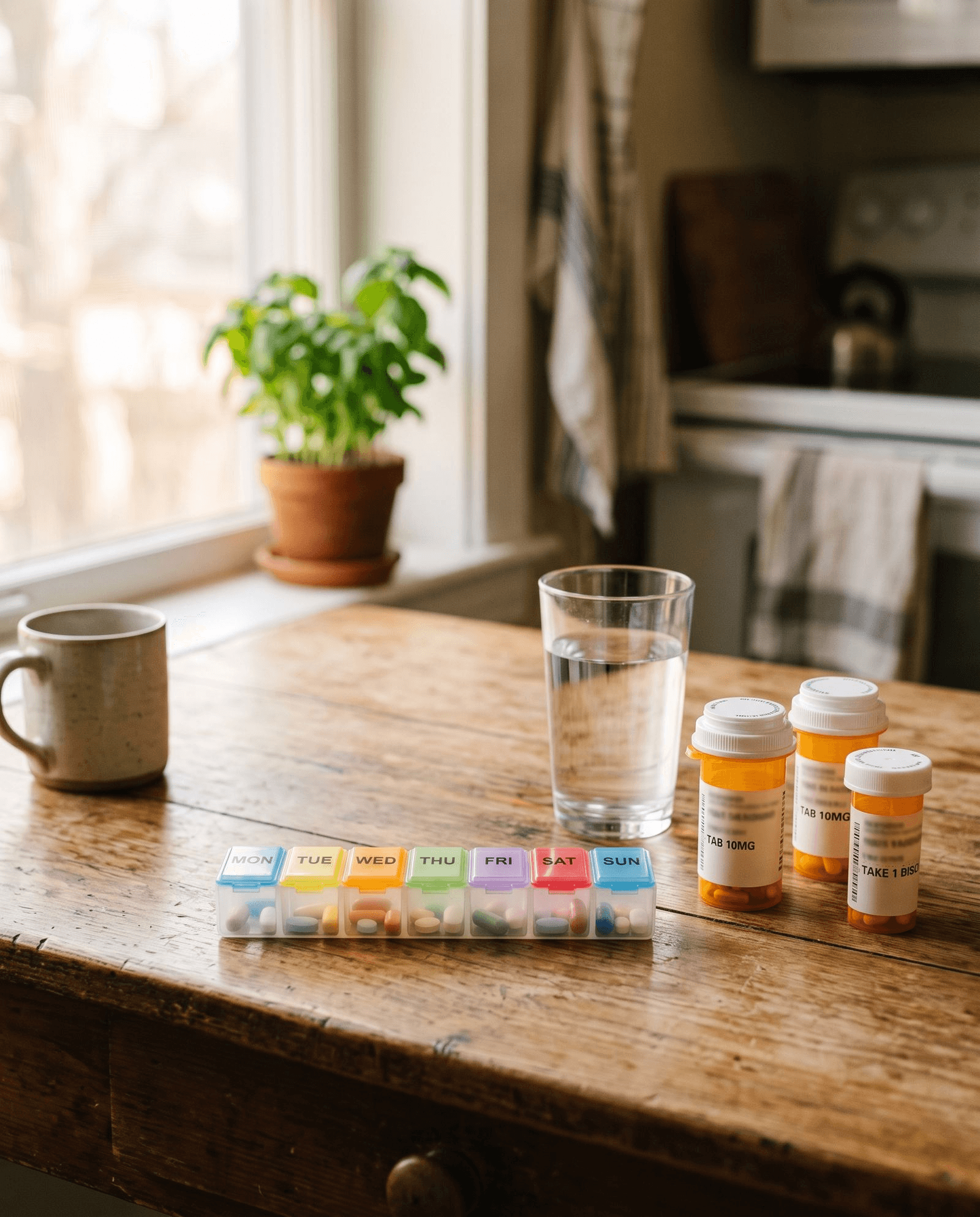
The point is not to stop anything. Blood thinners in particular are usually preventing something far more dangerous than a bruise, and stopping one on your own can be a serious mistake. The point is that a jump in bruising is a good reason to sit down with a doctor or pharmacist and run through the whole list, prescriptions and supplements alike, which is a natural part of the kind of routine medication management every older adult on several drugs should have.
How to Read a Bruise
A bruise keeps a rough calendar of its own age, and knowing how to read it takes some of the worry out of finding one. A new bruise starts red or purple. Over the next days it darkens, then shifts toward brown, green, and finally a yellowish fade as the body breaks the trapped blood down and carries it away. A mark that moves through those colors and shrinks is a bruise doing exactly what it should.
Location tells you something too. The ordinary, unremarkable bruises live on the arms, the legs, and the backs of the hands, the places that bump into the world all day long. Doctors have names for the sizes as well: pinpoint red or purple dots the size of a pen tip are called petechiae, mid-sized spots are purpura, and the familiar larger blotches are ecchymoses. Most of that vocabulary you can happily ignore, with one exception. Those pinpoint petechiae are the one pattern worth learning, because unlike a normal bruise they signal a bleeding issue rather than a bump, and they belong in the next section.
The Bruises Worth a Phone Call
Nearly all age-related bruising is benign, and the goal here is not to make anyone anxious about a purple forearm. It is to name the handful of patterns that are genuinely worth a doctor's attention, so that the rest of the time you can relax. Hematologists point to a short, consistent list.
Call the doctor about bruises that are frequent and large with no injury to explain them, or that show up somewhere unusual, particularly the trunk, the back, or the face rather than the arms and legs. As Cleveland Clinic's hematologists put it, small bruises on the limbs are ordinary, but frequent or unprovoked bruising on the torso, back, or face is not. Watch for the pinpoint petechiae mentioned above, and for bruising that arrives alongside other bleeding: gums that bleed when brushing, frequent nosebleeds, blood in the urine or stool. A bruise that keeps enlarging, hurts a great deal, or simply never heals earns a call too. So does a sudden wave of easy bruising in someone who never used to, especially with fatigue or feeling unwell, since on rare occasions the cause is a shortage of platelets, a clotting problem, liver disease, or a vitamin deficiency in C, K, or B12. A quick blood test settles most of these questions, which is exactly why they are worth raising rather than worrying over in silence.
The Question Families Are Afraid to Ask
There is one worry that often goes unspoken when an adult child keeps finding bruises on an aging parent, especially a parent who has help at home: could someone be hurting them? It is an uncomfortable question, and it deserves a calm, honest answer rather than avoidance.
Start from the base rate. The overwhelming majority of bruises on older adults are accidental, and they follow the accidental pattern: small, on the arms and legs and hands, on the parts of the body that meet furniture and door frames. The patterns that warrant a closer look are different. Bruises on the neck, chest, back, or face are harder to acquire by accident. So are marks shaped like a hand, a grip, or an object, matching injuries on both sides of the body, and bruises that the person cannot explain or grows visibly uneasy when asked about. Behavior can speak louder than the skin: a parent who becomes newly fearful, withdrawn, or tense around one specific person is telling you something. If your instinct is uneasy, you are allowed to act on it. The national Eldercare Locator connects families to local Adult Protective Services, who look into exactly these situations. Asking the question does not accuse anyone. It protects someone who may not be able to protect themselves.
Everyday Ways to Head Off Bruises
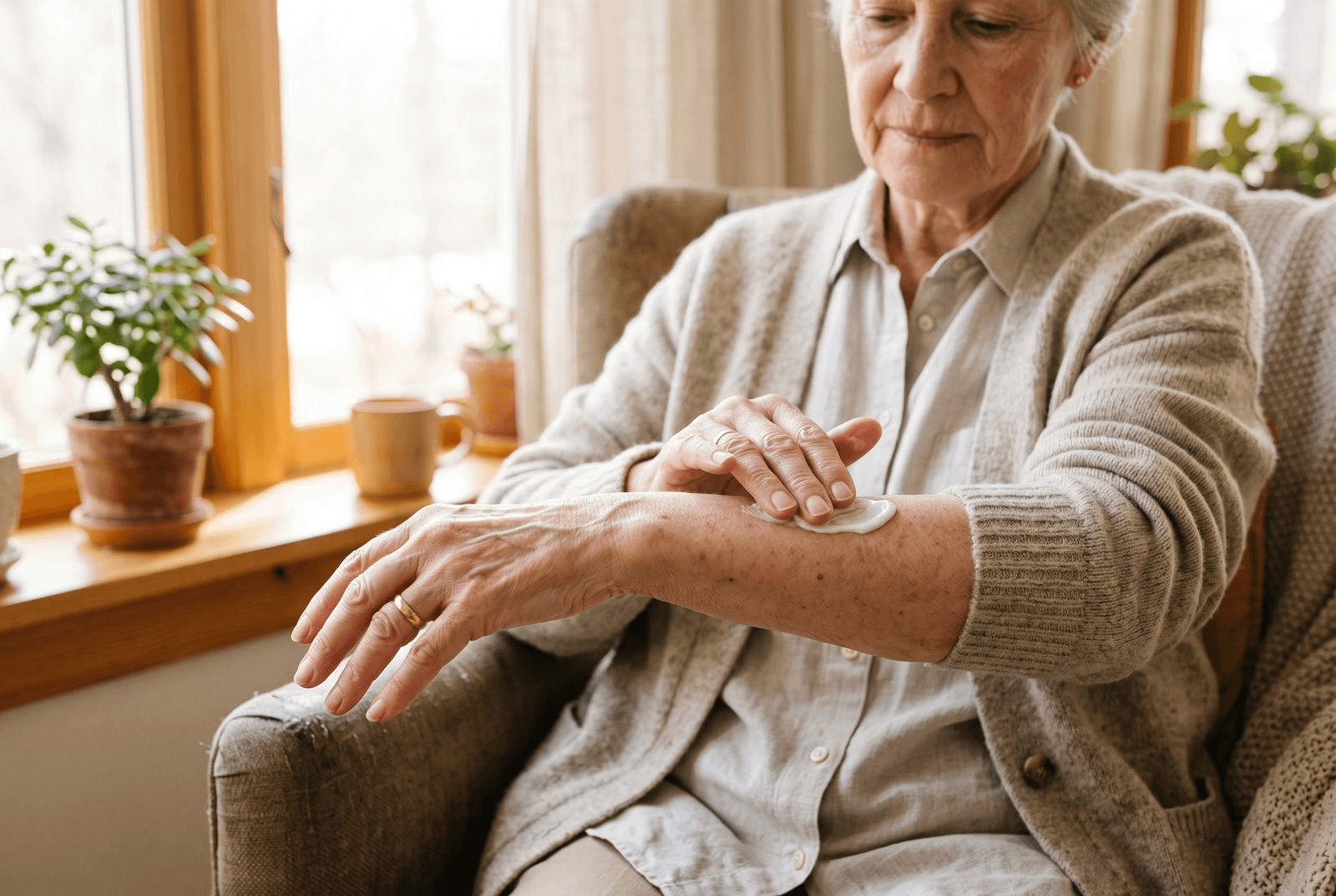
You cannot undo thin skin, but you can stack the deck. Most of what reduces bruising is unglamorous and cheap. Keep the skin moisturized so it stays a little more supple, protect it from the sun that weakened it in the first place, and keep the body hydrated. Long sleeves and long pants put a layer of cloth between fragile arms and the world, which is why so many older adults quietly switch to them year-round.
Because a great many bruises come from falls and near-falls, the home matters as much as the skin. Clear the loose rugs and clutter from walkways, add lighting to the dim corners and the path to the bathroom, pad the sharp edges of coffee tables and bed frames, and use a cane or walker without embarrassment when it steadies the day. The same fixes that prevent a bruise prevent the far worse injury behind it, which is the whole point of thinking through bathroom and home safety before a fall forces the issue. When a bump does happen, rest, a cold pack in the first day, and gentle elevation keep the mark smaller. Skip oral vitamin K or high-dose supplements as a home remedy unless a doctor suggests them, and be cautious with arnica if there is a blood thinner in the picture.
This is also where a steady extra set of eyes earns its keep. A caregiver who helps with bathing and dressing sees the skin every day, which means they are often the first to notice that bruises are multiplying, changing character, or landing somewhere they should not. That daily observation, paired with a home cleared of hazards and a medication list someone is actually watching, is quiet, ordinary work that heads off both the bruise and the fall. It is one reason families across Middlesex County lean on an in-home caregiver not for anything dramatic, but for the steady attention that catches a change early.
The Reassuring Part
For all the alarm a mystery bruise can cause, the everyday version is one of the more benign facts of getting older. Thin skin and fragile vessels make the marks appear from almost nothing, they run through their colors, and they fade. The job is not to panic at every purple patch. It is to know the short list of exceptions, keep the skin and the home a little kinder to an aging body, and keep a doctor in the loop when the pattern changes. Do that, and a bruise stays what it usually is: a small, temporary story the skin tells, and nothing more.
Frequently Asked Questions
Why do older adults bruise so easily?
Aging thins the skin and wears away the fatty layer that cushions the small blood vessels underneath, and years of sun exposure weaken the connective tissue that holds those vessels in place. Together that leaves the capillaries near the surface fragile enough that a light bump, or sometimes no remembered bump at all, lets blood leak into the skin and show as a bruise. Common medicines and supplements that thin the blood or the skin make it happen more readily. In most cases the bruising is a cosmetic nuisance rather than a sign of disease, but a sudden change in how often or where bruises appear is worth mentioning to a doctor.
What is senile purpura?
Senile purpura, also called actinic purpura, is the flat, dark red or purple bruising that shows up on the forearms and the backs of the hands in older adults. It is caused by fragile, sun-weakened blood vessels rather than any disorder of the blood, and it is harmless. The marks often last one to three weeks and can leave a brownish stain on the skin for months after the bruise itself has faded. It is more common in people with lighter skin and in anyone who has spent years in the sun.
What medications cause easy bruising in seniors?
The usual culprits are the drugs that interfere with clotting: prescription blood thinners such as warfarin, apixaban, rivaroxaban, and clopidogrel; aspirin; and over-the-counter anti-inflammatories like ibuprofen and naproxen. Corticosteroids such as prednisone thin the skin itself, and some antidepressants can affect how platelets work. Several supplements add to the effect too, including fish oil, ginkgo biloba, and high-dose vitamin E. None of these should be stopped on your own, but they are worth reviewing with a doctor or pharmacist if bruising has increased.
When should I worry about bruising in an older adult?
Ordinary age-related bruises sit on the arms, legs, and backs of the hands and heal over a couple of weeks. Reasons to call the doctor include frequent large bruises with no clear cause, bruises on the trunk, back, or face, tiny pinpoint red or purple dots called petechiae, or bruising that comes with bleeding gums, frequent nosebleeds, blood in the urine or stool, or unusual tiredness. Bruises that keep growing, are very painful, or never seem to heal also deserve prompt attention, since on rare occasions easy bruising signals a problem with platelets, clotting, or the liver.
Can easy bruising be a sign of elder abuse?
It can, though most bruising in older adults is accidental. Accidental bruises tend to be small and land on the arms, legs, and hands. Patterns that raise concern include bruises on the neck, chest, back, or face, marks shaped like a hand or an object, injuries on both sides of the body, and bruises the person cannot or will not explain. Behavioral changes matter as much as the marks: new fearfulness, withdrawal, or visibly tensing around a particular caregiver. If something feels wrong, the national Eldercare Locator and Adult Protective Services can help you look into it.
How can you prevent bruising in seniors?
You cannot fully stop age-related bruising, but you can reduce it. Keep the skin well moisturized, protect it from the sun, and stay hydrated. Make the home safer by clearing tripping hazards, improving lighting, padding sharp furniture edges, and using mobility aids when they help. Long sleeves and long pants add a layer of protection to fragile arms and legs. Review medicines and supplements with a doctor or pharmacist, and eat a balanced diet, since low vitamin C, K, or B12 can contribute. For a fresh bump, rest, ice, and gentle elevation help limit the mark.